Advertising disclosure: This page includes affiliate links that may earn us a commission at no additional cost to you.
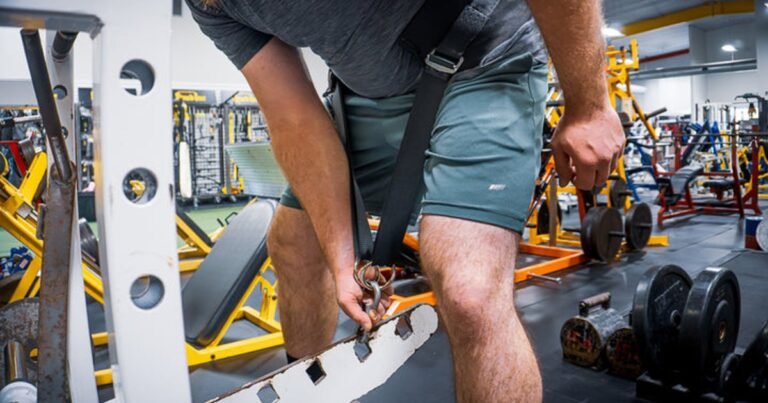
A pair of loadable dumbbells can cover a useful range of weights without a long rack of fixed pairs. The awkward part often arrives before the first repetition: the exposed metal sleeve presses into your thigh while you prepare to lift the dumbbells into position.
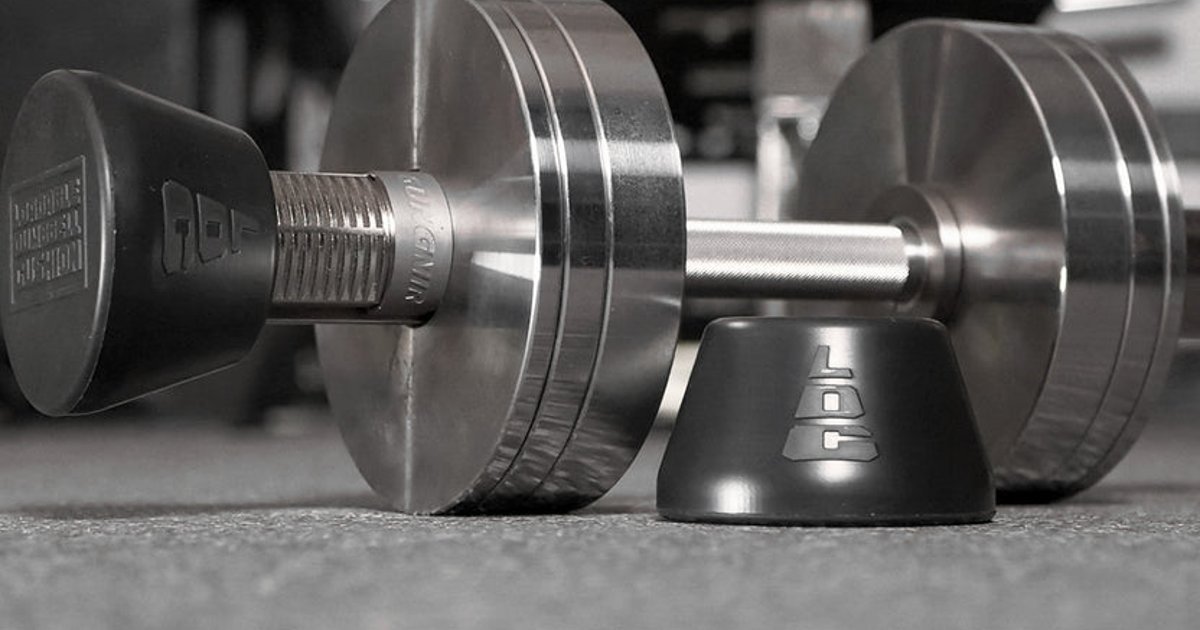
AbMat’s Loadable Dumbbell Cushions address that contact point. They are a small accessory with a specific job, rather than a new weight-selection system or a substitute for secure plates. Before buying, the important questions are whether your dumbbells have the right sleeves, whether your actual plate stack leaves room and whether you can control the complete setup. This is a specification-based guide, not an MMP hands-on test.
A softer contact surface, not a lifting mechanism
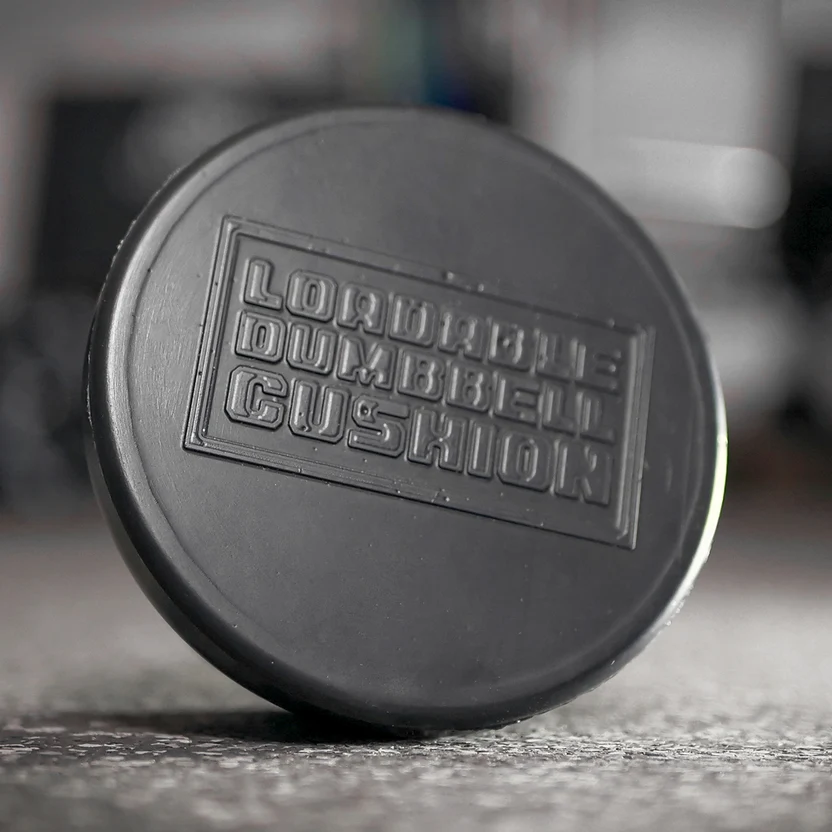
The cushions are foam pieces that slip onto exposed Olympic-style loadable dumbbell ends. They are sold as a pair, weigh approximately two ounces each and are listed at 5.25 × 4.25 × 2.5 inches. Their broad face changes the contact between the metal end and your leg.
That makes their purpose quite narrow. They do not shorten the dumbbell, change its grip diameter, hold the plates in place or help you press the working weight. The handle and its retention system still have to function properly. Think of the cushion as an interface between two existing things: the dumbbell end and the place you rest it.
Foam can compress. A padded surface should not be treated as a rigid platform, and comfort at one load does not demonstrate identical behaviour at a much heavier load. Nor does a more comfortable contact point prove the setup is stable. Those are separate observations.
It helps to describe the problem before looking for an accessory. If the end digs into your thigh while the rest of the setup is controlled, cushioning may address the relevant issue. If you cannot lift the dumbbells into position or return them calmly, a softer end does not resolve the larger handling problem.
Check the sleeve after loading your real plates
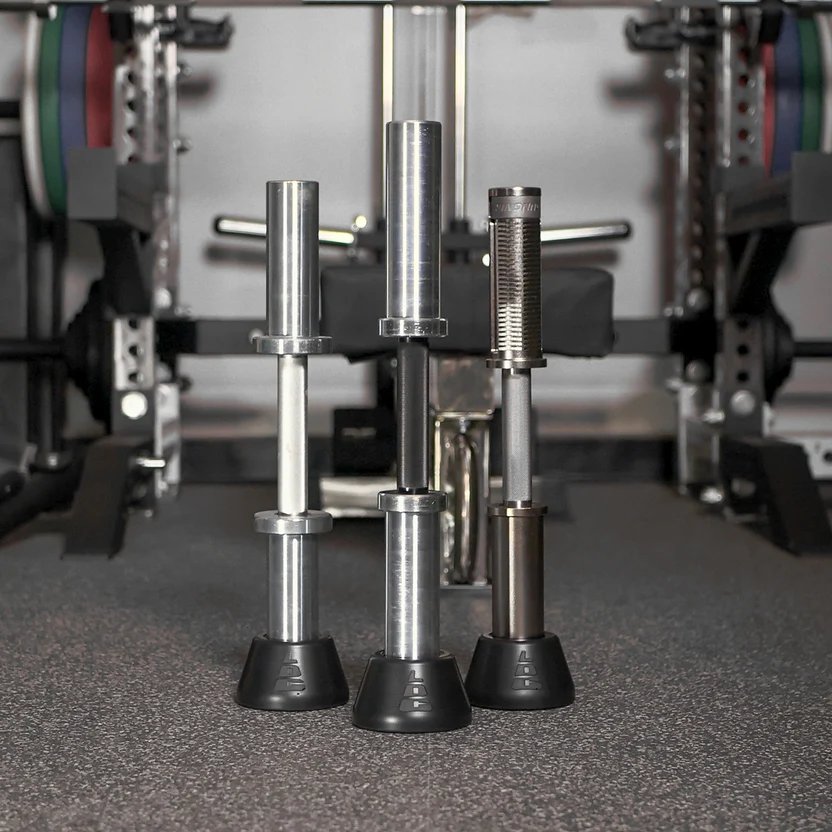
The stated application is Olympic-style loadable dumbbells, with enough exposed sleeve beyond the plates and collars. They are not intended for standard one-inch handles or fixed-weight dumbbells. A catalogue photograph showing a cushion on an empty handle cannot establish the fit of your fully loaded setup.
Start with the combination you actually use: handle, plates and the required retention hardware. Secure the plates as instructed by the handle manufacturer. Then examine the remaining sleeve. If fitting the cushion requires removing a collar, leaving the retention device partly engaged or reducing its purchase on the sleeve, the combination is unsuitable.
Two handles described as Olympic loadables can offer substantially different loading space. For example, the Rogue DB-10 and DB-15 list 3.625 and 6.75 inches of loadable sleeve respectively. That difference explains why the same plate-and-collar stack can leave room on one handle and crowd another. It is not a guarantee that either particular configuration fits this cushion.
Plate thickness matters alongside total weight. Several small plates can occupy a different amount of sleeve from a more compact combination giving the same load. Record the actual stack rather than assuming that a certain number of kilograms predicts clearance. Ask for a configuration-specific fit check if the remaining engagement is uncertain.
Rehearse the start and finish with a manageable load
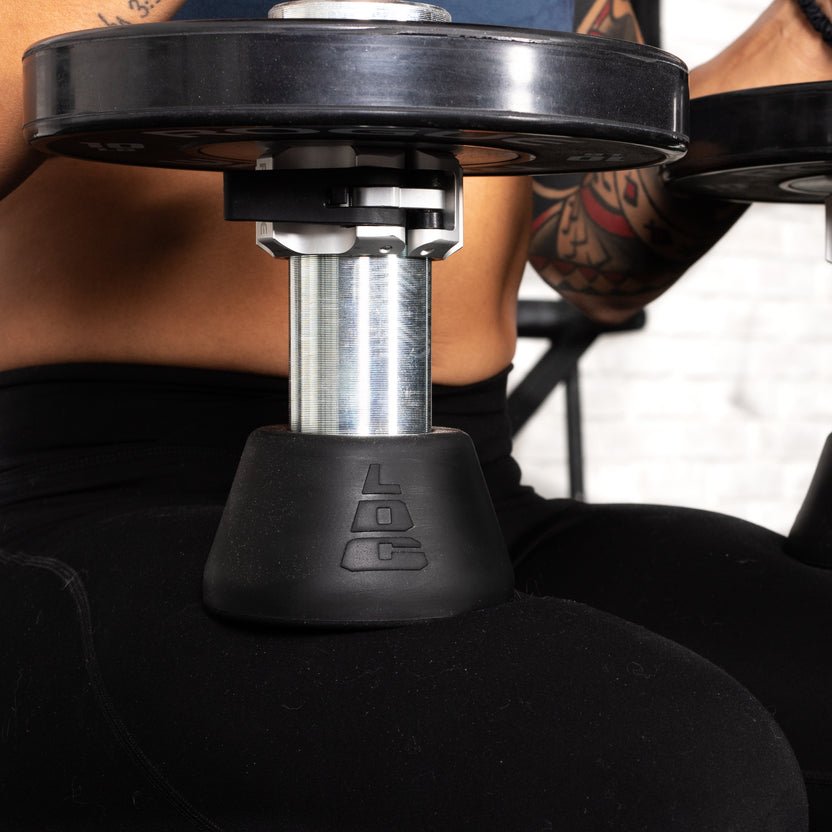
A useful first trial is deliberately undramatic. Fit the cushions to a lightly loaded, properly secured pair, check their seating and practise bringing the dumbbells to your thighs. Notice whether the contact feels centred and whether either cushion shifts or rolls as you change position.
Do not make the first attempt with a weight you can barely press. You are checking an unfamiliar contact surface and the transition into the exercise. Being strong enough for a repetition does not necessarily mean you can organise the preceding movement consistently.
The finish deserves equal attention. Before starting, know where the dumbbells will go when the set ends. Leave enough space around the bench and keep the return within your control. If your only planned finish depends on throwing the weights away, the accessory has not made the complete exercise manageable.
Bench position can change the transition. Flat, incline and seated pressing put your torso in different orientations relative to your thighs and hands. Rehearse the actual position you intend to use rather than assuming a successful flat-bench setup automatically transfers to a more upright press. Keep the bench stable and clear of surrounding equipment.
A spotter or coach can help assess an awkward setup, but the cushion itself is not spotting equipment. Reduce the load or choose a more manageable exercise when the transition remains the limiting factor. The purpose of the rehearsal is to discover that before fatigue makes the return less predictable.
Compare dumbbell designs without confusing compatibility
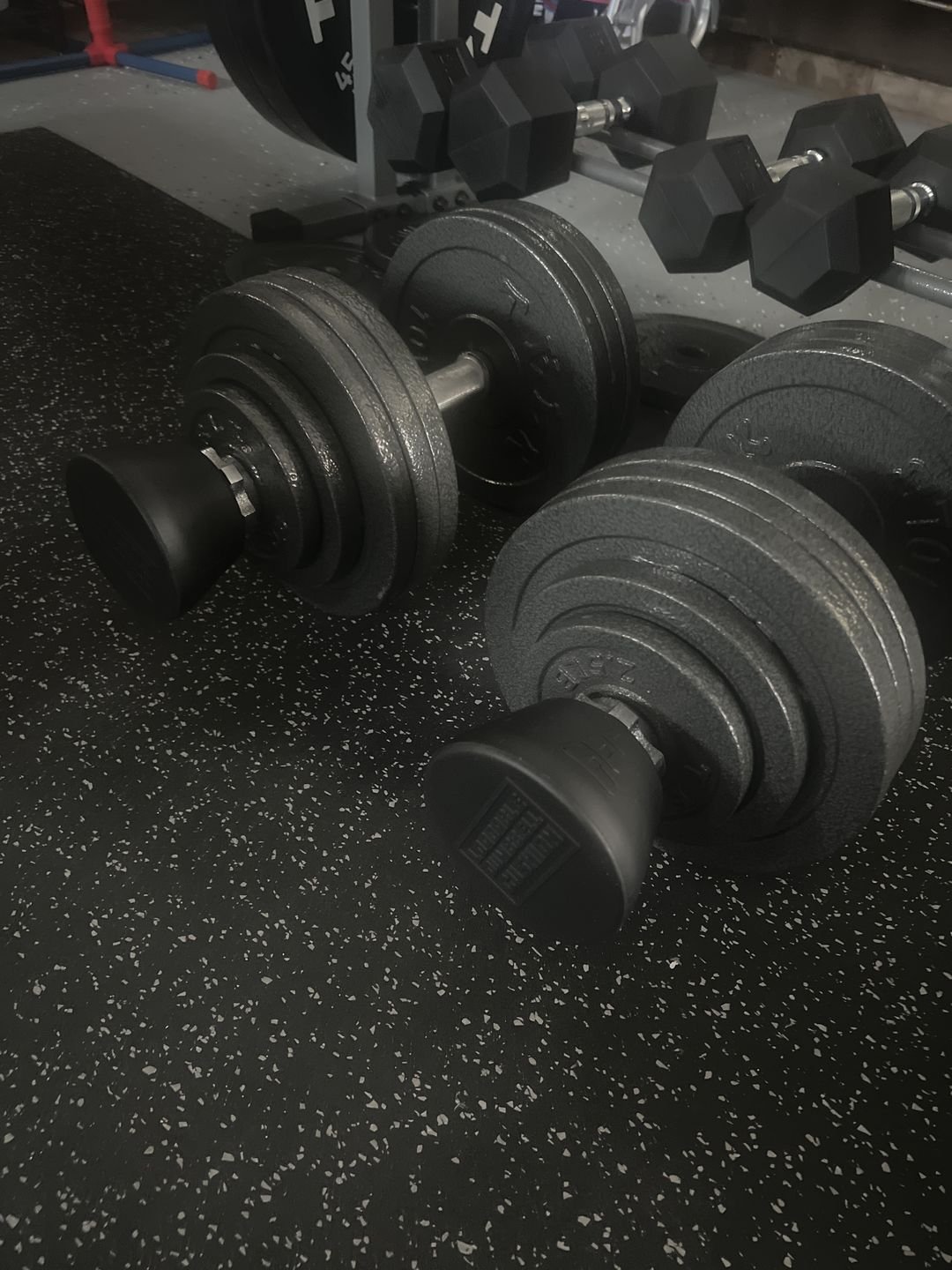
Loadable does not describe one universal construction. Some handles use separate collars; others use integrated locking systems. The Gungnir Dumbler Olympic, for example, uses built-in SlideLocks and separately lists overall sleeve length and loadable sleeve length. Those measurements should not be treated as interchangeable amounts of spare space.
Other adjustable dumbbells use a different arrangement altogether. Ironmaster Quick-Lock dumbbells have flat ends and their own locking-screw system. An accessory intended to cover an exposed Olympic sleeve should not be assumed to fit them merely because both products allow weight changes.
Fixed-weight dumbbells introduce another distinction. Their shape, handle feel and transition between exercises can matter even though there is no sleeve to load. Our guide to rotating versus fixed Eleiko Evo handles explores a separate design question; rotation is not the same feature as adjustability or end cushioning.
These comparisons are useful when choosing a system, but they are not reasons to replace equipment that already works. Identify whether your obstacle is weight increments, loading time, thigh contact, grip feel or overall handling. A solution to one of those problems may leave the others unchanged.

Bodybuilding Shirts & Workout Gear
Bodybuilding shirts, tanks and gym gear for lifters chasing muscle, size, symmetry and the pump.

Dumbbell Meme Shirt – Essential & Gymbros Seeking T-Shirt
Make gym days more fun with “Dumbbell Gym Meme” style.

Dumbbell Heartbeat Decal for Water Bottles Laptops Gym Sticker
Bring “Dumbbell Heartbeat” attitude to your water bottle or laptop.


I Love Bench Press | Heart Weight Plate Hooded For Ches Hoodie
Keep it laid-back with a little “I Love Bench Press” attitude.


Live Love Lift Crewneck Pullover Sweater Workout Gymbro T-Shirt
For laid-back days and gym-girl humor: “Live Love Lift”.

Liftionaire Money Barbell Meme Workout Bodybuilding Pow Hoodie
Keep it laid-back with a little “Liftionaire” attitude.

Bench Press and Chill Funny Gym T
Make gym days more fun with “Bench Press and Chill” style.

Heart And Brains Dumbbell Meme : The Ultimate T-Shirt
Make gym days more fun with “Heart and Brains Dumbbell Gym Meme” style.

My Bench Press Is Stuck Tee
Heavy lifts, good laughs, and a little “My Bench Press is Stuck Funny Horror” energy.
Make the buying decision about your complete setup
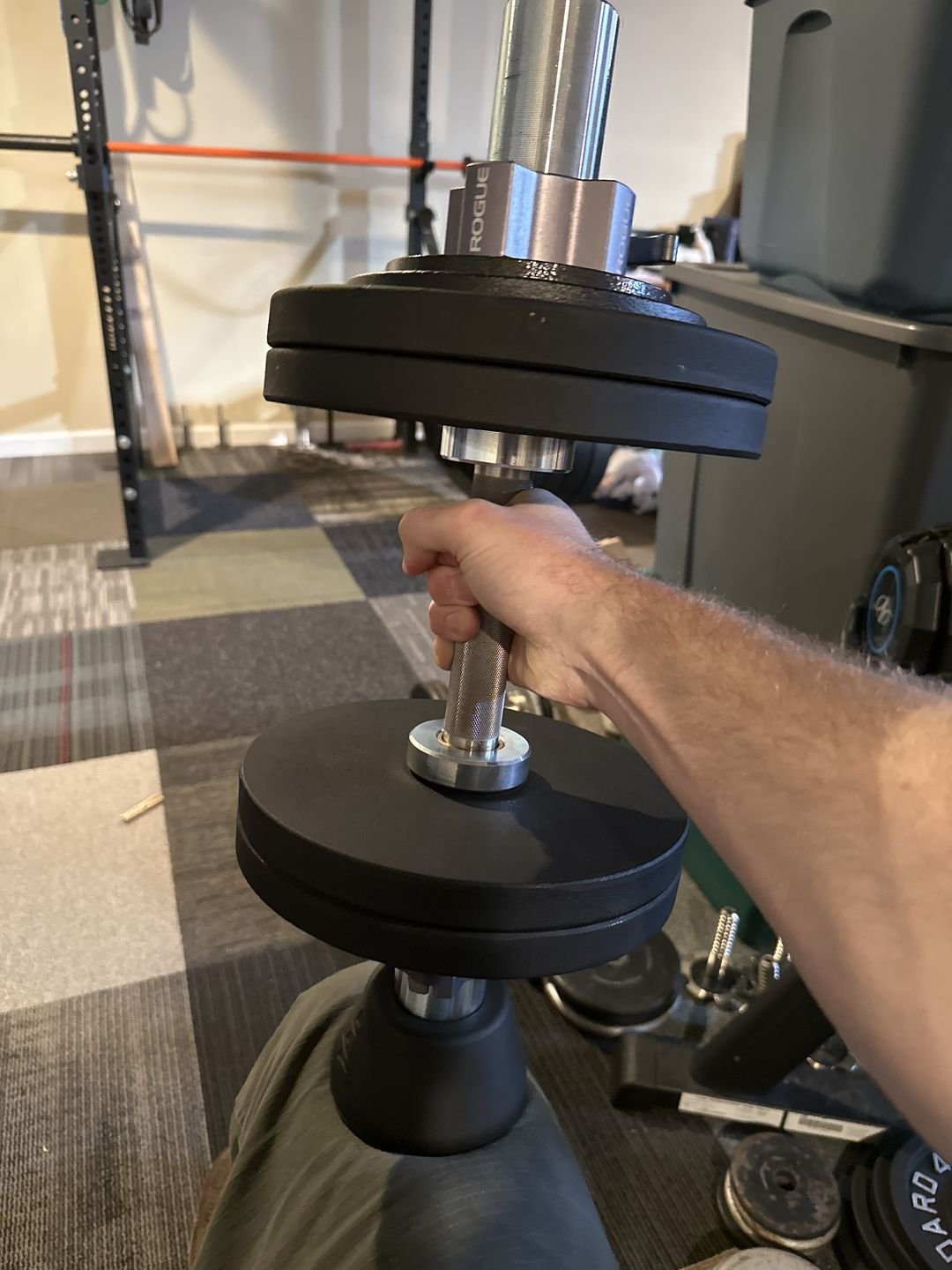
The strongest case for these cushions is straightforward: you already use compatible Olympic loadable handles, your normal plate-and-retention setup leaves sufficient exposed sleeve, and metal-to-thigh contact is the specific inconvenience you want to address. That is a more useful buying rationale than expecting an accessory to transform pressing performance.
Make a short checklist before ordering. Note the handle model, plate combination, collar or locking system and the remaining sleeve space. Include the heaviest configuration you realistically expect to use. A fit that works only with a much lighter stack may be less useful than it first appears.
Also distinguish the price of an accessory from the cost of changing your entire dumbbell system. A new adjustable pair may offer a different loading process or progression range, but it is a much larger decision. Our adjustable-dumbbell buying checks show why the available weight steps and physical dimensions deserve attention alongside maximum capacity.
After fitting an accessory, keep checking the equipment rather than treating installation as a permanent verdict. Inspect the cushion’s condition, confirm secure plate retention and stop using a combination that shifts unexpectedly or no longer seats properly. Avoid improvising a forced fit simply because the product looks close to the right size.
A small change can be worthwhile when it solves the right problem. For these cushions, that means a more suitable contact surface within an already controlled setup—not permission to remove collars, exceed your handling ability or assume that every adjustable dumbbell shares the same compatibility.