Advertising disclosure: This page includes affiliate product links that may earn us a commission, as well as products from our own store.
Victor Hoffer had a very particular advantage at the 2026 CrossFit Games: he could turn an upside-down obstacle course into an opportunity to take time out of the field. But one spectacular gymnastics performance does not explain an entire competition. The French athlete also had to lift, run, recover between events and keep collecting points when the tests moved away from his best discipline.
His 2026 season offers a useful case study for anyone who wants to become a more complete athlete without surrendering the strength they have already built. The trick is not to reproduce his enormous training volume. It is to borrow the logic behind it: decide which qualities need practice, give each an appropriate dose, and stop treating every training session as a competition.
A breakthrough season built on range
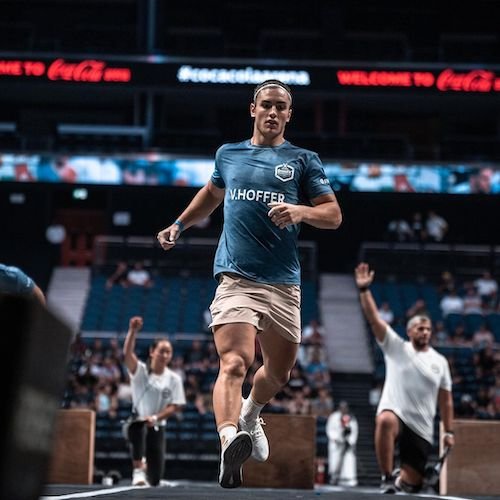
Hoffer moved from a gymnastics background into functional fitness and gradually climbed the competitive ranks. His worldwide Open placing went from 134th in 2023 to 21st in 2024 and 12th in 2026. Those figures reflect different seasons, fields and tests, so they are not a controlled measurement of improvement. They do, however, show that his results became increasingly competitive.
At the April 2026 Mayhem Classic, he qualified for the Games by winning a closely contested men’s division. One of the weekend’s tests combined rope climbing, handstand walking and heavy front squats. That combination illustrates the problem facing a specialist: good balance is helpful, but the legs, trunk and grip still need to keep working after difficult efforts.
At the Games in July, Hoffer finished 14th overall and won the handstand sprint. His success in one event is not evidence that he was the strongest or fittest in every category. It demonstrates the value of retaining a standout skill while raising the floor of the weaker events. In recreational training, that might mean a strong powerlifter learning to run comfortably for twenty minutes, or a runner building enough upper-body strength to perform controlled pull-ups.
Start with three repeatable benchmarks, not a random weekly test of everything. For example, record a comfortable set of five squats at a fixed weight, a strict pulling progression, and a twenty-minute bike ride at an easy effort. Keep the same equipment and conditions when repeating each test. If your squat improves but your bike output falls dramatically at the same perceived effort, you have useful feedback about the balance of your training. You do not need to recreate a Games event to learn that lesson.
Strength that survives the rest of the workout
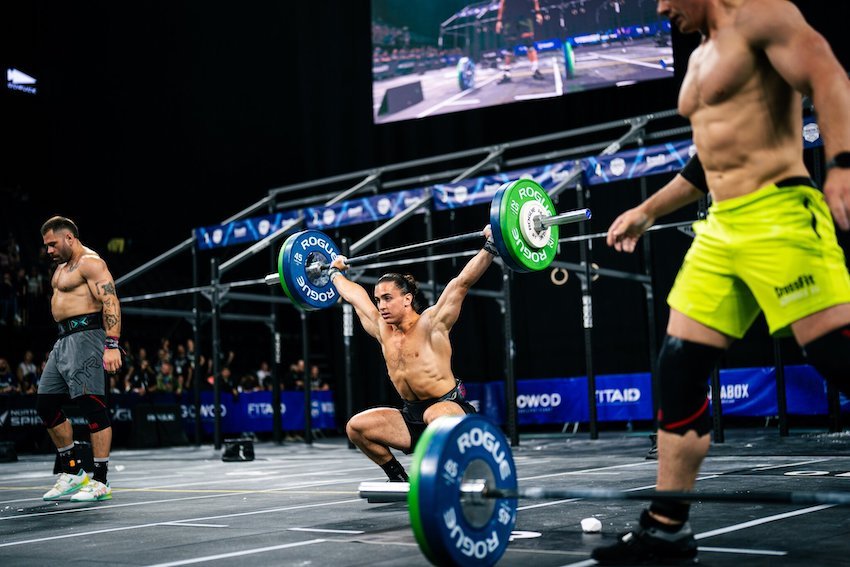
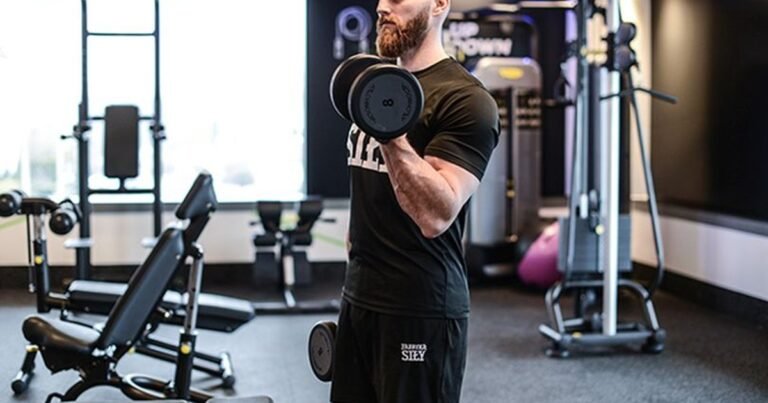
In March 2026, Hoffer described a week of roughly twenty-five training hours, including four strength sessions. His reported program mixed Olympic-style lifting with conventional exercises. That distinction matters because the two approaches solve different problems. A clean or snatch combines speed, positioning and coordination with strength. A conventional squat or press lets you train muscular force and build a larger reserve without making every set a technical challenge.
For a lifter adding functional fitness, the reserve is especially valuable. If a moderate front squat already feels like a maximum effort, performing repeated squats after another task will be difficult. Raising your basic strength can make the same absolute load less demanding. That does not mean heavy lifting alone prepares you for repeated bouts of work. You still need to practise controlled breathing, transitions and efficient repetitions.
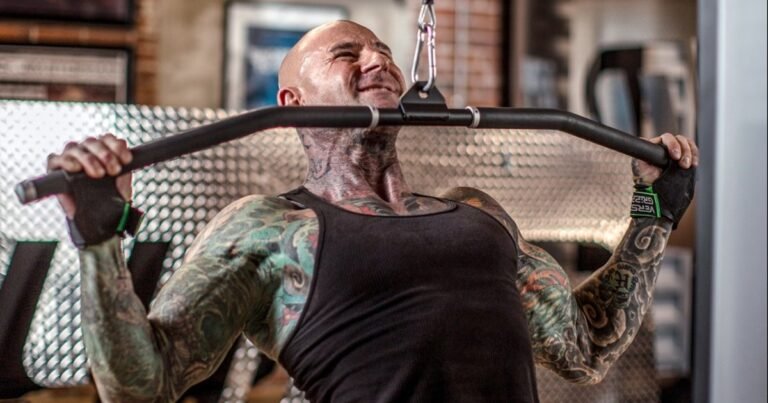
Keep two priorities separate in the gym. First, perform the lift requiring the highest precision while fresh. A lifter learning a clean can practise unloaded bar positions, light pulls and receiving positions with a coach rather than attempting the heaviest possible lift. Second, use conventional resistance work to accumulate manageable sets. Three sets of five squats and three sets of six to eight presses are an entirely reasonable foundation for a session, provided the loads leave several good repetitions in reserve.
Do not make the final strength set a dramatic failure just because a conditioning piece follows. If your legs are exhausted before you start the bike, it becomes difficult to tell whether you are training aerobic fitness or simply tolerating the fatigue from your squats. When strength is the priority, protect the quality of the lifting. When a hard conditioning test is the priority, move the heavy lower-body session elsewhere in the week.

Equipment Worth Exploring
Explore equipment, accessories and gear from our carefully selected range.


Rubber Hex Dumbbells
Rubber-coated hex dumbbell pairs with a stable shape for home and commercial strength training.


Cast Iron Kettlebells
Textured cast-iron kettlebells for swings, squats, carries, and full-body training.

Gymnastics: make skill practice look boring
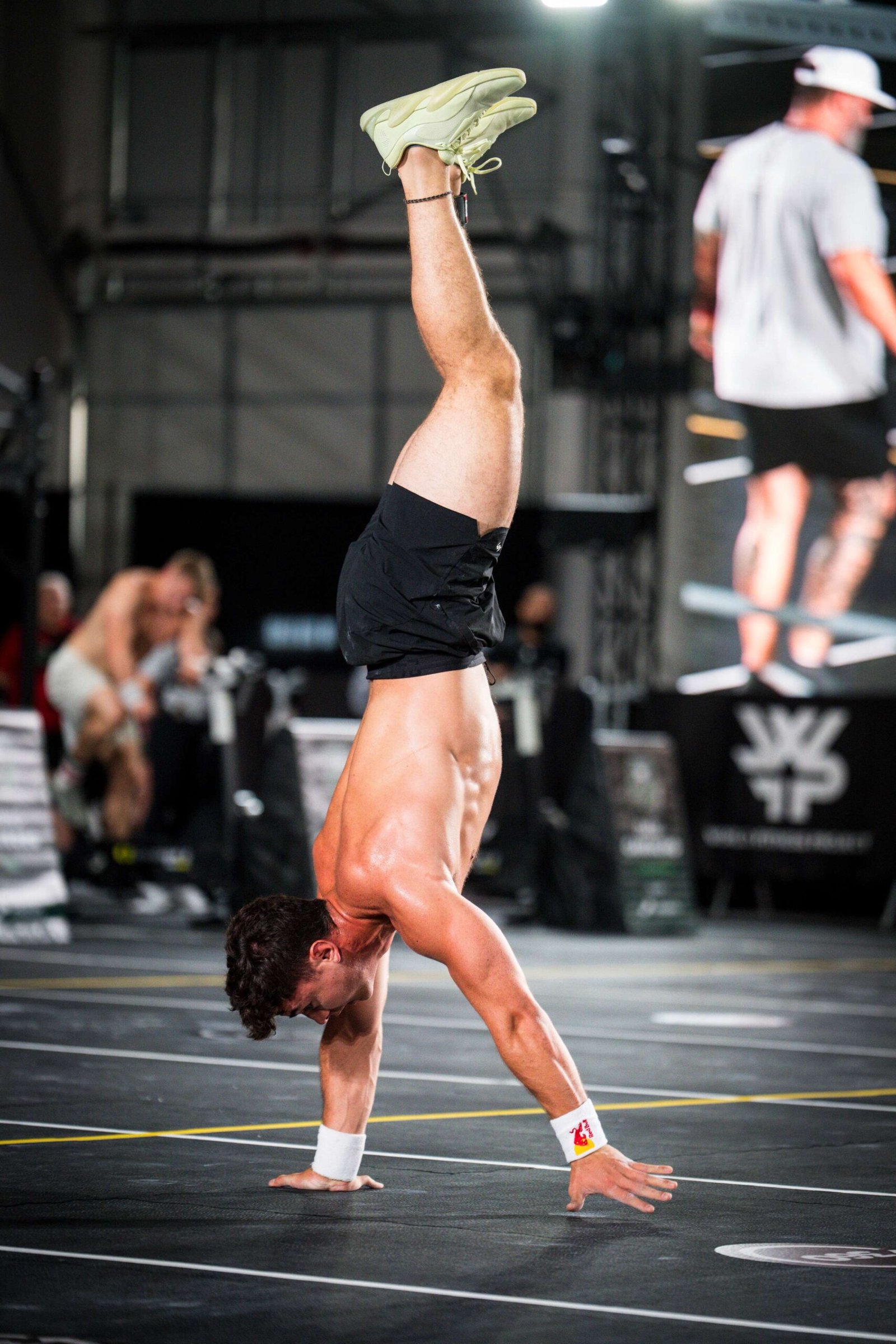
Hoffer’s gymnastics background is a major differentiator. Handstand walking demands far more than the ability to press a bar overhead. The athlete has to transfer weight between the hands, organise the trunk over a moving base of support and recover balance without the normal assistance of the feet. A strong shoulder is useful, but strength is only one ingredient.
Most gym-goers do not have years of childhood gymnastics training behind them. The mistake is jumping straight into difficult inversions or swinging muscle-ups because a competitive athlete makes them look easy. Instead, choose a progression that allows you to practise the position with control. A plank, a pike hold or a supported handstand progression with qualified supervision can be a sensible starting point, depending on experience. Do not work through wrist, neck or shoulder pain, and do not practise unsupported inversions in a crowded space.
For pulling, a set of controlled ring rows can build the foundation for harder bodyweight work. A band-assisted pull-up or a strict pull-up is a separate progression. If your current goal is a first pull-up, measuring consistent range and gradually reducing assistance is more useful than attempting complicated kipping movements for time.
Allocate ten to fifteen minutes before the main workout for one skill. Rest sufficiently between attempts. End the block when your technique starts deteriorating, not when your arms are unable to support you. Two short exposures each week are easy to fit into a regular lifting schedule and provide a chance to make corrections before fatigue takes over. Progress comes from accumulating successful attempts, not from accumulating spectacular misses. A coach can help distinguish a mobility limitation from a strength or balance issue, which is often much faster than repeating the same failed drill.
The aerobic engine is not a daily race
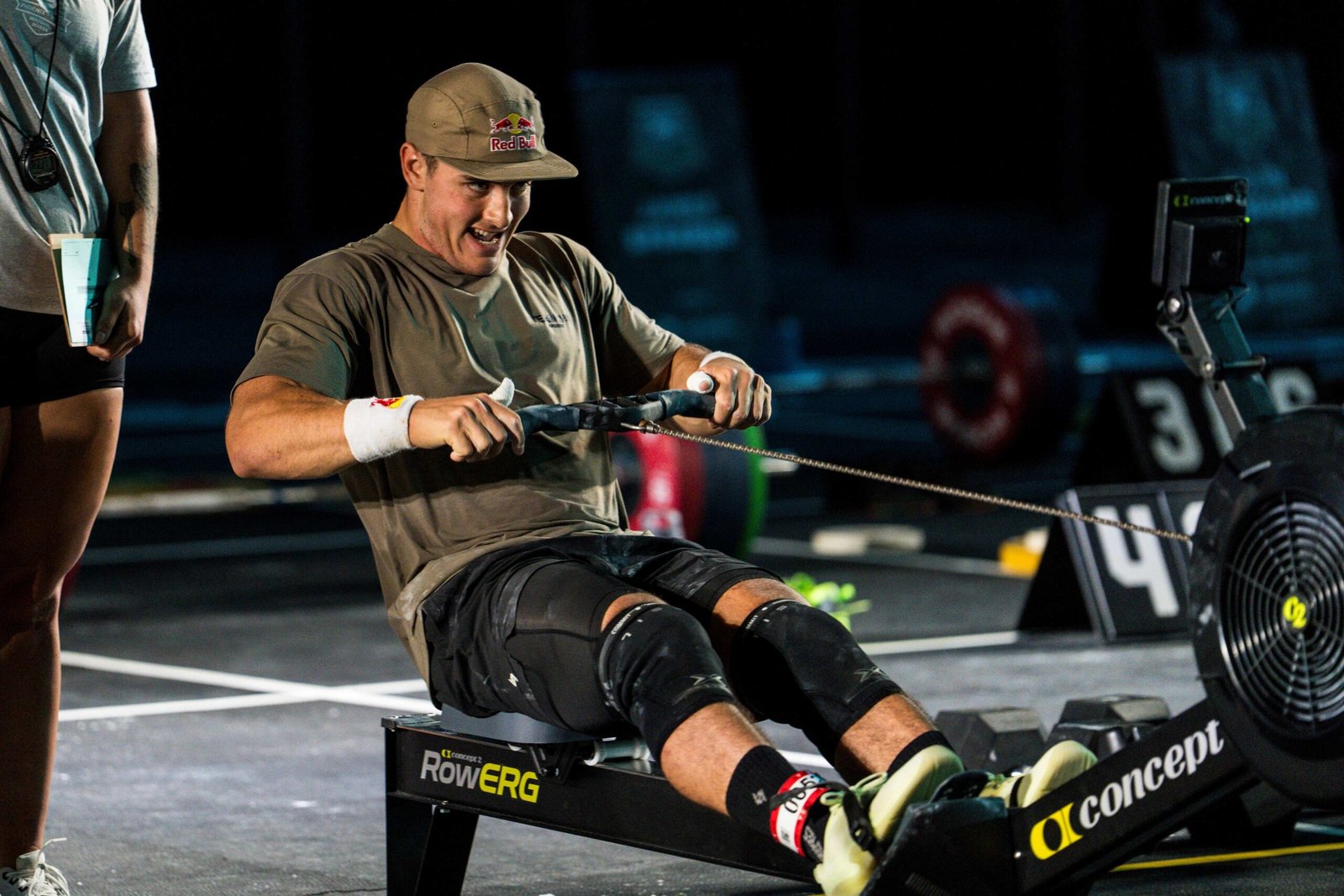
The March training description also included running and longer machine-based endurance work, alongside separate intense competition sessions. The important point is that these are different jobs. An easy row builds the ability to keep working without requiring the same recovery as an all-out interval session. A hard mixed event asks the athlete to manage a high rate of work while the muscles are already under pressure.
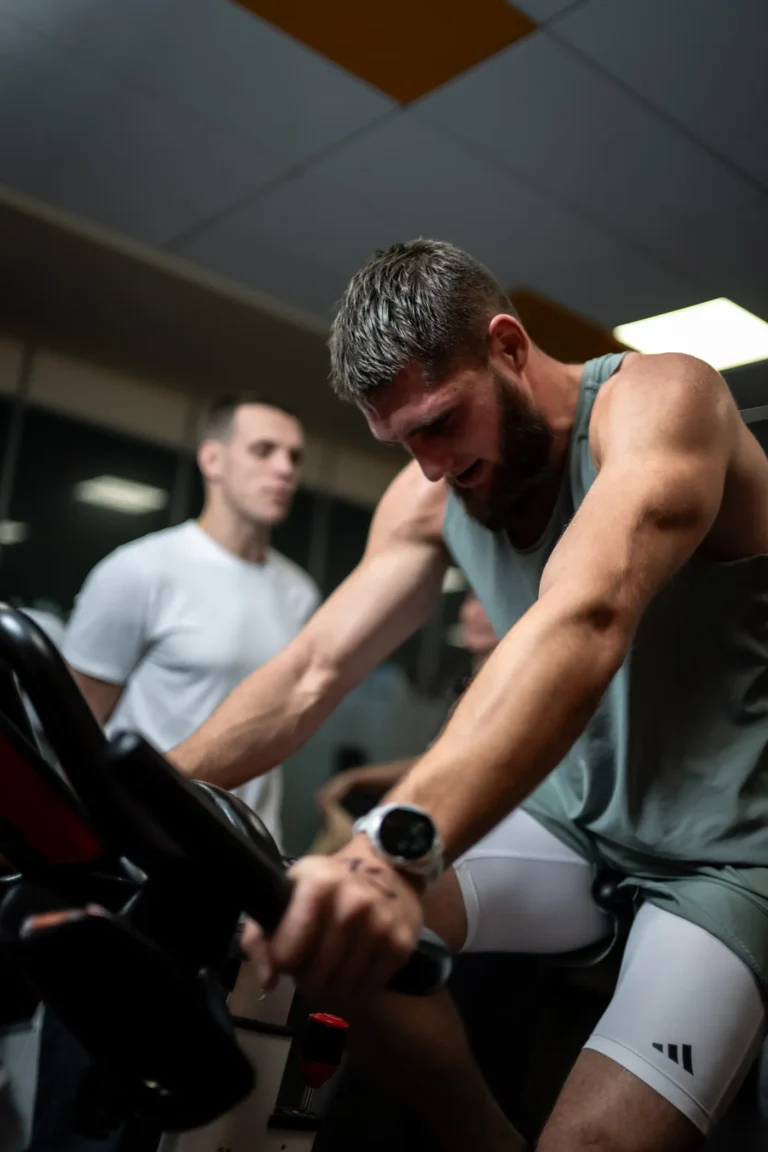
For a recreational lifter, there is no requirement to spend ninety minutes at a time on an ergometer. Begin with twenty to thirty minutes at an effort that lets you talk in sentences. A rower, bike or brisk uphill walk can all work. Pick an activity you can perform consistently, and choose a low-impact alternative if running is currently unfamiliar or uncomfortable.
Research on combining aerobic and resistance exercise suggests the immediate effect on lifting performance depends on the preceding aerobic workload, its intensity, recovery interval and the muscles involved. A long, difficult cycling session immediately before demanding leg work is not the same thing as a short easy ride on a separate day. If lower-body strength is a priority, try putting demanding cardio several hours away or on another day rather than combining the hardest sessions back to back.
Once an easy session becomes comfortable, add a small amount of time rather than increasing both pace and duration. For example, move from twenty-five to thirty minutes at the same conversational effort. If you also want to practise harder conditioning, reserve one short controlled interval session for a different day. Six rounds of thirty seconds of strong but repeatable cycling with ninety seconds easy is one possible starting format for an already active person. It should not finish with a desperate sprint on every interval. Beginners can simply keep building easy aerobic capacity first.
Build a smaller week that you can repeat
The following is an MMP editorial adaptation for an experienced recreational exerciser, not Hoffer’s actual workout schedule. It aims to distribute strength, skill and conditioning across four days, leaving room for recovery and normal life.
- Monday: Front squat or goblet squat, three sets of five to eight; bench press, three sets of six to eight; ring rows, three sets of eight to twelve. Finish with five to ten easy minutes on a bike if desired.
- Tuesday: Twenty-five to thirty minutes of easy rowing or cycling. Spend ten minutes practising a suitable low-risk gymnastics progression while fresh, before the cardio if balance is the priority.
- Thursday: Romanian deadlift, three sets of six to eight; overhead press, three sets of six to eight; strict pull-up progression, three controlled sets. Practise a second brief skill block before lifting if appropriate.
- Saturday: Warm up thoroughly, then use short controlled intervals on a machine. Alternatively, perform three to four easy rounds of five goblet squats, six elevated push-ups and one minute of cycling, resting between rounds. Select movements that you can control. This is a conditioning practice, not a contest.
In week one, find loads and durations that leave you feeling able to train again the next day. In week two, add a small amount of resistance or a repetition to selected strength sets, not both everywhere. In week three, extend the easy aerobic session by five minutes if recovery is good. Week four can maintain those workloads or reduce them slightly if you feel unusually tired. Repeat the three original benchmarks once you have recovered, rather than testing them at the end of a hard circuit.
The most useful measure of the program is whether you can sustain the work and improve something you care about. Track sleep, unusual soreness and whether your usual warm-up weights feel unexpectedly difficult. If multiple indicators deteriorate for several sessions, reduce the conditioning workload or strength volume before adding another session. Eat enough to support the activity and make the rest days actual rest days. Hoffer’s example is compelling because of the combination of skills he has developed; you can apply the same principle at a fraction of his volume, without measuring yourself against an elite athlete’s timetable.

Functional Fitness Shirts & Workout Gear
Functional-fitness shirts, tanks and workout gear for athletes who train strength, conditioning and everything in between.

CrossFit Carrying Cross Tee
Heavy lifts, good laughs, and a little “CrossFit Jesus Christ Carrying Cross” energy.

Hybrid Athlete – Strength & Endurance Gym Decal for Run Sticker
Put “Hybrid Athlete” gym humor on your laptop, bottle, or gym gear.


Burpees Bad Breaking Bad Shirt – Meme & Cardio Haters T-Shirt
Show some cardio attitude with a playful “Burpees Bad Breaking Bad” tee.

Vive La Resistance Bands – Resistance Bands Warmup Reha Tank Top
Your gym-day look, with a playful “Vive La Resistance Bands” twist.

Live Love Lift Crewneck Pullover Sweater Gymbro Workout T-Shirt
Keep things casual with a little “Live Love Lift” attitude.

Gym Is My Happy Place Happy Kettlebell Emoji Decal Sticker
Give your everyday gear a playful “Gym Is My Happy Place” twist.

Pancake Kettlebell – Breakfast Gains Meme Hooded Pullov Hoodie
Show off your lifting humor in a laid-back “Pancake Kettlebell” hoodie.

Lift Together Grow Stronger for Workout Partners and Li Hoodie
Show off your powerlifting humor in a laid-back “Lift Together Grow Stronger” hoodie.