Advertising disclosure: This page includes affiliate product links that may earn us a commission, as well as products from our own store.
The GORUCK Rucker 5.0 makes a familiar promise: put purposeful weight in a purpose-built backpack and go walking. The useful buying question is more specific. Does its fit, plate storage and handling solve a problem your current setup actually has?
This is a specification-based guide to the current 5.0, rather than a hands-on MMP review. Its two headline changes are a larger lumbar pad and magnetic internal storage pockets. Neither tells you how much weight you should carry. Separating the pack’s design from the workout makes both decisions easier.
Start with what the 5.0 actually changes
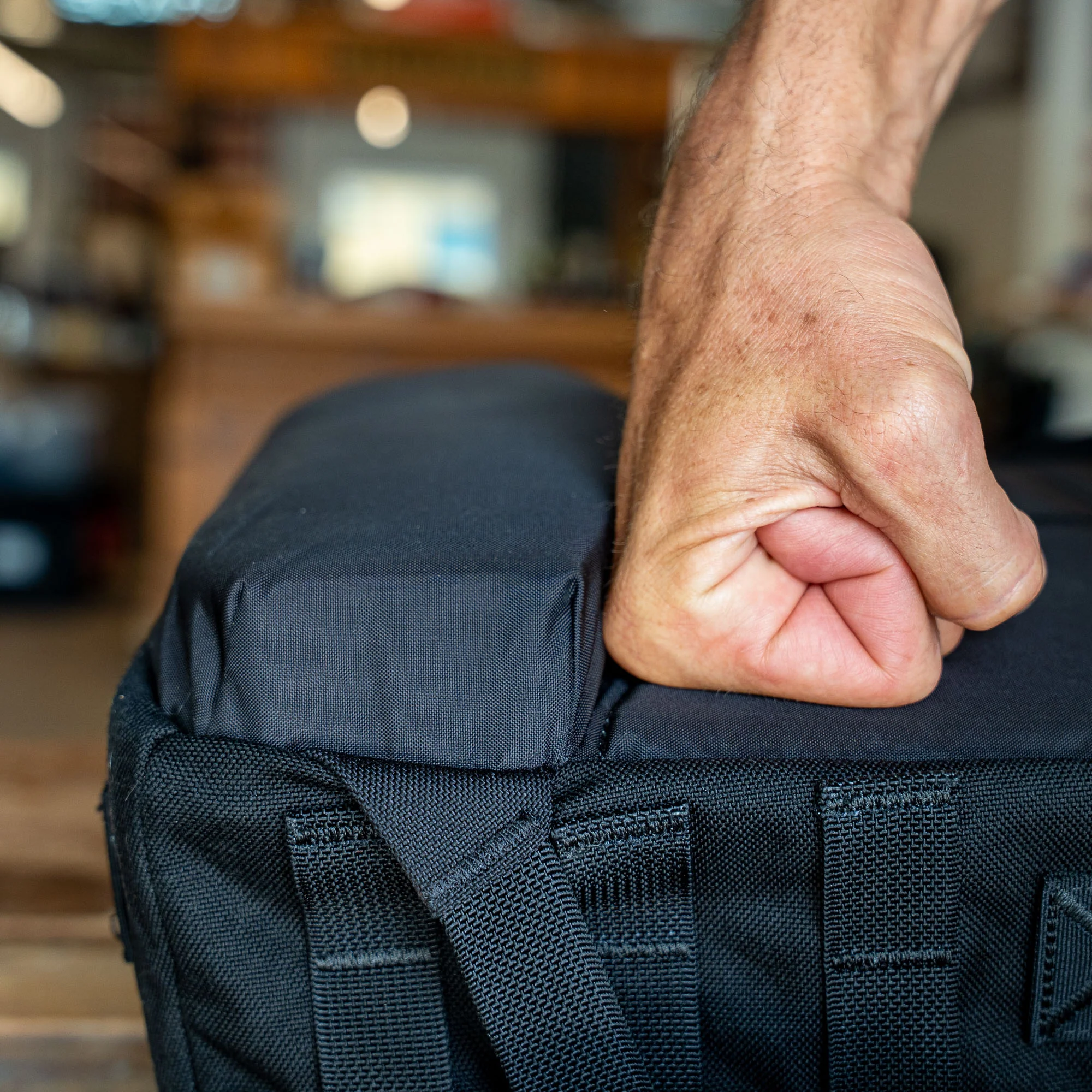
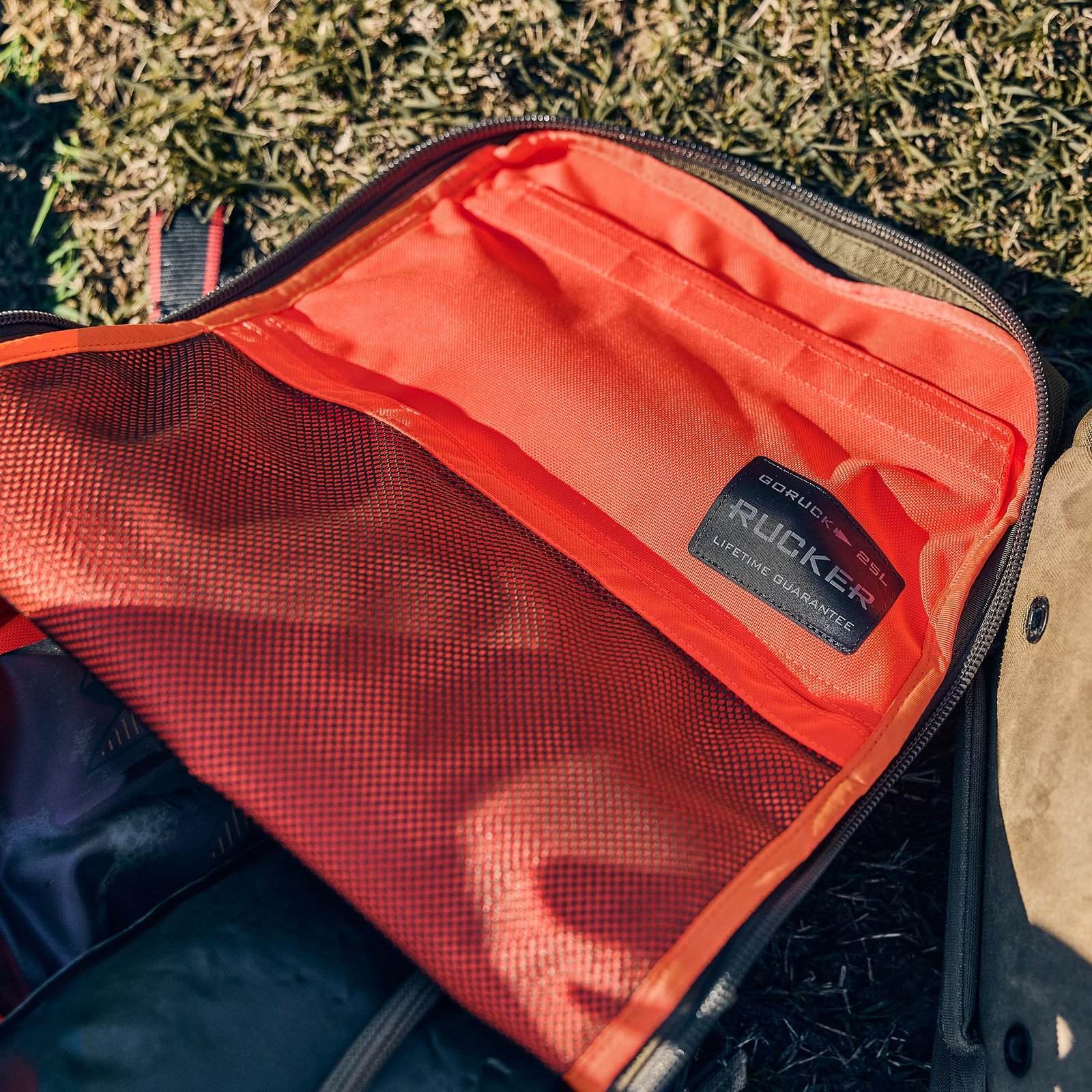
The enlarged lower-back pad is the most obvious physical change. GORUCK specifies 30 mm of high-density EVA foam there. The other headline addition is magnetic closure for internal storage pockets. Those pockets organize smaller belongings; they should not be confused with the dedicated weight-plate compartments.
That distinction matters when you look at an open-pack photograph. A quick-access storage flap and a plate-retention system perform different jobs. The first helps you reach a phone or small item. The second needs to keep a dense training weight where it belongs while you move. Buying because the storage feels convenient still leaves the plate-fit check to do.
More padding is also a design choice, rather than proof of a better result for every back. It changes the contact surface. Whether that contact feels supportive, intrusive or simply different depends on your torso, clothing and adjustment. A bigger pad cannot compensate for a bag that sits poorly on you.
If you own a comfortable previous-generation pack, begin with the irritation you want to remove. Difficult pocket access is a different complaint from shoulder pressure, pack movement or limited room for clothing. The upgrade is easier to judge when it answers one concrete problem. Without that problem, a revised feature list alone gives little reason to replace working equipment.
Choose 20L or 25L by fit before storage ambition
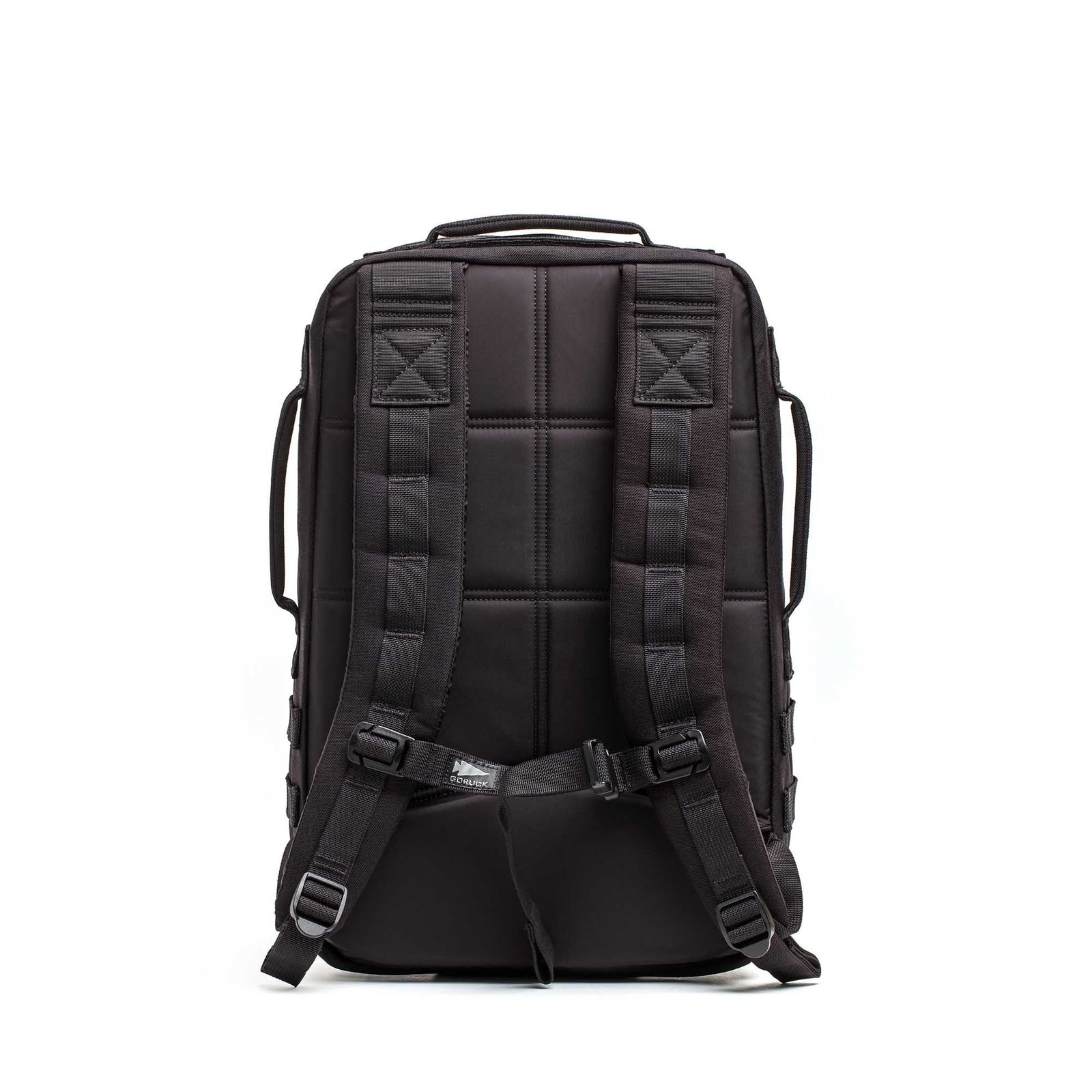
The two sizes differ in more than capacity. Listed dimensions are 11.5 × 18 × 5.5 inches for the 20L and 12 × 20 × 6.75 inches for the 25L. The manufacturer’s torso guide spans 17.5–19.25 inches for 20L and 19 inches upward for 25L. Treat the overlap as a reason to compare, rather than a precise universal boundary.
Measure torso length using the size guide’s landmarks instead of guessing from trouser size. Two people of the same standing height can have different proportions. The bigger number on the capacity label does not automatically mean the better fit for someone who wants to train seriously.
During a fitting, use the clothes and modest load you expect to walk with. Check whether you can adjust the straps comfortably, swing your arms normally and look around without a constant urge to reposition the bag. A pack that seems unobtrusive while empty can feel different once its plate pockets are loaded.
Storage still matters, but be specific about what must fit. A short local walk and a day that includes spare layers have different packing requirements. Write down the actual kit rather than purchasing empty space for an imaginary future outing. If your main uncertainty concerns the style of load carriage itself, our comparison of rucking and weighted-vest walking explains the broader choice before you commit to a particular bag.
Bring the plate you already own into the comparison too. Its footprint, the room left for belongings and the bag’s position on your back all belong in the same fitting. Deciding on capacity first and checking compatibility after ordering reverses the useful sequence.
Plate pockets set the load position, not your starting weight
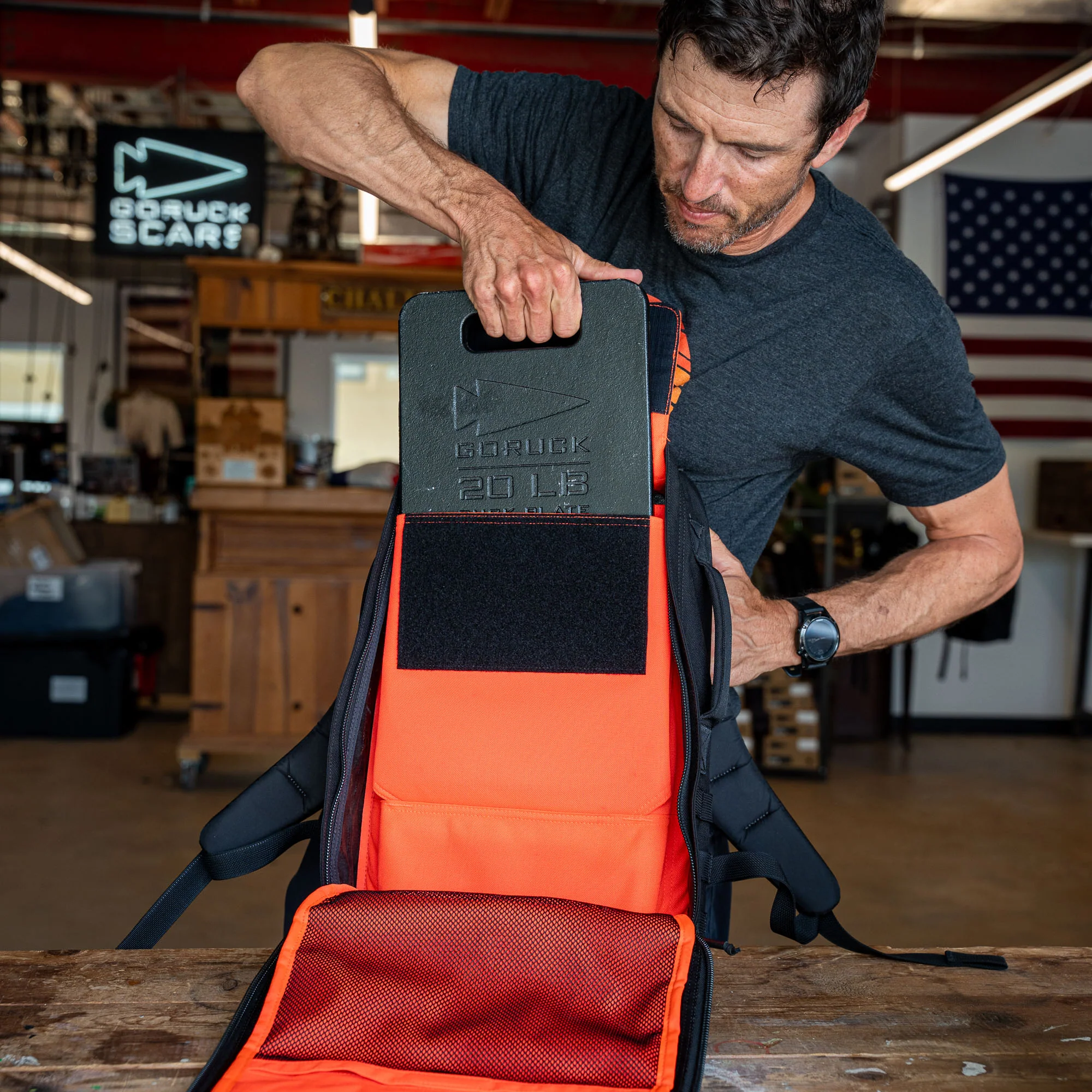
The Rucker has two elevated plate pockets. Its shorter pocket accommodates Standard plates, while its longer pocket accepts Long plates as well. GORUCK lists up to 75 lb of combined plate capacity. Check the dimensions and closure of the actual plate-and-pocket combination before assuming an existing weight will fit.
Capacity answers an equipment question: what the design can accommodate. It does not answer a training question: what makes sense for your first walk, your current weekly workload or the route ahead. An impressive maximum is particularly easy to misread when a product is marketed around hard training.
Count the complete carried load. Plates, the bag itself, water and other belongings all contribute. If one outing includes extra water or a jacket, the same plate selection no longer means the same total mass. A simple packing note makes comparisons between walks more honest.
Secure weight also feels different from a dense object shifting inside an ordinary bag. Inspect how the plate is retained, whether the closure is fully engaged and whether loose items can move around it. Do this before setting off, rather than trying to solve a packing mistake halfway through the route.
Keep route conditions in the decision. Stable pavement and uneven ground present different balance demands. A fixed elevated pocket is a design feature, not a guarantee that every terrain becomes appropriate with extra weight. Our guide to pack weight and terrain for lifters provides the wider training context; this model guide is about choosing and fitting the equipment.
Storage and handles are useful only if they suit your sessions
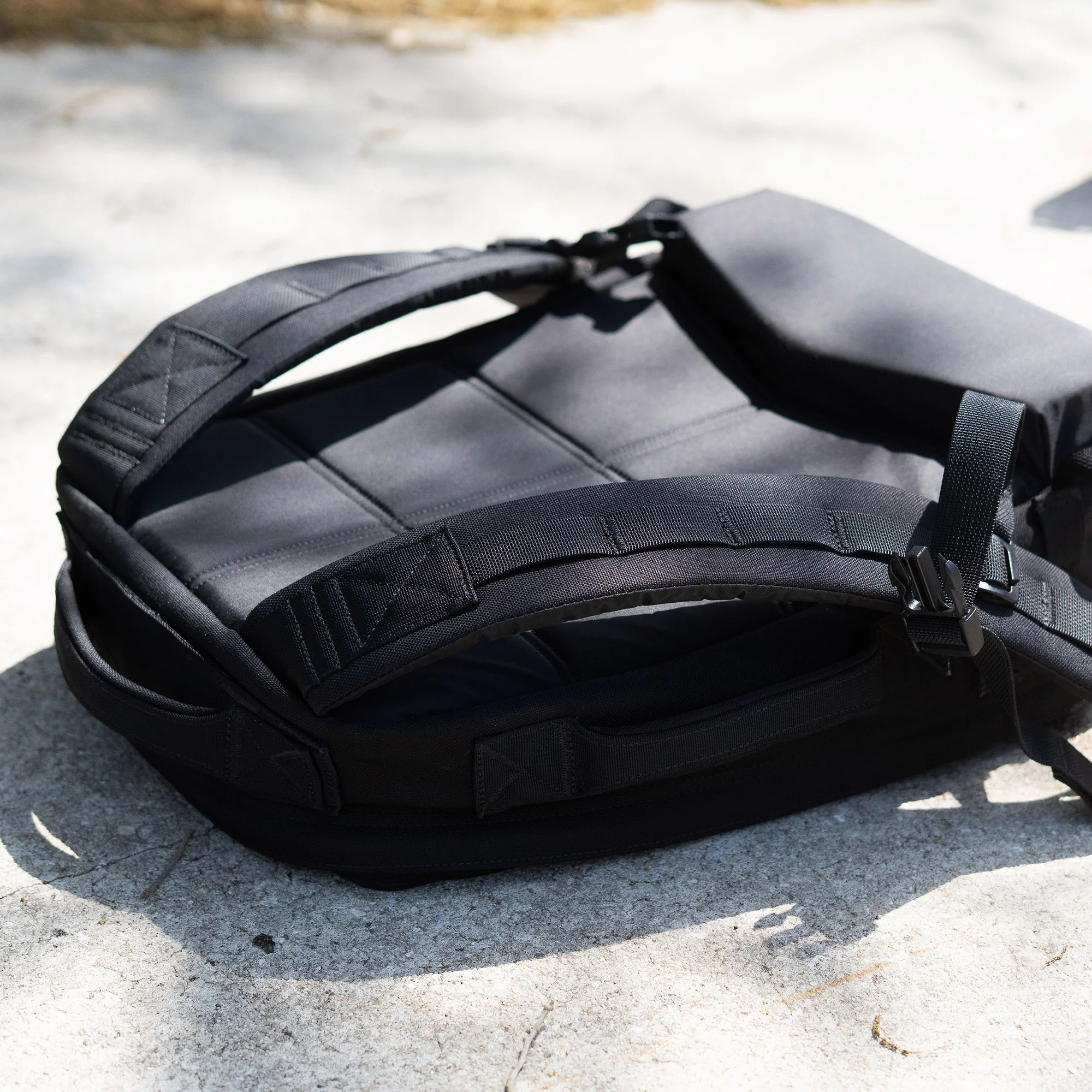
Four padded handles provide several ways to pick the Rucker up. Together with its internal frame sheet, they broaden its appeal beyond carrying belongings on a walk. That does not mean every owner needs to turn the bag into a workout implement.
For a walking-only buyer, accessible storage and straightforward loading may matter much more than exercise versatility. Think about the sequence you repeat: pack the weight, organize small items, put the bag on, walk, take it off and empty it. A feature earns its place when it removes friction somewhere in that sequence.
For someone considering floor exercises or repeated pickups, examine how the loaded bag behaves before building a circuit around it. A compact backpack has a different shape and handling from a sandbag or kettlebell. The presence of a handle does not make those implements interchangeable, and an awkward movement is not automatically useful just because it looks demanding.
Keep small electronics and valuables separate from decisions about rough handling. Convenient storage is not the same thing as impact protection. Likewise, water resistance should not be read as a promise that belongings stay dry during submersion. Match your packing precautions to the conditions rather than extrapolating from rugged-looking photographs.
The most sensible feature comparison is therefore personal and fairly plain: which pockets will you use, which handles will you use, and what will you carry? If the answers remain vague, spend more time defining the session before spending more money on equipment.
Make the first outing a fit check, not a capacity test
Start by making the setup easy to evaluate. Use a familiar, uncomplicated route and a manageable load. Notice the bag’s movement, any rubbing and whether you keep adjusting the straps. The purpose of this first check is to learn how the configuration behaves, rather than prove that you can fill every pocket.
A useful log can be short: complete bag weight, route, time, clothing and the point where anything became uncomfortable. That information is more actionable than simply writing “hard.” It helps distinguish a packing problem from an outing that was too demanding.
Repeat the same easy route after a small adjustment before judging that adjustment. Changing the shirt, strap setting and packing arrangement simultaneously can conceal which change helped. The aim is a repeatable setup that needs little attention while you walk.
Change one major variable at a time when comparing setups. Increasing weight, distance and terrain difficulty together makes it harder to understand what changed. Rapid increases in loaded-walking demands can also increase injury risk. A pack designed for heavy use does not remove the need to build tolerance gradually.
Rucking belongs within the rest of your training week. Loaded walking, resistance training and unloaded aerobic work can complement one another; repeatedly adding hard carries on top of already demanding leg sessions is a different proposition. Persistent pain, tingling or numbness deserves attention rather than tighter straps and more determination.
Choose the Rucker 5.0 if its fit and organization make the activity you intend to do easier to repeat. Choose the size around your torso and actual kit. Choose the load around your present ability and route. Those three decisions are more valuable than treating a new lumbar pad, a magnetic pocket or a high capacity rating as a shortcut to better fitness.

Cardio Shirts & Workout Gear
Cardio and conditioning gym gear for runners, endurance athletes and anyone who earns the sweat.

Anti Hiking Hiking Hiking Club Shirt – & Meme Top T-Shirt
Heavy lifts, good laughs, and a little “Anti Hiking Hiking Hiking Club” energy.

Anti Walking Walking Club Shirt Gymbro Meme Lifting T-Shirt
Bring “Anti Walking Walking Club” humor to your next gym day.

Straight Outta Shape Hoodie
Stay casual and show some cardio attitude with “Straight Outta Shape”.

Exercise I Thought You Said Extra Fries Retro Fast Food Sticker
Give your everyday gear a playful “Exercise I Thought You Said Extra Fries” twist.

Don't Quit Do It – Motivational Workout Vest Muscle Shi Tank Top
Bring “Don't Quit Do It” humor to your next lifting session.

Shirt – Cardio Is Hardio – & Gymbros T-Shirt
Show some cardio attitude with a playful “Cardio is Hardio” tee.

Exercise Your Demons | Cardio Workout From Hell Muscle Tank Top
Add some cardio attitude to training with “Exercise Your Demons”.

Negative Cardio Review 1 Star Sweater Cardio Sucks T-Shirt
Show some gym-day personality with “Negative Cardio Review”.