Advertising disclosure: This page includes affiliate product links that may earn us a commission, as well as products from our own store.
A can of chickpeas can turn an unfinished lunch into an actual meal. It can also become hummus, a crunchy topping or the base of a warm bowl. For lifters, the useful question is what that serving contributes alongside everything else on the plate. Chickpeas provide protein, carbohydrate and fibre together. Treating them as interchangeable with a lean protein food, or treating every chickpea recipe as nutritionally identical, makes meal planning less clear than it needs to be.
Start with the chickpeas you actually eat
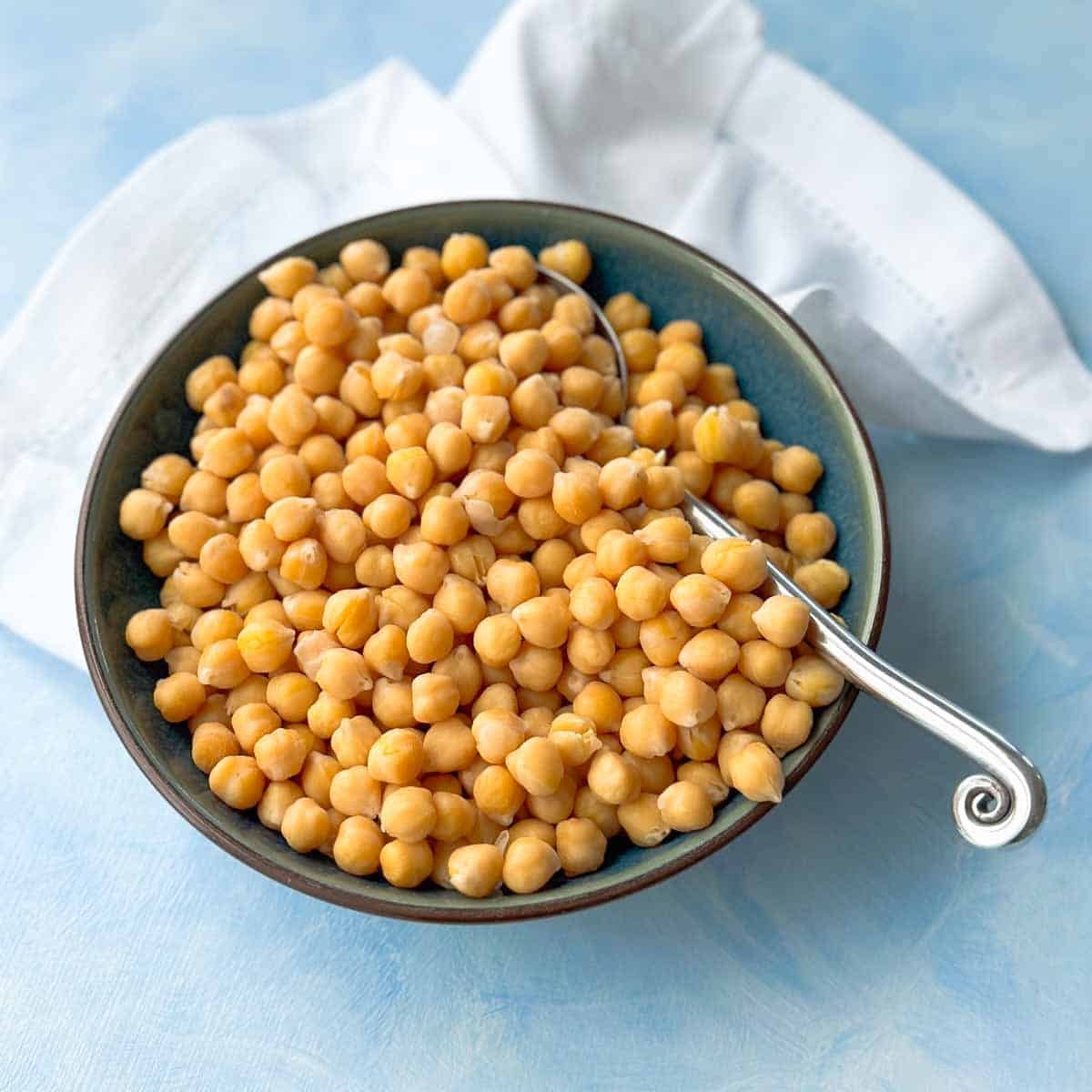
Chickpeas and garbanzo beans are names for the same food. Their nutrition depends partly on the form and the serving being described. Dry beans, cooked beans and drained canned beans contain different amounts of water per equal weight. A number for one form should not automatically be applied to another.
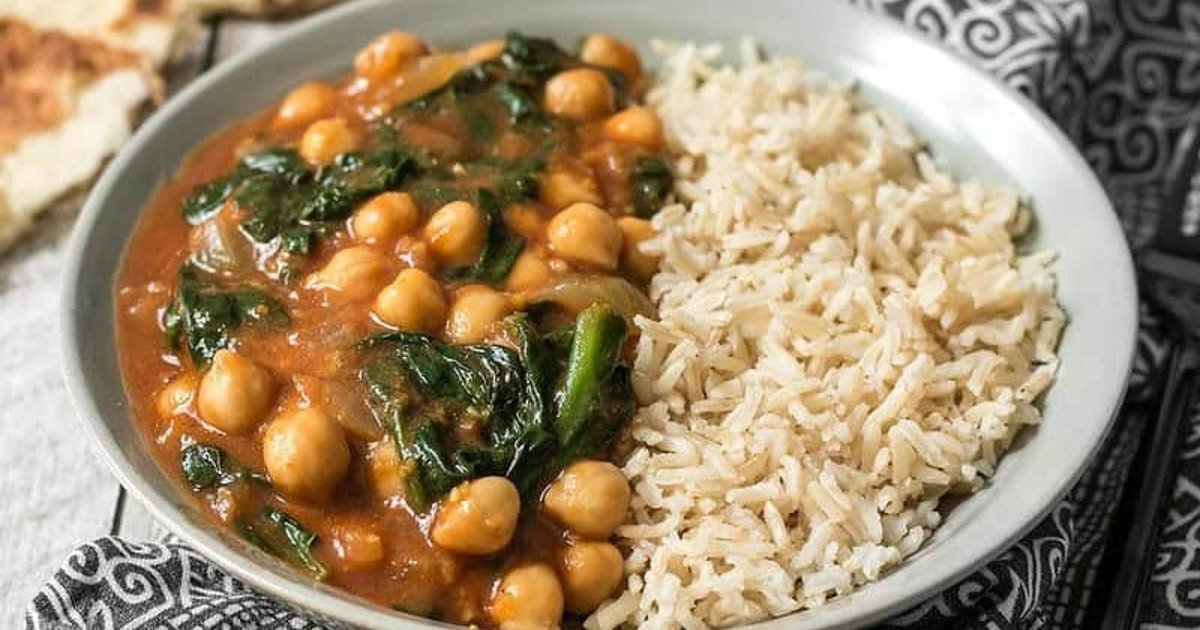
For context, a half-cup reference serving of cooked chickpeas without added salt supplies roughly 7 grams of protein, 22 grams of carbohydrate, 6 grams of fibre and 130 calories. These are approximate reference values, not a measurement of the pictured bowl or a promise about every canned product. Use the label on your own food when making a specific calculation.
This is a mixed contribution rather than a reason to dismiss chickpeas. Carbohydrate and fibre are part of the food you are choosing, not unexpected extras. However, if you want a meal with a particular protein total, establish how much comes from the chickpeas before assuming the rest of the plate is covered.
An invented label makes the arithmetic easier to see. If drained chickpeas list 7 grams of protein per 100 grams, a 150-gram portion supplies 10.5 grams. That example does not define an ideal portion. It simply shows why a can, a cup and a drained weight are different descriptions. Our guide to serving sizes and protein calculations explains the same method across foods.
Before saving an entry in a food app, check its preparation state and units. A familiar name is not enough. Matching the food you measured usually matters more than choosing the entry with the most impressive protein number.
Choose canned convenience or a batch cooked from dry
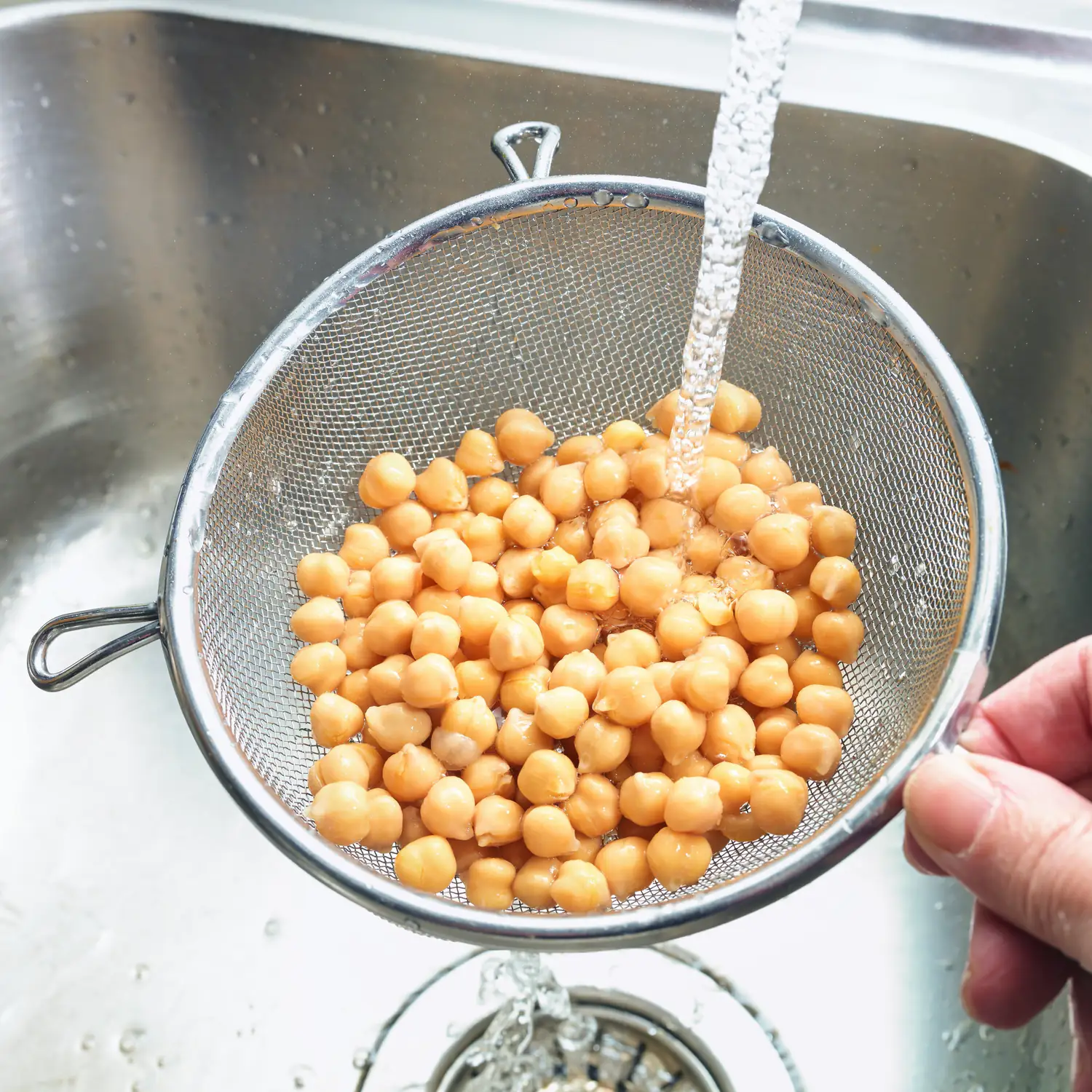
Canned chickpeas are already cooked. Drain and rinse them before adding them to a cold dish or heating them in a recipe. Rinsing can remove some sodium from salted canned beans; choosing a no-salt-added version is another option. It does not make sense to discard a convenient food merely because cooking from dry is also possible.
Dry chickpeas offer a different workflow. Sort and rinse them, soak as directed, then cook in fresh water until tender. Follow the packet or a reliable recipe for the method and equipment you use. Bean age, soaking and cooking conditions affect the time, so a fixed timer is less useful than checking whether the centre is properly softened.
Decide which version suits the day. A can makes sense when dinner needs to happen soon. A larger cooked batch can be useful when you already have time in the kitchen. The cheaper-looking package is not automatically the better purchase if much of it stays unused or the preparation discourages you from eating it.
Compare edible quantities when comparing price. A can’s net weight includes liquid, while a dry bag gains water during cooking. For a practical household comparison, note the drained amount from the can and the usable cooked yield from your own batch. Divide each cost by the amount you will actually eat. Do not assume one universal conversion fits every product.
Keep the process repeatable rather than perfect. Use the same straining method when weighing portions, record whether the label refers to drained food, and reserve any liquid required for a recipe separately. Small differences are ordinary; repeatedly applying a dry-food value to a cooked serving is a much larger avoidable error.
Hummus is a recipe, not plain chickpeas in another shape
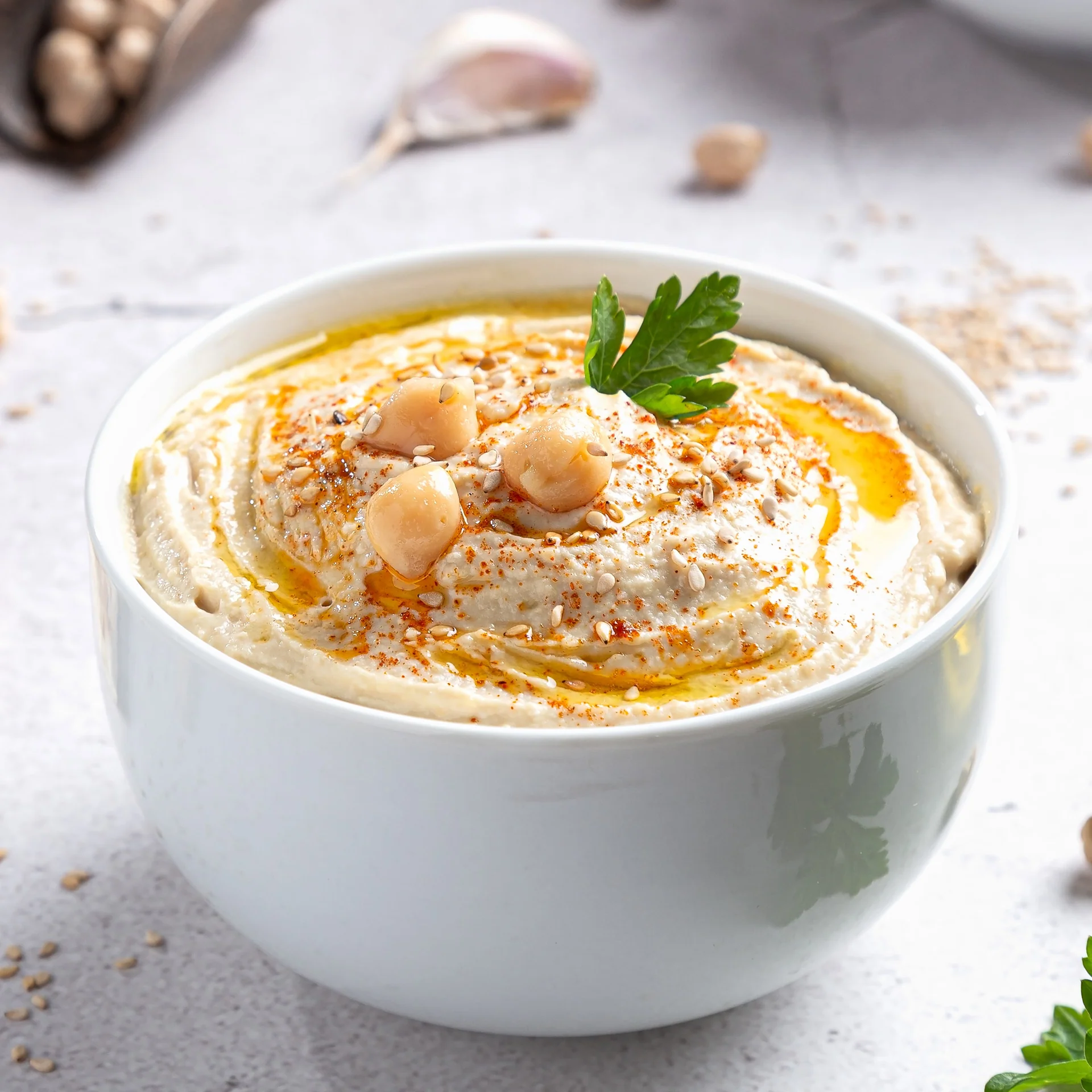
Blending chickpeas changes their texture. Adding tahini, oil, lemon and other ingredients changes the recipe’s nutritional total as well. Hummus can be a useful spread or dip without having the same protein-to-calorie relationship as plain drained chickpeas. Read the finished product’s label rather than importing a plain-bean entry.
For homemade hummus, start with the ingredients and quantities you actually used. Include tahini and oil instead of treating them as invisible blending aids. Added water or cooking liquid changes the final weight and consistency, but it does not multiply the protein already in the mixture.
Consider a hypothetical batch containing 1,000 calories and 30 grams of protein in total. Divided into ten genuinely equal portions, each would supply about 100 calories and 3 grams of protein. These invented figures illustrate division, not the nutrition of the photograph or a tested MMP recipe. A larger serving changes both numbers together.
Choose the role before choosing the portion. A spoonful spread inside a wrap has a different job from a bowl eaten with bread and vegetables. If the meal needs more protein, add another suitable food rather than expecting a small amount of dip to do everything. Our comparison of tofu, tempeh and edamame explores several other plant-food options.
You can adjust flavour and consistency without turning lunch into a nutrition contest. Taste, texture and convenience help determine whether you will use the food regularly. The useful distinction is between enjoying hummus and making a protein claim that the actual portion does not support.
Roasted chickpeas work best as a deliberate topping
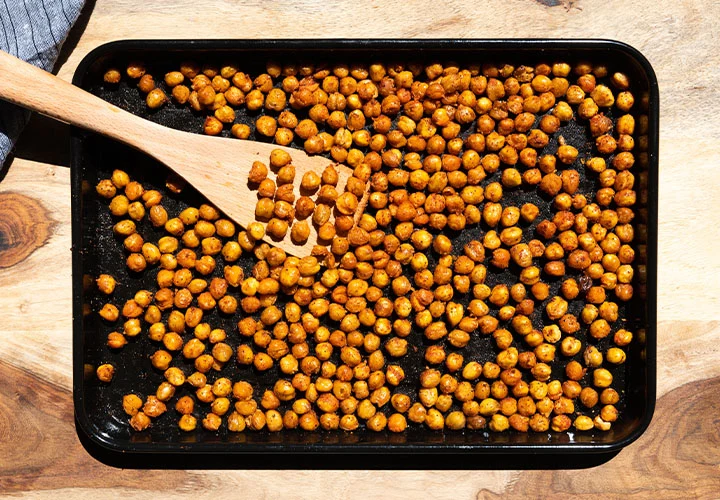
Roasting offers crunch instead of the soft texture of a stew or spread. Start with cooked chickpeas, drain them and dry the surface well. Spread them in a single layer with the oil and seasoning your recipe calls for. Crowding the tray or leaving the beans wet makes crispness harder to achieve.
A practical starting point is a hot oven around 200 degrees Celsius, with regular checking and turning as they colour. Exact time depends on the oven, quantity and how dry the chickpeas were. Follow a tested recipe and stop before they scorch rather than chasing an unusually dark appearance.
Roasting removes water. It does not create extra protein in the batch, although the finished food may become more concentrated per gram. If you track the recipe from its starting ingredients, do not apply the starting weight’s nutrition to every gram of the lighter finished batch. Divide the total across the actual portions instead.
Oil matters to that total too. Measure it if you want a repeatable recipe, then season with flavours you enjoy. Smoked paprika, cumin or garlic can make a familiar salad more appealing without implying any special training effect. A crunchy chickpea topping remains food, not a supplement or a muscle-growth shortcut.
Keep the topping separate from wet ingredients until serving when crunch is the goal. You can use a modest amount for texture alongside soft beans elsewhere in the meal. That is a cooking decision rather than a claim that one preparation method is universally healthier.
Build meals that survive an ordinary week
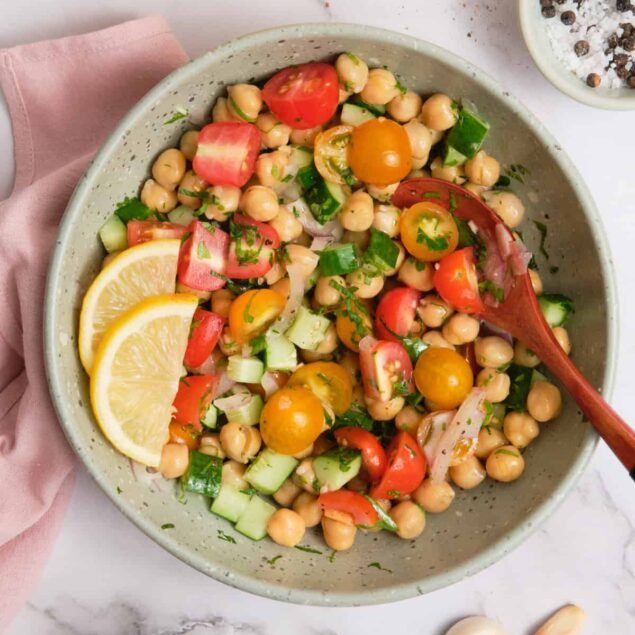
Choose one cold option and one warm option before cooking a large batch. For a cold bowl, combine cooked chickpeas with chopped cucumber, tomatoes and a dressing you like. For a warm meal, stir them into a tomato-based stew and add rice or bread as appropriate. These are assembly ideas, not photographed recipes with verified macros.
Then decide what else the meal needs. Another protein food may suit your target, while vegetables, carbohydrate portions and fats can be adjusted to appetite and preference. Chickpeas do not need to replace every animal food, and choosing a plant-based meal does not require pretending each ingredient serves the same function.
Cool cooked food in shallow containers and refrigerate promptly at 4 degrees Celsius or below. Do not leave perishable meals out longer than two hours, or one hour in temperatures above 32 degrees Celsius. Keep opened or cooked chickpeas refrigerated in a covered container and use them within about four days. Prepare a realistic amount rather than stretching a week’s plan around leftovers that will not be eaten in time. Freeze suitable extra portions when needed, following appropriate food-storage guidance.
For your next shop, try one can before committing to a large bag. Use some in a bowl and some in a spread or topping, then assess convenience, taste and how comfortably the serving fits your meals. A useful pantry staple earns its place through meals you repeat, not through an exaggerated protein headline.

Funny Gym Shirts & Workout Gear
Funny gym shirts, tanks, hoodies and workout gear for lifters who like training hard.


Work Hard Eat Hard Bulk Tank Top
Your gym-day look, with a playful “Work Hard Eat Hard” twist.


Brotein Bar Gym | Funny Protein Bar Meme Workout Decal Sticker
Bring “Brotein Bar” attitude to your water bottle or laptop.

Pink Protein Shaker Bottle | Meme Decal Sticker
Stick a little “Pink Protein Shaker Bottle” humor on your favorite gear.

Brotein Shake Gym | Funny Workout For Bros & Lifters | Hoodie
Make your off-duty look more fun with “Brotein Shake”.

Protein In The Jar Decal for Water Bottles Laptops Gym Sticker
Bring “Protein In The Jar” attitude to your water bottle or laptop.

This Is Your Body On Protein Shirt – Meme & Top T-Shirt
Bring “This Is Your Body On Protein” humor to your next gym day.

Bulking King Bodybuilders & Mass Gain Phases Meme Tank Top
Your gym-day look, with a playful “Bulking King” twist.

Bear Protein : Hilarious Meme T-Shirt
Add a playful “Gym Bear Protein” touch to your casual rotation.