Advertising disclosure: This page includes affiliate product links that may earn us a commission, as well as products from our own store.
Sprint power changes when you leave the saddle
Most people who use a stationary bike for conditioning know the feeling: you are pushing hard, the cadence starts to drop, and standing on the pedals suddenly feels like the easiest way to keep the effort going. But does getting out of the saddle actually make you more powerful? And if it does, should every hard interval be performed standing?
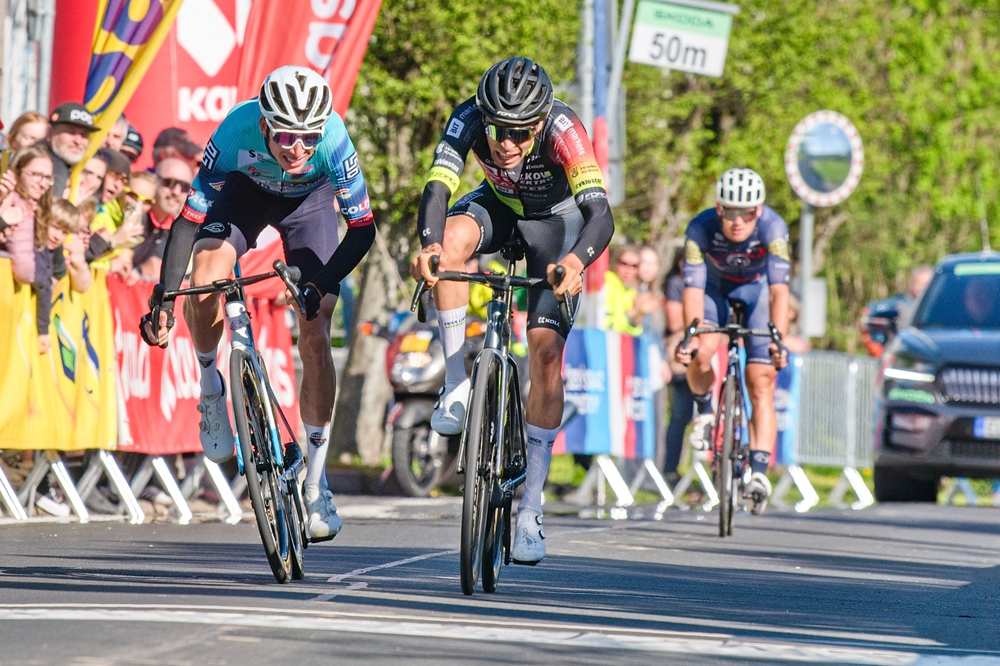
An experiment published in 2019 compared three sprinting positions in 11 recreational male road cyclists. Each rider completed 14-second sprint efforts in a conventional seated position, a conventional standing position and a forward-leaning standing position. The researchers also tested the positions around a preceding high-intensity effort, making the comparison relevant to riders who sprint when already fatigued rather than only when fresh.
The reported group peak-power values were approximately 1,043 watts seated, 1,175 watts standing and 1,126 watts in the forward-standing position. The corresponding mean-power values were about 857, 928 and 896 watts. Conventional standing produced significantly greater power than seated sprinting in this experiment; the forward-standing condition was not significantly different from either. That is not evidence that the two standing techniques are identical, only that the experiment did not establish a difference between them.
These figures should not become targets for recreational gym users. The participants were cyclists, not a random sample of people starting a conditioning program. A heavier lifter may produce more absolute watts while still being less capable of sustaining them, and different bikes calculate or measure power differently. The useful finding is the positional contrast, not whether you can reproduce a four-digit number on your console.
Notice the difference between peak output and mean output. One very forceful pedal stroke can raise peak power without helping you hold an effort over the remaining seconds. When conditioning is the objective, both numbers deserve attention. If you are training for a final acceleration on the road, even those two measurements are not the entire performance picture: handling, rolling resistance and aerodynamic drag matter as well.
Power, cadence and torque are different measurements

Power is the rate of doing mechanical work. At the crank, it reflects the combination of turning force and angular speed. Cadence tells you how many revolutions the pedals complete in a minute, but does not tell you how hard you are pressing. Two riders can pedal at the same cadence while producing very different power if their resistance or effective crank torque differs.
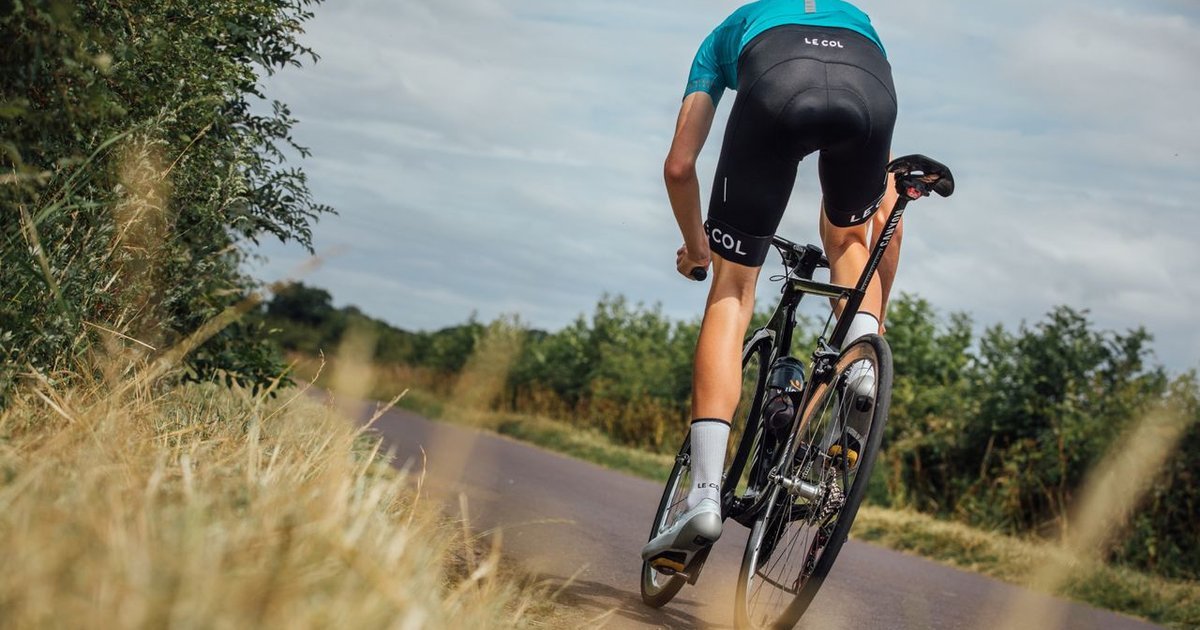
Standing changes the way the rider is supported. The saddle no longer carries the same portion of body weight, the torso can move differently, and the arms can help stabilize the position against the handlebars. The change is not simply an instruction to push harder with the quadriceps. Balance and the timing of force production across the pedal cycle can affect the resulting output.
In the 2019 sprint comparison, cadence did not significantly differ between the positions. Differences in peak torque and where it appeared during the pedal revolution were observed under some conditions. That is useful because it suggests that the advantage was not just a case of spinning the pedals faster. It would still be an overreach to conclude that one position recruits a particular muscle more effectively for long-term growth based on those observations.
A separate track-cycling investigation compared force and velocity profiles in seated and non-seated sprinting. It found that the non-seated condition favored torque and power at lower and intermediate cadences, while the seated condition favored very high cadences. The seated and non-seated tests were conducted in different settings, however, which limits how cleanly the numbers can be interpreted as a pure posture effect.
For the gym athlete, this is a reason to distinguish a heavy, slow acceleration from a fast, controlled cadence effort. Do not turn an easy high-cadence session into a grinding standing sprint just because it looks more athletic. Likewise, do not insist on staying seated if your goal is to practice controlled acceleration and the machine is expressly designed for riding out of the saddle.
Why climbing changes the decision

A sprint from a rolling start is not the same task as a long climb. Gradient changes the resistance the rider must overcome, while the length of the effort changes the cost of producing that resistance. An uphill effort lasting several minutes is much more sensitive to pacing than a short burst of maximal power.
In a field experiment with 13 elite cyclists completing uphill time trials, the standing portions involved higher mechanical power and lower pedalling cadence than the seated portions, without a comparable increase in riding speed. Riders used the standing position intermittently rather than maintaining it for the entire climb. This illustrates why higher watts at a given moment do not automatically mean a faster overall ride.
Another investigation tested ten trained men riding uphill at a 10 percent grade on a treadmill. The standing condition was more advantageous at the highest tested power, while the lowest tested intensity did not yield a clear difference in time to exhaustion. Its transition estimate was specific to those riders, intensities and test conditions; it is not a universal heart-rate threshold at which everyone should stand.
In a third experiment with eight well-trained cyclists, six-minute cycling trials at a prescribed moderate power showed no clear difference in gross efficiency between seated flat, seated uphill and standing uphill riding. The authors also tested maximal sprints separately. Putting these results together is more informative than treating the sprint result as a general rule about endurance economy.
Indoors, you can apply the same distinction without simulating a mountain. Use seated cycling for the bulk of easy or moderate aerobic work, where comfort, repeatability and predictable resistance are valuable. Use brief standing changes where appropriate to the bike and your goals. If you feel the need to stand continuously just to maintain an easy target, first consider whether you selected too much resistance or whether the saddle and handlebars need adjustment.

Equipment Worth Exploring
Explore equipment, accessories and gear from our carefully selected range.


How to compare positions on your own bike
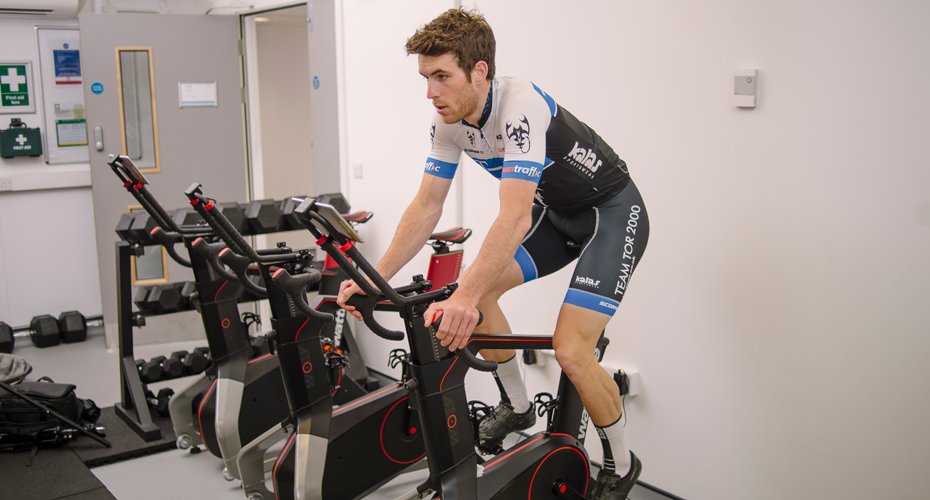
A useful comparison starts with equipment that can safely support both positions. A stable stationary cycle designed for standing efforts can be suitable. Not every recumbent, compact exercise bike, trainer setup or air bike permits them. Follow the manufacturer’s instructions, use secure footwear and stop if the bike rocks excessively or your technique becomes uncontrolled.
Begin with ten minutes of easy riding. Increase effort gradually, then practice a few short accelerations without approaching maximal intensity. Choose a repeatable resistance setting and rolling cadence. On a machine that displays watts, record the average power over a ten-second controlled acceleration and the highest displayed value. If it only displays speed or cadence, use those values with the same resistance setting and treat them as machine-specific performance indicators rather than measured power.
Alternate seated and standing efforts, with two to three minutes of easy riding between them. Start at roughly seven or eight out of ten perceived effort rather than performing all-out tests on your first session. Keep the number of trials equal and alternate which position goes first on a second day to reduce order and fatigue effects. Avoid changing both resistance and starting cadence at the same time.
Alongside the console numbers, record control, comfort and whether you can maintain a smooth pedal action. A position that adds a few watts but makes your hips shift unpredictably or causes you to lose contact with the pedals is not a useful choice. A simple log with position, resistance, starting cadence, average output and perceived effort can help separate genuine progression from changes in technique.
Results from different bikes cannot be assumed interchangeable. An air-resistance bike that also uses the arms is a different mechanical task from a road bicycle or conventional spin bike. The same principle applies to rowing machines, ski trainers and treadmills: they can be valuable alternatives for general conditioning, but their displayed outputs do not directly measure cycling performance. Pick one machine for repeat tests and use the others for variety if desired.
A four-week cycling progression for lifters
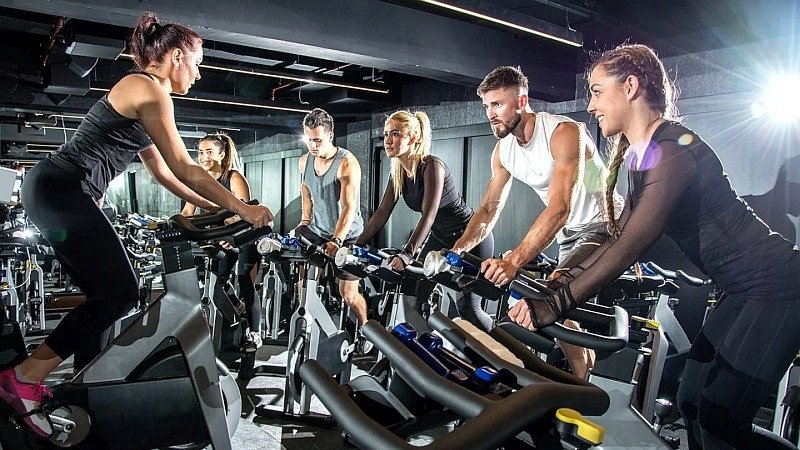
For a lifter who wants to add cycling without compromising leg training, an uncomplicated plan is often more productive than attempting maximal sprints after every workout. The following four-week progression is an editorial example, not the protocol tested in the 2019 experiment. Schedule two bike sessions per week and adjust the total volume to your existing fitness and lifting schedule.
- Week 1: Ride seated for 15–20 minutes at a conversational effort in one session. In the other, practice four controlled ten-second accelerations with generous easy recovery, comparing positions only if the bike supports both.
- Week 2: Add five minutes to the easy ride if recovery is good. Repeat the four accelerations and aim for more consistent output rather than a higher peak at any cost.
- Week 3: Maintain the easy ride and increase the interval session to five or six controlled accelerations. Keep at least two minutes of easy pedalling between harder efforts, or longer if output and control have not recovered.
- Week 4: Repeat your original comparison under similar conditions. Evaluate average output, cadence, control and recovery across the efforts. Reduce volume if heavy leg sessions have started to suffer.
Put the harder cycling session away from your most demanding squat or deadlift session where practical. For the rider who also wants stronger legs, conventional strength training such as controlled squat patterns, split squats and hip hinges still serves a distinct purpose. Cycling performance does not replace progressive resistance training, and a high cycling power number alone does not prove that muscle size or maximal strength has increased.
Finally, keep the intensity appropriate to your health and training background. New riders should establish an easy aerobic base and learn the movement before pursuing maximal efforts. Stop for unusual dizziness, chest discomfort or loss of control. The strongest practical conclusion is simple: standing can be an effective tool for short powerful efforts, but seated cycling remains valuable. Choose the position for the job, measure it consistently, and let your own repeatable performance decide how much of each you need.

Cardio Shirts & Workout Gear
Cardio and conditioning gym gear for runners, endurance athletes and anyone who earns the sweat.

Anti Cycling Cycling Club – Ironic Cardio Meme & T-Shirt
Show some cardio attitude with a playful “Anti Cycling Cycling Club” tee.

Gym Dost Thou Even Pedal Medieval Air Bike Joke for Cro T-Shirt
Show some gym-day personality with “Dost Thou Even Pedal Medieval Air Bike Joke”.

Cardio Heartbeat for Runners, Cyclists and Endurance Fa Tank Top
Bring “Cardio Heartbeat” humor to your next lifting session.

Triathlon – Iron Man Medieval Knight Swim Bike Run Shir T-Shirt
Make gym days more fun with “Triathlon” style.

Mystery Cardio Shirt T-Shirt
Heavy lifts, good laughs, and a little “Mystery Cardio” energy.

Exercise Your Demons | Cardio Workout From Hell Muscle Tank Top
Add some cardio attitude to training with “Exercise Your Demons”.

Cardio Is Calling Decline Bros Meme Hooded Hoodie
Make your off-duty look more fun with “Cardio Is Calling”.

Skip Cardio – Exit Cardio Meme , , Top T-Shirt
Bring “Skip Cardio” humor to your next gym day.

Cardio Is Hardio – Workout Meme Decal for Water Bottles Sticker
Put “Cardio Is Hardio” gym humor on your laptop, bottle, or gym gear.

with Shark Meme – Motivation Finds You Workout Vest for Tank Top
Bring “with Shark Meme” humor to your next lifting session.