
Advertising disclosure: This page includes affiliate product links that may earn us a commission, as well as products from our own store.
Edwin Moses won so often that the headline can become difficult to picture: 122 consecutive races in the 400-metre hurdles, including 107 finals, across a streak stretching from 1977 to 1987. The two totals describe different counts within the same run of success. They are not rival versions of the story.
For anyone who trains, the interesting part is the combination of speed, a highly specific skill and repeated performance against other athletes. Moses was an Olympic champion before that streak began. He remained a major championship contender after it ended. His career is bigger than one number, and more useful to understand than a motivational claim that winners simply refuse to lose.
Olympic gold came before the famous streak
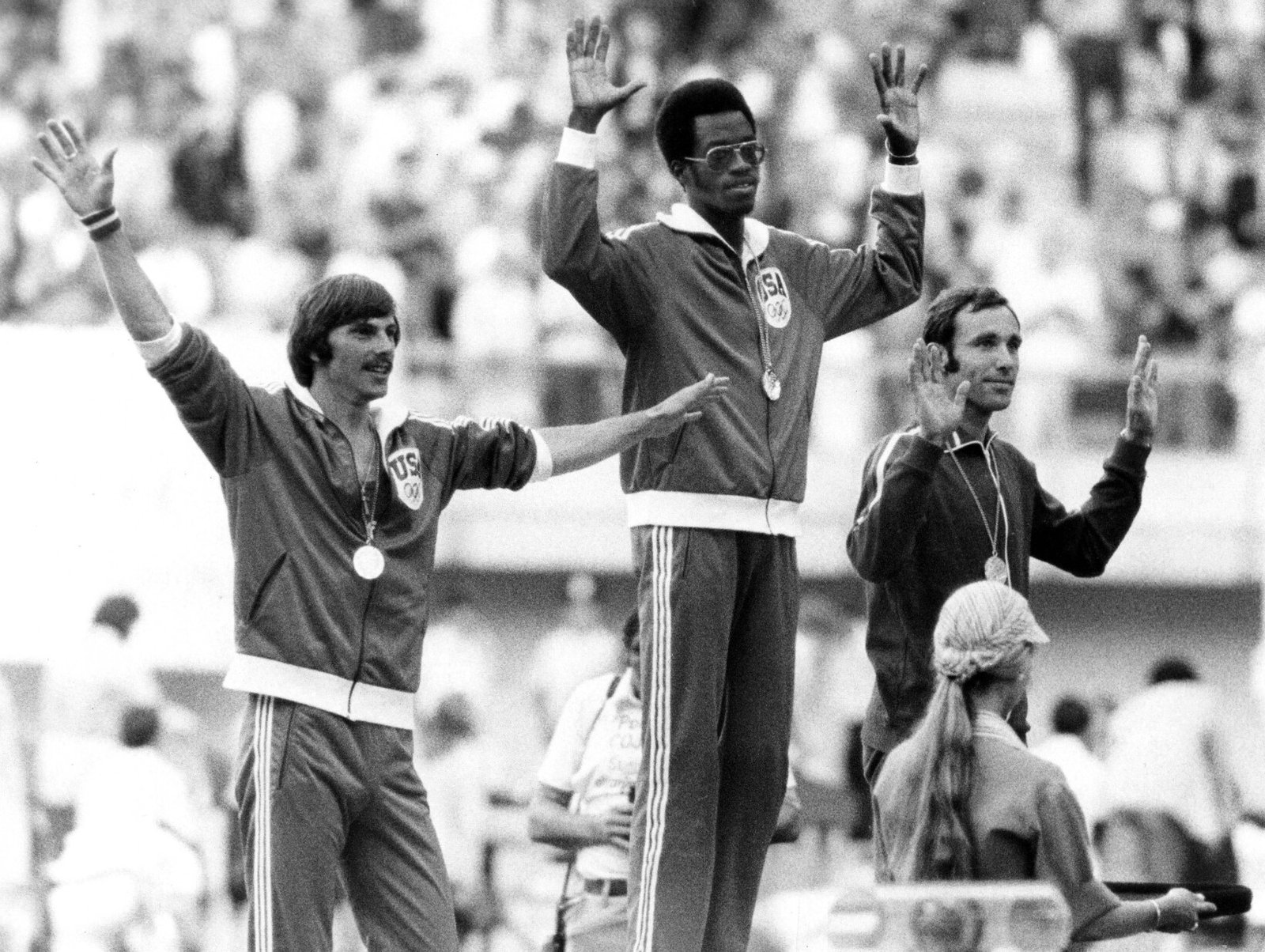
Moses won the 400-metre hurdles at Montreal in 1976. He had studied physics at Morehouse College, where the track team did not have its own track. Those details make an unusual sporting biography, but neither should be turned into a shortcut explanation for an Olympic result. Studying science does not automatically make someone a world-class athlete, and training with limited facilities does not make those limitations desirable.
The sequence matters because the later unbeaten run is sometimes told as if it captures his whole development. It does not. By the time that run began in 1977, he had already demonstrated that he could win the largest championship in his event. His starting point was an established elite performance, not the beginning of an ordinary recreational training plan.
That distinction is familiar in other running stories. Our account of Roger Bannister’s four-minute mile separates a landmark result from the context that made it possible. A celebrated breakthrough is easier to interpret when you know what the athlete was already capable of doing.
It also changes the question we ask about improvement. Instead of wondering how a beginner could copy a champion’s rise in a few sessions, we can examine how an already exceptional competitor kept producing results. Development, selection and championship execution are connected, but they are not the same thing.
122 races and 107 finals count different things
The commonly recorded totals are 122 consecutive victories overall and 107 consecutive finals. The larger figure includes races outside finals. Treating every win as a final exaggerates one version of the achievement; dropping those other races from the overall total understates another. Both numbers need their labels. An unbeaten record describes opposition, not identical race times.
A streak is also a sequence of competitive outcomes. It does not mean the athlete ran a personal best every time, followed an identical preparation each week or felt equally good on every start line. The result tells us who finished first in a particular race. To explain the performance in more detail, we would need the race, conditions, opposition and preparation attached to it.
This is why consistency can be more demanding than a collection of isolated highlights suggests. A career montage puts successful moments beside one another and removes most of the waiting, travel, training and recovery between them. It can show what happened without showing everything required to arrive ready again.
For a recreational athlete, the appropriate comparison is not an expectation of never losing. It is the value of keeping a clear definition of success. Completing planned sessions, improving a repeatable test and placing well in a race are different outcomes. If you change which one you are counting halfway through a training block, your progress becomes difficult to judge.
Winning and running faster are separate measures as well. A runner can improve a time and finish behind a stronger field, or win without producing a best-ever mark. Neither result is contradictory. For a fair assessment, decide whether you are studying the athlete’s absolute performance or the outcome against that day’s opponents. The first asks what the athlete did; the second asks how it compared with everyone else in the race. Both are valuable, but switching between them can create a misleading story about progress or decline.
Moses’s streak deserves its exact competitive meaning. It was not a metaphor for perfect workouts, and it does not need that embellishment to be extraordinary.
A fast runner still had a specific event to master
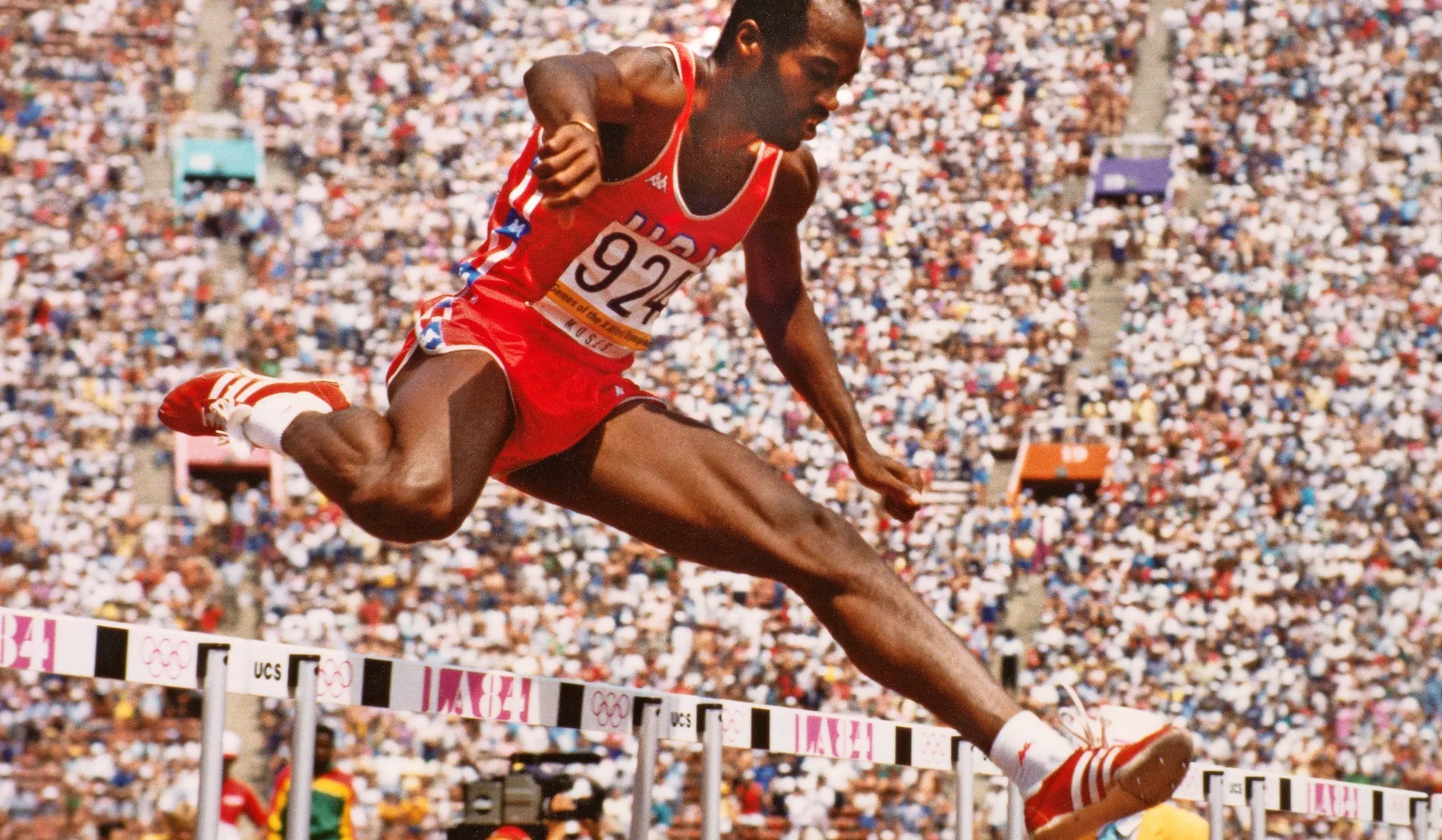
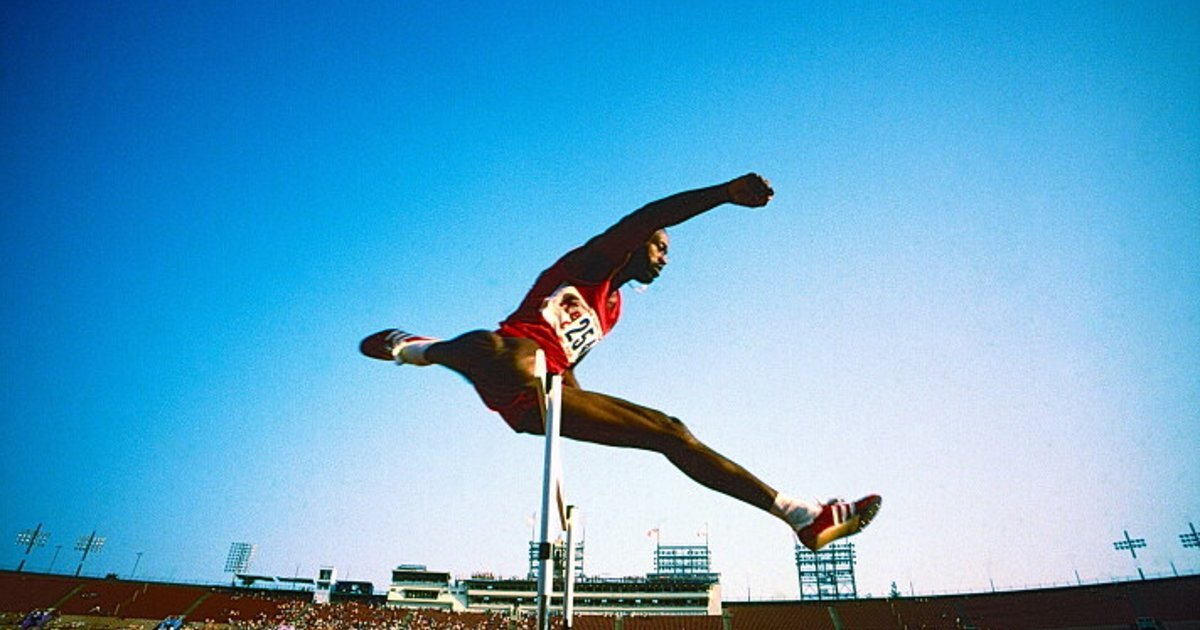
The 400-metre hurdles combines running with clearing repeated barriers. A photograph catches one clearance, but the event requires the athlete to keep moving through the entire race. It is possible to admire a striking airborne position while missing the work on either side of it.
That matters when famous technique becomes a visual template. Copying the shape of one frame does not reproduce the approach speed, timing or coordination that put the athlete there. A still image cannot establish a complete stride pattern, the rhythm of the whole race or the instructions a coach would give a different runner.
Moses’s recorded personal best was 47.02 seconds in 1983. Keep the event name attached to that mark: it is a 400-metre hurdles performance. It should not be presented as a flat 400-metre time, nor converted into a general-purpose target for a treadmill session. The course and skill demands are part of what the number means.
For lifters, there is a useful parallel without pretending the sports are identical. A completed repetition is more informative when the load, range of motion and exercise are known. A running time likewise needs its distance and event. Strip away those details and two performances can look comparable while describing different tasks.
The practical lesson is to make your own comparisons specific. Record the actual exercise or test, use a repeatable setup and resist changing several important conditions at once. This is an editorial way to interpret performance information, not a reconstruction of Moses’s programme.
The streak ended; the championship career continued
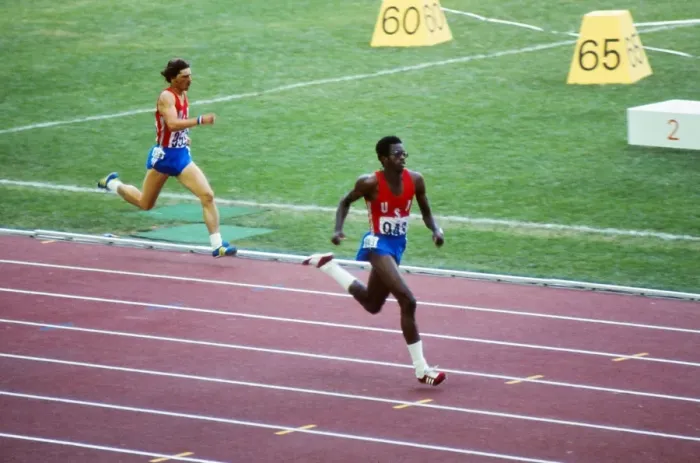
The unbeaten run ended in 1987. Moses’s Olympic record still includes gold in 1976, gold in 1984 and bronze in 1988. The American boycott kept him out of the Moscow Games in 1980. We can describe that missed opportunity without awarding him a hypothetical medal: an event that was not contested by an athlete has no result for that athlete.
Equally, the Seoul bronze belongs in the story as a real performance, rather than an inconvenient footnote to an image of permanent victory. A career can contain dominance, defeat and a later medal without any of those facts cancelling the others.
Our feature on Emil Zátopek’s three Helsinki golds makes a related distinction between a famous headline and the individual competitive problems behind it. The event, calendar and athlete’s prior experience help explain why an achievement matters.
That perspective is useful when following modern athletes too. A result is not automatically evidence that someone has become lazy, lost their discipline or abandoned a successful method. Those are claims about causes. They require evidence beyond the finishing order.
For your own training, a disappointing test can be a reason to examine the record, rather than rewrite your whole identity around one day. Ask what was measured, what changed and whether the comparison is fair. Avoid turning either a personal best or a setback into a complete explanation of your fitness.
Borrow the habit of recording, not an invented routine

Moses has described keeping detailed training records and analysing information about his runs. That is a more grounded point of interest than inventing a weekly workout split and attaching his name to it. A historical result cannot tell us the exact session volume, recovery or progression a different athlete should use.
A useful personal log can stay simple. Record what you planned, what you completed and the conditions that materially affected the comparison. For running, distance, time and the type of session help. For lifting, the exercise, load, repetitions and rest make a starting point. Add context when it explains something; do not collect numbers simply because a device can display them.
Then review several entries together. One unusually good session may reflect a favourable day. A repeatable improvement across comparable sessions gives you a stronger basis for deciding what to keep. The log supports a decision; it does not remove the need for judgement.
Lifters who joke about avoiding cardio and runners who enjoy tracking every split can both recognise that difference. The useful standard is an honest account of the work you actually did, not an impressive-looking total stripped of context. Moses’s 122 races and 107 finals are a reminder to name the measure before celebrating the number.

Cardio Shirts & Workout Gear
Cardio and conditioning gym gear for runners, endurance athletes and anyone who earns the sweat.


Cardio Heartbeat for Runners, Cyclists and Endurance Fa Tank Top
Bring “Cardio Heartbeat” humor to your next lifting session.

Cardio Is Hardio – Workout Meme Hooded Pullover Hoodie
Keep it laid-back with a little “Cardio Is Hardio” attitude.

Cardio Is Calling Decline Sweater Meme T-Shirt
Bring “Cardio Is Calling” humor to your everyday gym style.

Anti Running Club Tee
Heavy lifts, good laughs, and a little “Anti Running Running Club” energy.

Anti Cardio Cardio Club Shirt Meme & Top T-Shirt
Bring “Anti Cardio Cardio Club” humor to your next gym day.

Negative Cardio Review Cardio Sucks 1 Star Decal Sticker
Give your everyday gear a playful “Negative Cardio Review” twist.

Death By Cardio Shirt Meme & Top T-Shirt
Bring “Death By Cardio” humor to your next gym day.

Meme Shirt – Two Things I Like Lifting Weights Not T-Shirt
Make gym days more fun with “Two Things I Like Lifting Weights Not” style.

Shirt: Does Running Out Of F*Cks Count As Cardio? & T-Shirt
Heavy lifts, good laughs, and a little “: Does Running Out Of F*cks Count As” energy.









One Comment