Advertising disclosure: This page includes affiliate product links that may earn us a commission, as well as products from our own store.
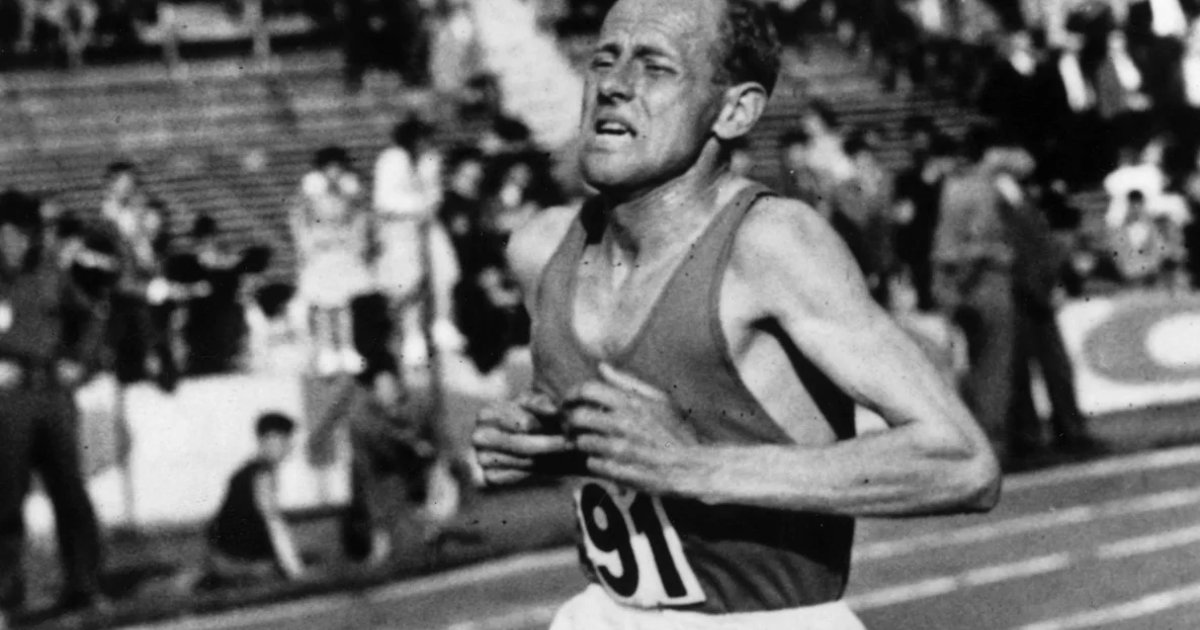
Winning an Olympic distance race is remarkable. Emil Zátopek’s Helsinki achievement becomes harder to grasp when you put the three event names beside one another: 10,000 metres, 5,000 metres and marathon. In 1952, he won all three at the same Games.
The easy version of the story is that a man with extraordinary determination simply refused to lose. The more interesting version keeps the different races, his previous experience and the competition schedule in view. It also separates an athlete’s verified results from the temptation to turn a training legend into a programme for everyone else.
The Helsinki treble began with an established champion
Zátopek did not arrive in Finland as an unknown runner discovering his ability. At London 1948, he had already won the Olympic 10,000 metres and taken silver in the 5,000 metres. Helsinki was another stage of a successful distance-running career, rather than an overnight transformation.
That background matters when the story is used for motivation. A first attempt at one event can sit on top of years of preparation in related events. The word first tells you about a particular competitive experience; it does not erase the athlete’s history, accumulated running or ability to handle elite opposition.
The three Helsinki victories came on 20 July, 24 July and 27 July. Read as calendar dates, the sequence immediately looks different from three separate peak performances spread across a season. The 10,000 metres came first, the 5,000-metre final followed and the marathon completed the collection.
Those dates describe the winning races, not a complete training diary or every demand of the meeting. They do not reveal how he felt each morning, the exact recovery work between events or a universal formula for racing again. Keeping that distinction prevents a compact medal graphic from pretending to be a complete account of preparation.
The achievement belongs to an experienced champion doing something exceptional. Recognising the experience makes the story more useful: it asks us to notice the work and competitive history behind the famous week, rather than imagine that belief alone can replace them.
The two track victories were different racing problems
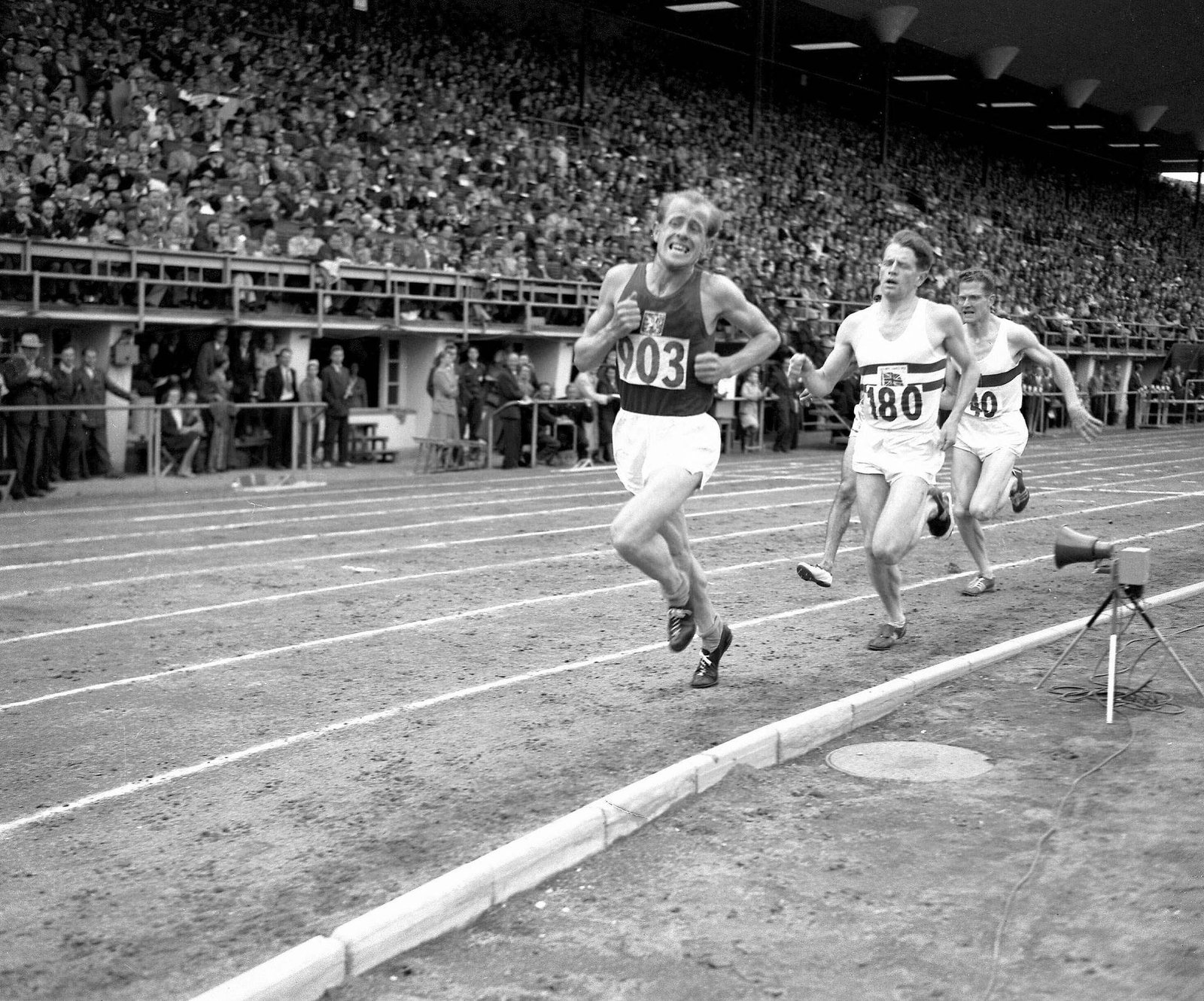
The 10,000-metre win came in 29:17.0. The 5,000-metre final was won in 14:06.6. Both were Olympic records at the time. These were competition results in specific races, not interchangeable examples of one generic ability called stamina.
In the longer track race, Zátopek finished nearly 16 seconds clear. The shorter final presented a much tighter late contest, with four runners still involved with 250 metres remaining. Winning that race required prevailing when rivals were still close enough for the finish to matter directly.
The contrast is part of the appeal. A clear winning margin and a contested finish can end with the same medal colour while telling different stories about how the race unfolded. Looking only at gold medals hides the opponents, timing and competitive decisions that produced them.
It is equally misleading to divide the 10,000-metre time by two and treat the result as a prediction for a separate 5,000-metre race. Different distances, opponents and race situations create different performances. Basic arithmetic can describe an average, but it cannot reconstruct the tactics of a championship final.
For scale, 29:17.0 over ten kilometres averages about 2:55.7 per kilometre. The 14:06.6 five-kilometre result averages about 2:49.3. Those are calculated averages from the finishing times, not recorded kilometre splits. They do not establish that each lap was identical or show where a decisive acceleration happened. This distinction matters whenever an old result is converted into a modern pace graphic: the calculation can help readers appreciate the speed while leaving the actual distribution of effort unresolved. A neat average should not be mistaken for a race plan.
A useful comparison is Roger Bannister’s four-minute mile. The distance and setting need to remain attached to the number there too. Historical running becomes much clearer when a time is treated as the result of an actual event, rather than a free-floating measure of how fit somebody was.
A marathon debut did not mean a beginner’s endurance
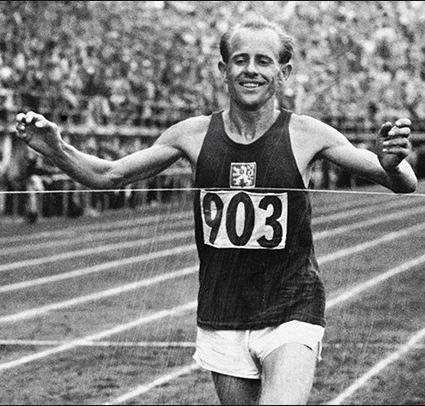
The marathon was Zátopek’s first competitive attempt at the distance. Winning it after the two track titles gave the Helsinki story its extraordinary final turn. An athlete already successful over 5,000 and 10,000 metres added the longest race to his Olympic programme and won again.
He finished more than two and a half minutes ahead of the runner-up. That margin conveys something different from the closely contested 5,000-metre finish. It also explains why the marathon carries such weight in accounts of the treble: this was a victory over specialists in an event he had not previously raced.
Still, marathon debut is a precise description, not a synonym for starting from nothing. He brought an elite distance-running background to the start. Presenting the story as an ordinary unprepared person deciding to run a marathon would remove the most important context.
The distances also explain why this particular treble stands out. A 5,000-metre race, a 10,000-metre race and a marathon are three distinct titles. The accomplishment is not three laps, three heats or three versions of the same final. The event names are essential to understanding the range involved.
For recreational readers, the lesson is how to describe a feat accurately. Notice the athlete’s prior experience, distinguish entering an unfamiliar event from being new to running, and avoid turning a successful gamble by an exceptional competitor into advice that everyone should race unfamiliar distances.
Three Helsinki golds were part of a larger career
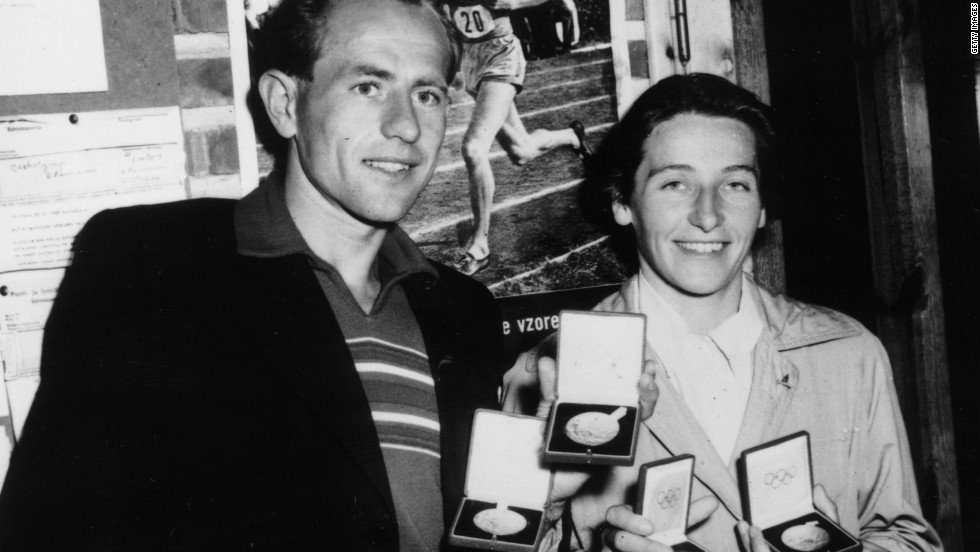
Helsinki supplied three of Zátopek’s four Olympic gold medals. The other came from the 10,000 metres in London four years earlier. His London 5,000-metre silver brings the Olympic medal total to five. The famous treble and the career total answer different questions.
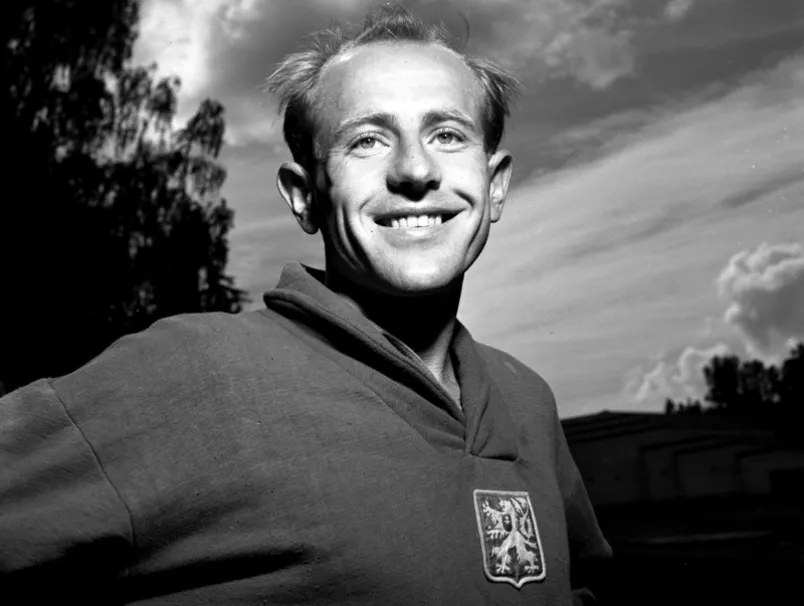
His wife, Dana Zátopková, also became an Olympic champion in Helsinki, winning the javelin. That shared success gives the photographs of the couple with their medals additional meaning. Dana’s achievement belongs to her own event and career; it is not an extra running medal in Emil’s total.
Four years later, he placed sixth in the Melbourne Olympic marathon. Including that result helps preserve a career as a sequence of competitions, rather than leaving an athlete permanently frozen at his most successful finish line. A celebrated champion can have an extraordinary peak without winning every later race.
The distinction between a peak and an entire career is useful across fitness culture. A single photograph, personal best or competition week usually becomes the image people remember. It is a selected moment. It does not show every preceding session or mean that subsequent performances must follow the same trajectory.
Zátopek’s legacy does not need embellishment. The verified medal record already gives the story its scale. Adding fictional workouts, invented conversations or claims about what his physique proves would make the account less informative than the real results.
Read the training legend without copying an invented plan
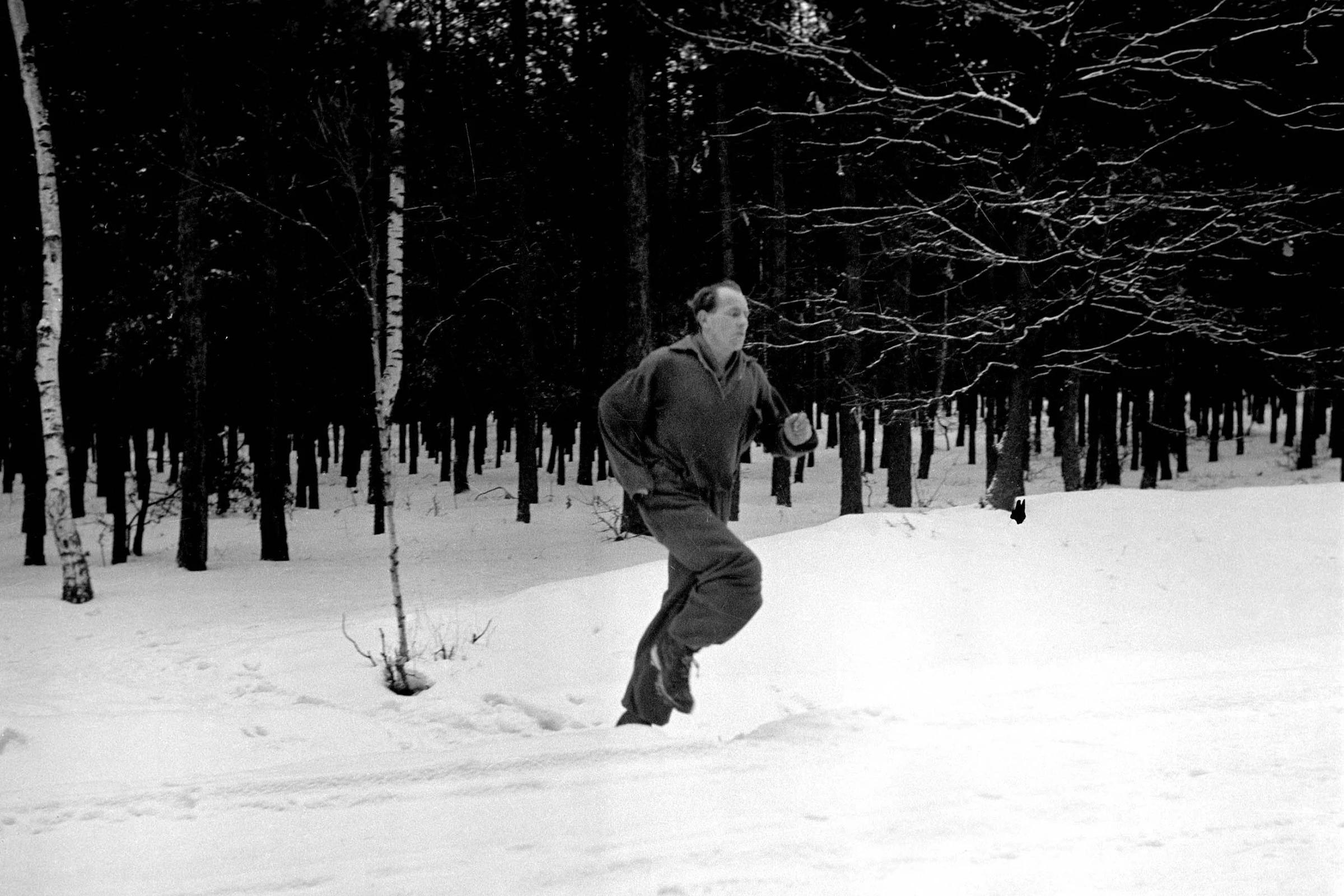
Zátopek is closely associated with demanding interval training. That broad historical connection is useful; an exact modern workout assembled from memorable anecdotes is a different claim. Repeated efforts, their pace, recovery periods and total volume all need context before they can describe a particular session.
A photograph of him running through snow can establish the visible setting and clothing. It cannot establish how far he ran, the intensity of the session or whether the same conditions would help another person. Likewise, a strained racing expression is not a reliable instruction about how every training run should feel.
If you combine running and lifting, start with the demands of your own week. Our guide to planning running and lifting on the same day addresses that practical question. A historical champion’s results are interesting context, but they do not supply your current training history, available time or priorities.
A better use of the legend is to ask clearer questions. Which event are you preparing for? What does a proposed workout actually contain? Is the story describing a race result, a documented session or someone’s later interpretation? Those questions help keep admiration separate from an unsupported prescription.
Zátopek’s Helsinki treble remains compelling because the verified achievement is so specific. An established track champion won two different track finals and then his first marathon. Keep those facts intact, and the story offers plenty to appreciate without requiring readers to imitate a mythical week of training.

Cardio Shirts & Workout Gear
Cardio and conditioning gym gear for runners, endurance athletes and anyone who earns the sweat.

Running Dost Thou Even Trot Medieval Treadmill Crewneck T-Shirt
Show some gym-day personality with “Running”.

Cardio Heartbeat Hoodie
Show off your cardio humor in a laid-back “Cardio Heartbeat” hoodie.

Anti Running Club Tee
Heavy lifts, good laughs, and a little “Anti Running Running Club” energy.

Cardio Is Hardio – Workout Meme Pullover Jumper T-Shirt
For laid-back days and cardio humor: “Cardio Is Hardio”.

Death By Cardio Shirt Meme & Top T-Shirt
Bring “Death By Cardio” humor to your next gym day.

Cardio Sucks Negative Review 1 Star Hooded Hoodie
Show off your cardio humor in a laid-back “Cardio Sucks” hoodie.

Cardio Is Calling Decline Decal Water Bottles Meme Sticker
A fun “Cardio Is Calling” touch for bottles, laptops, and lockers.

Meme Shirt – Two Things I Like Lifting Weights Not T-Shirt
Make gym days more fun with “Two Things I Like Lifting Weights Not” style.

Shirt: Does Running Out Of F*Cks Count As Cardio? & T-Shirt
Heavy lifts, good laughs, and a little “: Does Running Out Of F*cks Count As” energy.

Don't Quit Do It – Motivational Workout Vest Muscle Shi Tank Top
Bring “Don't Quit Do It” humor to your next lifting session.