Advertising disclosure: This page includes affiliate product links that may earn us a commission, as well as products from our own store.
Phil Clapp’s 2:38.2 over 1,000 metres on a rowing ergometer is worth revisiting for more than its headline. The January 2025 performance put an exceptional sprint into an easily recognised gym setting: an athlete, a handle and a monitor. Understanding it properly means keeping the date, distance and equipment beside the number, then separating an elite result from a useful training lesson.
This is a historical performance analysis, not a claim that Clapp still owns the current record or a reconstruction of his complete programme. A later February 2026 championship preview reported Logan Ullrich surpassing that mark by one tenth of a second. Neither milestone needs to be presented as breaking news to remain interesting.
Place the performance in its actual timeline
The January 30, 2025 report gave Clapp’s time as 2:38.2, improving on James Hall’s 2:39.3 by 1.1 seconds. It also described his earlier 500m mark of 1:09.8 from March 2024. Those are performances over different distances, rather than two interchangeable measures of the same task.
Clapp described several months of consistent preparation and a preceding period containing multiple 1km efforts. That provides context, but it does not disclose a complete training calendar, the intensity of every session or how another athlete should organise the same period. A short comment about preparation cannot support an invented weekly split.
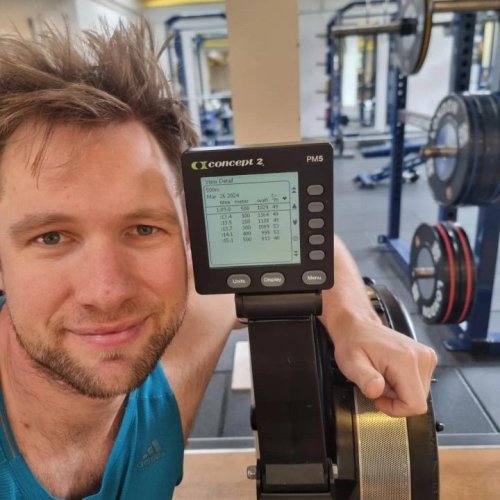
The archival photograph here belongs to the earlier 500m story. It illustrates the athlete and the monitor, rather than documenting the later 1,000m attempt. That distinction matters whenever a memorable sports image travels farther than its original context. A real photograph can still accompany the wrong date or event if its description is careless.
Keep three separate questions when reading a record story: what happened, what the athlete actually said about preparing, and what you can reasonably take into your own training. The first needs a result and a date. The second needs a genuine account. The third requires judgment about your experience, schedule and goals.
The later 2:38.1 report confirms that Clapp’s 2025 mark was surpassed. It does not establish who holds every category today. Records have categories and continue to change, so this article keeps the historical claim narrow instead of turning a dated achievement into a permanent title.
That does not diminish the performance. Improving a short established mark can involve a very small margin on the clock. The interesting question for an ordinary gym rower is how to understand that margin without confusing it with a training target they are expected to match.
Translate the finish time without inventing a race plan
Convert 2:38.2 into seconds: 158.2. Divide by two, because 1,000 metres contains two 500m segments, and the average pace is 79.1 seconds, or 1:19.1 per 500m. This is arithmetic describing the completed performance. It does not show the pace of either individual half.
A rower could reach the same overall time with different pacing patterns. You need the actual split data to say how the effort developed. Avoid inferring an even pace, an opening surge or a finishing sprint from the final result alone. The total is evidence of the total.
Similarly, doubling the earlier 500m time of 1:09.8 gives 2:19.6, but that calculation does not predict a sustainable 1,000m performance. Doubling a distance changes the demand. Treat an isolated sprint result as its own achievement rather than assuming its speed can simply be extended.
Our explanation of 500m splits, stroke rate and finish-time maths is useful if the monitor’s units are unfamiliar. A pace figure describes progress over distance; strokes per minute describes movement frequency. Increasing one does not automatically produce the desired change in the other.
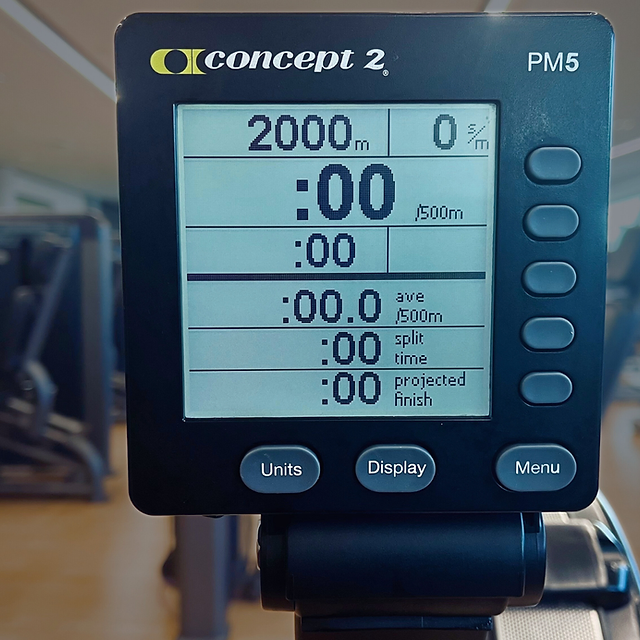
The monitor photograph shows a 2,000m setup, not Clapp’s result. It illustrates how several labelled fields can coexist on the same screen. Before interpreting a number, check whether it refers to current pace, average pace, elapsed time or a projected finish. A dramatic current reading can differ from the completed average.
For your own comparisons, write both distance and finish time. Add average pace only after you understand what the display measured. If you calculate it in a spreadsheet, work in seconds first: 1:19.1 is not 1.191 minutes. Keep the original result so an arithmetic error can be spotted later.
Keep the machine and movement comparable
Indoor rowing records distinguish static machines, machines on Slides and Dynamic machines. A result in one category should not quietly become a claim about another. Different cardio equipment also uses different measurements and resistance systems, so a distance displayed elsewhere is not automatically equivalent to a Concept2 record distance.
Record requirements include a level surface, no performance-altering machine modifications, a single distance or timed piece and a non-moving flywheel at the start. Verification can involve a qualifying monitor code, witnesses or a continuous video meeting the stated requirements. A normal training photo and a formally accepted record are different forms of evidence.
You do not need official record administration for every workout. You do need to recognise when the setup changed. Note the machine and session format, and distinguish continuous pieces from intervals. If a gym change gives you a different model, establish a new baseline rather than pretending every old result remains directly comparable.
Damper position is another useful setup note, but the largest lever number is not a badge of effort. Our RowErg damper and drag-factor guide explains the distinction between the lever position and measured drag. Choose a setup you can control instead of copying a number without understanding it.
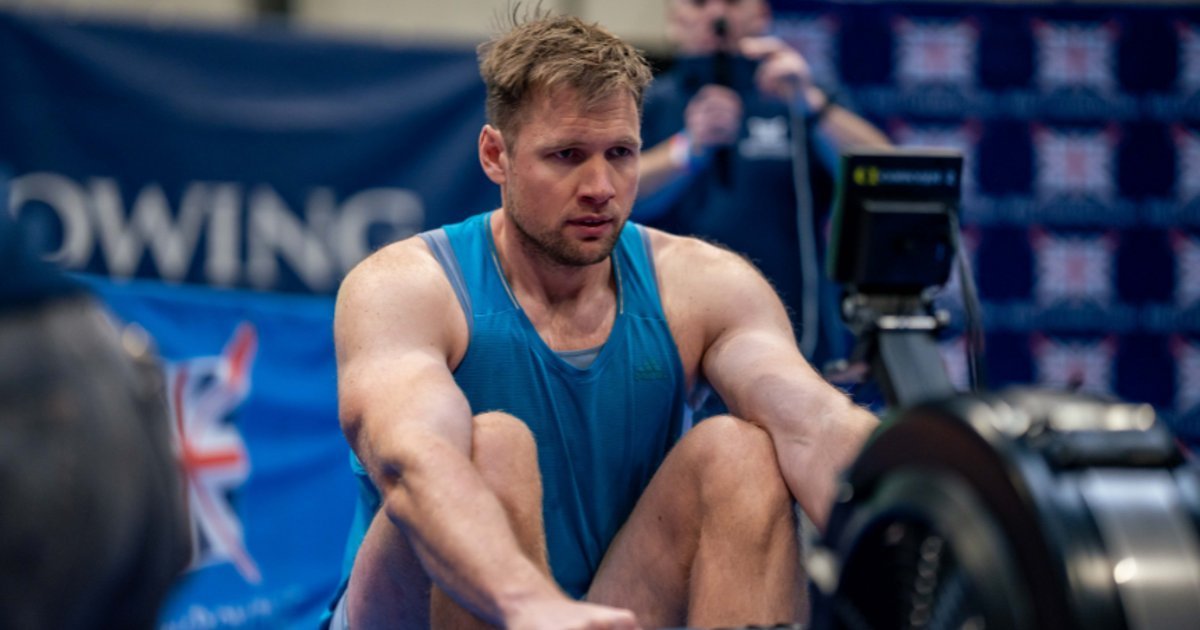
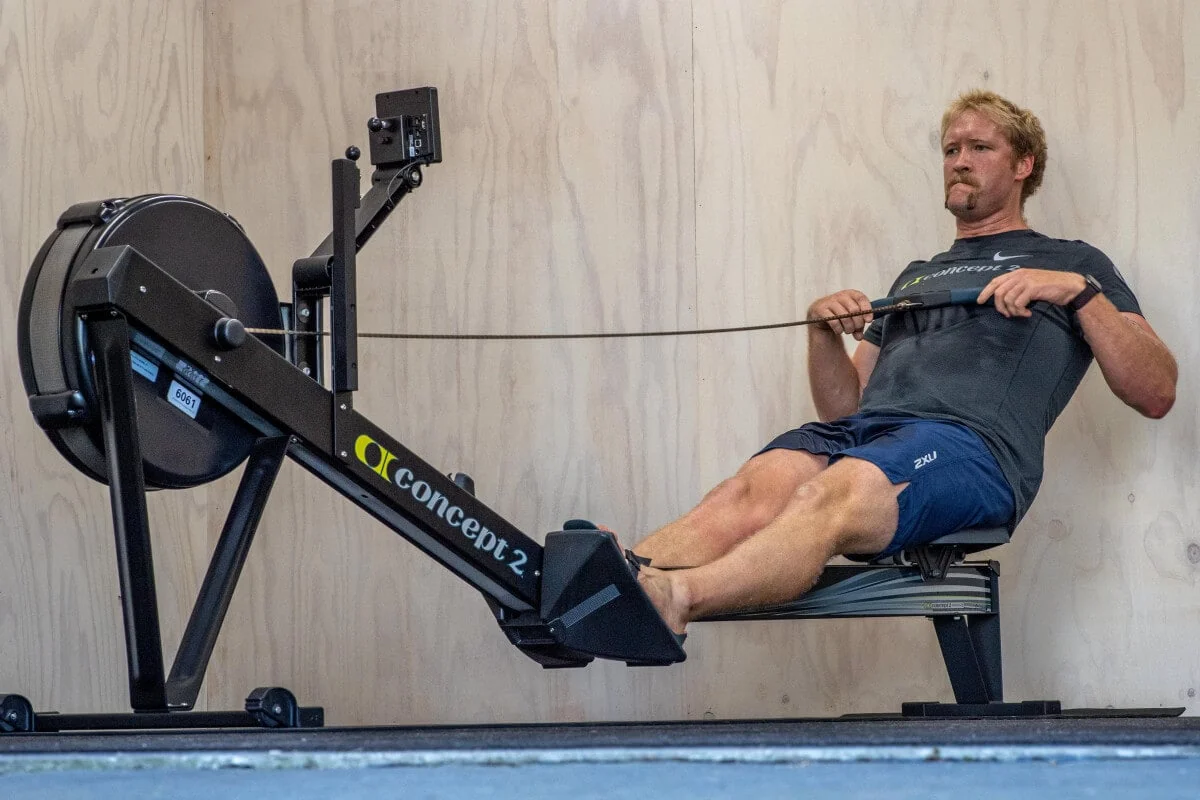
For technique practice, start the drive with the legs, then add the body swing and arm pull. On the return, extend the arms and hinge before the knees bend after the hands clear them. Blend the sequence rather than rushing through disconnected positions. The illustrative rower pictured here is not Clapp.
Have someone observe a manageable effort if you are unsure about the movement. Trying to reproduce an elite sprint before learning the sequence is unlikely to give you a useful comparison. A clear, repeatable stroke gives subsequent pace changes more meaning than a faster but increasingly disorganised slide.

Cardio Shirts & Workout Gear
Cardio and conditioning gym gear for runners, endurance athletes and anyone who earns the sweat.


Anti Rowing Rowing Club Shirt – Meme & Top T-Shirt
Show some cardio attitude with a playful “Anti Rowing Rowing Club” tee.

Cardio Is Calling Decline Bros Meme Hooded Hoodie
Make your off-duty look more fun with “Cardio Is Calling”.

Cardio Is Hardio – Workout Meme Decal for Water Bottles Sticker
Put “Cardio Is Hardio” gym humor on your laptop, bottle, or gym gear.

Negative Cardio Review Cardio Sucks 1 Star Vest Tank Top
Bring “Negative Cardio Review” humor to your next lifting session.

Death By Cardio Shirt Meme & Top T-Shirt
Bring “Death By Cardio” humor to your next gym day.

Anti Cardio Cardio Club Shirt Meme & Top T-Shirt
Bring “Anti Cardio Cardio Club” humor to your next gym day.

Shirt Cardio Kills Meme Top T-Shirt
Show some cardio attitude with a playful “Cardio Kills Meme” tee.

Cardio Kills Gains Shirt 'S Meme & Top T-Shirt
Rep “Cardio Kills Gains” humor in and out of the gym.

Cardio Heartbeat Hoodie
Show off your cardio humor in a laid-back “Cardio Heartbeat” hoodie.
Borrow the consistency, then build your own evidence
The practical lesson from Clapp’s preparation account is that the headline followed sustained work. It is not permission to copy an unknown programme or turn every rowing session into a maximum attempt. Decide whether today’s purpose is learning the stroke, accumulating manageable work or assessing a particular distance.
Give those sessions different labels in your log. A technique session might be successful because the movement stayed organised. A conditioning session might be useful because you completed the planned work at the intended effort. A test has a specific result to compare with another test under similar conditions.
Choose the next adjustment from what you observed. Did the pace change while your stroke rate stayed similar? Did you lose the sequence when trying to move faster? Did you finish the planned work but struggle to repeat it next session? Those questions provide more direction than automatically adding another hard effort.
Keep other conditioning tools in their own columns. Air bikes, ski trainers and skipping ropes can offer different activities; dumbbells and kettlebells serve separate strength exercises. The equipment options below are tools to investigate, not Clapp’s personal kit, a replica of his training or interchangeable ways to validate a rowing time.

Equipment Worth Exploring
Explore equipment, accessories and gear from our carefully selected range.


Clapp’s historical sprint remains impressive when presented accurately. The useful response is to understand the result, respect the setup and make your own training easier to evaluate. A dated elite performance can inspire consistent practice without becoming a promise about your next personal best.