Advertising disclosure: This page includes affiliate product links that may earn us a commission, as well as products from our own store.
A glute bridge march looks simple until one foot leaves the floor and your hips start to roll. The test is not how high you can lift your knee. It is whether you can keep your pelvis steady while alternating support. Here is a precise way to set it up, fix the usual leaks in form and progress the movement without pretending a floor drill replaces heavy training.
Set the bridge position before taking the first step
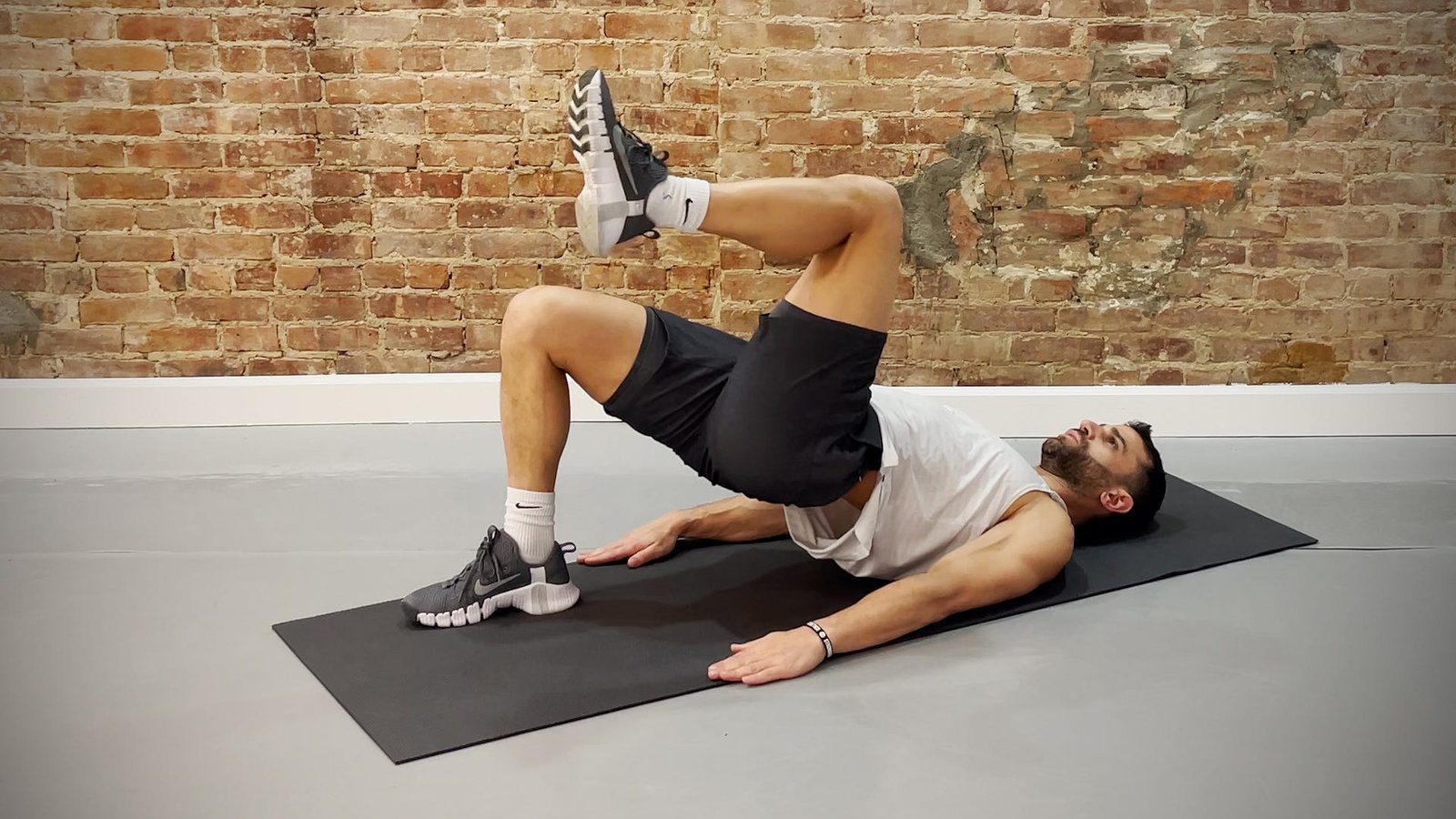
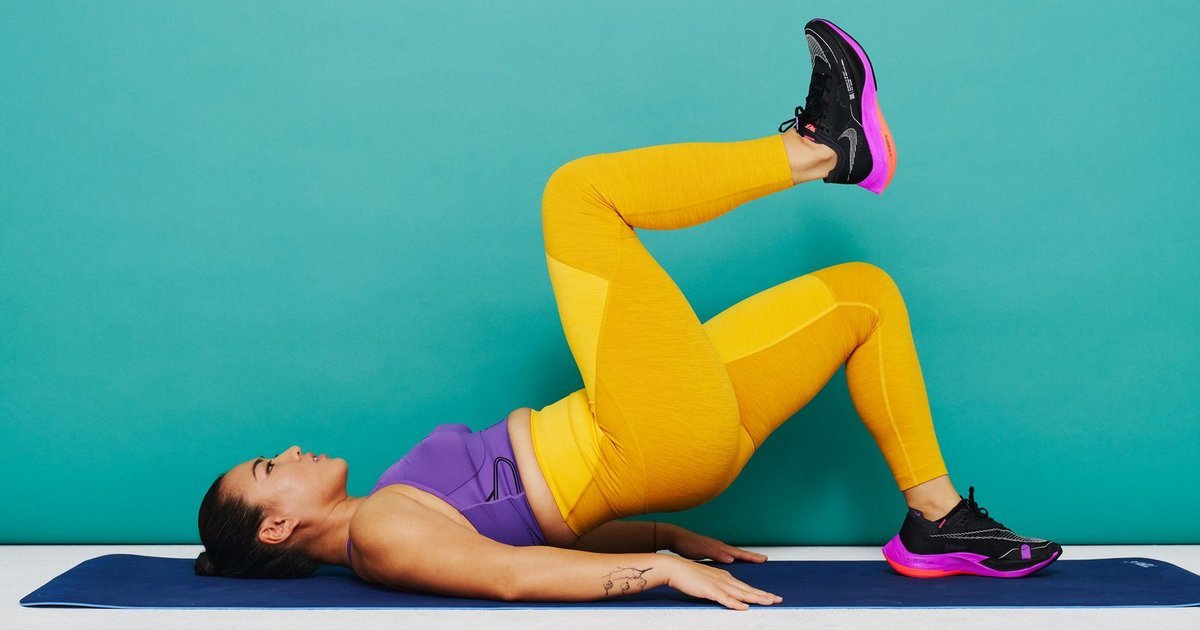
Start on your back on a firm mat with both knees bent and your feet about hip-width apart. Bring the heels into a position where you can press through the whole foot without the knees collapsing inward. Put your arms on the floor beside your torso. Your hands can help balance, but they should not be the main engine of the movement. Choose a spot on the ceiling and keep your head resting comfortably; there is no prize for craning the neck.
Before lifting, take a normal breath, let the ribs settle instead of flaring toward the ceiling, and gently tighten the abdomen. Now drive through both feet to raise the hips. Aim for a nearly straight shoulder-to-hip-to-knee line rather than chasing the highest pelvis position possible. The top should feel like the glutes are holding your thigh bones in line with the trunk, not like the lower back is bending into a huge arch. If you feel pressure in the back, try a lower bridge and better rib control.
Hold that two-foot position for three to five quiet breaths. Look at your belt line or imagine the front points of your pelvis facing straight upward. If you cannot stay level with both feet planted, the marching version is premature. Practice ordinary controlled bridges or ten-second holds first. The purpose of this setup is simple: once a foot leaves the mat, the other side must support the body without your hips turning into a seesaw.
Lift a knee without letting the pelvis follow
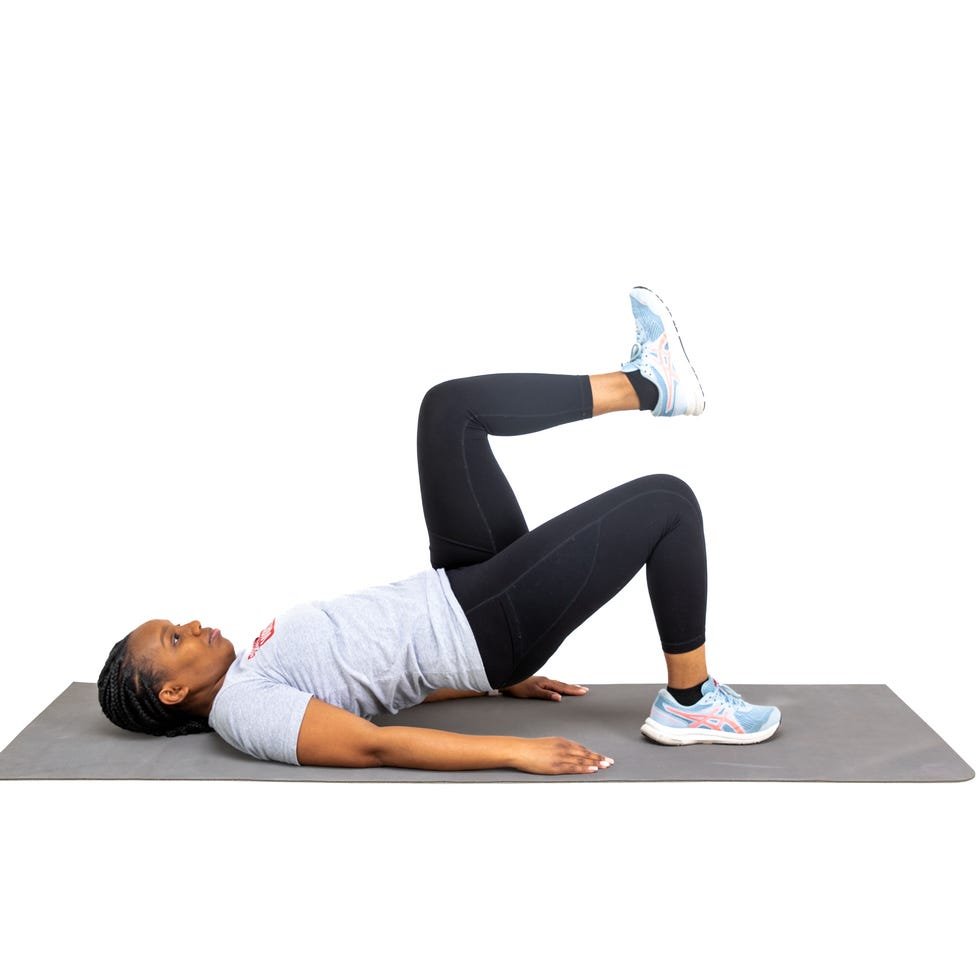
From the stable top position, lighten one foot, then lift it just far enough for the knee to move toward the chest. Keep the supporting foot planted and the opposite knee pointing roughly forward. The lifted knee does not have to touch your chest; a few inches of clearance is already enough to expose side-to-side instability. Pause briefly, place the foot back in exactly the same spot, restore even pressure, and repeat on the other side.
Think of the motion as an anti-rotation task rather than a high-knee competition. A clean march keeps the belt buckle facing the ceiling while one leg moves independently. Your planted hip may have to work harder to resist the tendency to roll toward the lifted side. A tiny, unavoidable shift of body weight is normal. A visible drop, a big sideways sway, or a twist that grows with every rep is a sign to reduce the lift, slow down, or end the set.
Use a comfortable rhythm: about one second to lift, a brief pause, and one second to return. Keep breathing; do not lock down your breath for a twenty-rep set. Count every foot lift as one march. Thus twelve total marches mean six on the left and six on the right. When you log sets, specify whether your count means total steps or repetitions per side. That tiny detail prevents an apparent doubling of training volume between weeks.
Unlike a repeated glute bridge, the march keeps hip extension mostly in place while the support alternates. A smooth line across the pelvis matters more than how high the knee travels. This is why the drill often feels surprisingly challenging without external weight.

Equipment Worth Exploring
Explore equipment, accessories and gear from our carefully selected range.

Studio Glute Drive
Plate-loaded hip-thrust machine with supported back pad and adjustable foot platform.

Standing Abductor
Plate-loaded standing hip abductor for targeted outer-glute and hip-stability training.



FID Bench MAX
Adjustable bench offering flat, incline, and decline positions + adjustable headrest.


Glute Ham Developer GHD-820
Adjustable glute-ham developer with contoured pads and a fold-out knee support.

Competition Plates
Competition-style bumper plates for Olympic lifts and loaded strength training.

Grip Plates
Rubber-coated weight plates with handholds for loading barbells and machines.
Understand the glutes, hamstrings and trunk demands
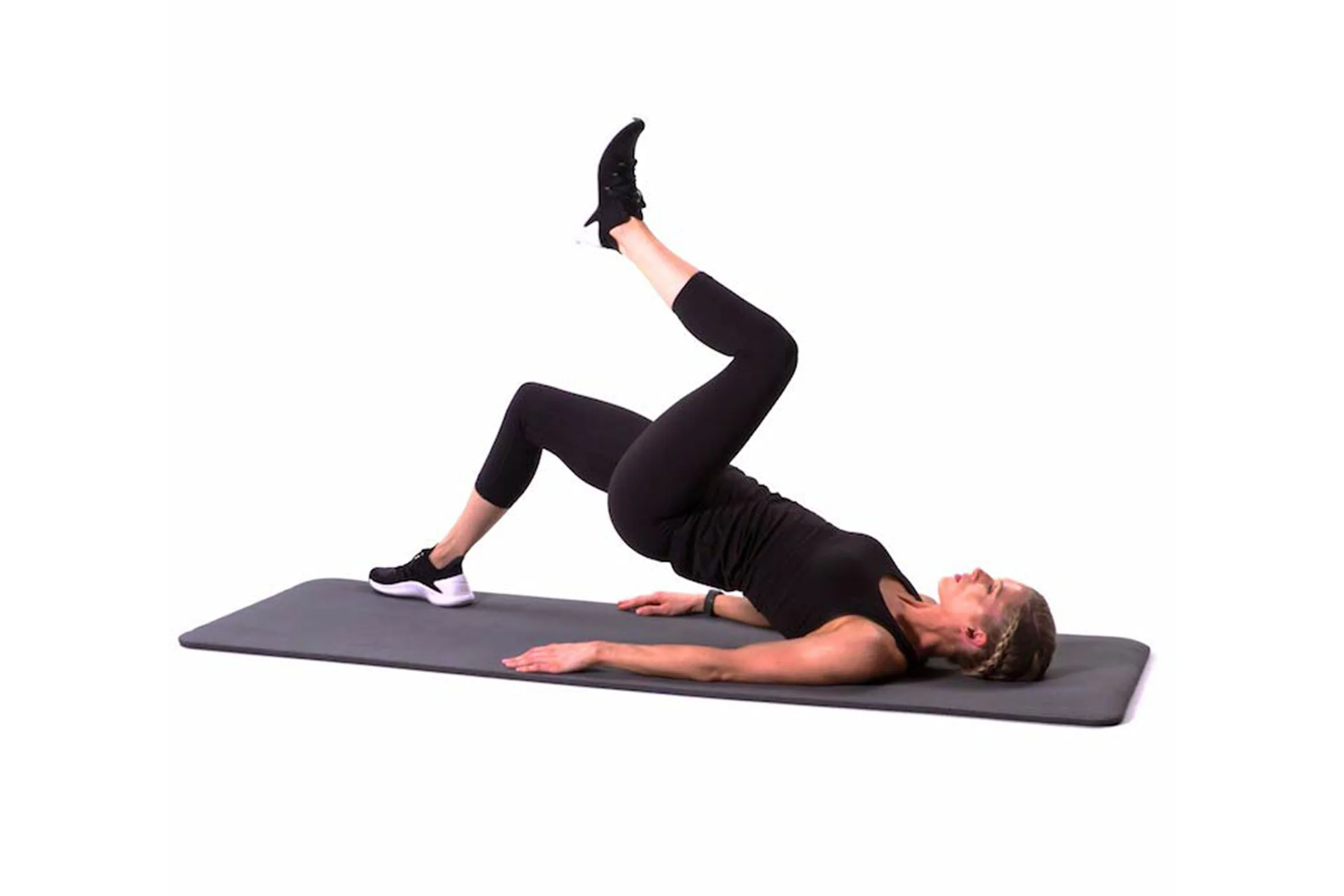
The large glute muscles and the hamstrings contribute to holding the hips extended against gravity. The outer hip musculature on the planted side helps resist pelvic drop when the other foot comes away. The abdominals and other trunk muscles resist unwanted spinal extension and rotation, while the hip flexors lift the free knee. The details vary with anatomy and position, but the practical message is consistent: this is not merely a tiny leg lift. You are maintaining a loaded position while removing half of the foot support.
Calling the march a glute exercise is reasonable, yet it does not make it an automatic substitute for progressively loaded squats, hip thrusts, deadlifts, or other substantial lower-body strength work. A light bodyweight march may become an excellent coordination or warm-up challenge long before it becomes heavy enough to drive continued muscle growth in a trained lifter. The glute bridge march primarily lets you test whether each side can hold an organized hip position while the opposite leg changes the support pattern.
Nor is a wobble diagnostic proof of an injury, a weak specific muscle, or a medical imbalance. Sometimes the exercise is simply new, the foot is too far away, or you are fatigued. Track your own control over repeated attempts rather than turning a brief hip dip into a sweeping conclusion about posture or athletic performance. A better practical marker is whether you can perform comparable left and right marches with the same height, tempo, and confidence.
For lifters who already do heavy glute work, a few deliberate marches can be useful near the start of a session or between easier movements. Keep the drill in proportion to its task: deliberate stabilization and position practice, not a promise of magical muscle activation that replaces training progression.

Funny Gym Shirts & Workout Gear
Funny gym shirts, tanks, hoodies and workout gear for lifters who like training hard.

This Princess Levels Up Shirt Princess Peach Booty T-Shirt
Make gym days more fun with “This Princess Levels Up” style.

Booty Builder Captain Marvel Leg Day & Squats Vest Tank Top
Show some personality between sets with “Booty Builder”.

Booty Builder Mode Captain Marvel Decal Water Sticker
A fun “Booty Builder Mode” touch for bottles, laptops, and lockers.

Booty Building Mode Wonder Girls Meme Hooded Hoodie
Stay casual and show some gym-girl attitude with “Booty Building Mode Wonder Lifter”.

Princess Booty Builder Sweater Girls Fairy Tale T-Shirt
For laid-back days and gym-girl humor: “Gym Princess”.

Booty Out Of This World – Girl Alien Meme Leg Day & T-Shirt
Show some gym-girl attitude with a playful “Booty Out of This World” tee.

Adventure Girl Booty Builder Leg Day Meme Hooded Hoodie
Stay casual and show some leg-day attitude with “Adventure Girl”.

Smash Weights She-Hulk Girls & Booty Builders Vest Tank Top
Bring “Smash Weights” humor to your next lifting session.

Booty Building Mode Witch Meme Leg Day & Squat Lovers Tank Top
Bring “Booty Building Mode” humor to your next lifting session.

Spread Cheeks Not Hate – Meme Booty & Glutes Lovers T-Shirt
Show some gym-girl attitude with a playful “Spread Cheeks Not Hate” tee.
Fix hip drop, back arching, cramps and rushed reps
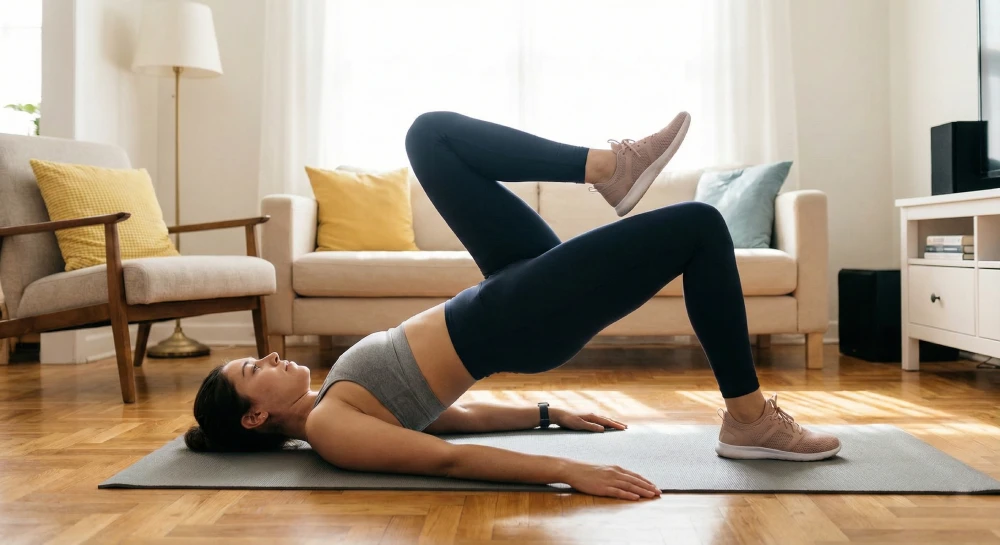
If the pelvis falls as soon as a foot leaves the floor, shrink the knee lift and spend another second stabilizing with both feet before switching sides. You can also put both feet back down and use alternating heel lifts without fully unloading either leg. Start from your most repeatable position, not your longest possible bridge. A large mirror is optional; filming one set from the foot end can reveal rotation that is hard to feel. Treat video as a feedback tool, not a verdict on flawless anatomy.
If your lower back arches as the set continues, lower the pelvis slightly and bring the ribs back over the abdomen. Exhale as the leg lifts and keep your shoulders relaxed against the floor. The shoulders are an anchor, not something to shrug or bridge up onto. Discomfort that changes with a smaller range or steadier breathing is a reason to adjust; persistent pain is a reason to stop rather than force the drill through it.
Hamstring cramping is another common interruption. Moving the feet a little closer to the hips may help, as can briefly lowering the bridge, resetting the foot position and reducing the hold duration. Do not assume every cramp has one cause. Fatigue, unfamiliar loading and individual tolerance all matter. If the cramps recur every session, use an easier variation and avoid pretending an equipment change guarantees a fix.
Finally, do not race the stopwatch. Ten steady marches with a level pelvis provide a clearer progression signal than thirty rapid steps that slowly sink toward the mat. Once speed hides your balance errors, adding a resistance band makes the movement harder to interpret, not necessarily better. Make the quality standard visible: stable foot, quiet trunk, controlled return and no abrupt drop between sides.
Equipment Worth Exploring
Explore equipment, accessories and gear from our carefully selected range.
VOLTRA
Compact digital cable trainer with smooth, adjustable resistance.

Go-Tone Pro
Portable digital cable trainer with up to 66 lb (30 kg) of adjustable resistance.

VForce Wall Trainer
Space-saving wall-mounted functional trainer with pivoting cable arms and variable resistance ratios.

45° Hyperextension HPX-650
Angled back-extension trainer with split padding, a ribbed footplate and resistance-band pegs.

GymPin D Cuffs
Adjustable wrist cuffs with textured grips for supported cable-machine exercises.


Leg Extension/Curl BCO-780
Leg extension and lying leg curl combo with plate loading, band pegs and a cable-loading option.


Squat Harness
Wearable harness for hands-free cable squats, sled work, and lower-body training.
Progress the march and place it in a four-week plan
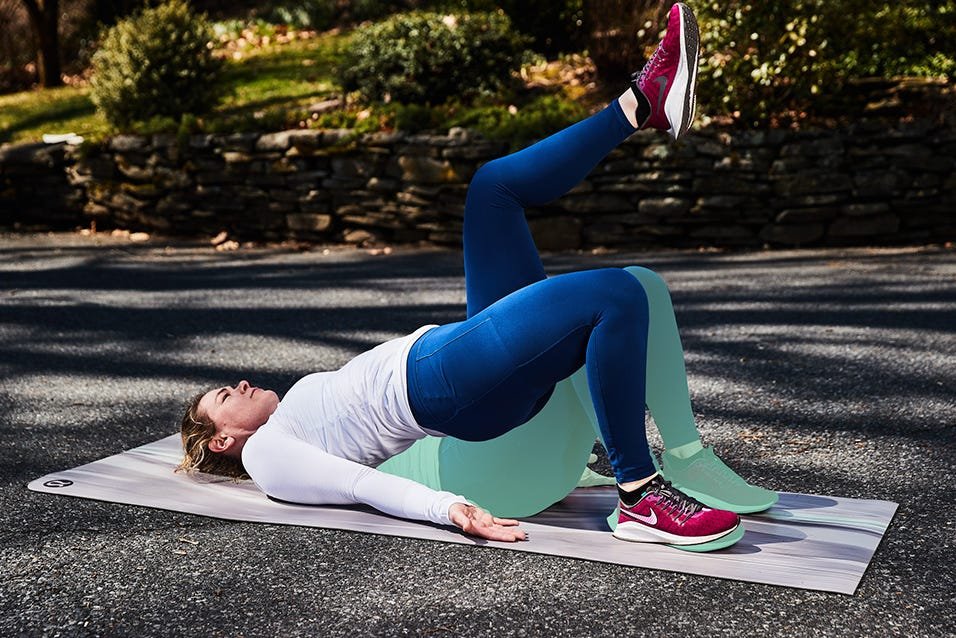
The simplest progression is not to add a barbell. Begin with symmetrical glute bridge holds, then heel lifts, then small alternating marches. When those are steady, extend the pause at the top of each knee lift or add a few total steps. A small loop band above the knees changes the side-hip demand, but it is an optional variation rather than an essential purchase. A longer single-leg bridge hold or bench-supported marching hip thrust is a bigger progression, and both require their own technique reset.
Here is a practical four-week example for a healthy lifter who can already hold a regular bridge comfortably. In week one, perform two sets of eight to ten total marches with a one-second pause on each lift, resting around a minute. In week two, use two or three sets of twelve total marches at the same controlled pace. In week three, keep that count and hold each lift for two seconds without letting the pelvis roll. In week four, aim for three sets of twelve to sixteen total marches only if every previous step remained level. These are coaching examples, not results from a trial of this exact four-week program.
Stop a set when you can no longer hold the top position consistently, even if the planned rep number has not been reached. Allow at least a day between demanding sessions on the same muscles if you need recovery, and place this drill where it does not make your main lifts worse. As a warm-up, one or two easy controlled sets may be enough; as an accessory, two or three slightly harder sets can fit after heavy lower-body work.
To measure improvement, record total clean marches, pause length, whether the hips stayed level and how you felt on each side. Equipment is optional: a mat and enough floor space usually do the job. A bench, cable setup or glute-drive machine may later support heavier hip-extension work, but it represents a different exercise and a different loading problem. Keep your bridge march honest about what it actually trains.
Funny Gym Shirts & Workout Gear
Funny gym shirts, tanks, hoodies and workout gear for lifters who like training hard.
GymTok – TikTok Parody Peach Booty Training Graphic for T-Shirt
A t-shirt featuring the GymTok – TikTok Parody Peach Booty Training Graphic for Gym Girls artwork, bringing lifting-inspired humor and distinctive gym graphics to your everyday gear.

Sleeping Booty – Bootybuilding Meme Princess, & T-Shirt
Make gym days more fun with “Sleeping Booty” style.

I Love Booty – Valentine's Day Peach Meme Jumper Pullov T-Shirt
Add a playful “I Love Booty” touch to your casual rotation.

Let It Grow Booty Builder Hip Thrust Meme Athletic Tank Top
Your gym-day look, with a playful “Let It Grow” twist.

Funny Thickers Gym | You're Not You With A Small Booty T-Shirt
For laid-back days and leg-day humor: “Thickers”.

Girl Booty Builder Leg Day Catwoman Meme Hoodie
Bring “Gym Girl Booty Builder” gym humor to lazy days and post-workout plans.

Hippo Thrust Meme – Hip Thrusts & Leg Day , Gymbro, T-Shirt
Bring “Hippo Thrust Gym Meme” humor to your next gym day.

Fantastic Booty Leg Day Sweater Squats & Glutes Meme T-Shirt
Keep things casual with a little “Fantastic Booty” attitude.

Big Butt Energy Sweater Leg Day & Glute Gains Meme T-Shirt
For laid-back days and leg-day humor: “Big Butt Energy”.

Booty Building Mode Sticker
Stick a little “Booty Building Mode” humor on your favorite gear.