Advertising disclosure: This page includes affiliate product links that may earn us a commission, as well as products from our own store.
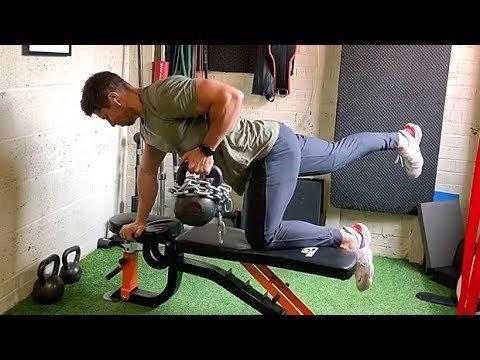
A bird-dog row combines a one-arm row with a position that asks you to keep your trunk and hips steady. One hand and the opposite knee support you while the free leg reaches behind and the free hand rows a weight. That combination creates a different challenge from a heavily supported dumbbell row. Use it when you want to practise pulling without much body movement, and judge the set by control rather than the largest dumbbell you can move.
Choose the bench and establish the support points
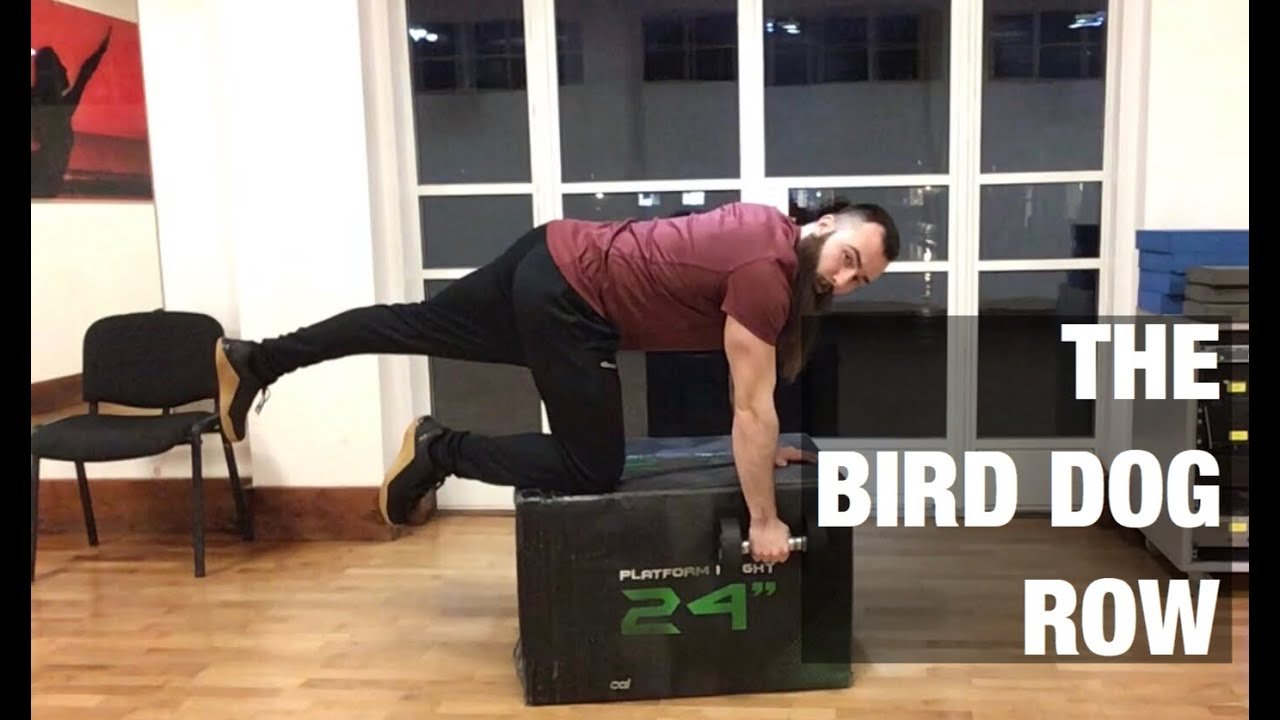
Use a firm, stable bench with enough surface for a palm and knee. Check that its adjustment mechanism is locked and that the feet do not rock or slide. Clear the area around the bench so you have room to reach the leg backward and place the weight down. A sturdy padded box may serve the same purpose if the height, width and stability are appropriate; a wobbling household surface does not.
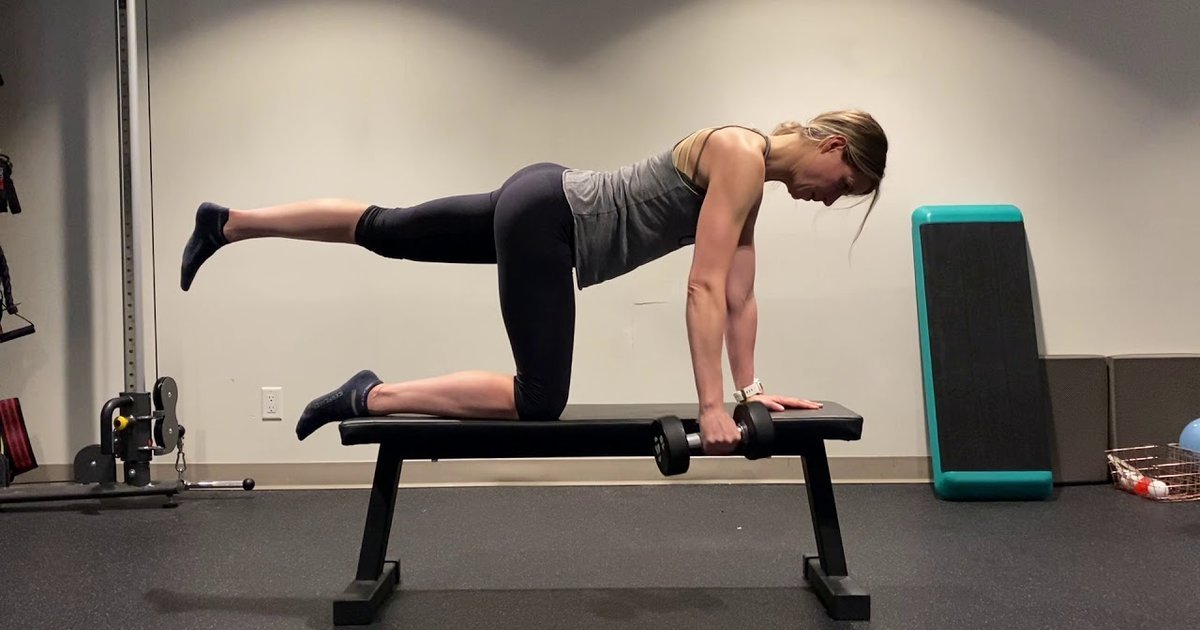
The support pattern matters. If you row with the right hand, support yourself with the left palm and right knee, then extend the left leg behind you. Reverse that arrangement for the other side. Your supporting hand and supporting knee are on opposite sides of the body. Establish those contacts before trying to pick up a demanding weight.
Practise the position without a dumbbell first. Place the hand approximately under the shoulder and the knee under the hip, adjusting for the bench dimensions. Reach the free leg backward while keeping enough room for the rowing arm to hang beside the bench. Check that the pad edge does not force the supporting wrist or knee into an uncomfortable position.
Plan the transition into the set. Position a light weight where you can reach it without a sudden twist or a long unsupported stretch. If getting the weight into your hand is harder than the repetitions, change the setup or use a supported row instead. Balance practice should start from an arrangement you can enter and leave calmly.
Reach the leg back without opening the hips
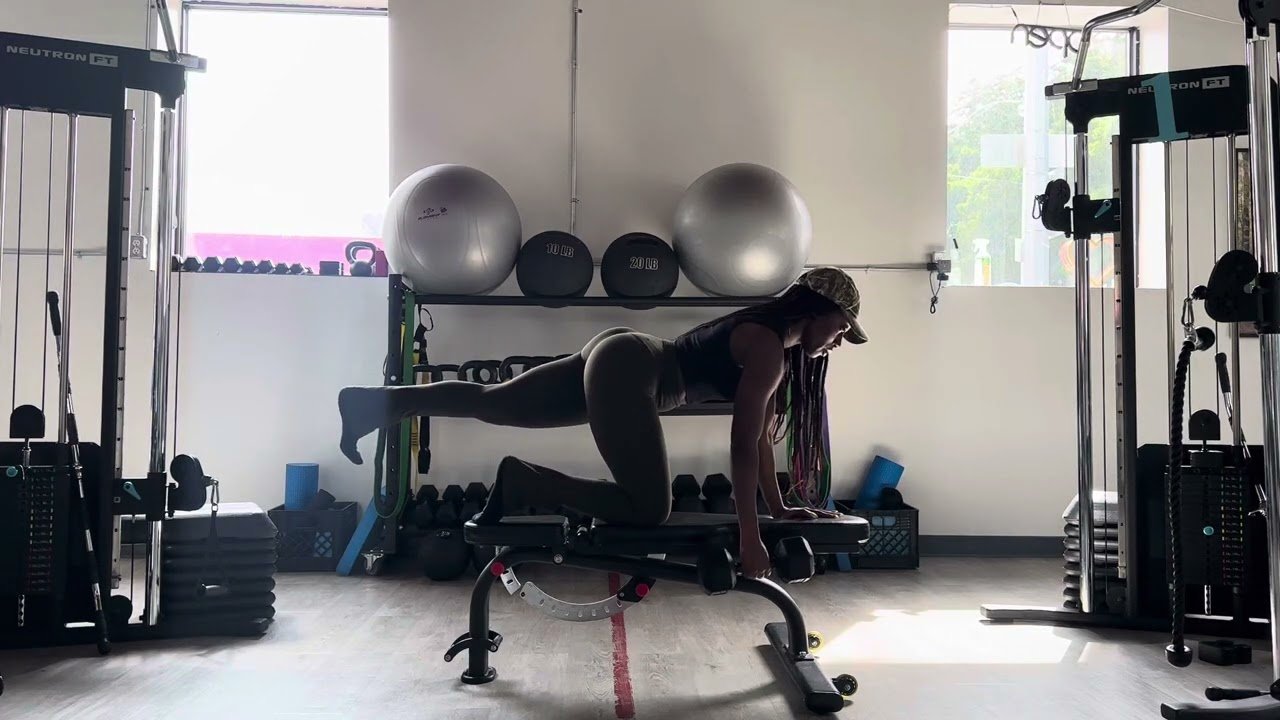
The bodyweight bird dog uses opposite-arm and opposite-leg movement while the trunk stays comparatively steady. In the rowing variation, the free arm holds and moves a weight instead of simply reaching forward. Keep the extended leg near the line of your trunk rather than lifting it as high as possible. More height is not automatically more useful work.
Imagine the front of your pelvis continuing to face the bench or floor. The reaching leg should not pull the hip open toward the ceiling. Likewise, avoid a large arch through the lower back to make the foot appear higher. Use a reach you can maintain while breathing and keeping your head in a comfortable continuation of the spine.
A rear or slightly elevated recording can reveal rotation that a side view misses. Look at whether the waistband repeatedly tilts or the supporting shoulder lifts with each repetition. Use the recording as feedback, not as a reason to demand a perfectly motionless body. Small adjustments are expected when balancing; a repeated large turn to complete the pull is a reason to simplify.
If the position deteriorates before the arm becomes tired, that is useful information about the task you chose. Put the leg down, reduce the weight or return to a more supported exercise. Do not interpret losing balance as proof that the back muscles have reached a productive training limit. The set can end because the position is no longer controlled.
Row the weight without borrowing a torso twist
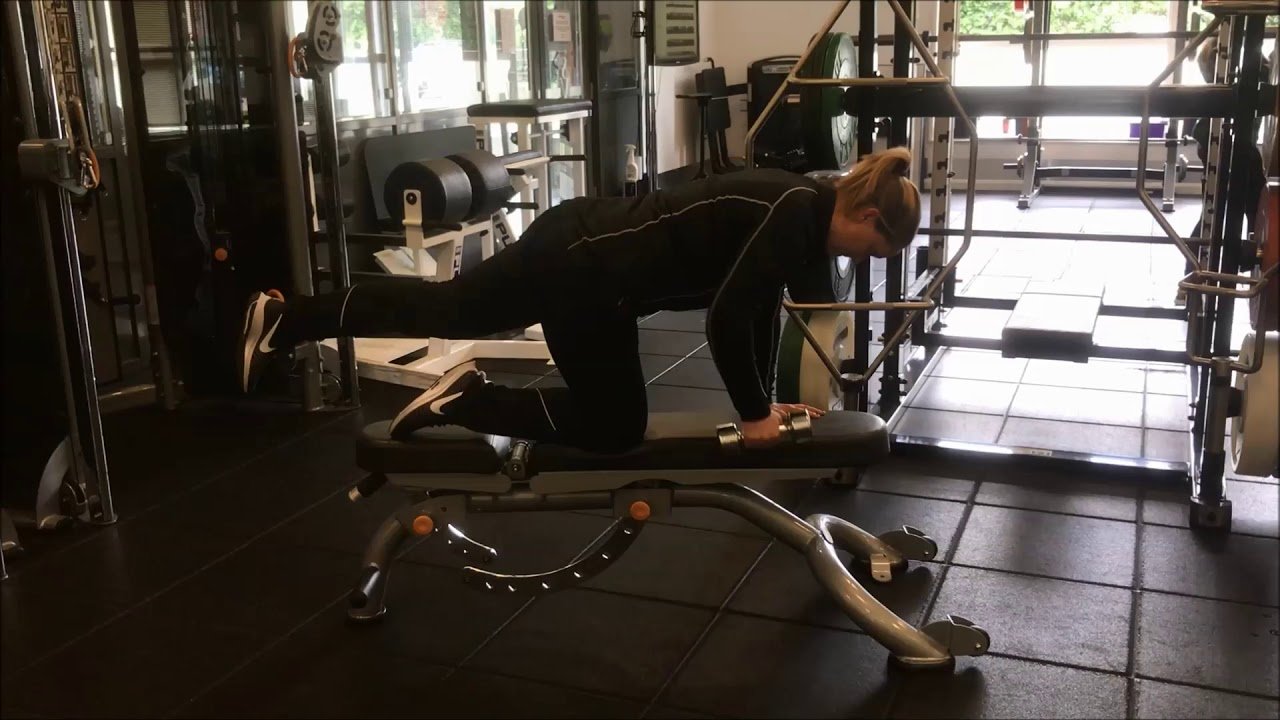
Let the working arm hang with the weight clear of the bench. Pull the elbow toward the lower ribs or hip area while the chest remains mostly directed downward. Allow the shoulder blade to move naturally with the row rather than trying to pin it rigidly in one position. Keep the handle secure and the wrist reasonably aligned instead of curling it to gain extra height.
The useful endpoint is the one you can reach without turning the chest open or yanking the shoulder backward. There is no prize for bringing the dumbbell higher by changing the whole-body position. Different limb lengths and bench widths alter the exact path, so give the implement enough clearance and choose a comfortable movement rather than copying somebody else's endpoint precisely.
Lower the weight deliberately while maintaining the same basic support arrangement. Do not let it drop and pull you toward the edge. At the bottom, regain control before beginning the next repetition. A short pause can be a helpful rehearsal, but it is not a mandatory tempo or a claim that paused rows produce better results.
For example, compare two sets at the same load: in one, the leg remains steady while the elbow bends and straightens; in the other, the hip swings upward every time the weight rises. Those are different performances even if both contain eight repetitions. Record the first clear loss of your intended position rather than counting every possible way of lifting the dumbbell.
Use regressions and equipment variations deliberately
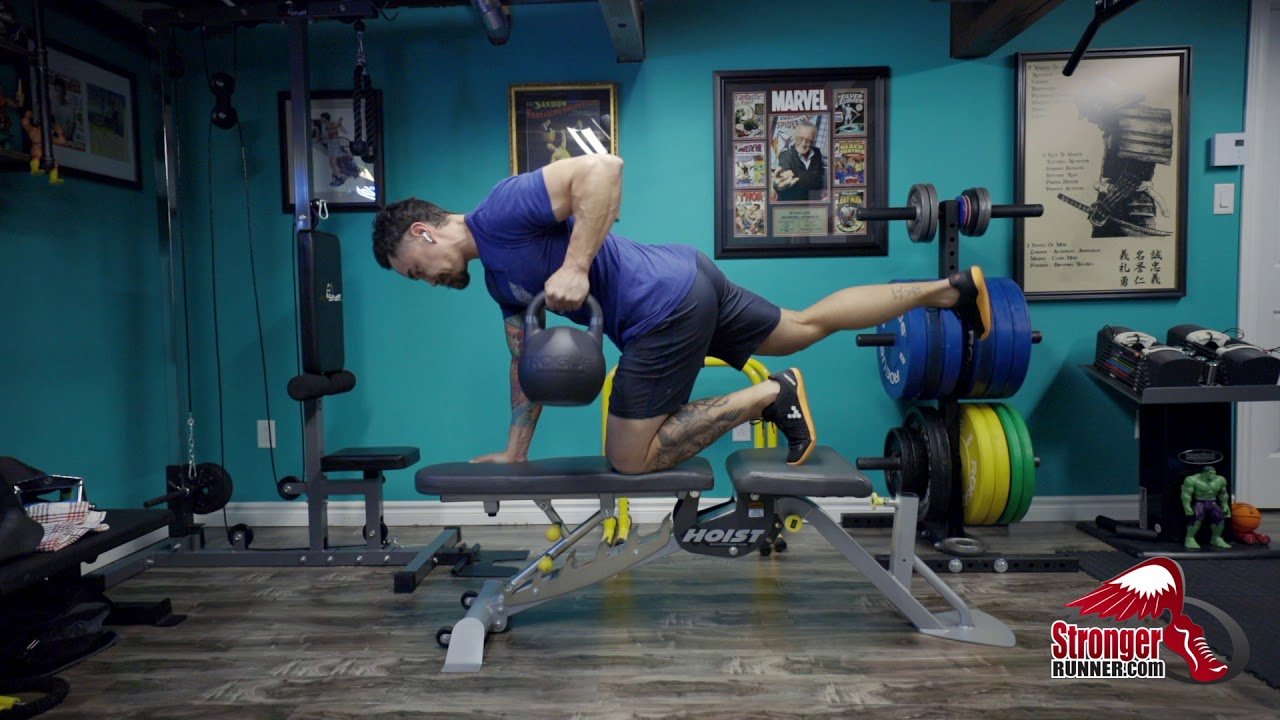
Separate the tasks if the combination is too demanding. Practise an unloaded bird dog on the floor to work on opposite-limb coordination, and use an ordinary supported one-arm row for the pulling work. Keeping more of your body supported is a reasonable training choice. It does not make the exercise a lesser version when your main goal is to challenge the rowing muscles.
You can also practise a quadruped row with both knees supported before attempting the extended-leg position, provided the bench is wide enough and the weight has clearance. Change one feature at a time. Lifting a leg, increasing the weight and moving to a narrower surface together makes it difficult to understand which change caused a problem.
A kettlebell can be used in a bird-dog row, but its handle and hanging bell change the clearance compared with a dumbbell. Rehearse it lightly and check that it does not strike the bench or supporting limb. Different implements are options, not automatic progressions. A photograph of the kettlebell variation illustrates that choice rather than prescribing a specific model or load.
For equipment selection, the essentials are a suitable support surface and a manageable implement. Fixed dumbbells, securely locked adjustables or compatible plate-loaded handles can all serve ordinary rowing work. If using a plate-loaded setup, check the required plate fit and collars rather than assuming every component is interchangeable. A stable flat or adjustable bench is useful only if its pad, dimensions and locking arrangement suit your actual setup. The equipment choices alongside this guide are optional alternatives, not a shopping list required to learn the movement.

Equipment Worth Exploring
Explore equipment, accessories and gear from our carefully selected range.


FID Bench MAX
Adjustable bench offering flat, incline, and decline positions + adjustable headrest.


Multi Bench MBX-650 2.0
Adjustable multi-bench with roller adjustment, 15 backrest positions and accessory mounts.


Rubber Hex Dumbbells
Rubber-coated hex dumbbell pairs with a stable shape for home and commercial strength training.


Speed Collar
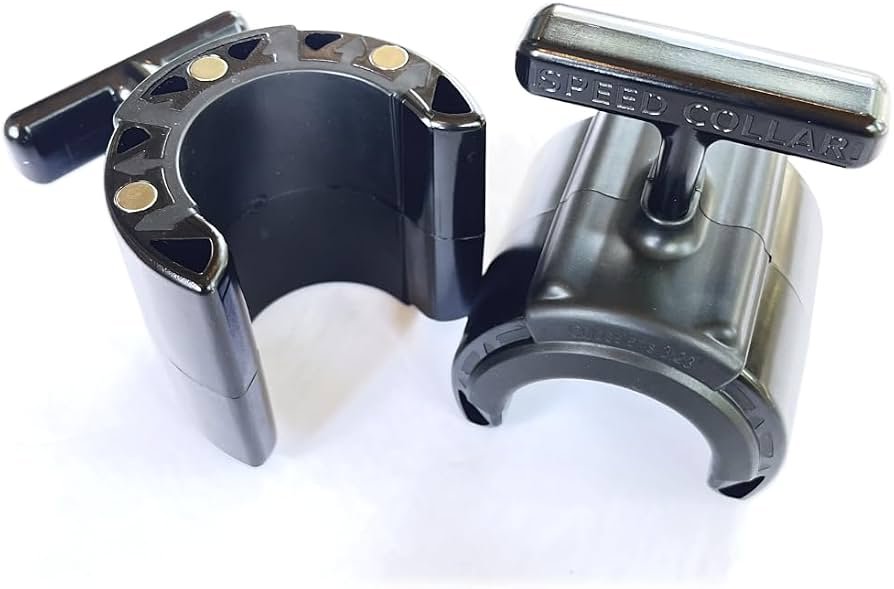
Quick-release collars designed to secure weight plates on standard two-inch Olympic bars.
Log controlled practice before progressing the load
Begin with an unloaded rehearsal and a light implement. A practical starting example is one or two sets of five to eight controlled repetitions per side, stopping while you can still maintain the position. This is an example for learning the combination, not a research-proven optimum or a prescription for treating back pain. Keep your existing main pulling work in view before adding more accessory sets.
Record the weight, repetitions per side, bench orientation, support arrangement and whether the free leg stayed extended throughout. Note the point at which you changed the position or put the foot down. Keep rest periods reasonably similar when comparing sessions. A new bench or a different-sized dumbbell may change clearance enough to explain a different result without implying that you suddenly gained or lost strength.
Progress after repeated sessions with a reliable setup and smooth repetitions. You might add one repetition before making the smallest available weight increase. Avoid simultaneously increasing load, shortening rest and extending the set to the point of losing balance. If a heavier dumbbell turns the exercise into a twisting row, return to the previous load or choose a more supported row for heavier work.
Finish by returning the weight to a stable position and restoring your support points before dismounting. Do not wait until you are falling sideways to decide where the dumbbell should go. Stop if the movement causes pain or a sense that you cannot safely control the setup. The useful result is a repeatable pull with manageable trunk movement; the exercise does not need to replace every other row in your programme to earn a place.

Funny Gym Shirts & Workout Gear
Funny gym shirts, tanks, hoodies and workout gear for lifters who like training hard.

Shirt Pull Day – Back & Biceps Meme Top T-Shirt
Heavy lifts, good laughs, and a little “Pull Day Graphic” energy.


Gym Dost Thou Even Pull Medieval Knight Back Day Crewne T-Shirt
Show some gym-day personality with “Dost Thou Even Pull Medieval Knight Back”.

I Have Abs-Olutely No Idea Meme Hooded Newbies & Hoodie
Keep it laid-back with a little “I Have Abs-olutely No Idea” attitude.

One More Rep Shirt: Motivational & T-Shirt
Make gym days more fun with “One More Rep” style.

Consistency King Tee
Make gym days more fun with “Consistency King Stoic Greek God Marble” style.

Mind Muscle Perfection Brain and Biceps Gym for Science Tank Top
Bring “Mind Muscle Perfection Brain and Biceps” humor to your next lifting session.


Swolenomics Bro Science Muscle Graph : The Ultimate T-Shirt
Heavy lifts, good laughs, and a little “Swolenomics Bro Science Muscle Graph” energy.

Get A Grip Grip Strength Vest Tank Top
Bring “Get a Grip” humor to your next lifting session.