Advertising disclosure: This page includes affiliate product links that may earn us a commission, as well as products from our own store.
The waiter curl changes how you hold a dumbbell: both palms support the underside of its upper head while the weight hangs vertically. That makes the setup feel very different from holding a handle, even though the main movement is still bending your elbows. It can be a useful accessory curl, provided the dumbbell stays secure and the repetition remains controlled. Learn the hold first, then decide whether this variation earns a place alongside the curls you already perform.
Choose a dumbbell you can support securely
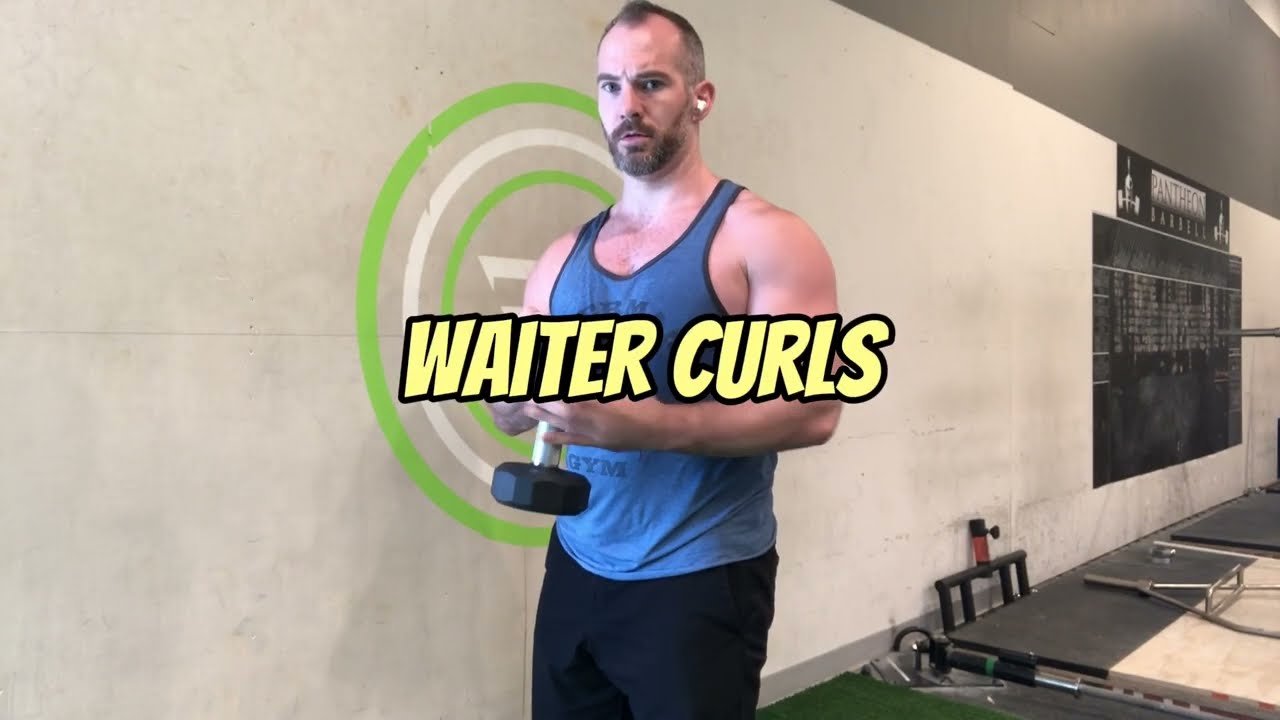
Begin with a light dumbbell and examine the contact surface beneath its upper head. You need room for both palms to support it without the weight balancing on a narrow edge. The lower head must also clear your body through the intended movement. A fixed dumbbell with a suitable flat underside is a straightforward place to learn, but the actual shape matters more than the label on the rack.
Do not assume every adjustable dumbbell is suitable for this hold. Selector mechanisms, removable plates and different head profiles can make supporting the head quite different from using the handle. Follow the manufacturer's permitted handling instructions. If compatibility is unclear, use the dumbbell for a conventional handle-grip curl instead. An unfamiliar grip is not a reason to improvise around a locking mechanism.
To establish the hold, bring the light weight into position with a secure grasp, then place both palms beneath the upper head before beginning the set. Keep the dumbbell centered between the hands. If one hand is taking most of the pressure or the weight tips, put it down and reset. Do not try to repair a slipping hold halfway through a difficult repetition.
Think about the end of the set as well as the start. Leave a clear place to lower and set down the dumbbell, keep your feet out of its path, and stop while you can still manage that return. The object is not to demonstrate how long you can balance an awkward weight. A stable hold should make the elbow-flexion work possible, rather than become the main challenge.
Make the elbows drive the repetition
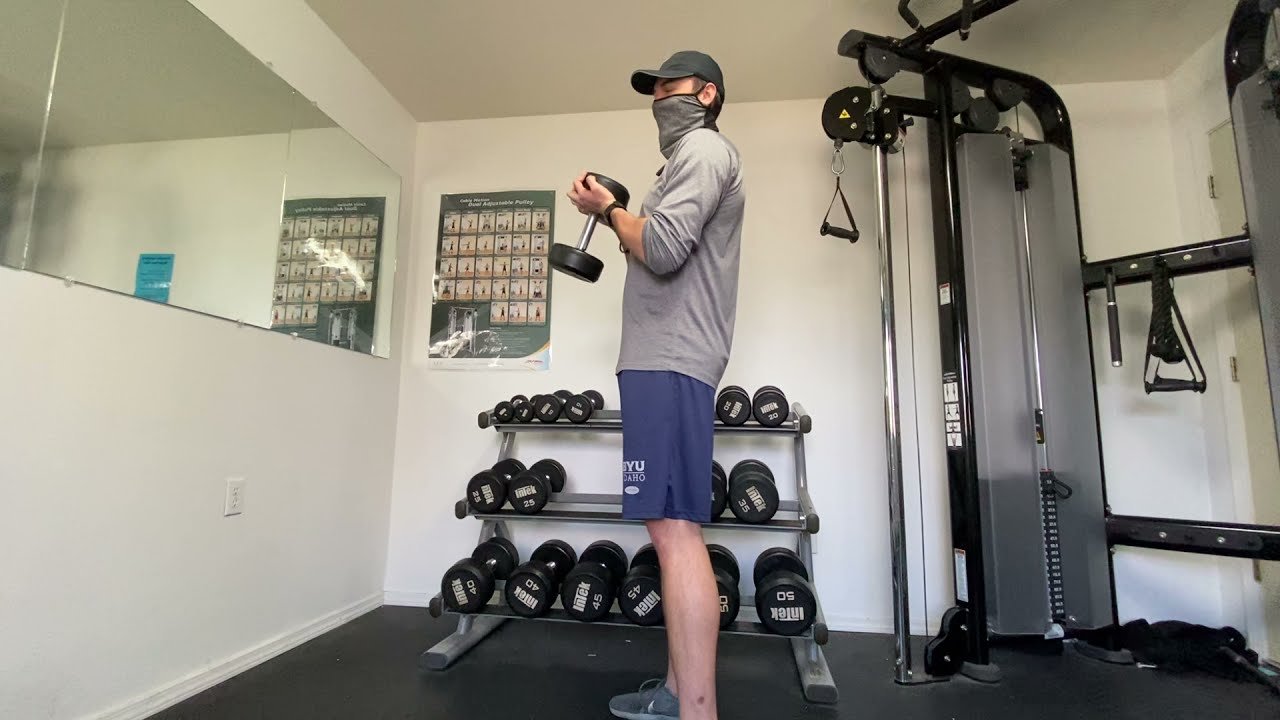
Stand in a balanced stance with your trunk controlled and the dumbbell in front of you. Keep the upper arms reasonably steady near the torso while the forearms move upward. Your hands remain underneath the upper head. Curl only as high as you can maintain the same support and a controlled shoulder position, then lower deliberately.
Watch for a change in the movement's source. If the final part of the lift comes from leaning backward, lifting the shoulders or pushing the elbows far forward, it no longer resembles the repetition you started with. You may still move the dumbbell higher, but extra height is not automatically better execution. Reduce the load or finish the set before those changes take over.
Your wrists will need to accommodate the palm-up support position. There is no benefit in forcing an extreme wrist angle to imitate someone else's demonstration. Keep the weight centered, choose a comfortable position and avoid repeatedly bending the wrists to bounce the dumbbell upward. If the hold is uncomfortable even with a light weight, a normal dumbbell curl is a reasonable alternative.
A side-view recording can answer a useful question: are the elbows bending while the torso stays fairly consistent, or is the whole body moving the weight? Record a short light set rather than attempting a maximum for the camera. Compare the first and last repetitions, then change one thing at a time. A smaller load is often a clearer correction than adding several competing cues.
Keep range and tempo honest as fatigue builds
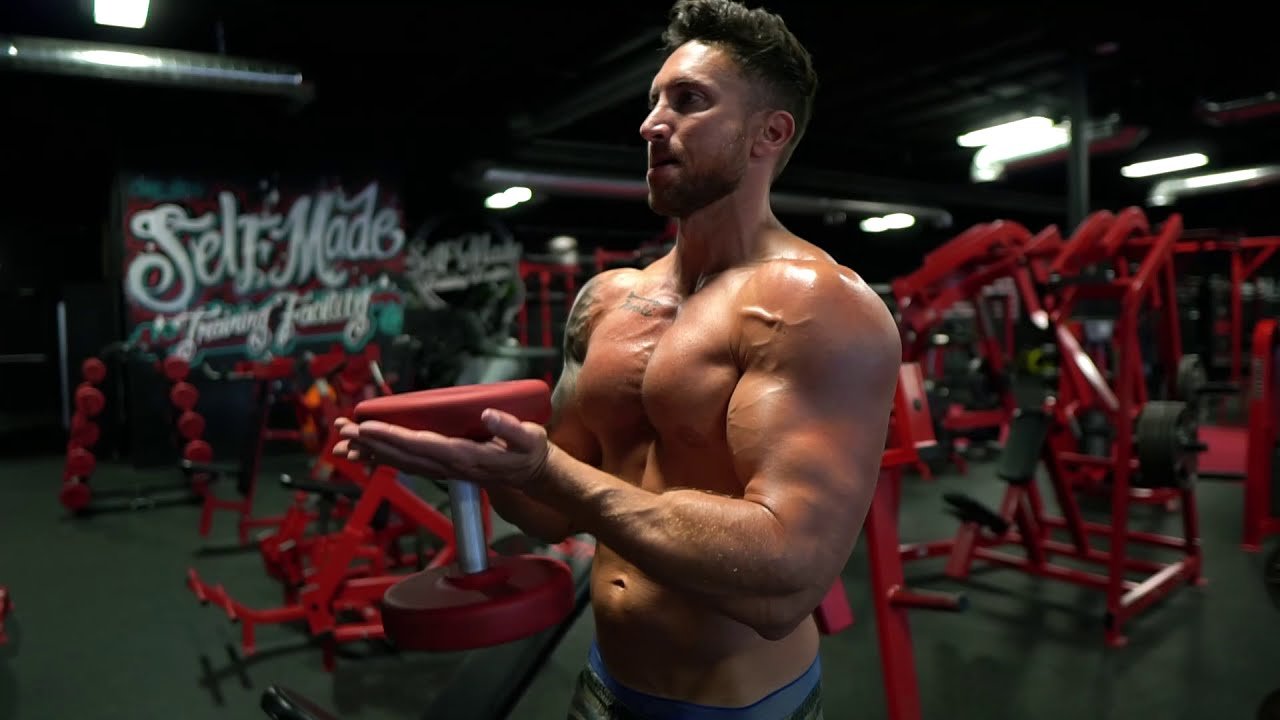
The bottom position is determined partly by the dumbbell's size and where it contacts or approaches your body. Lower to a comfortable, repeatable position without losing the palm support. Avoid claiming a full repetition simply because the weight moved somewhere between your waist and chest. Establish your own clear start and finish before you count the set.
A partial-range waiter curl is a variation, not a secret correction for every lifter. If you deliberately use a shorter range, label it in your log and compare it with the same range next time. Do not silently shorten each repetition as fatigue increases, then treat a higher count as equivalent progress. The same principle applies to a pause: record it if you use one consistently.
Lower slowly enough to control the weight, rather than allowing the lower head to swing and pull the upper head away from your hands. You do not need an elaborate stopwatch prescription to learn that skill. A deliberate ascent and descent, with a brief moment to confirm balance at the top, gives you a practical standard. Stop if maintaining that standard becomes doubtful.
For example, suppose your target is twelve controlled repetitions. If repetition ten requires a backward lean and eleven loses the established bottom position, the useful result is not automatically twelve successful reps. Record the controlled work you completed and what ended the set. That tells you whether the next adjustment should involve load, range, rest or the choice of exercise.
Use supported variations and other curls for a reason
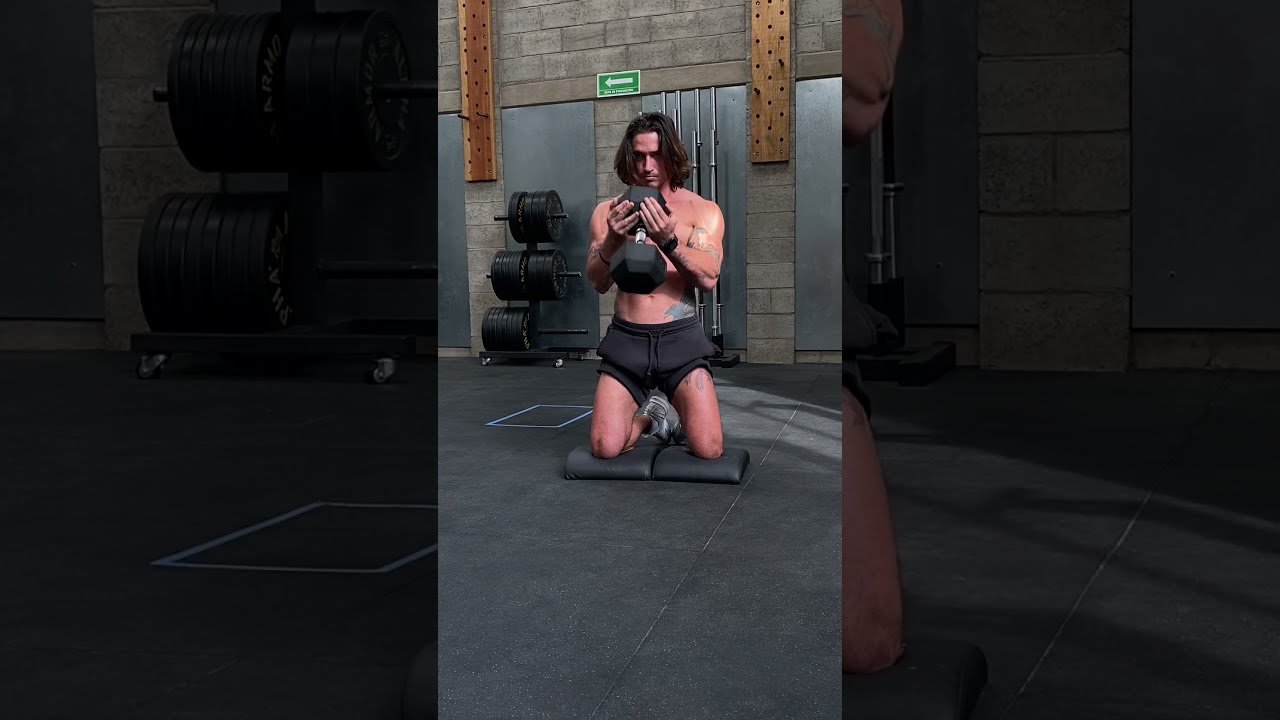
Kneeling removes the standing stance and may make it easier to notice some forms of body movement. It does not prevent every compensation: you can still lean, shrug or change the wrist position. Choose a comfortable kneeling surface and establish the same secure hold before curling. Treat it as a different setup that needs practice, rather than assuming it automatically makes a heavy dumbbell manageable.
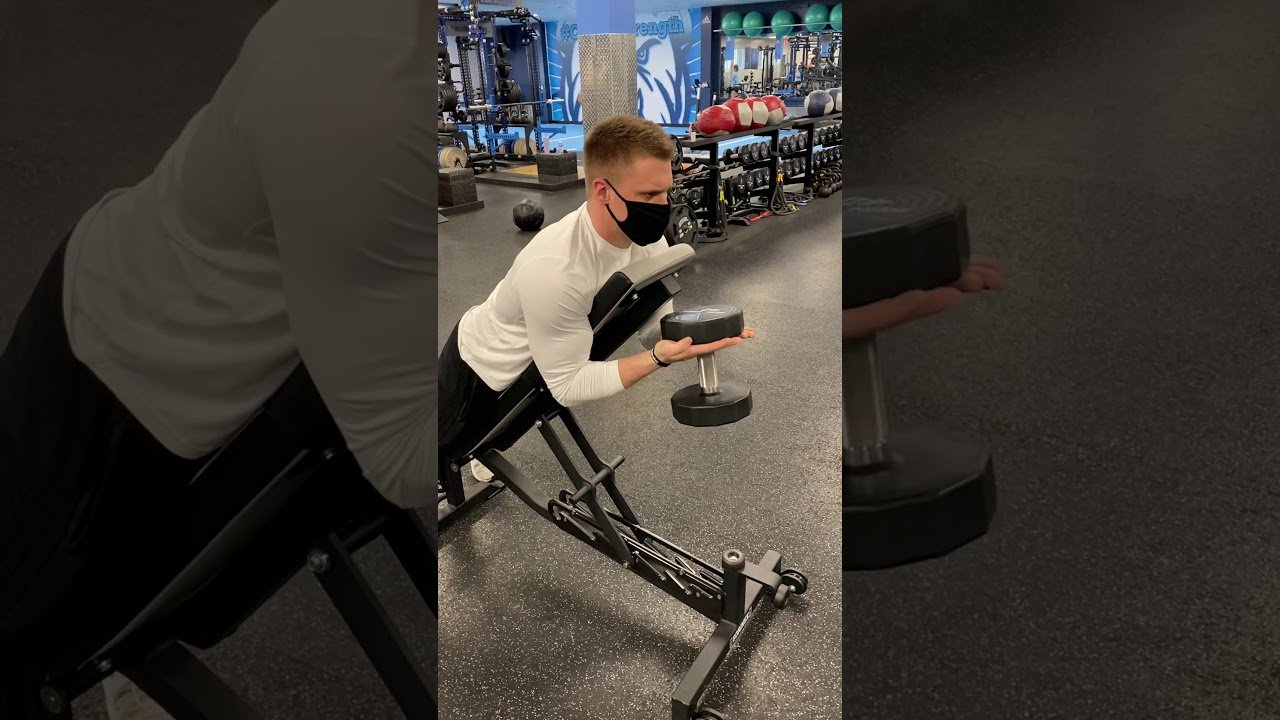
A prone, chest-supported waiter curl adds a bench and changes how your arms hang. Check that the bench is stable, the dumbbell clears its frame and the floor, and you can start and finish without an awkward reach. Choose a light load while learning the arrangement. Do not copy a bench angle or weight just because it appears in a demonstration; your limb lengths and available equipment affect clearance.
A conventional dumbbell curl keeps the load in the handles and allows each arm to work independently. An EZ-bar curl supplies a shared handle with a different hand position. These are useful alternatives when palm support is uncomfortable, when you want simpler loading, or when you want to compare each arm's performance. None needs to imitate the waiter grip to count as productive biceps work.
This is where equipment choice should follow the exercise. A suitable fixed dumbbell supports the waiter variation; a stable adjustable bench can support a prone variation; ordinary dumbbells and curl bars support the alternatives. Adjustable dumbbells and plate-loading handles can still be useful for conventional curls when used as intended. Their presence in an equipment range does not establish approval for supporting removable heads from underneath.

Equipment Worth Exploring
Explore equipment, accessories and gear from our carefully selected range.


Rubber Hex Dumbbells
Rubber-coated hex dumbbell pairs with a stable shape for home and commercial strength training.

FID Bench MAX
Adjustable bench offering flat, incline, and decline positions + adjustable headrest.




EZ Curl Barbell
Olympic EZ curl bar with angled grips for curls and triceps exercises.

Dual Hook EZ Curl Bar
Angled aluminum dual-hook cable bar for biceps curls and pulldown variations.

Multi Bench MBX-650 2.0
Adjustable multi-bench with roller adjustment, 15 backrest positions and accessory mounts.

Fit it into arm training without chasing peak promises
Use the waiter curl as an accessory you can repeat consistently. As an illustrative starting experiment, replace an existing curl slot with two light sets in a comfortable moderate repetition range, rather than automatically adding more work to every session. Leave enough capacity to lower and set down the dumbbell securely. This is a practical example to adapt, not a tested waiter-curl-specific optimum.
Choose a repeatable progression rule before increasing weight. You might first add controlled repetitions within your chosen range, then try the next manageable dumbbell once both sets remain stable. If the next available weight forces a different grip or much shorter range, the jump is not yet useful. Keep the lighter weight, adjust the plan, or use a more easily loaded curl variation.
Keep the rest of your arm session recognizable during the first few exposures. Changing the curl, total sets, rest periods and every other exercise simultaneously makes it difficult to decide whether this particular variation is useful. One deliberate substitution gives you a clearer comparison.
Log the dumbbell, set count, repetitions, range and whether you performed the movement standing, kneeling or supported. If you swap from one dumbbell design to another, note that too: two weights with the same mass can feel different when the contact surface changes. These details make the next session easier to interpret and keep novelty from being mistaken for progress.
The exercise trains elbow flexion with an unusual support position. That description is enough to explain its place in an arm routine without promising that it uniquely isolates a biceps head, switches off the forearms or creates a particular peak. Judge it by secure handling, comfortable execution and progress you can reproduce. If another curl gives you those qualities more reliably, keep that movement as the foundation and let the waiter curl remain an optional variation.

Funny Gym Shirts & Workout Gear
Funny gym shirts, tanks, hoodies and workout gear for lifters who like training hard.

Dost Thou Even Curl Tank
Bring “Dost Thou Even Curl Medieval Knight Bicep” humor to your next lifting session.

OnlyGains Big Biceps Tee
Rep “OnlyGains Only Gains Big Biceps” humor in and out of the gym.

I Love Gym Bicep Heart | Swole Heart Decal for Gym Love Sticker
Stick a little “I Love Gym Bicep Heart” humor on your favorite gear.

Muscle Mountain – Bicep Mountain Meme Pullover Jumper T-Shirt
For laid-back days and lifting humor: “Muscle Mountain”.

Mind Muscle Perfection Brain and Biceps Gym for Science Sticker
Give your everyday gear a playful “Mind Muscle Perfection Brain and Biceps” twist.

Curls The Girls Shirt – Bicep Curls Top & Gymbros T-Shirt
Rep “Curls For The Girls” humor in and out of the gym.


One More Rep Shirt: Motivational & T-Shirt
Make gym days more fun with “One More Rep” style.

Shirt – Broscience – Meme & Gymbros T-Shirt
Make gym days more fun with “Broscience” style.