Advertising disclosure: This page includes affiliate product links that may earn us a commission, as well as products from our own store.
The bar travels in front of the face during a standard overhead press. Move it behind the head and the lift looks similar at lockout, yet the shoulders have to organize a different path underneath the weight. That difference has fueled a familiar gym argument: is the behind-the-neck press secretly better for building round delts, or simply an unnecessary way to challenge your mobility? A small experiment with 14 resistance-trained men offers a more precise answer. It measured what the muscles did during the raising and lowering portions of each variation, not which press built the most muscle over months.
There is no need to declare either exercise universally superior. The useful question is which movement you can perform comfortably, consistently and progressively while training the muscles you actually intend to develop. Here is what the measurements show, where their limits lie and how to turn the information into a sensible pressing plan.
What the 14-man comparison actually tested
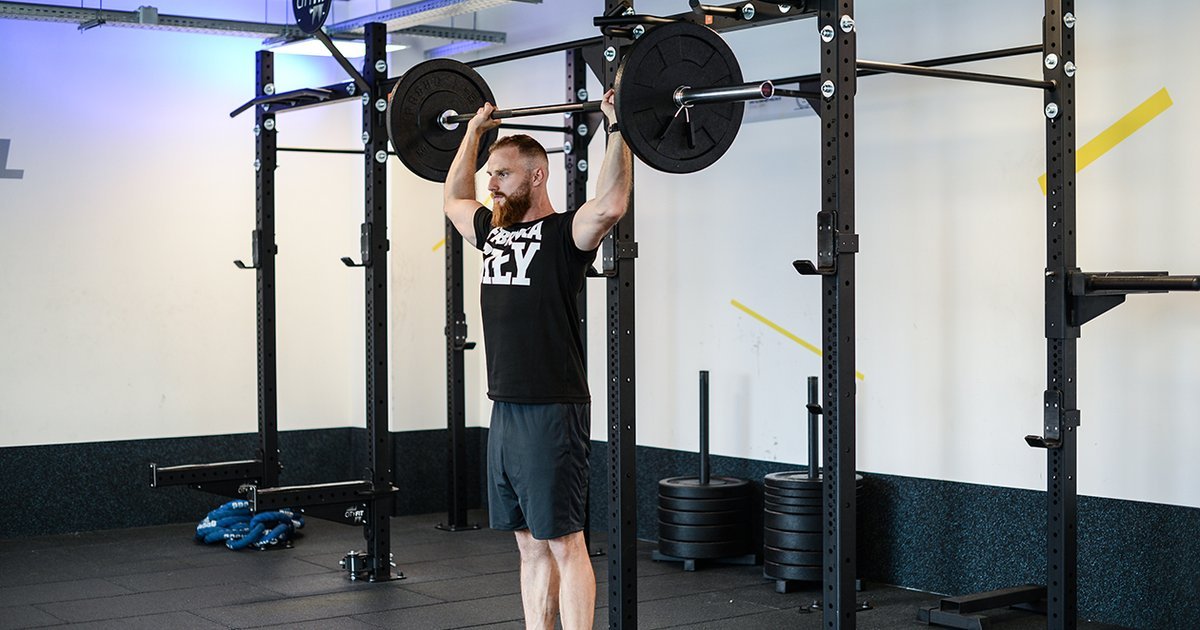
Fourteen trained men performed a barbell overhead press with the bar passing in front of the head and another variation passing behind the neck. The protocol used loads associated with an eight-repetition maximum, but the recorded sets were deliberately non-fatiguing. That matters: the researchers were comparing muscle excitation during specified movements, not recording a hard bodybuilding workout taken to failure. Each press was separated into an upward, or concentric, phase and a downward, or eccentric, phase.
Instead of using a single sensor as a rough proxy for an entire muscle, the experiment used a grid of surface electrodes. High-density electromyography, or HD-EMG, can describe both the magnitude of the detected electrical signal and where that signal is concentrated under the electrode grid. The measured muscles included the front, side and rear portions of the deltoid, the upper trapezius, the pectoralis major and the triceps. These are logical choices for an overhead pressing movement, but they do not represent every stabilizer around the shoulder blade, trunk or neck.
Think of the comparison as a controlled snapshot. The same basic task was performed with different bar routes while the sensors recorded which muscles were more electrically active in specific portions of the repetition. The study did not prescribe weeks of training, measure new muscle volume, examine injuries or establish a maximum safe load for the average gym member. It also involved men who already lifted, so its findings should not be treated as a universal beginner prescription.
One practical implication starts before the results: a change in bar path can change the demand even when the exercise label remains overhead press. Record front and behind-the-neck variations separately. Treating their loads and repetition numbers as directly interchangeable makes progression harder to interpret.
Why the front press stood out for front delts and chest
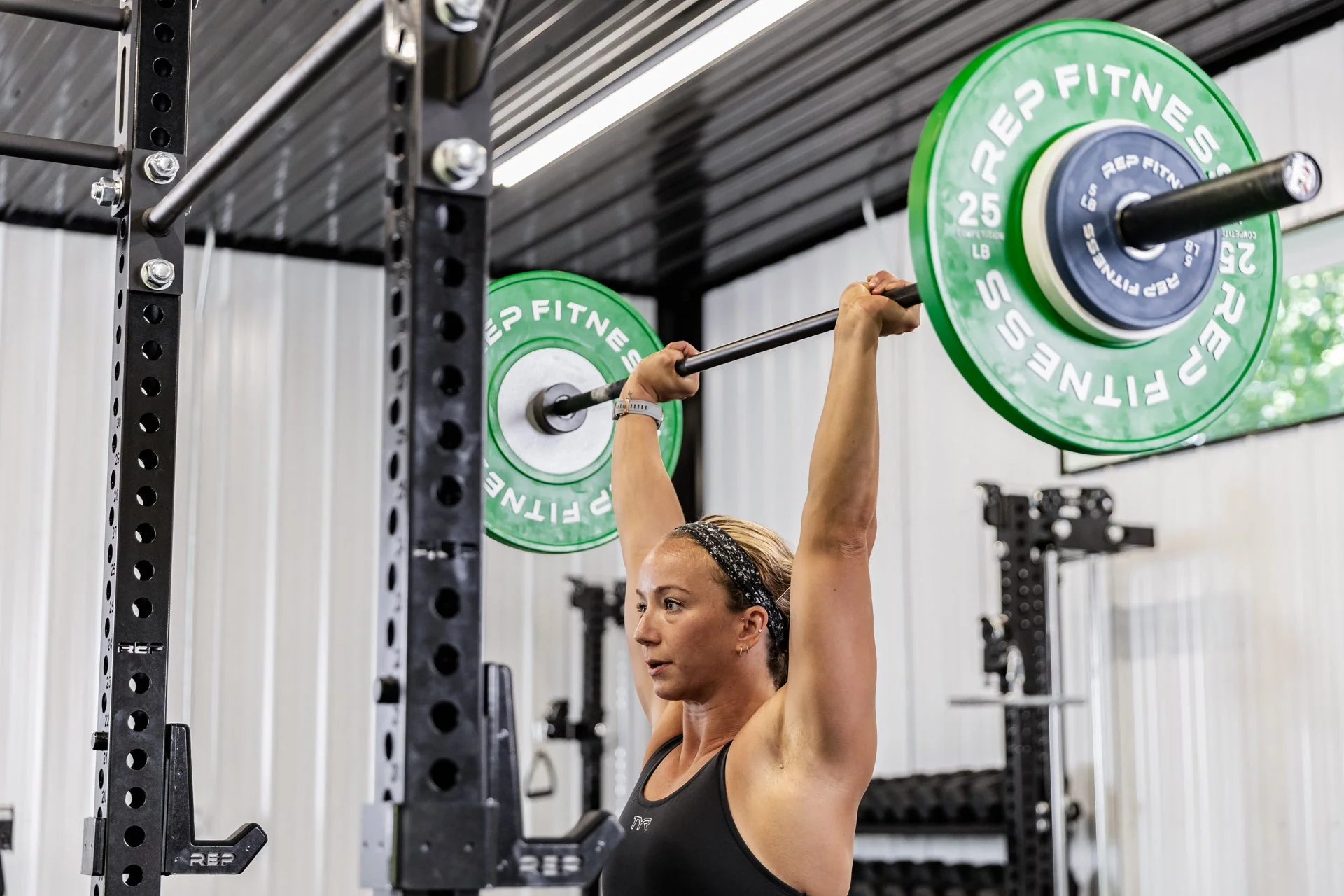
On the upward phase, the front-of-head route showed higher electrical excitation in the anterior deltoid and pectoralis major. The reported standardized effect sizes were 1.03 and 0.70, respectively. The same pattern appeared while lowering the weight: 1.00 for the anterior deltoid and 0.74 for the pectoralis major. These are comparative measures of the recorded signal, not percentages of muscle growth or percentages of the weight lifted.
The pattern makes mechanical sense without requiring any magic muscle isolation. Bringing the bar past the front of the face changes the relation between the upper arm and torso as the shoulder flexes. The front deltoid contributes to this movement, while the upper portion of the chest can assist depending on shoulder position and the rest of the technique. Neither muscle suddenly switches off when the bar passes behind the head; the experiment found relative differences under its conditions.
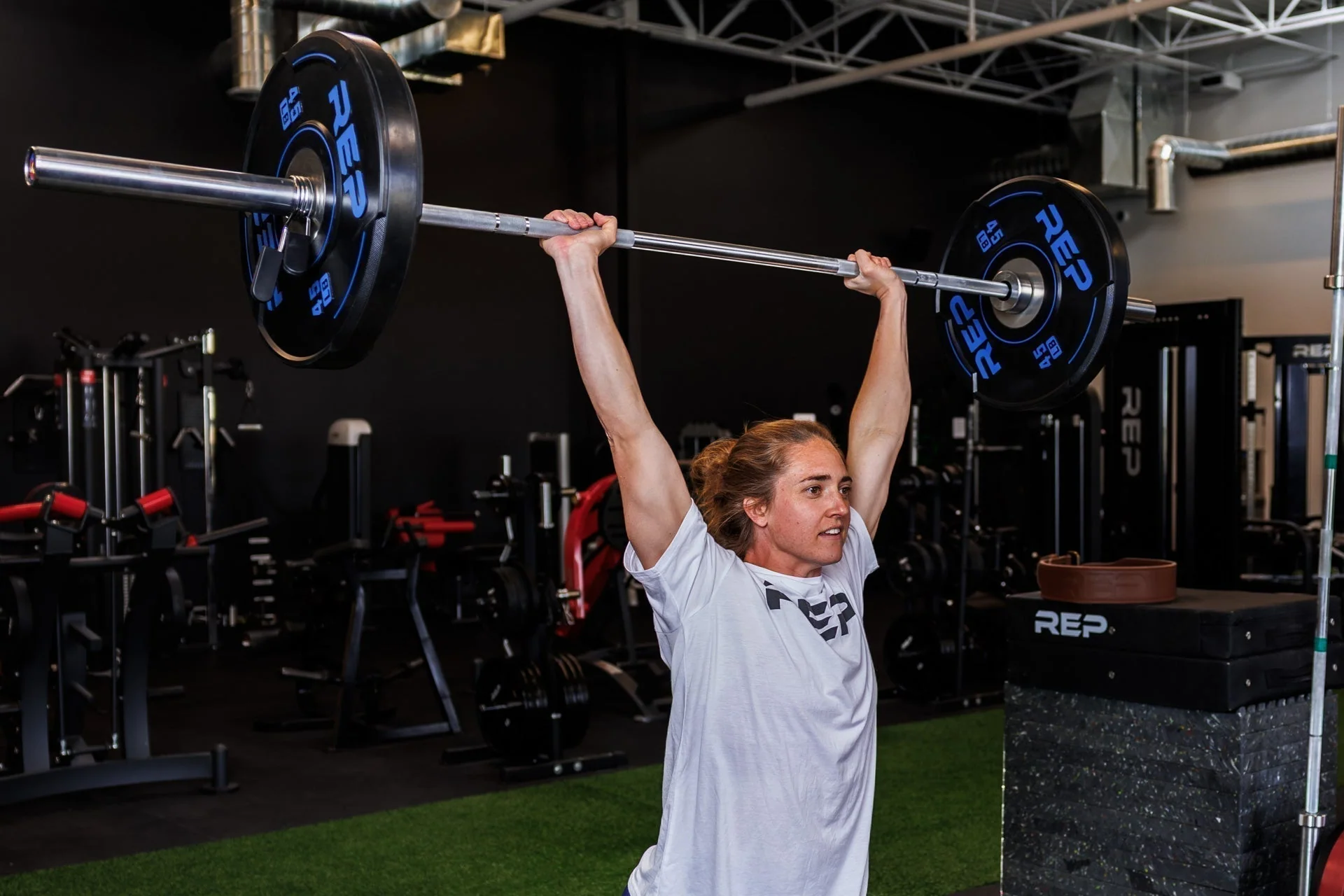
For a lifter whose main job is to drive a heavier, repeatable barbell press overhead, the front variation usually offers a straightforward starting point. Begin from a stable shoulder-height rack position, brace the abdomen and glutes, and move the bar past the face without turning the movement into an exaggerated backward lean. Once the bar passes the forehead, let the head return to a neutral position under the load. The final position should feel stacked rather than bent backward through the lower spine.
Do not confuse a front-deltoid EMG advantage with proof that the front press is the single best shoulder-builder. Muscle size depends on repeated training stress, effort, recovery and progression. The result simply gives you one more reason to keep a front press when you want a robust, easily tracked vertical press that also recruits the front delts and chest.

Equipment Worth Exploring
Explore equipment, accessories and gear from our carefully selected range.


Multi Pull Smith Rack MPHR-780
All-in-one rack with a Smith machine, functional trainer, lat pulldown and low row.

FID Bench MAX
Adjustable bench offering flat, incline, and decline positions + adjustable headrest.

Foldable Wall Rack
Wall-mounted folding squat rack designed to save floor space between workouts.


Competition Plates
Competition-style bumper plates for Olympic lifts and loaded strength training.

Multi Bench MBX-650 2.0
Adjustable multi-bench with roller adjustment, 15 backrest positions and accessory mounts.

VForce 3IN1
All-in-one rack combining an adjustable Smith machine, functional trainer, and free-weight station.

Ultimate Power Seat
Rack-mounted power seat for lat pulldowns, leg extensions, and leg curls.
Behind the neck changed the lowering phase most clearly
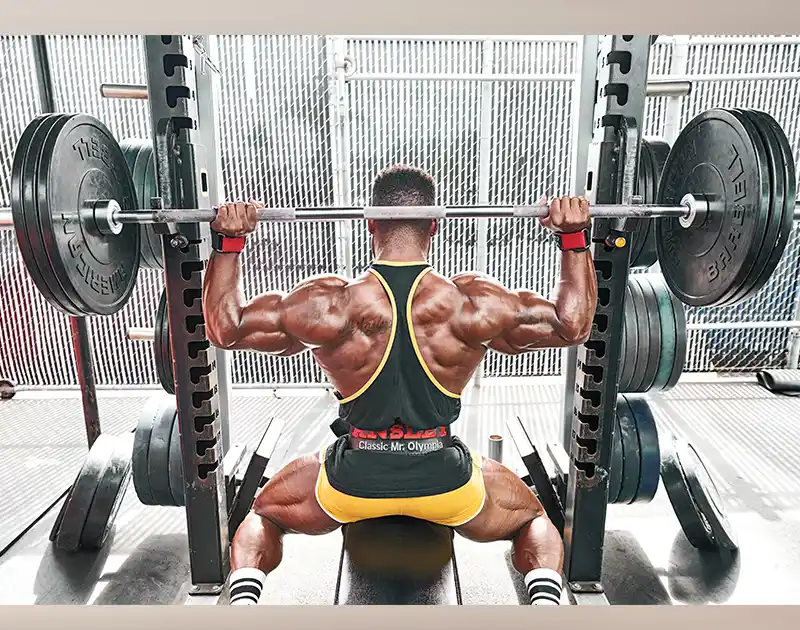
The most interesting findings for the behind-the-neck version occurred as the bar came down. Compared with the front route, the rear route showed higher excitation for the posterior deltoid, upper trapezius and triceps during the eccentric phase. The reported effect sizes were 1.11, 0.72 and 2.01. The last figure may look dramatic, but it remains an effect size for an electrical measurement. It does not mean twice the triceps growth, twice the resistance or a guaranteed superior exercise.
Behind the head, the upper arm needs a different rotational position while the shoulder girdle keeps the bar under control. The rear shoulder, upper back and arm extensors may therefore share stabilization and braking demands differently during the descent. During the upward phase, however, the study did not find that every shoulder head was uniformly more excited behind the neck. That asymmetry is the point: the direction of travel matters. A single whole-repetition label such as good for shoulders hides meaningful details.
The grid recordings also showed shifts in the location of detected activation within certain muscles. A changed signal centroid does not automatically identify a newly trained anatomical region. Electrode grids have their own reference axes, and skin-surface signals are affected by movement and underlying anatomy. It is safer to interpret the finding as evidence that the nervous and muscular demands differed, not as a map promising precise spot-growth from one press variation.
There was also an earlier comparison of eight competitive bodybuilders using front and back barbell presses as well as machine variants. It found several deltoid-excitation differences favoring the back barbell route and pectoral differences favoring the front route, though it used a different protocol and conventional surface EMG. These small acute studies broadly support variation in muscle recruitment. They do not resolve which program produces more long-term shoulder size.
Mobility and setup matter more than the gym debate

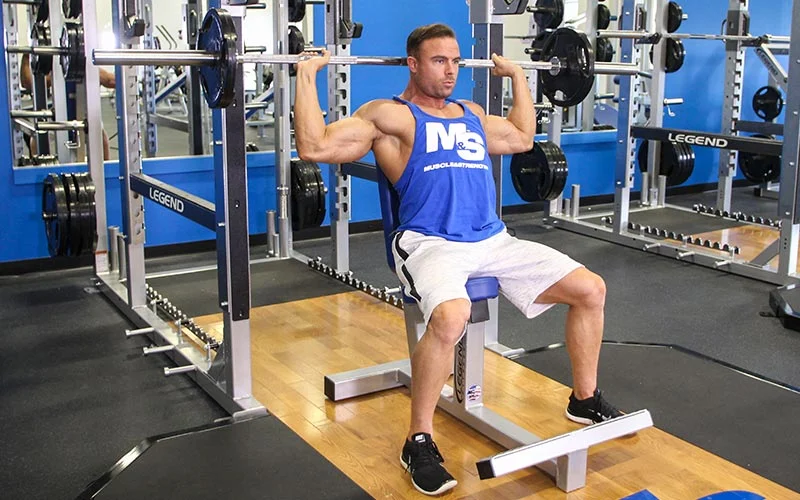
Behind-the-neck pressing requires enough shoulder external rotation and elevation for the bar to travel behind the skull without the wrists, neck or lower back compensating. The ability to reach a visually impressive position does not guarantee that you can load it comfortably. Some lifters move through that path easily; others feel pinching, have to jut the chin forward or extend the spine just to keep the bar in range. A front press, dumbbell press or machine press may then be a more productive choice.
Test the unloaded movement first in a rack with adjustable safety pins. Use an appropriate grip and a range that does not force discomfort. Keep the ribs from flaring excessively and avoid driving the head into the bar. If you cannot descend behind the head without a painful or awkward stop, do not force extra depth because an illustration or social clip shows it. You can reduce the range, lower the load or choose another variation. A loaded barbell is a poor tool for chasing mobility you do not yet control.
That does not mean the behind-the-neck press must be branded inherently dangerous for every healthy trainee. Observational mechanics work on overhead pressing has shown that shoulder position and individual range of motion change the movement demands. What it cannot give is a guarantee of injury or safety for one specific person. Previous shoulder problems, repeated sharp pain, instability symptoms or neurological symptoms are reasons to obtain individual professional guidance rather than experiment through discomfort.
Set the rack height so you do not need an awkward half-squat to lift the bar out. Use safeties positioned for your body and intended range. Control the lowering portion instead of bouncing the bar off the upper traps. Keep enough clearance behind the rack uprights for the plates and elbows. The more complicated the setup becomes, the stronger the argument for using a simpler press that still lets you train hard and recover.
Equipment Worth Exploring
Explore equipment, accessories and gear from our carefully selected range.

Lever Arm Multi Press LMP-650
Multi-press with independent lever arms and an integrated adjustable bench for upper-body training.




Rubber Hex Dumbbells
Rubber-coated hex dumbbell pairs with a stable shape for home and commercial strength training.


VForce 2IN1
Half rack and pivot-arm functional trainer with switchable 1:1 and 2:1 pulley ratios.

Standing Chest Press SCP-760
Standing chest-press machine with adjustable handle positions for chest and close-grip pressing.


Choose a press that earns its place in your program
Start with the training goal rather than the name of the exercise. If you care most about progressing a measurable strict press, place a front barbell press early in the session, when bracing and concentration are fresh. Try two or three challenging work sets in a repeatable repetition range, leaving a small margin before your technique breaks down. Progress by adding a repetition first or using a modest load increase when all prescribed reps remain controlled.
If you tolerate behind-the-neck pressing well and want to keep it, make it an accessory rather than a compulsory test of toughness. A practical starting point is a light, deliberate set with several repetitions left in reserve, followed by a second only if the shoulder path stays comfortable. Record the grip, starting height, range and load; they determine whether next week’s numbers are comparable. There is little value in claiming a personal record after shortening the descent or using a different rack setup.
A lifter who cannot use the rear bar route comfortably has plenty of legitimate options. Dumbbells allow a grip and elbow path to change between people. A stable shoulder-press machine may reduce balancing demands, while lateral raises and rear-delt exercises can add local shoulder work without making the entire program depend on a demanding bar path. Those movements do not reproduce the precise study conditions, but a training program does not need to replicate a laboratory protocol to be effective.
For a simple six-week example, retain your main press at the same position in the weekly split and track its performance. Use weeks one and two to establish clean sets, weeks three and four to accumulate reps or a small increase in load, and weeks five and six to assess whether your technique and strength are genuinely progressing. Treat rear-delt and side-delt accessories as separate progressive exercises. If recovery stalls or joints become irritated, reduce demands rather than adding a fourth press solely because an EMG chart looks persuasive.
What muscle signals cannot promise about growth
Electromyography is useful for understanding acute muscle excitation, but it is not a hypertrophy trial. A muscle can show a higher measured signal during one exercise without gaining more size over a training block. Loads, joint angles, range of motion, proximity to failure, mechanical tension and the amount of productive work all matter to adaptation. Surface recordings also depend on electrode placement, signal processing and individual anatomy, so an effect size cannot be converted into extra millimeters of deltoid thickness.
The comparison involved 14 trained men on a defined non-fatiguing protocol. It did not follow different training groups for months, randomly assign them to front-only versus back-only programs or measure subsequent changes in shoulder muscle mass. It did not investigate people with shoulder pain or determine which movement is safer. An apparently precise activation map should not be allowed to answer questions that were never tested.
The more useful takeaway is narrower and stronger. Front pressing emphasized the recorded anterior delt and chest signal in both directions, while the behind-the-neck route showed higher recorded activity in the rear delt, upper traps and triceps during the lowering portion. That makes exercise selection more interesting, not more absolute. Choose movements based on comfortable range, reliable setup, the muscles and skills you want to train, and results you can track over time.
Most lifters do not need a complicated rotation of near-identical presses. One consistent primary press, sensible accessory work and progressively better execution can provide a clearer training signal than changing movements every week. If you genuinely enjoy behind-the-neck pressing and have the movement capacity for it, there is room to include it. If not, you are not leaving proven shoulder growth on the table by choosing another path overhead.

Bodybuilding Shirts & Workout Gear
Bodybuilding shirts, tanks and gym gear for lifters chasing muscle, size, symmetry and the pump.


Swole Jesus Lateral Raises Tank
Bring “Swole Jesus Lateral Raises” humor to your next lifting session.

Yeah Buddy Ronnie Tank
Add some lifting attitude to training with “Yeah Buddy Lightweight”.


Gym Skull Weightlifting Design for Powerlifters Bodybui T-Shirt
Bring “Skull Weightlifting Design for Powerlifters” humor to your next gym day.

Lift Heavy – Hardcore Heavy Metal Gym Crewneck for Powe T-Shirt
Show some gym-day personality with “Lift Heavy”.

Gym The Bar Does Not Lie Medieval Knight Muscle Shirt f Tank Top
Bring “The Bar Does Not Lie Medieval Knight” humor to your next lifting session.

Gym Iron Before Honor Medieval Knight Lifting Shirt for T-Shirt
Make gym days more fun with “Iron Before Honor Medieval Knight Lifting” style.

Platehead Powerlifting Tee
Heavy lifts, good laughs, and a little “Platehead Gym Skull” energy.