Advertising disclosure: This page includes affiliate product links that may earn us a commission, as well as products from our own store.
The guillotine press resembles a bench press with an unusual landing zone: the bar travels toward the collarbones and neck rather than toward the middle or lower chest. That dramatic route has an old-school bodybuilding reputation, but feeling a different stretch is not proof of superior muscle growth. Before treating it as a chest-day upgrade, consider what the position changes for the shoulders, how a failed repetition would end, and whether familiar alternatives accomplish the same goal with a better safety margin.
What makes the guillotine press different
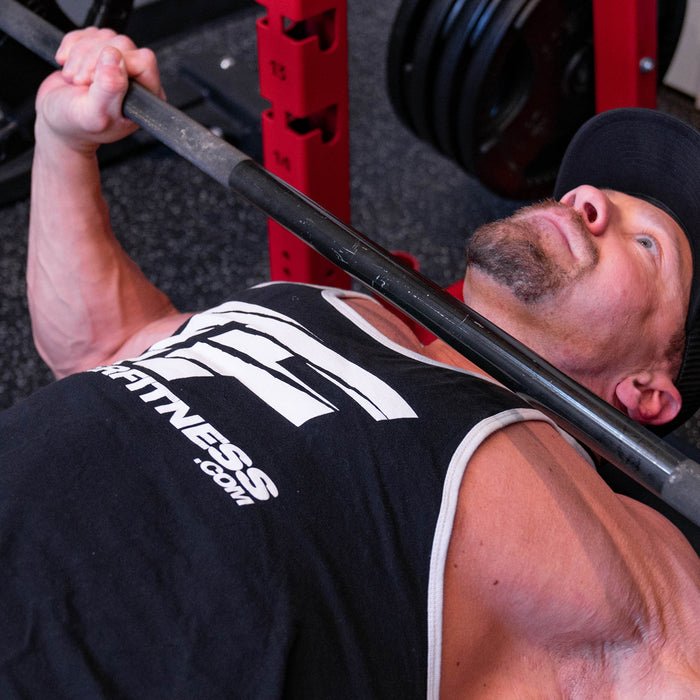
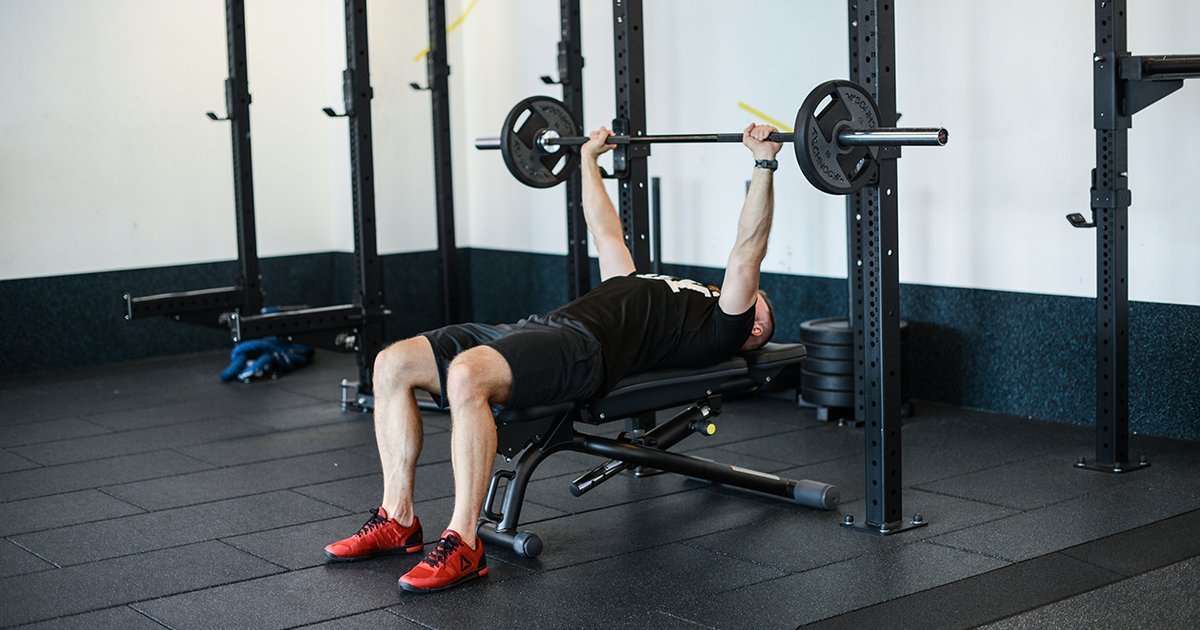
In a conventional barbell bench press, most lifters lower the weight toward the sternum with their upper arms at a manageable angle to the torso. The guillotine or neck press shifts the target upward toward the collarbone and throat line. The upper arms are usually more flared, and the shoulder position at the bottom becomes noticeably different. This is not simply a regular bench press with a more exciting name: it asks the joints to organize the press around a distinct path.
Some old-school descriptions praise the pec stretch created by this route. That sensation alone tells you neither how much of the load is carried by each part of the chest nor how much new muscle a lifter will grow over several months. The pecs, anterior deltoids and triceps still work together. A momentary activation measure, even when available, would not automatically settle a long-term hypertrophy comparison. There is no compelling reason to treat the neck press as compulsory for upper-chest development.
Importantly, the exercise’s name is descriptive rather than an instruction to let a loaded bar touch the neck. The throat is not a safe contact target. Studying the movement from a side-view photograph or a light, controlled demonstration is one thing; putting working weight over the airway without a reliable safety system is another. Start by understanding the geometry, not by trying to duplicate an extreme photograph.
The grip and elbow flare create the shoulder trade-off
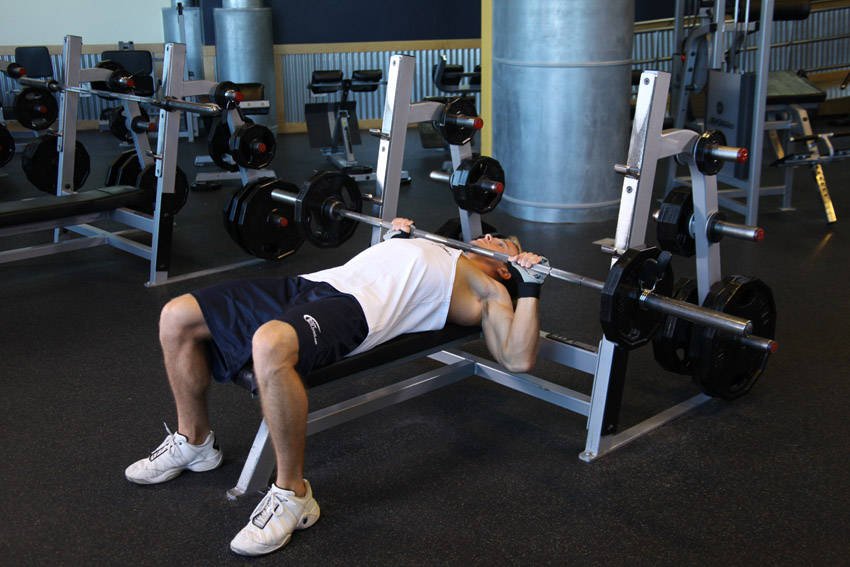
Classic neck-press demonstrations often use a wider-than-usual grip with elbows pointing far outward. This can change the chest’s lengthened position, but it also moves the upper arm into greater horizontal abduction. Your shoulder has to tolerate that position while the hand remains fixed to a straight bar. With heavy loads, the fact that something feels intense is a poor reason to ignore a pinching or unstable sensation.
There is no universally correct hand width. Forearm length, shoulder anatomy, bench setup and training history affect how a particular grip feels. Two lifters can hold the same bar markings and have different arm angles at the bottom. When wrists roll back, the shoulders shrug forward or the elbows drift unpredictably, adding more weight is not progress. A more conservative movement that stays stable is easier to repeat and measure.
Contrast that fixed arrangement with dumbbells or a converging chest machine. Those options can let the hands and elbows follow a route that better matches the individual, although they too require sound setup. The question is not which grip creates the most theatrical stretch. It is which exercise permits a meaningful chest-training effort while keeping the joints comfortable, controlling the entire range and allowing steady improvement without a wrestling match against the bar path.
A missed rep over the neck changes the safety calculation
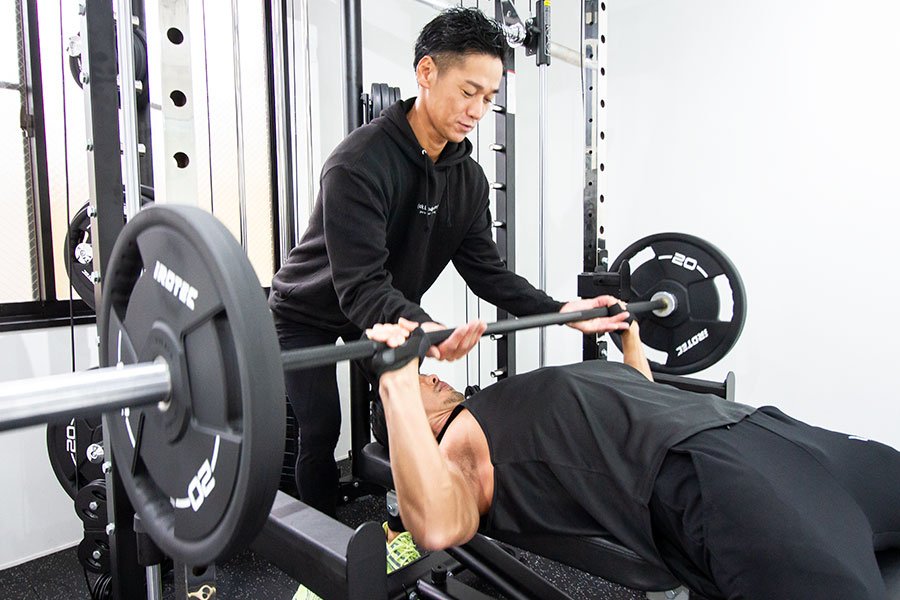
The clearest drawback is the potential landing zone of a failed repetition. Ordinary bench pressing already requires sensible planning: a competent spotter or properly set rack safeties, a stable bench and a clear way to finish the set. When a bar moves near the throat, failure can have more severe consequences. A setup where the bar could crush the neck if the lifter runs out of strength is not a defensible environment for an optional bodybuilding experiment.
Safety catches must be tested in the actual rack, with that particular bench, bar and lifter. Pin heights copied from an online video may be wrong because pads, body dimensions and natural arches vary. If the catches cannot stop the bar before it reaches the neck while leaving a usable training range, the movement should not be done there. A spotter is helpful but cannot replace a predictable physical escape route when the stakes are high. A fatigued lifter’s path may change unexpectedly, too.
Avoid heavy singles, forced repetitions, bouncing, uncontrolled pauses and any deliberate grind to complete failure. Lifters with shoulder instability or persistent symptoms have even less reason to chase this unusual route. Stop when a movement causes sharp pain, catching or a loss of control, and obtain competent professional guidance instead of trying to push through warning signs. The threshold for rejecting a specialty exercise should be low when traditional chest options are readily available.

Equipment Worth Exploring
Explore equipment, accessories and gear from our carefully selected range.



FID Bench MAX
Adjustable bench offering flat, incline, and decline positions + adjustable headrest.

Multi Bench MBX-650 2.0
Adjustable multi-bench with roller adjustment, 15 backrest positions and accessory mounts.


Multi Pull Smith Rack MPHR-780
All-in-one rack with a Smith machine, functional trainer, lat pulldown and low row.

Foldable Wall Rack
Wall-mounted folding squat rack designed to save floor space between workouts.


The Smith-machine version is not a universal solution
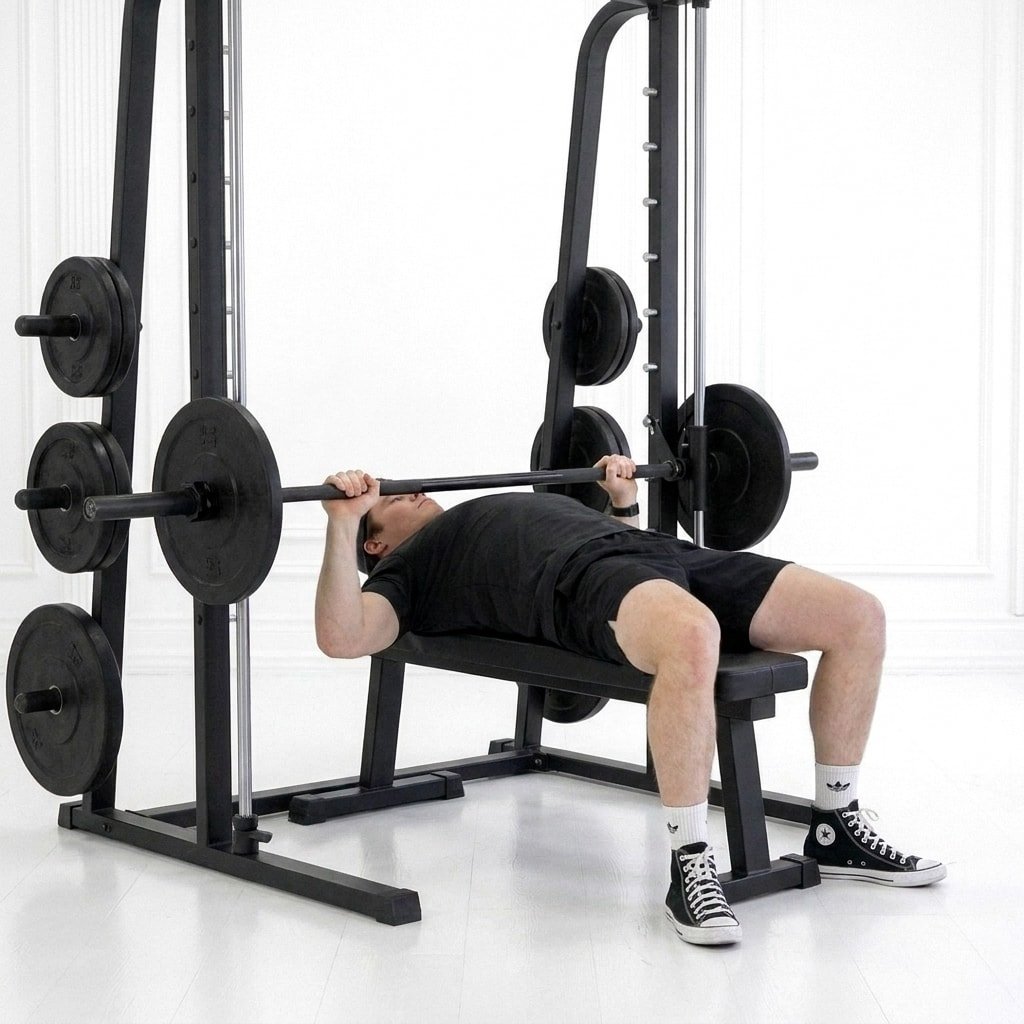
Guided rails make the Smith-machine guillotine press look more manageable. The bar does not wander freely, and some machines allow quick reracking. But the shoulder still travels through the chosen position, and the machine now dictates a fixed path. Being guided removes one problem while potentially introducing another: a hand or shoulder that prefers a slight adjustment cannot change the bar route as naturally.
Actual machines differ in rail angle, hook mechanism and safety stops. Moving a bench a few centimetres can change whether the rail tracks over the upper chest or directly over the neck. That makes model-specific understanding essential; a setup seen on one machine cannot be copied onto another without checks. A Smith unit is not inherently harmless just because it has hooks. The catch height must still prevent a dangerous landing if strength disappears.
If the movement feels cramped or irritates a shoulder even with minimal weight, repeatedly repositioning the bench to force the neck-line visual makes little training sense. A standard Smith chest press or controlled plate-loaded machine may produce productive pec work without the awkward target. Reliability matters more than novelty: can the lifter repeat the same safe path for all working sets and leave the machine without a hazardous transition?
Upper-chest alternatives that are easier to progress
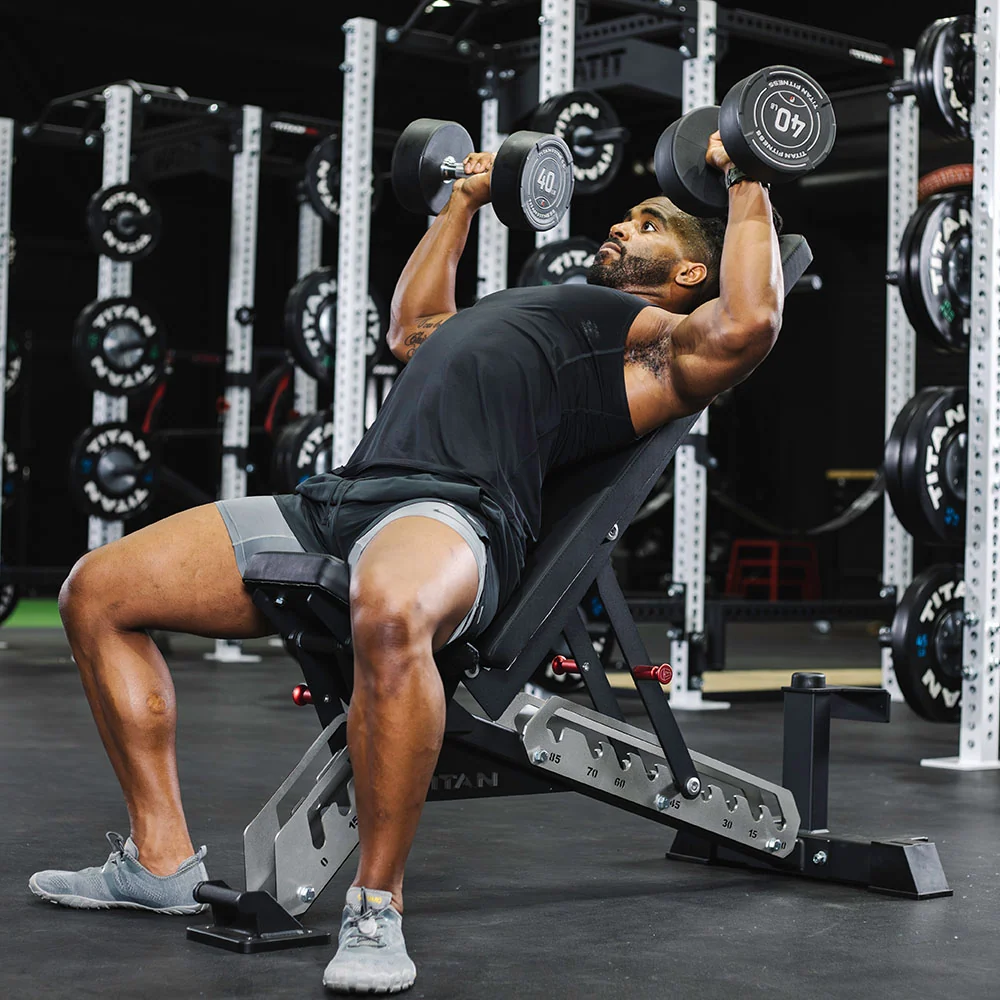
A low-to-moderate incline dumbbell press is a straightforward place to start. Small bench-angle adjustments allow an experiment with pressing direction, and each dumbbell can move in a slightly individual path. Begin with a comfortable range of motion and progress slowly rather than chasing excessive depth. A conventional incline barbell press is another sound option if an appropriate rack, spotter and suitable shoulder position are available.
Low-to-high cable flyes and adjustable cable presses provide a different resistance curve with handles that are easier to position around a comfortable shoulder path. A converging selectorized chest press can be useful when the aim is repeatable hard sets without balancing a free bar over the face. None of these options is guaranteed to duplicate the neck press’s exact muscle activation, and no specific angle suits everyone. They simply offer practical paths for training the chest without introducing its most conspicuous failure risk.
Evaluate a chest exercise by stable wrists, controllable reps, appropriate range and a safe exit if effort fades. Can you add a rep next week while preserving those features? Can you train consistently without joint symptoms? Those answers tell you more about the movement’s value in a program than whether it has a legendary nickname. An ordinary exercise that you can progressively load for months is a better investment than a special variation you cannot use reliably.
Equipment Worth Exploring
Explore equipment, accessories and gear from our carefully selected range.


Rubber Hex Dumbbells
Rubber-coated hex dumbbell pairs with a stable shape for home and commercial strength training.


Pec Fly/Rear Delt PEC-650
Combination machine with adjustable movement limits for chest fly and rear-delt exercises.

Standing Chest Press SCP-760
Standing chest-press machine with adjustable handle positions for chest and close-grip pressing.

Lever Arm Multi Press LMP-650
Multi-press with independent lever arms and an integrated adjustable bench for upper-body training.

VForce Wall Trainer
Space-saving wall-mounted functional trainer with pivoting cable arms and variable resistance ratios.

VForce 2IN1
Half rack and pivot-arm functional trainer with switchable 1:1 and 2:1 pulley ratios.
VOLTRA
Compact digital cable trainer with smooth, adjustable resistance.
A four-week chest plan without a neck-line gamble
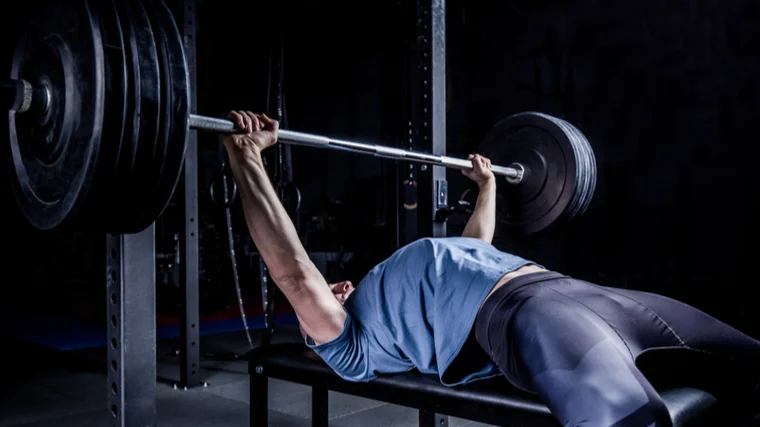
Instead of trying to establish a muscle-growth advantage from four weeks of novelty, use a simple plan to test repeatability. Open each chest workout with three controlled working sets of a conventional flat or moderate-incline press, leaving about two good repetitions in reserve. Follow with two sets of a comfortable cable fly or chest machine. Train this combination once or twice weekly as your larger routine and recovery allow. There is no need to include a loaded guillotine press.
Week one establishes grip, range, load and a baseline of shoulder comfort. Week two aims to improve one or more reps before increasing the weight. During week three, change only one variable such as the incline angle, and keep the rest stable. In week four, review whether the reps are more controlled, the load is progressing and you can recover for the next session. A short personal log cannot prove comparative hypertrophy, but it can identify whether an exercise is practical and tolerable.
If you are curious about the historical neck-press pattern, discuss the movement with a qualified coach and consider whether an unloaded demonstration has educational value. Do not feel obligated to make it part of your working program. Keeping the neck free of the bar’s potential landing path, maintaining shoulder comfort and gaining strength consistently are more meaningful successes than copying an aggressive elbow position. Chest development comes from repeated productive training, not from collecting the riskiest variations.

Powerlifting Shirts & Lifting Gear
Powerlifting shirts and gym gear for squat, bench and deadlift lifters who live for heavy numbers.

I Love Bench Press Valentine'S Day Meme – Chest Day T-Shirt
Make gym days more fun with “I Love Bench Press Funny Valentine's Day” style.

Chest Day Sweater Bench Press & Meme T-Shirt
Add a playful “Chest Day” touch to your casual rotation.


I Love Bench Press Gym Decal | Heart Weight Plate Funny Sticker
Put “I Love Bench Press” gym humor on your laptop, bottle, or gym gear.

Gym Sir Swole of Benchalot Medieval Knight Bench Press T-Shirt
Make gym days more fun with “Sir Swole of Benchalot Medieval Knight” style.

Ultimate Meme : The Essential Bench Press Shirt T-Shirt
Show some powerlifting attitude with a playful “Ultimate” tee.

Bench Press and Chill Funny Gym T
Make gym days more fun with “Bench Press and Chill” style.

Three Plates Bench Club – Chest Day & Gains T-Shirt
Make gym days more fun with “Three Plates Bench Club” style.

Jesus Is My Spotter Shirt – & Meme Top T-Shirt
Heavy lifts, good laughs, and a little “Jesus Is My Spotter” energy.
Some product links may be affiliate links, which can support our independent testing and reporting at no additional cost to you.