Taking a lighter week can feel like giving up momentum. You finally have a rhythm, the weights are moving, and your training log is improving. Why deliberately do less? The answer depends on whether you are accumulating useful training stress or simply carrying fatigue from one workout into the next.
A controlled experiment reported in February 2026 offers a useful counterpoint to the idea that every missed set costs muscle. Two weeks of sharply reduced lifting did not produce a clear disadvantage in muscle-thickness or 10-repetition-maximum outcomes over an eight-week program in novice men. But that finding is not proof that deloading is essential, that all programs respond equally, or that a full week off has the same effects as lighter training. Here is how to make those distinctions work in an actual training plan.
What the 2026 deload experiment actually tested

The study followed 19 previously untrained young men for eight weeks. Rather than assigning different people to entirely different programs, it assigned participants’ limbs to continuous or reduced-training conditions. The exercises were unilateral leg extensions and biceps curls, allowing muscle-thickness measurements of the quadriceps and biceps while reducing some person-to-person differences in sleep, diet and general activity.
In the continuous condition, participants trained twice weekly with six to eight sets per exercise at loads corresponding to approximately eight to twelve repetitions maximum. The deload condition followed the same broad plan, except in weeks four and eight: those limbs trained only once that week and completed two sets per exercise. This was an active reduction in both frequency and volume, not a week of zero resistance training.
Both conditions improved measured muscle thickness and performance on a ten-repetition-maximum test. The researchers did not detect a statistically significant difference in the pattern of change between conditions across those outcomes. That is meaningful because the deloaded limbs completed substantially less work during two of the eight weeks, yet still made measurable progress.
There are limits. Nineteen novices, two isolation exercises and eight weeks cannot settle how an experienced powerlifter, a high-volume bodybuilder or someone preparing for a one-rep-max attempt should deload. A non-significant difference also does not establish mathematical equivalence: small experiments can miss modest real effects. The study measured muscle thickness and 10RM performance, not every aspect of recovery, soreness, joint tolerance or maximal strength. The fair conclusion is that brief, substantial reductions in training can be compatible with progress under the tested conditions.
Deload, rest day, taper and detraining are different things

A deload is a temporary reduction in training demand, followed by a return to a more challenging program. You might perform fewer hard sets, leave more repetitions in reserve, reduce load, train fewer days, or combine those adjustments. It is usually measured in days rather than months. The purpose is to make the next block of productive training easier to tolerate, not to demonstrate toughness by doing nothing.
A rest day is simply a day without the planned workout. Most ordinary programs already contain them, and they do not automatically amount to a deload week. A taper is more specifically arranged to improve performance at a planned event or test; its goal is often to shed fatigue while preserving the readiness needed for a peak. Detraining describes a period in which training stimulus is absent or too low to maintain adaptations, particularly as the break becomes prolonged.
These distinctions matter when reading results. If one study reduces weekly sets by roughly three quarters but keeps the exercise practice, and another removes lifting completely for seven days, they are not testing the same intervention. Likewise, a competition taper that maintains some heavy lifting is not interchangeable with a beginner’s easy week. For a practical deload, it helps to decide which stressor you are reducing: number of challenging sets, proximity to failure, load, frequency, or all four. Otherwise a week labeled easy can accidentally become another demanding training week.
When a lighter week may be useful—and when it may not
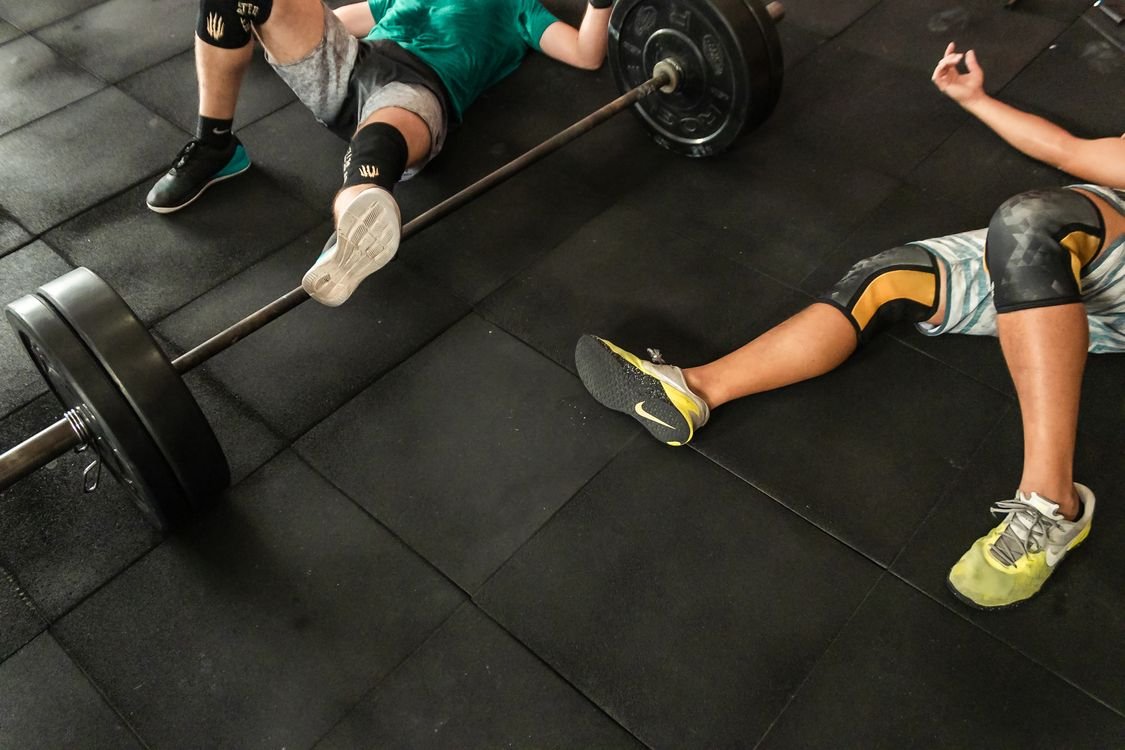
One poor workout is not a reliable signal that you need seven days of reduced training. A bad night of sleep, an unusually busy day or an overly ambitious opening set can temporarily reduce performance. A more persuasive pattern is several sessions in which comparable loads feel unexpectedly difficult, repetition quality slips, motivation falls and normal rest days no longer seem to restore your usual readiness.
Look for trends rather than a single sensation. Suppose your first two sets of squats usually move cleanly at a familiar load. If bar speed, depth and confidence deteriorate across two or three workouts despite similar sleep, food and scheduling, accumulated fatigue becomes a plausible explanation. Persistent soreness that interferes with the next planned session is another reason to review workload. These signs are not medical diagnoses, and sharp or worsening pain calls for a different response than simply pushing through an easy week.
There is also a difference between fatigue from productive training and fatigue from too much training. If your program already has moderate volume, sensible exercise selection and recovery days, inserting a mandatory deload every fourth week may remove useful practice without solving a real problem. In the 2026 experiment, continuous training performed just as well on the measured outcomes; the lighter weeks were not shown to improve growth beyond the continuous approach.
Experienced lifters handling high volumes, repeated near-maximal sets or heavy competition preparation may have more reason to plan recovery proactively. Newer lifters often need consistency, technique practice and realistic progression more than an elaborate fatigue-management calendar. A sensible compromise is to pencil in a potential lighter week after several hard weeks, then decide using your logbook and how the last sessions actually went.

Equipment Worth Exploring
Explore equipment, accessories and gear from our carefully selected range.


VOLTRA
Compact digital cable trainer with smooth, adjustable resistance.

Go-Tone Pro
Portable digital cable trainer with up to 66 lb (30 kg) of adjustable resistance.


HUSLA Leg Extension Pad
Pad attachment designed to increase usable range of motion on compatible leg-extension machines.


How to run an active deload without abandoning your program
Start by keeping your familiar exercises. If your normal week contains three sets of squats, three sets of presses and several accessories, you can preserve the movement patterns while reducing the total number of challenging sets. A simple illustration is to turn four hard working sets into two easier sets, keep the same technique and stop with three to five good repetitions still available. You may also keep the normal training days but shorten each session.
For example, a lifter who normally performs four sets of eight on a leg press might perform two sets of six to eight with a comfortable load. A curl that normally ends one repetition short of failure could stop four or five repetitions short instead. Those figures are practical options, not experimentally established optimal prescriptions. The point is to reduce both the amount of work and the effort needed to finish it.
Another route is to retain relatively familiar weights but dramatically reduce the number of sets and avoid grinders. A strength-focused lifter might prefer that because it keeps the feel of a heavier bar without accumulating the usual fatigue. Someone with irritated joints or unusually high soreness may instead prefer lighter loads, fewer repetitions and more controlled ranges. There is no reason to force a percentage-based prescription when the reason for deloading is a specific movement that no longer feels good.
A useful target is to leave the gym feeling capable of more, not as if you accidentally performed a second normal workout. Avoid filling the recovered time with extra circuits, new exercises or repeated failure sets; that simply moves the workload elsewhere. Keep walking, ordinary movement and normal sleep habits, and continue eating in a way that supports your goals. A deload is not a crash diet or a test of how little food you can get away with.
Record what changed: exercises, working sets, load, approximate repetitions in reserve and the next session’s readiness. That small amount of tracking is more informative than arguing about whether every deload should last exactly seven days.

Funny Gym Shirts & Workout Gear
Funny gym shirts, tanks, hoodies and workout gear for lifters who like training hard.

Rest Day Sloth – Essential T-Shirt
Show some bodybuilding attitude with a playful “Rest Day Sloth” tee.

Everlong Rest Periods Tee
Show some rock-and-lifting attitude with a playful “Everlong Rest Periods” tee.

More Rest More Test Meme Testosterone Bro T-Shirt
For laid-back days and lifting humor: “More Rest More Test”.

Rap God Recovery | Hip Hop Workout & Lifting Pullover Hoodie
Bring “Rap God Recovery” gym humor to lazy days and post-workout plans.

Sleeping Booty Bootybuilding Meme Decal Water Sticker
A fun “Sleeping Booty” touch for bottles, laptops, and lockers.

Lift Eat Sleep Repeat Hoodie
Make your off-duty look more fun with “Lift Eat Sleep Repeat”.

Everything Hurts and I'm Tired Tee
Make gym days more fun with “Everything Hurts And I'm Tired” style.

Dino Sore Dinosaur Decal Water Bottles & Equipment Sticker
Bring “Dino Sore” attitude to your water bottle or laptop.

Off-Season Rest Day & Meme Fans Hooded Hoodie
Keep it laid-back with a little “Off-Season Rest Day” attitude.

Kanye Rest Day | Swole Ye Muscle Shirt Workout Vest Tank Top
Train hard, laugh a little, and rep “Kanye Rest Day”.
Is a complete week off better than a reduced-volume week?

The direct evidence is mixed because studies have tested different versions of a break. A nine-week supervised training experiment compared uninterrupted lifting with a full week without resistance training at the program midpoint. Both groups gained similar measured lower-body muscle size, endurance and power. However, the group that trained continuously improved more on dynamic and isometric lower-body strength tests. A complete week away therefore did not look like a universal advantage for strength in that setting.
Contrast that with the February 2026 experiment: its participants continued to train during deload weeks, just much less. Muscle thickness and 10RM improvements were broadly similar between conditions. It is tempting to conclude that active deloads are always superior to full breaks, but the studies differ in training experience, exercise selection, duration and the specific strength tests used. They were not a head-to-head comparison of two deload strategies in the same lifters.
A separate longer-term experiment tested ten-week training breaks between blocks and found that lost muscle and strength could be regained quickly after training resumed. That does not make a ten-week break an efficient hypertrophy plan. It illustrates that temporary interruptions are not always permanent setbacks, while also showing why a long detraining period should not be equated with a one-week reduction in volume.
In a survey of 246 competitive strength and physique athletes, the typical reported deload lasted about 6.4 days and appeared approximately every 5.6 weeks. Athletes generally reported reducing volume and effort while keeping familiar exercises. Those are descriptions of what competitors chose to do, not controlled proof that a six-day break every six weeks is ideal. For someone who is exhausted, traveling or ill, a true break can be reasonable. For someone who wants to maintain movement practice, a brief reduced-volume week may fit better.
Equipment Worth Exploring
Explore equipment, accessories and gear from our carefully selected range.


FID Bench MAX
Adjustable bench offering flat, incline, and decline positions + adjustable headrest.


GymPin Mag Pin V2
Magnetic selector pin designed to secure weight selection on compatible pin-loaded machines.


GymPin Ergo Handles
Pair of ergonomic cable handles shaped for comfortable triceps and pulling exercises.
Returning to normal lifting: avoid the rebound trap

A deload works as part of a training cycle only if you know what happens afterward. The first normal session should not be a punishment for taking it easy. If you return by adding extra sets, testing a personal record and taking every accessory to failure, you can erase the recovery benefit you were trying to create. Start with the program you intended to resume, not a backlog of work you feel obliged to repay.
One approach is to restore your usual exercises and most of your ordinary working sets, then assess bar speed, movement quality and perceived effort before increasing load. If the first session feels unusually heavy, hold the load steady or keep one or two sets in reserve rather than chasing a missed progression. If it feels crisp and repeatable, you can rebuild the next sessions according to your normal plan. The appropriate ramp depends on why you deloaded and how demanding your training is.
It is also useful to separate physical readiness from excitement. After a lighter week, motivation may rebound faster than tissues and technique have adapted to high workload. A fresh feeling is welcome, but it does not guarantee that a large jump in weekly sets is productive. Likewise, feeling slightly awkward under a bar after several days away does not mean muscle has disappeared; familiar movement rhythm often returns with a few controlled sets.
Think of the first week back as a test of your programming assumptions. If you immediately feel buried by the same volume that caused the problem, the original plan may be too aggressive. A deload should not be a recurring license to train beyond what you can recover from. Sustainable progress usually comes from a workload you can repeat and gradually advance.
Bodybuilding Shirts & Workout Gear
Bodybuilding shirts, tanks and gym gear for lifters chasing muscle, size, symmetry and the pump.

Consistency Is Key Stoic Greek God Marble Sculpture T-Shirt
Make gym days more fun with “Consistency is Key Stoic Greek God Marble” style.

Progress Stoic Bodybuilder Greek God Marble Sculpture T-Shirt
Heavy lifts, good laughs, and a little “Progress Stoic Bodybuilder Greek God Marble” energy.

Lift Eat Repeat Sweater & Meme Fans T-Shirt
For laid-back days and lifting humor: “Lift Eat Repeat”.


Grunge Gains Repeat Sticker
Bring “Grunge Gains Repeat” attitude to your water bottle or laptop.

Discipline Greek God Statue Stoic Sigma T-Shirt
Heavy lifts, good laughs, and a little “Discipline Greek God Statue Funny Stoic” energy.

No Days Off for Daily Workouts, Lifting, and Fitness Di Hoodie
Keep it laid-back with a little “No Days Off” attitude.

Suffering Is Gainz Stoic Greek God Marble Sculpture T-Shirt
Make gym days more fun with “Suffering is Gainz Stoic Greek God Marble” style.

Resistance Is Gainz: Stoic Greek God Bodybuilder T-Shirt
Rep “Resistance is Gainz: Funny Stoic Greek God” humor in and out of the gym.

Progressive Overload Milo Tee
Bring “Progressive Overload Milo Bull” humor to your next gym day.
Who needs deloads, and what should you track?

For beginners, a deload can be as simple as an easier week when life gets busy, technique starts breaking down or a planned holiday interrupts training. There is little reason to treat every fourth week as a compulsory ritual. Consistent practice, manageable progression and adequate recovery days remain the bigger priorities. The 2026 novice experiment is reassuring about temporarily reduced work, but it does not show that beginners gain extra muscle by scheduling frequent deloads.
For intermediate and advanced lifters, consider a more structured decision. Record two or three repeatable indicators: performance at a familiar load, the effort required to complete usual sets, and whether soreness or general fatigue disrupts the next session. A fourth useful indicator is whether your schedule is becoming harder to sustain. If several signals deteriorate together, a lighter week may be more productive than insisting on the original volume.
Do not confuse ordinary training fatigue with an injury warning. Persistent or sharp pain, swelling, a sudden loss of strength or restricted movement deserves specific attention rather than a generic deload prescription. You can modify or avoid aggravating exercises without abandoning all activity, but do not use a training calendar to dismiss a potentially significant problem.
The bottom line: a well-chosen deload is a tool for managing workload, not a shortcut to faster hypertrophy. Short reductions in sets and frequency can preserve progress in the conditions tested, while complete breaks may have different consequences for strength practice. Use the minimum adjustment that restores productive training, then return to a sustainable plan. Your best program is the one that lets you accumulate high-quality work over months—not the one that wins a single exhausting week.