Advertising disclosure: This page includes affiliate product links that may earn us a commission, as well as products from our own store.
The California press combines two familiar actions into one less familiar repetition: a lying triceps extension on the way down and a close-grip press on the way up. The difficult part is often the transition between them. A bar that feels manageable over the chest can become much harder to control near the head, so ordinary bench-press numbers are a poor starting point. This guide focuses on a deliberate extension-to-chest-to-press version. Learn that sequence, establish a setup you can finish safely and keep the movement recognizable before you worry about adding plates.
Identify the sequence you intend to train
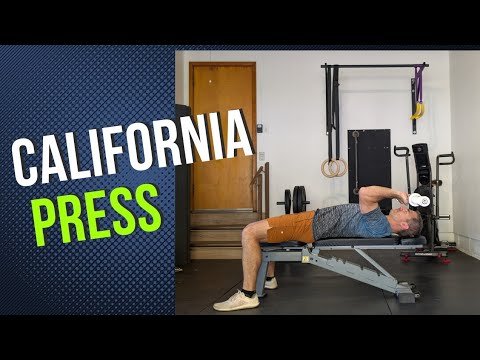
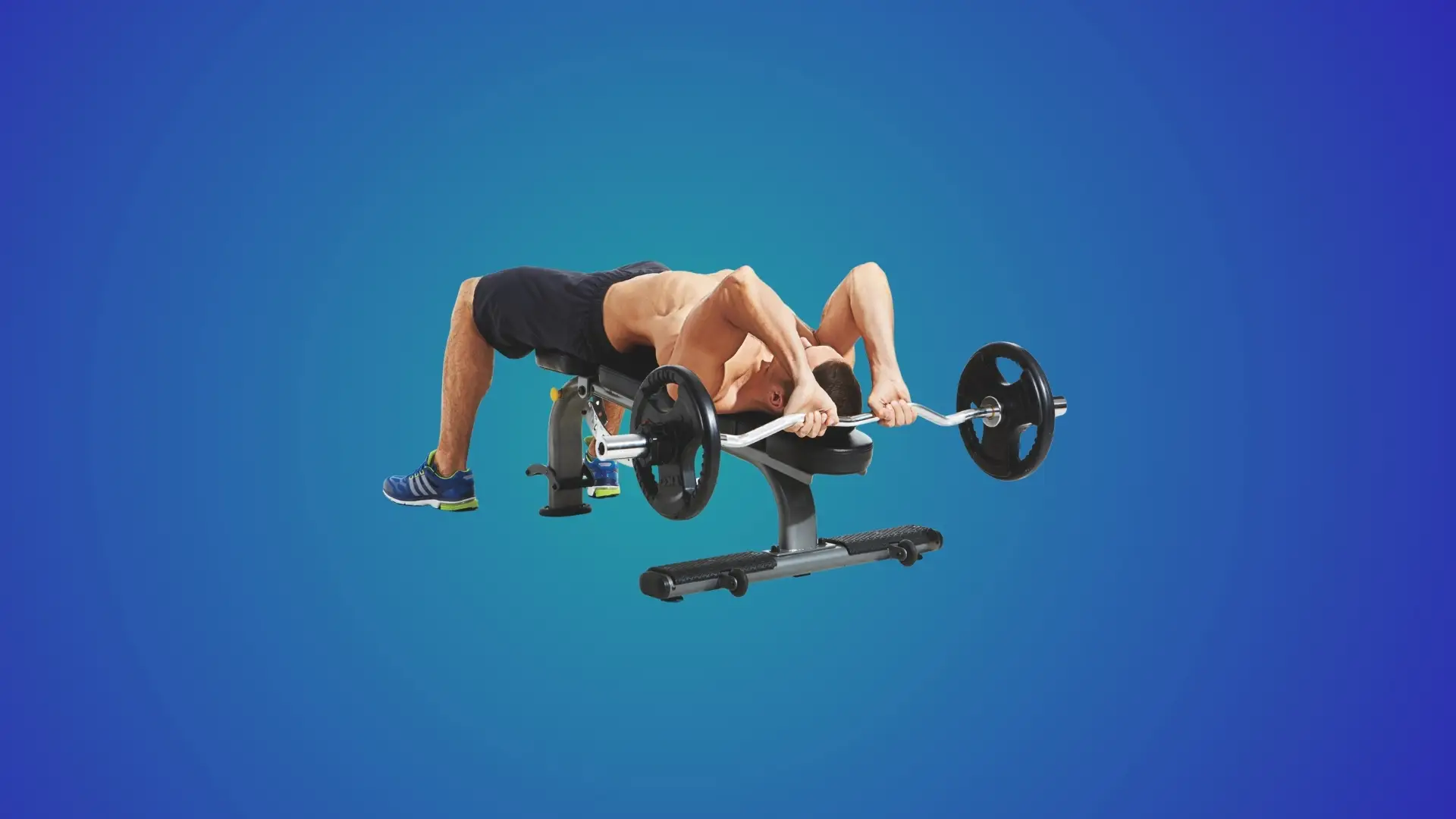
Begin above the chest with the elbows extended and the bar settled. Bend the elbows to lower the bar toward a controlled position near the head, as in a lying triceps extension. Then bring the elbows down and forward so the bar moves toward the upper chest. From that position, press back to the start. These stages form one repetition rather than three separate exercises performed as a circuit.
The name is used for more than one movement. Some demonstrations blend the elbow bend and shoulder movement into a shorter hybrid descent. Others show the distinct extension, transfer and press described here. Decide which version you are practicing before comparing loads or repetitions. Two lifters using the same exercise name may be doing substantially different work.
The triceps extend the elbows, while the chest and shoulders can assist during the pressing component. That assistance is part of the movement, not evidence that the exercise has stopped working. It also means a smooth press back to the top cannot prove that the preceding extension was controlled. Judge the whole repetition, including its weakest or least coordinated stage.
The California press can be a useful accessory, but combining movements does not automatically make it better than training them separately. A conventional close-grip bench press and a straightforward triceps extension remain valid choices. The hybrid earns its place when you can reproduce it comfortably and it fits the purpose of your arm or push session.
Set up for the extension rather than your strongest press
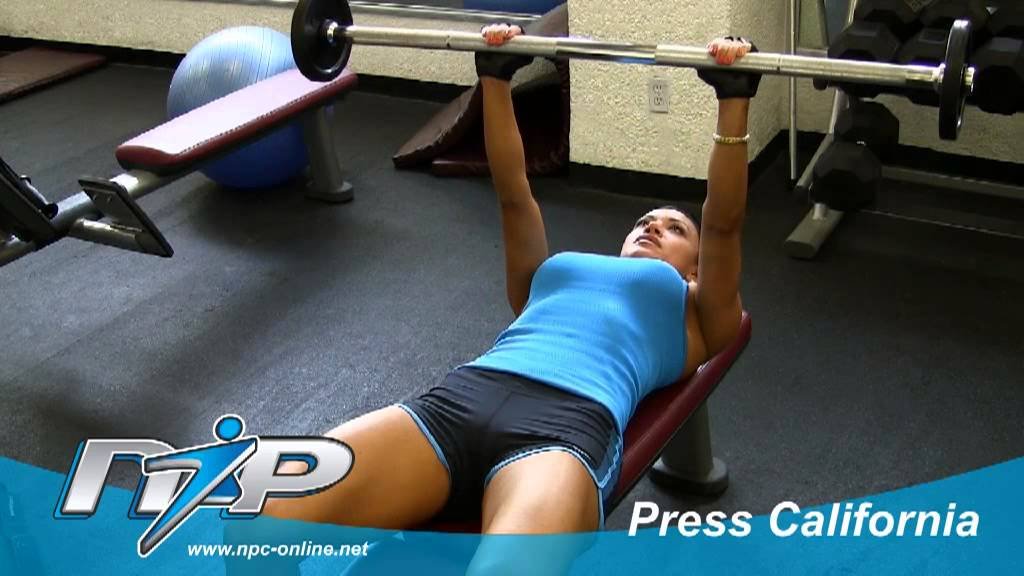
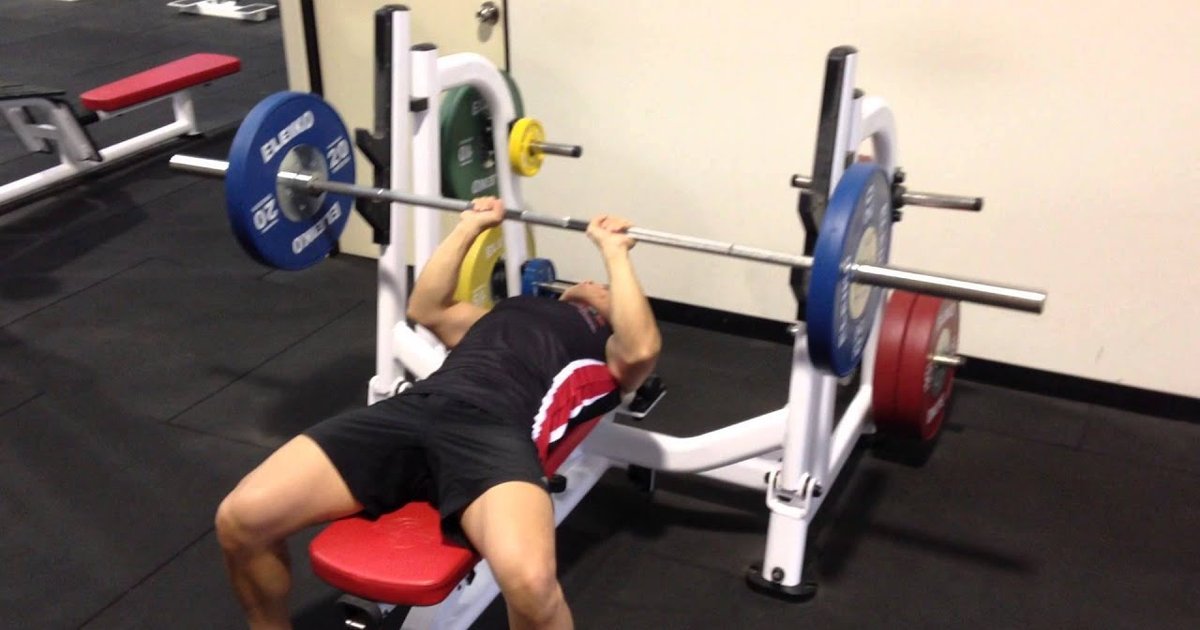
Use a stable flat bench and a bar you can handle confidently. A straight bar and an EZ bar offer different hand positions; choose one that allows a secure grip and comfortable wrist alignment. Check the actual equipment fit. Some shorter EZ bars cannot be supported safely on the rack hooks you use for a full-length barbell.
Set the hooks so you can unrack without losing your upper-back position, and position the bench centrally. Put compatible safeties where they can provide useful protection, while recognizing that safeties positioned for chest pressing may not catch every part of an extension near the head. Check the full movement with a very light load instead of assuming a familiar bench setup covers it.
Keep your feet planted, your hips on the bench and the bar settled before starting. Take a grip around shoulder width or modestly narrower if that suits your wrists and elbow path. Narrower is not automatically more effective. An extremely close grip that bends the wrists or makes the elbows uncomfortable adds a handling problem without proving a better triceps stimulus.
Start much lighter than your close-grip bench working weight. Even an empty standard bar can be too heavy when learning the extension stage. A lighter training bar or an alternative exercise is preferable to forcing a minimum equipment weight you cannot control. Secure the plates with collars compatible with the sleeves.
A competent spotter can help with a coordinated handoff and return, but should understand the planned bar path. Agree on the assistance before beginning. The goal is to complete the set with a clear route back to the hooks, not to improvise once the bar is already difficult to control.
Make the transfer toward the chest deliberate
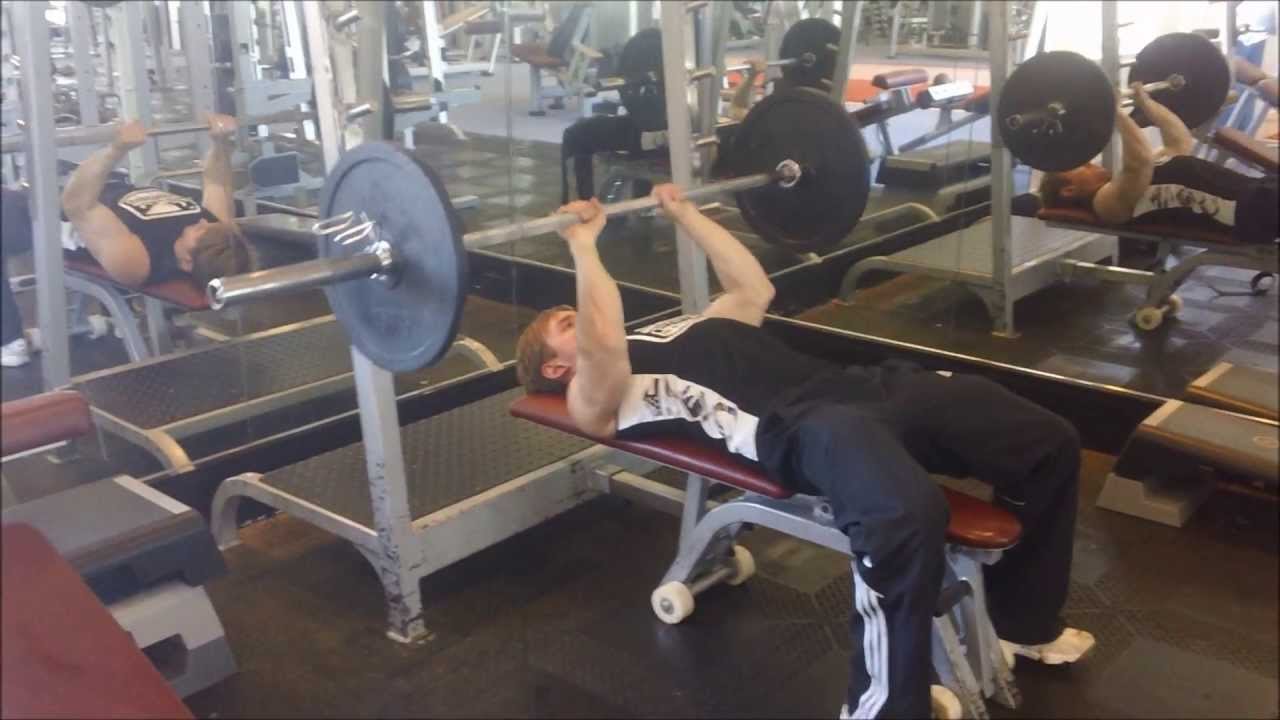
From the settled top position, lower through the elbow bend at a pace that lets you stop the bar. Approach the head with space and control; touching the forehead or taking the bar as far behind the head as possible is not a requirement. Choose a range that you can manage without the wrists folding or the upper arms changing position abruptly.
Next, move the elbows toward the sides and guide the bar forward toward the upper chest. Think of placing the bar into a pressing position rather than dropping it into one. This is the defining transfer in the three-stage version. If it feels like a fall followed by a rescue press, reduce the load or rehearse a smaller range.
Once the bar is settled in the pressing position, extend the elbows and press upward under control. Avoid bouncing off the chest or snapping into the final position. Regain the same top position before the next descent so the repetitions begin from a consistent reference rather than gradually drifting toward the face.
Your exact elbow angle and depth will depend on your build and comfortable range. Do not try to make both arms meet an arbitrary geometric target while ignoring how the bar behaves. Watch for one end of the bar descending faster or one elbow reaching the chest position early. A single bar can hide uneven arm movement unless you look for it.
A side-oblique recording can make the sequence easier to assess. Place the camera outside the lifting area and compare the first repetition with the final one. Check that the extension, transfer and press are still distinct and controlled. A shorter descent paired with a faster press may increase the rep count while changing what you trained.
Use movement drift as feedback
The pressing stage will often feel more manageable than the extension. That can tempt you to choose a weight based on the easiest part. Instead, let the least controlled stage determine the load. If the bar repeatedly accelerates near the head or you need help transferring it to the chest, the fact that you could press it afterward does not make the set appropriate.
Another common change is removing the extension entirely as fatigue builds. The repetitions become close-grip bench presses. That is a different exercise with its own uses, but it makes a California press training log difficult to interpret. Finish the set when you can no longer maintain the intended sequence, and record the repetitions you actually completed.
Watch for grip changes and excessive wrist bend as well. Reset the hand position before the next set rather than trying to shift your hands on a loaded bar above your body. If one grip is consistently awkward, trial another suitable bar at a lighter load. A different handle shape may improve comfort, but it does not remove the need to control the movement.
Muscular effort is expected; sharp pain, catching or increasing joint discomfort is a reason to stop and reassess. This exercise is not a treatment for elbow problems, and no variation can guarantee irritation-free training. A simpler press or extension may be a better choice if the multi-stage movement repeatedly causes difficulty.
Make equipment decisions around those observations. A stable bench, usable rack height, secure collars and smaller loading increments support repeatability. They cannot compensate for a bar path you are unable to control. Keep the training task ahead of the amount of equipment involved.

Equipment Worth Exploring
Explore equipment, accessories and gear from our carefully selected range.


EZ Curl Barbell
Olympic EZ curl bar with angled grips for curls and triceps exercises.



FID Bench MAX
Adjustable bench offering flat, incline, and decline positions + adjustable headrest.


Multi Bench MBX-650 2.0
Adjustable multi-bench with roller adjustment, 15 backrest positions and accessory mounts.

Multi Pull Smith Rack MPHR-780
All-in-one rack with a Smith machine, functional trainer, lat pulldown and low row.


Competition Plates
Competition-style bumper plates for Olympic lifts and loaded strength training.
Give the hybrid one clear role in your week
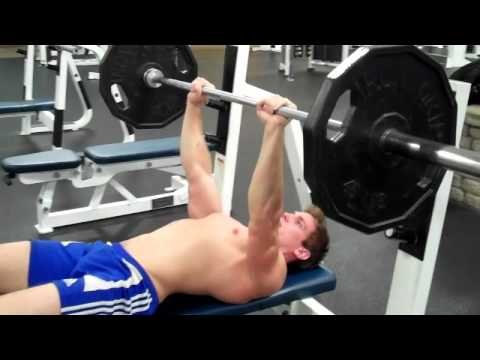
One conservative learning trial for an experienced lifter is two light sets of eight controlled repetitions after the main upper-body work, leaving several repetitions available. This is an illustrative starting experiment rather than a tested optimum. Stop sooner if the sequence changes, and allow enough rest to approach the next set with the same attention to the transfer.
Log the bar type, grip choice, load, completed repetitions and the stage that limited the set. Keep the setup steady for a few exposures. Increasing repetitions with the same controlled path is more informative than adding weight while also shortening the extension and changing the chest position. Make one meaningful adjustment at a time.
Count the work alongside your existing bench pressing, dips and triceps extensions. The California press adds demand to overlapping muscles; it does not exist outside the rest of the program. Replacing a small amount of accessory work gives you a clearer way to judge its effect than simply adding more sets to an already crowded push day.
If the hybrid is not useful, separate its jobs. A close-grip bench press offers a simpler pressing pattern, while a lying extension or cable pressdown provides a more direct elbow-extension task. Dumbbell variations change the handling and allow the arms to move independently, so they need their own load and setup decisions. Do not carry over barbell numbers automatically.
After several sessions, keep the California press if the sequence is repeatable, the setup is manageable and recovery fits the rest of your lifting. Replace it if coordination remains the main obstacle or another exercise serves the goal more clearly. A useful arm-training plan is built from movements you can perform and progress, not from collecting the greatest number of exercise variations.

Funny Gym Shirts & Workout Gear
Funny gym shirts, tanks, hoodies and workout gear for lifters who like training hard.

Gym Nothing Else Matters Tee
Rep “Gym Nothing Else Matters Metallica” humor in and out of the gym.


Kanye Chest Gym | Funny Bodybuilding Parody Pullover | T-Shirt
Keep things casual with a little “Kanye Chest” attitude.


If You're Reading This Its Chest Day | Drake Workout Me Sticker
Stick a little “If You're Reading This Its Chest Day” humor on your favorite gear.

My Bench Press Is Stuck Horror Movie Meme Scary Vest Tank Top
Bring “My Bench Press Is Stuck” humor to your next lifting session.

Gym Sir Swole of Benchalot Medieval Knight Bench Press Hoodie
Show off your medieval humor in a laid-back “Sir Swole of Benchalot Medieval Knight” hoodie.

| I Love Bench Press Pink Heart Pullover T-Shirt
For laid-back days and gym-girl humor: “I Love Bench Press Pink Heart”.

Six Plates Bench Club Meme Shirt – Chest Day T-Shirt
Heavy lifts, good laughs, and a little “Six Plates Bench Club” energy.