Advertising disclosure: This page includes affiliate product links that may earn us a commission, as well as products from our own store.
A portable pulley can add cable work to a rack without the footprint of a full machine. The buying decision is less about the size of the pulley than the space around it: the anchor overhead, the distance your hands travel and the room available for the suspended plates. The Angles90 A90 Cable Pulley is a useful example of that tradeoff. This researched setup guide examines the complete working arrangement rather than claiming hands-on testing or treating an advertised component rating as permission to load any structure.
Start with the anchor, not the headline load rating
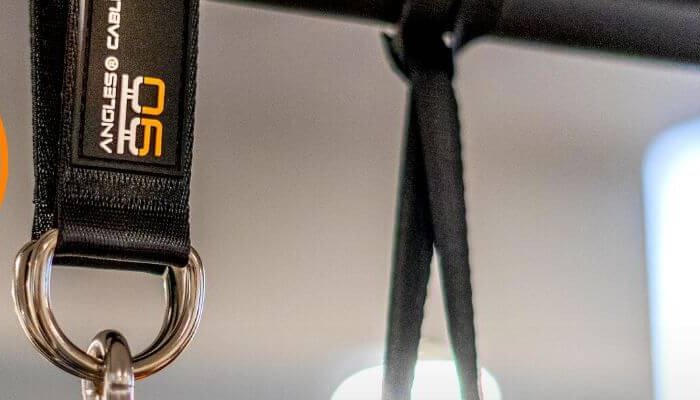
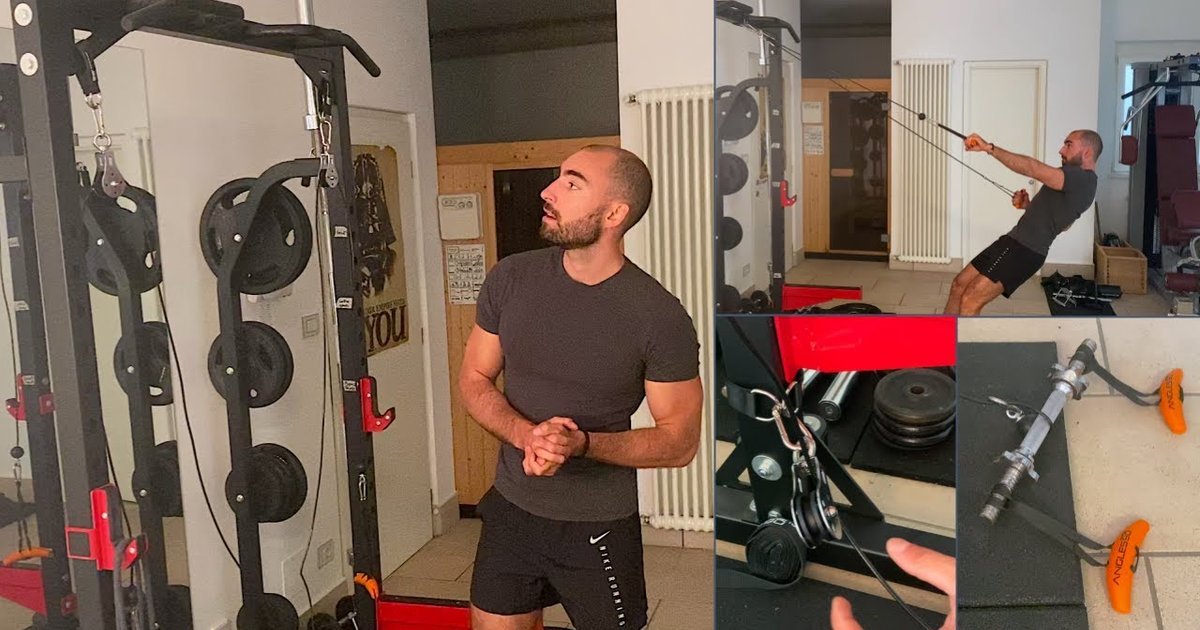
The A90 system uses a suspended pulley, cable, hanging strap, connectors and a loading pin. That makes the supporting structure part of your exercise station. A pull-up bar or rack crossmember must be suitable for the direction and amount of force involved, with its own installation and equipment guidance followed. A convenient overhead object is not automatically an appropriate anchor. Check the support before planning the exercise, particularly in a garage or basement where ceiling height may tempt you into improvising.
Inspect the complete connection from the structure to the pulley. The strap should sit as intended without passing over an abrasive edge; the connector should close fully and carry the load in its intended orientation. Keep the cable seated correctly in the wheel and clear of anything it could rub against. Start with a very light, slow trial. If the anchor moves, the strap creeps or the wheel assembly twists into an awkward position, stop and resolve the setup before adding plates.
Ratings belong to individual components and configurations. The official A90 information gives different limits for the pulley/cable and the strap/connectors, so the largest number is not a whole-installation allowance. Your rack, mounting point, handle and every added connection can impose a lower limit. Inspect equipment before each session and replace worn or damaged parts using the relevant manufacturer guidance. A small pulley is still a loaded overhead system, and it deserves the same attention you would give any other lifting equipment.
Map the cable travel before choosing your first exercise
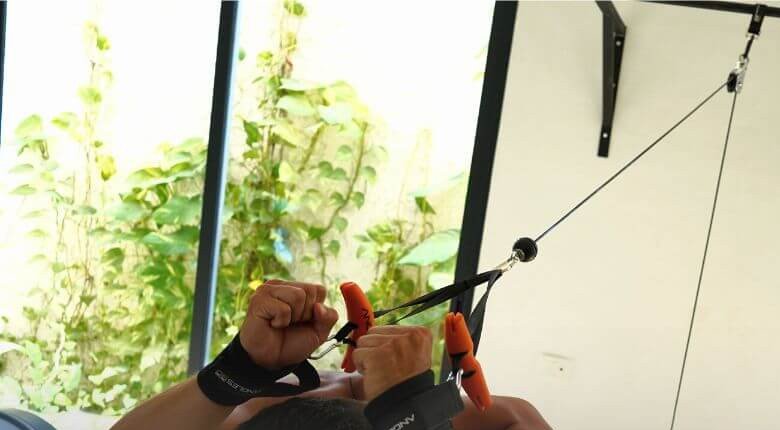
The listed cable length is 2.5 metres, but that number alone cannot tell you whether a seated pulldown will work beneath your crossmember. The full route includes the hanging pulley, the distance down to the starting hand position and the cable running to the loading pin. Connector and handle lengths also occupy space. A setup that looks tidy when unloaded may put the plates on the floor halfway through a repetition or bring a stop against the pulley before you finish.
Set out the arrangement with a small load and move through the complete intended exercise slowly. At one end, check that the plates have enough space to rise without striking the pulley, rack or another attachment. At the other, check that they do not land early and remove resistance before the movement is complete. Include the actual seat or kneeling position and the actual handle. Changing a long strap for a short grip can alter the available working distance enough to matter.
For a simple fixed pulley, the purpose is chiefly to redirect the cable. Do not assume every added wheel halves the resistance: a low redirect and a moving pulley are different arrangements. Commercial cable stations also use different ratios, so a familiar stack number is a poor starting prescription for a suspended plate system. Treat the first session as a new exercise setup. Use manageable resistance and judge control across the full range rather than matching the number you normally select at a gym.
Give the loading pin a clear, stable path
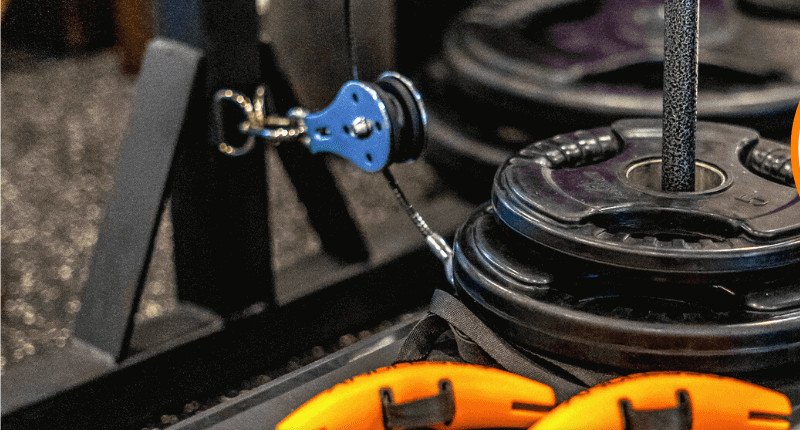
The A90 listing specifies a 22-centimetre loading pin with a narrow shaft. Confirm your plate holes, stack thickness and connection space against the actual equipment you receive. Having a bore large enough to pass over the pin does not guarantee that every plate combination will stack neatly or leave adequate connector clearance. Large-diameter plates can also become the first thing to collide with a rack, bench or your feet even when the central shaft fits easily.
Build the load from stable, compatible plates and check that the connection is fully engaged before lifting. Keep the area beneath and around the suspended load clear. Begin the first repetition gradually so the plates rise vertically instead of swinging toward the rack or your shins. A swinging stack can change the cable's path and make the next repetition less predictable. Lower it deliberately and allow it to settle before changing the load; do not reach into a moving plate stack.
Small increments are useful here. A slight increase can be enough when an exercise is already limited by balance, grip or the height available for the plates. Record the full plate combination rather than remembering only the largest disc. Also note any difference between a thick bumper stack and a compact iron stack. They may weigh the same while occupying very different amounts of the available working space. Storage space and training clearance are separate questions.

Equipment Worth Exploring
Explore equipment, accessories and gear from our carefully selected range.

Angles 90 Grips
Flexible grip attachments that allow natural wrist movement during pulling exercises.


Grip Plates
Rubber-coated weight plates with handholds for loading barbells and machines.


GymPin D Handle Bar
Multi-use steel D-handle bar for cable rows, pulldowns and other cable exercises.

Multi-Length Tricep Strap
Adjustable-length cable strap for triceps, biceps and upper-body cable exercises.

VForce Lat Tower
Wall-mounted cable tower with pivot arms and adjustable 1:1 or 2:1 pulley ratios.

VForce Wall Trainer
Space-saving wall-mounted functional trainer with pivoting cable arms and variable resistance ratios.
VOLTRA
Compact digital cable trainer with smooth, adjustable resistance.
Choose one-pulley and two-pulley work deliberately
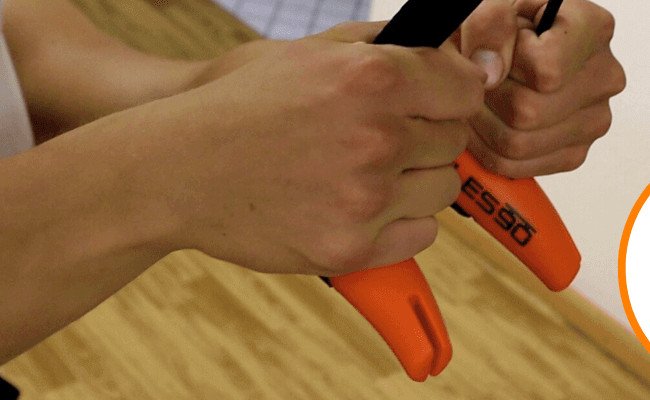
A high pulley can serve exercises such as pulldowns and triceps pushdowns when the support and travel are suitable. A low horizontal pull changes the problem: you need the cable to arrive from a lower direction while the load still has room to rise. The A90 instructions describe a two-pulley arrangement for seated low rows. Buying one unit and assuming every low-row configuration will follow automatically can leave you short of the needed hardware or clearance.
Plan one exercise completely before designing a collection of cable routes. Draw the anchor locations, handle position and loading-pin path, then check the manufacturer's demonstrated arrangement. Do not combine spare pulleys and connectors on the assumption that any configuration is equivalent. A second wheel is useful when it creates the intended route; it is unnecessary complexity when the first arrangement already does the job. Keep the station straightforward enough to inspect each time you use it.
Handle choice comes afterward. Angles90 grips offer different hand positions, but the pulley-only package and a larger bundle may contain different accessories. Check the itemized contents instead of assuming the orange grips in a photograph are included with every option. A familiar approved cable handle can be a useful baseline when compatibility is confirmed. Change one variable at a time: if you alter the handle, seat position and pulley route together, it becomes difficult to identify what improved the movement.

Home Gym Shirts & Garage Gym Gear
Home, garage and basement gym shirts and workout gear for lifters who built their own place to train.

Home Gym & Garage Gym Tee
Heavy lifts, good laughs, and a little “Home Gym & Garage” energy.

My Gymbro Has Attachment Issues Meme T-Shirt
Show some lifting attitude with a playful “My Gymbro Has Attachment Issues” tee.

Home – Garage , Basement & Gains Lovers – Meme Top T-Shirt
Show some lifting attitude with a playful “for Home Gym Athletes” tee.

Garage Shirt – Garage Meme Top Home Gains & Gymbros T-Shirt
Bring “Garage” humor to your next gym day.

Garage Shirt – Garage Hero Meme Top Home Gains T-Shirt
Show some lifting attitude with a playful “Garage” tee.

Home Is Where The Gym Is Funny Home Gym Garage Basement Sticker
A fun “Home Is Where The Gym Is Funny Home” touch for bottles, laptops, and lockers.

Funny Basement Gym Muscle Shirt Athletic Vest for Home Tank Top
Show some personality between sets with “Basement”.

Home Gym Built Not Bought Crewneck Pullover Sweater for T-Shirt
Bring “Home Gym Built Not Bought” humor to your everyday gym style.

Home Gym Nerd Crewneck Pullover Sweater for Home Gym Li T-Shirt
Bring “Home Gym Nerd” humor to your everyday gym style.

Funny Garage Gym Decal for Home Gym Equipment Water Bot Sticker
Bring “Garage” attitude to your water bottle or laptop.
Compare a portable kit with the station you will actually use
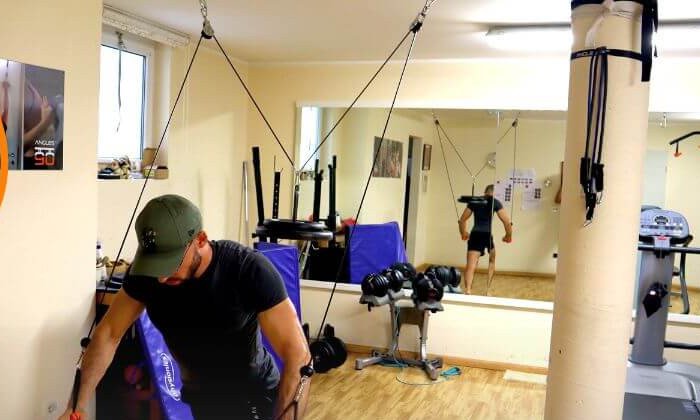
A portable pulley is most attractive when you already own a suitable support and plates, can leave enough clear space and do not mind arranging the cable route. Its packed size can be small while its operating area is substantial. In a shared garage, check whether the loading path interferes with parked equipment, storage or a walkway. In a basement, allow for the lowered height of the suspended pulley rather than measuring only the ceiling.
A dedicated cable tower may be easier to use repeatedly because its frame defines the loading path and its adjustments are built in. That convenience comes with a larger installed footprint. A digital resistance unit offers another approach to creating cable resistance, with its own mounting, power and operating requirements. Compare the complete solution around your actual routine: setup time, exercise changes, load increments, usable travel and the room that remains available between sessions.
Other portable systems also separate high and low arrangements. For example, the Spud Inc Super Econo low-pulley addition is intended to accompany its high-pulley system. SYL Fitness offers rack-mounted pulley components and custom cable options. Bells of Steel has an adapter specifically for changing the connection arrangement on its own cable towers. These are useful reminders to compare system details; none establishes that an accessory from one brand fits the A90 setup.
Before buying, choose your two most important exercises and write down how each will work. List the support, anchor height, complete connection length, plate stack and intended body position. Confirm the package contents and any additional approved parts required. If those details fit your space, the A90 can be considered as a compact way to add pulling work. If they do not, a different cable length, manufacturer-approved arrangement or dedicated station may solve the problem more cleanly than forcing the first kit into place.