Advertising disclosure: This page includes affiliate product links that may earn us a commission, as well as products from our own store.
Which kettlebell exercise actually challenges the shoulder more: a conventional overhead press, an upside-down press, a row or a swing? A twenty-man laboratory comparison offers useful clues but no shortcut to bigger muscles. The clearest finding was a change in shoulder-muscle activation when the orientation, resistance tool or number of hands changed. Here is what the measurements really show—and how to apply them without mistaking a surface-EMG reading for a long-term training result.
Twenty men, three movement families and seven shoulder muscles
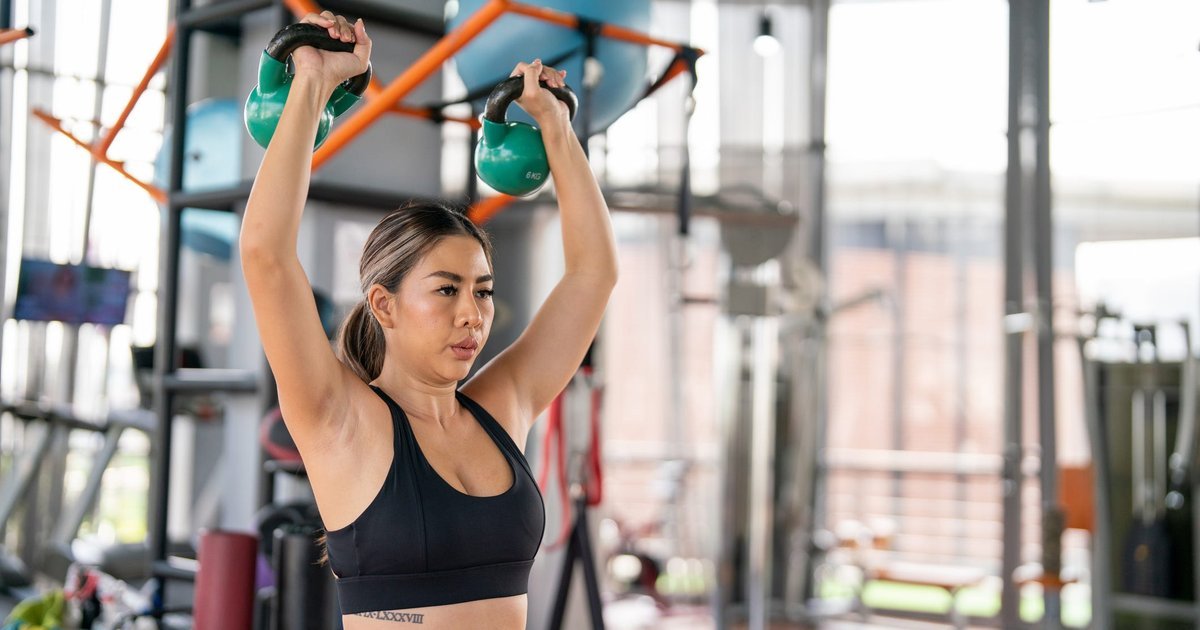
Every exercise can feel different without necessarily producing a different training result. To separate that sensation from measurable muscle activity, a 2026 investigation examined pressing, rowing and swinging variations in twenty healthy young men. The researchers recorded electrical signals from seven muscles around the shoulder during the movements. Their question was narrower than whether kettlebells build better shoulders: which tasks produce comparatively more activity in particular muscles during a testing session?
The study measured surface electromyography, usually shortened to EMG. Electrodes on the skin detect signals associated with the muscle contracting. Results were normalized against maximal voluntary isometric contractions so that the investigators could compare activity across different tasks. That method is useful for observing a movement, but it does not put every exercise on a universal scale of difficulty. Grip demands, leverage, speed and how comfortable someone is with a lift can all affect the signal.
The strongest distinctions concerned the bottoms-up overhead press, free-weight versus band rows, and some single-arm swing comparisons. There were statistically detectable differences between tasks and muscles, yet the paper also noted that the absolute differences in normalized activity were generally modest. In everyday terms, changing the implement or orientation may shift where muscular effort is registered without completely changing the exercise or making its alternative worthless.
This was a cross-sectional exercise test, not a months-long muscle-building intervention. The twenty volunteers were healthy young men, rather than a representative sample of older lifters, people with shoulder pain and women. The exercise order may have been randomized, but no long-term training groups were followed for strength or size. That distinction matters before turning an interesting laboratory result into a definitive programming rule.
Bottoms-up pressing: why orientation changes the challenge
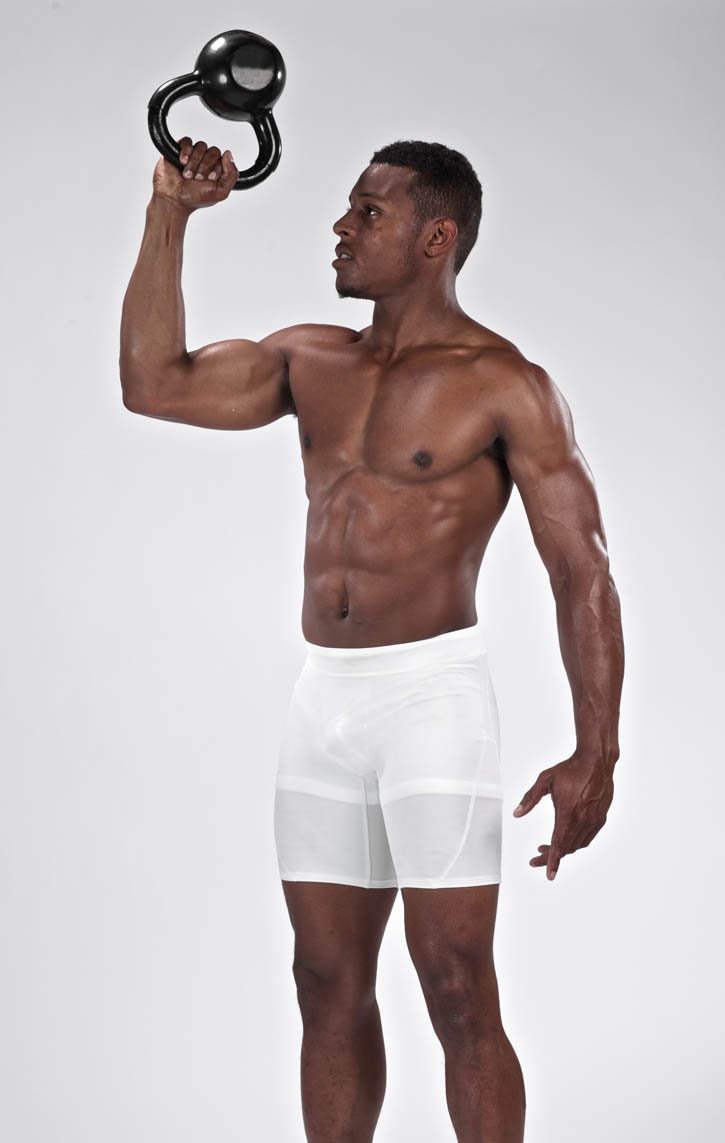
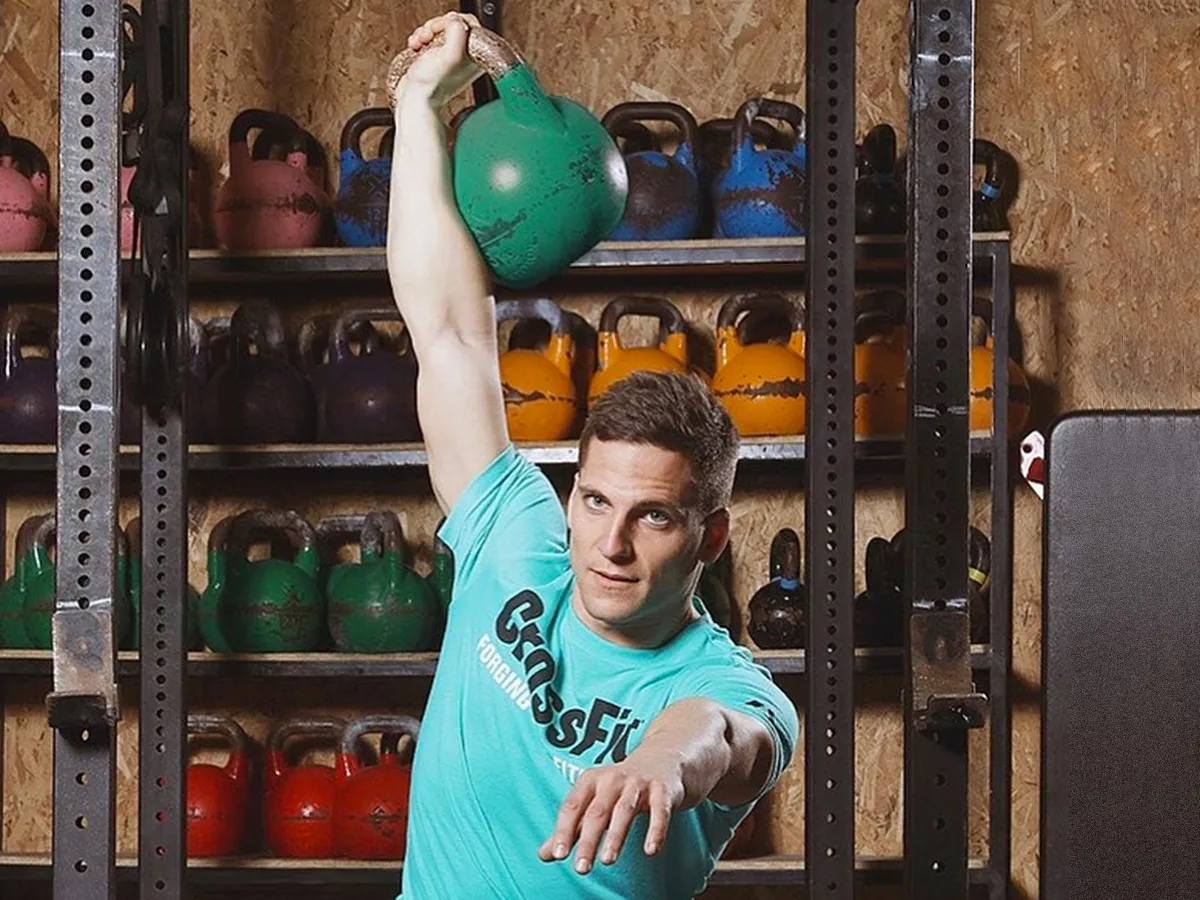
Hold a kettlebell normally and its mass hangs below your hand. Turn it upside down so the heavy bell rests above the handle and the same object becomes harder to balance. A bottoms-up press asks the hand to keep the bell centered while the shoulder moves overhead. That extra balance task is the attraction, but also the reason a light bell can feel unexpectedly demanding compared with a standard press.
In the twenty-man study, the bottoms-up kettlebell overhead press produced greater measured activity than the normal kettlebell overhead press in the upper trapezius, lower trapezius, biceps brachii and infraspinatus. The upper trapezius averaged 30.4 percent of maximal voluntary isometric-contraction activity, with substantial between-person variation. Those observations support the idea of a different coordination demand. They do not prove that a bottoms-up press will grow those muscles faster.
For a practical trial, first demonstrate comfortable overhead movement with a conventional bell or dumbbell. Choose a deliberately light kettlebell, establish a steady handle grip and keep the bell above the fist without letting the wrist collapse backward. Move through a range that stays under control, with ribs stacked above the pelvis and no need to arch dramatically to clear the weight. A deliberate press and descent is more useful than a shaky maximum attempt.
Start with a bottoms-up hold at shoulder height if pressing immediately causes the bell to topple. Then use a short, controlled range before attempting a full repetition. A set can end when the bell begins to wander, the wrist folds or breathing and trunk position deteriorate. A sensible example is two or three sets of three to six clean repetitions per side, with the amount and difficulty adjusted to the lifter rather than presented as a study-tested prescription.

Equipment Worth Exploring
Explore equipment, accessories and gear from our carefully selected range.


Cast Iron Kettlebells
Textured cast-iron kettlebells for swings, squats, carries, and full-body training.


Rubber Hex Dumbbells
Rubber-coated hex dumbbell pairs with a stable shape for home and commercial strength training.


Angles 90 Grips
Flexible grip attachments that allow natural wrist movement during pulling exercises.

FID Bench MAX
Adjustable bench offering flat, incline, and decline positions + adjustable headrest.
Do not mistake wobbling for a superior stimulus. If grip balance prevents any productive pressing volume, a conventional kettlebell or dumbbell press may be the better main movement and the bottoms-up version a small accessory. People recovering from shoulder injury need exercise choices tailored by their clinician; a surface-EMG comparison involving healthy men cannot establish which variation is safe during rehabilitation.
Rows: free weights and elastic bands are not identical
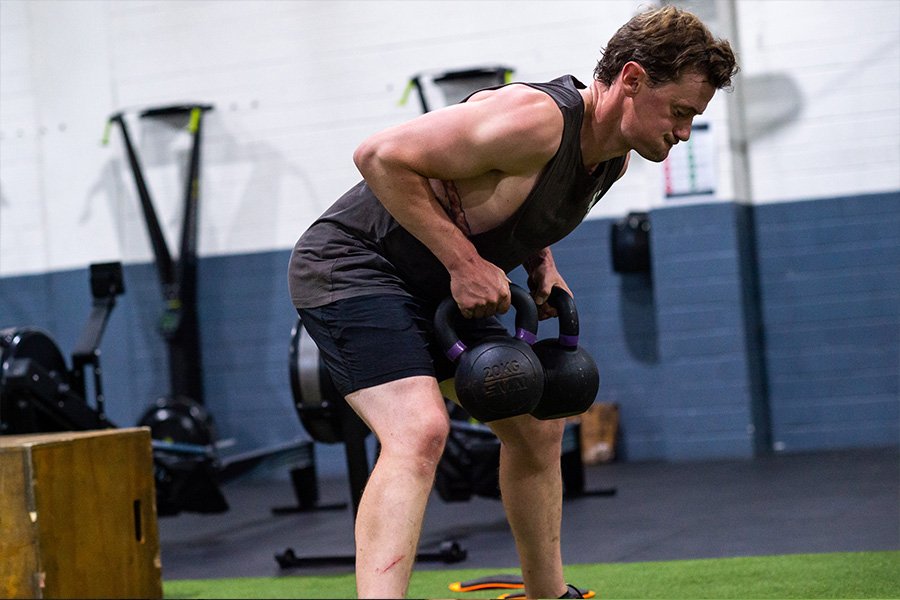
A row looks like a pull regardless of the equipment, but its resistance changes with the tool. A kettlebell or dumbbell acts against gravity, while a band resists stretching and can become harder toward the end of its travel. Neither arrangement is automatically superior. A weighted row may suit repeatable loading, and a band can be convenient when space or equipment is limited, or when the direction of resistance needs changing.
In the laboratory comparison, free-weight rowing produced more middle- and lower-trapezius activity than elastic-band rowing. Serratus anterior activity was comparatively low in the rowing conditions. That is a description of the exercises as performed and measured, not a verdict that bands fail to train the back. An exercise can challenge several muscles without registering the highest EMG activity in the one researchers chose to highlight.
To make a kettlebell row useful, select a load that permits a controlled hinge and stable torso. Support the free hand on a solid bench when necessary. Pull the elbow toward the hip or ribs without turning the repetition into a fast full-body twist. Lower until the working shoulder can move naturally, and preserve enough range to feel the back contributing rather than only the grip hanging on.
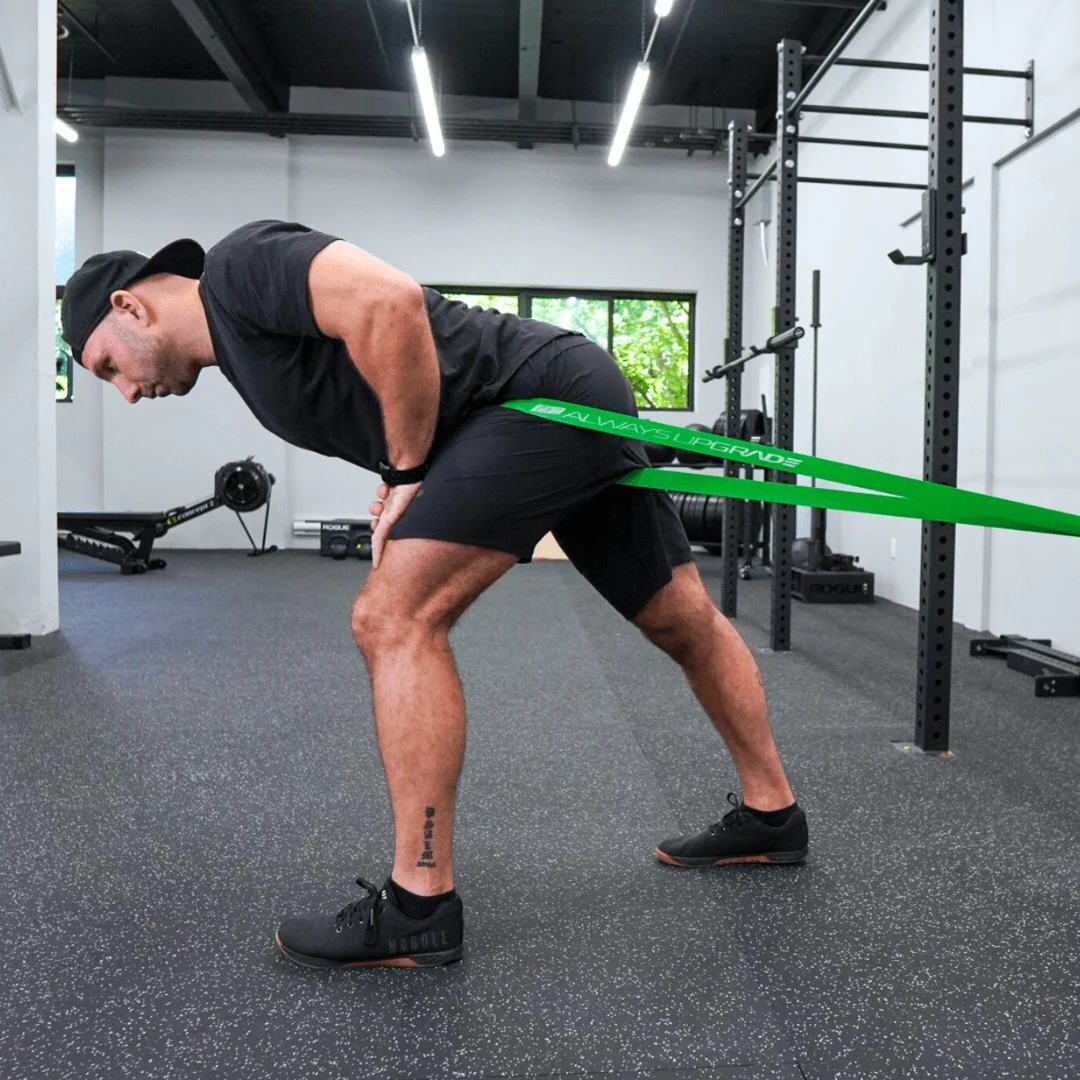
For a band row, anchor the band securely and check the direction before pulling. Step far enough from the anchor to keep useful tension through the motion, but not so far that the torso must jerk backward to start every repetition. A well-designed band row can be a practical addition to an upper-body session, especially for extra controlled volume. Comparing a very light band with a heavy kettlebell would be a load mismatch, not a fair test of the materials.
A programming decision should consider the full set: the resistance you can progress, the number of challenging repetitions, the movement range you maintain and whether the exercise fits alongside other lifts. Rather than hunting for a single universally optimal rowing variation, choose one that lets you train consistently and measure improvement without constantly changing setup.
One-hand and two-hand swings: a hinge before a shoulder exercise
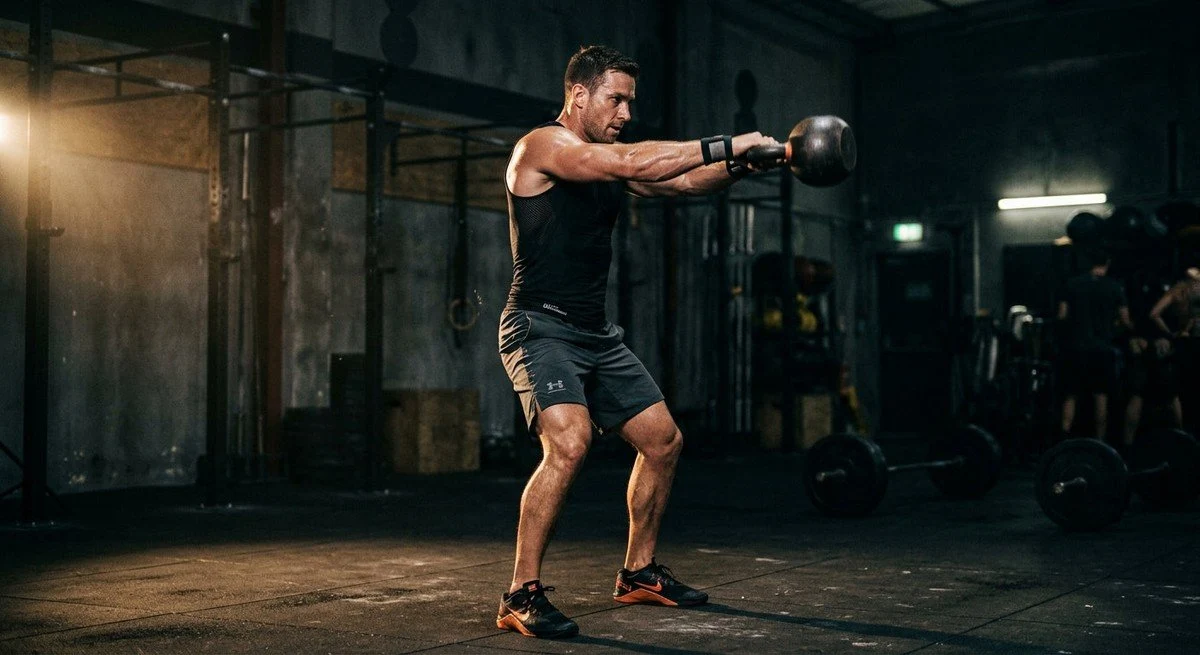
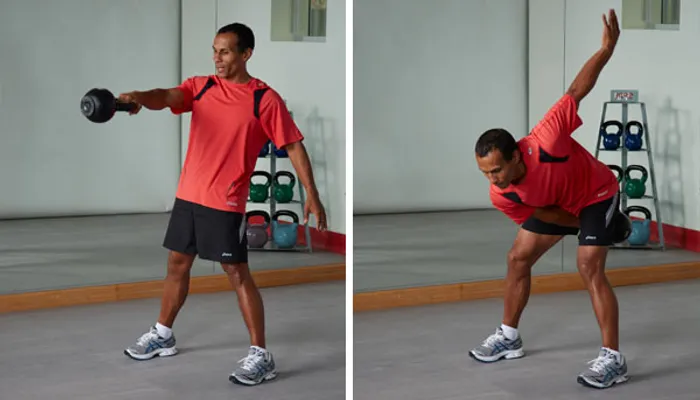
The kettlebell swing is powered mainly by rapid hip extension, not by lifting the weight with the arms. When the hips extend, the bell travels forward while the hands guide its path. A two-handed swing generally offers a wider, more symmetrical grip. With only one hand on the bell, the lifter must manage a different rotational and grip challenge, and that can change how the upper body participates.
The study found broadly similar shoulder-muscle activation profiles between two-handed kettlebell swings and comparable dumbbell swings. One-handed kettlebell swings increased activation in selected muscles, particularly the lower trapezius. These are specific measurements from one testing context. They do not mean the one-handed swing is automatically a better hypertrophy exercise or that it trains the entire shoulder complex more effectively.
Learn the hinge with a manageable two-handed swing. Set the bell ahead of the feet, brace the torso, send the hips backward and hike it between the legs without collapsing the spine. Drive the feet into the floor and stand tall, letting the bell float to about chest height. The arms are connectors, not engines. If the movement becomes a shoulder front raise, reduce the load and restore the hip-driven rhythm.
A one-handed progression can begin with short sets on each side after two-handed sets feel reliable. Keep the shoulders approximately level, resist excessive torso rotation and allow the free arm to help counterbalance naturally. Avoid throwing the bell upward to achieve a particular height or letting it drag the shoulder into an uncontrolled downswing. Park the bell deliberately after each set instead of abandoning it mid-repetition.
Grip fatigue can arrive before the hips or legs are fully challenged. That is not necessarily a problem, but it tells you why a particular session is ending. When the goal is general conditioning, two-handed swings may deliver more useful repeatable work. When the goal includes single-side control and the lifter already owns the hinge, a small amount of one-hand work can offer a different skill demand.
What EMG cannot tell you about growth, safety or strength
A more active muscle on an EMG recording is not the same thing as a muscle becoming bigger in the coming weeks. Long-term hypertrophy depends on numerous factors, including challenging training performed over time, adequate recovery and an appropriate food intake. EMG offers one angle on an exercise, but it does not measure the number of new muscle fibers, the size of a muscle after training or the amount of future strength gained.
Surface electrodes also have limitations. Signals are influenced by electrode placement, the depth of the muscle, neighboring tissue and how the movement is performed. Normalizing to a maximal voluntary contraction makes comparisons more interpretable, not infallible. A result such as more upper-trapezius activity during an unstable press should be described as a response under the tested conditions, rather than treated as a universal ranking of all presses.
Technique and intention matter. A lifter who races through a swing, pulls a row with the back rounded or balances a bell they cannot manage is not necessarily repeating the protocol from the paper. Conversely, a skilled lifter may make a demanding movement look smooth because the task is well learned. Apparent stability does not mean the relevant muscles are doing nothing, just as obvious shaking does not prove a superior adaptive stimulus.
This paper also was not a shoulder-injury prevention trial. It did not follow people for future pain, assess clinical outcomes or establish that one orientation protects the rotator cuff. Someone experiencing pain, recurrent instability or a recent operation should not interpret the laboratory activation rankings as rehabilitation instructions. Exercise tolerance, symptoms and professional guidance should determine those choices.

Functional Fitness Shirts & Workout Gear
Functional-fitness shirts, tanks and workout gear for athletes who train strength, conditioning and everything in between.


Break The Stereotype Gym | Feminist Muscle Shirt For St Tank Top
Add some lifting attitude to training with “Break The Stereotype”.

Viva La Resistance Bands , Meme Shirt, Top T-Shirt
Make gym days more fun with “Viva La Resistance Bands” style.

Cheeseburger Kettlebell – Burger Swings Meme Hooded Pul Hoodie
Bring “Cheeseburger Kettlebell” gym humor to lazy days and post-workout plans.

Kettlebell Skull Tee
Heavy lifts, good laughs, and a little “Kettlebell Skull Gym Meme” energy.

OnlyGains Kettlebell Meme Sweater Meme T-Shirt
Keep things casual with a little “OnlyGains” attitude.

Kettlebell Heart X-Ray – Valentine's Workout Hooded Hoodie
Bring “Kettlebell Heart X-Ray” gym humor to lazy days and post-workout plans.

HYROX High Rocks Functional & CrossFit Tank Top
Your gym-day look, with a playful “HYROX High Rocks” twist.

Vitruvian Kettlebell Tee
Heavy lifts, good laughs, and a little “Vitruvian Man With Kettlebells” energy.

Donut Kettlebell – Bakery Gains Meme Decal for Water Bo Sticker
A fun “Donut Kettlebell” touch for bottles, laptops, and lockers.
A stronger practical test is to ask whether the variation fills a gap in a complete program. Is the main movement progressing? Can the person add repetitions or load without sacrificing mechanics? Does the accessory create enough useful work to justify its setup and fatigue? Those questions keep the evidence in proportion while leaving room for the real differences between implements that the study identified.
Build a measured six-session kettlebell shoulder rotation
Use a short experiment rather than replacing your entire upper-body program. Over two or three weeks, run six sessions that include a comfortable main press, one row variation and a controlled swing option. Keep at least a day between hard sessions for similar muscle groups when needed. The purpose is to compare how well you perform the movements and recover from them, not to reproduce a laboratory protocol the study did not publish as a training plan.
At the beginning of each session, warm up with easy shoulder motion, several light presses and unloaded hip hinges. Perform your normal kettlebell or dumbbell press for two or three sets of six to ten controlled repetitions. If the load and technique are appropriate, finish the pressing portion with two light bottoms-up sets of three to six reps per side. Remove the bottoms-up work if balancing the bell is your only remaining effort.
Next choose either supported kettlebell rows or securely anchored band rows for two to four sets of eight to twelve repetitions. Use the same variation for at least two successive sessions before changing it, then record the load or band configuration and range. A meaningful comparison needs similar effort, range and rest times. If your band has little resistance at the start, note that instead of assuming its repetition count equals a free-weight row.
Finish with two or three short swing sets. Begin with six to ten two-handed repetitions per set if you are still practicing. Experienced lifters who can keep the bell on a controlled path may introduce four to eight single-arm swings per side as a technique-focused substitution. Stop before the grip gives out or the swing turns into a shoulder lift. These figures are editorial starting examples, not prescriptions validated in the twenty-man EMG study.
After the sixth session, compare the ordinary details: the heaviest controlled press, the kettlebell weight you can stabilize, row repetitions with consistent torso position, and whether swings remain hip-driven. Also note shoulder comfort and whether the extra variation reduced performance on your main work. Keep the bottoms-up press or single-arm swing if it improves training quality and fits your goals. If not, conventional presses, rows and two-handed swings remain perfectly legitimate choices.