Advertising disclosure: This page includes affiliate product links that may earn us a commission, as well as products from our own store.
Landmine deadlifts look straightforward until the bar starts pulling at an unexpected angle. One end is fixed, so the loaded end swings through an arc rather than travelling vertically. The safest useful setup is the one that respects that arc: secure the pivot, adjust where you stand, then make your hip hinge repeatable before loading more plates. Here is a practical setup, troubleshooting and programming guide.
Anchor the bar before you think about weight
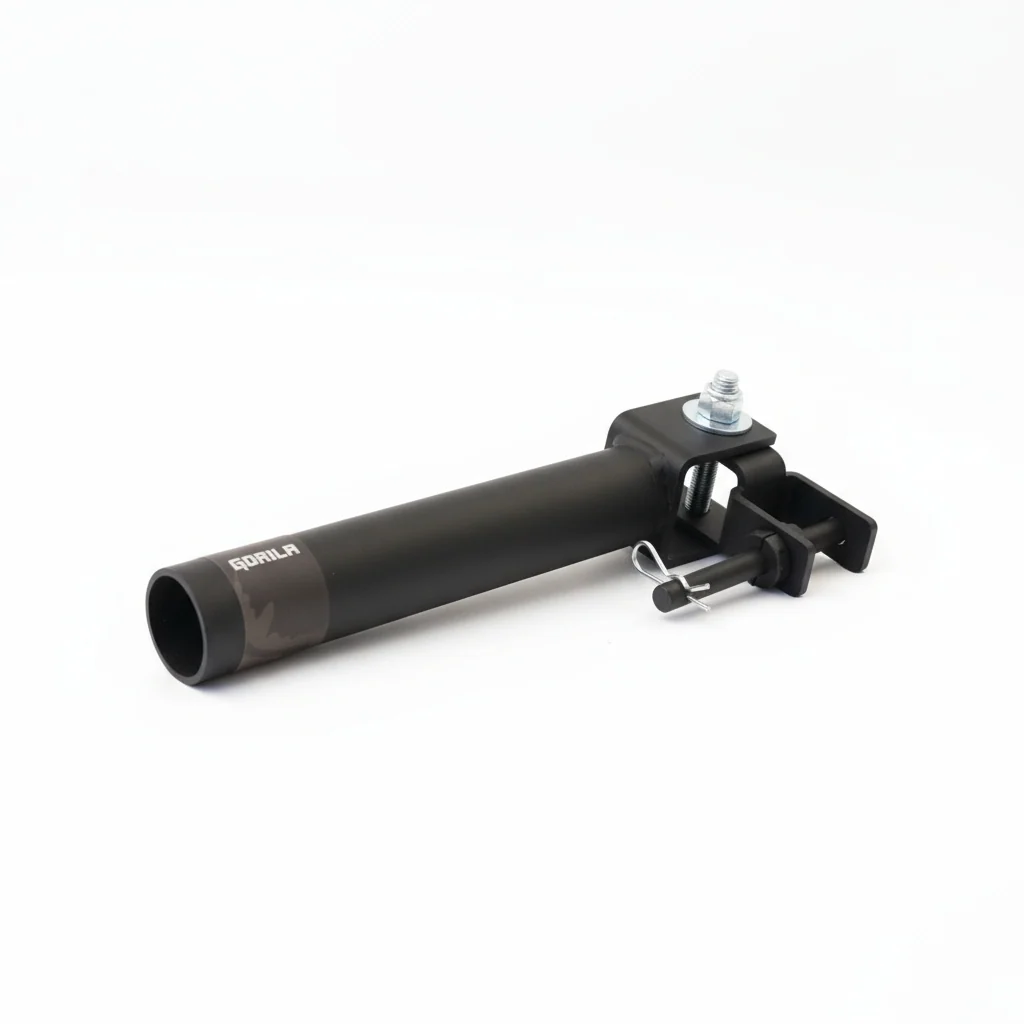
Begin at the end of the bar that does not move: the landmine pivot. A proper rack-mounted or floor-mounted sleeve should accept the correct Olympic bar diameter, swing smoothly without rattling loose, and sit on a stable structure. A plate or shoe wedged against an unsecured bar is not equivalent to a positively retained pivot. Check the attachment’s instructions, pin or bolt engagement, clearance from the rack and surrounding floor space before loading anything.
Place the empty bar into the mount and gently sweep the free end through the intended lifting path. You should not feel the pivot catching, binding or dragging the bar sideways. Give the loaded end enough space to travel without striking a rack upright, wall, mirror, other plates or another lifter. A secure anchor may be unglamorous, but every repetition depends on it.
Load only the free end with plates that fit the sleeve. Lock them with a suitable collar where the configuration permits one and inspect whether the first plate touches the floor at the intended bottom position. Plate diameter can alter your starting height: large bumper plates and smaller metal plates are not geometrically interchangeable. A thicker stack can also alter how the handle feels next to the knees. Begin with an empty bar or a modest load and check the entire available range before increasing weight.
Some dedicated landmine bars offer separate gripping and loading areas; with an ordinary barbell you may hold the sleeve, a purpose-designed end handle or another compatible attachment. Make sure your hands have a reliable purchase that will not contact rotating plate edges. The right tool is the one that keeps the contact point steady, not necessarily the most elaborate accessory.
Find a stance distance that agrees with the arc
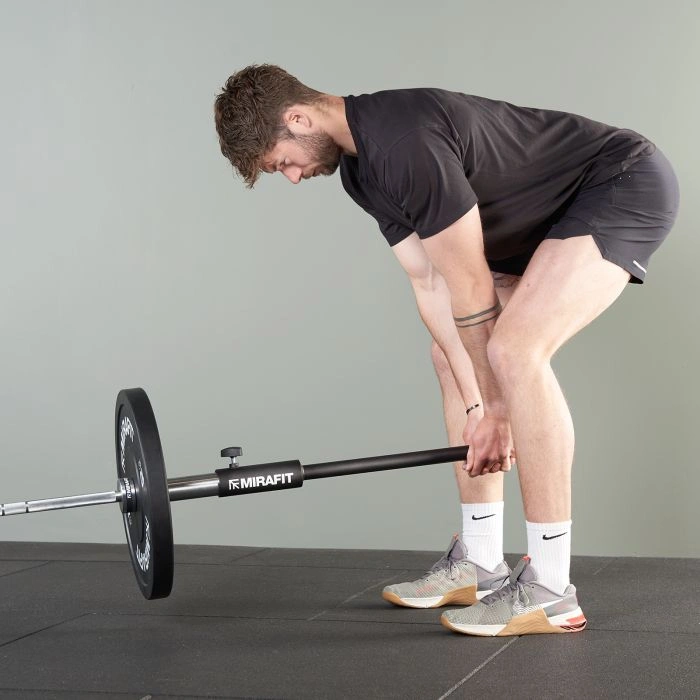
Unlike a straight-bar deadlift, the free end of a landmine travels along part of a circle. Its pivot is fixed; the loaded end does not rise perfectly vertically. This changes the horizontal distance between the weight and your feet as you stand. If you ignore that geometry, a movement that should feel like a controlled hip hinge can become a tugging contest with a bar that wants to travel somewhere else.
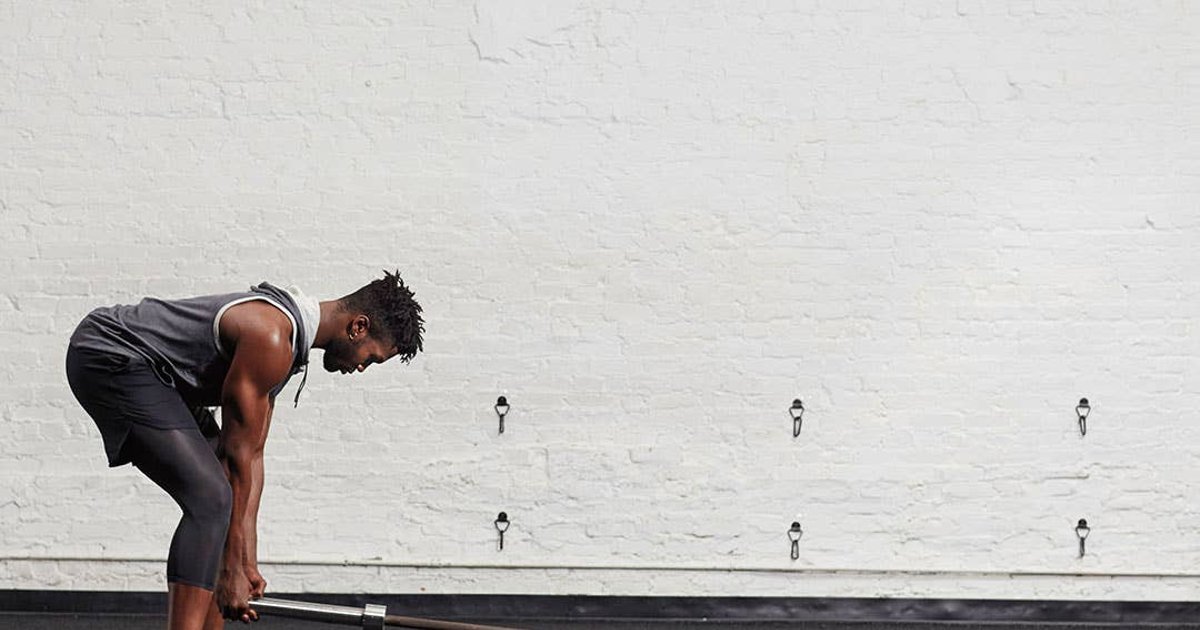
Start by facing the anchor with feet roughly hip-width apart. Position the free end so you can grasp it with both hands while the hips are folded and the shoulders are over or just ahead of the grip. Shins need not be frozen perfectly vertical, but avoid pushing the knees so far forward that you can no longer move the hips back. The load should leave the floor without your having to reach or twist.
Perform two to four unloaded repetitions, then move the feet a small distance nearer or farther from the pivot. You are looking for a start position you can repeat and a finish where the hips are extended without the handle colliding with your thighs or pulling your shoulders forward. Too close and the bar may crowd your body as it rises. Too far and the arc may feel like it stops before you have finished standing.
Take a side-view video if you cannot tell which direction feels more natural. Compare the bar’s position relative to your body at the start and finish, not just its height off the floor. Different bar lengths, plate sizes, handle arrangements, arm lengths and heights change the answer. There is no universal centimetre measurement that works for every landmine deadlift setup.

Equipment Worth Exploring
Explore equipment, accessories and gear from our carefully selected range.


Grip Plates
Rubber-coated weight plates with handholds for loading barbells and machines.


Leather Lifting Straps
Padded leather straps support grip during heavy rows, deadlifts and pulling exercises.


T-Bar Row Attachment
Welded barbell attachment that connects a D-handle bar for landmine and T-bar rows.

GymPin Barbell Row Handle
Heavy-duty handle attachment for barbell, landmine and T-bar rows.
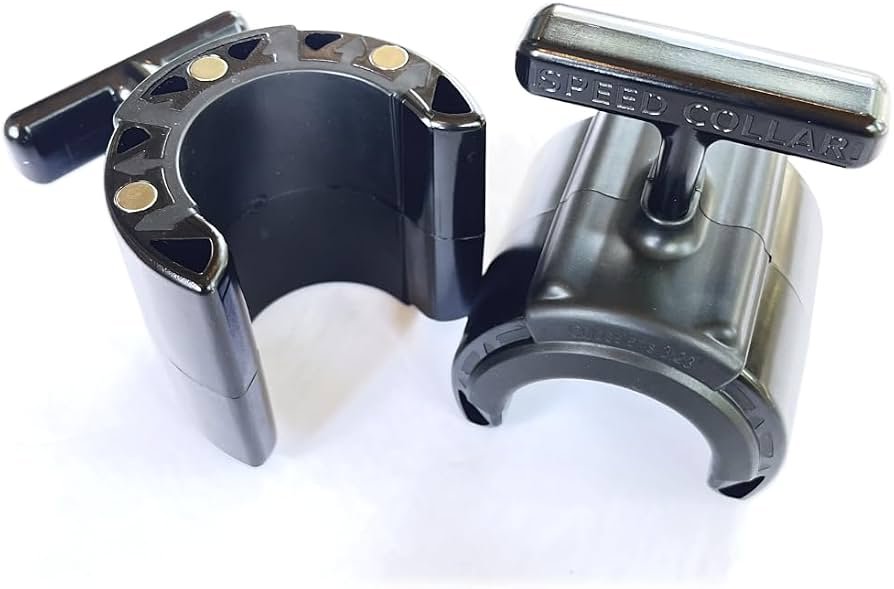
Speed Collar
Quick-release collars designed to secure weight plates on standard two-inch Olympic bars.
Brace, hinge, stand and lower the same way
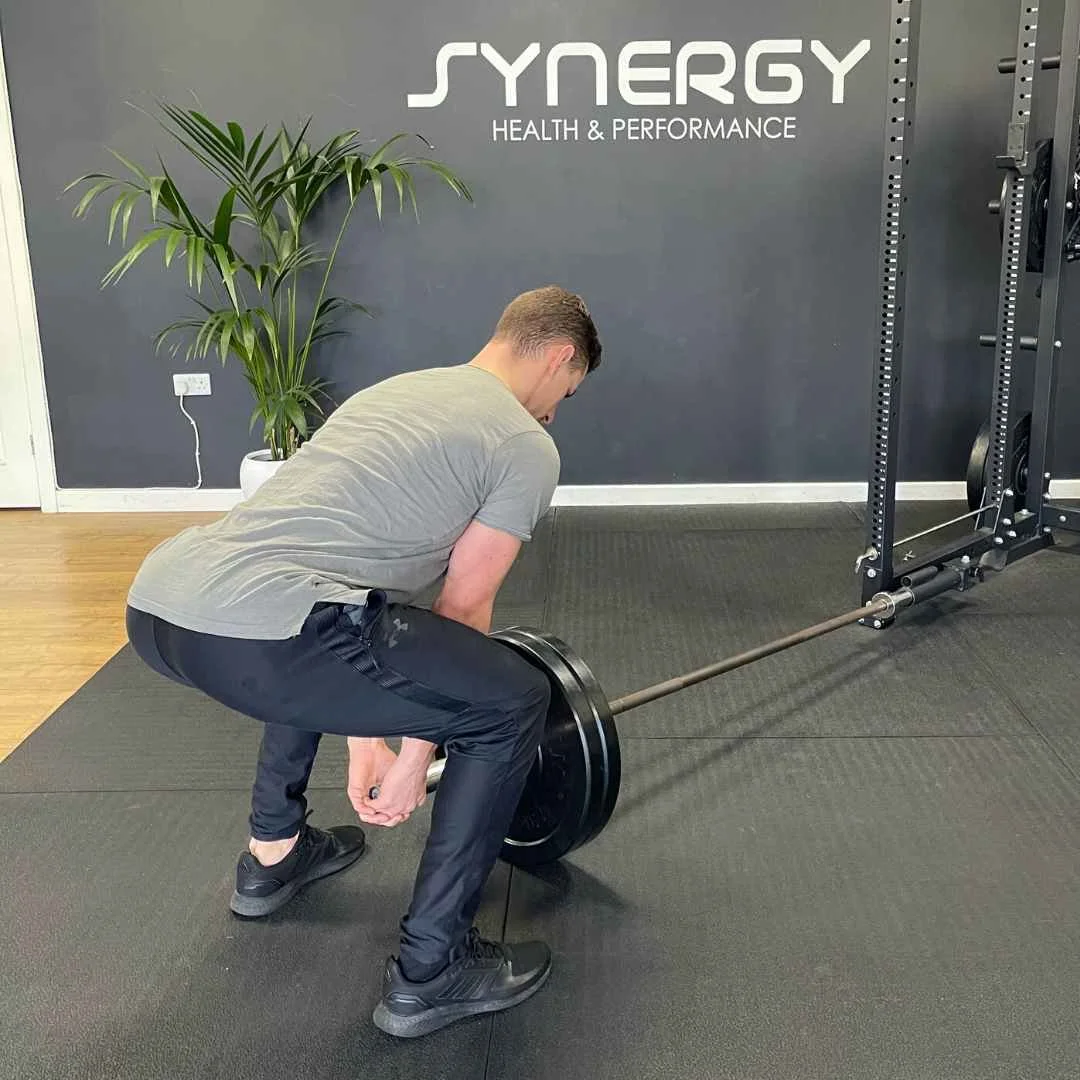
Approach each working rep as a deadlift first and a landmine movement second. Set the feet, grasp the handle, draw the arms long, take a breath and brace the midsection. Think about keeping the ribcage and pelvis working together instead of lifting the chest so dramatically that the lower back arches. The goal is a firm trunk that lets the hips do the largest share of the moving.
Move the hips backward to load the posterior chain, allowing the knees to bend enough for the handle to reach the bottom position without rounding the back. Pressure should stay distributed across each foot. A bit of knee travel is normal: turning the movement into a stiff-legged endurance test is no better than sitting straight down into a squat. A controlled hinge combines hip motion, modest knee motion and a stable shoulder-to-hip relationship.
Push the ground away, straighten the legs and extend the hips as the bar rises through its fixed path. Keep the shoulders organized rather than jerking the end upward with the arms. You should be able to stand tall without leaning back to squeeze out artificial range. If your hips finish extending before the bar reaches an awkward stop, adjust stance and load before your next set.
Lower by sending the hips back while you guide the free end downward along the reverse arc. If the plates repeatedly hit the floor farther in front of your body, check stance and grip instead of treating the drift as inevitable. Let the weight settle without bouncing, reset tension and repeat. Clean repetitions should resemble one another more closely than they resemble a swinging landmine row.
Fix the four errors that make the lift feel strange
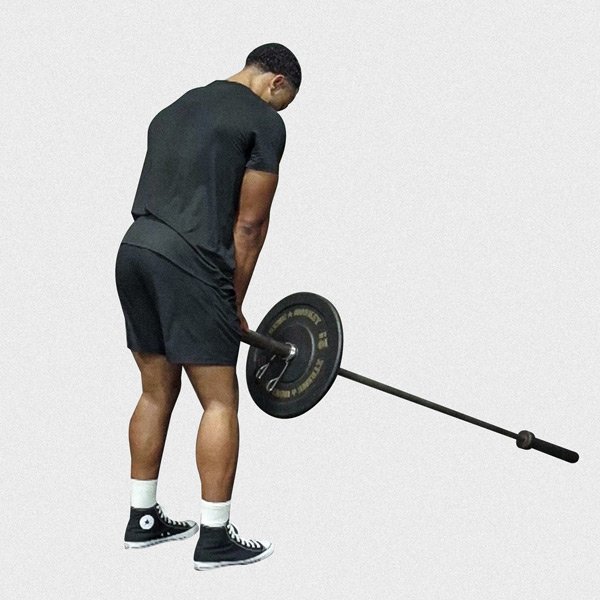
The first common error is chasing a straight vertical bar path. Because the bar is pinned, trying to pull the free end directly up can create an unnecessary horizontal pull against your hands. Let the end follow its natural arc while you keep the torso braced. Small stance changes matter more than complicated cues when geometry is the underlying problem.
The second is overreaching for the handle. A lifter may bend from the upper back instead of sending the hips backward, especially when plates position the grip low or far away. Reduce the range, lift the starting position slightly with appropriate stable blocks if the exercise setup allows it, or choose a more suitable handle. Do not force the spine to round just to touch a sleeve at an arbitrary height.
The third is crowding the free end with the knees or torso. If plates keep meeting the thighs or a short attachment contacts the body before the hips extend, pause the set and move a little. Check whether the collar and plate stack create a larger footprint than your empty-bar practice. A new plate size can require a new setup even when the weight number is unchanged.
The fourth is assuming every landmine repetition is automatically easier on the back. A pinned bar provides a constrained path, but it does not remove loading from the spinal erectors or make a sloppy hinge safe. Keep the challenge appropriate for the lifter and purpose, and stop or modify the movement when pain or loss of position appears. Muscle effort is expected; persistent sharp pain is not a training target.
Compare the bilateral hinge with one-leg and other deadlifts
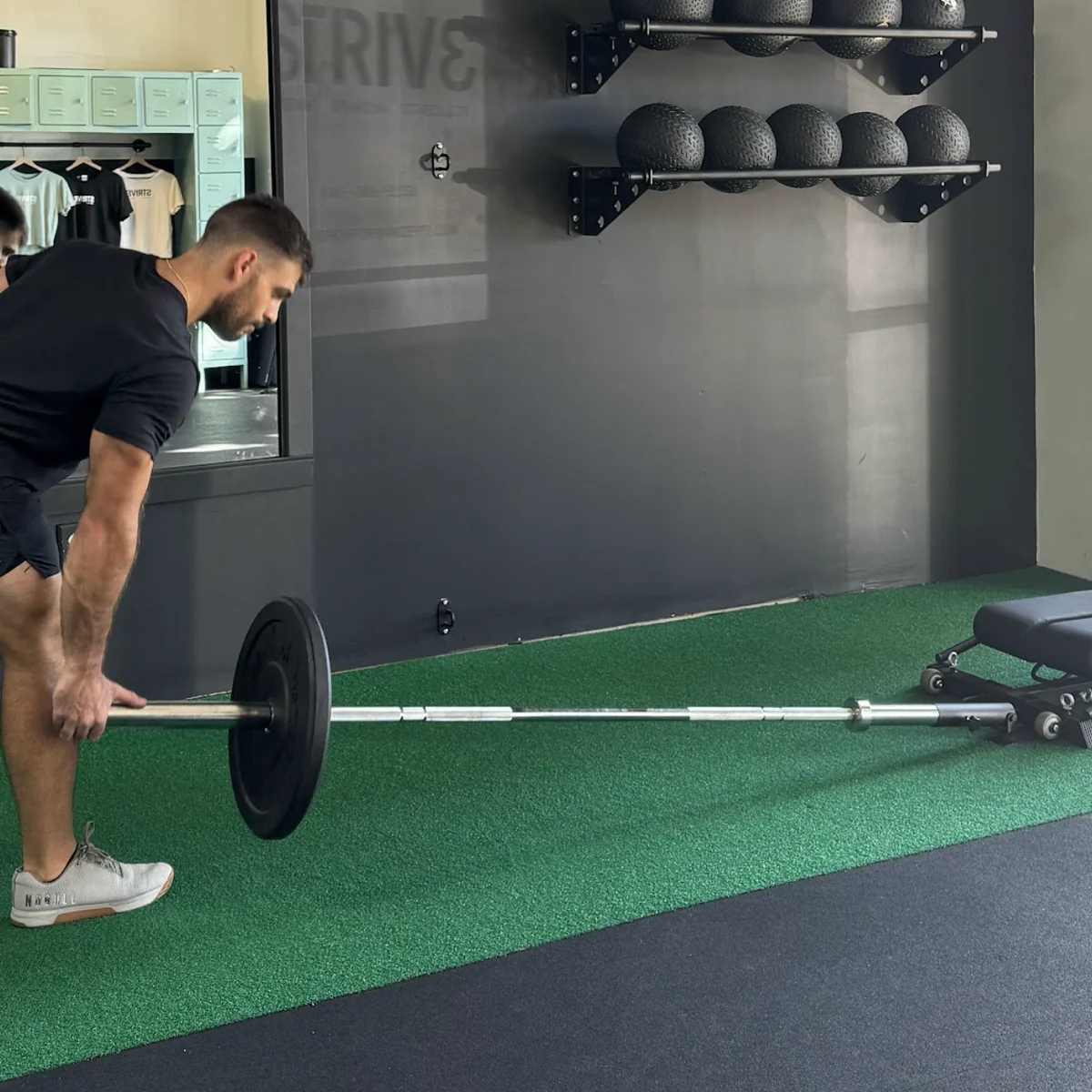
The two-foot landmine deadlift is the sensible baseline. It gives both legs a stable platform, lets you concentrate on the pivot path, and usually permits more external load than a deliberately off-balance variation. That does not make it a direct replacement for a straight-bar deadlift: the line of resistance, handle height, loading geometry and peak demands vary through the motion.
A staggered stance places one foot slightly behind the other for balance. It can create a useful intermediate step between bilateral and single-leg work, provided you keep the hips level and resist twisting toward the anchored end. A single-leg version introduces a major balance requirement as the free leg moves backward. Start with a much lighter load and shorten the range when the pelvis rotates or the back position begins to change.
A landmine Romanian deadlift generally emphasizes lowering through a hinge with only modest knee bend and often starts from a higher top position. A landmine squat, meanwhile, places the load nearer the chest and asks for substantially more knee flexion. Similar equipment does not make these exercises interchangeable. Choose the movement according to the muscles, joint angles and skill you actually want to train.
If your goal is maximal competition-style pulling strength, practice the competition lift itself. If your goal is useful hinge volume, a different loading feel, or a practical accessory exercise, a carefully chosen landmine setup may fit. Compare exercises based on measurable progression and repeatable technique rather than saying one is universally superior.

Powerlifting Shirts & Lifting Gear
Powerlifting shirts and gym gear for squat, bench and deadlift lifters who live for heavy numbers.

Bending Bars Meme – Barbell Squat Bench Deadlift, & T-Shirt
Heavy lifts, good laughs, and a little “Bending Bars Gym Meme” energy.


Leg Day Is Calling You Squats & Deadlifts Meme Hoodie
Stay casual and show some leg-day attitude with “Leg Day Is Calling You”.

Praise The Deadlift Holy Lifting Meme , & T-Shirt
Show some deadlift attitude with a playful “Praise The Deadlift” tee.

Leg Day Squats Deadlifts Decal Meme Vinyl Sticker
Give your everyday gear a playful “Leg Day” twist.

Defy Gravity Isaac Newton Deadlift Meme Science T-Shirt
Heavy lifts, good laughs, and a little “Defy Gravity” energy.

9 Plates Deadlift Club Motivational Meme & Ultimate T-Shirt
Show some deadlift attitude with a playful “9 Plates Deadlift Club” tee.

Leg Day Gains | LEGO Inspired Workout For Squat & Deadl Hoodie
Stay casual and show some leg-day attitude with “Leg Day Gains”.

Squat Bench Deadlift Pet Dogs Shirt Dog Lovers T-Shirt
Make gym days more fun with “Squat Bench Deadlift Pet Dogs” style.

Heavy Metal Deadlift – Gymbro Leg Day & Gains T-Shirt
Make gym days more fun with “Heavy Metal Deadlift” style.
Build a four-week progression you can actually measure
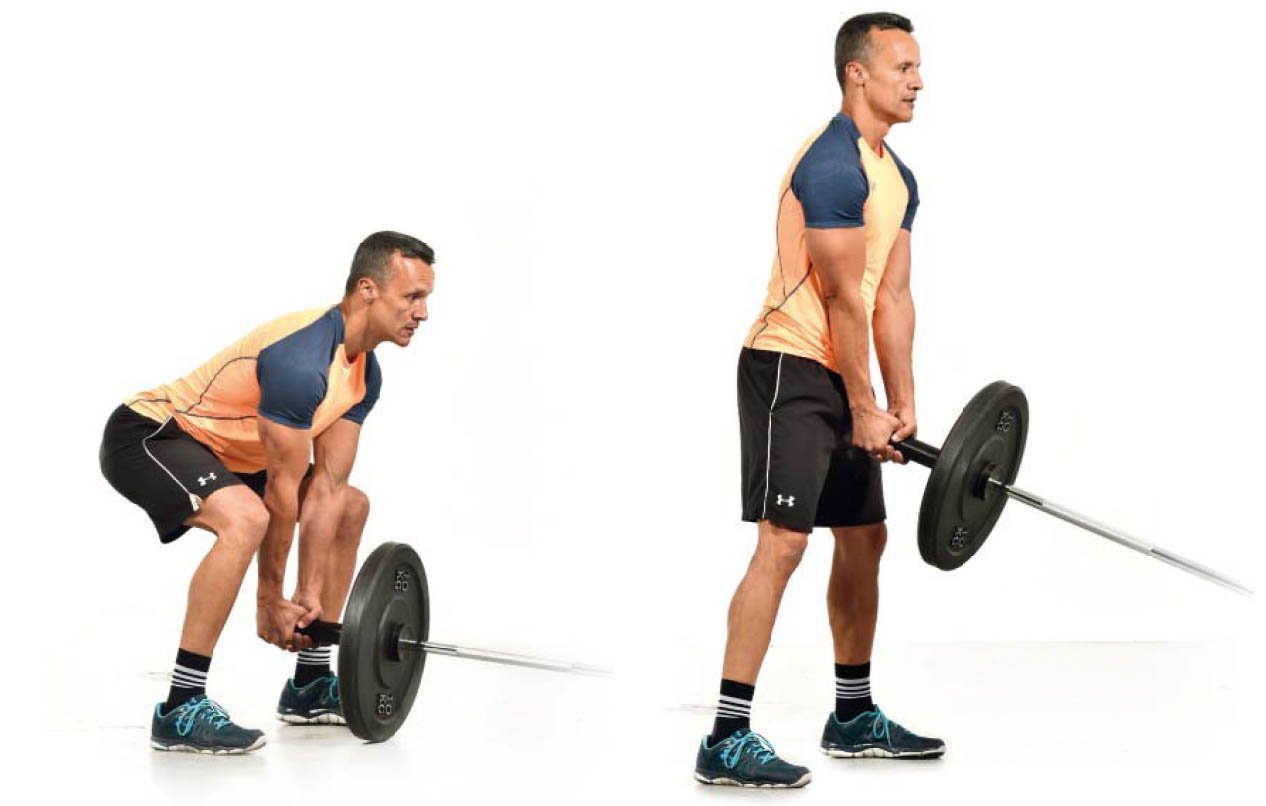
Put the landmine deadlift near the beginning of a training session, after a specific warm-up, while you still have enough concentration for the setup. For a first working week, try two or three sets of six to ten smooth repetitions with a load that leaves about two or three clean reps in reserve. This is a practical example, not a prescription for every athlete or a claim that one rep range uniquely builds muscle.
During week one, record the anchor location, bar length, plate diameter, stance distance, handle, working load and how consistently the plate meets the floor. In week two, keep the same setup and add one repetition to each set if every repetition remains controlled. In week three, aim toward the top of your rep range or make a small load increase and return to fewer repetitions. In week four, repeat a comparable session and judge the improvement by both repetitions and position quality.
Rest enough between sets to restore bracing and technique. Two to three minutes may be useful when the sets are challenging, though lighter accessory work can tolerate less. If you already perform heavy conventional or Romanian deadlifts in the same week, adjust total hinge volume rather than piling on overlapping sets because the equipment looks different.
Stop progressing load when the free end swings, the plates hit a new place on the floor, the bar drags you forward, or the torso position deteriorates. Make one change at a time: your foot position, plate selection or handle can all change the difficulty independently of the weight. A repeated clean eight with better control is more informative than an improvised heavy set whose mechanics have changed.
The useful takeaway is that the landmine deadlift is neither a magic shortcut nor a mere barbell novelty. Secure the pivot, solve the arc, brace the torso and train a hinge you can reproduce. That makes the exercise simple to audit and much easier to improve over time.