Advertising disclosure: This page includes affiliate product links that may earn us a commission, as well as products from our own store.
A one-arm reverse-grip pushdown is a precise change to a familiar cable exercise: one handle, one working arm and an underhand hold. Its value comes from a comfortable setup and repetitions you can compare. Use this guide to check elbow movement, notice when grip becomes the limit and record each side without turning an attachment change into a claim about superior muscle growth.
Know what the reverse grip actually changes
A reverse-grip pushdown uses an underhand hold: take the single handle with your palm facing upward as you set up. The working action is still elbow extension. Straighten the arm to move the handle down, then bend the elbow to return it. The name does not mean reversing the direction of the cable or turning the exercise into a curl.
One arm also means one side receives its own set. That makes the variation useful when you want a clear record for each arm instead of sharing a bar between both hands. It does not automatically diagnose an imbalance. A difference in repetitions might reflect setup, exercise order, grip fatigue or ordinary day-to-day variation, so record the circumstances before deciding what it means.
Keep the claim modest: changing your grip changes how you hold the attachment. It is not proof that a particular triceps head has been isolated or that this version grows more muscle than every other pushdown. The practical question is whether you can keep a comfortable hold and produce repeatable elbow movement under the load you selected.
Before adding this to an arm day, decide what job it serves. You might use it to practise controlled single-arm repetitions, to compare your sides under similar conditions, or simply because a single handle fits your session. Those are testable reasons. A dramatic exercise name or a strong sensation after one set is a weaker basis for rebuilding your whole routine.
For a first comparison, keep the station, attachment and order unchanged. Learn what a normal set looks like on each side before interpreting a small difference. That gives you a useful baseline without promising a special result from the grip alone.
Build a high-pulley setup you can repeat
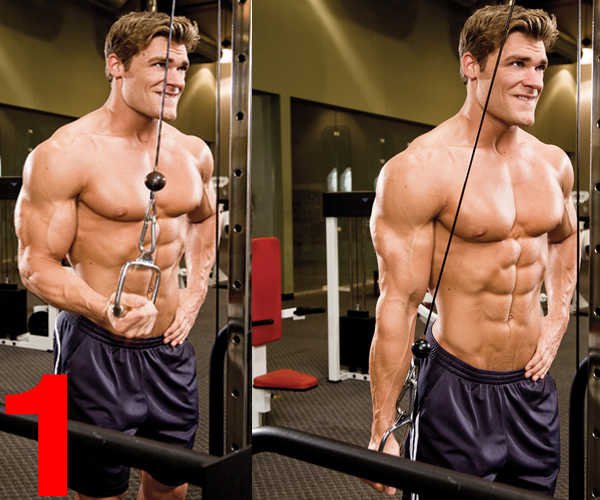
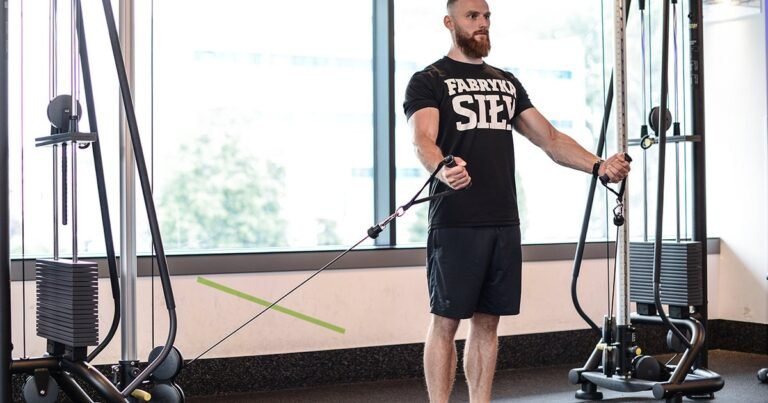
Attach a single-grip handle to a high cable and choose a manageable setting. Face the station, take the underhand grip and settle your upper arm close to your side. Establish your position before the first repetition. Your free hand can provide light support on a suitable fixed part of the machine, but it should not pull you through the set.
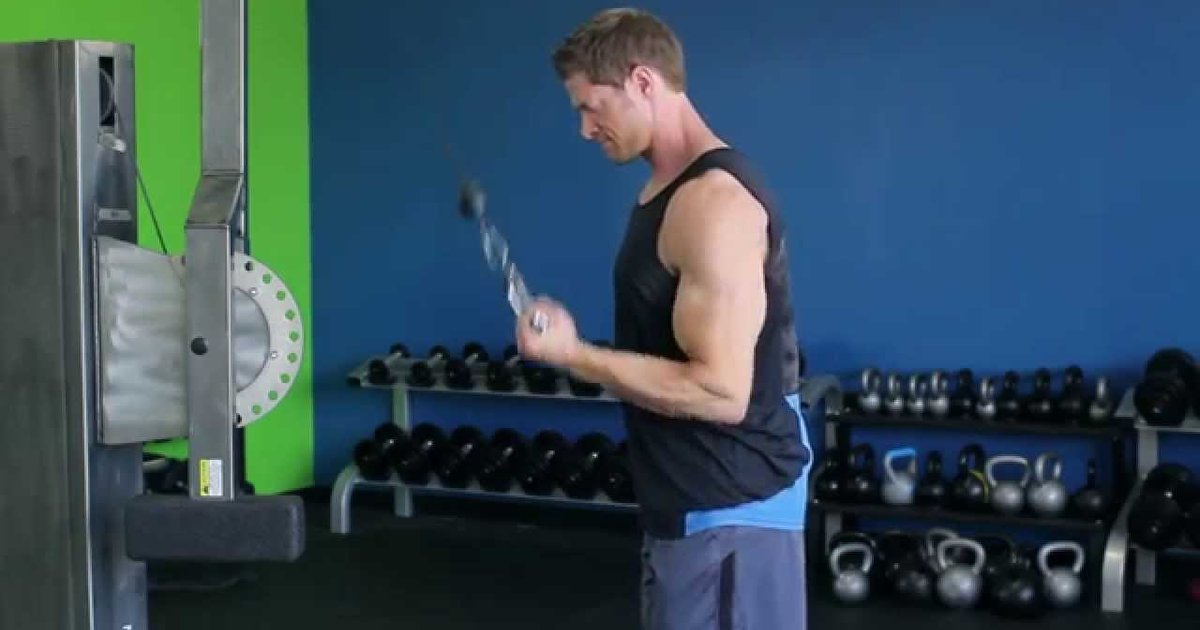
The photograph shows the same single-handle task at two points in the movement. Use it to identify the attachment and elbow position, not to copy another person's stance down to the centimetre. Body proportions, cable height and the handle's shape all affect where you can stand comfortably. Find a position that lets you move without crowding the cable or reaching awkwardly.
A useful rehearsal is to take a very light set and watch three things: where your feet settle, where your elbow starts, and whether your torso moves when you begin pressing. If you need a large forward lean just to start, reconsider the setting before calling it your working weight. The rehearsal is a setup check rather than an extra heavy set.
Make the surroundings repeatable too. A crowded station can tempt you to shift sideways halfway through a set. Wait for enough room, position yourself outside other users' cable paths and choose an unobstructed place for the handle when you finish. A quick, orderly start is easier to reproduce than a rushed grab at an unfamiliar attachment.
Record the pulley position if the machine allows adjustment. A note such as high pulley, single handle, right side first is more useful next session than trying to remember exactly where you stood. The goal is a setup you can recognise and repeat, not an elaborate ritual.
Separate elbow movement from a tiring grip
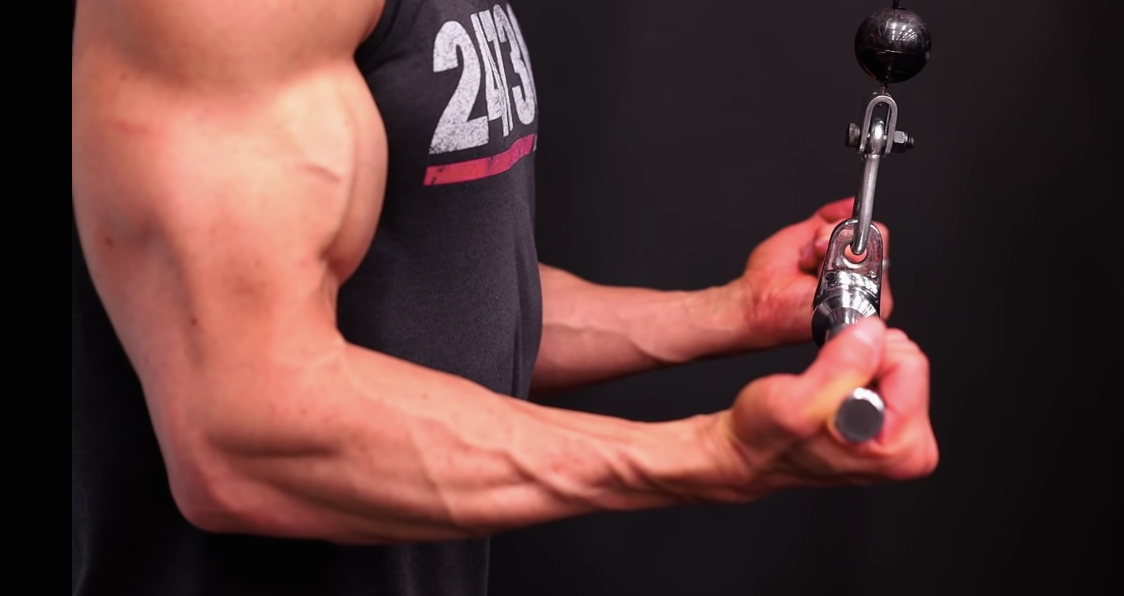
Press through the elbow while keeping your upper arm reasonably steady. Return the handle under control rather than allowing the cable to pull it abruptly upward. Keep your wrist in a position you can maintain; avoid turning the final part of the repetition into a wrist curl merely to make the handle travel farther.
The close-up photograph uses a two-handed underhand bar. It is a grip comparison, not a demonstration of the one-arm version. Notice that an underhand hold can exist with different attachments. That shared palm orientation does not make the bar and single-handle versions interchangeable for logging purposes: the number of working arms and the way the attachment is supported have changed.
During your own set, distinguish why a repetition stopped. Perhaps the fingers could no longer retain the handle securely. Perhaps the elbow stopped extending without a torso shift. Perhaps the wrist position became uncomfortable. Those observations describe different limitations. Writing only failed at twelve hides the detail that would help you choose the next sensible adjustment.
An ordinary coaching rule is to stop counting clean repetitions when the agreed movement changes. If your first ten repetitions keep a steady upper arm but the next two require a shoulder swing, write ten controlled reps rather than treating all twelve as identical. This is a recording convention, not a claim that a particular repetition standard guarantees a precise training effect.
If holding the attachment becomes the main problem, reduce the load or use a more comfortable variation. Do not force your hand farther into an uncomfortable underhand position to preserve the exercise name. A set you can control is a better comparison point than a heavier number achieved by changing the task.
Choose handles without changing the task by accident
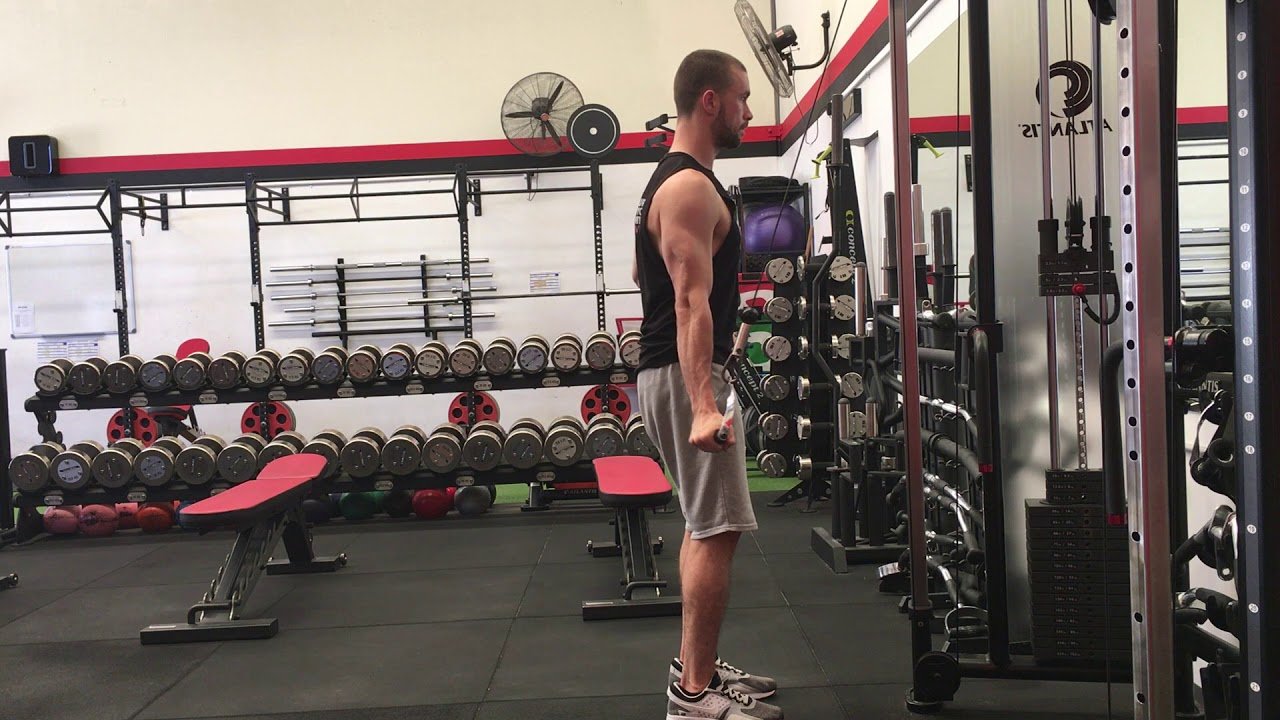
A single handle is the straightforward starting point for this variation. A freely moving handle gives each hand its own contact point, while a shared bar ties both hands to one attachment. A rope offers another holding position. These options can all belong in triceps training, but each deserves its own setup and record.
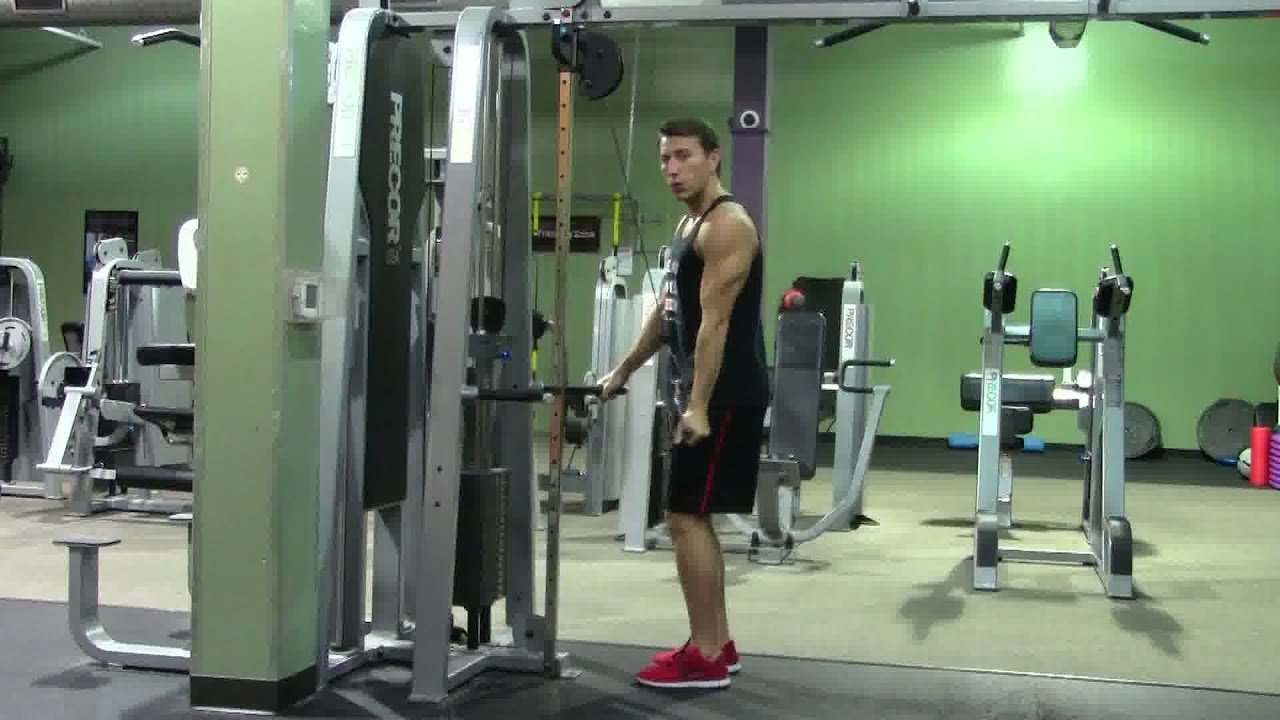
The section image returns to a single-arm cable extension with the handle beside the thigh. Compare that position with the earlier shared-bar photograph. When you change attachments, ask what changed besides comfort: one or two working arms, hand orientation, attachment length, starting position and the amount of movement you can repeat. Avoid comparing the stack numbers while overlooking those differences.
A cuff or strap is another attachment category, not a way to claim that you performed the same reverse-grip repetition without using your hand. If you choose an alternative, name it accurately in your log and start with a sensible rehearsal. The equipment choices below include handles, ropes, straps and cable stations; they are options for different setups rather than a list of mandatory purchases.
Keep equipment decisions proportionate to the problem. If a familiar handle allows a comfortable, controlled set, replacing it is optional. If a large jump between stack settings makes the next load impractical, first consider whether you can repeat the present setting with better control. Buying another attachment does not automatically resolve a progression problem.
There is also value in keeping one attachment for several comparable sessions. You then have a clearer chance of noticing a real change in your performance. Experimenting is reasonable, but label an experiment as a new variation instead of folding it into an old personal best.

Equipment Worth Exploring
Explore equipment, accessories and gear from our carefully selected range.


GymPin Ergo Handles
Pair of ergonomic cable handles shaped for comfortable triceps and pulling exercises.
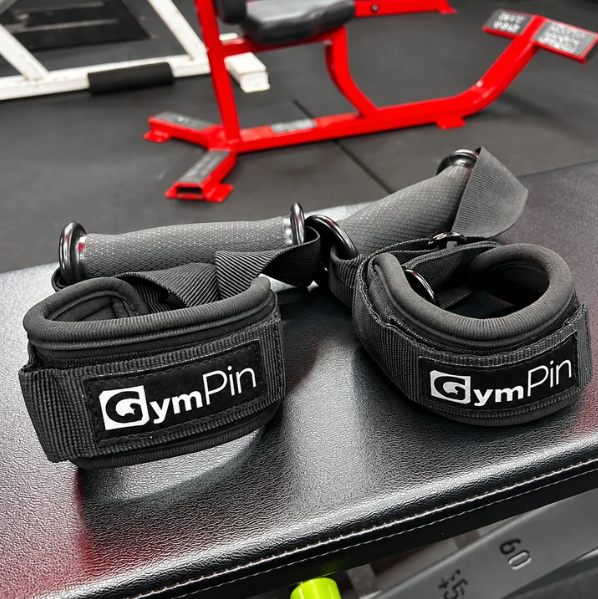
GymPin D Cuffs
Adjustable wrist cuffs with textured grips for supported cable-machine exercises.
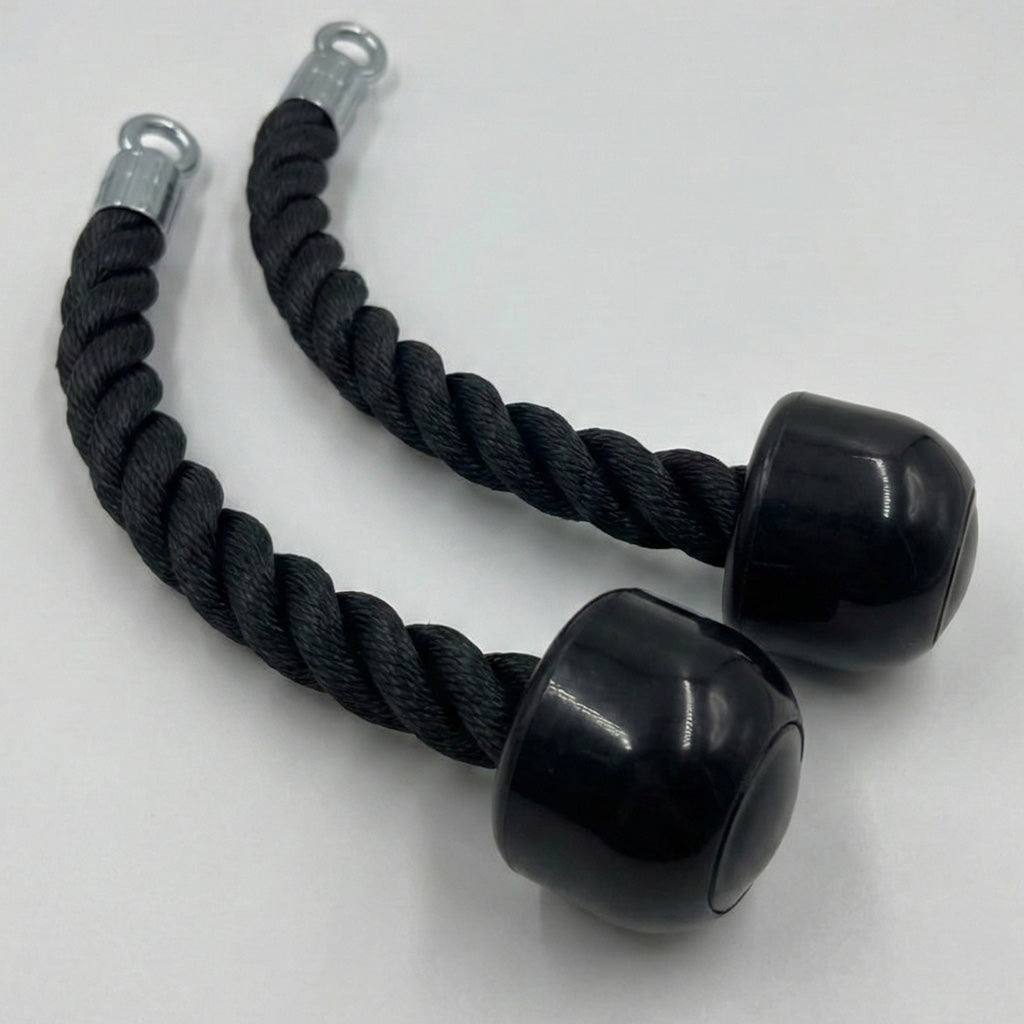
Individual Tricep Ropes
Pair of individual cable ropes for triceps pressdowns and cable hammer curls.

Multi-Length Tricep Strap
Adjustable-length cable strap for triceps, biceps and upper-body cable exercises.

Long Tricep ERGO Ropes
Extended triceps ropes with ergonomic grips for cable pressdowns and overhead extensions.
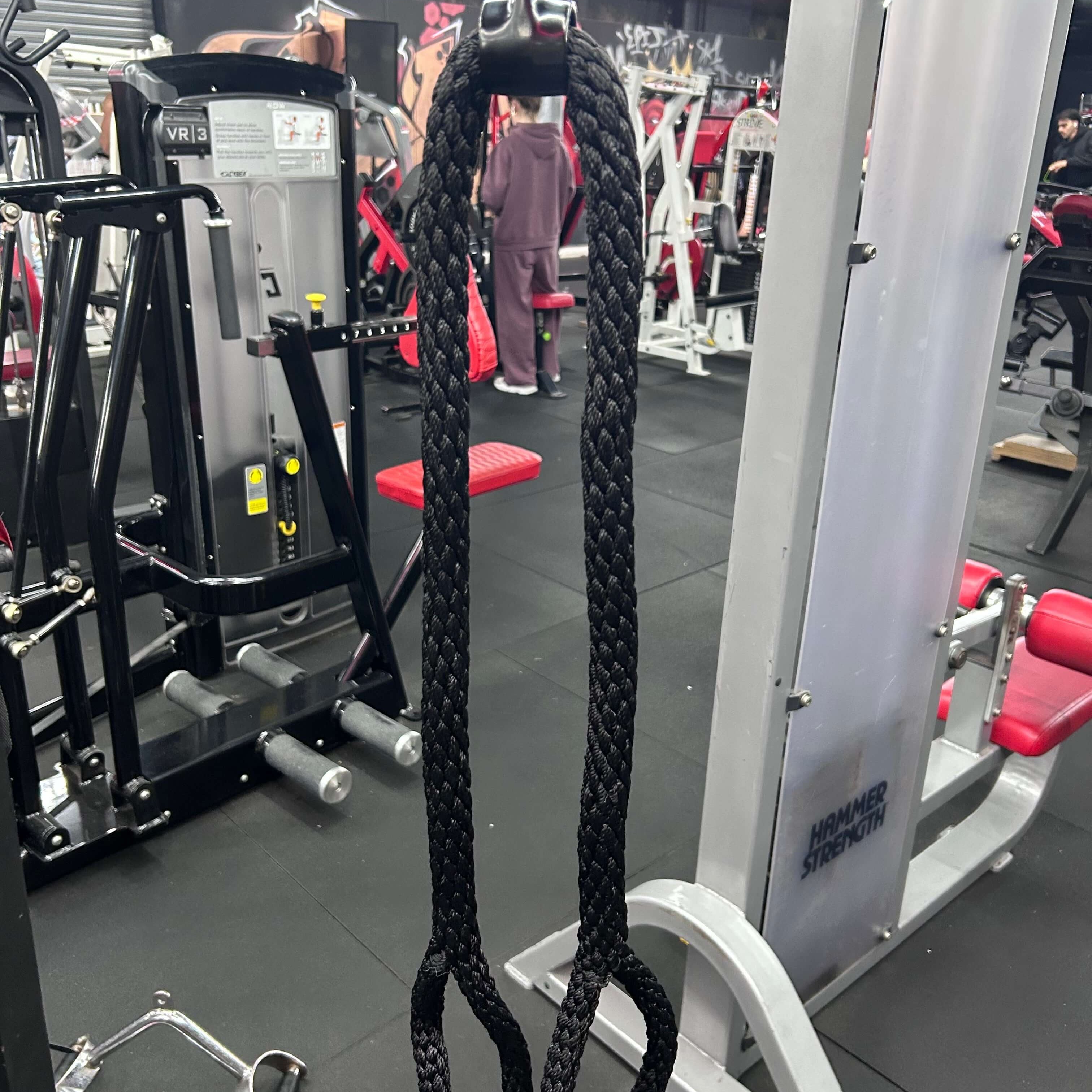
Super Long Tricep Rope
Extra-long looped cable rope for triceps pressdowns and overhead extensions.
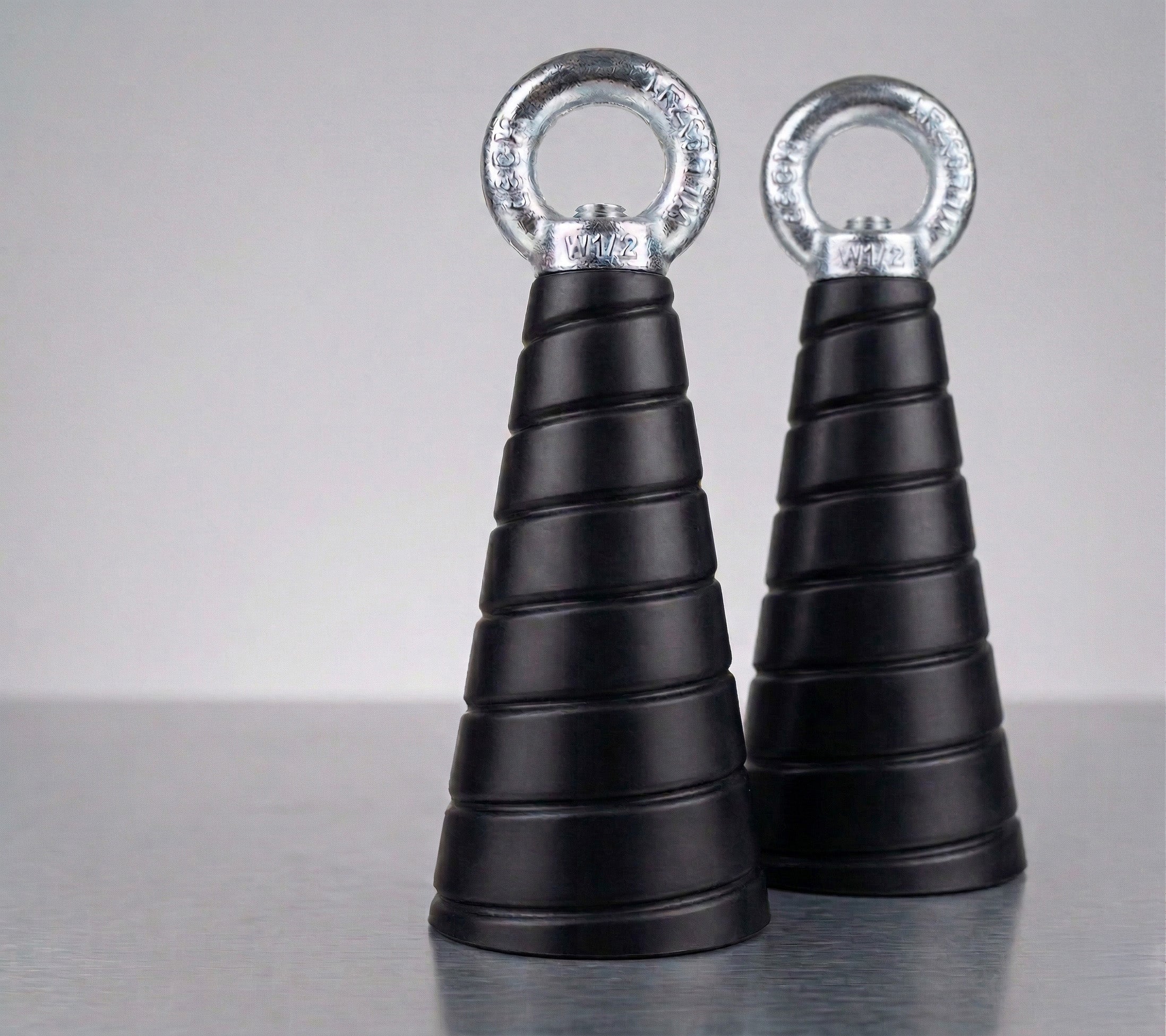
Tapered Tricep Cone
Tapered rubber cable grip for triceps extensions, face pulls and hammer curls.
VOLTRA
Compact digital cable trainer with smooth, adjustable resistance.

VForce Wall Trainer
Space-saving wall-mounted functional trainer with pivoting cable arms and variable resistance ratios.
Log each side and progress the repeatable version

Start your record with the date, exercise name, attachment, machine setting and repetitions for each side. Add one short note about the set's limiting factor. For example, left: steady elbow, grip fading near the end conveys more than a large collection of numbers without context. Keep the system short enough that you will actually use it.
Choose a repetition target and set count that fit the training you already do. There is no need to add an entire second triceps programme simply because the handle changed. If you normally finish a session with cable extensions, you can assess this variation in that existing slot. Keep its position in the session consistent while you are learning how it feels and performs.
Here is a practical progression example rather than a tested prescription: repeat a manageable setting until both sides meet your chosen repetition target with the movement you intended. Then try the smallest available increase and reassess. If that increase produces a different movement or immediately defeats your grip, return to the prior setting instead of forcing the number.
Record the order of your sides as well. If you always train the right arm first, the second side has a different place in the session. You can keep that order consistent or deliberately alternate it across sessions, but write down the choice. A small observation made repeatedly is more useful than a one-off verdict about which arm is weak.
Keep the same attention to detail through your arm day: controlled repetitions and a consistent record. Evaluate a few comparable sessions, keep what works comfortably, and change one clear variable when you need a different result. Progress is easier to assess when you know exactly which version you performed.

Bodybuilding Shirts & Workout Gear
Bodybuilding shirts, tanks and gym gear for lifters chasing muscle, size, symmetry and the pump.


Every Day Is Arm Day
Make gym days more fun with “Every Day is Arm Day Octopus Gym Meme” style.

Gymhead Lifting Is On My Mind Skull Vest Tank Top
Your gym-day look, with a playful “Gymhead” twist.

Lift Smart Brain Weight Plate Mind Muscle Connection 45 T-Shirt
For laid-back days and lifting humor: “Lift Smart Brain Weight Plate”.

Mind Muscle Perfection Brain and Biceps Gym for Science Hoodie
Show off your lifting humor in a laid-back “Mind Muscle Perfection Brain and Biceps” hoodie.


Control Your Gains Stoic Greek God Marble Sculpture T-Shirt
Make gym days more fun with “Control Your Gains Stoic Greek God Marble” style.

Installing Muscles Meme – Motivation Decal Bros & Sticker
A fun “Installing Muscles” touch for bottles, laptops, and lockers.

Hustle for That Muscle Greek God Tee
Show some lifting attitude with a playful “Hustle For That” tee.