Advertising disclosure: This page includes affiliate product links that may earn us a commission, as well as products from our own store.
A reverse Nordic is a specific way to load the front of the thigh, not a test of how far you can fall backward. An eight-week study of muscle architecture offers a different perspective from a single workout’s activation readings. The useful training question is how to define the movement, repeat the setup and judge progress without promising more than the evidence measures.
Define the movement before judging its result
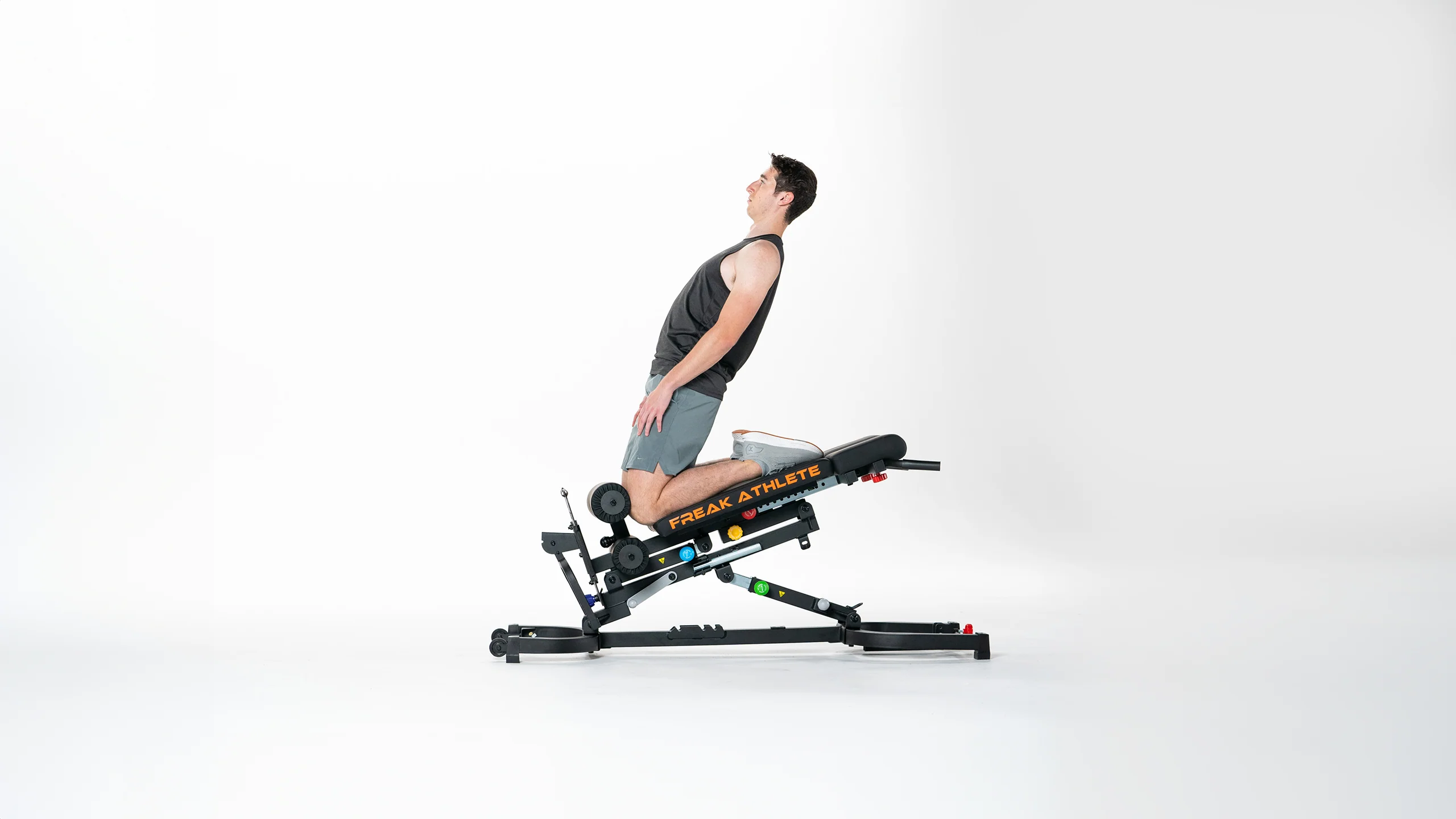
A reverse Nordic begins from kneeling and moves the body backward as the knees bend. The hips remain extended enough that the knees, hips and shoulders move as a fairly consistent line. This is different from a hamstring Nordic, where the lower legs are secured and the body lowers forward. Similar names should not make the exercises interchangeable.
The rectus femoris is part of the quadriceps and crosses both the hip and knee. The other three quadriceps muscles do not share that same two-joint arrangement. That anatomy makes it useful to distinguish knee-extension work from a general label such as leg training. It does not make one exercise a complete programme by itself.
The photograph illustrates a reverse Nordic on an angled exercise apparatus. The apparatus changes the setup and should be used according to its instructions. It is not the research equipment from every reverse-Nordic study, and the angle shown is not a universal starting requirement for a floor-based version.
Before comparing results, identify which variation you are actually doing: floor or apparatus, assisted or unassisted, lowering only or lowering and returning. Add the range you can control. Two people can both write reverse Nordic in a log while performing quite different tasks, and that ambiguity makes progress harder to assess.
A useful first goal is a movement you can repeat and describe. More depth, less assistance and more repetitions are separate changes. Establish a consistent version before combining them. This gives the exercise a practical definition that is more useful than judging its effectiveness from how dramatic a backward lean looks.
Separate eight-week architecture from a single workout reading
A study published online in October 2018 followed 26 subjects through a control week, eight weeks of eccentric reverse-Nordic training and four weeks of detraining. Resting two-dimensional ultrasound assessed the rectus femoris before training, after training and after the detraining period. This is a longer-term structural measurement rather than a single-session muscle-activation test.
After the training period, measured fascicle length, muscle thickness, pennation angle and cross-sectional area increased significantly. Those measures subsequently decreased significantly after detraining. The findings support the possibility of structural adaptation and its reversibility under that protocol; they do not establish superiority over every squat, lunge or machine exercise.
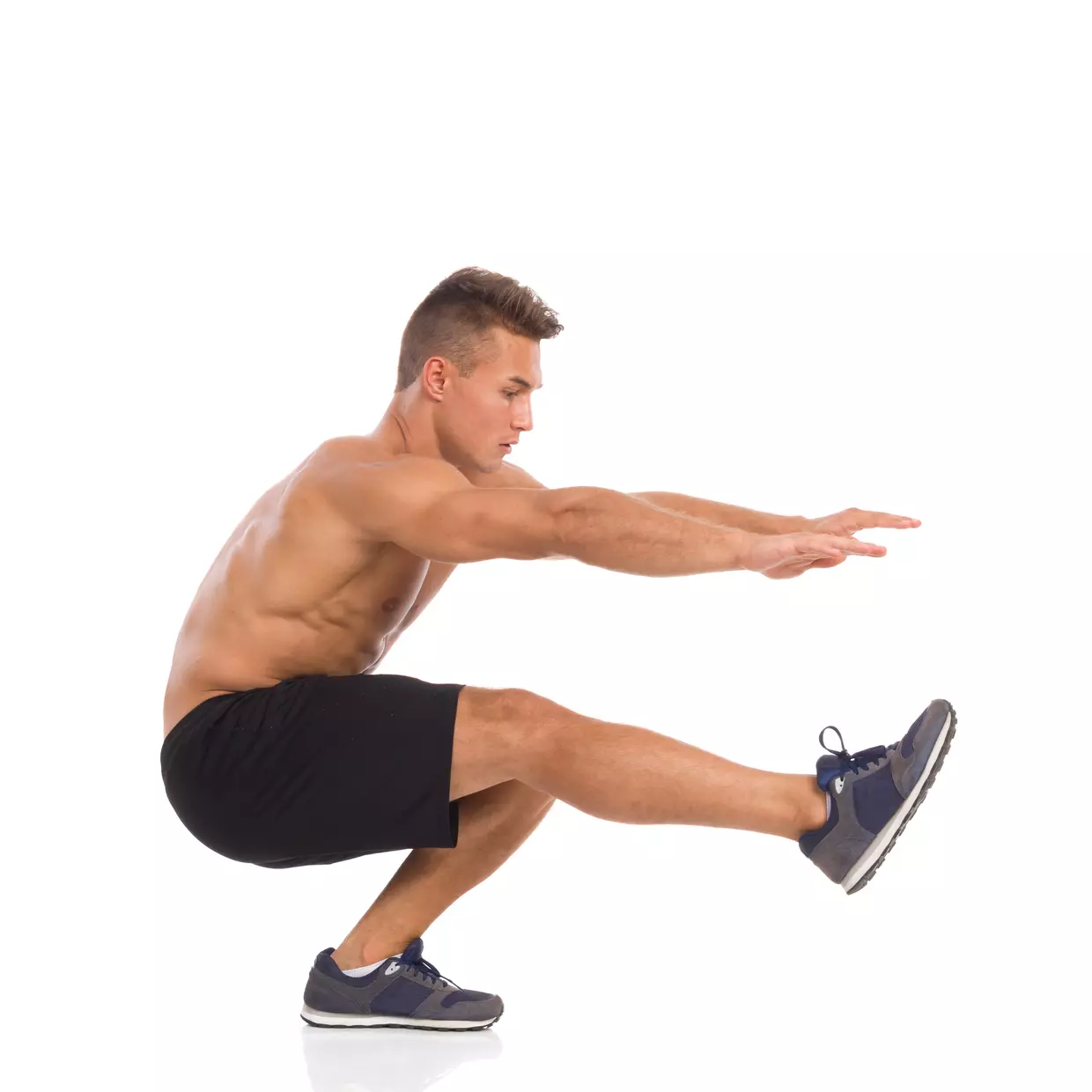
The single-leg squat photograph provides an exercise comparator, not an ultrasound image or a participant from that study. A separate acute comparison involving 23 volunteers measured quadriceps activity during reverse Nordics and squat-based movements. That experiment asked a different question. Higher or lower activity during one session is not the same outcome as architecture measured across weeks.
When reading an exercise claim, ask what was actually measured and when. Repetitions, electrical activity, strength tests, muscle dimensions and injury rates are different outcomes. A finding in one category should not silently become a promise in another, particularly when a small study becomes a short social-media recommendation.
For your own training, the useful lesson is to keep the observation proportional. A better-controlled repetition is evidence of improved execution of that task. It is not a home measurement of fascicle length, and it does not need to be presented as one to count as worthwhile progress.
Keep squat and single-joint work in their proper roles
Squats, split squats and lunges combine movement at more than one joint. The reverse Nordic is organised around knee movement while you manage the position of the rest of the body. These differences provide a reason to consider complementary exercise roles rather than treating all quadriceps exercises as substitutes with identical demands.
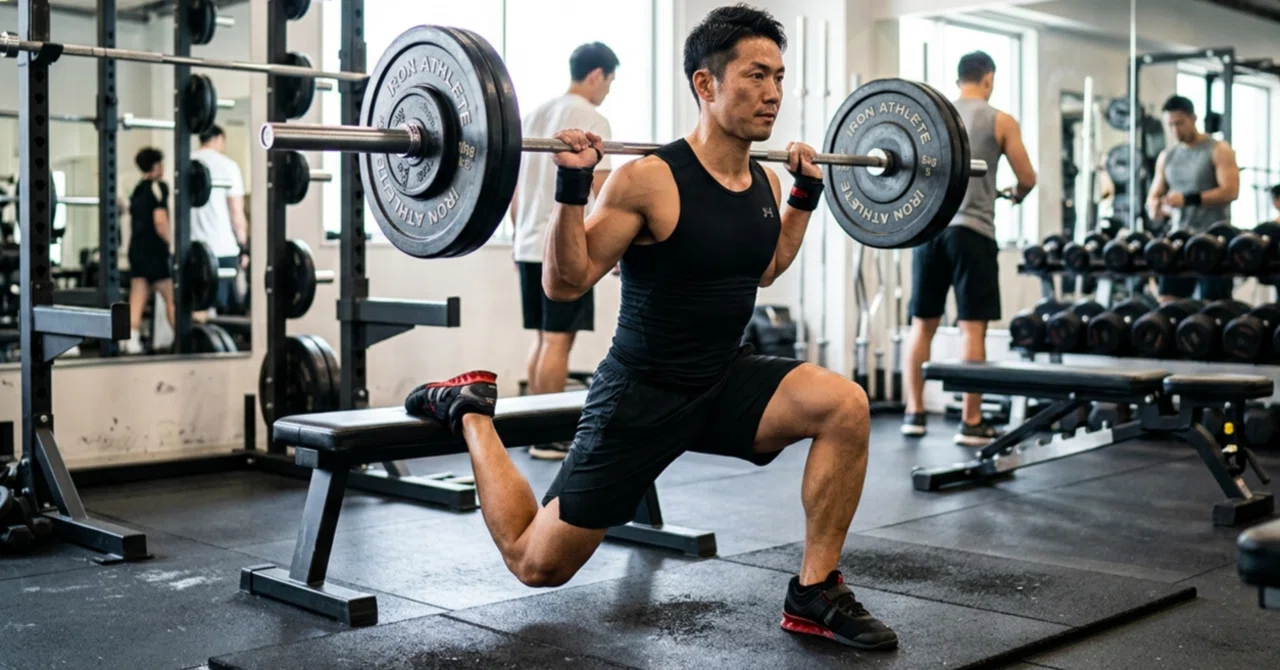
The rear-foot-elevated split squat pictured here illustrates one such alternative. It adds balance, stance and loading decisions that differ from a kneeling lean. Being able to perform one movement comfortably does not establish that the other will suit you at the same effort or through the same range.
Start with the purpose of the session. If you need to practise a particular squat pattern, keep that skill visible in the programme. If you want additional knee-extension work, compare suitable options on their actual setup and execution. Do not replace the principal movement automatically because another exercise produces a stronger local sensation.
Equipment can offer alternatives without being mandatory reverse-Nordic equipment. Leg-extension machines and bench attachments support different knee-extension tasks; squat machines and wedges serve other setups. Use each item according to its design. The options shown here should not be interpreted as a shopping list required to perform a bodyweight reverse Nordic.
Write substitutions explicitly. Replacing a split squat with assisted reverse Nordics changes more than the exercise name, so record the reason and judge the new movement on its own terms. This makes it easier to decide later whether the change improved consistency, solved a setup problem or simply shifted the work somewhere else.

Equipment Worth Exploring
Explore equipment, accessories and gear from our carefully selected range.


Leg Extension/Curl BCO-780
Leg extension and lying leg curl combo with plate loading, band pegs and a cable-loading option.

Seated Leg Combo BCO-680
Adjustable seated leg extension and leg curl machine with band pegs for added resistance.

HUSLA Leg Extension Pad
Pad attachment designed to increase usable range of motion on compatible leg-extension machines.


Leg Press/Hack Squat BPR-790
Convertible 45-degree leg press and hack squat machine with a broad footplate and band pegs.

Compact Leg Press CLP-700
Compact reverse-style leg press with a moving seat carriage and an adjustable footplate.

Studio V-Squat
Plate-loaded V-squat machine for supported lower-body strength training.

GymPin Squat Wedges
Non-slip 15-degree squat wedges help elevate the heels for deeper quad-focused squats.
Make the kneeling setup comfortable and the assistance repeatable
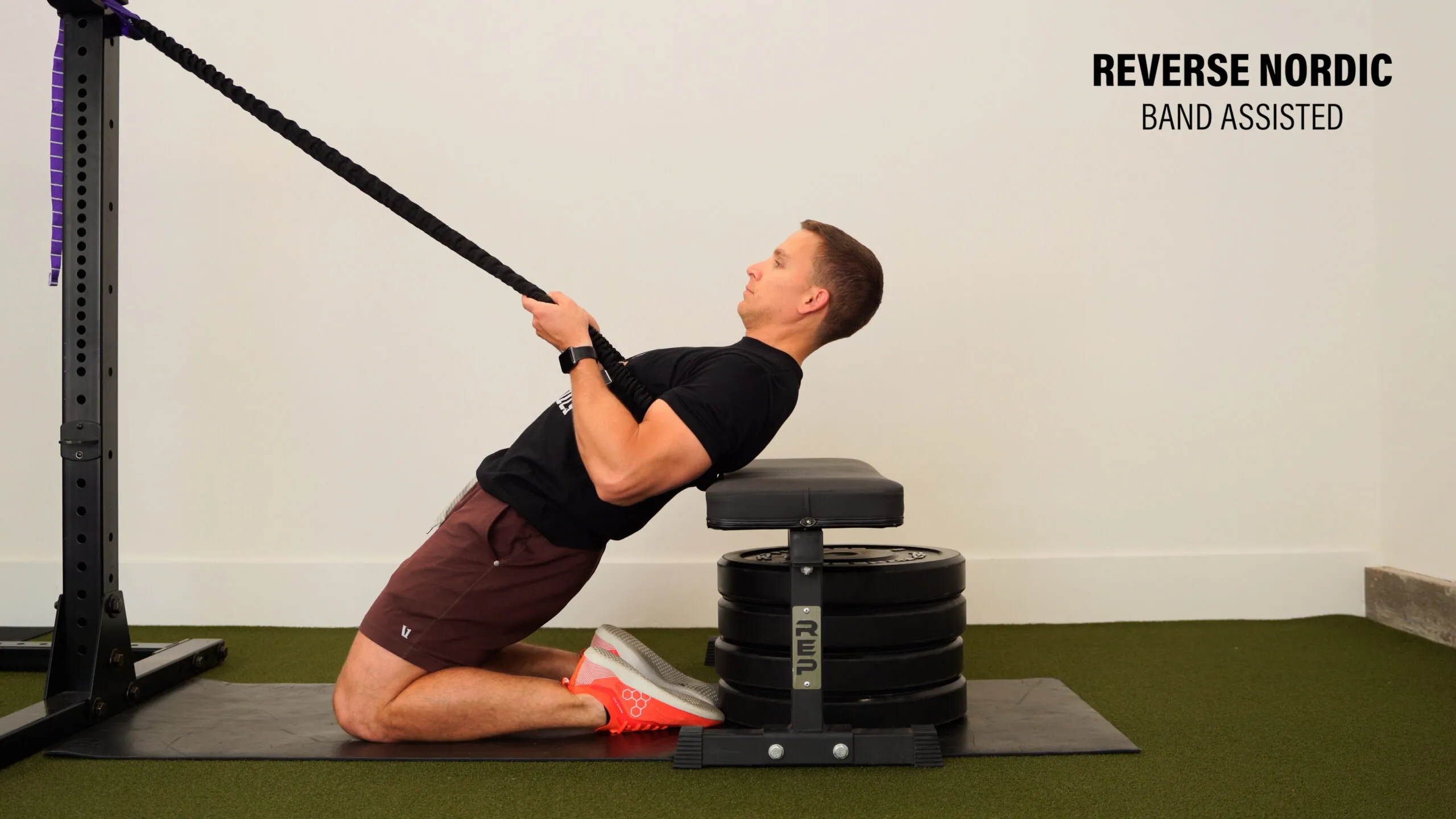
Use a suitable padded surface and first check that the kneeling position is comfortable. Do not begin by forcing a large backward lean through an uncomfortable knee or ankle position. A small controlled range is a more useful starting point than reaching a depth that requires compensation or a sudden catch.
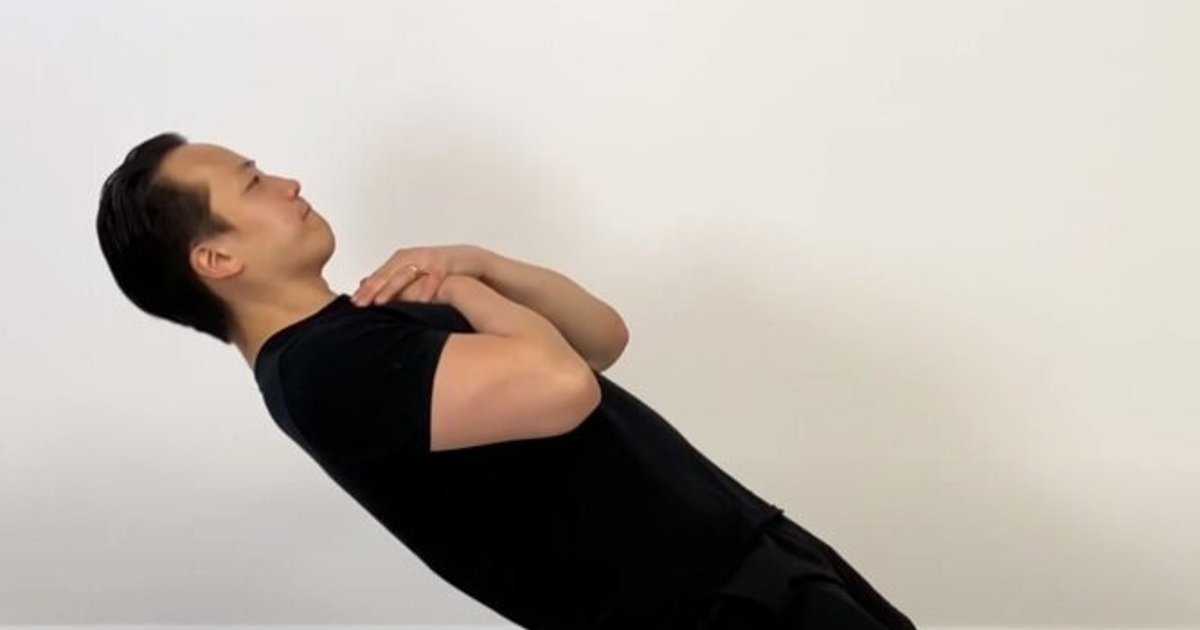
A band can provide assistance when anchored securely in front of you. The photograph shows that arrangement. Keep the setup consistent enough to describe it, including the band and where you hold it. Different starting tensions can change the task even if the same colour band appears in both sessions.
If you use an object behind you as a depth reference, position it securely and make sure it does not create another obstacle. It should help you identify a manageable stopping point rather than invite you to fall onto it. Practise the return as well as the lowering phase before adding a larger range.
A useful setup note might include the pad, the assistance and the reference height. These details are easy to overlook when the exercise uses no obvious external weight. They still influence what you are asking yourself to perform, so they belong beside repetitions in the training record.
If the movement is painful, stop and reassess instead of treating the research as permission to continue. A study of adaptations is not an individual diagnosis or a guarantee of tolerance. Choose an appropriate alternative or obtain individual guidance when symptoms prevent you from establishing a comfortable, controlled version.
Track a progression that remains the same exercise
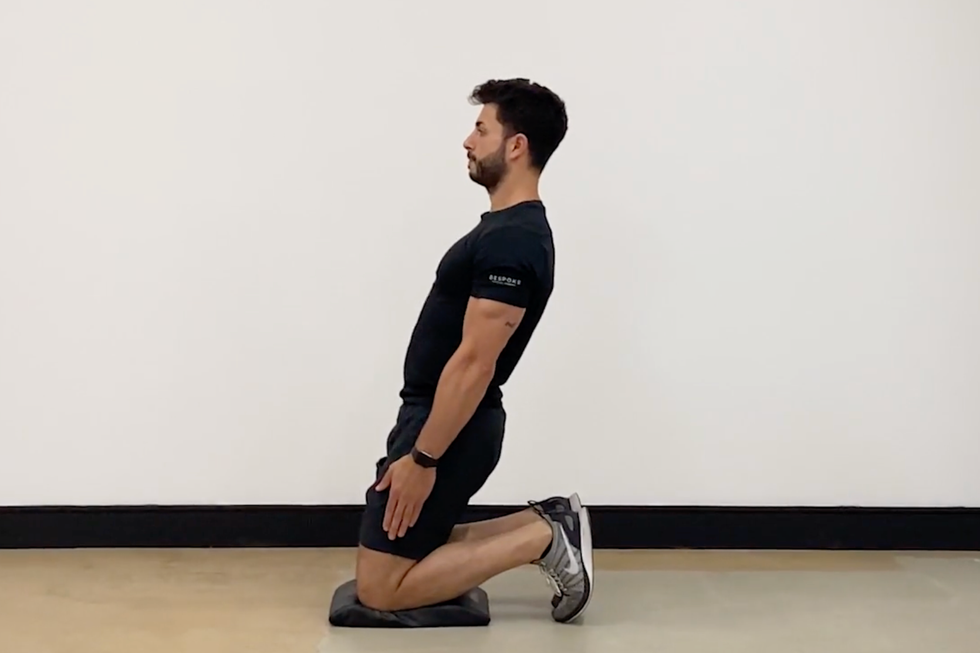
Choose a version you can perform reliably before deciding how much work it needs. Consider the rest of your leg training and how unfamiliar the movement is. An eight-week research intervention describes what was studied; it is not an instruction that every reader should copy an entire protocol immediately.
Keep a simple baseline: variation, assistance, intended range and completed repetitions. Note whether you lowered and returned under control or reset between lowering-only efforts. Those are different tasks. Combining them under one repetition total can make a session look more consistent than it was.
Progress one main demand at a time. You might first improve the consistency of the existing range, then consider more repetitions, a slightly larger range or less assistance. The appropriate change depends on the goal and the current execution, not on a requirement to make every workout look harder on paper.
The photograph shows a lifter beginning a small backward lean. It does not establish that a deeper repetition would be better for that person. Use it as a reminder that range is something to control and record, rather than a contest to get the shoulders as close to the floor as possible.
Check the following session as well as the set itself. If the new work makes the rest of the programme difficult to repeat, adjust the dose rather than assuming severe soreness proves a productive stimulus. The record should help you make the next decision, not become a collection of discomfort scores.

Leg Day Shirts & Workout Gear
Leg-day gym shirts and workout gear for lifters who never skip squats, lunges and lower-body punishment.

Leg Day Thou Shalt Not Skip Leg Day Medieval Gym Crewne T-Shirt
Show some gym-day personality with “Leg Day”.
Heavy Metal Skeleton Squat for Powerlifters, Bodybuilde T-Shirt
A t-shirt featuring the Heavy Metal Skeleton Squat for Powerlifters, Bodybuilders and Leg Day Lifters artwork, bringing lifting-inspired humor and distinctive gym graphics to your everyday gear.

I Love Squats | Valentine's Leg Day Muscle Shirt Vest Tank Top
Add some leg-day attitude to training with “I Love Squats”.

Legendary Leg Day – Squat Meme Hooded Pullover Hoodie
Keep it laid-back with a little “Legendary Leg Day” attitude.

Never Skip Leg Day – NSLD Fried Chicken Meme Decal for Sticker
Bring “Never Skip Leg Day” attitude to your water bottle or laptop.


Never Skip Leg Day Flamingo – Fitness Meme Vest Muscle Tank Top
Train hard, laugh a little, and rep “Never Skip Leg Day Flamingo”.

Not Recommended Leg Day 1 Star Review Squats Hoodie
Bring “Not Recommended Leg Day” gym humor to lazy days and post-workout plans.

Leg Day Is Calling You Squats & Deadlifts Meme Vest Tank Top
Your gym-day look, with a playful “Leg Day Is Calling You” twist.

Legday Gains – Squats & Deadlifts , Top Gymbros & T-Shirt
Heavy lifts, good laughs, and a little “Legday Gains” energy.
Plan for breaks without turning detraining into a deadline
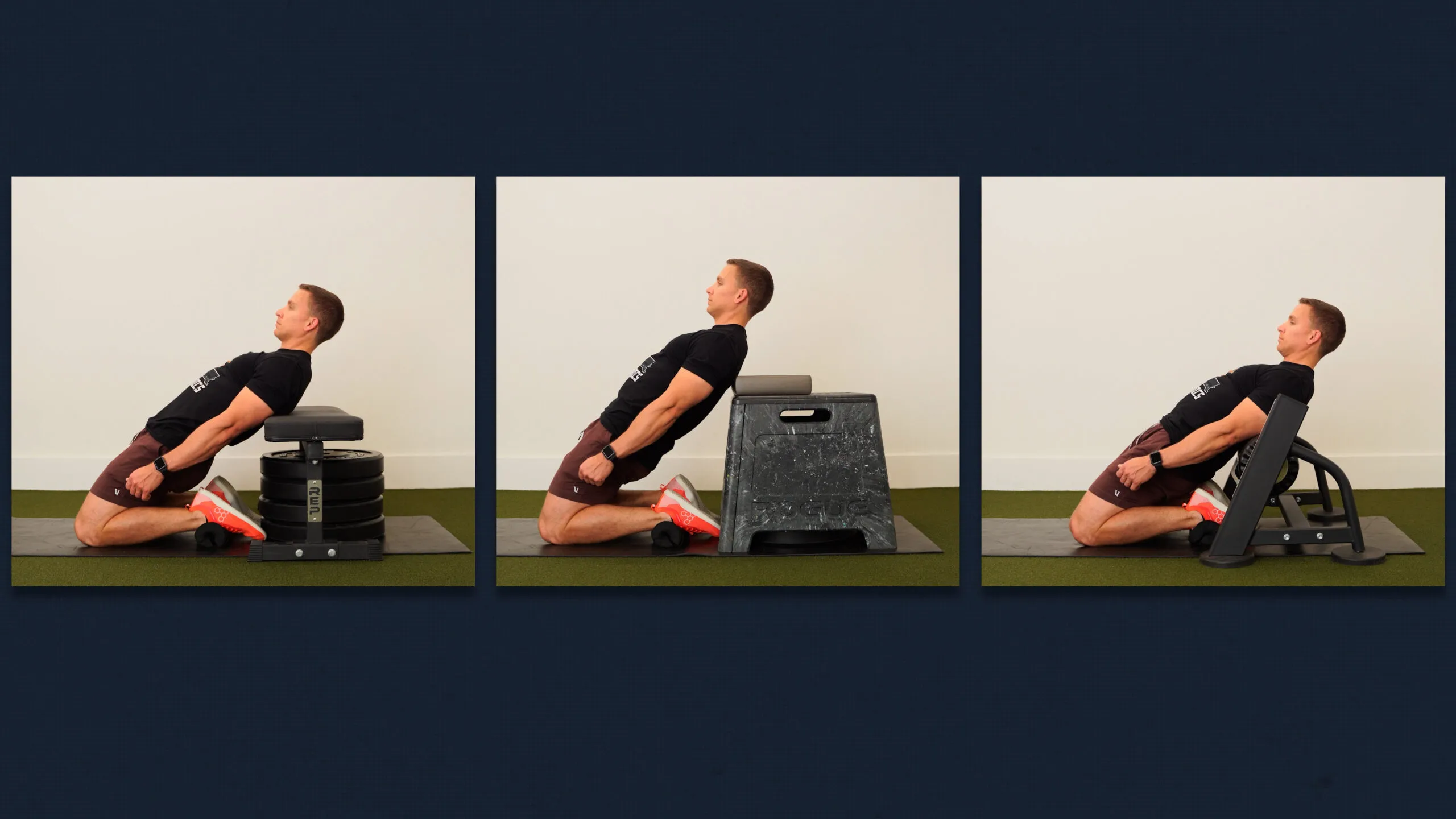
The study’s four-week detraining phase matters because it shows that measured adaptations can change after training stops. It does not provide an exact countdown for every lifter or prove that one missed session removes a particular amount of progress. Keep the reported group result separate from an individual prediction.
When returning after a break, begin with what you can currently control. Your previous best range or assistance level can be useful history without becoming an immediate requirement. Re-establish the setup and a manageable workload, then use the same descriptive record to guide later changes.
The photographic sequence in this section uses different support objects to mark lean depth. These are practical reference points, not devices that measure muscle architecture. Their value is making the movement easier to repeat. The object you used previously may need adjustment when your current capacity or setup changes.
Also reconsider why the exercise is in the programme. If it remains a useful, comfortable knee-extension option, there is a clear reason to practise it consistently. If a different exercise better fits the available equipment, goals or tolerance, choose that option without pretending that a single research finding makes reverse Nordics compulsory.
The strongest practical takeaway is a repeatable training process: define the movement, record the demands, progress deliberately and reassess after interruptions. Structural findings provide context for that process. They do not replace it with a promise of superior growth, injury protection or a fixed recovery timetable.