Advertising disclosure: This page includes affiliate product links that may earn us a commission, as well as products from our own store.
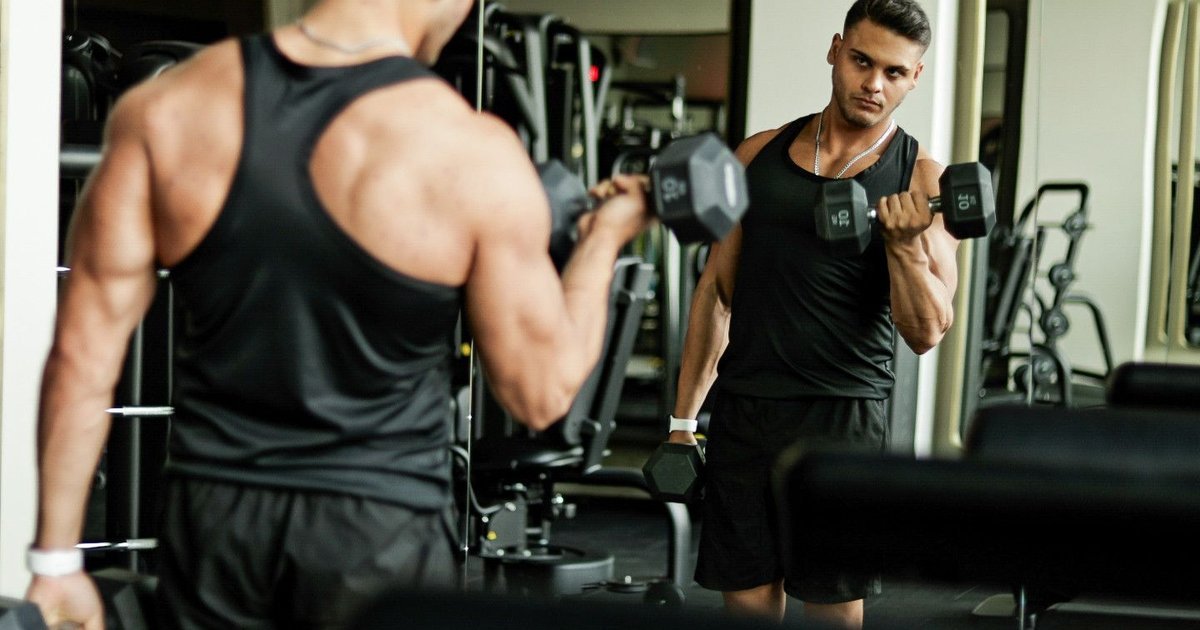
A gym mirror can help you inspect a position, but that does not make the reflection a performance aid. Research on mirrors, attention and feedback asks several different questions. Separating them helps you decide when to look, when to review a recording and when to concentrate on the movement itself.
Decide what you want the reflection to tell you
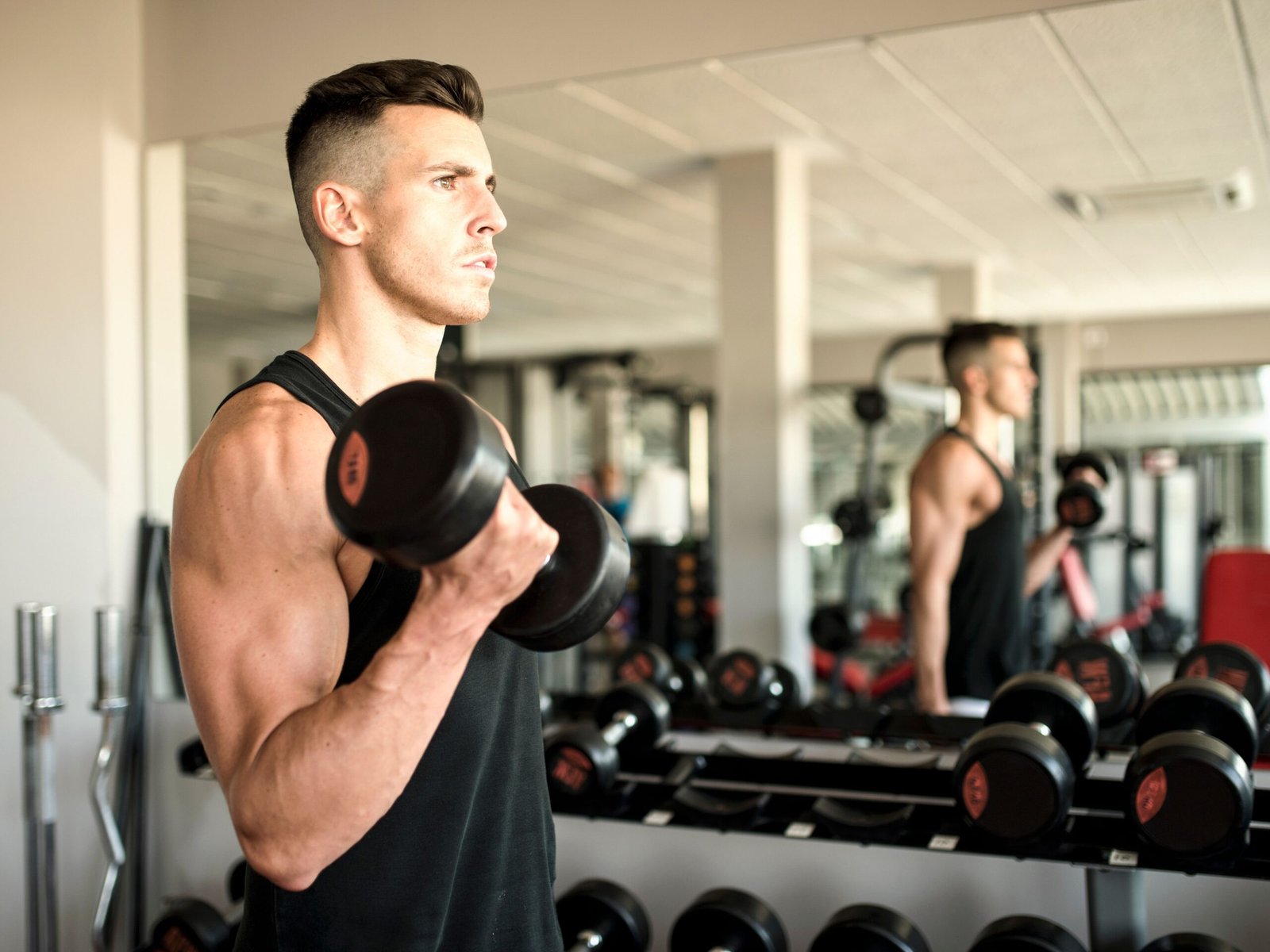
A mirror gives you a live view from one direction. That can be useful when checking whether your starting position looks the way you intended. It does not measure the force you produce, reveal exactly which muscle is doing the work or show every part of a movement equally well. Start with a question the reflection can actually answer.
For example, you might check that both hands are placed evenly before a dumbbell exercise or that your stance is consistent before an easy squat. That is different from watching your arms throughout a demanding set and expecting the observation itself to create better performance. One use concerns information about position; the other makes a claim about what improves the lift.
Choose the check before picking up the weight. If you cannot describe what you are looking for in a short sentence, you may be collecting visual detail without a useful decision attached. A clear question makes it easier to finish the check and return attention to the exercise.
A comfortable view matters too. Do not turn your head toward a side mirror while moving a loaded bar just to inspect an angle. If the available reflection requires an awkward position, use an easier practice set, a different observation method or help from a coach. The exercise should not become a search for the best view.
Read the mirror experiment as an immediate performance test
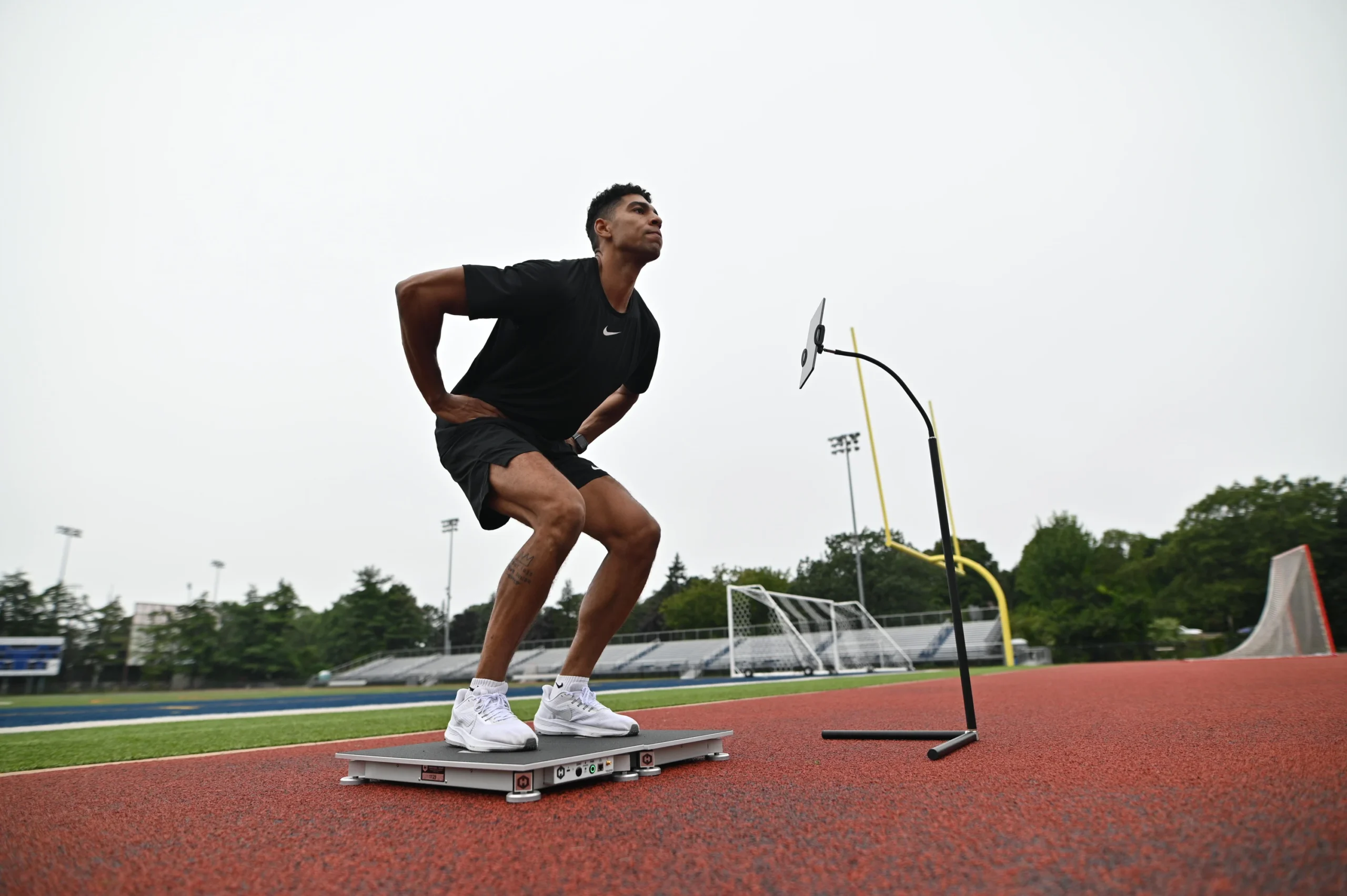
A 2016 experiment involved 28 resistance-trained adults, evenly split between men and women. They completed isometric elbow-flexion tests and countermovement jumps under mirror, internal-focus, external-focus and neutral conditions. The elbow test held the joint still against a measuring device; it was not a normal set of dumbbell curls.
External-focus instructions produced greater normalized elbow-flexion force than the other conditions. Mirror and neutral conditions were not significantly different. Jump height showed a similar directional pattern, but the overall difference between instructions was not statistically significant. That qualification matters more than a headline declaring one approach the winner.
This was a short-term comparison, not evidence that removing mirrors builds more muscle. A later meta-analysis of ten studies found an acute strength advantage for external focus, while its overall long-term strength comparison was not statistically significant. Acute performance and training adaptations remain different questions.
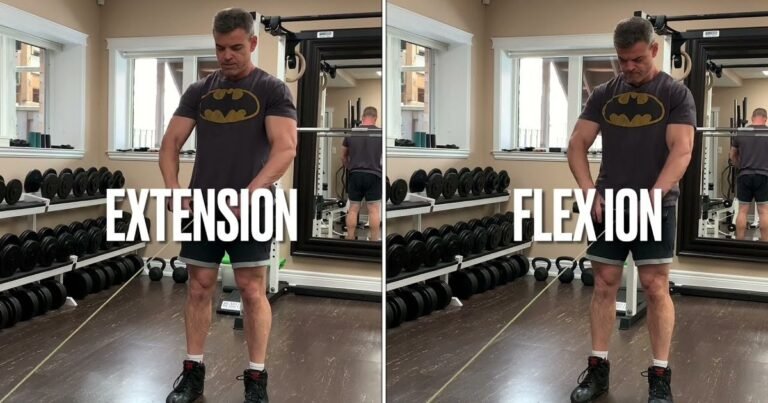
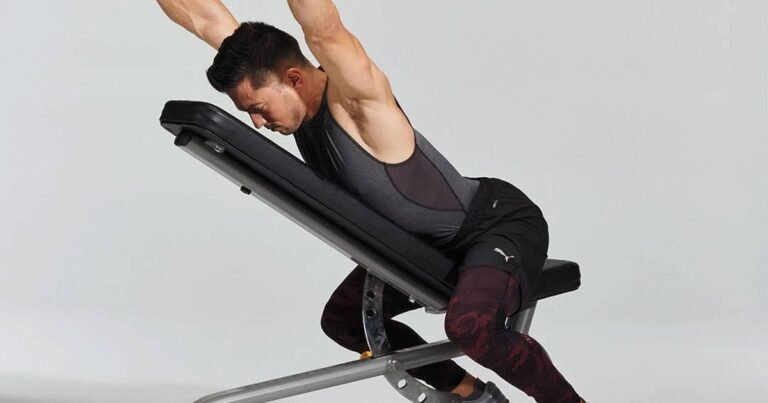
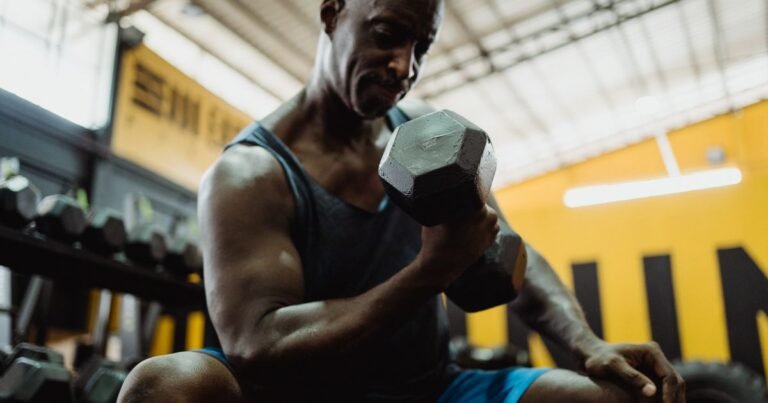
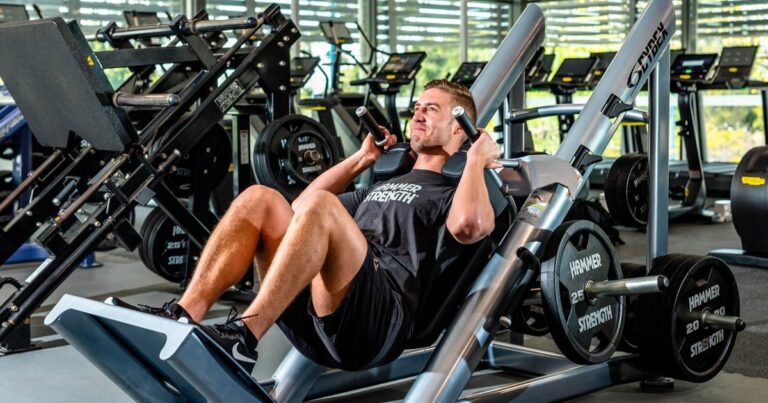
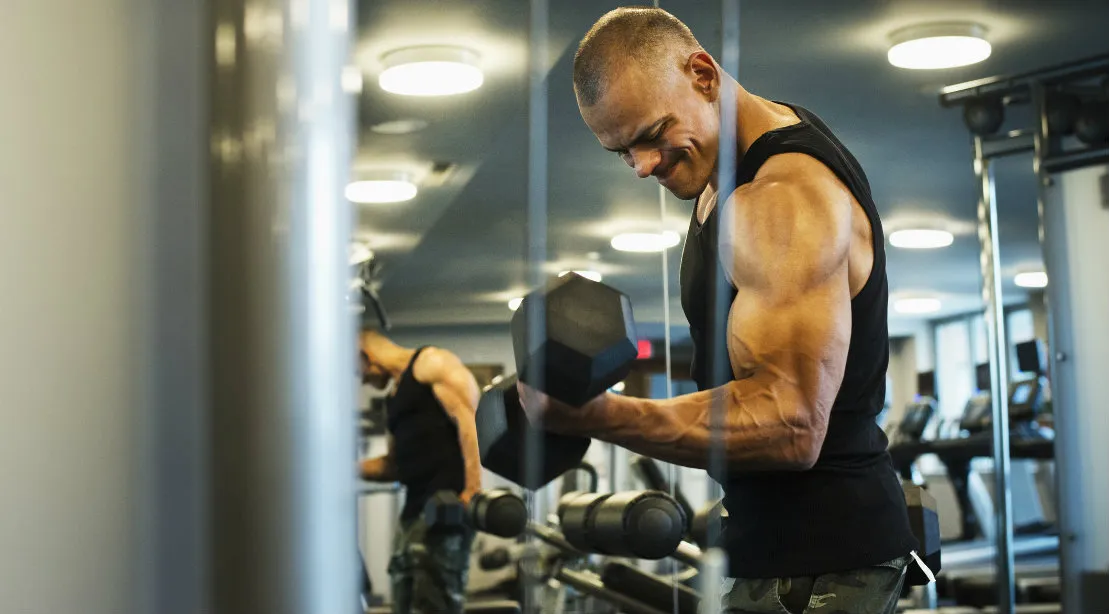
The jump photograph illustrates a modern force-plate testing context, not the original participants or apparatus. Likewise, the curl photographs are ordinary gym illustrations. A familiar-looking exercise image should not make a tightly controlled laboratory test seem identical to your usual working sets.
Use the findings to question an assumption, not to create another rigid rule. If a mirror helps you organise a particular setup, that practical use can remain worthwhile even when merely having a reflection does not improve a measured performance outcome.
Make one setup check, then commit to the movement
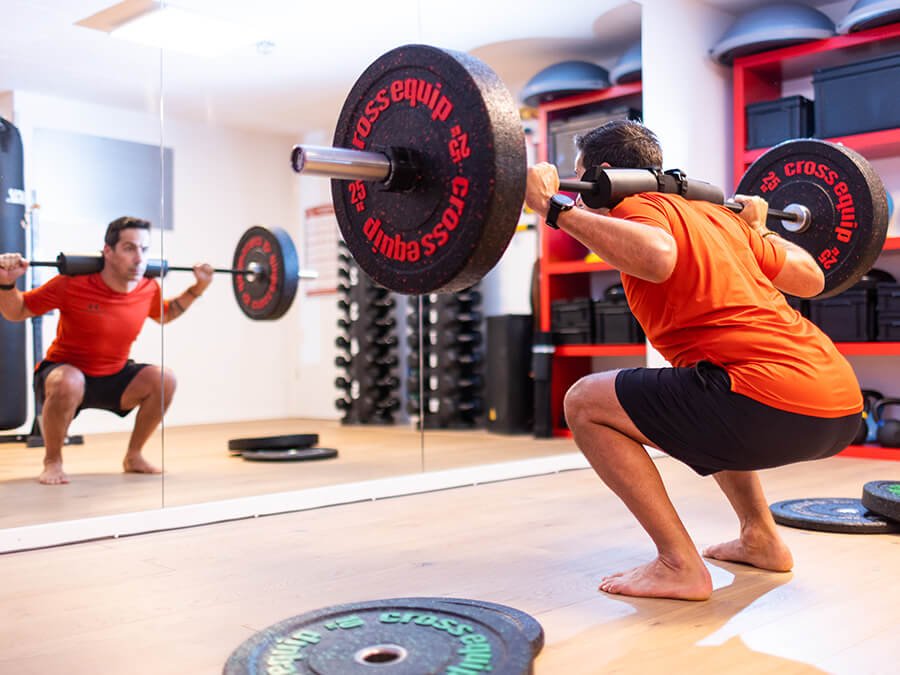
Choose one visible feature during a manageable warm-up. With a squat, that might be whether you begin from the same stance each time. With a curl, it might be whether your shoulders start level. Check it, settle into position and perform the repetition without continually searching for new details.
Keep the cue short and related to the job. A cue about moving the implement toward an intended endpoint gives you a different focus from a long list of muscle contractions. Neither is a substitute for understanding the exercise. If a phrase makes your movement less controlled, stop, reduce the difficulty and choose clearer instructions.
A front-facing mirror also has limitations. It may help you notice obvious left-right differences, but it is a poor tool for judging everything about squat depth or the relationship between the bar and your feet. The apparent view changes with distance, mirror angle and where you stand. Avoid treating a single reflection as a complete technique assessment.
Use equipment that lets you practise deliberately. A manageable dumbbell pair, a stable bench or a suitable rack can make the setup easier to repeat. The equipment options here support ordinary curl and squat practice; they are not the measuring apparatus used in the mirror experiment. Check compatibility and instructions for your actual setup.
Finish the warm-up knowing which observation matters on the next set. If several issues compete for attention, address the most useful one first rather than trying to consciously control every joint throughout every repetition.

Equipment Worth Exploring
Explore equipment, accessories and gear from our carefully selected range.


Rubber Hex Dumbbells
Rubber-coated hex dumbbell pairs with a stable shape for home and commercial strength training.


EZ Curl Barbell
Olympic EZ curl bar with angled grips for curls and triceps exercises.


Foldable Wall Rack
Wall-mounted folding squat rack designed to save floor space between workouts.


Use video for a view you can review after the set
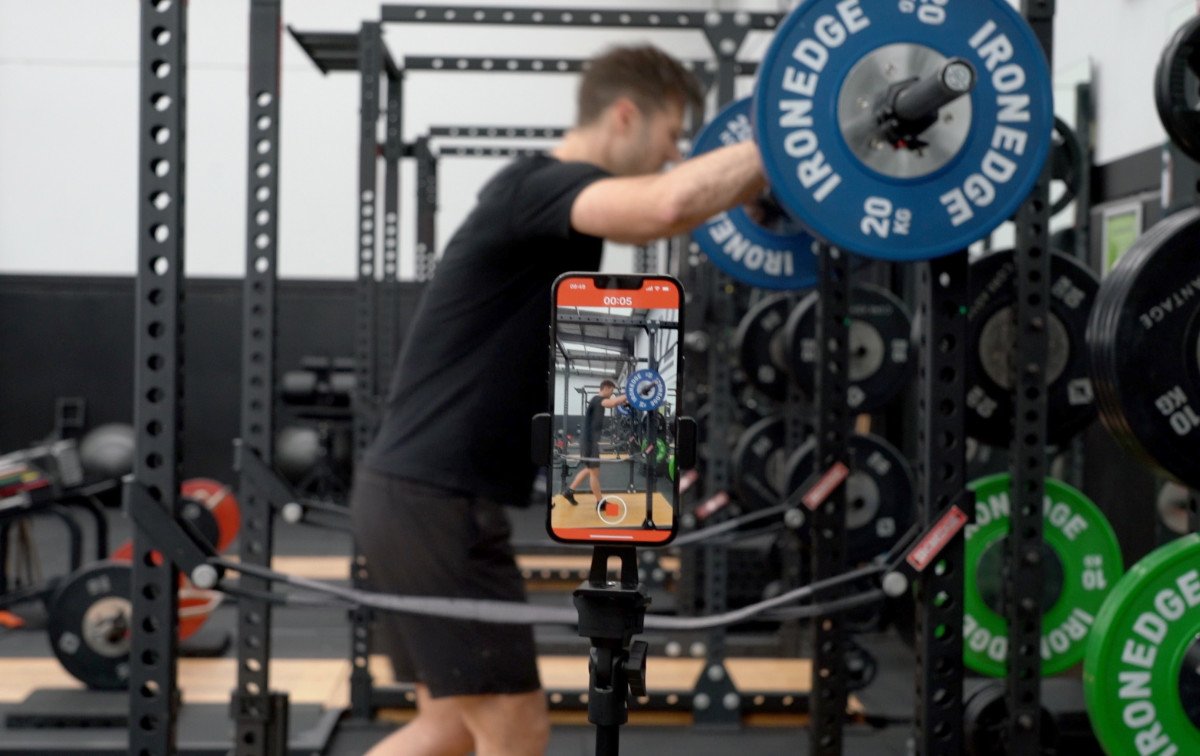
Video lets you separate performing a repetition from inspecting it. Position the camera before the set, keep it clear of the lifting area and review the result after the weight is secure. That gives you time to pause at a specific point without changing your head position under load.
A trial involving 30 healthy participants compared squat feedback delivered through video, manual contact and no feedback. The video group retained improvements in several measured movement variables over subsequent days, with some retained for a week. This concerned learning a squat, rather than proving that filming a heavy set immediately increases strength.
For practical use, select an angle that can show the feature you care about. A side view may help you compare depth and broad bar travel; a front or rear view may reveal different information. Keep the camera position similar when comparing sessions. A change in perspective can make the same movement look different.
Choose one observation from the recording and one action for the next set. For example, you might notice that your first repetition begins from a different stance than the rest. Reset deliberately rather than adding three unrelated cues. The aim is to create a useful change you can evaluate.
The phone photograph illustrates a stable recording setup. It does not establish that every app accurately measures bar speed or that an ordinary clip provides laboratory-grade joint angles. Use the information your setup can reasonably supply, and ask for qualified guidance when an interpretation is uncertain.
Distinguish coaching, measured feedback and encouragement
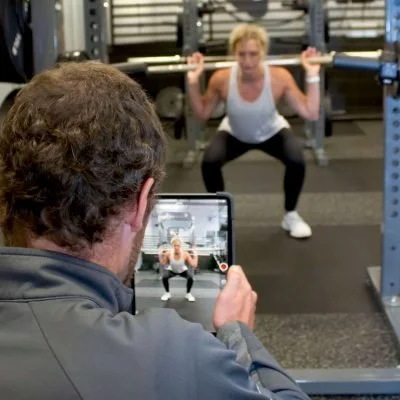
A coach can interpret what happened and decide which instruction deserves attention. A screen can display a measurement or replay a movement. Encouragement can support effort. Those functions can work together, but they should not be treated as interchangeable simply because someone felt more motivated.
In a five-week study of 19 untrained women, technological feedback and traditional verbal coaching both accompanied improvements in back-squat strength. There were no significant between-group differences in the observed changes. Some outcomes improved within the verbal-coaching group alone, which does not by itself establish that coaching was superior to the other intervention.
A separate small study in 12 semiprofessional rugby players compared back-squat velocity with numerical verbal feedback, visual feedback, encouragement and no feedback. Its findings supported potential immediate benefits from several feedback methods. It does not establish that shouting, a mirror and a measured velocity display produce the same training adaptations.
Before asking for feedback, explain your objective. You might want a check of a specific position, a reminder of the planned repetition target or an assessment of whether the set matched your usual standard. A useful reply connects the observation to that objective rather than supplying a different instruction after every repetition.
If you work with a training partner, keep their role clear. Observing a movement, offering encouragement and physically spotting a lift involve different responsibilities. Do not let enthusiasm obscure the agreed plan or delay necessary help. Put the weight down before discussing a complicated correction.
Keep a small feedback routine you can repeat
Try a simple sequence during an ordinary training session: choose the observation, check an easy set, perform the planned work and record one useful note. This is a practical organisation method, not a tested protocol promising a particular strength increase. Keep your programme and stopping rules intact.
For a curl session, your note might say that the same dumbbells, stance and repetition standard were used, with the reflection checked only before each set. For squats, it might record the same camera position and one cue from the previous session. These details help explain later differences without turning the logbook into a full movement report.
Compare broadly similar sessions before deciding that a cue works. A better day may also involve more rest, an easier preceding workout or ordinary variation. If you change the load, exercise, camera position and instruction at once, the result will be difficult to interpret.
Keep the feedback proportionate to the problem. An occasional setup check may be enough for a familiar exercise. A new movement may deserve closer coaching and more practice at a manageable difficulty. You do not need constant visual scrutiny simply because the equipment is available.
Keep the method that helps you complete consistent, well-understood repetitions. Adjust or remove a cue when it distracts you from the task. The useful outcome is a training decision you can explain and repeat, with enough attention left to perform the exercise itself.

Funny Gym Shirts & Workout Gear
Funny gym shirts, tanks, hoodies and workout gear for lifters who like training hard.

Mind Muscle Perfection Embroidered Brain and Biceps Gym Hat
A playful “Mind Muscle Perfection Embroidered Dad” cap for workouts and weekends.

Gymhead Mind Muscle Connection Bodybuilders & Bros Tank Top
Show some personality between sets with “Gymhead”.

Safety Practice Safe Sets Hooded Jumper Top Hoodie
Show off your bodybuilding humor in a laid-back “Gym Safety” hoodie.

Lift Eat Sleep Repeat Meme Sweater & T-Shirt
Bring “Lift Eat Sleep Repeat” humor to your everyday gym style.

Lift Together Grow Stronger Buddies Friendship Workout T-Shirt
Make gym days more fun with “Lift Together Grow Stronger” style.

Gym Is My Happy Place Happy Kettlebell Emoji Graphic Wh T-Shirt
Make gym days more fun with “Gym Is My Happy Place” style.

Lift Smart Brain Weight Plate Mind Muscle Connection 45 T-Shirt
For laid-back days and lifting humor: “Lift Smart Brain Weight Plate”.

Installing Muscles Meme – Jumper T-Shirt
Bring “Installing Muscles Gym Meme” humor to your everyday gym style.

Bro Science Element Chemical T-Shirt
Show some bodybuilding attitude with a playful “Bro Science Element” tee.

Lift Heavy Sh*T – Essential & Gymbros T-Shirt
Show some powerlifting attitude with a playful “Lift Heavy Sh*t” tee.