Advertising disclosure: This page includes affiliate product links that may earn us a commission, as well as products from our own store.
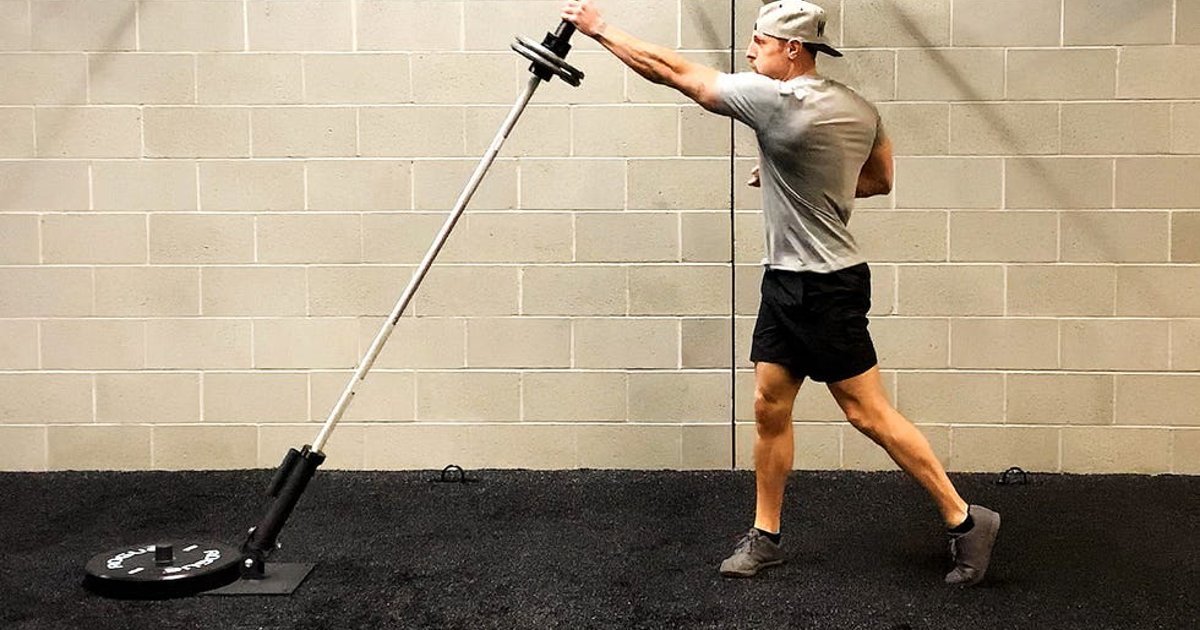
The rotational landmine press links a pivot through the feet and hips to an angled barbell press. Done well, it looks like one connected action: the lower body turns, the torso stays organised and the arm finishes the reach. Done badly, it becomes a hurried shoulder press, a fixed-foot spinal twist or an uncontrolled swing of the bar.
There are several exercises with similar names. This guide focuses on the turning, standing press—not the ordinary half-kneeling press or the side-to-side landmine rainbow. The aim is a repeatable skill you can load gradually, not a claim that it builds more muscle than every conventional press.
Secure the landmine and organise your starting stance
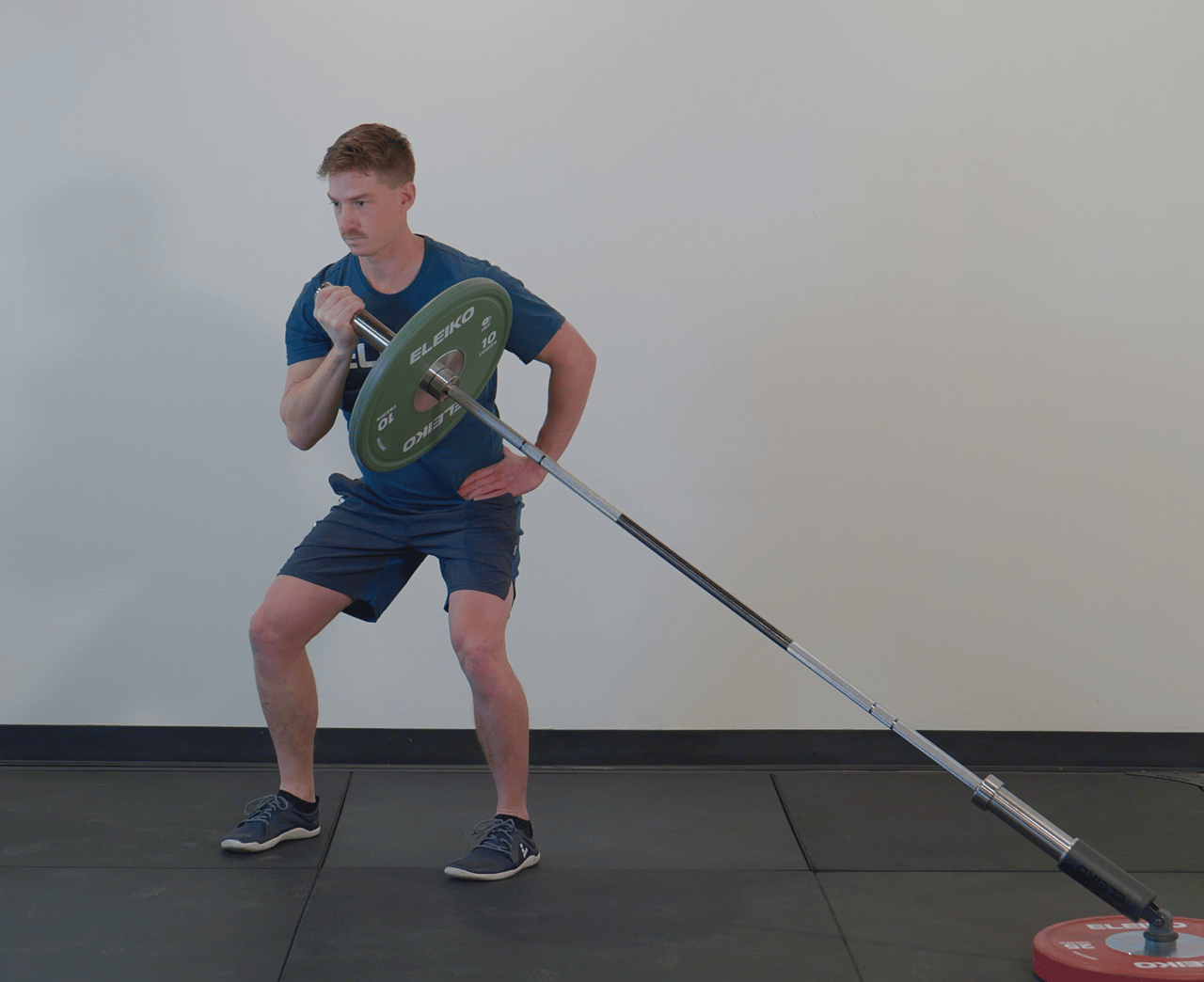
A rotational landmine press depends on one end of the bar moving around a fixed ground-level pivot. First establish that the pivot is secure and that the sleeve can travel freely without hitting the rack, walls or another athlete. A dedicated landmine attachment is preferable to an improvised corner setup, which can slide or damage the surface when the direction of force changes. Check that the bar is correctly seated, any required collar is secured and the working end has clearance throughout the sweep.
Start lighter than you would for a familiar overhead press. The empty bar already has mass and an unusual leverage pattern: adding a small plate at its free end does not feel identical to holding that same plate as a dumbbell. The bar angle changes with your height, stance and distance from the anchor. Rather than prescribing one universal load, find a resistance that allows the whole turn, press and controlled return on both sides.
Stand slightly side-on to the anchor with room to pivot. The exact grip depends on whether you are doing the two-hand rotational version or a one-hand rotational punch; both exist and should not be confused with a square-stance anti-rotation press. For the single-arm version, receive the free end near the working shoulder with the elbow below or just behind the sleeve. Keep the wrist organised instead of letting the weight bend it backwards. Begin with knees soft, trunk braced and the rear foot ready to turn.
Test one slow unloaded repetition before your first work set. Your shoes should maintain traction even as the heel turns, and your bar should finish diagonally forward without pulling you into a collision with the fixture. If the bar bangs into a plate stack, your stance is too close or the direction is wrong. If you cannot keep control of the free end, reset the anchor and reduce the load. This is equipment preparation, not a strength challenge.
Let your feet and hips start the turn
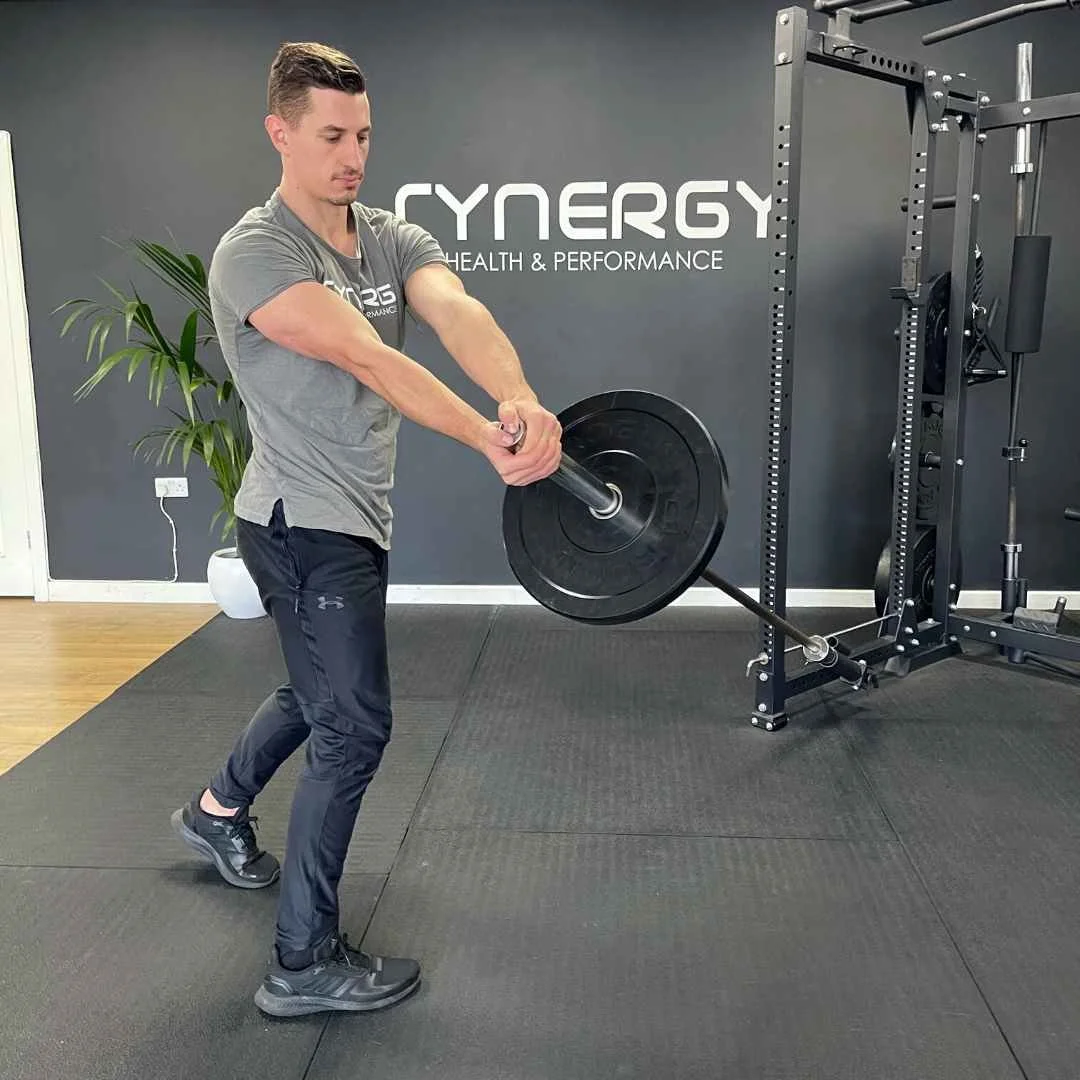
The key distinction is that rotational pressing is not an arm-only shoulder press with a decorative twist at the end. Your movement begins against the ground. Pressure through the foot allows the hips to turn, the torso follows in a coordinated way, and the arm extends as the landmine rises. For a right-side press, the right-side foot may pivot as the hips and chest orient toward the destination of the bar. Reversing the side should produce the same smooth sequence, even if one direction initially feels less natural.
Think of turning the belt buckle toward the direction of the press rather than wrenching the spine around while both feet remain fixed. The knees need room to follow the feet; a hard planted heel coupled with an aggressive torso rotation is usually a cue to slow down. Your rear heel may lift naturally. Avoid demanding an exact degree of rotation, because limb length, stance width, bar length and the chosen variation all change what comfortable motion looks like.
Practice the lower-body component with the sleeve at shoulder height and no added plates. Move the feet and hips together, pause, return, and then add the press. This reveals whether you are actually controlling the sequence or simply throwing the bar from the arm. A smooth moderate effort is more informative than a dramatic maximal turn. If the athlete can keep the working shoulder over a stable ribcage and the feet are moving cleanly, load can come later.
The abdominals and obliques contribute to trunk control while the shoulder, upper chest and triceps help move the bar; glutes and legs help generate and transmit the turning force. That is a useful description of movement demands, not proof that rotational landmine presses are superior for growing any individual muscle. The actual muscle stimulus depends on technique, set effort, volume and how the exercise fits with the rest of the program.

Equipment Worth Exploring
Explore equipment, accessories and gear from our carefully selected range.


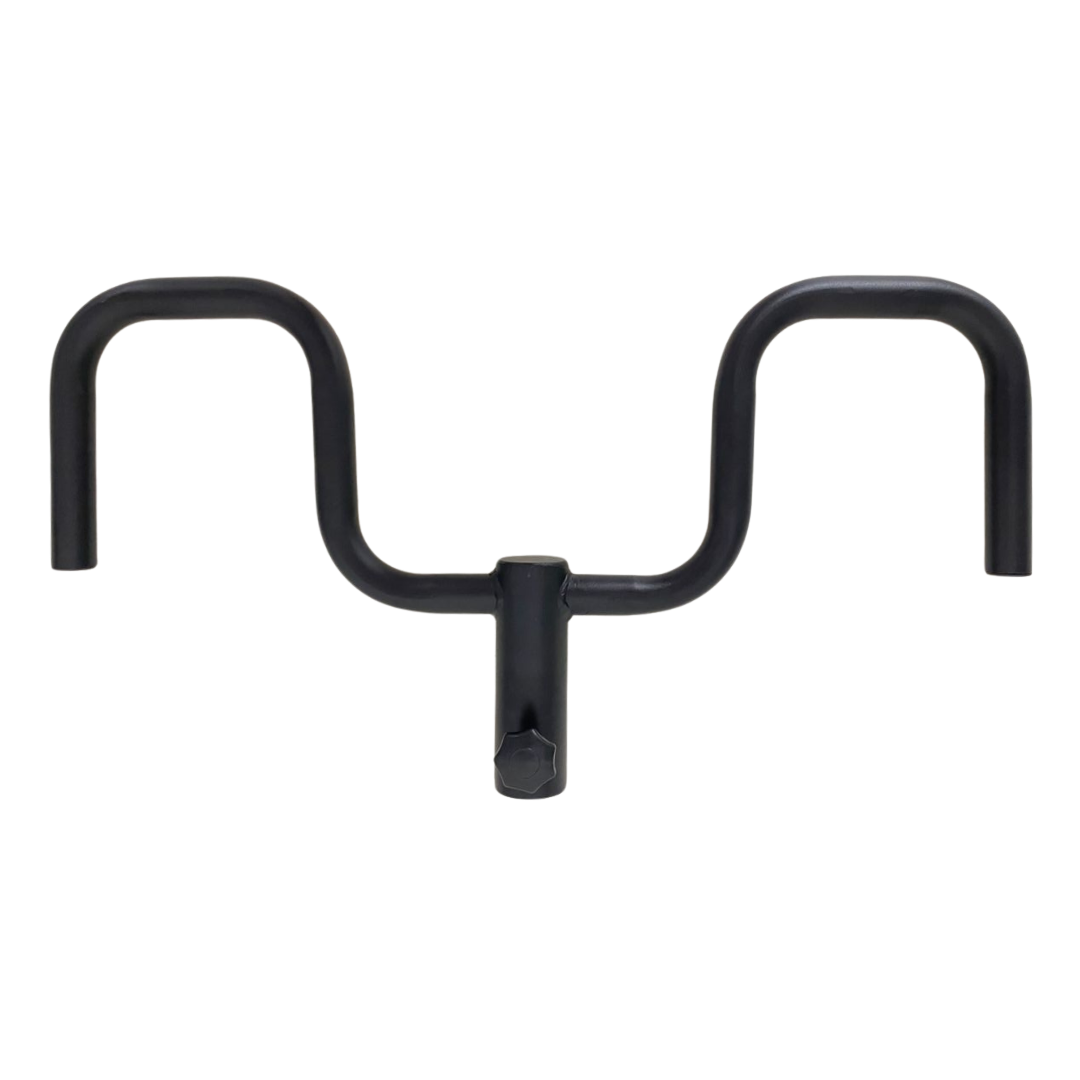
T-Bar Row Attachment
Welded barbell attachment that connects a D-handle bar for landmine and T-bar rows.


Grip Plates
Rubber-coated weight plates with handholds for loading barbells and machines.

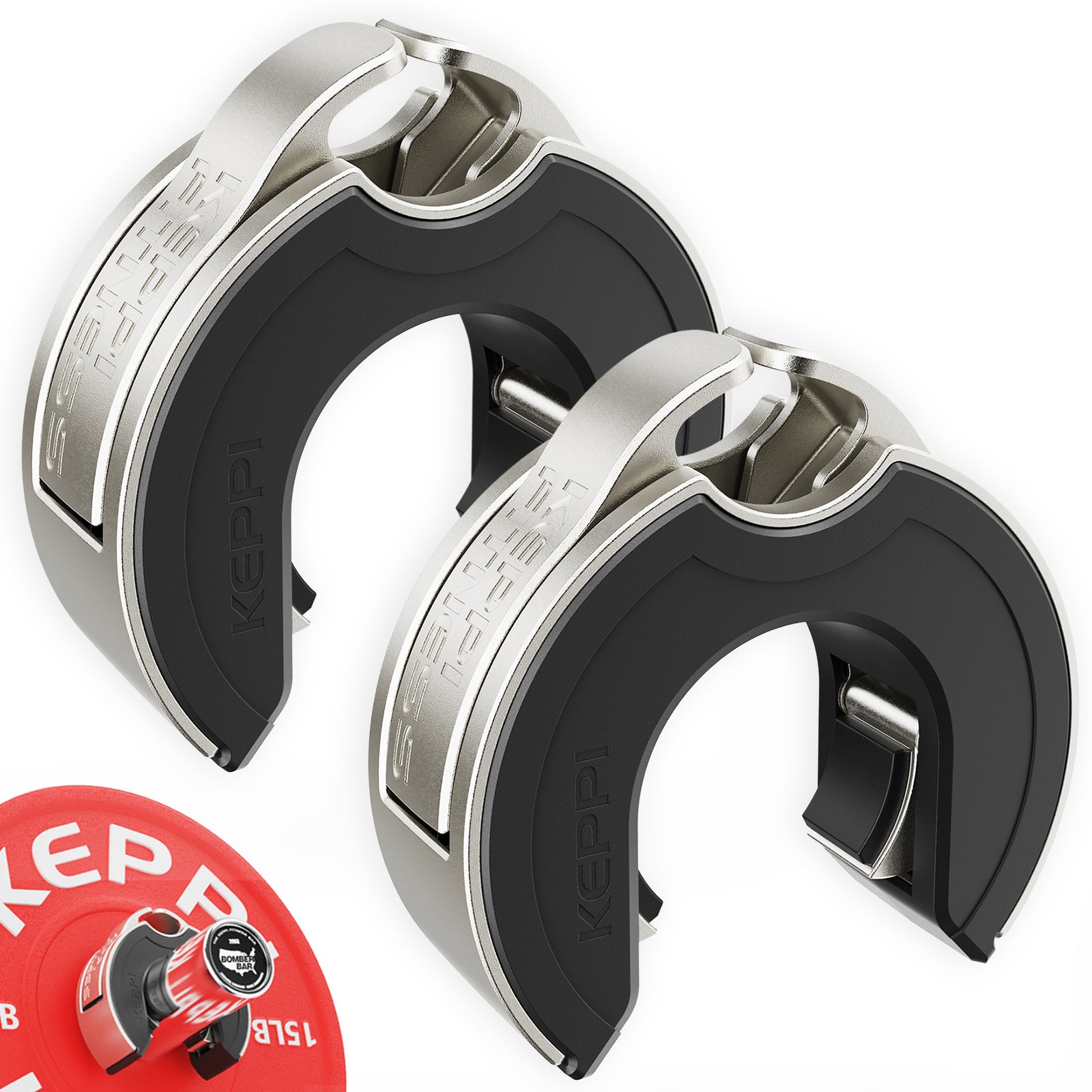
Keppi Open Collars
C-shaped magnetic Olympic barbell collars with a quick-lock mechanism and grippy lining.
Press on the bar’s diagonal arc without losing your rib position
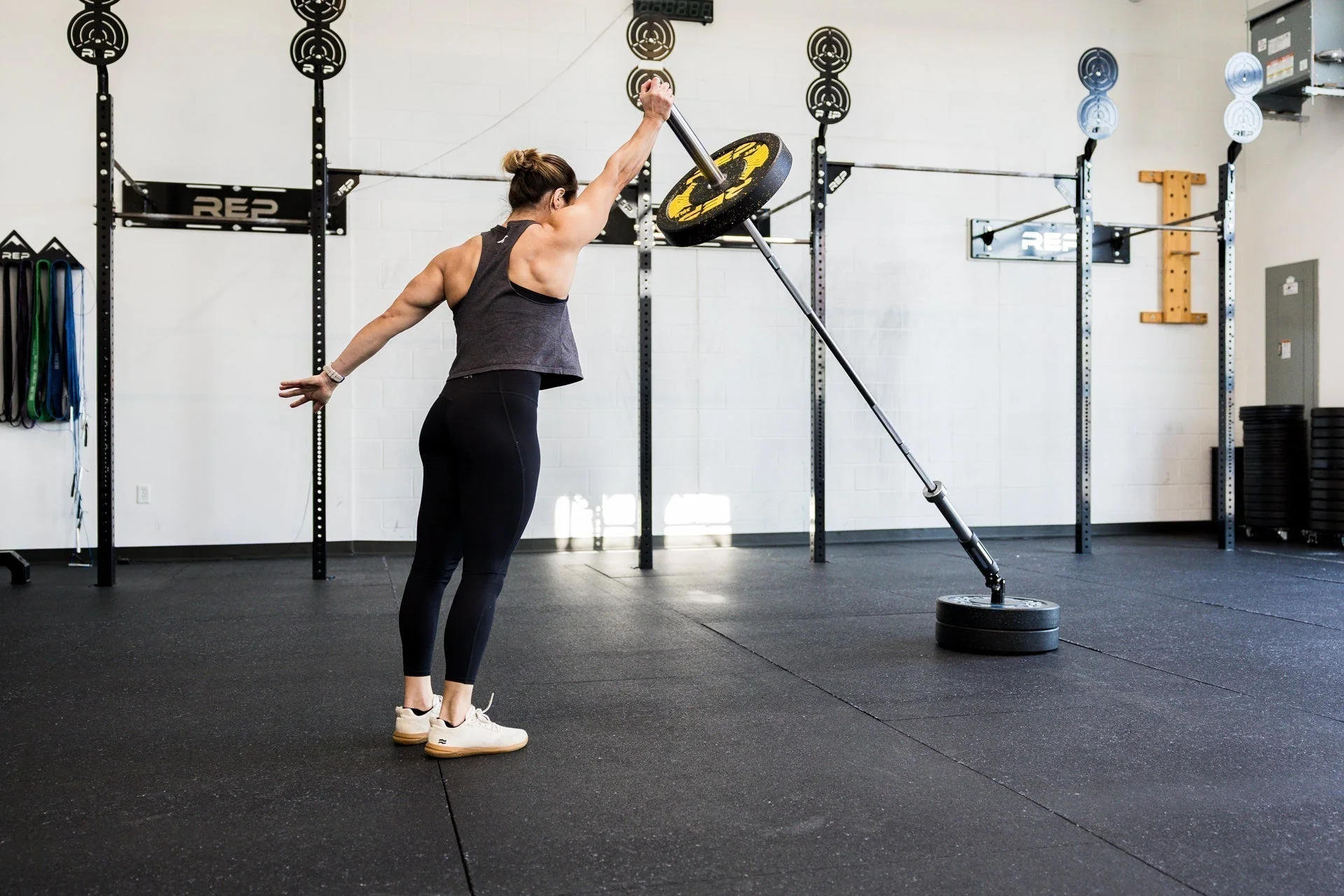
The free end of the bar does not travel vertically as a standard overhead barbell would. It describes a diagonal arc because the opposite end stays near the ground. Follow that arc instead of trying to force the sleeve above your head. At the top, the working arm reaches up and forward in the press direction, the bar remains under control, and the body has turned enough to support the finish without an exaggerated backward lean.
A useful cue is to press through the moving shoulder while allowing the shoulder blade to move normally around the ribcage. Do not clamp it rigidly downward throughout the reach. The wrist, forearm and sleeve should remain comfortably aligned. If your elbow shoots sideways or your wrist collapses, first reduce the load and change the hand position rather than hoping a more aggressive hip snap will solve it.
Keep the front of the ribcage from flaring upward to manufacture extra range. A sudden arch through the lower back can make the weight look higher without actually improving shoulder movement or rotational coordination. Use the feet to create the turn, the trunk to transfer it and the arm to finish. The end position is not a contest to see how far the shoulders can face away from the starting point.
Filming one light set from the side and one from behind can show whether the loaded end travels smoothly or loops and jerks. Watch the start and finish of the same rep, not only the most photogenic midpoint. Compare your left and right side. If one arm reaches freely but the other side compensates with a large lean or unstable footing, shorten the motion and practise the weaker pattern with a manageable weight before increasing difficulty.
Own the return and correct the usual mistakes
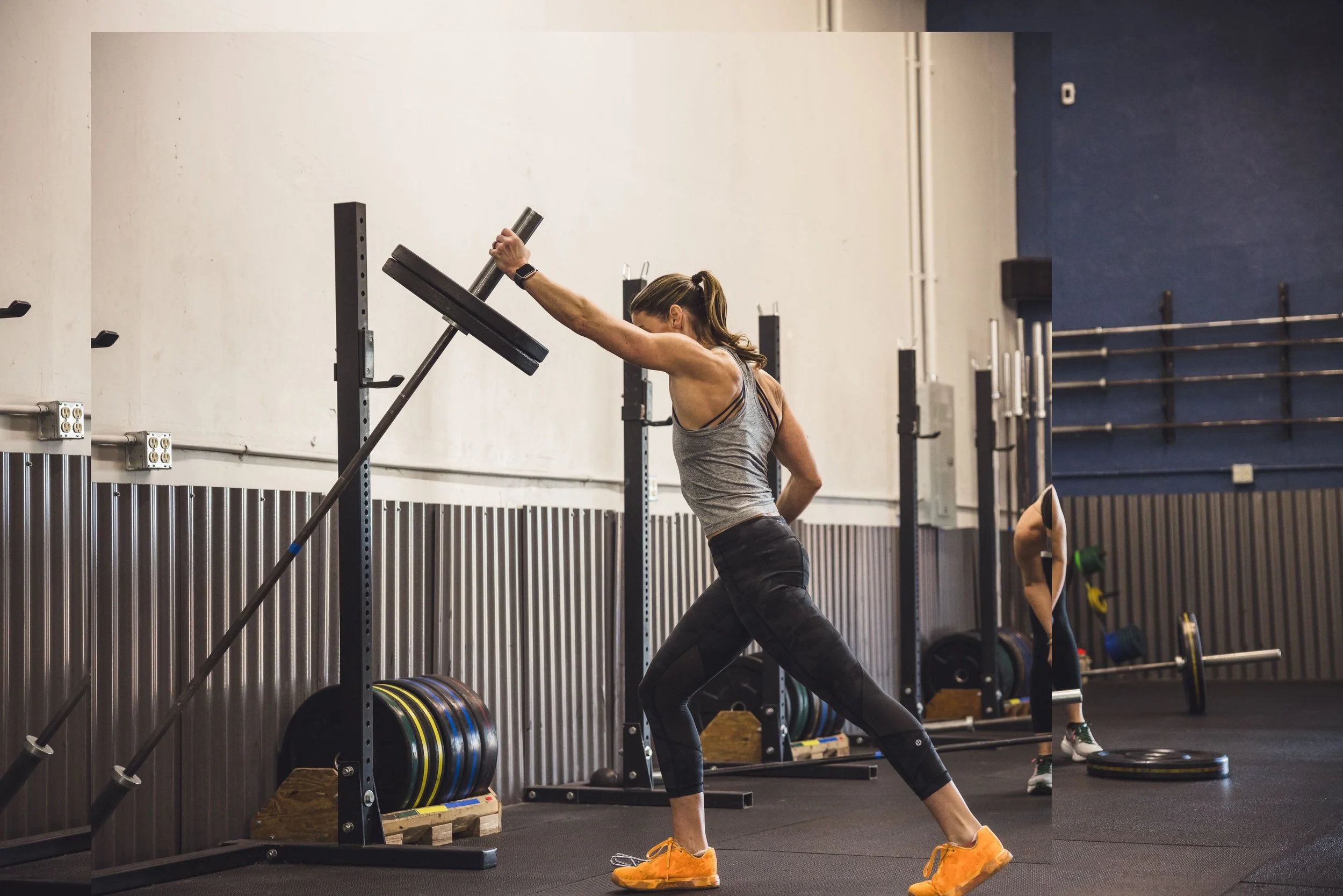
A controlled return is part of the repetition. Lower the free end back toward the receiving shoulder while the torso and hips reverse their turn. Do not simply let the loaded bar drop and catch it with your wrist, and do not spin back so quickly that the end of the bar drags you off balance. Aim to arrive at essentially the same starting position and pause long enough to know you could repeat that rep deliberately.
One common error is initiating the movement by heaving with the elbow, then trying to catch up with the feet. The fix is to rehearse the pivot first with no added load, then layer the arm extension onto the middle of the turn. The opposite error is spinning the feet and torso before the bar begins moving, which can make the lift jerky and inconsistent. Coordinate the pieces instead of treating them as separate tricks.
Another mistake is chasing a load that only the dominant side can control. If the final reps force you to twist through the lower back, shorten the reach, shove the free sleeve away with a bent wrist or take an unplanned step, the weight is too high for the intended variation. Rest and use a smaller increment. Rotation is not automatically dangerous, but a technique that consistently produces sharp pain or loss of control deserves modification rather than more effort.
For better training feedback, record the amount loaded on the free end, the type of bar, the stance, reps per side and whether you used an intentional leg drive. A 15-kilogram plate at the sleeve does not by itself define the resistance across every landmine system. Also distinguish a deliberately explosive repetition from a rushed one: power work still requires a stable pivot and a controlled way to decelerate the bar. Terminate a set when the end position deteriorates.
Know which landmine variation you are actually training
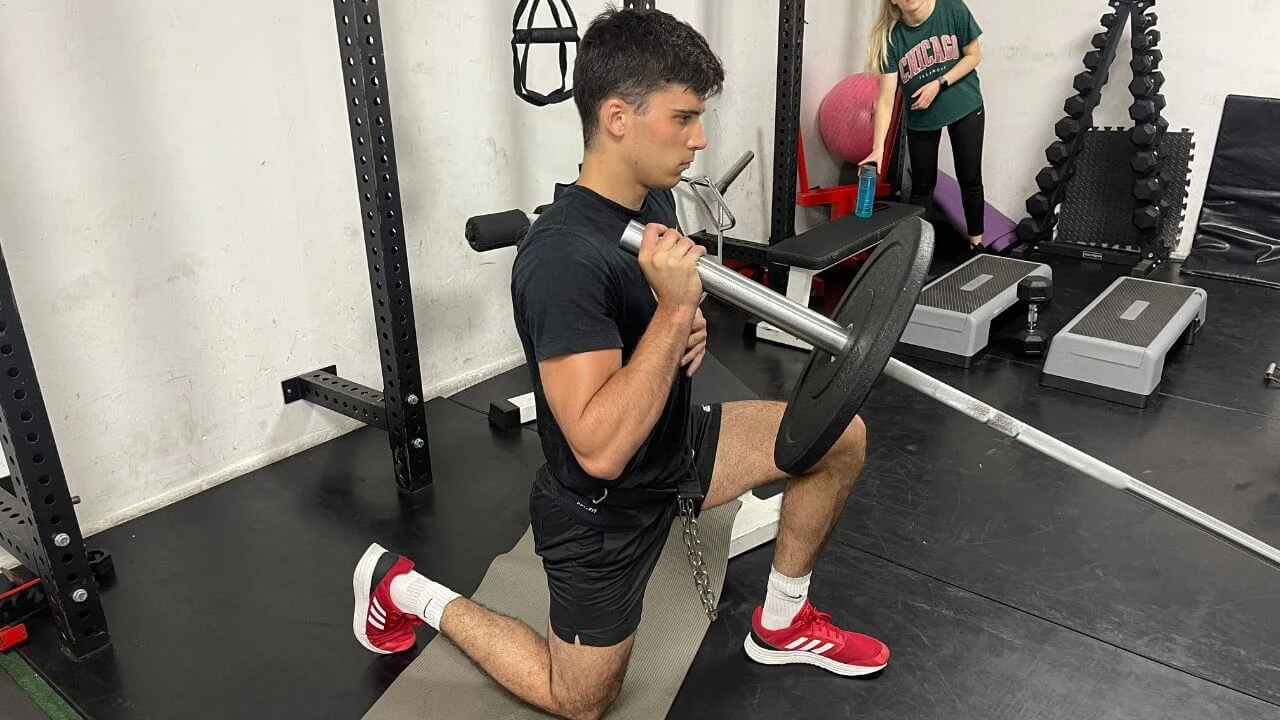
A half-kneeling single-arm landmine press removes most of the lower-body pivot and asks you to hold the trunk steady while the arm presses. A standard standing landmine press also normally keeps the torso relatively square. Both can be excellent shoulder exercises, but their purpose differs from a rotational press where coordinated hip turn and force transfer are central. Substituting one for the other without noticing the difference changes what you are practising.
A Viking press attachment offers a two-hand pressing grip and can feel stable for heavier straight-ahead pressing. It is not a direct substitute for a one-arm rotational press. A landmine rotation or landmine rainbow, meanwhile, moves the bar around the body with both arms and emphasises a different direction of control. And a landmine squat-to-press adds a pronounced knee-and-hip drive, changing the lift again. Use the exercise name as a useful starting label, then check what your actual repetition contains.
If the goal is shoulder hypertrophy, ordinary presses, lateral raises and other direct shoulder work may be easier to standardise and progressively overload. If you want to develop a coordinated pivot-and-punch pattern, the rotational press can serve as a technique or power accessory. Neither claim requires inventing a specific percentage of glute or oblique activation. Those muscles contribute, but no photo or simple feeling identifies a definitive hierarchy of recruitment.
An approachable progression is a stationary two-hand landmine press, followed by an unloaded foot pivot, then a controlled single-arm pivot-and-press. Someone who has restricted or painful rotation can stay with a non-rotating variation instead. Choose the exercise that matches your goals and usable range, not the one that creates the most movement for its own sake. The skill matters most when you can make the same good rep twice.

Bodybuilding Shirts & Workout Gear
Bodybuilding shirts, tanks and gym gear for lifters chasing muscle, size, symmetry and the pump.


Doctor Delts Gym Villain Funny Gym Hoodie
Show off your superhero humor in a laid-back “Doctor Delts Gym Villain” hoodie.


Yeah Buddy Ronnie Tank
Add some lifting attitude to training with “Yeah Buddy Lightweight”.

– Flex Armstrong Astronaut Moon Huge Arms Jumper T-Shirt
Show some gym-day personality with “Flex Armstrong Astronaut Moon Huge Arms”.

Shirt – Guns N Poses – Rock Music & Huge Arms Meme & T-Shirt
Heavy lifts, good laughs, and a little “Guns N Poses” energy.

Heavy Metal Lift Heavy – Hardcore Powerlifting Gym Deca Sticker
Give your everyday gear a playful “Heavy Metal Lift” twist.

Swole Jesus Lateral Raises – Easter Bodybuilding Meme G Hoodie
Show off your Easter humor in a laid-back “Swole Jesus Lateral Raises” hoodie.

Big Guns Rock Gym Funny Workout Muscle Shirt Who Love R Tank Top
Bring “Big Guns Rock” humor to your next lifting session.
Build a four-week rotational press progression
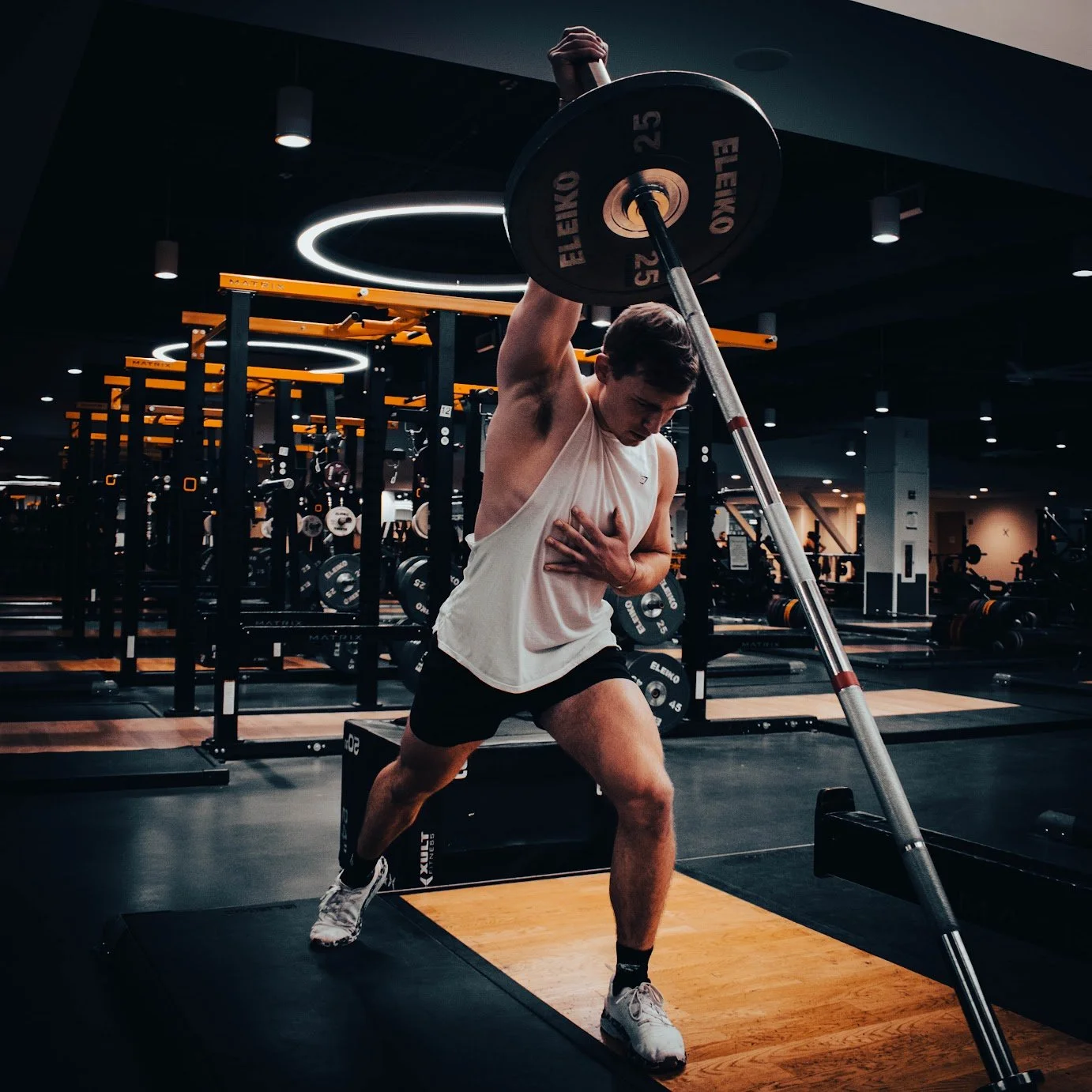
Use the exercise once or twice per week, where it complements your main lifting rather than replacing all your overhead or horizontal pressing. For most recreational lifters, a short block of clean practice before exhausting upper-body sets makes sense. These are coaching starting points rather than an experimentally validated optimal four-week protocol. Count reps for each side separately and keep the chosen hand/stance version consistent across weeks so your log means something.
Week one is about finding the groove. After a general warm-up and several unloaded pivots, perform two or three easy sets of five controlled reps per side. Pick a load at which you can finish every rep without losing balance or forcing the bar overhead. Stop well before failure. Note the anchor position, which foot pivots, how far you stand from the base and what each shoulder feels like at the finish.
In week two, keep the setup and add a repetition or a small amount of total practice if both sides remain consistent. Three sets of five to seven each side are enough for a useful technique session. In week three, either take a small plate increase or add one modest set, but avoid changing both at once. If you want the movement to be faster, practise a crisp drive with a still-manageable weight and maintain an equally controlled return.
In week four, compare clean sets with the first week’s load. Can you turn without an awkward planted foot, keep the bar moving on the same arc and lower without an extra recovery step? If yes, progress gradually. If not, return to fewer reps or a more stable press. Continue your established squat, hinge, row and other pressing work elsewhere in the week. A landmine rotational press provides a valuable coordination challenge, but it is not a complete upper-body or trunk program by itself.