Advertising disclosure: This page includes affiliate product links that may earn us a commission, as well as products from our own store.
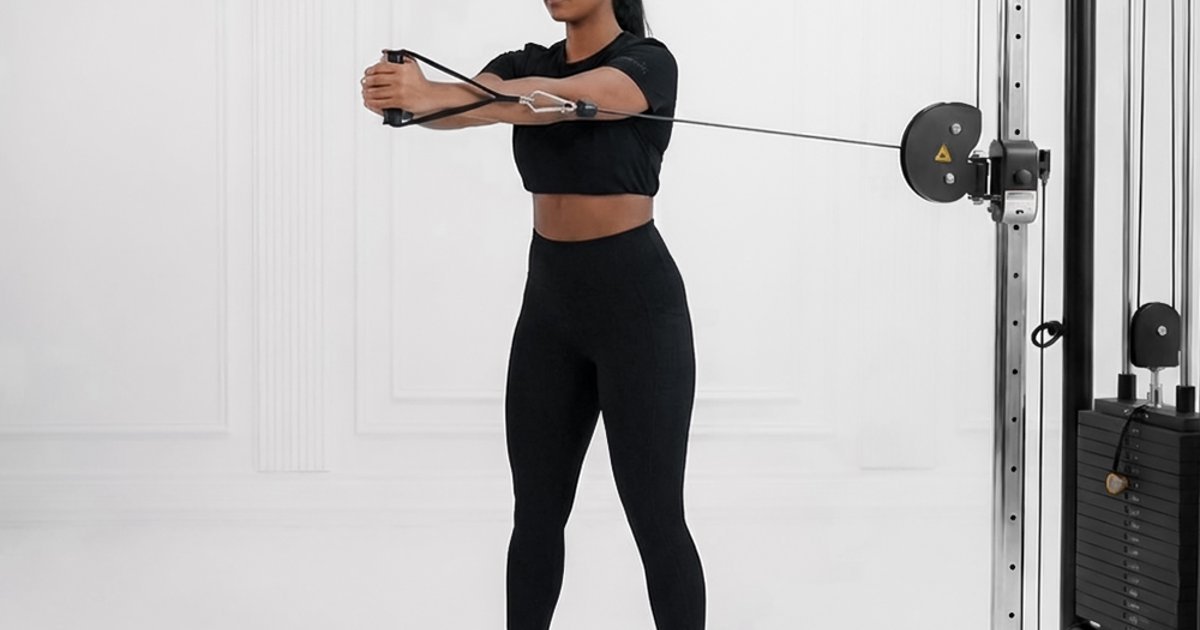
The Pallof press looks simple: stand beside a band or cable, bring the handle to your chest, then press it away without letting your torso twist. Yet the exact foot position can make that same resistance feel completely different. A small 2025 study compared five versions of the movement using a phone strapped over the pelvis. Its findings offer a useful way to order progressions, provided we do not mistake more wobble for better strength training.
What the 12-person Pallof press experiment actually measured
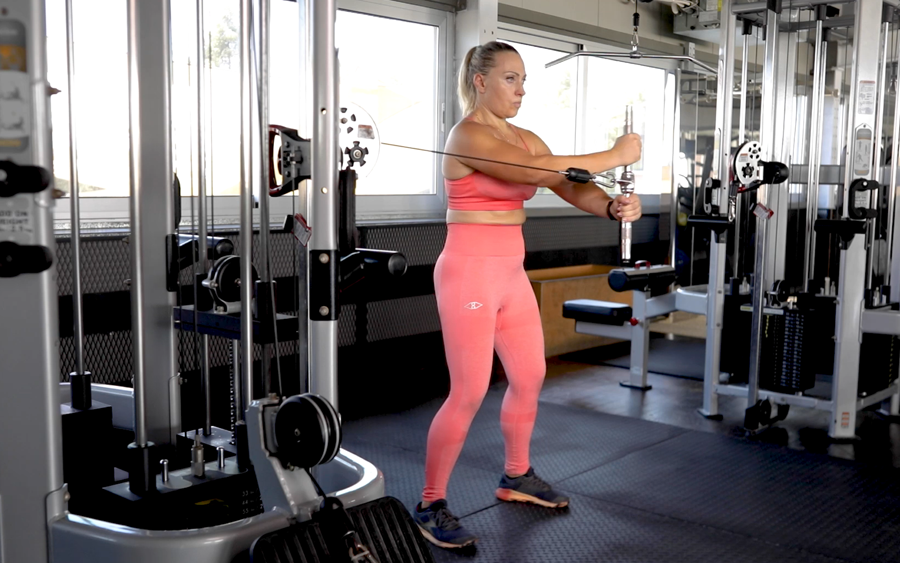
Twelve physically active adults, six women and six men, took part in two laboratory sessions separated by a week. Each session included two sets of five different Pallof press holds. Rather than counting conventional presses in and out, the researchers asked the participants to keep both elbows extended for 15 seconds. This detail matters because moving the hands changes the leverage and could distort a measurement intended to capture the difficulty of maintaining a fixed posture.
A smartphone held over the sacrum recorded acceleration of the lumbopelvic area. In everyday terms, the device measured how much movement occurred while someone tried to remain steady against a sideways pulling force. It did not measure abdominal muscle activation, muscle growth, spinal loading, strength improvements or the quality of an individual’s squat or deadlift. Higher acceleration was interpreted as a larger postural-control challenge in this particular setup, not as an automatic sign of a more effective workout.
Resistance came from an elastic band attached to a pulley station and was standardized using a dynamometer. That is not equivalent to the fixed number showing on the selectorized cable stack in your gym. The experiment used the same basic side-on, arms-extended anti-rotation task while changing only the position of the body and its support surface. Keeping those distinctions in mind makes the results more informative than simply announcing that one variation is the hardest.
The practical lesson is to control the setup before comparing progress. Record which side faced the anchor, where the band was fixed, the amount of tension, the distance from the anchor, foot position and the duration of your hold. Changing all six variables at once makes it hard to know what improved.

Equipment Worth Exploring
Explore equipment, accessories and gear from our carefully selected range.
VOLTRA
Compact digital cable trainer with smooth, adjustable resistance.

Go-Tone Pro
Portable digital cable trainer with up to 66 lb (30 kg) of adjustable resistance.

VForce Wall Trainer
Space-saving wall-mounted functional trainer with pivoting cable arms and variable resistance ratios.

VForce Lat Tower
Wall-mounted cable tower with pivot arms and adjustable 1:1 or 2:1 pulley ratios.

VForce 2IN1
Half rack and pivot-arm functional trainer with switchable 1:1 and 2:1 pulley ratios.

VForce 3IN1
All-in-one rack combining an adjustable Smith machine, functional trainer, and free-weight station.

VForce 3IN1 Max
Six-post all-in-one rack with Smith machine, functional trainer, and variable-force cables.

Multi Pull Smith Rack MPHR-780
All-in-one rack with a Smith machine, functional trainer, lat pulldown and low row.

Trinity Lat Machine LSW-850
Weight-stack pulldown tower offering three cable directions and adjustable seated support.

Foldable Wall Rack
Wall-mounted folding squat rack designed to save floor space between workouts.
The five stances: kneeling, floor standing and a hemisphere
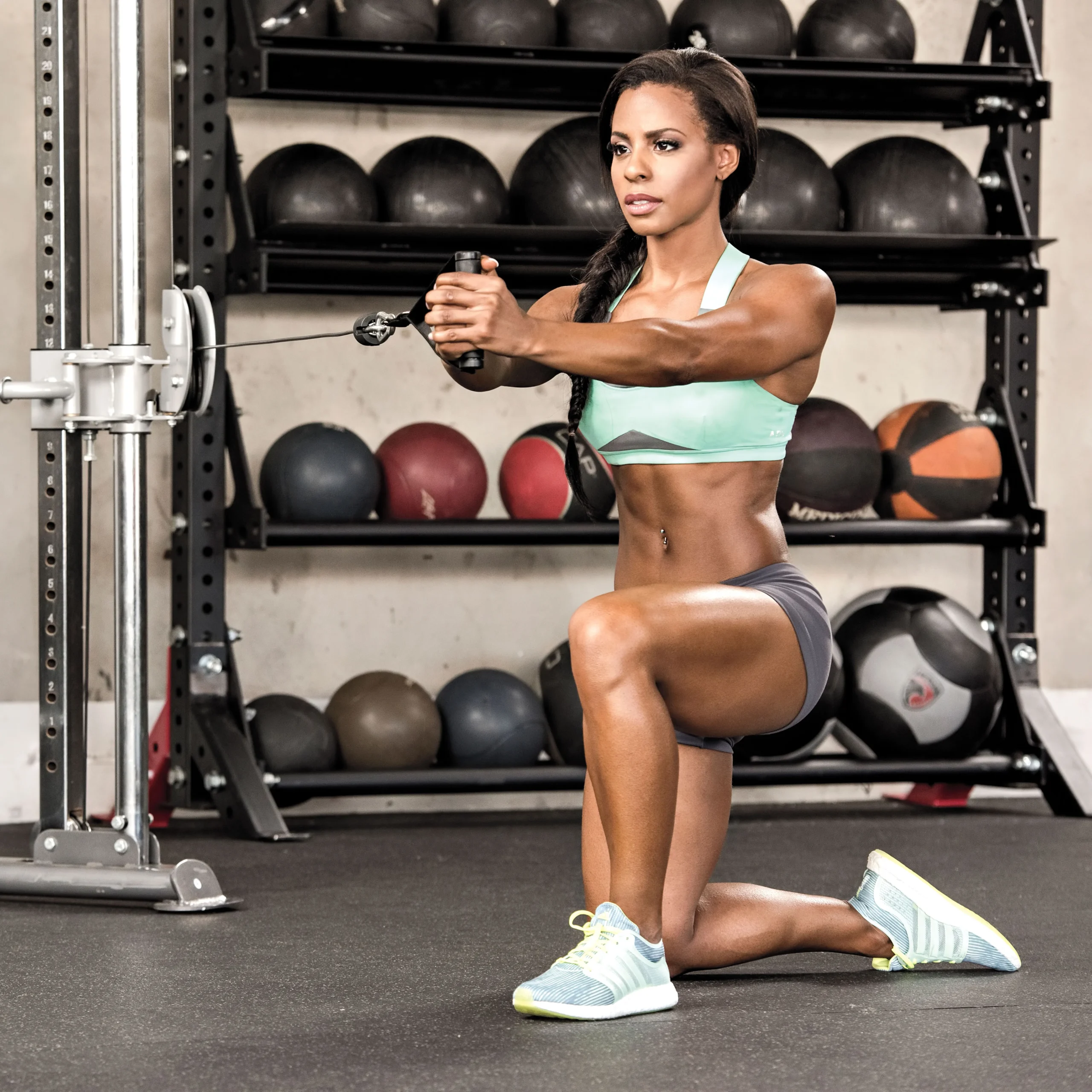
The simplest tested position was tall kneeling on a foam pad. The two knees supported the body close to the floor while the hands stayed straight ahead. Standing upright with both feet together reduced the base of support and raised the point where the lateral band force acted. Moving into a heel-to-toe, or tandem, stance further narrowed side-to-side support. The final two variations moved the standing positions onto a rounded hemisphere balance surface.
The reported average pelvic acceleration values were 0.17 m/s² for kneeling on foam, 0.22 for feet together on the floor, 0.31 for tandem on the floor, 0.55 for feet together on the hemisphere and 0.61 for tandem on the hemisphere. Those values refer to the device’s movement readings, not percentages of abdominal effort. You cannot convert 0.61 into a claim that the exercise trains the core three times as effectively as kneeling.
The hemispherical surface produced distinctly more movement than the corresponding stable-floor variations. Tandem stance on the floor also produced more movement than the kneeling condition. However, the study did not establish a significant difference between the two standing foot placements within each surface category. Treat the numerical order as a useful starting progression, not a promise that every one of those adjacent steps will be meaningfully harder for every person.
There is an important practical difference between the tested tall-kneeling position and the popular half-kneeling version with one foot planted forward. Half kneeling is a useful option for training but was not one of the five conditions in this study. If you include it in a program, judge its difficulty through your own controlled performance rather than attaching one of the study’s acceleration figures to it.
How stance changes the anti-rotation task
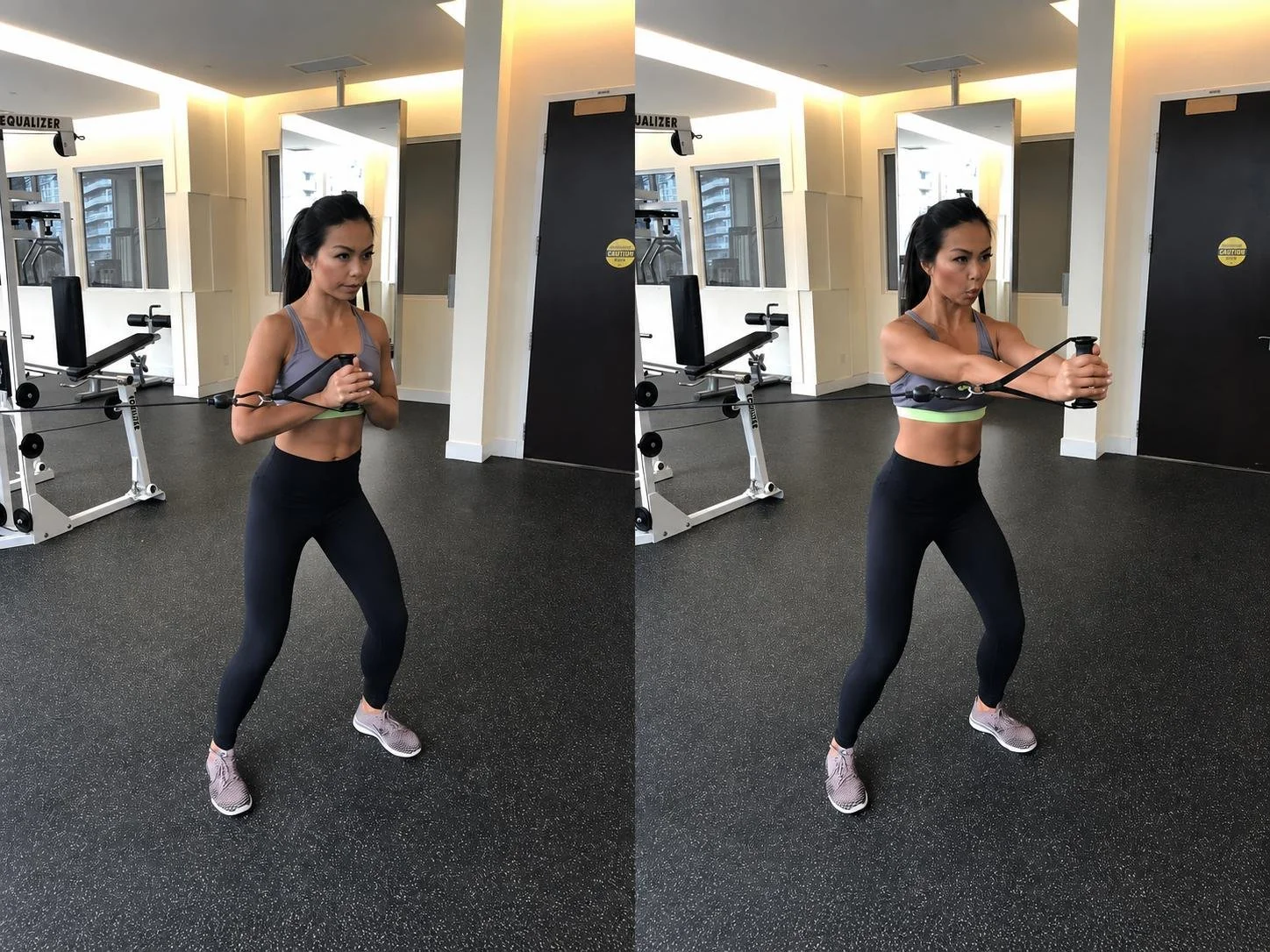
A Pallof hold creates a twisting demand because the resistance line pulls sideways while your hands are in front of the chest. The longer the horizontal reach from your torso to the hands, the harder it generally becomes to keep the shoulders and pelvis facing forward. Pressing your arms farther away does not mean turning your torso toward the anchor. Instead, the goal is to keep your chest, rib cage and belt buckle pointed in the same direction throughout the hold.
Standing can feel more demanding than tall kneeling for several reasons. Your center of mass is higher, your feet offer a different base of support and the lateral force acts higher above the floor. A narrow or heel-to-toe stance also leaves less room to compensate with a large side step. Small corrections through the ankles, hips and trunk can become noticeable before the resistance itself feels heavy. For a beginner, a wide, comfortable floor stance often makes more sense than reproducing the study’s feet-together positions immediately.
Do not treat intentional body sway as a performance target. The pelvis acceleration readings were an observation of the postural challenge, not an instruction to wobble. If a lifter has to lean sharply away from the cable, rotate the shoulders or repeatedly move a foot to avoid falling, the current variation may be too demanding to practice with precision. Reduce the lateral pull, choose a wider stance or shorten the lever by moving the hands closer to the chest.
Keep the knee position comfortable and the shoulder blades relaxed rather than shrugged. Breathe behind the brace instead of holding your breath throughout a long set. When you switch sides, duplicate the stance and distance from the pulley. If one direction is markedly less controlled, that discrepancy is useful training feedback, although it is not a diagnosis of weakness or injury.

Functional Fitness Shirts & Workout Gear
Functional-fitness shirts, tanks and workout gear for athletes who train strength, conditioning and everything in between.

Vive La Resistance Bands – Resistance Bands Warmup Mobi T-Shirt
Add a playful “Vive La Resistance Bands” touch to your casual rotation.


Hybrid Athlete – Strength & Endurance Crewneck for Func T-Shirt
For laid-back days and lifting humor: “Hybrid Athlete”.


Live Love Lift – Gymbro Meme & Gains – Shirt T-Shirt
Rep “Live Love Lift” humor in and out of the gym.

Vitruvian Kettlebell Tee
Heavy lifts, good laughs, and a little “Vitruvian Man With Kettlebells” energy.

HYROX High Rocks Functional & CrossFit Tank Top
Your gym-day look, with a playful “HYROX High Rocks” twist.


Atlas Kettlebell Earth Meme Greek God Top T-Shirt
Make gym days more fun with “Atlas Kettlebell Earth Lifter” style.

Super Kettlebell Hero Superman & Gymbros Meme Top T-Shirt
Show some superhero attitude with a playful “Super Kettlebell Gym Hero” tee.
Why an unstable hemisphere is harder, but not automatically better

The rounded support surface was the clearest difficulty amplifier in the experiment. Even with comparable lateral band tension, standing on the hemisphere increased pelvic movement substantially. The surface introduces a separate balance problem: the person must react to shifts under the feet while simultaneously resisting rotation. That can be a worthwhile coordinated challenge for someone who already performs the floor version cleanly.
There is no need to assume that maximum instability produces maximum strength gains. When balancing becomes the limiting factor, a lifter may use less cable resistance or shorten the arm position just to remain upright. That could be appropriate for a balance-focused session but less useful when the purpose is applying a repeatable anti-rotation force. The research recorded single-session movement during brief holds. It did not follow people long enough to establish a superiority claim for abdominal hypertrophy, athletic performance or injury prevention.
Both the tandem and feet-together hemisphere conditions produced high values in the sample, but there was not a demonstrated significant difference between those two foot stances on the same surface. Select the version that lets you control the task rather than pursuing the largest number. These were healthy physically active adults in a supervised testing environment, not a prescription for people with pain, recent injury or compromised balance.
Anyone attempting the unstable version should first be consistent on the floor, use modest resistance, position the setup away from hard obstacles and arrange a sensible way to step down safely. The hemisphere should be stable on the ground and the cable should not threaten to pull the person off the platform. If the purpose is ordinary core training, a reliable floor-based Pallof press remains an excellent option without additional balancing equipment.
Set up the band or cable so your reps are comparable
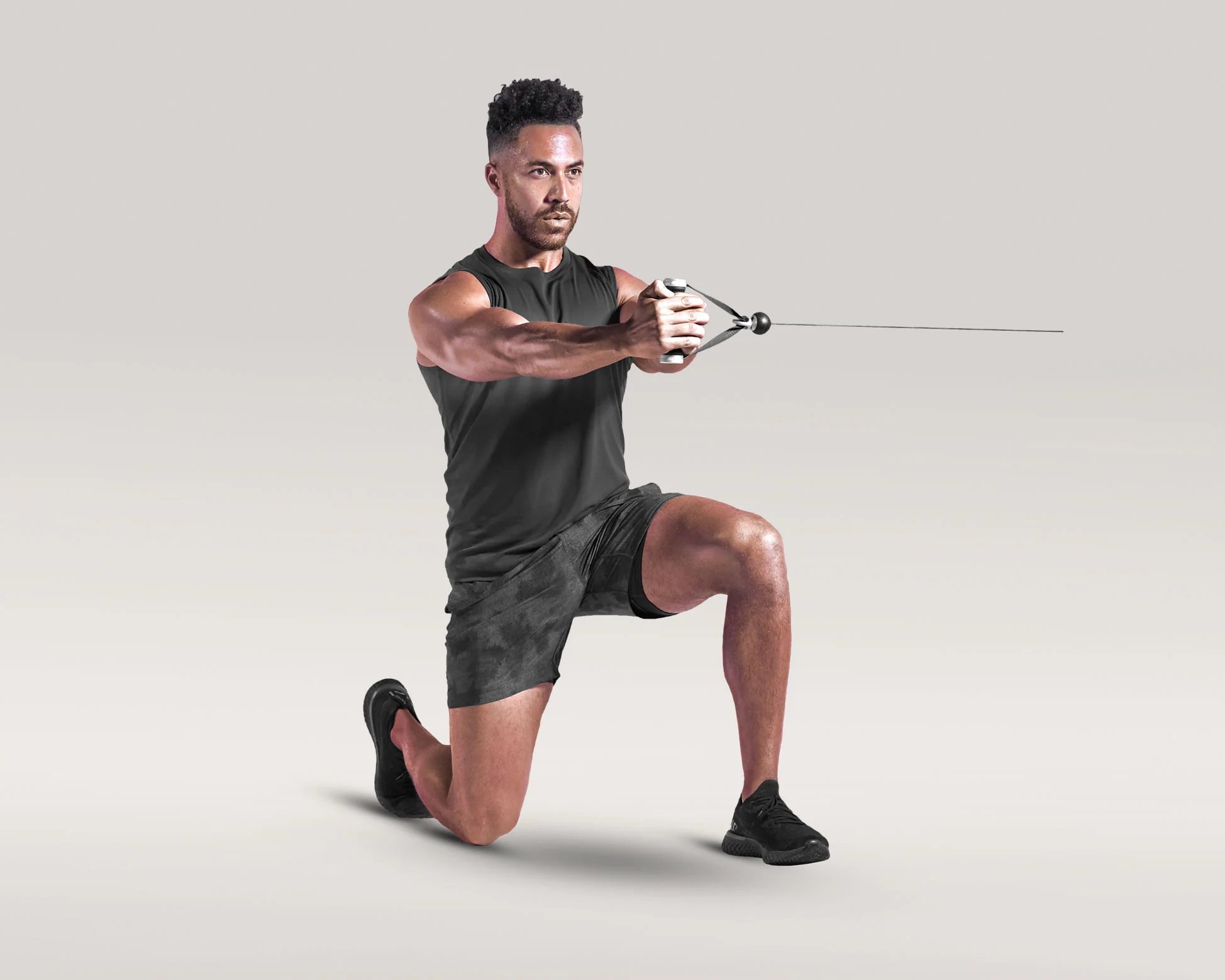
Choose a stable, securely anchored cable or suitable resistance band at approximately chest height. Stand sideways to the anchor, take a single handle or compatible band grip in both hands and step away until you feel a controlled sideways pull. Start with a comfortable stance. Keep the pelvis and breastbone facing forward, the ribs gently stacked over the hips and the shoulders away from the ears. Make sure the band cannot slip or snap back into someone nearby.
For a conventional dynamic Pallof press, begin with the hands close to the breastbone, exhale while extending both elbows directly forward, briefly pause without turning and then return the handle slowly. The press-out increases leverage, so avoid adding load merely because the handle feels easy at the chest. For a study-style isometric hold, extend the elbows and maintain the position for the chosen time instead of performing repeated presses. Do not mix the two versions in your log without recording which you used.
A practical difficulty check is simple: can you complete the planned hold while keeping both heels or knees planted, breathing smoothly and resisting an obvious sideways shift? If not, step a little toward the anchor or reduce the stack. Do not turn the exercise into a heavy cable chest press, let one shoulder creep forward or flare the lower back as a substitute for trunk control. Rest briefly, then repeat while facing the opposite direction with the same setup.
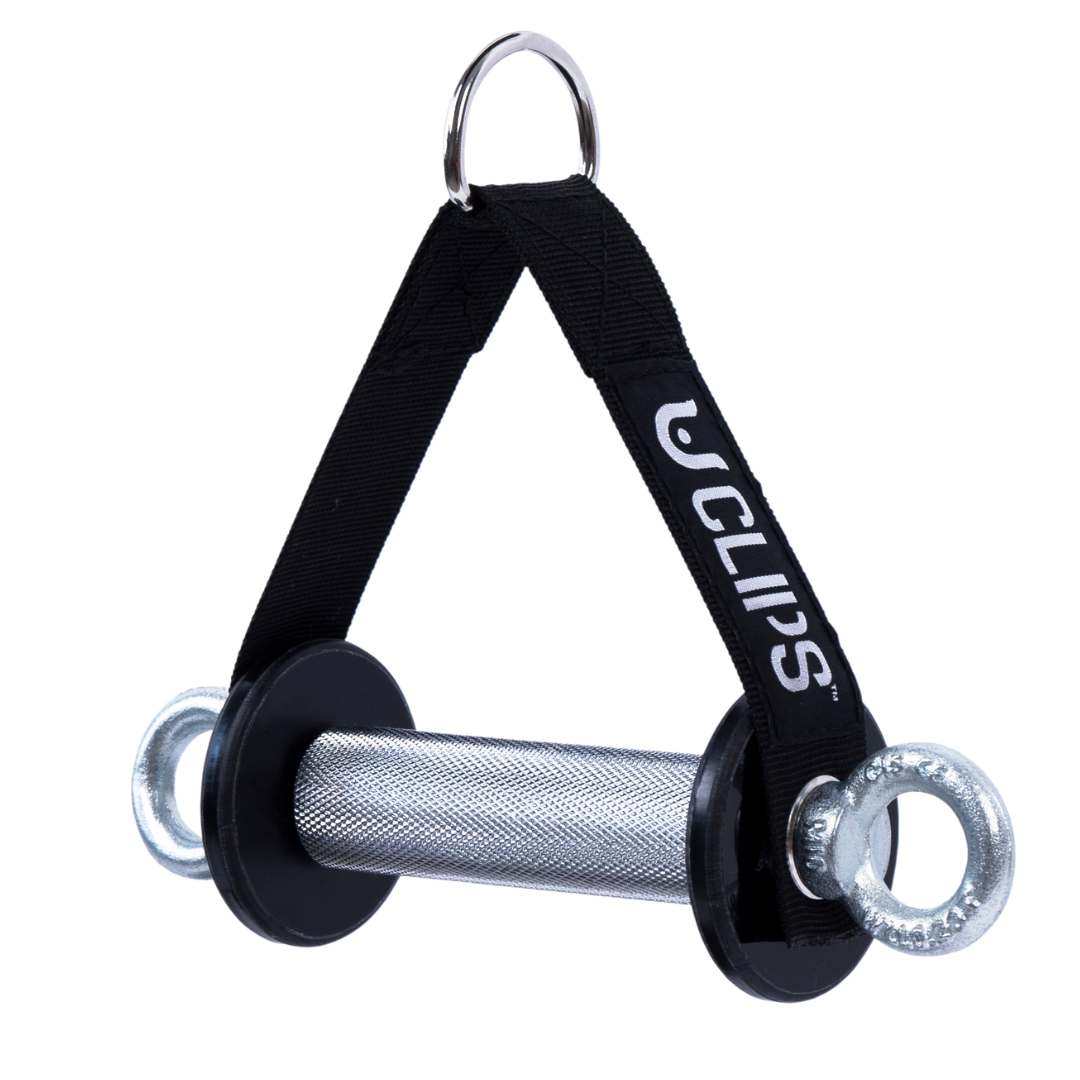
Home gyms need extra care with temporary anchors, straps and portable cable devices. Confirm the attachment is rated for the intended load and mounted to a stable structure. A thick bar or wide row handle is unnecessary when one secure D-handle can support a symmetrical two-handed grip. Choose the simplest equipment that lets the movement remain smooth and repeatable.
Equipment Worth Exploring
Explore equipment, accessories and gear from our carefully selected range.
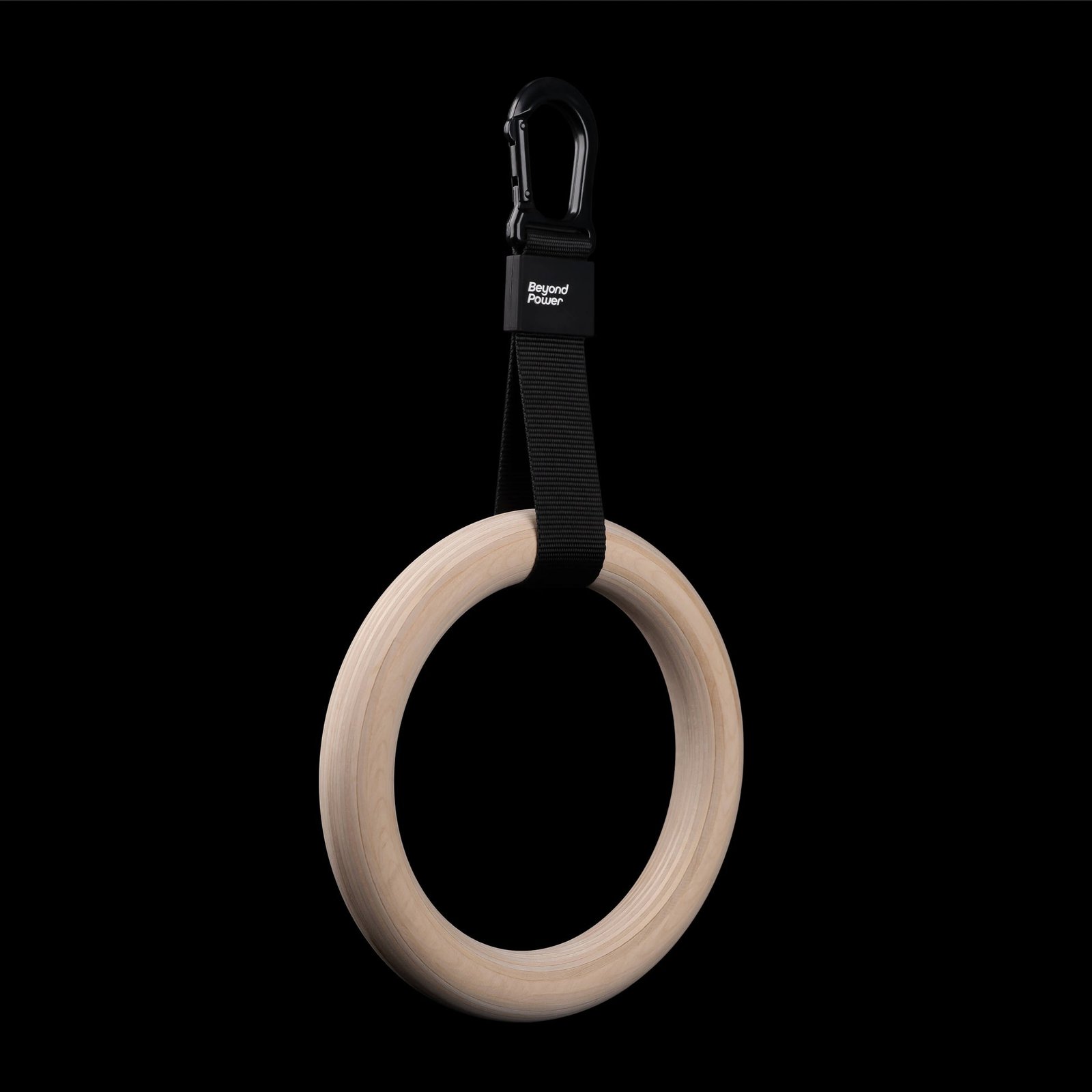

GymPin Ergo Handles
Pair of ergonomic cable handles shaped for comfortable triceps and pulling exercises.

GymPin D Handle Bar
Multi-use steel D-handle bar for cable rows, pulldowns and other cable exercises.
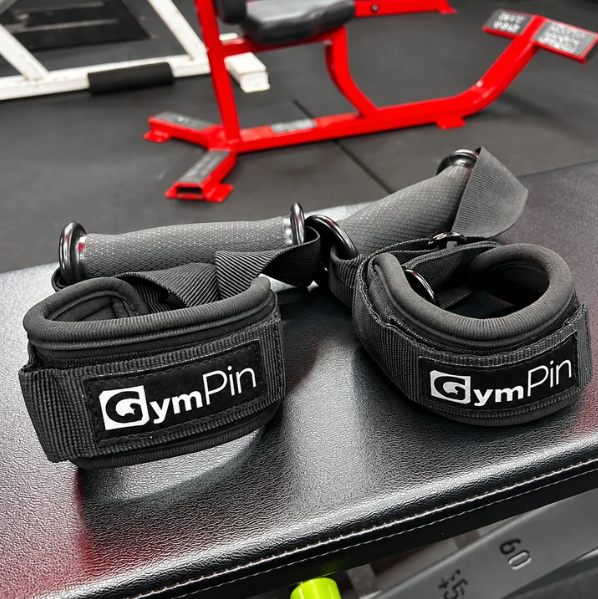
GymPin D Cuffs
Adjustable wrist cuffs with textured grips for supported cable-machine exercises.
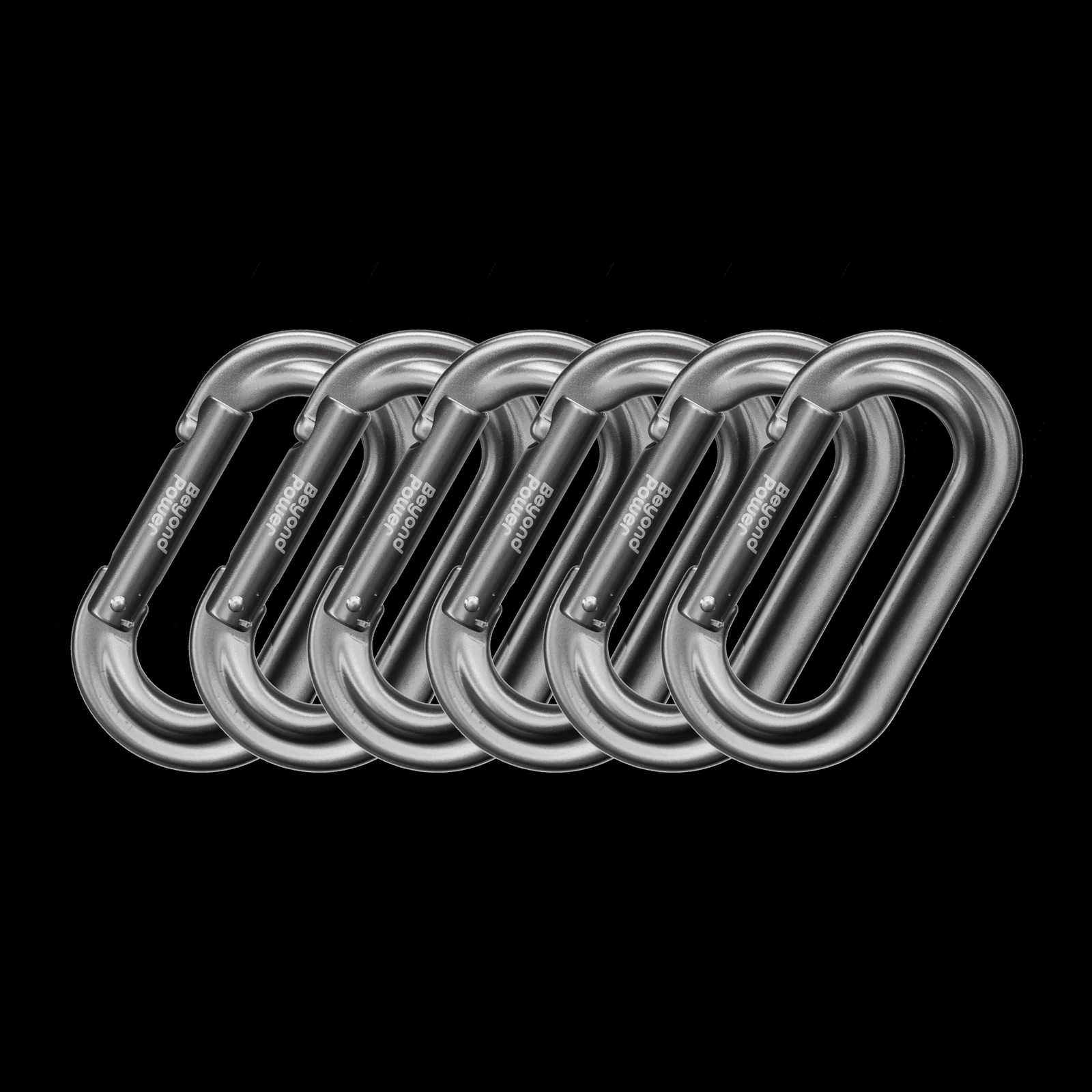
Premium Carabiner
Durable carabiner for connecting cable attachments and training accessories.
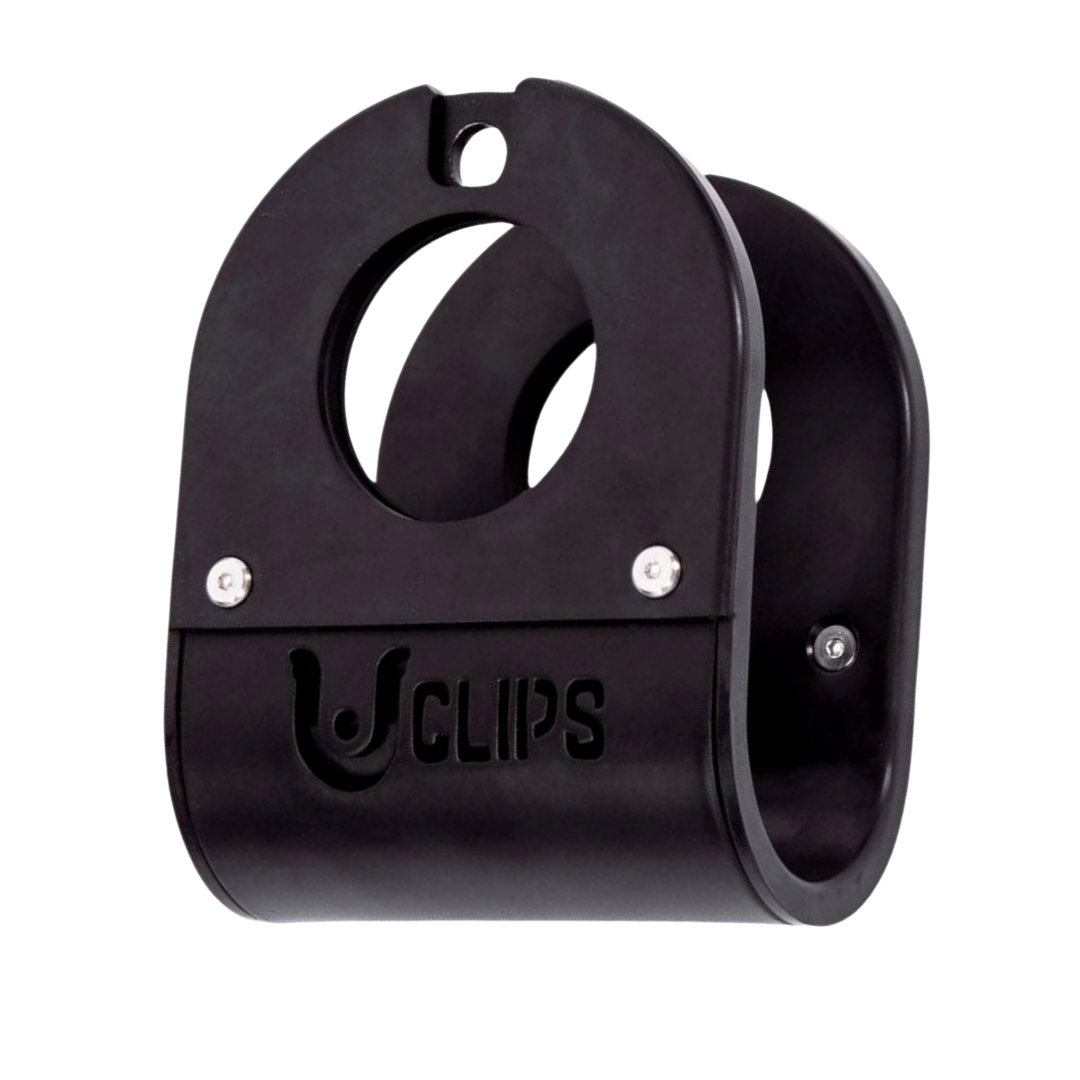
U Clips
Versatile gym clips for barbell, landmine, and attachment setups.
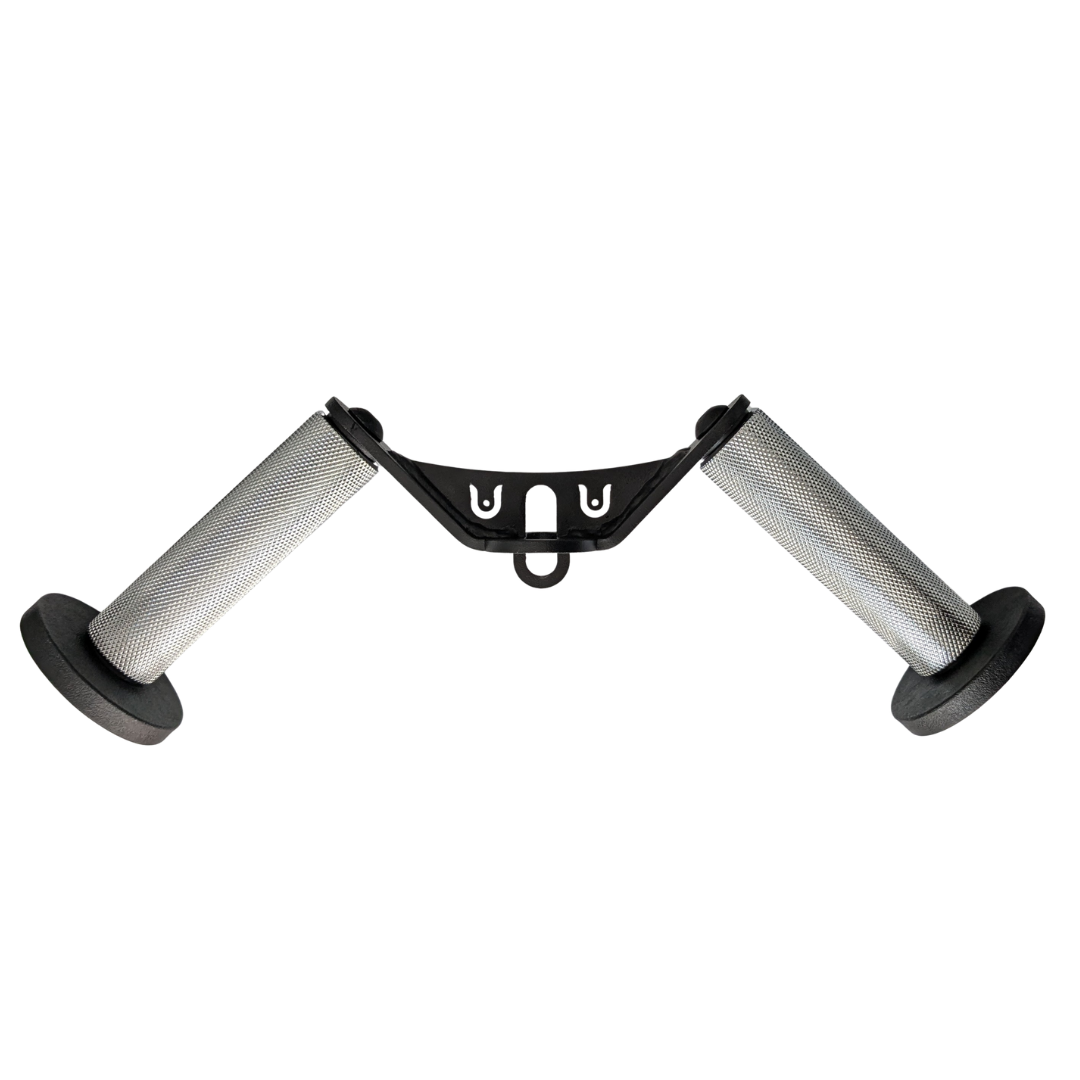
W Grip
Angled cable grip for comfortable rows, pushdowns, and curls.
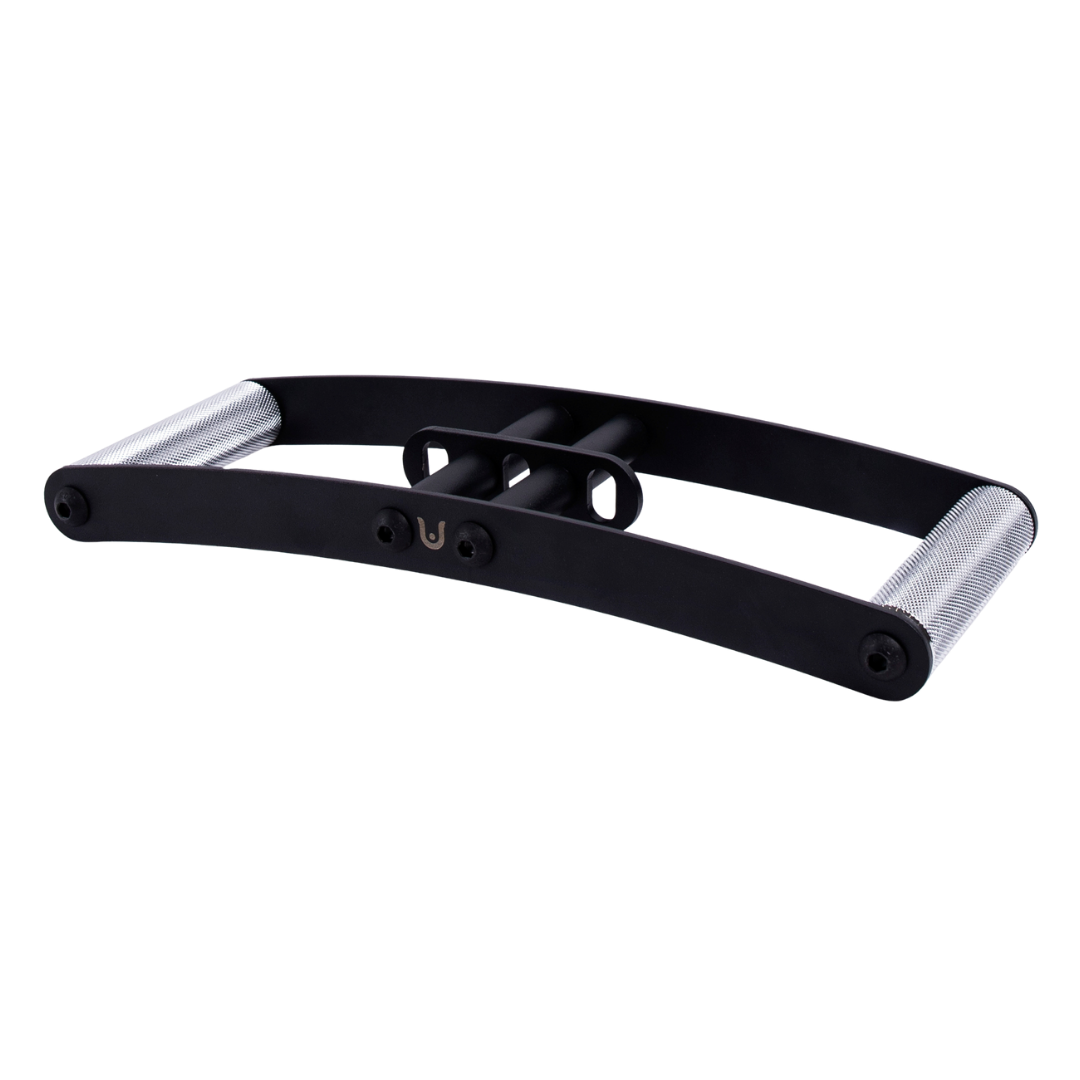
Horizon Grip
Ergonomic V-style cable grip for rows and back training.

Angles 90 Grips
Flexible grip attachments that allow natural wrist movement during pulling exercises.
A four-week progression that keeps quality ahead of wobble
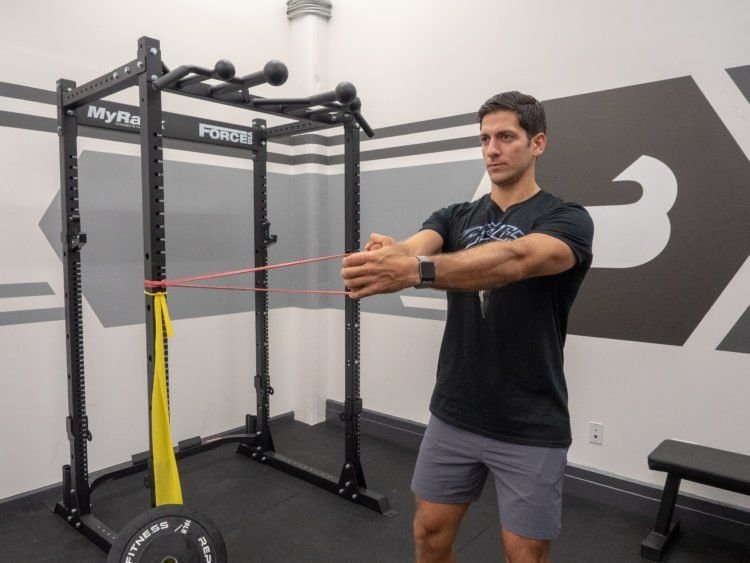
Start by identifying a position you can own: tall kneeling on padding or a comfortable standing stance on the floor. During week one, try two or three sets of 10- to 15-second arms-extended holds per side, two or three times that week. Use a conservative band or cable load, rest enough to maintain control and write down the anchor height and stance. If the full extension strains the shoulders, shorten the reach or stop the set rather than fighting through pain.
In week two, keep the same basic position and work toward slightly longer, equally controlled holds, perhaps 15 to 20 seconds per side. Alternatively, use a dynamic press-out for six to ten deliberate repetitions per side, but record that as a different version. Do not simultaneously increase resistance, hold time and balance difficulty. The objective is to make one variable more demanding while the rest of the setup stays recognizable.
Week three can introduce a narrower stance or half-kneeling variation if both sides remained steady. Progressing from a wide stance to feet together, and only then to tandem, is a reasonable practical sequence, although the study’s adjacent standing comparisons were not all statistically distinct. Alternate which foot leads in tandem stance. Watch whether one position causes a hip hike, a quick foot correction or a loss of normal breathing; those are reasons to return to a more stable option.
During week four, decide what you actually want to improve. If it is loaded trunk control, consider a small rise in resistance on a stable surface with unchanged hold time. If it is balance under a modest sideways pull, you can experiment with a narrower floor stance before considering specialist unstable equipment. No one must progress onto a hemisphere. Its higher pelvic acceleration is a measure of greater balancing demand, not a badge of superior training.
Use a simple training log with the date, anchor, cable or band setting, stance, hold time or repetitions and a quick note on whether the torso stayed square. Compare the same variation across weeks. The study provides a useful hierarchy of postural challenges; the proof of personal progress is performing the task more consistently with an appropriately documented load, not imitating a lab number or wobbling for the sake of it.
Funny Gym Shirts & Workout Gear
Funny gym shirts, tanks, hoodies and workout gear for lifters who like training hard.

I Have Abs-Olutely No Idea Meme Hooded Newbies & Hoodie
Keep it laid-back with a little “I Have Abs-olutely No Idea” attitude.

Stability Stoic Sigma : Meme Bodybuilders & Seeking T-Shirt
Rep “Stability Stoic Sigma” humor in and out of the gym.

Hardcore Gains Meme – – Fire Top & T-Shirt
Bring “Hardcore Gains Gym Meme” humor to your next gym day.

Lift Together Grow Stronger Buddies Friendship Workout T-Shirt
Make gym days more fun with “Lift Together Grow Stronger” style.

I Like Because I Love Eating Foodie Meme T-Shirt
Heavy lifts, good laughs, and a little “I Like Exercise Because I Love Eating” energy.

Bodybuilding Meme – Light Weight Baby Muscle Shirt for Tank Top
Bring “Bodybuilding Meme” humor to your next lifting session.
Lift Heavy – Hardcore Heavy Metal Gym Shirt for Powerli T-Shirt
A t-shirt featuring the Lift Heavy – Hardcore Heavy Metal Gym Shirt for Powerlifting and Bodybuilding artwork, bringing lifting-inspired humor and distinctive gym graphics to your everyday gear.


6Pac Shakur Gym | Hip Hop Parody Pullover Chasing Six P Hoodie
Bring “6Pac Shakur” gym humor to lazy days and post-workout plans.

Whole Lotta Reps AC/DC Heavy Metal Rock Music Workout f Hoodie
Make your off-duty look more fun with “Whole Lotta Reps”.