Advertising disclosure: This page includes affiliate product links that may earn us a commission, as well as products from our own store.
Reverse Nordic vs Single-Leg Squat: What 23 Volunteers’ Quad Data Really Shows
Which bodyweight move challenges the quads harder on the lowering phase: a reverse Nordic curl, a single-leg squat, a Bulgarian split squat or a forward lunge? The answer depends on which quadriceps muscle you examine and what you mean by harder. A controlled laboratory comparison involving 23 healthy volunteers offers a more useful response than declaring any one movement the undisputed king of leg day.
The study measured electrical activity during the eccentric, or lowering, portion of ten repetitions per exercise. It did not measure changes in muscle size, track injuries or test which movement produced better strength gains after months of training. That distinction matters: a muscle can register high activity on one repetition without proving the exercise will build the most muscle over a training cycle. Here is what the measurements actually showed, where each movement earns a place and how to build practical quad training around them.
1. What the four-exercise comparison actually measured
In the comparison, 23 healthy adults, including 15 men, completed reverse Nordic curls, single-leg squats, Bulgarian split squats and forward lunges. Researchers collected surface electromyography from three quadriceps regions: rectus femoris, vastus lateralis and vastus medialis. They focused on the eccentric portion of the repetition, when the knee extensors control knee flexion against gravity, and also measured knee range of motion. For each exercise, the volunteers performed ten repetitions. The electrical signals were normalized against a maximal voluntary isometric knee-extension contraction, helping make exercise comparisons more interpretable within the experiment.
The headline finding was not that the reverse Nordic dominated. Its rectus femoris and vastus medialis activity during lowering was statistically similar to the three squat-based exercises. For the vastus lateralis, however, the reverse Nordic produced lower activation than the single-leg squat. The single-leg squat also produced greater eccentric activation in all three measured muscles than the forward lunge and Bulgarian split squat within this particular testing protocol. The reverse Nordic used less knee-flexion range of motion than the squat-based movements.
Think of these numbers as a snapshot of muscle activity under defined laboratory conditions, not a final ranking of exercise quality. Ten bodyweight repetitions cannot reproduce every athlete’s technique, body proportions, added loading, fatigue level or available training volume. None of these tests was a months-long intervention. A fair takeaway is that the reverse Nordic can provide meaningful eccentric quadriceps work, but it did not show superiority over the other choices in these measurements.
2. Why the single-leg squat stood out
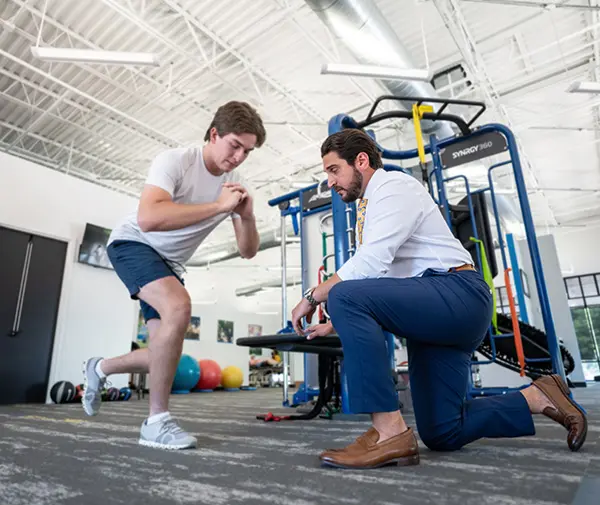
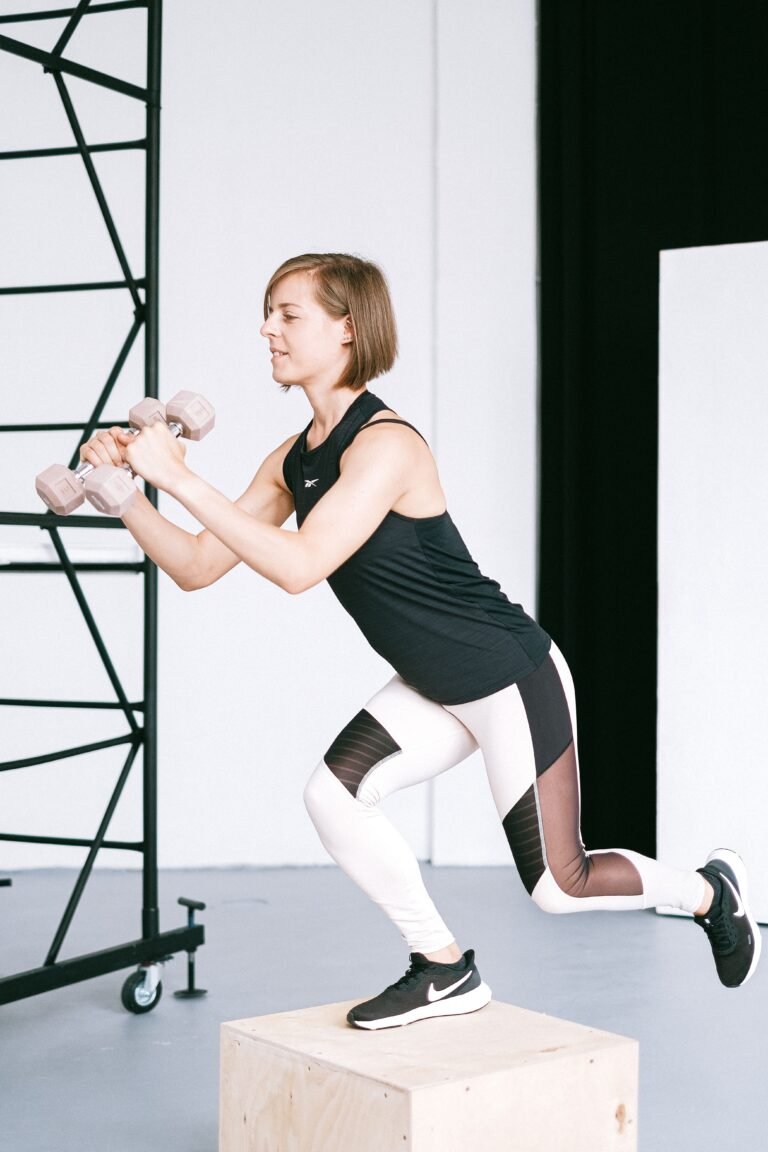
A single-leg squat asks one supporting leg to lower and raise the body while also managing balance, hip position and knee tracking. In the study, its eccentric quadriceps signal exceeded that of both the forward lunge and Bulgarian split squat across the three measured regions, and it exceeded the reverse Nordic for vastus lateralis activity. That is a noteworthy result, especially if your current leg work rarely includes demanding unilateral knee bends.
One interpretation is that the supporting leg may need to control a large share of body mass while the person stabilizes a moving centre of mass. Yet the exact depth, balance strategy, torso angle, non-working leg position and capacity to control the descent all influence the difficulty. A shaky single-leg squat is not automatically a better muscle-building rep. If balance is the limiting factor rather than quad effort, hold a rack upright, use a counterweight or squat toward a bench to make the movement repeatable.
Start with a small, controlled knee bend and the heel firmly planted. Lower over roughly two to three seconds, keep the pelvis reasonably level and allow the knee to travel as needed without collapsing inward. Use light hand support when that allows you to reach an appropriate range rather than twisting to stay upright. A person who can only wobble through three shallow repetitions may get more productive work from an assisted single-leg squat or a loadable split squat. The measured EMG advantage should spark experimentation, not force you to abandon every other leg exercise.
3. Bulgarian split squats and forward lunges still have jobs
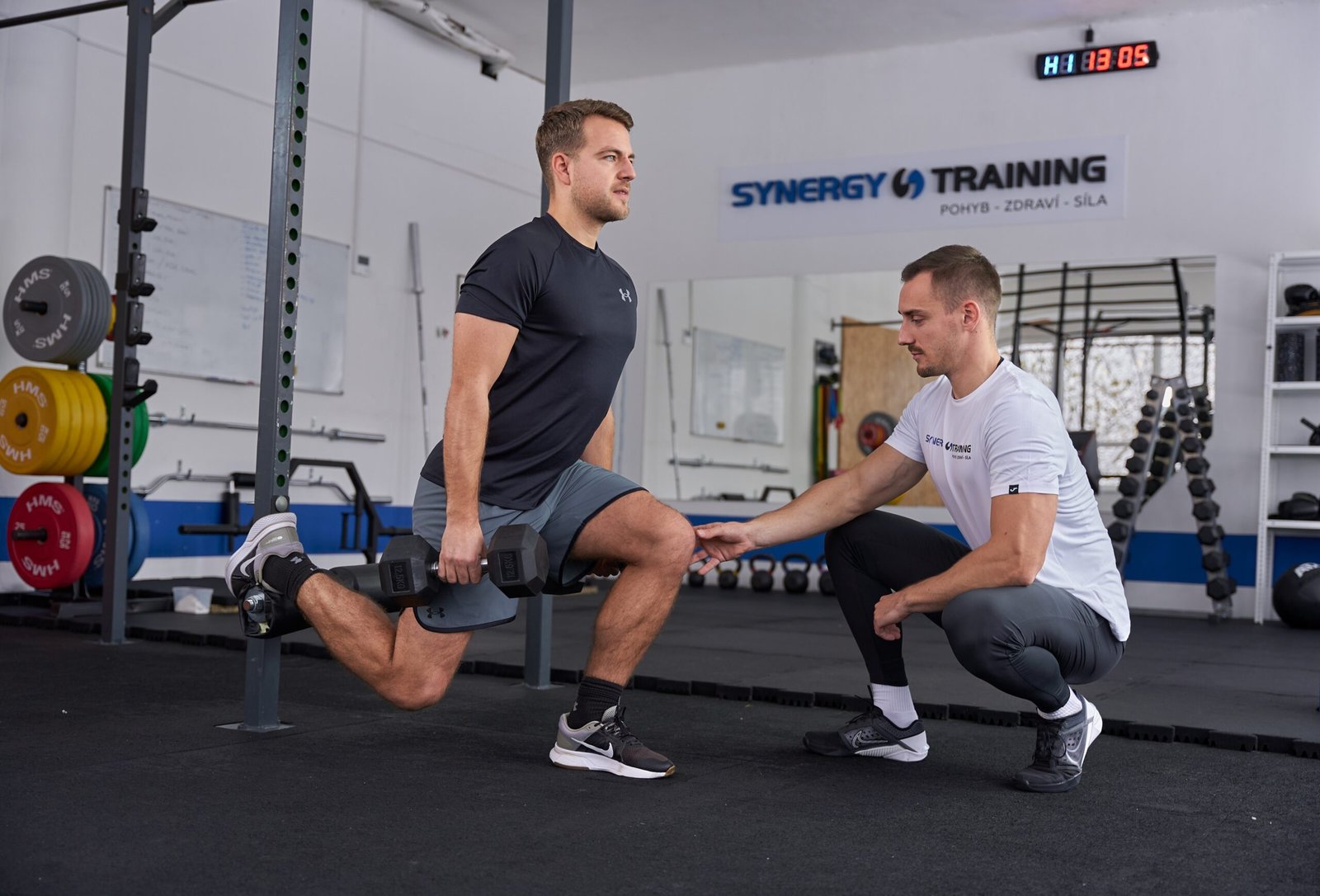
It would be a mistake to read a lower laboratory EMG value as a verdict against Bulgarian split squats or forward lunges. Both movements can be made significantly harder with dumbbells, a barbell or a progressively larger range of motion. They also solve practical problems: a Bulgarian split squat keeps your feet in a relatively fixed arrangement so you can load the working leg hard, whereas a forward lunge requires deceleration, stepping accuracy and a deliberate push back to the starting position. Those are useful training demands beyond a single surface-EMG figure.
For a rear-foot-elevated split squat, place the front foot far enough forward that you can lower without feeling jammed between your stance and the bench. Keep the whole front foot planted, allow a comfortable amount of forward knee travel and descend vertically as the back knee approaches the floor. Adjust your torso angle for comfort and target muscles rather than copying an arbitrary upright position. To bias knee extension, use a range and stance that challenge the front quadriceps while preserving control.
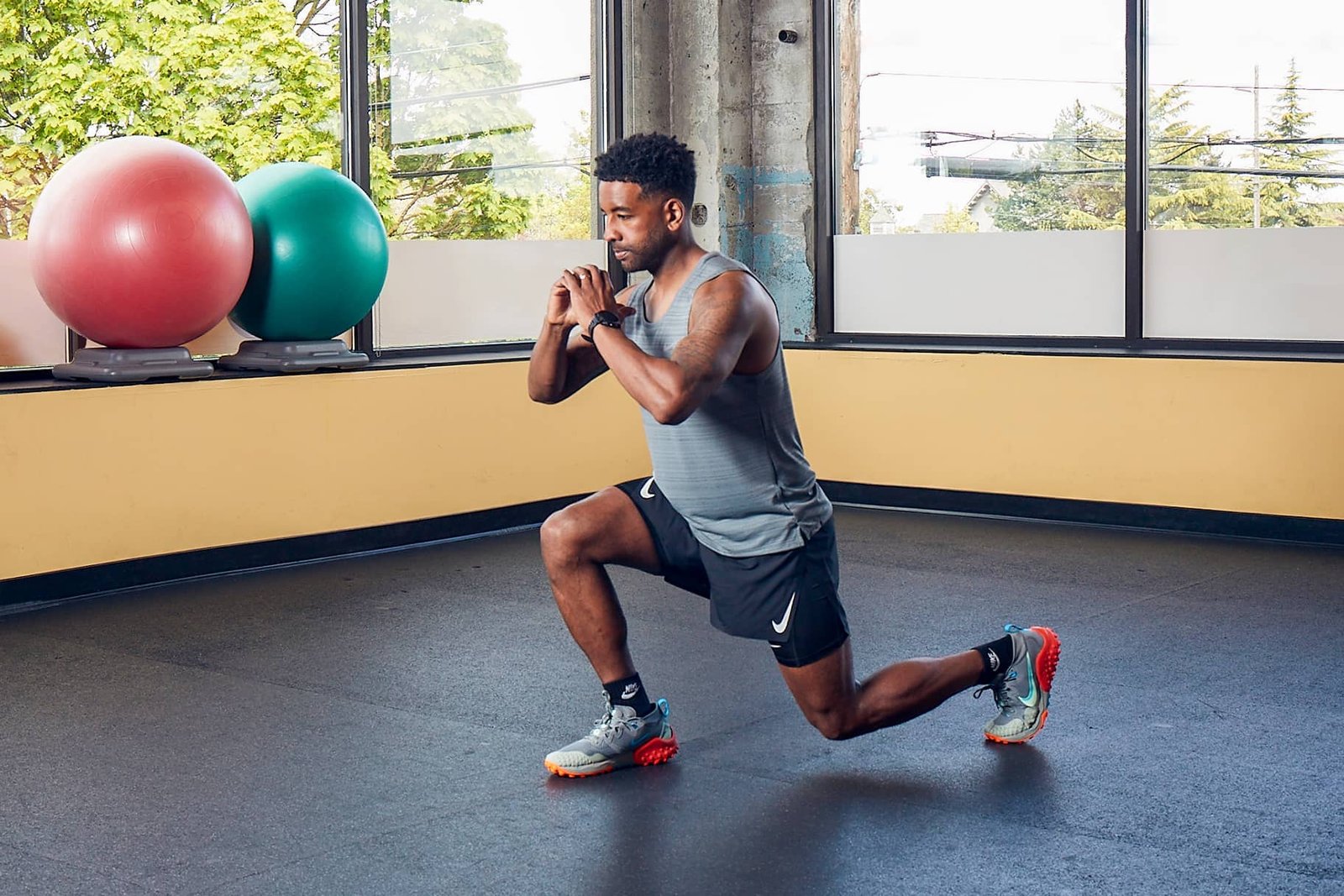
A forward lunge is a dynamic alternative. Step into a position you can brake cleanly, bend both knees, then drive back without pushing off wildly from the rear foot. If the step is too long, hip extension may dominate; if it is too short, balance and crowded joint angles can interfere. Begin with bodyweight, then add small dumbbells when your landing position repeats. The choice between these two movements comes down to your equipment, tolerance, ability to progress and actual training goal, not whether one condition produced a larger electrical signal in 23 volunteers.

Equipment Worth Exploring
Explore equipment, accessories and gear from our carefully selected range.

Leg Extension/Curl BCO-780
Leg extension and lying leg curl combo with plate loading, band pegs and a cable-loading option.

Seated Leg Combo BCO-680
Adjustable seated leg extension and leg curl machine with band pegs for added resistance.

HUSLA Leg Extension Pad
Pad attachment designed to increase usable range of motion on compatible leg-extension machines.


Leg Press/Hack Squat BPR-790
Convertible 45-degree leg press and hack squat machine with a broad footplate and band pegs.

Compact Leg Press CLP-700
Compact reverse-style leg press with a moving seat carriage and an adjustable footplate.

Studio V-Squat
Plate-loaded V-squat machine for supported lower-body strength training.

GymPin Squat Wedges
Non-slip 15-degree squat wedges help elevate the heels for deeper quad-focused squats.

Safety Squat Handles
Barbell squat handles that reduce shoulder positioning demands during high-bar squats.

Squat Harness
Wearable harness for hands-free cable squats, sled work, and lower-body training.
4. How to use the reverse Nordic without turning it into a circus trick
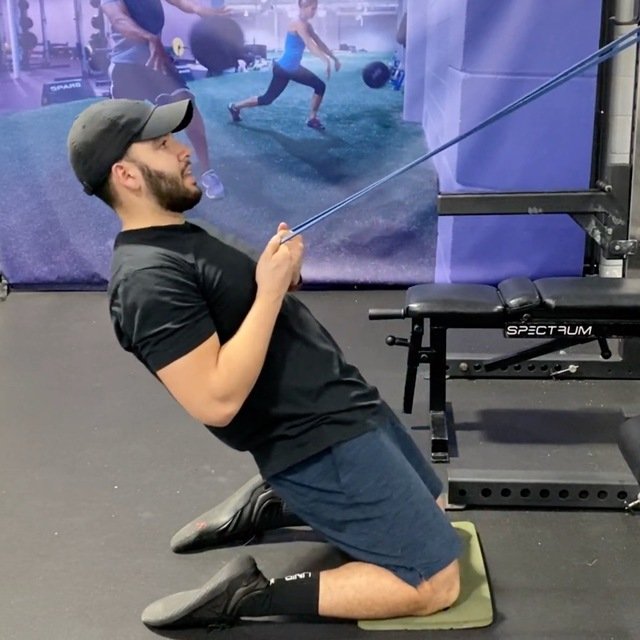
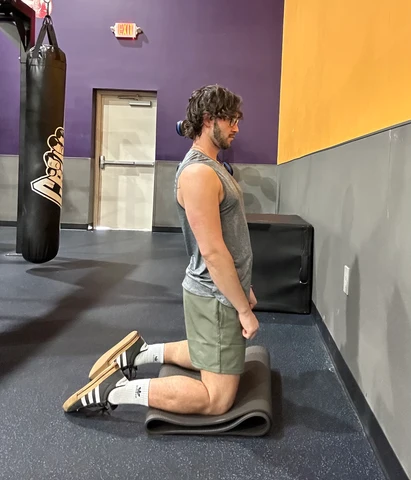
The reverse Nordic starts kneeling rather than standing. Put a soft pad under the knees, point or tuck the feet in whichever position is comfortable, brace your trunk and squeeze the glutes. Imagine your knees, hips and shoulders staying on one line as the body leans backwards as a single unit. The lowering phase creates a growing knee-extension demand. Stop when you can no longer preserve that line, then return under control. Do not bend sharply at the hips to disguise a larger range; that changes the leverage and makes progress difficult to compare.
The full movement can feel demanding very quickly, especially at the front of the thigh and around the knee. Use the smallest range you can control without sharp discomfort. A sturdy band anchored above and ahead of you can provide assistance on the descent and return; a bench or stack of pads behind the body can serve as a clear depth target. These are progressions, not cheating. Once six to ten controlled repetitions are comfortable at the same depth, move the target slightly lower, reduce band assistance or slow the lowering phase rather than trying to throw your shoulders toward the floor.
Do not confuse a reverse Nordic, which emphasizes knee extensors as the torso leans backward, with a regular Nordic hamstring curl, in which the torso leans forward under anchored ankles to load knee flexors. They look superficially related but train different primary actions. If kneeling, loading the front of the knee or moving through deep knee flexion is uncomfortable, choose a tolerable squat or leg-extension variation and build capacity first. Persistent pain merits individualized assessment rather than forcing one particular exercise because it sounds eccentric or advanced.
5. The trap in using EMG to predict muscle growth
Surface EMG detects electrical activity associated with muscle activation at recording sites. It is useful when scientists want to compare immediate responses under carefully controlled conditions, but it is not a direct gauge of mechanical tension across every fibre, nor a measuring tape for future hypertrophy. Electrode placement, movement speed, joint angles, technique, skin and tissue characteristics and normalization procedures can all shape results. A difference between two normalized EMG averages says something about the specific task; it does not automatically say which exercise will produce larger quads.
The gap is especially important for this study. The participants completed a short testing session; they were not randomly assigned to months of training with equalized effort and volume. The experiment cannot establish which exercise is superior for long-term quadriceps growth, tendon resilience, preventing a quad strain or improving athletic performance. A lack of statistically significant difference also is not proof that two exercises are perfectly equivalent in every setting. And the stronger signal observed in the single-leg squat does not mean it will remain stronger when a Bulgarian split squat is loaded heavily.
For hypertrophy programming, more reliable questions include: Can you train the movement through an effective and tolerable range? Can you bring the target muscle close to a meaningful effort level? Can you add load, repetitions, range or quality over time? Can you recover and repeat the work? A leg extension machine may isolate knee extension more conveniently than a balance-demanding squat, while a heavy split squat provides a different combination of stimulus and skill. Treat the EMG comparison as one piece of evidence and judge the program by repeatable performance and longer-term progress.

Leg Day Shirts & Workout Gear
Leg-day gym shirts and workout gear for lifters who never skip squats, lunges and lower-body punishment.

Thundersquat – AC/DC Rock Music , Gymbro & Meme Top T-Shirt
Heavy lifts, good laughs, and a little “Thundersquat” energy.

5 Plates Squat Club Meme – Top T-Shirt
Bring “5 Plates Squat Club” humor to your next gym day.


My Leg Hurts Leg Day Sweater & Squat Meme Lovers T-Shirt
Keep things casual with a little “My Leg Hurts” attitude.

Leg Day Squats Deadlifts Sweater Meme T-Shirt
Show some gym-day personality with “Leg Day”.


Never Skip Leg Day Gym | LEGO Workout For Squat & Deadl Hoodie
Bring “Never Skip Leg Day” gym humor to lazy days and post-workout plans.

Let It Grow Leg Day Squats & Booty Gains Meme Tank Top
Add some leg-day attitude to training with “Let It Grow”.

Leg Day Is Calling You Squats & Deadlifts Meme Vest Tank Top
Your gym-day look, with a playful “Leg Day Is Calling You” twist.

Heavy Metal Skeleton Squat for Powerlifters, Bodybuilde Sticker
Give your everyday gear a playful “Heavy Metal Skeleton Squat” twist.
6. Put the findings into a usable two-day quad plan
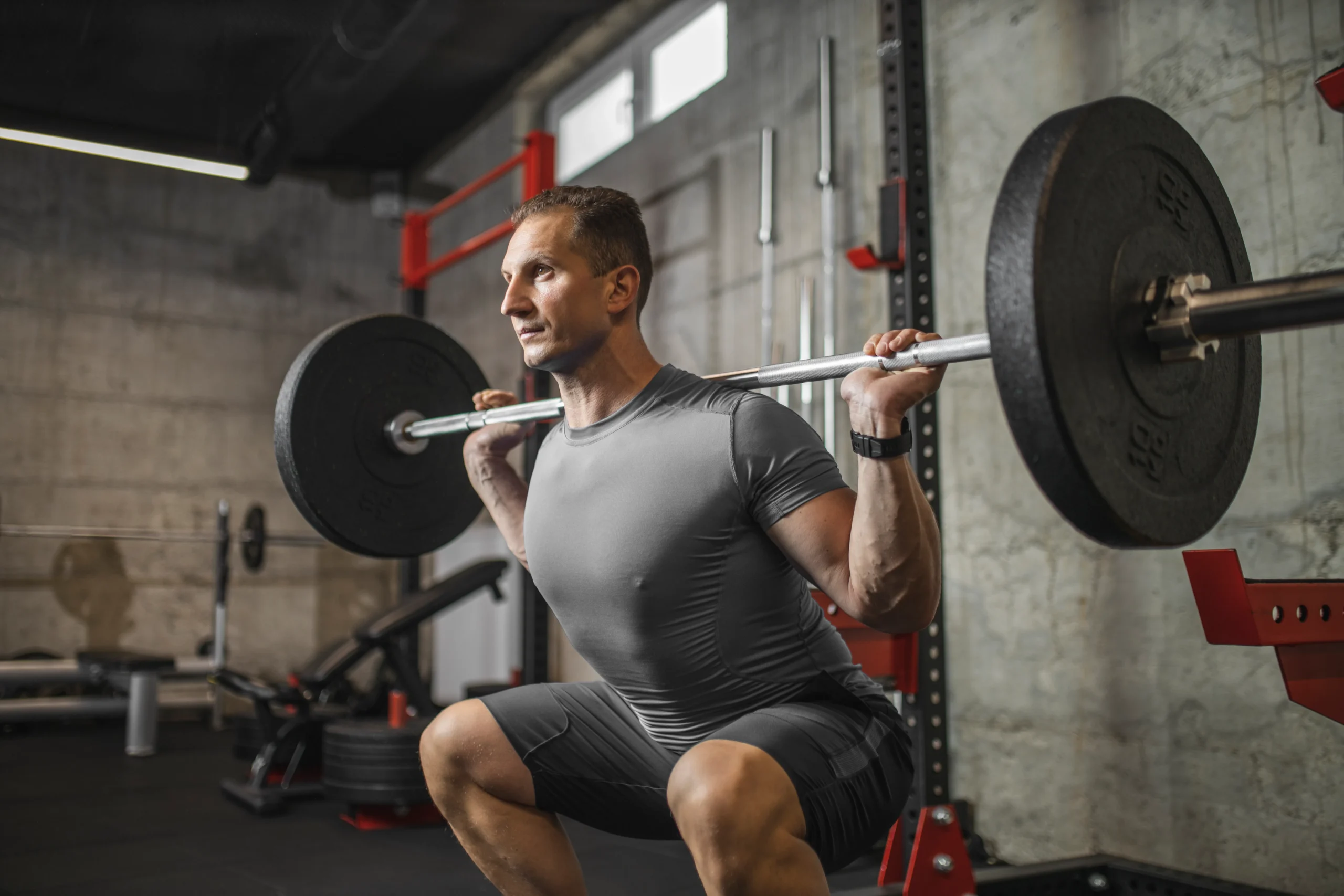
For a practical two-day lower-body schedule, keep a loadable squat pattern as the main strength movement and use the other options as accessories. On day one, perform a squat, hack squat or leg press for three challenging sets of six to ten controlled repetitions. Follow with a Bulgarian split squat for two sets of eight to twelve per leg. If your knees and quads tolerate the movement, finish with one or two sets of reverse Nordics at a conservative range and deliberate tempo. Leave a couple of clean repetitions in reserve while learning the skill rather than taking the first session to a shaking failure.
On the second day, use a different variation to make the task complementary. After your main lower-body lift, try supported single-leg squats for two or three sets of six to ten per side. Progress depth before discarding support and choosing sloppy repetitions. Add a leg extension or a forward lunge for two sets depending on whether you need isolated quad work or dynamic stepping control. You do not need all four studied movements in every workout. Choose the combination that you can load, recover from and perform consistently, especially if running, cycling, sport and additional hamstring training are already demanding your legs.
Track one comparable detail per exercise: controlled depth and assistance for the reverse Nordic, support level and knee-bend depth for single-leg squats, external load and repetition quality for split squats, and step length plus load for lunges. Increase only one variable at a time, and leave at least a day of recovery between demanding quad sessions if soreness or performance warrants it. After four weeks, judge progress by more controlled repetitions, better load tolerance, improved range and consistency, not by trying to recreate a laboratory electrode signal. The real victory is a quad session you can repeat, progress and enjoy.