Should you train every muscle twice a week, three times, or squeeze everything into a single long session? For a home-gym lifter, the useful answer is less rigid than most workout-split debates suggest. The number of days on your calendar matters, but so do your weekly hard sets, the quality of those sets, the lifts you want to improve and whether the plan survives a busy month.
A 2026 meta-analysis found a small average strength advantage with higher resistance-training frequency, but no clear overall difference in muscle mass. Earlier volume-matched research also cautions against treating more training days as a guaranteed shortcut to growth. Here is how to turn that evidence into a realistic schedule for a rack, bench, adjustable dumbbells or compact cable machine.
1. Count muscle exposures, not just trips to the gym
Training frequency has two meanings that are often mixed together. Session frequency is how many workouts you perform per week. Muscle-group frequency is how many times a particular muscle receives meaningful resistance work. Four workouts can still train your chest only once if you use a body-part split. Three full-body sessions can train it three times.
The NSCA’s guidance on determining training frequency makes an important practical point: exercise choice, the amount of work in each session, experience, outside activity and available recovery all influence the schedule. A novice with two dependable training windows may do better than someone attempting a six-day routine they abandon after ten days. The guideline’s suggested frequencies are useful starting points, not evidence that one split is compulsory.
Start by writing down your main movement patterns: squat or knee-dominant work, hip hinge, horizontal push, horizontal pull, vertical push and vertical pull. Add direct arm, calf, abdominal or shoulder work if those are priorities. Then count how often each pattern appears across seven days. A bench press also trains the triceps and front deltoids, so counting every overlapping exercise as an entirely separate full set can exaggerate volume.
For example, a Monday full-body workout and a Thursday full-body workout create two weekly opportunities to train most major muscle groups. A Monday chest session, Tuesday back session and Friday legs session provide only one direct exposure for each, even though there are three workouts. Neither arrangement is automatically wrong. The distinction matters when you compare programs or try to identify why a muscle is not progressing.
Think of frequency as the container for training, not the training stimulus itself. A productive schedule has enough challenging work inside each container, with room for technique and recovery.
2. For muscle growth, weekly work usually matters more than the split
When people say a muscle must be trained twice a week, the missing question is: compared with what weekly volume? Ten challenging sets for the back divided across two days are not the same comparison as ten sets on one day versus twenty sets across two days. In the second case, the higher-frequency plan also doubles the number of sets, so you cannot credit frequency alone for any difference.
A 2019 meta-analysis covering 25 studies found no meaningful hypertrophy difference between higher and lower frequencies when weekly volume was equated. A newer 2026 review pooled 47 studies and reported no statistically clear overall effect of frequency on muscle mass, although results varied considerably between studies. The practical interpretation is not that frequency never matters; it is that the number of days is a weaker lever for hypertrophy than the quality and amount of work you can sustain.
The 2026 dose-response meta-regression by Pelland and colleagues reinforces why it is useful to track weekly set volume rather than worship a particular split. More sets can help, but returns are not linear and recovery capacity differs. The ACSM’s 2026 resistance-training summary uses roughly ten sets per muscle group per week as a practical hypertrophy reference point, not a requirement that everyone jump straight to ten.
Suppose you currently complete six productive sets of chest work per week. You might distribute them as three sets on Monday and three on Thursday, or perform all six on Monday. The split version can make later sets less fatigued, which may help preserve technique and performance. But if the one-day version is the only schedule you can maintain, those six sets still count. A missed ideal workout is less useful than a completed good one.
There is a point where cramming volume into one session becomes inefficient. If your tenth set of rows is performed with much less load, fewer clean repetitions and poor concentration, moving part of that work to another day is sensible. That is a quality-of-work argument for higher frequency, not proof of a magical 48-hour growth window.
For most home-gym lifters, begin with a manageable weekly amount, progress it when performance and recovery justify the increase, and use frequency to keep the individual sessions productive.

Equipment Worth Exploring
Explore equipment, accessories and gear from our carefully selected range.


FID Bench MAX
Adjustable bench offering flat, incline, and decline positions + adjustable headrest.


3. Strength adds another variable: practicing the actual lift
Muscle size and maximal strength overlap, but they are not identical outcomes. A stronger squat also depends on coordination, bracing, bar path, confidence under load and the ability to express force in that specific movement. Repeating a lift more often can provide extra practice without requiring every exposure to be exhausting.

In the April 2026 meta-analysis of 47 studies and 1,665 participants, higher frequency produced a small average advantage for strength (reported standardized effect magnitude about 0.17), while the pooled muscle-mass difference was not statistically clear. The authors also found that study design and programming details influenced the strength results. That does not mean six heavy squat days will beat two: the review compares different interventions, and the average effect does not specify the best routine for an individual.
An earlier 2018 meta-analysis found that frequency’s apparent strength advantage became non-significant in the subset of studies where weekly training volume was matched. Read together, the research suggests a modest, context-dependent role for practice and work distribution, not an unlimited benefit from adding days. Strength on a tested lift can improve partly because you rehearse that exact skill more frequently.
A practical solution is to separate heavy practice from lighter technique work. If your priority is a stronger bench press, Monday might include three challenging working sets; Thursday might include two controlled sets at a lighter load, followed by rows and triceps work. That gives you two opportunities to refine setup and bar path without making both days maximal. These are illustrative programming examples, not prescriptions derived directly from one trial.
For squat and deadlift, consider the fatigue cost. A hard deadlift session can demand more recovery than a set of curls, and your lower back may also be loaded during rows or squats. Higher frequency only works if the distribution is recoverable. More days of lifting are not inherently more days of effective practice when every session leaves you drained.
Compact home gyms have an advantage here: a ten-minute technique session is feasible when the equipment is already set up. Use that convenience deliberately, while keeping the total weekly workload under control.

Funny Gym Shirts & Workout Gear
Funny gym shirts, tanks, hoodies and workout gear for lifters who like training hard.

Eight Days A Week At The Gym – Beatles Workout Meme Hoo Hoodie
Bring “Eight Days A Week At” gym humor to lazy days and post-workout plans.

Can't Stop Lifting – RHCP Inspired Workout Vest Muscle Tank Top
Your gym-day look, with a playful “Can't Stop Lifting” twist.


Liftonomics – Bro Science Muscle Graph Gymbros & T-Shirt
Rep “Liftonomics” humor in and out of the gym.

Defy Gravity Isaac Newton Deadlift Meme Science T-Shirt
Heavy lifts, good laughs, and a little “Defy Gravity” energy.

Lift Heavy Sh*T – Essential & Gymbros T-Shirt
Show some powerlifting attitude with a playful “Lift Heavy Sh*t” tee.

Squats R Us Shirt – Leg Day Gains & T-Shirt
Heavy lifts, good laughs, and a little “Squats R Us” energy.

Bench Press and Chill Funny Gym T
Make gym days more fun with “Bench Press and Chill” style.

Gymhead Mind Muscle Connection Sweater Meme T-Shirt
Bring “Gymhead” humor to your everyday gym style.

Hybrid Athlete Strength Tee
Show some lifting attitude with a playful “Hybrid Athlete” tee.
4. Two, three or four days? Match the schedule to your constraints
There is no universal winner between full-body and upper/lower splits. Choose the smallest schedule that accommodates your target work, then add days if they improve performance, convenience or enjoyment. In a home gym, travel time disappears, but warm-ups, equipment changes, family commitments and mental fatigue still exist.
- Two days: A reliable starting point for beginners, returning lifters or busy weeks. Use full-body sessions and cover all major movement patterns. Sessions may be longer, so keep exercise selection focused.
- Three days: Full-body training on alternating days works well when you want to spread sets and practice key movements more often. You can also alternate two different sessions, A and B, across weeks.
- Four days: An upper/lower split offers two exposures per region while keeping each session more manageable. It suits people who prefer more exercise variety or need extra volume for a few muscles.
- Five or six days: Useful for specialized goals or shorter sessions, but not a prerequisite for muscle growth. More sessions can increase opportunities for practice while also increasing scheduling and recovery demands.
Do not mistake training days for training hard days. A four-day plan with two demanding and two lighter sessions may be easier to recover from than three sessions that all end in repeated failure. Conversely, two thoughtful sessions can be highly effective if the weights and repetitions progress over time.
Time also matters. If you can train only 35 minutes at a time, three short workouts may fit better than two 75-minute sessions. If changing between a rack, pulley attachments and a bench takes several minutes, grouping similar equipment tasks can save enough time to make the difference between finishing and skipping accessories.
Build the schedule around the days you can consistently protect, not the days an influencer happens to train. The best split is the one that produces enough quality work and remains realistic through ordinary interruptions.
5. A two-day full-body template for a compact home gym
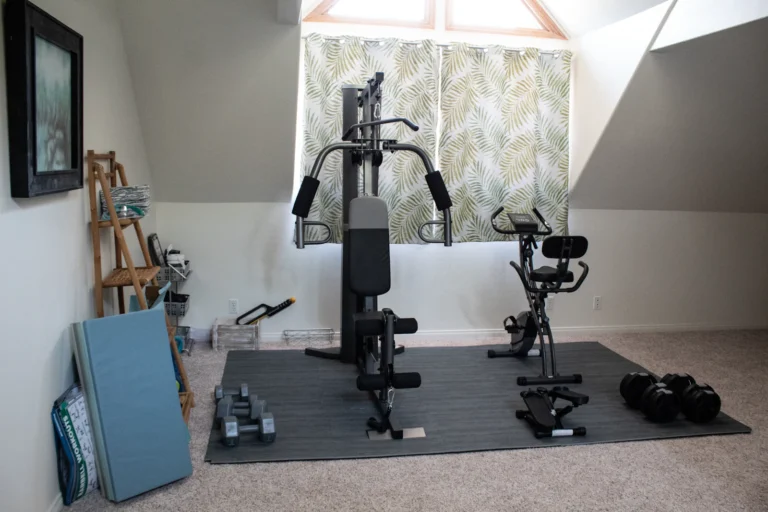
Two sessions can cover the whole body without requiring a giant rack or a collection of specialized machines. A stable bench, adjustable dumbbells and a way to perform rows or pulldowns are enough to create meaningful work. A barbell and rack add loading options, but the underlying principles remain the same.
Monday — Full Body A: Squat variation 3 × 6–10; bench press or dumbbell press 3 × 6–10; one-arm row or cable row 3 × 8–12; Romanian deadlift 2 × 8–10; optional lateral raise or curl 2 × 10–15.
Thursday — Full Body B: Split squat or step-up 3 × 8–12 per leg; overhead press 3 × 6–10; pulldown or assisted pull-up 3 × 6–12; hip hinge or hip thrust 2 × 8–12; optional triceps or abdominal work 2 × 10–15.
These are examples of working sets, excluding warm-ups. Choose loads that leave roughly one to three clean repetitions in reserve on most sets, especially while learning the movements. Rest enough to maintain technique. If time is tight, pair a press with a row or an upper-body movement with a lower-body accessory rather than rushing two hard squat sets.
Notice that not every muscle receives an identical number of direct sets. That is deliberate. The template is a practical starting point, not a precise hypertrophy-maximizing prescription. A lifter who wants bigger shoulders may add a few sets of lateral raises; someone focused on pull-up strength might move pulling work earlier and repeat it in both sessions.
When the top of a repetition range is achieved with clean form across all sets, increase the load by the smallest practical increment. If your adjustable dumbbells have large weight jumps, add a repetition or a controlled pause before increasing weight. Keep notes for each exercise; a simple log is more useful than guessing whether last Thursday felt harder.
Most importantly, leave enough recovery to repeat the program. If Monday’s leg work consistently ruins Thursday’s performance, reduce the initial dose rather than declaring that two-day training is ineffective.
Equipment Worth Exploring
Explore equipment, accessories and gear from our carefully selected range.
VOLTRA
Compact digital cable trainer with smooth, adjustable resistance.

Go-Tone Pro
Portable digital cable trainer with up to 66 lb (30 kg) of adjustable resistance.
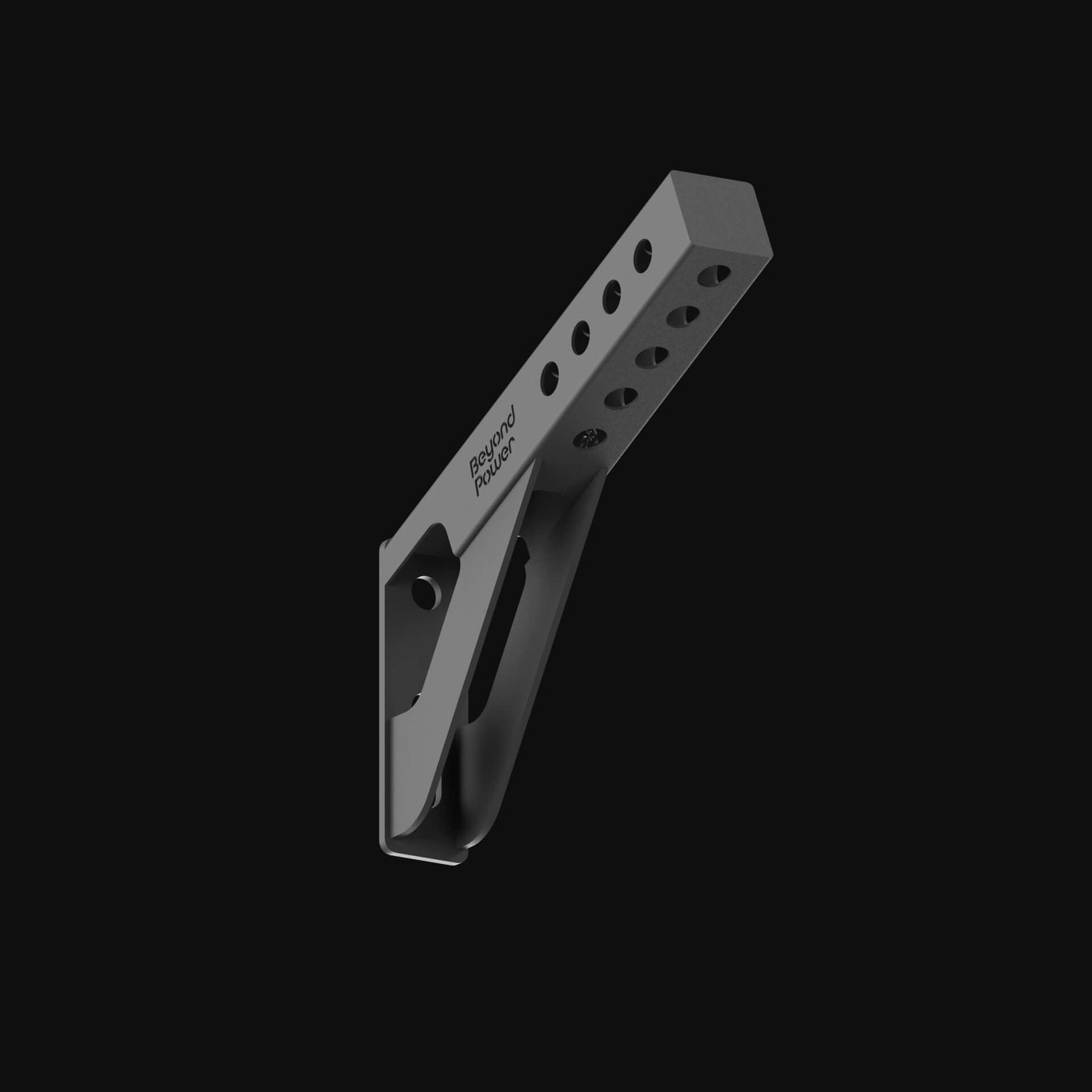

Safety Squat Handles
Barbell squat handles that reduce shoulder positioning demands during high-bar squats.

GymPin Squat Wedges
Non-slip 15-degree squat wedges help elevate the heels for deeper quad-focused squats.

Belt Squat Collar
Heavy-duty collar adapter for compatible belt-squat and landmine bar setups.
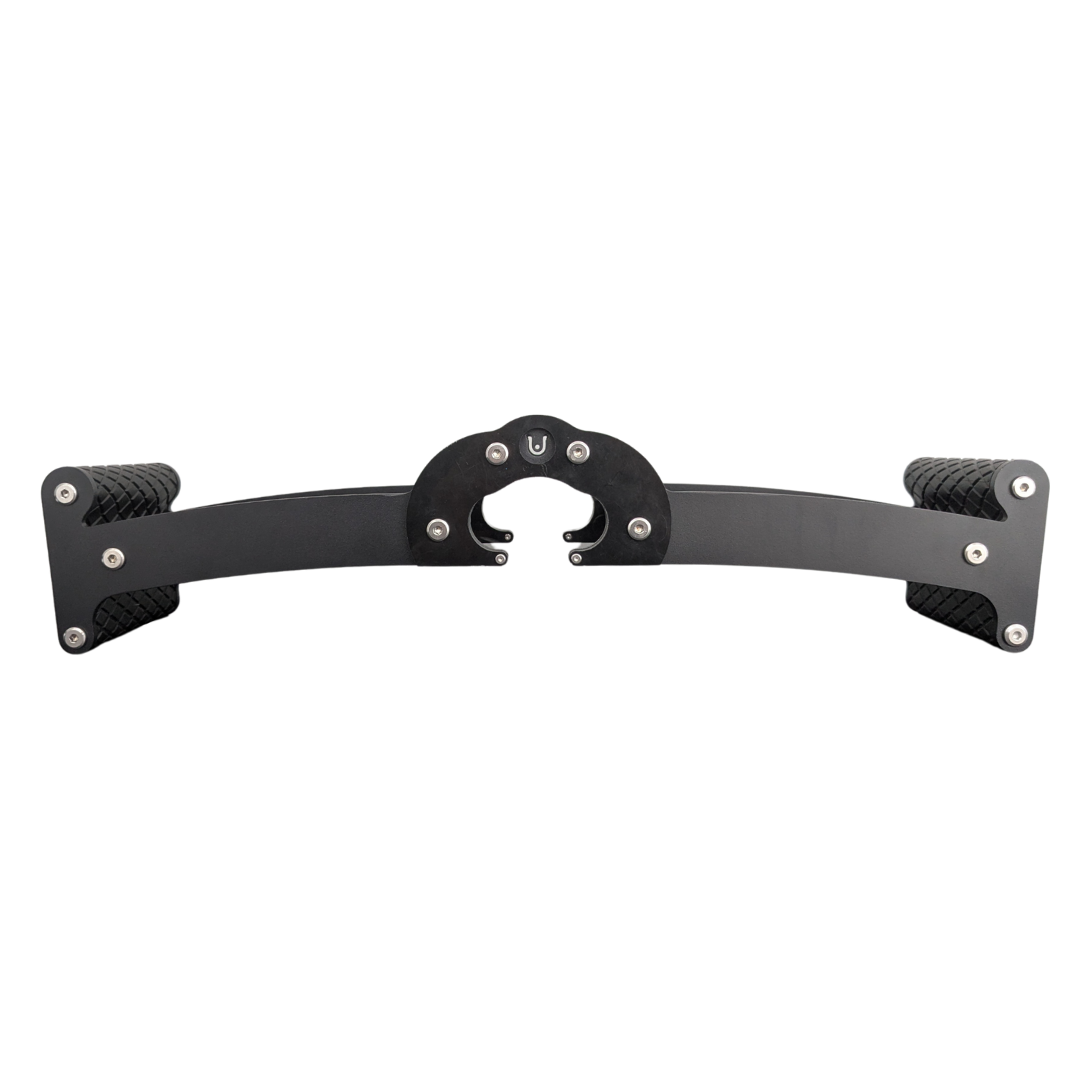
Back Bar
Multi-grip cable and landmine bar with a built-in deadlift jack.

GymPin Ergo Handles
Pair of ergonomic cable handles shaped for comfortable triceps and pulling exercises.

6. Three-day full-body and four-day upper/lower options
When you have a third or fourth training window, the main benefit is flexibility: the same weekly work can be distributed into shorter, more focused sessions. You do not need to increase every exercise’s total sets simply because you have more days available.
Three-day full body (Monday, Wednesday, Friday): On Monday emphasize squat, horizontal press and row; on Wednesday emphasize hinge, overhead press and pulldown; on Friday emphasize split squat, bench or push-up variation and a second pulling movement. Add one or two accessories at the end of each day according to your goals. A major lift can appear twice with one harder and one lighter exposure.
For example, Monday’s squat could be three sets of six to eight at a challenging load, while Friday’s knee-dominant movement is three sets of ten to twelve with dumbbells. Both train the legs, but they do not create the same fatigue or require identical equipment. This is one reason full-body training does not mean repeating the exact same workout three times.
Four-day upper/lower (Monday, Tuesday, Thursday, Friday): Upper A includes bench, row, pulldown and a small amount of arm work. Lower A includes squat, hinge, calves and trunk work. Upper B includes overhead press, an alternate row, a chest accessory and arm work. Lower B includes a hinge variation, split squat, leg accessory and trunk work. Wednesday and the weekend can be rest or light activity, depending on your recovery and preferences.
To compare these plans fairly, hold your target weekly sets approximately constant. If you were doing eight chest sets across two days, do not automatically perform eight sets in each of four sessions. Spread the eight sets where they fit, then assess whether more volume is actually needed. Otherwise, any improvement could reflect more work rather than a superior split.
Home-gym logistics should influence the choice. A pulley-based setup may make alternating upper-body push and pull movements fast; a barbell-only space may favor grouping rack lifts together. Equipment convenience is a legitimate programming variable because it affects how reliably you complete the plan.
Bodybuilding Shirts & Workout Gear
Bodybuilding shirts, tanks and gym gear for lifters chasing muscle, size, symmetry and the pump.

LIFT Shirt Meme – Ultimate & Gymbros Seeking Gains T-Shirt
Show some lifting attitude with a playful “LIFT Funny Gym Shirt Meme” tee.

Deadlifts & Gains Meme – Essential T-Shirt
Heavy lifts, good laughs, and a little “Deadlifts & Gains” energy.


Muscle Mommy Lifting Club for Gym Girls, Bodybuilding & T-Shirt
Heavy lifts, good laughs, and a little “Muscle Mommy Lifting Club” energy.

Mike Mentzer Heavy Duty Old School Bodybuilding Gym Gif Hoodie
Make your off-duty look more fun with “Hoodie Mike Mentzer Heavy Duty Old School”.

Gymhead Lifting Is On My Mind Sweater Skull T-Shirt
Add a playful “Gymhead” touch to your casual rotation.

Medieval Knight Lifting Iron Meme T-Shirt
Make gym days more fun with “Medieval Knight Lifting Iron” style.

Here Comes The Swole – Beatles-Inspired Workout Vest Mu Tank Top
Show some personality between sets with “Here Comes The Swole”.


The Bro Science Theory Big Bang Gains Hooded Hoodie
Stay casual and show some lifting attitude with “The Bro Science Theory”.
7. Adjust frequency using performance, recovery and adherence
Instead of changing splits every time you see a new study, give a reasonable program several weeks and track what actually happens. The key measurements are straightforward: planned sessions completed, hard sets per muscle, loads and clean repetitions, session duration, and whether you can repeat the work without persistent pain or excessive fatigue.
Week 1: Choose a schedule you can realistically keep. Record exercises, loads, sets and repetitions. Leave a little room for improvement rather than exhausting yourself to prove the program is hard.
Week 2: Try to improve a repetition, load or movement quality where appropriate. If a muscle feels fresh but the session is running too long, distribute some sets onto another day rather than adding volume immediately.
Week 3: Review the log. Are your final sets becoming unproductive? Are you skipping accessories because you run out of time? Those are good reasons to increase frequency without necessarily increasing total weekly sets. If every session is completed and performance rises, there may be no reason to change anything.
Week 4: Compare the actual results with your goal. If strength on a specific lift is stalled, consider a second lighter technique exposure. If you are consistently sore, sleep-deprived or losing repetitions, reduce fatigue before adding sessions. Joint pain, dizziness or other unusual symptoms are not signs to push through.
Three common mistakes are worth avoiding. First, treating a muscle’s soreness as a perfect recovery meter: soreness can decline with familiarity even when training remains productive. Second, using a weekly set target as an obligation regardless of experience or capacity. Third, interpreting a study’s average effect as a rule for every exercise, age group and training history.
For hypertrophy, a frequency of roughly two exposures per muscle per week is a convenient default because it spreads the work; one can still work, and three can be useful when sessions would otherwise be crowded. For strength, additional practice may help when it is specific and recoverable. Neither goal requires chasing a particular number of days at the expense of progressive, consistent training.
The bottom line: Build your week around quality sets and repeatable progress. Start with two or three dependable sessions, choose a split that covers your priorities, and add frequency when it solves a real problem. A home gym makes consistency easier; it does not make recovery optional.