Advertising disclosure: This page includes affiliate product links that may earn us a commission, as well as products from our own store.
Bottoms-Up Kettlebell Presses: Secure the Grip and Control the Rep
Turn a kettlebell upside down and a familiar shoulder press becomes a different coordination problem. The bell’s body sits above your hand, so maintaining its balance becomes part of every repetition. A load that feels easy in a conventional press can be demanding in this orientation.
That challenge can make bottoms-up pressing useful practice. It does not make the exercise a mandatory shoulder test or prove it builds more muscle than ordinary pressing. Start with a clear purpose: learn to support an inverted bell, move it through a comfortable overhead path and lower it without losing the position.
1. Understand the task before choosing the load
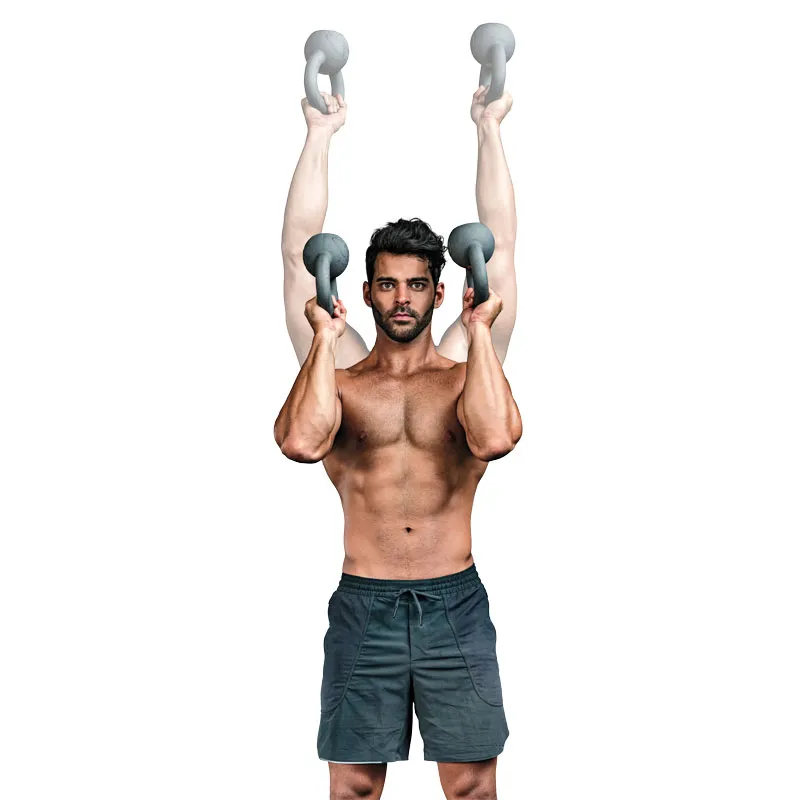
In a conventional kettlebell rack, the bell rests against the forearm. In the bottoms-up position, you hold the handle while the bell’s body points toward the ceiling. The weight must remain balanced over your grip as your arm moves. This changes the limiting factor: your ability to control the implement may run out before your shoulder’s pressing strength does.
Use a single light bell when learning. The double-bell version pictured here adds a second balancing task and is an advanced variation, not the starting point. A familiar two-handed kettlebell exercise also does not establish that you can safely control the same weight upside down with one hand.
Choose a load you can hold steadily near shoulder height before attempting an overhead repetition. If the bell repeatedly tips while stationary, pressing it higher is not the next useful step. Select a smaller bell or return to conventional pressing while you learn the inverted hold. The number printed on the bell is less important than a position you can reproduce.
2. Build a firm grip over a supported forearm
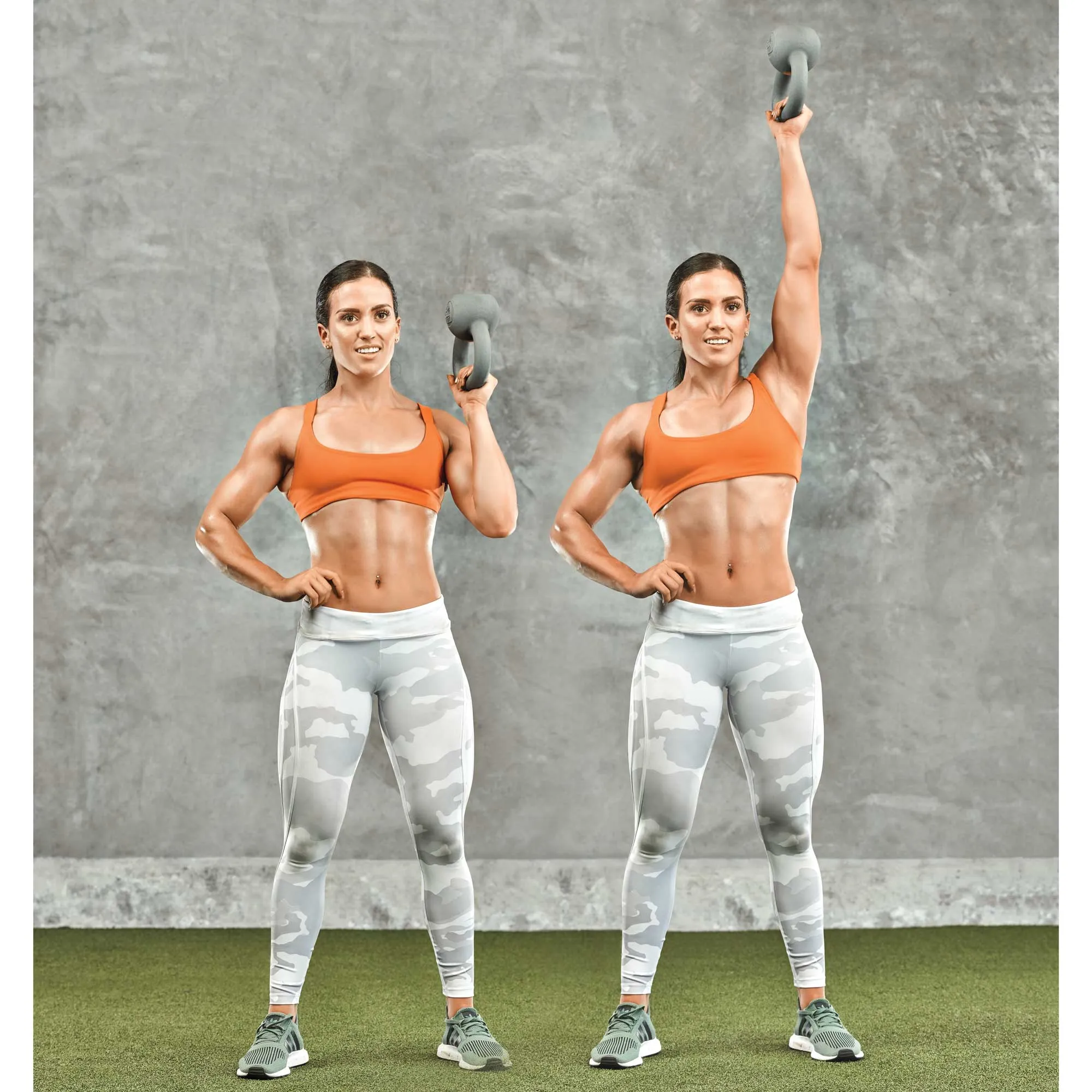
Grip the handle with the whole hand rather than letting the outer fingers become passengers. Aim to balance the bell over a wrist that stays reasonably straight, with the elbow supporting the hand from below. A wrist folding backward or sideways makes the balancing job harder and changes the position you are trying to train.
At shoulder height, bring the upper arm slightly forward of a completely sideways position. Find a comfortable starting angle rather than forcing the elbow into a photograph’s exact coordinates. Keep your stance steady and leave enough clear space around you. Learn the setup and a controlled return to the floor with a coach if handling the bell itself is unfamiliar.
A good rack hold is active but repeatable: the grip stays firm, the bell does not roll toward your face and you can maintain your body position for a few calm breaths. Stop and reset when that changes. Do not try to rescue a falling bell overhead or turn a failed balance attempt into a test of reflexes.
3. Press without changing your whole body to save the bell
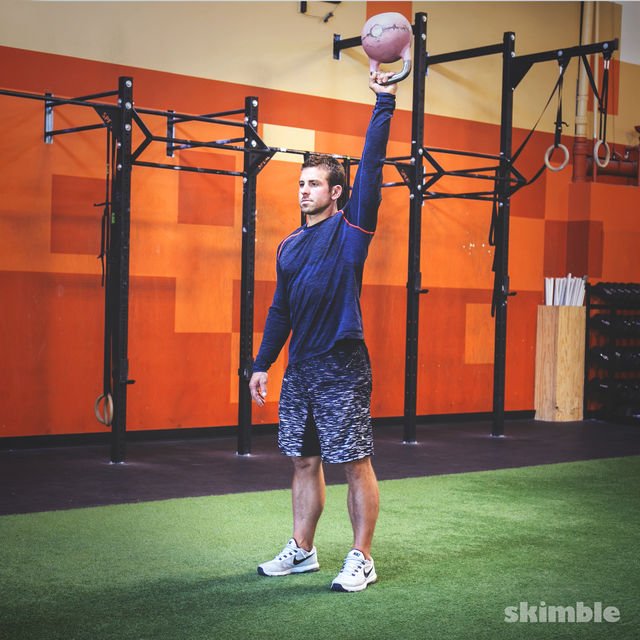
From the stable starting position, press slowly into a comfortable overhead reach. Let the shoulder blade move with the arm rather than trying to pin it down throughout the lift. Keep the bell balanced over the hand as the elbow extends, then lower along a path you can control back to the starting position.
Watch for the compensations that make repetitions look successful: a large backward lean, an abrupt sideways bend, a leg drive or an uncontrolled last few inches. Those may get the implement higher, but they change a deliberate strict press into another task. Reduce the weight or the attempted range when you cannot keep the intended version consistent.
The descent deserves the same attention as the ascent. Reaching the top once does not complete a controlled repetition if the bell immediately tips on the way down. Finish the set while you can still return it deliberately. Sharp pain, catching or a feeling that the shoulder is giving way is a reason to stop, not to squeeze the handle harder.
4. Change stance deliberately, then compare like with like
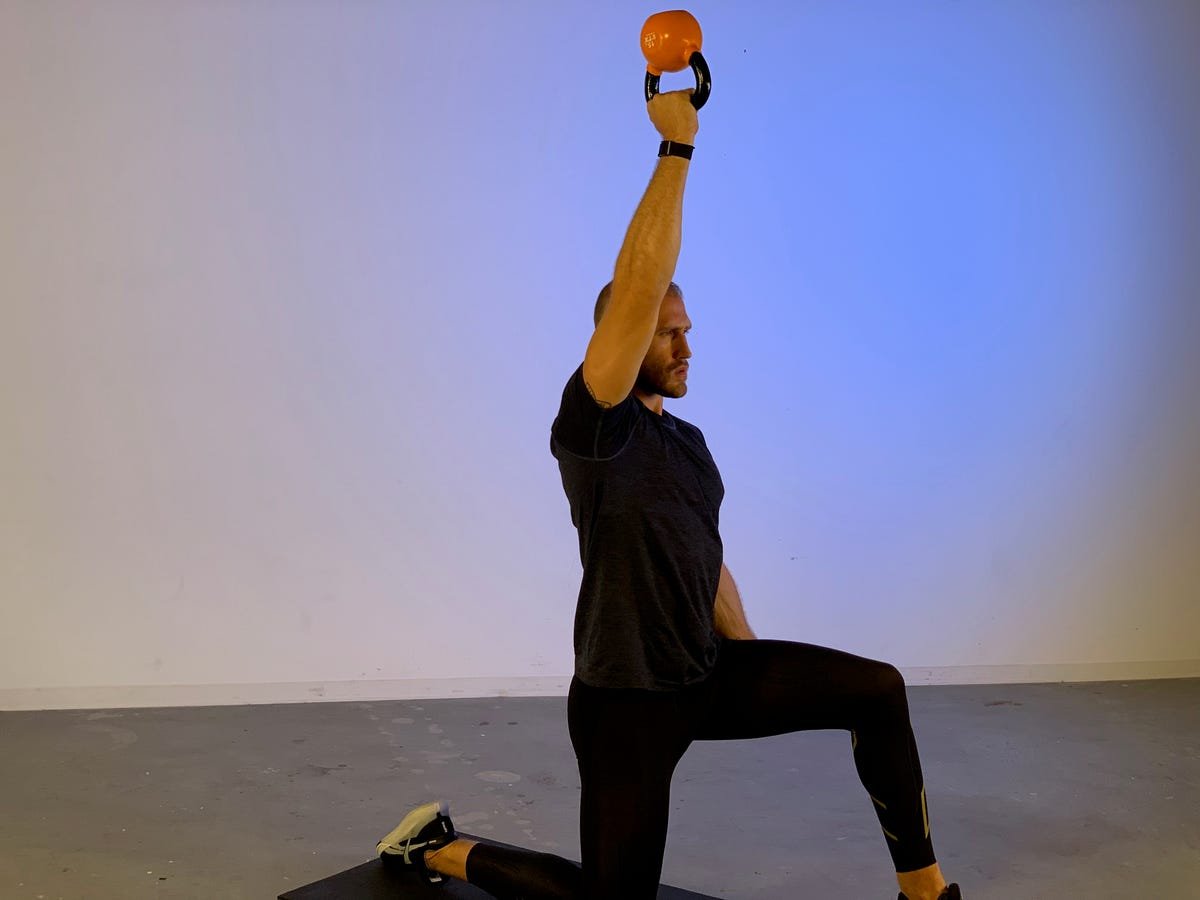
Standing and half-kneeling versions create different support conditions. A standing stance lets you establish a broad, comfortable base. Half-kneeling changes how you organize the lower body and removes some opportunities to use the legs. It is an option, not an automatic upgrade or a guarantee that the lower back cannot compensate.
If trying half-kneeling, use a comfortable pad, plant the front foot securely and check that you can hold the torso steady before adding the press. Keep the same grip and controlled movement principles. Return to standing if kneeling is uncomfortable or introduces more distractions than it resolves.
Record the stance alongside the load and repetitions. Three smooth standing presses and three half-kneeling presses are not interchangeable measurements. Likewise, changing the bell’s handle shape can change the balance challenge. Progress is easier to judge when the implement, stance, range and standard for a completed repetition stay similar.
5. Keep skill practice distinct from your main pressing work
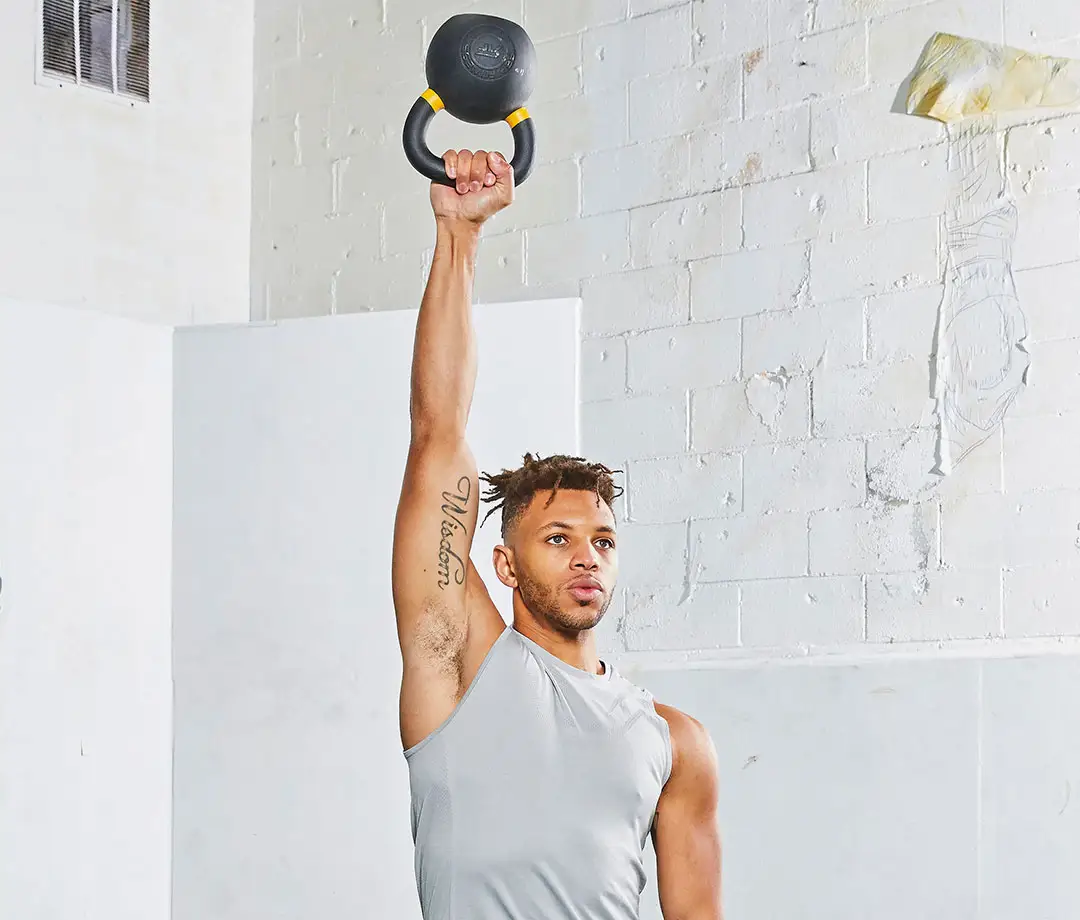
A small amount of deliberate practice can sit before a main upper-body session, provided it does not exhaust your grip or distract from the lifts you actually want to progress. Begin with short sets that end comfortably before control breaks down. Add another clean repetition only when the existing repetitions stay comparable.
For strength or muscle-building goals, conventional kettlebell presses, dumbbell presses and other suitable shoulder exercises remain useful options. They allow a different relationship between loading and balance. Bottoms-up practice can complement them without replacing them, and improvement in this particular skill should not be treated as proof that every other press will improve.
Choose equipment around the task. A light fixed kettlebell may be simpler to balance than a bulkier adjustable design; check the actual handle and body shape rather than assuming all equal-weight bells feel identical. The equipment below includes kettlebells and separate pressing or grip-training tools. Dumbbells and a forearm trainer are alternatives for other work, not substitutes for an inverted kettlebell. Small plates require compatible loading equipment.

Equipment Worth Exploring
Explore equipment, accessories and gear from our carefully selected range.


Cast Iron Kettlebells
Textured cast-iron kettlebells for swings, squats, carries, and full-body training.

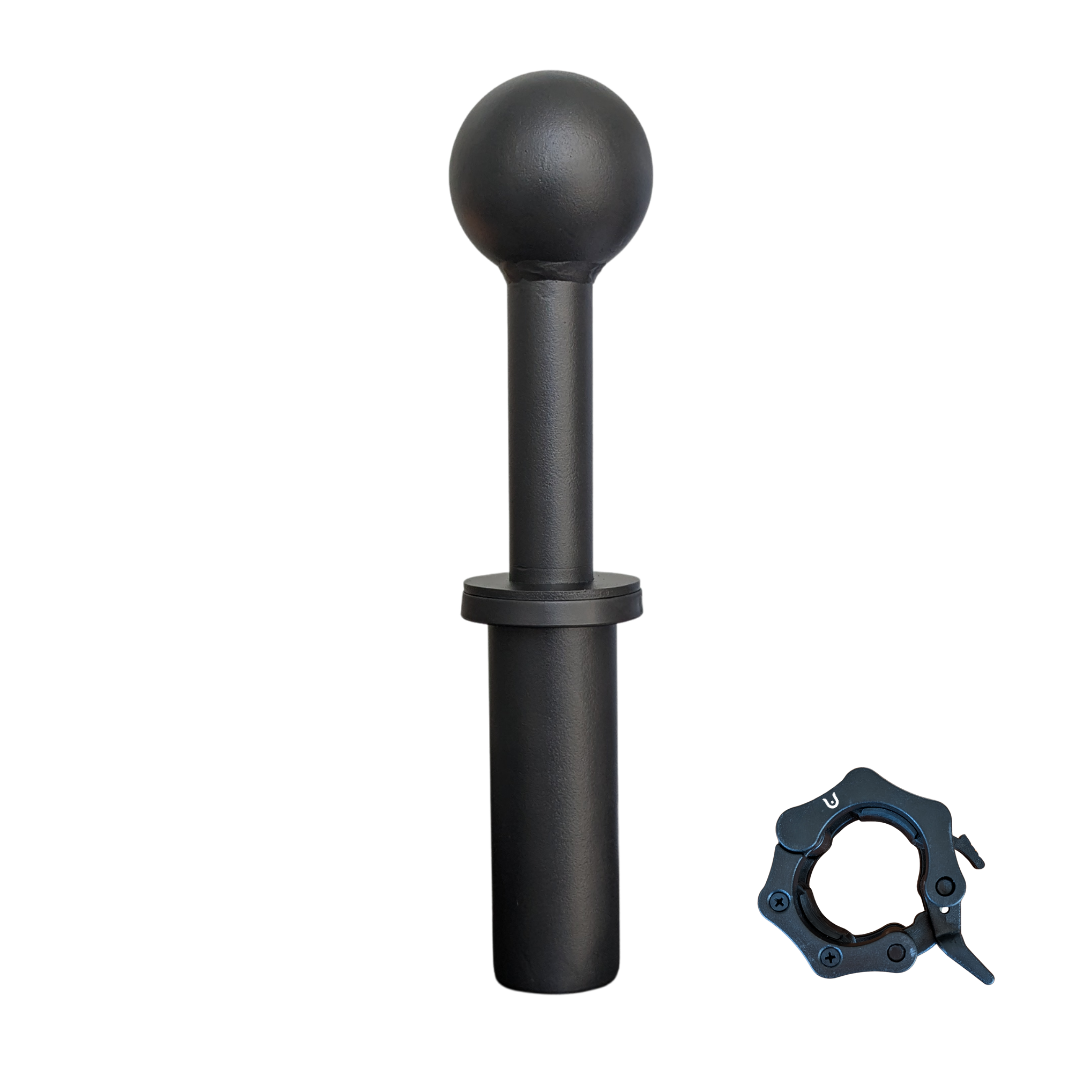


Rubber Hex Dumbbells
Rubber-coated hex dumbbell pairs with a stable shape for home and commercial strength training.


Keep the training log equally clear: balance practice records control and clean repetitions; the main pressing work records its own load and effort. The kettlebell, grip and controlled-training designs below fit that broader lifting routine. You do not need to turn a useful practice drill into a daily maximum attempt.

Funny Gym Shirts & Workout Gear
Funny gym shirts, tanks, hoodies and workout gear for lifters who like training hard.

Gym Equation Makes Me Happy Kettlebell Meme Graphic Fit T-Shirt
Heavy lifts, good laughs, and a little “Gym Equation” energy.

Gym Is My Happy Place Happy Kettlebell Smiley Face Emoj Tank Top
Bring “Gym Is My Happy Place” humor to your next lifting session.

Blue Macaroon Kettlebell – Whimsical Fitness Meme Pullo T-Shirt
For laid-back days and bulking humor: “Blue Macaroon Kettlebell”.

Dia De Los Muertos Kettlebell – Day of the Dead Workout Sticker
Bring “Dia De Los Muertos Kettlebell” attitude to your water bottle or laptop.

Heavy Metal Gym – Funny Kettlebell Rock Music Hooded Pu Hoodie
Keep it laid-back with a little “Heavy Metal” attitude.

Kettlebell Heartbeat Muscle Shirt Athletic Vest Workout Tank Top
Add some lifting attitude to training with “Kettlebell Heartbeat”.

Kettlebell Skull Tee
Heavy lifts, good laughs, and a little “Kettlebell Skull Gym Meme” energy.

Ice Cream Kettlebell Shirt – Sweet Gains Meme T-Shirt
Bring “Ice Cream Kettlebell” humor to your next gym day.

Safety Practice Safe Sets Vest Weightlifting Tank Top
Bring “Gym Safety” humor to your next lifting session.

Control Your Gains & Your Mind Stoic Sigma T-Shirt
Bring “Control Your Gains & Your Mind Stoic Sigma” humor to your next gym day.