Advertising disclosure: This page includes affiliate product links that may earn us a commission, as well as products from our own store.
Weighted Dips: Set the Belt, Respect Your Shoulders and Build Pressing Strength
Weighted dips turn a familiar bodyweight movement into a measurable upper-body strength lift. The attraction is obvious: a pair of parallel handles, a small extra load, and a pressing exercise that challenges the chest and triceps without needing a bench or a spotter. The problem is that hanging a heavy plate between your legs does not automatically make the exercise better. It can magnify a poor setup, a swinging rep, or a bottom position your shoulders dislike.
A sensible weighted-dip progression begins before the first plate goes on the belt. You need a secure station, repeatable bodyweight repetitions, a comfortable range of motion, and a way to step into the bars without jumping under load. This guide explains how to create that starting point, compare loading methods, and progress for six weeks while keeping the movement useful rather than turning it into a risky strength stunt.
1. What a weighted dip actually trains
On parallel bars, you support your body with extended arms, bend at the elbows and shoulders to lower, then press back to support. Adding resistance increases the demand on a movement that already uses a large fraction of your body weight. The pectoralis major and triceps brachii are major contributors, while the front shoulders and muscles controlling the shoulder blades and trunk help you stay stable.
Chest-versus-triceps arguments usually oversimplify the lift. A slight forward torso inclination can feel more chest-biased, while an upright style can put more emphasis on elbow extension, but neither converts dips into a one-muscle isolation exercise. The width and shape of your station, shoulder comfort, elbow tracking and the range you actually achieve matter just as much as a cue about leaning forward.
A small comparison involving thirteen experienced men found meaningful differences between bench, parallel-bar and ring dips. Bench dips demanded more shoulder extension; bar and ring dips created somewhat different muscle-activation and stability demands. The study was not evidence that every person should chase maximum depth or that one version guarantees greater muscle growth. It is better understood as a reminder that the variations are not interchangeable.
Another small analysis followed fifteen healthy men through fatiguing bar-dip sets and found rising chest and triceps activity without dramatic shifts in measured peak joint angles. That does not tell us that form remains automatically safe under heavy added load. A strict bodyweight set is still your most useful entry test: if the last few repetitions require a kick, an uncontrolled drop or shoulder pain, adding plates is premature.
For someone already performing solid bodyweight dips, added resistance offers straightforward overload. For someone who struggles with the movement, pressing alternatives and assisted work may be more productive. The goal is not to earn a particular dip-belt number; it is to train a repeatable upper-body press.
2. Build a stable station and fit the dip belt
Inspect the parallel bars before loading. The grips should not rock or rotate, both sides should be securely mounted, and the support height should leave enough clearance for your shoes and the suspended load. Rack-mounted attachments require the correct mounting hardware and rack compatibility; never assume an attachment fits a rack simply because the posts look similar.
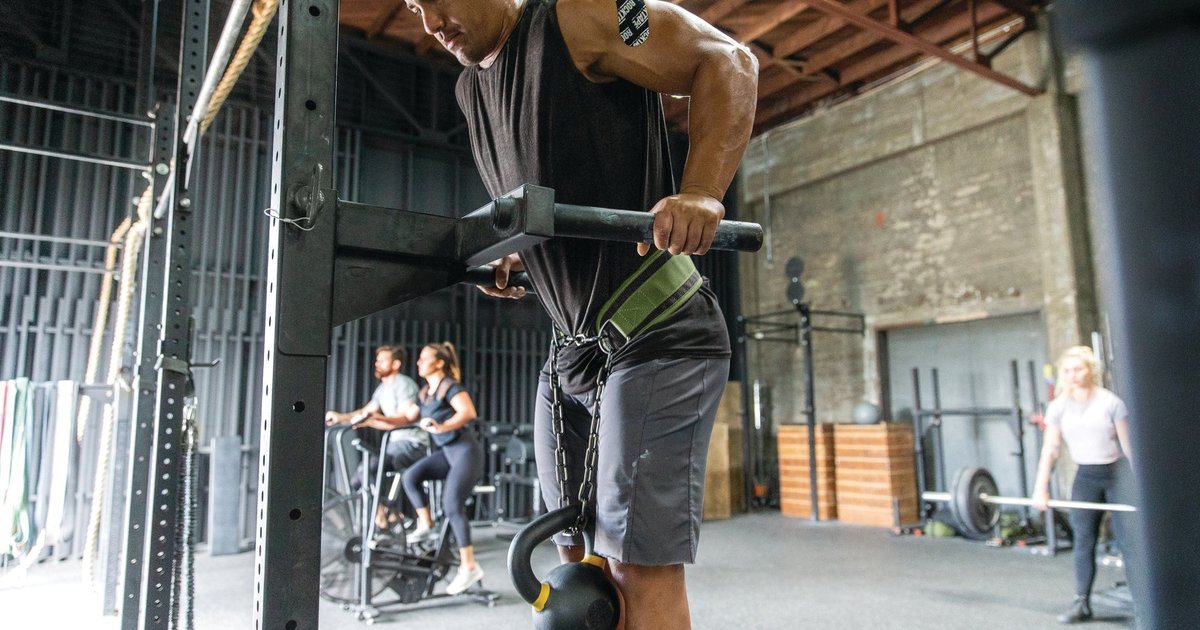
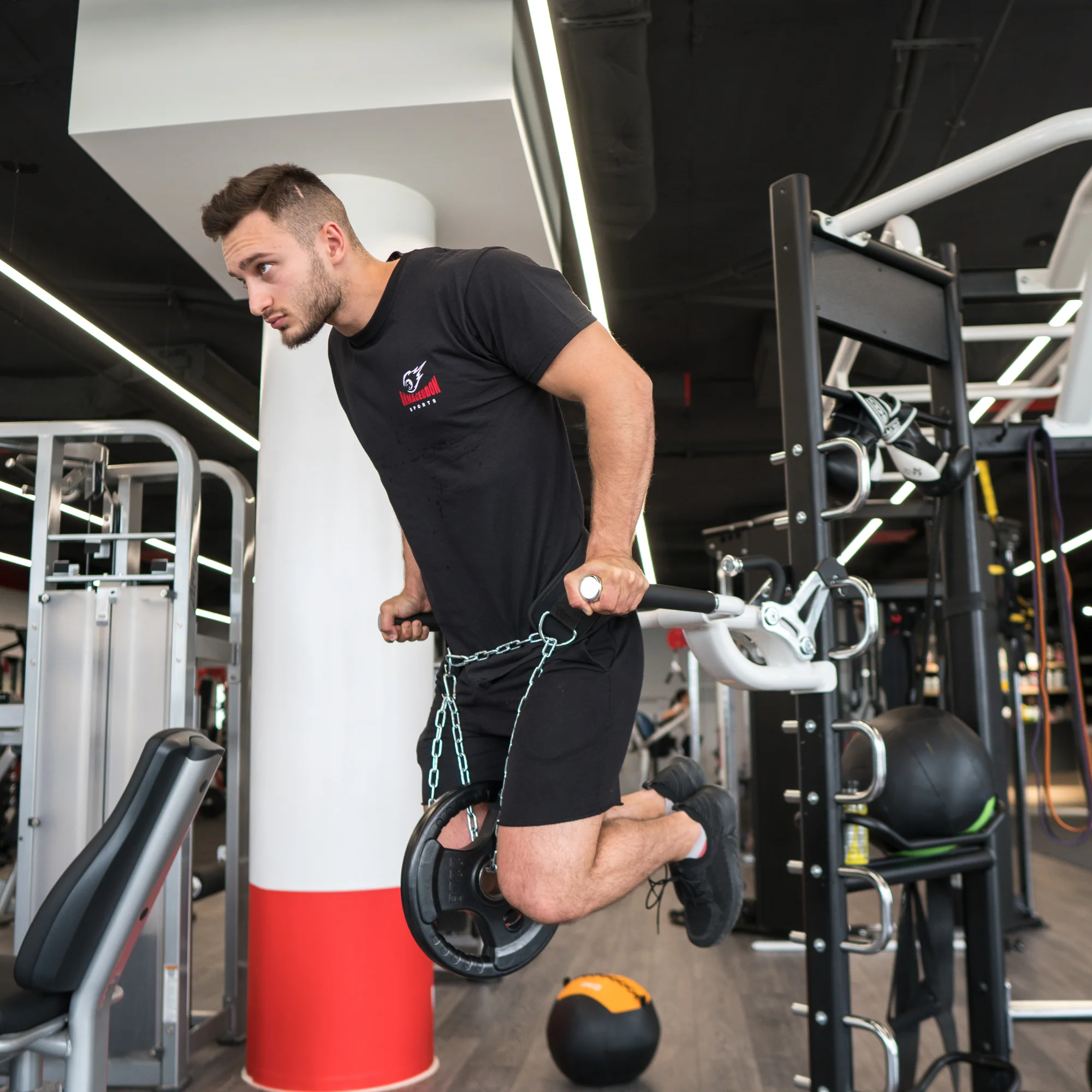
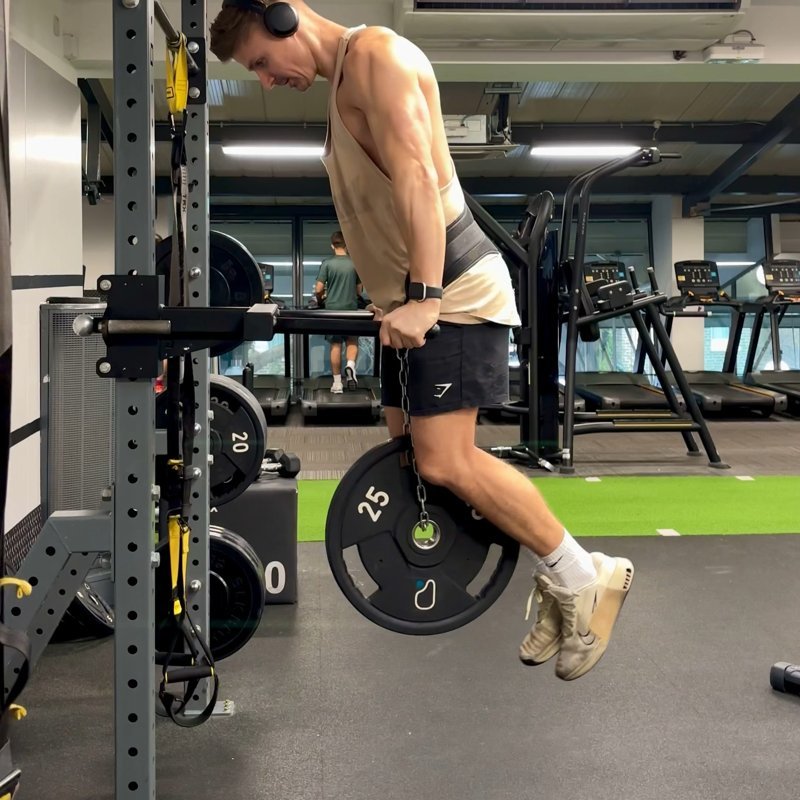
A dip belt should sit securely around the hips, with its chain or strap routed according to the manufacturer’s instructions. Clip the plate so it hangs freely between the legs, clear of the floor, bars and knees. Check every carabiner, link, stitching point and plate opening. A larger plate may hang lower and collide with a box or the floor; a smaller plate may create better clearance even when the total load is identical.
Use a firm step or platform to enter the top position with control. Have the load attached before stepping up, grip the handles, straighten the arms, brace the abdomen and let the hanging weight stop moving. Do not jump from the floor into a heavy support position. The extra acceleration and swinging weight are neither a useful warm-up nor a reliable test of your shoulders.
A simple pre-set check catches most avoidable setup failures: stand next to the station and confirm the belt is secure, the plate has clearance, the platform is where you can return to it, and nothing crosses the chain’s path. Then perform one controlled support hold. If the bar or weight shifts unexpectedly, get down and fix the equipment rather than attempting to stabilize a questionable setup with your joints.
For a first weighted session, add only a small increment to a movement you can already perform well. A heavy vest can work when it stays secure and does not interfere with the arms. A dumbbell held between the feet is an option for experienced lifters, but dropping or squeezing it changes your body position; it is less convenient when the load grows. Choose the method you can set up safely and reproduce every week.

Equipment Worth Exploring
Explore equipment, accessories and gear from our carefully selected range.

Power Tower
Freestanding pull-up and dip station with adjustable handles for bodyweight training.


Grip Plates
Rubber-coated weight plates with handholds for loading barbells and machines.

Competition Plates
Competition-style bumper plates for Olympic lifts and loaded strength training.


Foldable Wall Rack
Wall-mounted folding squat rack designed to save floor space between workouts.
3. Find a controlled depth instead of chasing the deepest rep
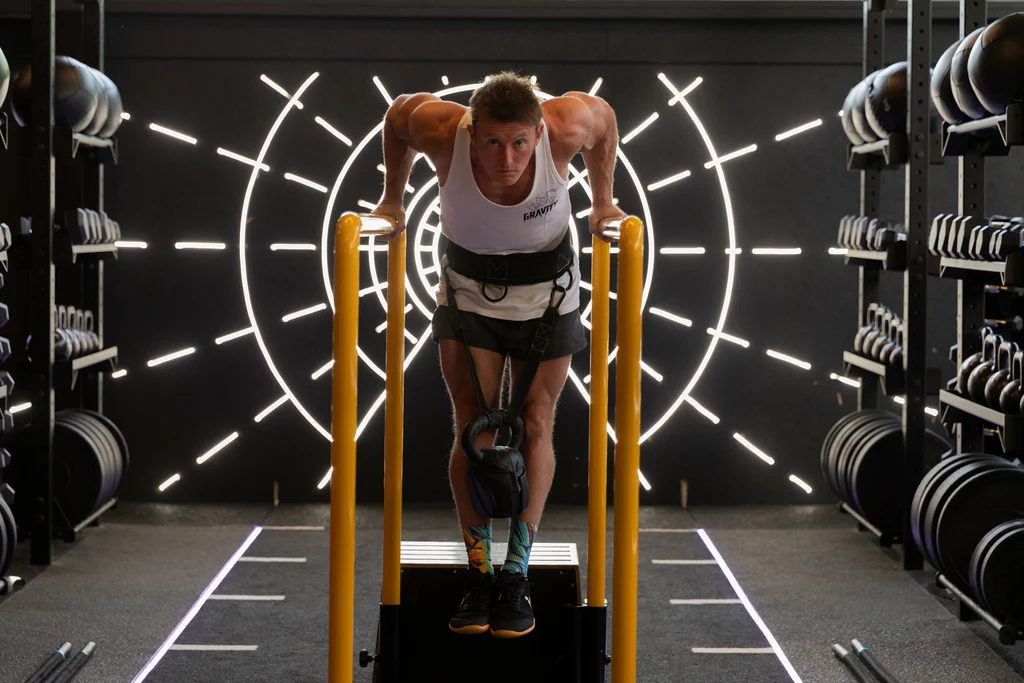
Start tall with shoulders controlled, a stable grip and the weight motionless. Lower at a deliberate pace while your elbows bend and your chest travels slightly forward between the bars. Keep the elbows following a comfortable line rather than letting them shoot straight sideways. Think of moving the whole body as one unit, not dropping the shoulders while the legs swing in the other direction.
Depth is individual. Many lifters use the upper arms approaching parallel to the floor as a useful visual reference, but that is not a medical boundary or a compulsory competition standard. Your shoulder structure, previous injuries, strength at the bottom and handle spacing all influence what is comfortable. Stop a little earlier when the shoulder begins to tip forward, you feel sharp discomfort, or you cannot reverse the motion without a bounce.
At the bottom, press the bars down and bring the torso back to a controlled support position. Finish with extended elbows without slamming into lockout. Let the plate settle before the next rep. If you have to swing your knees, kick the load or aggressively arch your back to escape the bottom, the load or depth is exceeding what you can control today.
Tempo provides an immediate quality check. Try roughly two seconds down, a brief controlled transition and a strong but smooth press. Count only repetitions that reach the same comfortable depth. A set of eight where the last four stop ten centimetres short is not equivalent to eight consistent repetitions, so do not use the larger number to justify increasing weight.
Shoulder discomfort is more than a form annoyance. Dips place the upper arm behind the torso during the lowering phase, which can aggravate some shoulders, especially under added load. Avoid forcing range through pain. If you have a history of shoulder instability, recent injury or persistent pain, choose an alternative and seek individual assessment where appropriate. Weighted dips are optional; training progress is not dependent on doing them.
4. Compare belts, vests and other pressing exercises
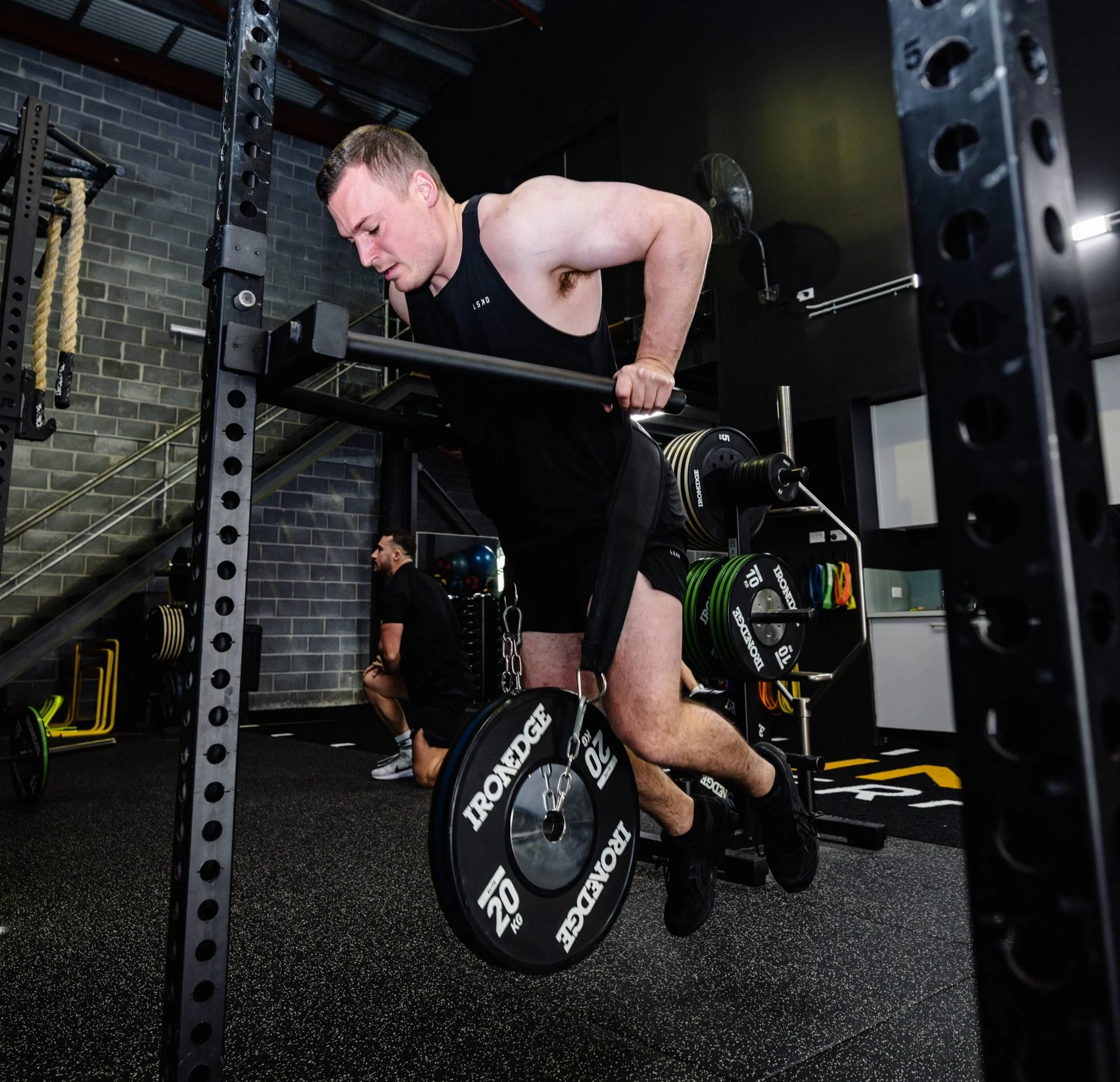
A chain belt is useful for plate-by-plate loading and lets you keep the torso relatively unrestricted, but the weight can swing and the plate must clear the floor. A properly fitted vest spreads the resistance across the upper body and often swings less, though bulky vests can interfere with shoulder movement or become hot. Neither is automatically superior for strength or hypertrophy; ease of setup and consistent execution are more important than the loading fashion.
Parallel-bar dips are not the same as bench dips or ring dips. Supporting your hands behind you on a bench changes the shoulder angle and often demands more shoulder extension. Rings add independent moving supports and a different stability challenge. Both are legitimate skills for suitable trainees, but treating them as simple substitutes for a heavy parallel-bar set can create needless surprises.
If a dip station feels wrong even with no external load, a close-grip push-up, neutral-grip dumbbell press, suitable machine press or cable press can train pressing muscles without reproducing the same deep shoulder position. You can progress those lifts with ordinary reps and load. Conversely, if bodyweight dips are comfortable but you cannot yet stabilize the extra plate, train support holds, slow bodyweight repetitions and small increments before heavier loading.
Think about your weekly programme as well. Weighted dips performed to hard fatigue immediately after a demanding bench session can make an otherwise manageable volume of pressing difficult to recover from. They may be better as the first compound exercise on one upper-body day, or a moderate accessory on a second day. Balance them with adequate pulling work rather than piling several hard pressing movements onto already irritated shoulders.
5. A practical six-week weighted-dip progression
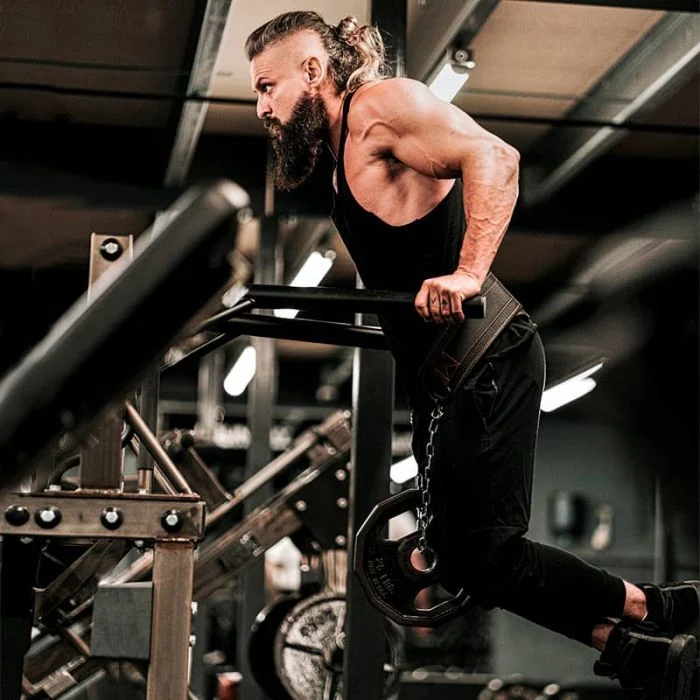
Use this plan as an adjustable example, not a mandatory test. The prerequisite is several sets of clean, comfortable bodyweight dips and a safe station. Start with two dip exposures per week separated by at least a day of recovery, and leave roughly two repetitions in reserve on most working sets. Write down the added load, rep count, bodyweight if relevant, comfortable depth, rest and whether the plate stayed still.
- Week 1: Run three sets of six bodyweight dips at a controlled tempo. If each set is consistent and comfortable, practise two very light weighted sets of three to five reps to learn the belt setup.
- Week 2: Choose a manageable added load and do three sets of five. Keep the same depth throughout. The second weekly session can remain bodyweight for two sets of eight rather than another demanding loaded day.
- Week 3: Keep the load unchanged and build toward three sets of six. Increase repetitions only if you can stop the swinging and maintain stable shoulders.
- Week 4: Work toward three sets of seven at the same load. If fatigue or shoulder discomfort rises, repeat week three or reduce the load instead.
- Week 5: If you have achieved all prescribed reps cleanly, add a small increment—perhaps one or two kilograms—and return to three sets of five. Small plates beat a dramatic leap.
- Week 6: Aim to repeat three sets of six with the new load. If that is not available without cheating, keep the same weight and improve the rep quality. Do not test a one-rep maximum merely because a six-week block ended.
For a simple strength-focused variation, use three to four sets of three to six with longer rests. For more general muscle-building work, moderate sets of six to ten can make sense when technique holds up. These are programming options, not guarantees about outcomes. The correct load is the one that lets you repeat the movement you intended.
If a weighted session leaves the front of the shoulder sore beyond ordinary muscular fatigue, changes your depth or compromises other pressing work, scale back. Do not compensate for a missed target by extending the set through uncontrolled reps. A successful block is one where the extra load rises gradually while your shoulders, bar position and body control remain predictable.
The best weighted dip is not necessarily the heaviest. It is the one you can set up without improvising, lower to a repeatable comfortable depth and progress without turning every rep into a fight against the plate.

Calisthenics Shirts & Street Workout Gear
Calisthenics and bodyweight-training gear for pull-ups, dips, handstands and street-workout athletes.


Calisthenics Evolution
Show some lifting attitude with a playful “Calisthenics Evolution” tee.

Turn Off Gravity Funny Calisthenics Gym Hooded for Huma Hoodie
Show off your lifting humor in a laid-back “Turn Off Gravity Funny Calisthenics” hoodie.

Be Stronger Than Your Excuses Funny Gym
Bring “Be Stronger Than Your Excuses” humor to your everyday gym style.

Calisthenics Heartbeat Decal Human Flag Fitness Gymbros Sticker
Give your everyday gear a playful “Calisthenics Heartbeat” twist.

Funny Calisthenics Gym Crewneck Pullover Sweater for Bo T-Shirt
Add a playful “Calisthenics” touch to your casual rotation.

Always Pull Yourself Up Hoodie
Make your off-duty look more fun with “Always Pull Yourself Up”.