Advertising disclosure: This page includes affiliate product links that may earn us a commission, as well as products from our own store.
Single-Leg Calf Raises: Control the Heel, Build Range and Progress One Side at a Time
Calf training can become a contest to move the most weight with the least ankle movement. A single-leg standing calf raise offers a useful reset: one foot, a steady support and a clear view of whether each repetition covers the same distance. Start with bodyweight, choose a manageable range and add resistance only when the weaker side can match the stronger side’s technique. The goal is to train the calf through a controlled movement that you can repeat and progressively load, not to win a balance test.
Why one-leg calf raises are worth doing
Your gastrocnemius is the visible, two-headed calf muscle crossing both the knee and ankle. Beneath it, the soleus also helps point the foot downward. With the working knee nearly straight, the gastrocnemius operates in a more lengthened position than with a bent knee. Knee flexion changes the relative contribution and makes the movement resemble a seated calf raise, although both muscles still participate. That distinction does not mean one muscle switches completely off.
Working one side at a time makes compensation harder to hide. If the right heel travels higher, the left ankle drifts outward, or one leg needs more fingertip support, the difference becomes obvious. That does not automatically mean a muscle is smaller or injured: balance, ankle mobility and fatigue affect performance. It tells you which variables need standardizing before loading. For many lifters, bodyweight on one leg is plenty to begin with.
There is a useful research clue about knee position, with limits. In a 12-week comparison involving 14 untrained adults, one leg performed standing calf raises and the other performed seated calf raises. The standing condition produced greater average growth in both gastrocnemius heads, while soleus growth was relatively similar. This supports including straight-knee calf work. It does not establish that a free-standing single-leg raise beats every machine or that trained athletes will see identical results.
Find stable footing before seeking more stretch
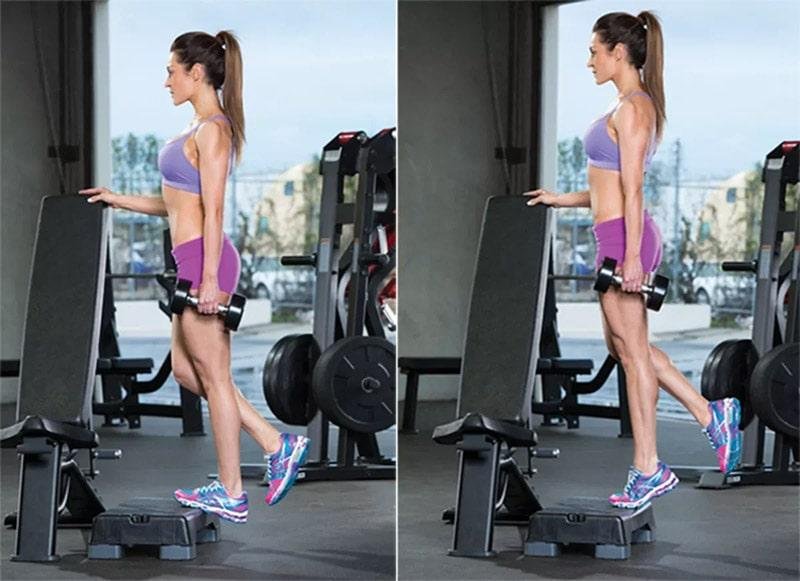
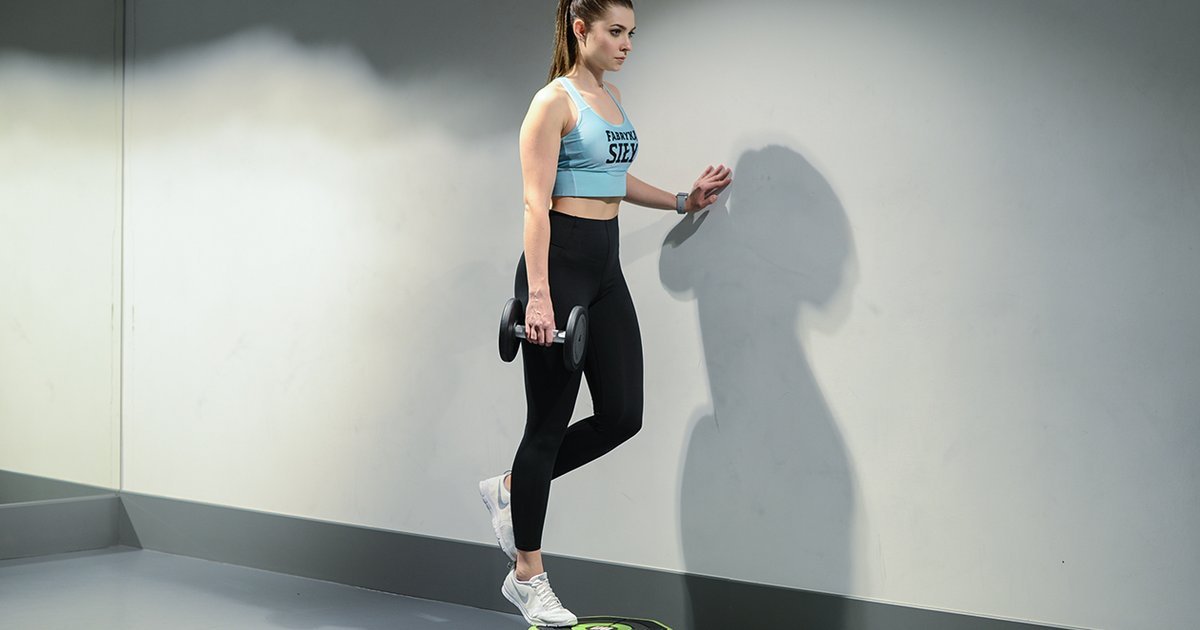
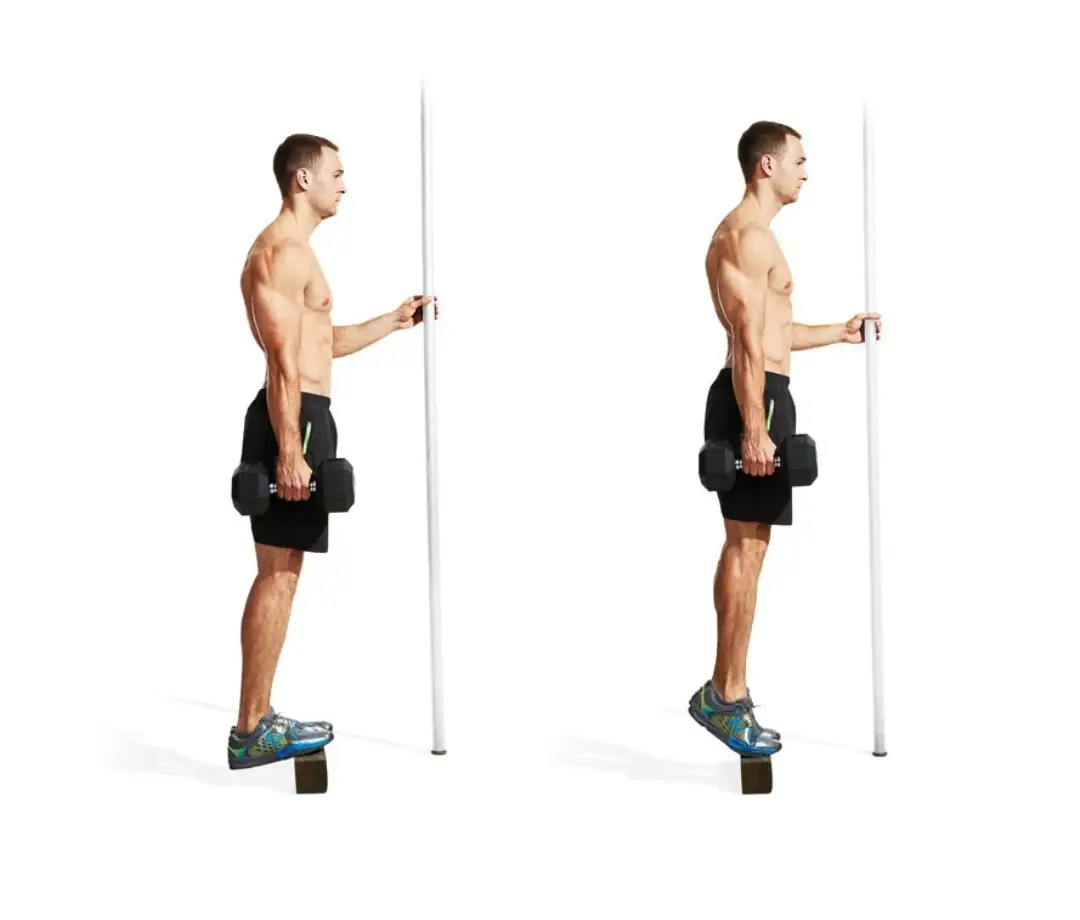
Begin on non-slip flooring beside a fixed rail, wall or rack upright. Lift one foot and rest your fingertips against the support. The support should remove the distraction of balancing, not carry your bodyweight. Position the working hip approximately above its foot, bend the free leg comfortably behind you and stay tall. Use your natural toe angle rather than forcing an uncomfortable stance. Keep the working knee nearly straight without jamming it into hyperextension.
Try several bodyweight repetitions on the floor before adding a platform. A sturdy low step or calf block can let your heel descend below toe level, but only when it is secure and non-wobbling. Place the ball of the working foot firmly on the edge with enough contact under the forefoot to prevent sliding. A loose stack of plates or unstable bench is a poor substitute. Keep the unused foot clear so it cannot secretly help the lift.
Step height is not your range-of-motion target. Lower the heel into a manageable stretch, then rise without rolling to the outer foot edge. If deep dorsiflexion irritates the Achilles area or pinches the ankle, reduce the depth or move to the floor. The benefit comes from useful muscular tension and consistency, not proving how far beneath the step the heel can travel. Record your platform setup so later sessions can be compared fairly.

Equipment Worth Exploring
Explore equipment, accessories and gear from our carefully selected range.


Rubber Hex Dumbbells
Rubber-coated hex dumbbell pairs with a stable shape for home and commercial strength training.


Cast Iron Kettlebells
Textured cast-iron kettlebells for swings, squats, carries, and full-body training.


Grip Plates
Rubber-coated weight plates with handholds for loading barbells and machines.

Make the heel movement deliberate
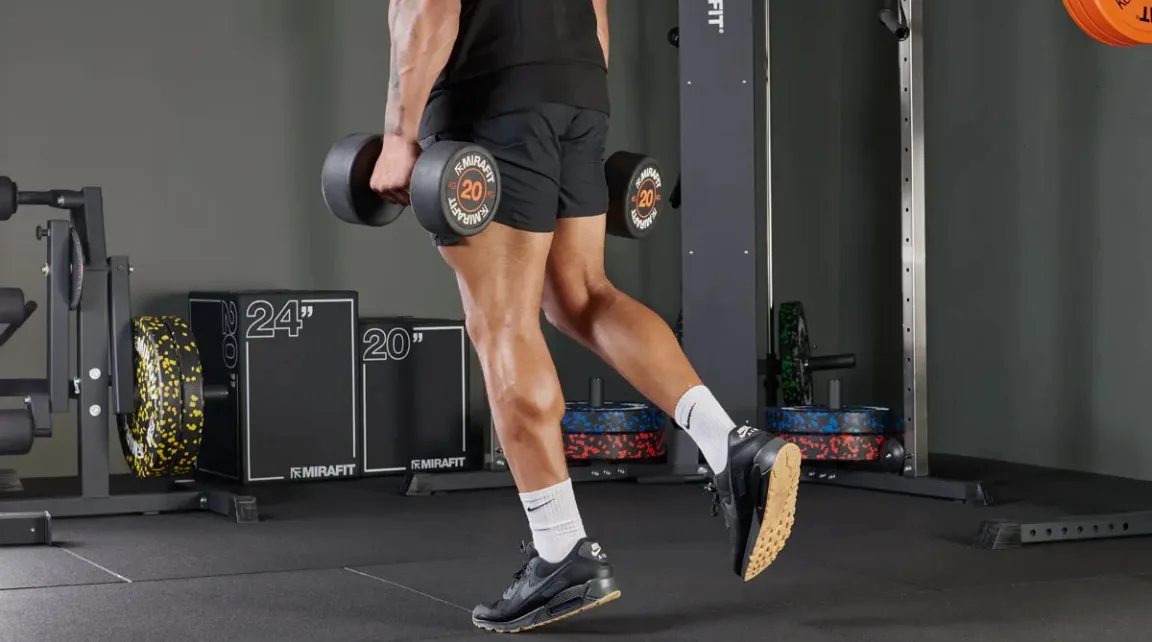
From a stable starting position, lower the working heel over roughly two to three seconds. Feel the calf lengthening while keeping balanced pressure across the forefoot. Settle briefly into the lowest comfortable position without suddenly sinking or rebounding from the tendon. Press through the ball of the foot and rise as high as you can without tipping outward, pushing from the free leg or bending your working knee for momentum.
Pause at the top to establish a real finish position, then control the next descent. Think of a vertical elevator instead of fast pulses. People often perform far more quick, shallow repetitions than deliberate full raises, but the numbers are not interchangeable. Choose a repeatable tempo and count only reps reaching consistent lower and upper landmarks. When heel height starts shrinking, you are probably near the useful end of the set.
Research also suggests the stretched part of calf training deserves attention. In an eight-week comparison, training in the more lengthened part of the ankle range generated promising gastrocnemius growth. That experiment used a loaded leg-press setup, however, not the unsupported exercise described here. Its practical message is to avoid habitually cutting the bottom portion short; it is not permission to bounce into an aggressive stretch or to discard every full-range repetition.
For added resistance, hold a light dumbbell or kettlebell at your side and keep your torso square. Either hand is workable if the supporting arm stays consistent. If the weight immediately shortens your heel travel or forces you to pull on the rail, it is too heavy for the intended quality. Build clean repetitions before raising the number on the dumbbell.
Correct common mistakes before adding load
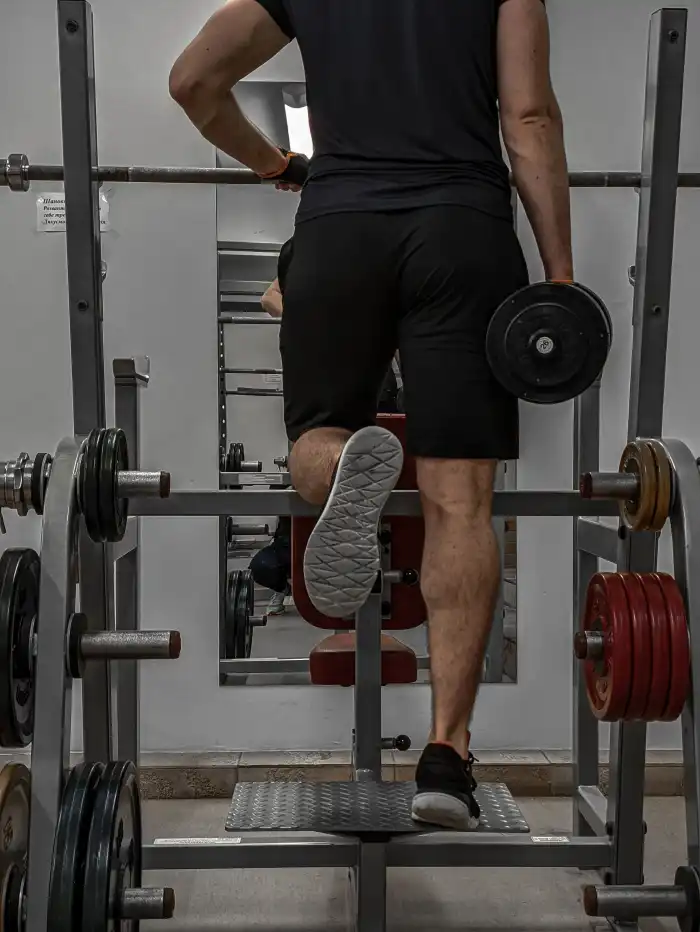
Fast bouncing is the biggest technique trap. A rebound can make the movement feel powerful while hiding how much work the calf actually performs. Slow down and briefly settle at the bottom. Another common error is pulling upward with the balance hand. Keep that arm relaxed and use just enough pressure to prevent tipping. If you need to lean heavily into the support, lighten the resistance or use a more comfortable standing position.
Watch your ankle in a mirror or record a rear-view set. If the heel rolls toward the outside of the foot, reduce the range or load until it tracks more consistently. If the working knee bends increasingly with fatigue, reset the straight-knee technique. A deliberate bent-knee raise is a legitimate separate variation with a different loading emphasis; accidentally blending both versions makes it difficult to compare progress across weeks.
Let the weaker side establish a fair repetition cap. If one leg produces 12 clean reps and the other can produce 17, doing 12 on both gives you a consistent comparison without encouraging extra sloppy volume. You can log the discrepancy and revisit it later. Strength differences can come from coordination and familiarity, not just muscle size. Use the same footwear, step and rest period when comparing sides.
Sharp Achilles pain, sudden swelling, a tearing sensation or persistent worsening discomfort are reasons to stop and seek professional assessment. Normal training fatigue is not a license to push through tendon symptoms. If your calves are unusually sore after a first session, keep the next workout easier rather than forcing a new load or deeper deficit.
Equipment Worth Exploring
Explore equipment, accessories and gear from our carefully selected range.
VOLTRA
Compact digital cable trainer with smooth, adjustable resistance.

Squat Harness
Wearable harness for hands-free cable squats, sled work, and lower-body training.

VForce 2IN1
Half rack and pivot-arm functional trainer with switchable 1:1 and 2:1 pulley ratios.

VForce Wall Trainer
Space-saving wall-mounted functional trainer with pivoting cable arms and variable resistance ratios.

Leg Press/Hack Squat BPR-790
Convertible 45-degree leg press and hack squat machine with a broad footplate and band pegs.

Compact Leg Press CLP-700
Compact reverse-style leg press with a moving seat carriage and an adjustable footplate.


Foldable Wall Rack
Wall-mounted folding squat rack designed to save floor space between workouts.

A six-week progression with measurable overload
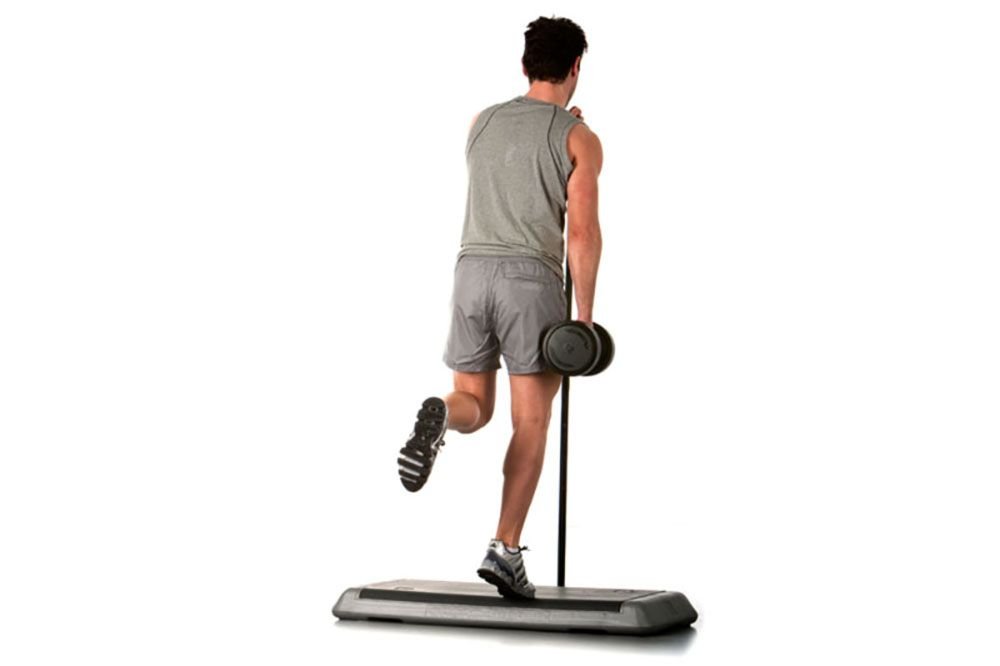
Train this exercise twice weekly after your main lower-body exercises, leaving an easier day between calf sessions. Begin with two or three working sets per leg, aiming for 8–15 controlled repetitions. Rest around 60–90 seconds between sides, longer if needed to restore usual heel height. The first session establishes your repeatable range, not your heaviest possible dumbbell.
Weeks 1–2: Use bodyweight on the floor or a secure low step. Make the lowering unhurried, the finish position consistent and fingertip assistance minimal. Stop when you have only one or two clean repetitions left. If your heel wobbles off a step, shorten the depth and record what you actually performed.
Weeks 3–4: Hold the same setup and increase strict repetitions first. When both sides complete three sets near the top of the range, introduce a small dumbbell or kettlebell. If the two sides still differ, use the less controlled side’s clean-repetition count as the limit for the stronger one.
Weeks 5–6: Change only one variable at a time: a modest resistance increase, one more clean repetition or slightly improved comfortable ankle range. Avoid changing step height, tempo and weight simultaneously. A useful log entry might read: three sets of twelve each side, ten-kilogram dumbbell, low calf block, controlled descent and one-second top pause. That is more meaningful than recording a large weight with no technique context.
A seated or intentionally bent-knee calf exercise can complement this standing variation. Running, jumping and loaded carries add other lower-leg demands, so adjust total fatigue rather than piling on sets automatically. The goal of six weeks is improved control and repeatable progressive overload, not a guarantee of a specific amount of muscle gain. Prioritize the quality of each repetition.

Leg Day Shirts & Workout Gear
Leg-day gym shirts and workout gear for lifters who never skip squats, lunges and lower-body punishment.

Never Skip Leg Day – NSLD Fried Chicken Meme Vest Muscl Tank Top
Your gym-day look, with a playful “Never Skip Leg Day” twist.

Leg Day Metallica Tee
Rep “Leg Day The Day That Never Comes Metallica” humor in and out of the gym.

I Want You To Stop Skipping Leg Day Patriotic Gym – Unc Hoodie
Show off your leg-day humor in a laid-back “I Want You To Stop Skipping Leg Day” hoodie.

Santa Quads Is Coming To Town Gym | Funny Fitmas Leg Da Sticker
Stick a little “Santa Quads Is Coming To Town” humor on your favorite gear.

Yesterday I Skipped Leg Day – Beatles Music Meme Vest M Tank Top
Bring “Yesterday I Skipped Leg Day” humor to your next lifting session.

Girl Strong Woman Leg Day Squats Meme Sweater Barbie T-Shirt
Bring “Gym Girl Strong Woman” humor to your everyday gym style.

Funny Gym Meme Graphic Tee
Show some leg-day attitude with a playful “Gym Meme Graphic” tee.

Mermaid Leg Day Female & Leg Day Lovers Hooded Hoodie
Keep it laid-back with a little “Mermaid Leg Day” attitude.

Swolebob Squatpants | SpongeBob Leg Day Meme Workout Sw T-Shirt
Show some gym-day personality with “Swolebob Squatpants”.

We Don't Need No Leg Day – Pink Floyd Meme Vest Muscle Tank Top
Show some personality between sets with “We Don't Need No Leg Day”.