Advertising disclosure: This page includes affiliate product links that may earn us a commission, as well as products from our own store.
Arnold Press: Rotate With Control and Build Stronger Shoulders
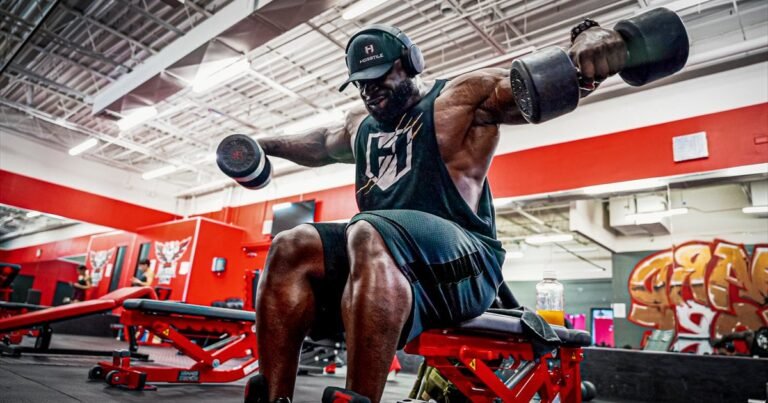
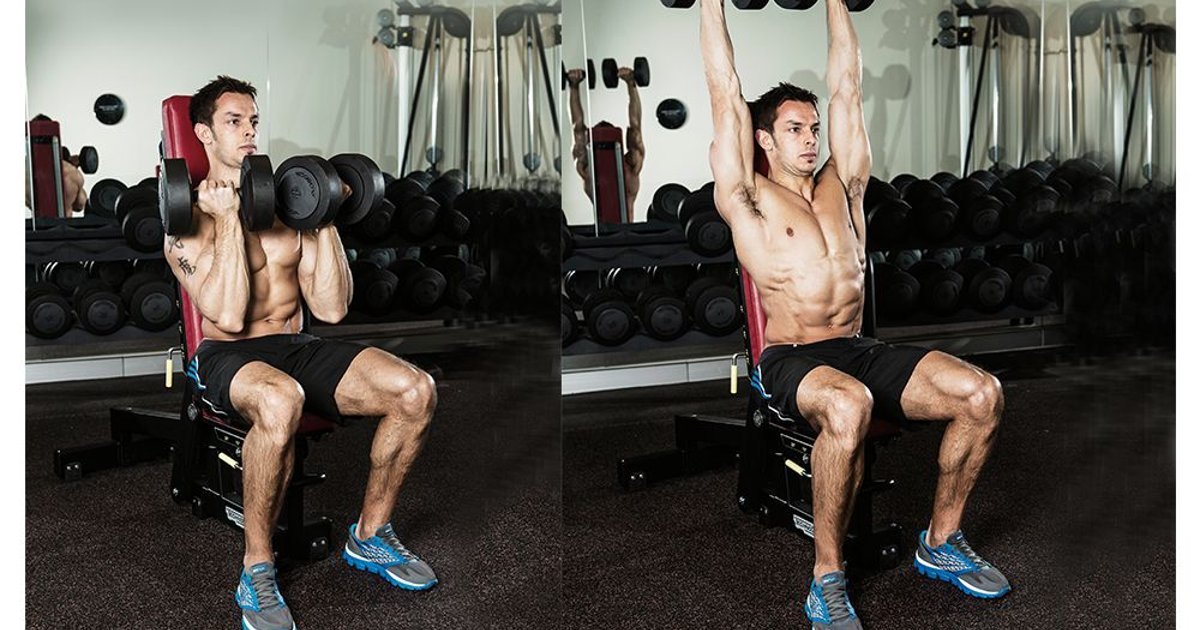
The Arnold press is a dumbbell overhead press that begins with the palms facing inward and turns the arms outward as the weights rise. The combination is named for Arnold Schwarzenegger, but its popularity should not be confused with proof that it builds more muscle than every other shoulder press. The useful question is whether the rotating path lets you train the shoulders hard while keeping each rep controlled.
This guide treats the Arnold press as a practical movement, not a magic deltoid shortcut. You will learn the start position, a comfortable rotation, the difference between seated and standing versions, the mistakes that make a set messy, and a six-week progression you can actually log.
1. Know what the rotation adds – and what it does not
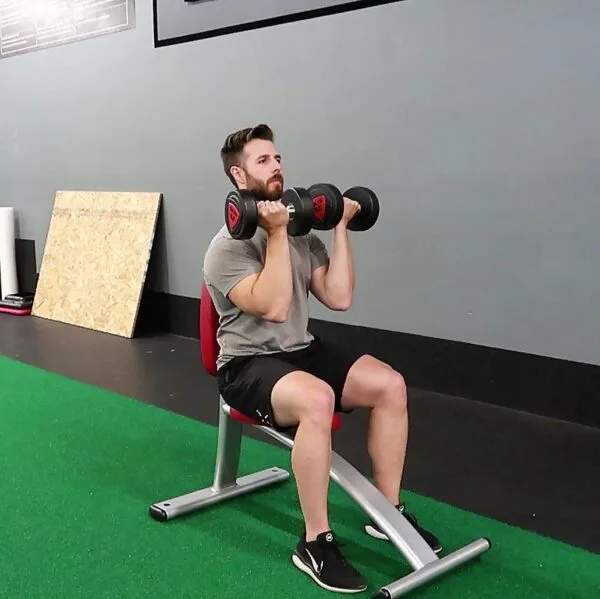
A conventional dumbbell shoulder press usually starts with the elbows out to the sides and the palms facing forward or inward. With the Arnold press, both dumbbells begin in front of the upper chest, elbows bent and palms toward the lifter. As the arms travel upward, the hands gradually turn outward. This creates a longer, more involved path than simply pressing straight up from shoulder height.
The front and side portions of the deltoid contribute to raising the upper arm, while the triceps extend the elbow. Muscles around the shoulder blade help the joint move overhead. The shoulder is not a simple three-way switch: rotating the dumbbells does not mean each deltoid region is isolated or that the rear delts suddenly receive the same challenge as during rows and reverse flyes.
The chief practical advantage is the controlled combination of shoulder elevation, elbow extension and changing arm orientation. It can make a light pair of dumbbells feel demanding because the rep takes longer and offers fewer opportunities to bounce. A longer rep is not automatically a better hypertrophy stimulus; effort, range you can control, total hard sets and progress over time still matter.
If you already get excellent results from a regular neutral-grip press, there is no requirement to replace it. Think of the Arnold press as an optional pressing variation. Its suitability depends on individual shoulder comfort, your overhead mobility and whether you can keep the same path from the first repetition to the last.
2. Set the bench, weights and starting position
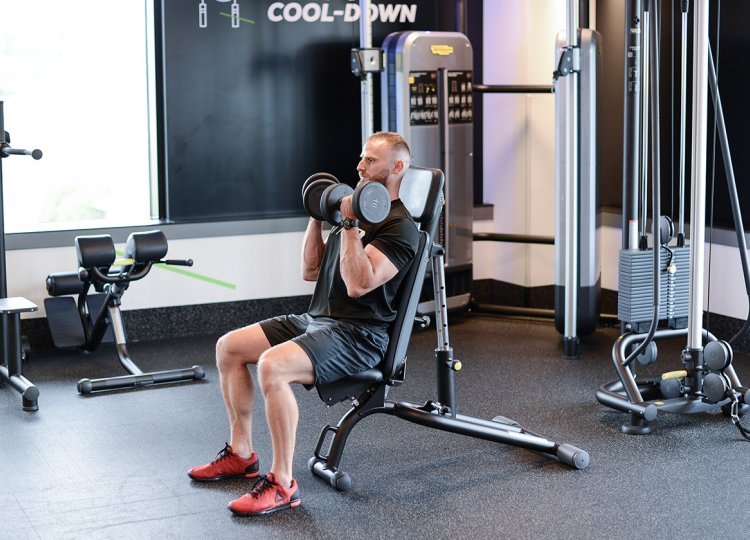
Begin with dumbbells noticeably lighter than the pair you use for a normal overhead press. Place a sturdy adjustable bench close to upright, sit with both feet planted and let the pelvis and upper back rest against the pad without exaggerating the arch in your lower spine. A bench backrest is useful because it removes one large source of unwanted movement while you learn the rotating path.
Bring the dumbbells to the front of your shoulders with your palms facing your upper chest. Keep the wrists stacked over the forearms and the elbows bent comfortably in front of the torso. You do not need to jam the elbows tightly together or force the weights against your chin. Leave enough clearance for the bells to pass your face without bumping one another.
Before the first press, inhale and brace as though you are preparing for a controlled standing press. Keep your ribs over your pelvis and your head neutral. The shoulders and upper arms are allowed to move; the torso should not throw the dumbbells upward. If the weights are hard to bring into place, the loading process may be too aggressive even when the pressing strength feels adequate.
Check the setup with three deliberately slow rehearsal repetitions. Watch whether both arms rotate symmetrically, whether your wrists stay in line, and whether the lower back peels away from the bench. Adjust dumbbell size or the beginning position before adding resistance. A strong start position saves far more trouble than attempting to fix a wandering press at the top.

Equipment Worth Exploring
Explore equipment, accessories and gear from our carefully selected range.


Rubber Hex Dumbbells
Rubber-coated hex dumbbell pairs with a stable shape for home and commercial strength training.


FID Bench MAX
Adjustable bench offering flat, incline, and decline positions + adjustable headrest.

Multi Bench MBX-650 2.0
Adjustable multi-bench with roller adjustment, 15 backrest positions and accessory mounts.


Leather Wrist Grips
Padded leather lifting grips help support the hands and wrists on heavy pulling exercises.
3. Press, rotate and lower with a repeatable path
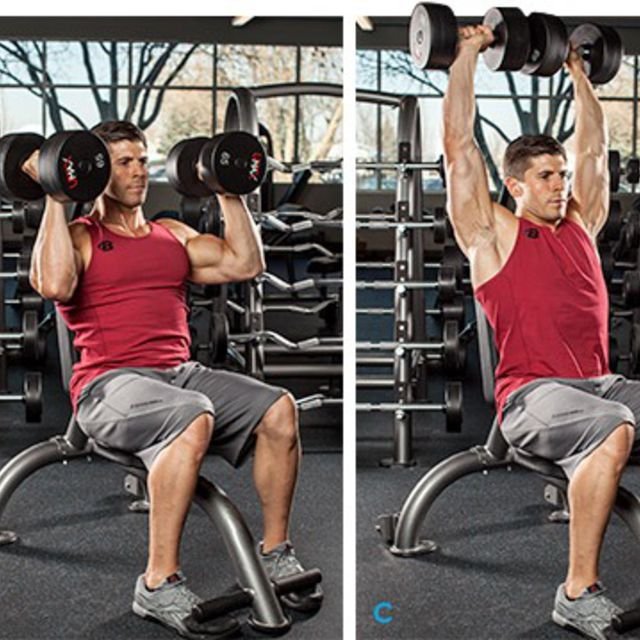
Start the upward phase by smoothly driving the dumbbells away from the upper chest as the elbows move outward and upward. Rotate the hands together with the upper arms rather than twisting only at the wrists. Around the middle of the press, the palms will be moving toward a forward-facing grip. The turn should blend into the press instead of being a sharp spin at the bottom.
Keep the motion comfortable and individual. Some lifters prefer to finish with their palms facing forward; others find a slightly angled grip more natural. Neither wrist position needs to be forced. The goal is a stable overhead finish with the arms extending smoothly and the weights traveling where the shoulders can support them without a dramatic lower-back arch.
Pause briefly near the top without smashing the bells together. Then reverse the pathway at a controlled speed: elbows bend, dumbbells descend, and the hands gradually turn back toward the body. Avoid dropping into the lowest position or trying to obtain extra range by dragging the elbows excessively behind the trunk. The bottom should look like a deliberate reset, not a collapse.
A useful first-session tempo is roughly two seconds rising and two seconds lowering. That is a coaching cue rather than a scientifically mandatory timing rule. You can speed up slightly later as long as rotation remains smooth and the rep never becomes a body swing. Stop the set if one side repeatedly turns earlier, the weights drift far forward or the back arches to finish.

Bodybuilding Shirts & Workout Gear
Bodybuilding shirts, tanks and gym gear for lifters chasing muscle, size, symmetry and the pump.


Come With Me If You Want To Lift Arnold T-Shirt
Show some powerlifting attitude with a playful “Come With Me If You Want To Lift” tee.


The Chestfather Arnold Schwarzenegger Meme Hooded Hoodie
Keep it laid-back with a little “The Chestfather” attitude.

Shoulder Press Dost Thou Even Press Medieval Knight Gym Sticker
Give your everyday gear a playful “Shoulder Press” twist.

Doctor Delts Gym Villain Funny Gym Hoodie
Show off your superhero humor in a laid-back “Doctor Delts Gym Villain” hoodie.

I Want You To Do One More Rep – Uncle Sam Patriotic Wor Sticker
Give your everyday gear a playful “I Want You To Do One More Rep” twist.

I Want You To Lift Weights – Uncle Sam Patriotic 4th of Hoodie
Show off your powerlifting humor in a laid-back “I Want You To Lift Weights” hoodie.
4. Fix common mistakes and pick the right variation
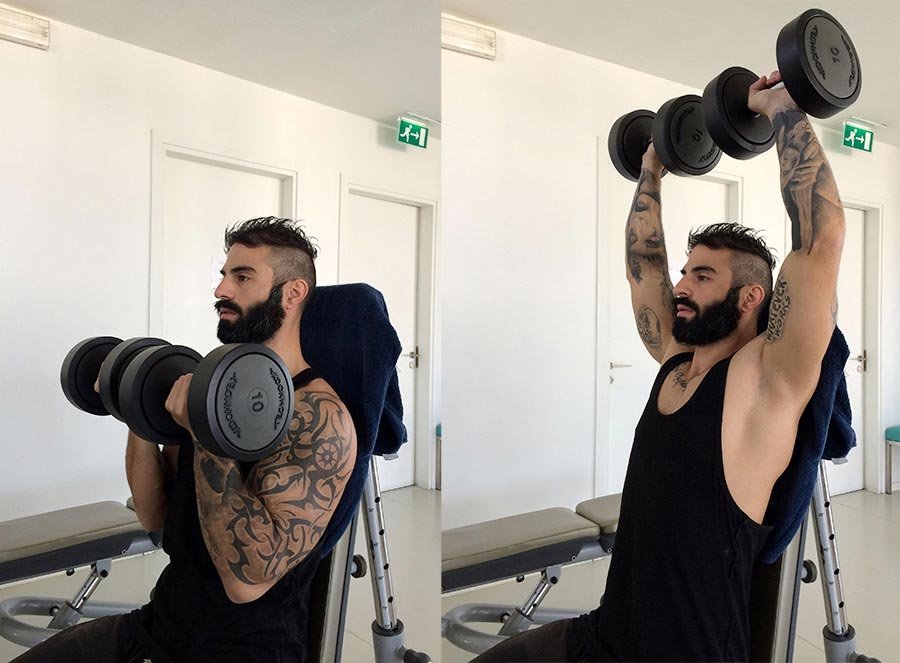
The first mistake is treating the Arnold press as a heavy power move. When the dumbbells are too heavy, the lifter often whips the elbows outward, jerks the torso back and rushes past the rotation. Reduce the load until the dumbbells stay close to a consistent path. You should be able to pause the press without feeling that the only way to finish is to heave the weights.
The second error is excessive rotation. Turning the palms as far as possible is not a competition, and trying to force a deep bottom position may feel awkward in the shoulder. Keep the motion in a comfortable zone and treat sharp pain as a signal to stop that variation. Persistent shoulder symptoms deserve individualized assessment rather than an internet instruction to push through.
A standing Arnold press is a workable choice if you can control your ribs and pelvis without swinging. A tall-kneeling version may help some lifters notice unwanted back extension, but it is not automatically safer for every body. A seated regular dumbbell press or a neutral-grip press is a sensible substitute when the turning motion feels uncomfortable or distracts from productive pressing.
For training balance, pair this press with lateral raises and a pulling movement such as rows or reverse flyes on the same week. The Arnold press emphasizes pressing; it cannot do every job in a complete shoulder program. You may also alternate it with a standard overhead press across training blocks rather than stacking several heavy overhead press variations in a single session.
Equipment Worth Exploring
Explore equipment, accessories and gear from our carefully selected range.
VOLTRA
Compact digital cable trainer with smooth, adjustable resistance.

Go-Tone Pro
Portable digital cable trainer with up to 66 lb (30 kg) of adjustable resistance.

Lever Arm Multi Press LMP-650
Multi-press with independent lever arms and an integrated adjustable bench for upper-body training.

VForce Wall Trainer
Space-saving wall-mounted functional trainer with pivoting cable arms and variable resistance ratios.

VForce 2IN1
Half rack and pivot-arm functional trainer with switchable 1:1 and 2:1 pulley ratios.

VForce 3IN1
All-in-one rack combining an adjustable Smith machine, functional trainer, and free-weight station.

VForce 3IN1 Max
Six-post all-in-one rack with Smith machine, functional trainer, and variable-force cables.

Multi Pull Smith Rack MPHR-780
All-in-one rack with a Smith machine, functional trainer, lat pulldown and low row.


5. Use a six-week plan without chasing sloppy reps
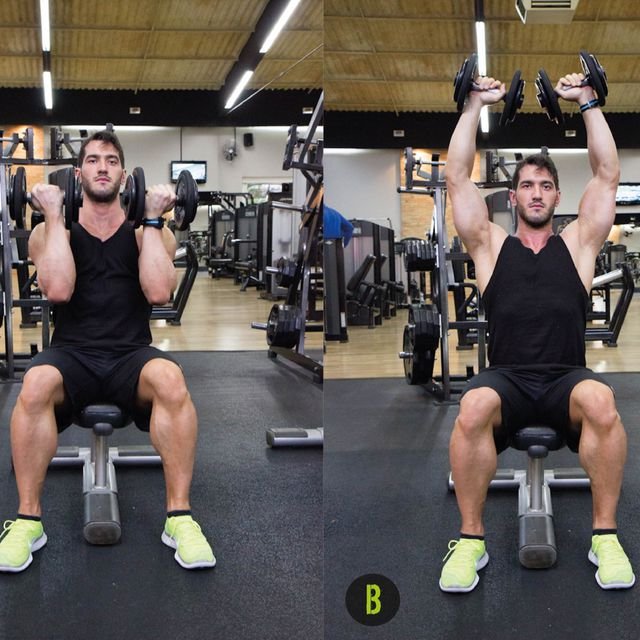
Train the Arnold press once or twice weekly, leaving enough time for your shoulders and triceps to recover. Start with two work sets of eight to twelve repetitions, resting roughly ninety to one hundred twenty seconds. Choose a weight that leaves about two to three clean repetitions in reserve. A rep only counts if the same comfortable start, rotation and overhead position are present.
In weeks one and two, establish a baseline: use the same bench angle, dumbbells and technique rules. If you reach eight controlled reps in both sets with no discomfort, record that as your starting point. Gradually add reps during the following sessions rather than changing the exercise every workout. Keep lateral raises and rowing work in the plan for broader shoulder development.
In weeks three and four, try to reach the upper end of the range across both sets. Once you can complete two sets of twelve with no torso swing and a comfortable rotation, take the smallest practical dumbbell jump and restart closer to eight reps. If the gym’s increments are too large, add a third set only if fatigue and the rest of your program allow it.
In weeks five and six, continue the same double-progression approach. Resist the temptation to add weight simply because the schedule says week six. If your wrists turn at different times or you shorten the bottom to finish a heavy rep, keep the current load and rebuild clean range first. Increasing quality repetitions at the same weight is measurable progress.
Write down the pair of dumbbells, bench angle, repetitions, distance from failure, and whether rotation stayed comfortable. If the shoulders are unusually fatigued from other presses, reduce this movement’s sets rather than forcing a perfect six-week calendar. At the end, decide whether the Arnold press is a productive choice for the next block or whether a simpler press fits your body better.