Advertising disclosure: This page includes affiliate product links that may earn us a commission, as well as products from our own store.
Muscle Memory After a Training Break: What Retained Proteins Can Tell Lifters
A training break can make an old working weight feel unfamiliar. That does not mean every adaptation has vanished, but it also does not mean your previous best is ready to repeat today. Muscle memory is an encouraging idea with several different meanings: remembering a movement, retaining cellular changes and regaining measurable performance. Separating those meanings makes the research more useful. It lets you return with some confidence without turning a biological finding into a promise about exactly how quickly your strength or physique will come back.
1. What the protein study actually measured
A human study published in April 2025 examined muscle proteins across training, a break and retraining. Thirty healthy, previously untrained adults entered the analysis. Seventeen followed ten weeks of resistance training, ten weeks without training and ten weeks of retraining. The comparison group first had a no-training control period, followed by continuous training. Sessions were supervised, twice weekly and involved the whole body.
Resting thigh-muscle biopsies showed two patterns. Many protein changes moved back toward baseline during the break and appeared again with retraining. Some other proteins remained elevated after training stopped, including proteins associated with contraction, cellular structure and calcium binding. This supports a potential retained proteomic memory: a history of training was still detectable in parts of the muscle’s protein profile.
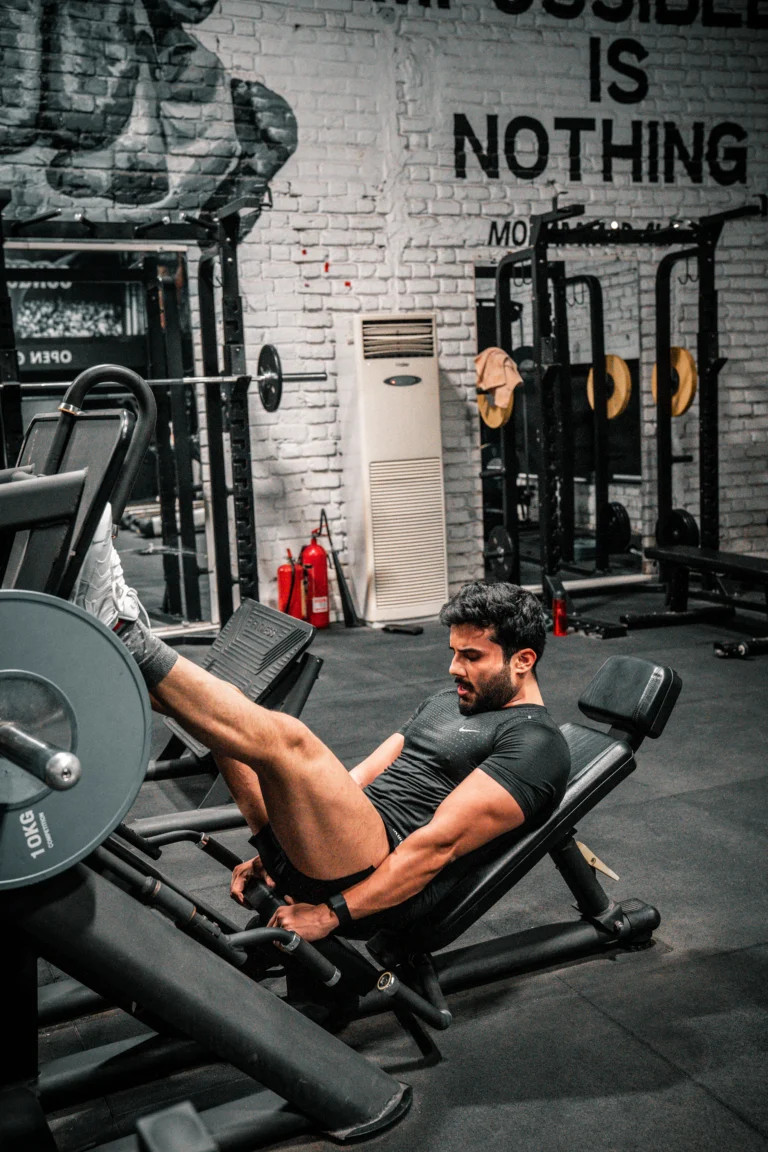
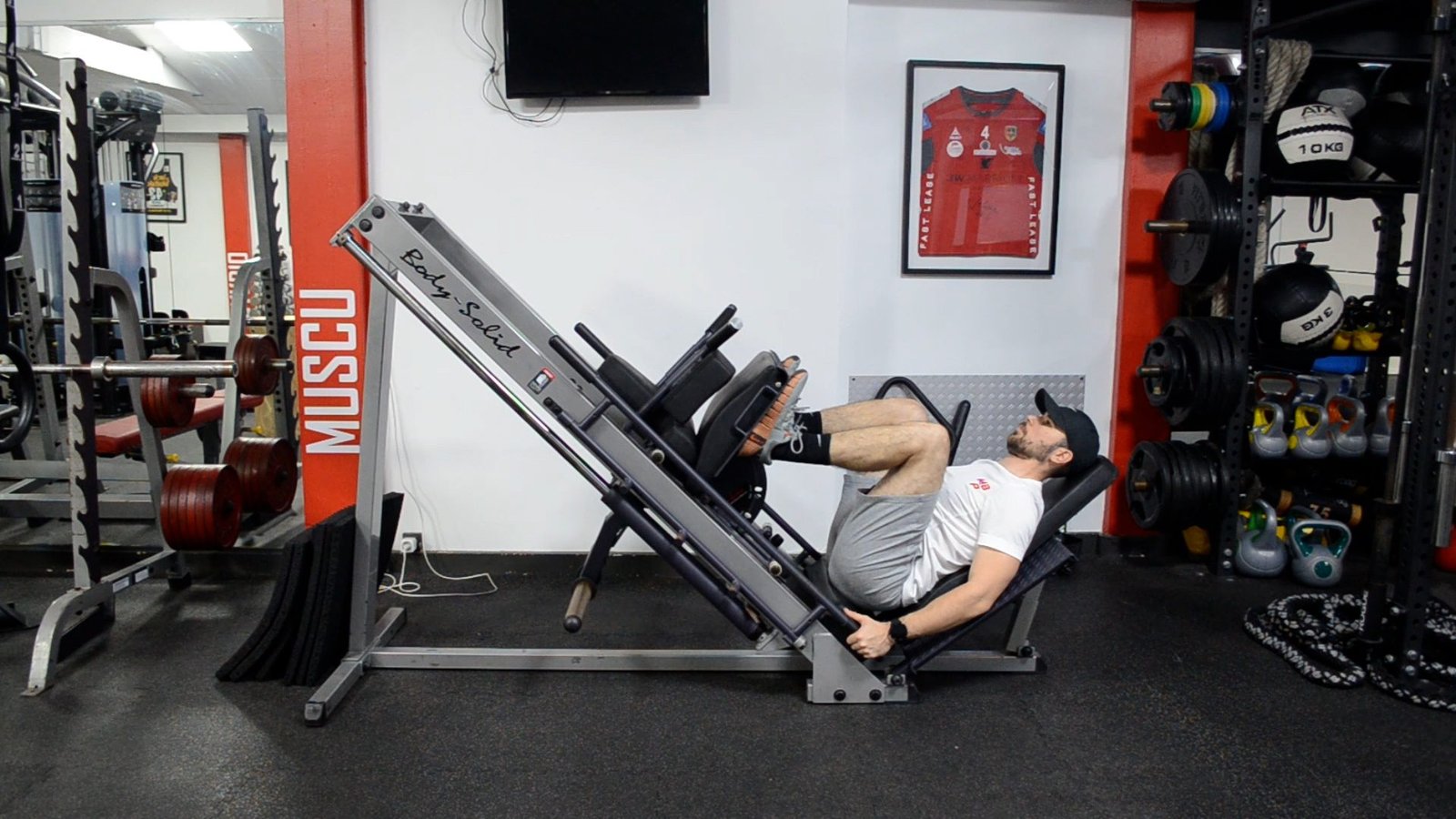
That is a narrower finding than “your muscle never goes away.” Retained proteins are not the same measurement as retained muscle size, an unchanged maximum lift or a guaranteed faster comeback. The photograph illustrates leg-press training context; it does not show a participant from the experiment or a muscle-biopsy result.
2. Protein memory, gene regulation and extra nuclei are different clues

Other human research has investigated different parts of the memory question. A 2018 study examined DNA methylation and gene expression across growth, unloading and reloading. Some methylation signatures persisted while muscle mass returned toward baseline. These are regulatory observations, rather than a photograph of muscle size being permanently preserved.
A separate 2024 experiment studied twelve previously untrained men and women using one-arm elbow-flexor training, detraining and later training of both arms. Added muscle-fibre nuclei persisted through detraining. However, the previously trained arm did not show a clearly superior retraining response. Retention of a cellular feature and a proven practical advantage are separate questions.
Think of these as different instruments looking at training history. A protein measurement, a DNA-related signal, a nuclei count and a strength test do not report the same thing. They may contribute to an explanation, but combining their labels does not create a universal timetable for rebuilding lost gains.
For example, being able to describe a familiar dumbbell curl is not a measurement of your muscle proteins. Completing more repetitions than last week is a performance observation, not proof that a particular gene or retained nucleus caused it. You can take the improvement seriously while leaving its exact mechanism unresolved.
That distinction also helps when reading a dramatic headline. Ask what was measured, in whom and after what kind of interruption. “Memory detected” needs that context before it becomes useful advice for someone returning to their own programme.
3. A studied training break is not a recommended training strategy
A planned experimental interruption helps researchers observe change. It does not automatically become an instruction to stop training for the same length of time. If your current routine is manageable and progressing, a memory finding alone is not a reason to replace it with repeated long layoffs.
Likewise, different interruptions should not be treated as interchangeable. A holiday, a demanding work period, prolonged illness and an injury can leave someone returning under very different conditions. A study of healthy adults following a supervised programme cannot tell every returning lifter to use the same starting load or expect the same result.
Begin with a plain account of your own break. When did you last perform the exercise regularly? Did you stop all resistance work or continue a few movements? Has the available equipment changed? Those answers describe the situation you are returning from more clearly than simply writing “detrained.”
Be precise about the old benchmark as well. Your best-ever set may have come after months of consistent practice, with a particular bench angle, a spotter and a different body weight. Comparing an ordinary first session back against that exceptional day can make useful work look like failure.
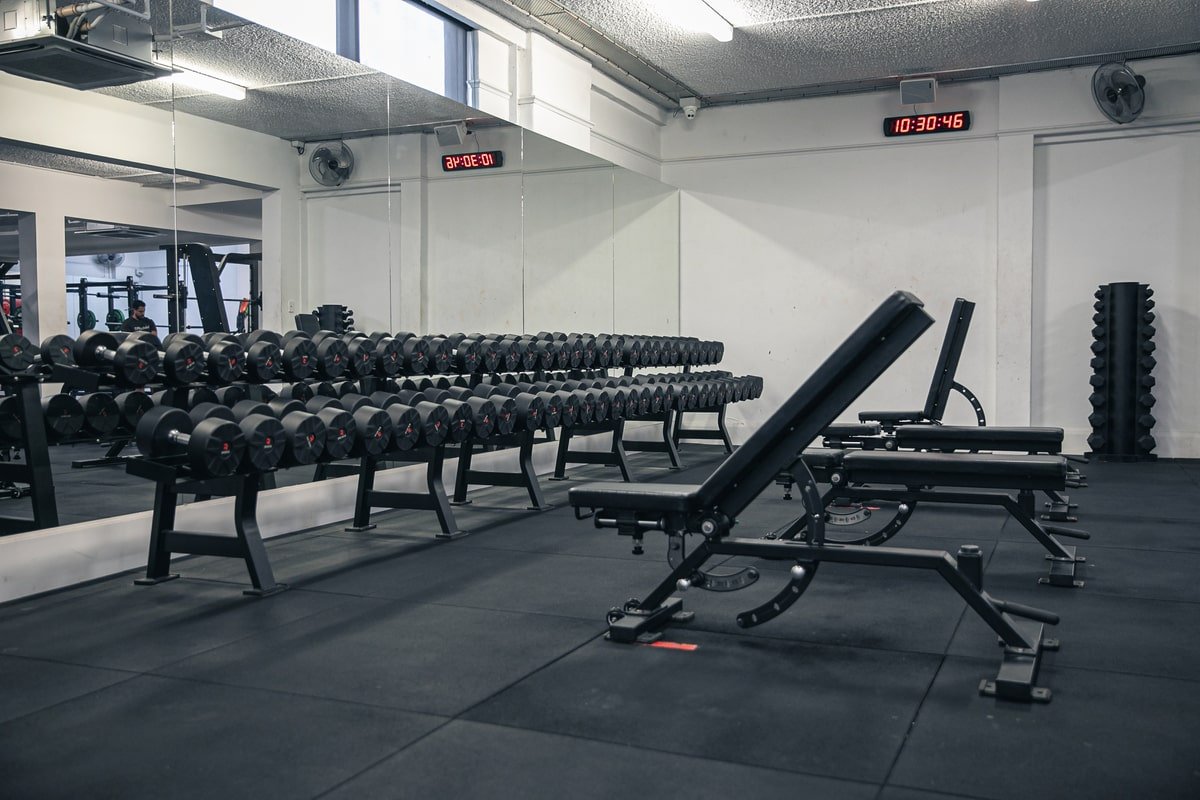
An empty rack is an opportunity to establish a current baseline, not a demand to prove that nothing changed. The next productive comparison can be with another well-recorded session under similar conditions. You do not need to erase your training history to accept that today’s starting point deserves its own entry.
4. Let today’s repetitions guide the return
General strength-training guidance emphasises manageable weights, controlled movement and gradual increases while maintaining technique. If the load changes the movement into something you cannot control, reduce the weight or repetitions. A familiar exercise name does not remove the need to check how the lift actually looks and feels now.
Use the first exposures to establish the task. For a dumbbell press, record the bench angle and whether the listed weight is per dumbbell. For a machine exercise, note the machine and seat setting. For a leg press, identify the apparatus rather than treating the displayed kilograms as directly comparable with every other leg press.
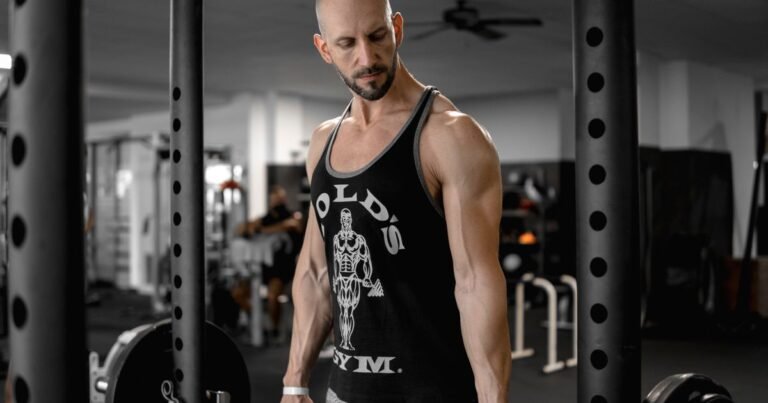
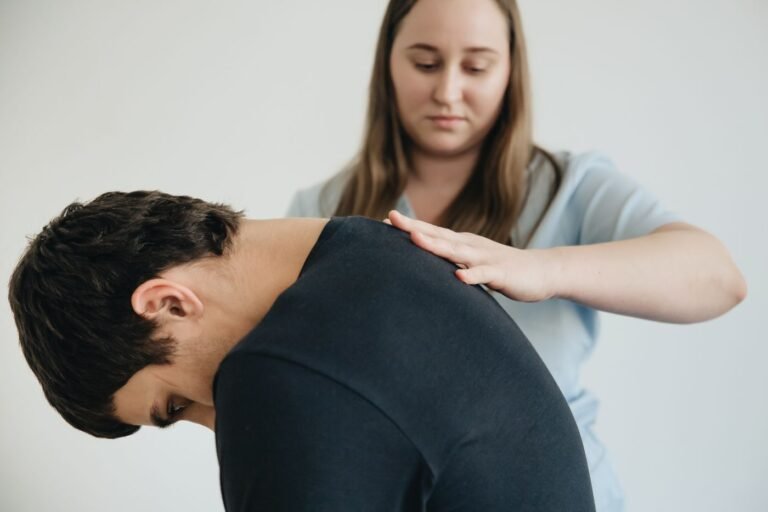
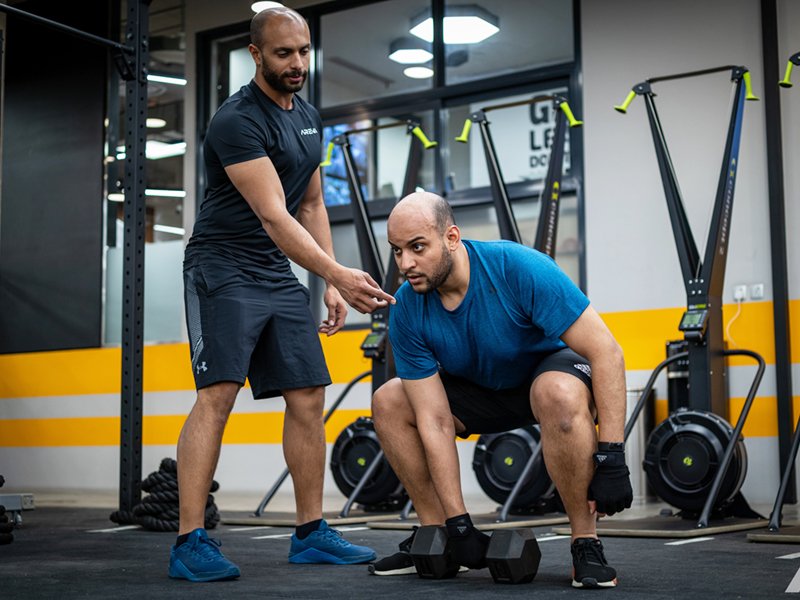
A coach can help check those details, as the accompanying training photograph illustrates. The pictured session is context for supervision and setup, not a prescribed return-to-training dose. If pain, an injury or a medical condition is part of the reason you stopped, get suitable individual guidance instead of trying to solve it with a muscle-memory headline.
Keep the return programme practical enough to repeat. If you change the exercise, apparatus, repetition target and rest timing together, the next result will be harder to interpret. That does not make the session useless; it means the notebook should describe a changed task rather than pretending it was an identical test.
The equipment selection below offers common machine and free-weight options for repeatable training setups. No purchase activates muscle memory, and a machine’s load numbers do not establish how much strength you have regained. Choose equipment for the movements and adjustments you need, then keep the comparison specific to that setup.

Equipment Worth Exploring
Explore equipment, accessories and gear from our carefully selected range.

Leg Press/Hack Squat BPR-790
Convertible 45-degree leg press and hack squat machine with a broad footplate and band pegs.

Compact Leg Press CLP-700
Compact reverse-style leg press with a moving seat carriage and an adjustable footplate.

Leg Extension/Curl BCO-780
Leg extension and lying leg curl combo with plate loading, band pegs and a cable-loading option.

Seated Leg Combo BCO-680
Adjustable seated leg extension and leg curl machine with band pegs for added resistance.

Rubber Hex Dumbbells
Rubber-coated hex dumbbell pairs with a stable shape for home and commercial strength training.


Multi Bench MBX-650 2.0
Adjustable multi-bench with roller adjustment, 15 backrest positions and accessory mounts.

5. Track regaining an old standard separately from building a new one
Give the training log two reference points: your current baseline and a clearly described previous standard. That allows a return to an old performance to be recognised without calling it a lifetime personal record. It also makes progress beyond that standard visible when it eventually happens.
As an illustrative example, imagine a previous dumbbell set of ten repetitions at a certain load. The first comparable session back produces six controlled repetitions, and a later session produces eight. That is progress from the current baseline even though the previous ten-repetition standard has not yet been reached. These are invented example numbers, not a forecast or results from the protein study.
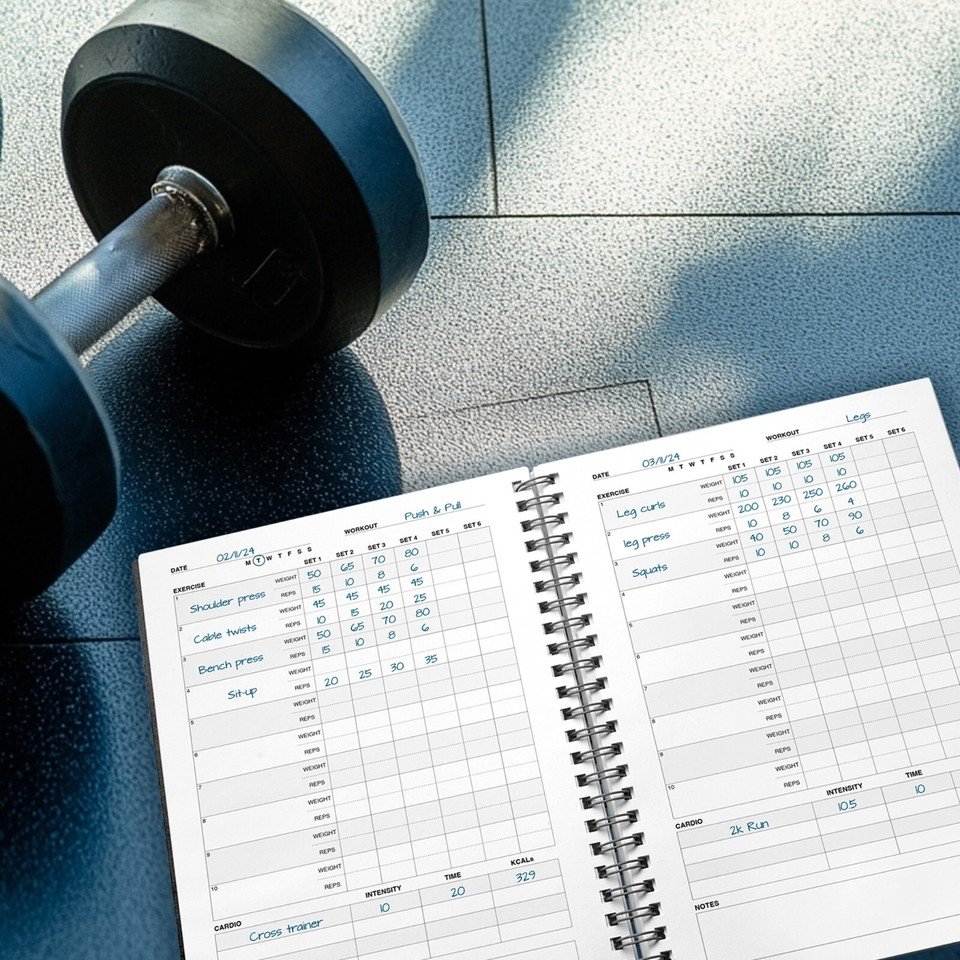
Record the exercise, load convention, repetitions, sets, setup and a brief effort note. If a set ends because technique changes, write that down rather than counting a different movement as equivalent. The photographed logbook shows a way to organise entries; its sample weights are not a programme to copy.
A single better day does not reveal the biological reason for the improvement. It may simply be the next observation in a useful training record. Keep completed work separate from explanations you cannot measure at home. You do not need a biopsy result to notice that you are becoming more capable at a consistent task.
The encouraging part of muscle-memory research is that training history can leave detectable traces. The practical response is to give the comeback real sessions, realistic comparisons and repeatable records. Let the evidence support patience rather than a deadline for getting everything back. Your old training matters; the work you can perform well today is still the place to begin.

Bodybuilding Shirts & Workout Gear
Bodybuilding shirts, tanks and gym gear for lifters chasing muscle, size, symmetry and the pump.

We Are So Back Shirt | Bodybuilding Back Workout | Grap T-Shirt
Heavy lifts, good laughs, and a little “We Are So Back” energy.

Back In Shape Back In Black Album Cover Parody AC/DC He Hoodie
Stay casual and show some metalhead attitude with “Back In Shape”.

– Installing Muscles Downloading Gains Meme Hoodie
Stay casual and show some lifting attitude with “Installing Muscles Downloading Gains Meme”.

Lift Smart Brain Plate Tee
Show some lifting attitude with a playful “Lift Smart Brain Weight Plate” tee.

Progress Stoic Bodybuilder Greek God Marble Sculpture T-Shirt
Heavy lifts, good laughs, and a little “Progress Stoic Bodybuilder Greek God Marble” energy.

Lift Eat Repeat Sweater & Meme Fans T-Shirt
For laid-back days and lifting humor: “Lift Eat Repeat”.

Bro Science Gym | Swole Scientist Funny Workout Vest fo Tank Top
Train hard, laugh a little, and rep “Bro Science”.

One More Rep Shirt: Motivational & T-Shirt
Make gym days more fun with “One More Rep” style.

Broscientology Decal for Water Bottles Laptops Gym Gear Sticker
Give your everyday gear a playful “Broscientology” twist.

OnlyGains Meme Sweater Bros Jogger Jumper Top T-Shirt
Show some gym-day personality with “OnlyGains Gym Meme”.