Advertising disclosure: This page includes affiliate product links that may earn us a commission, as well as products from our own store.
Cuban Press: Light Loads, Clear Stages and a Controlled Return
The Cuban press joins a raised-elbow position, shoulder rotation and an overhead press. That combination makes it different from simply pressing a pair of dumbbells. The load must suit the rotation as well as the press, and the return deserves the same attention as the upward movement. You can perform standing and chest-supported versions, but they should be treated as different setups. The useful goal is a sequence you can repeat comfortably, without turning a light shoulder drill into a heavy overhead challenge.
1. Choose the load for the whole sequence
Begin with empty hands and rehearse the positions before choosing dumbbells. Being able to press a particular weight does not establish that you can control it through the preceding rotation. Use the least manageable part of the sequence to guide your selection, rather than borrowing your normal shoulder-press weight.
For a standing version, clear space beside your elbows and above your head. Keep other people, racks and hanging attachments out of that space. Place the weights where you can pick them up without an awkward reach. A stable stance and a deliberate put-down are part of the setup, even though neither looks impressive in a training video.
Small fixed dumbbells are convenient because the load is easy to identify. If using adjustable dumbbells, check their minimum weight and adjustment increments first. A set built for heavy pressing may start too heavy for this drill. Confirm the locking mechanism is secure and that the shape allows your hands to travel without the weights colliding.
Try one rehearsal repetition, set the weights down and assess it. Did you need a leg drive or a backward lean? Could you separate the movement into recognisable stages? A lighter pair is a productive choice when it lets you control a sequence that was previously rushed. There is no reward for keeping an unsuitable load just because the press itself felt easy.
2. Separate raising the elbows from rotating the shoulders
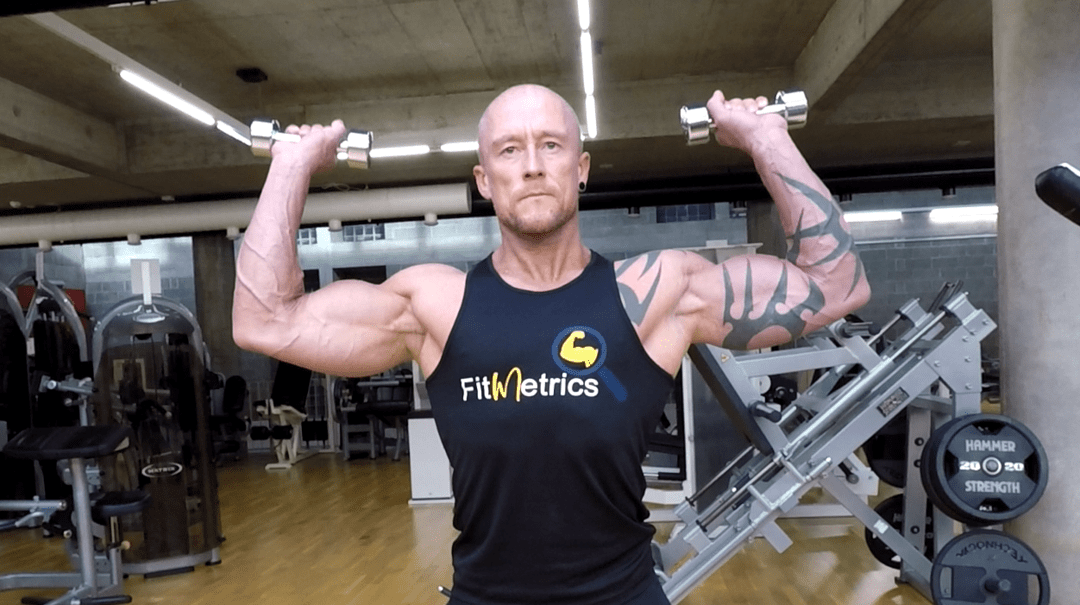
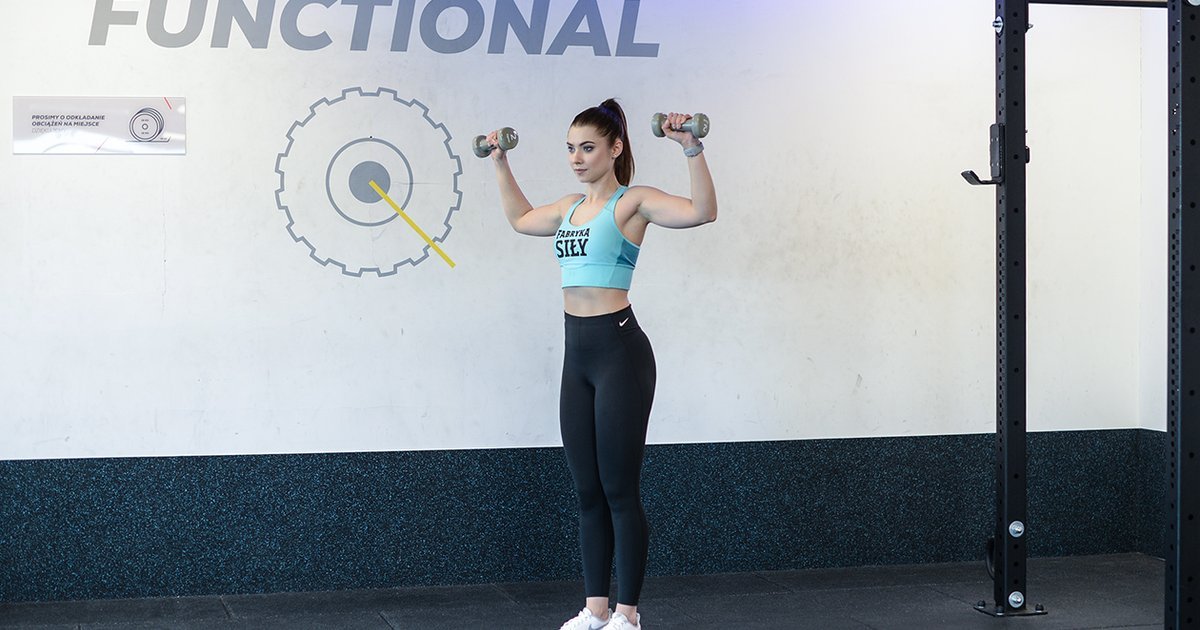
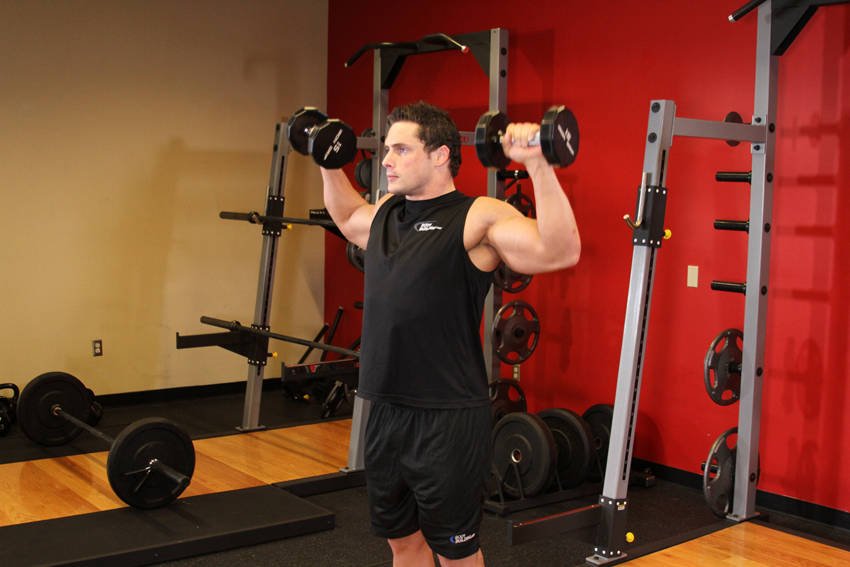
In the common standing sequence, raise the elbows outward to roughly shoulder height while the forearms point down. Then rotate the upper arms so that the hands move upward toward a goalpost position. The elbows remain bent during this transition. This is shoulder movement; bending the wrists back is not a substitute for it.
Rehearse the transition slowly enough to notice whether the elbows drift as the hands rise. Avoid pulling the weights upward with a sudden shrug. You are trying to organise the rotation before the press begins, rather than using momentum to skip the difficult middle position. The exact appearance will vary with your build and comfortable range.
A bar connects the two hands and changes the available grip choices. Dumbbells allow each hand to move independently. Neither option guarantees a better result, and a light bar can still be too heavy. If you change implements, restart with a rehearsal rather than assuming that matching the total weight makes the movement identical.
Do not force a textbook shape through pain or a pinching sensation. Stop the drill if it hurts. For a shoulder that is already painful, recently operated on or being rehabilitated, get individual guidance before loading this combined movement. A complex exercise name does not make it a necessary step in everyone’s shoulder training.
3. Press overhead without borrowing movement from your trunk
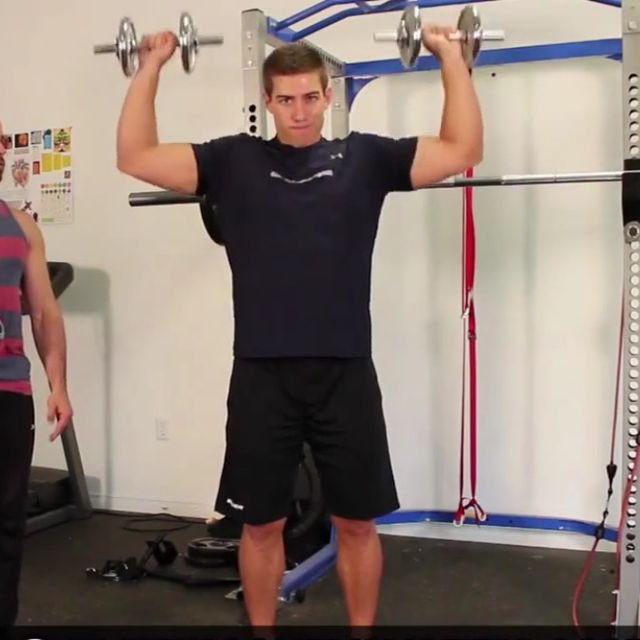
Once the hands are above the elbows in a controlled position, extend the arms overhead through a comfortable path. Keep the legs quiet. If the weights only reach the top because you dip and drive with the knees, you have added a different movement to the task.
Also watch the relationship between the ribs and pelvis. A growing backward lean may make the top position look attainable while changing the posture you started with. Reduce the load or stop the repetition instead of trying to finish at any cost. Keep breathing rather than holding one prolonged breath through a slow, grinding sequence.
A short side-view recording can answer a specific question: did the torso move substantially between the rotated position and the top? Compare the first and last repetitions from the same angle. Video is most useful when it checks one observable feature, not when it becomes a hunt for a flawless pose.
Keep this drill distinct from your main overhead press. You may train that lift with different loads, repetitions and intent. A light Cuban press does not need to exhaust the shoulders to have a role as movement practice. Likewise, a demanding set is not automatically a better warm-up if it leaves the following exercise less controlled.
4. Reverse the stages instead of dropping into the next repetition
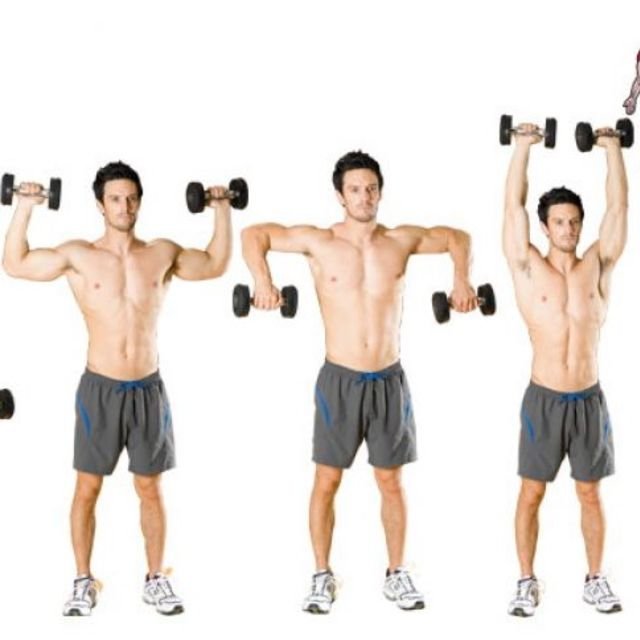
From the top, lower back to the bent-elbow position, reverse the shoulder rotation under control and then lower the arms. Think about recognising the same intermediate positions in both directions. Finishing the press is only part of completing the repetition.
One common shortcut is letting the elbows and hands fall together as soon as the weights descend. That can make a set look fluid while concealing the part you cannot control. Slow the transition enough to identify it. You do not need an arbitrary ten-second lowering phase; you need a return that you can reproduce without the weights pulling you off course.
Use the first repetition as a reference. If the third or fourth repetition has a much quicker return, ask whether fatigue or attention changed the task. End the set before the movement becomes a series of catches. More repetitions are not useful evidence of progress when they remove the very stage you intended to practise.
For a practical log, record the dumbbell weight, the version and how many complete sequences remained controlled. “Six repetitions, last two rushed” contains more useful information than a bare total of six. On the next exposure, you can repeat four good sequences rather than chasing seven uneven ones.
5. Keep supported and standing practice in separate records
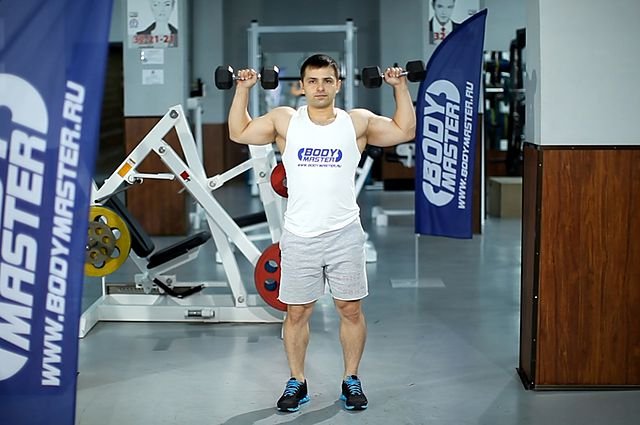
A chest-supported version changes your body angle and gives the torso a support surface. Use an appropriate adjustable bench, secure its settings and choose a position where the arms and weights have clearance. Do not assume the setup works simply because the pad is at an incline. Rehearse the entire path without weight first.
When working chest-supported, the arm path is organised relative to the inclined body rather than a standing torso. That is why an identical-looking finish against the room’s vertical lines is not the right comparison. The standing example shown here is a reference for the general bent-elbow position, not a photograph of the supported variation. If you cannot establish the supported setup clearly, get a coach to demonstrate it rather than improvising around the bench.
Pick one version for a short practice block. An illustrative starting experiment is one or two brief sets with several easy, controlled repetitions, followed by an assessment of the next exercise. This is a way to test a training role, not a research-established dose. You can omit the drill if it adds complexity without helping your session.
Progress in small steps. First repeat the same version and load with a consistent return. Then consider a modest repetition increase or the smallest suitable load change, keeping the other variables steady. If the next dumbbell increment is large, staying at the current weight is reasonable. You do not have to increase weight every time you practise.
The equipment choices below cover light dumbbell work, suitable adjustable benches and alternative light-bar setups. Check the actual minimum load and fit rather than choosing by maximum capacity. They are options for the tasks discussed, not a claim that buying more equipment improves the exercise.

Equipment Worth Exploring
Explore equipment, accessories and gear from our carefully selected range.


Rubber Hex Dumbbells
Rubber-coated hex dumbbell pairs with a stable shape for home and commercial strength training.


FID Bench MAX
Adjustable bench offering flat, incline, and decline positions + adjustable headrest.


Multi Bench MBX-650 2.0
Adjustable multi-bench with roller adjustment, 15 backrest positions and accessory mounts.


EZ Curl Barbell
Olympic EZ curl bar with angled grips for curls and triceps exercises.

For shoulder sessions built around controlled dumbbell practice and separate pressing work, the following bodybuilding designs follow that equipment and training theme. The programme still depends on your exercise choices and execution, not what you wear.

Bodybuilding Shirts & Workout Gear
Bodybuilding shirts, tanks and gym gear for lifters chasing muscle, size, symmetry and the pump.

Dumbbell Meme Shirt – Essential & Gymbros Seeking T-Shirt
Make gym days more fun with “Dumbbell Gym Meme” style.


Shirt – Liftionaire Golden Dumbbell Gymbros & Gains T-Shirt
Make gym days more fun with “Liftionaire Golden Dumbbell” style.

Dumbbell Heartbeat Crewneck Pullover Sweater Workout Fa T-Shirt
Add a playful “Dumbbell Heartbeat” touch to your casual rotation.

Shoulder Press Dost Thou Even Press Medieval Knight Cre T-Shirt
Show some gym-day personality with “Shoulder Press”.

Hells Dumbbells Hells Bells Parody AC/DC Heavy Metal Ro Hoodie
Stay casual and show some metalhead attitude with “Hells Dumbbells”.

Donut Dumbbell Donuts Barbell Bulk Hoodie
Show off your donut-loving humor in a laid-back “Donut Dumbbell Donuts Barbell” hoodie.

Funny I Love Gym Valentine's Day – Gym Lovers Workout V Tank Top
Bring “I Love Gym Valentine's Day” humor to your next lifting session.

For Whom The Bell Curls Dumbbell Metallica Workout Deca Sticker
Bring “For Whom The Bell Curls” attitude to your water bottle or laptop.

Heart And Brains Dumbbell Meme : The Ultimate T-Shirt
Make gym days more fun with “Heart and Brains Dumbbell Gym Meme” style.