Advertising disclosure: This page includes affiliate product links that may earn us a commission, as well as products from our own store.
Glute Growth: How Hip Thrusts, Bridges and Squats Fit Together
Glute training is bigger than choosing between a hip thrust and a glute bridge. A bench-supported thrust, a floor bridge, a squat and a hip hinge can all contribute to a stronger posterior chain, but each uses a different path, setup and loading constraint. The useful question is how to combine repeatable training with enough hard work over time.
A systematic synthesis of twelve training studies examined growth of the gluteus maximus from resistance exercise. It supports resistance training as an effective way to develop the muscle; it does not establish one universal winner, or prove that an easy bridge and a heavy thrust are interchangeable. This guide turns that distinction into practical setup choices and a six-week training framework.
1. What the glute-growth evidence actually supports
A 2025 systematic review included twelve studies of dynamic resistance training and pooled eleven studies for its main comparison of gluteus-maximus hypertrophy. The pooled result favored training over control with a moderate standardized effect of approximately 0.71. That is a result across varied exercises, participants and assessment methods; it is not a prediction that an individual lifter will grow by a fixed percentage.
The synthesis included single exercises and combined routines. Hip thrusts featured among useful single-joint-emphasis choices, while squats, leg presses and other hip-extension exercises also produced growth. Combining movements can therefore be productive, but the review does not show that adding every available glute exercise to one session is better. Overlapping exercises still create fatigue and consume training time.
One ten-week experiment on 33 previously untrained women compared a leg press plus stiff-leg deadlift routine against the same exercises with barbell hip thrusts added. Both programs increased measured glute thickness; adding thrusts produced a larger increase in that small study, roughly 9.3% versus 6.0%. The extra exercise also meant extra training exposure, so this is not a matched-volume verdict against squats, deadlifts or bridges. In another nine-week experiment comparing hip thrusts and squats, both produced glute growth and tended to improve the strength test that was practiced.
These findings have limits. Training status, study length, outcome-measurement locations, set volume and exercise execution all matter. Some experiments measure muscle activation or how far a bar moves rather than muscle growth after training. Those are interesting mechanics, but they do not establish hypertrophy superiority. The floor bridge is generally a shorter-range hip-extension variation than a bench-supported thrust; the difference is practical and observable without claiming that longer range always causes more growth.
For programming, think in roles rather than rankings. A loaded hip thrust can be a primary hip-extension exercise. Squats and leg presses add knee-and-hip-extension work; a Romanian deadlift emphasizes a loaded hinge; a floor bridge or single-leg bridge can be a low-setup accessory. Choose enough movements to challenge the muscle reliably, then track whether execution and performance improve.
2. Use the hip thrust as a stable loaded hip-extension option
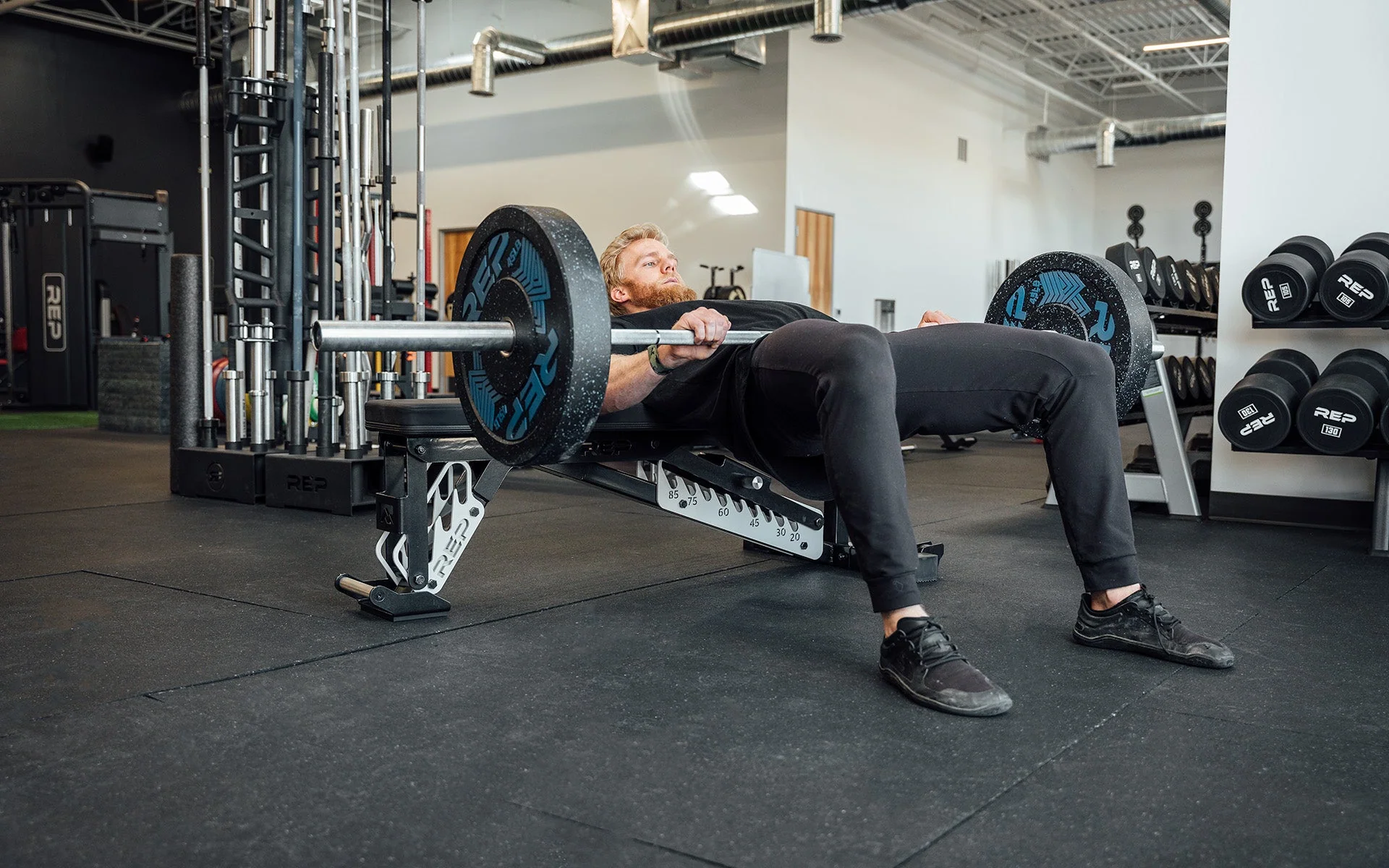
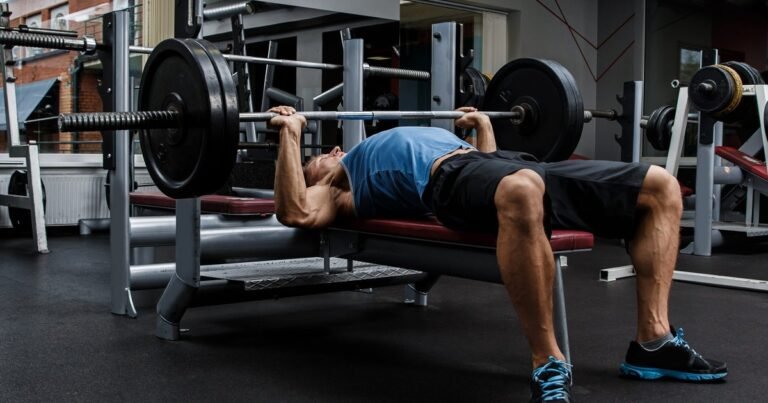
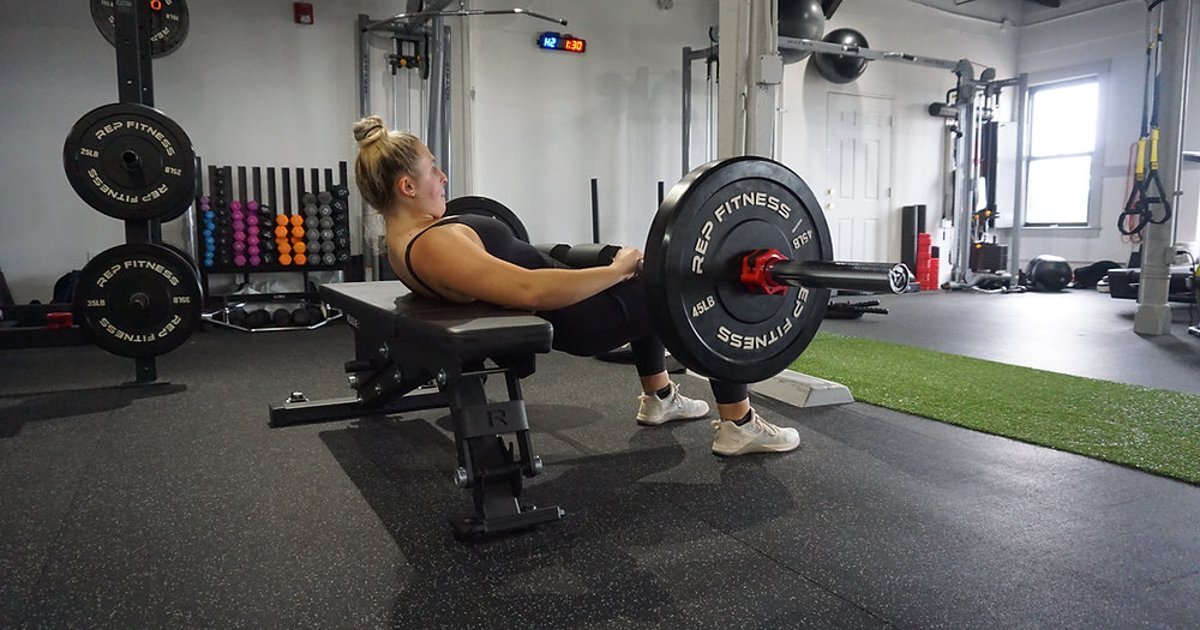
Begin by finding a bench or purpose-built hip-thrust pad that cannot slide, tip or roll. The bench edge should support the region around your lower shoulder blades rather than push into your neck. Place a padded barbell securely across the crease of the hips, hold it with both hands and leave clear space around the weight plates. If the bar is difficult to move into position safely, use a dedicated hip-drive machine or start with a lighter, simpler resistance option.
Put your feet approximately hip to shoulder width apart. Adjust their distance until your shins are close to upright at the top of a controlled repetition; limb lengths and comfortable joint angles vary, so that is a reference rather than a rigid visual rule. Brace the abdomen and lift by driving through a planted foot, maintaining a stable rib cage rather than throwing the chest toward the ceiling. Finish with the glutes while allowing the head to follow the torso naturally.
A brief pause at the top helps separate hip extension from an exaggerated arch in the lower back. Lower under control to the bottom position you can own comfortably, rather than bouncing into the next rep. A side-view video on a lighter set can reveal a sliding bench, shifting foot position or a bar path that changes each repetition. These are better reasons to adjust load than an arbitrary number printed on the plates.
For a starting point, use two or three warm-up sets, then choose a weight you can repeat for eight to twelve technically consistent reps. Keep your bench height, pad position, foot markers and approximate pause consistent from session to session. A kilogram added with identical mechanics is more informative than an ambitious increase made possible by shortening every repetition.

Equipment Worth Exploring
Explore equipment, accessories and gear from our carefully selected range.

Studio Glute Drive
Plate-loaded hip-thrust machine with supported back pad and adjustable foot platform.



FID Bench MAX
Adjustable bench offering flat, incline, and decline positions + adjustable headrest.


Competition Plates
Competition-style bumper plates for Olympic lifts and loaded strength training.

Grip Plates
Rubber-coated weight plates with handholds for loading barbells and machines.

3. Keep floor glute bridges as a deliberate accessory
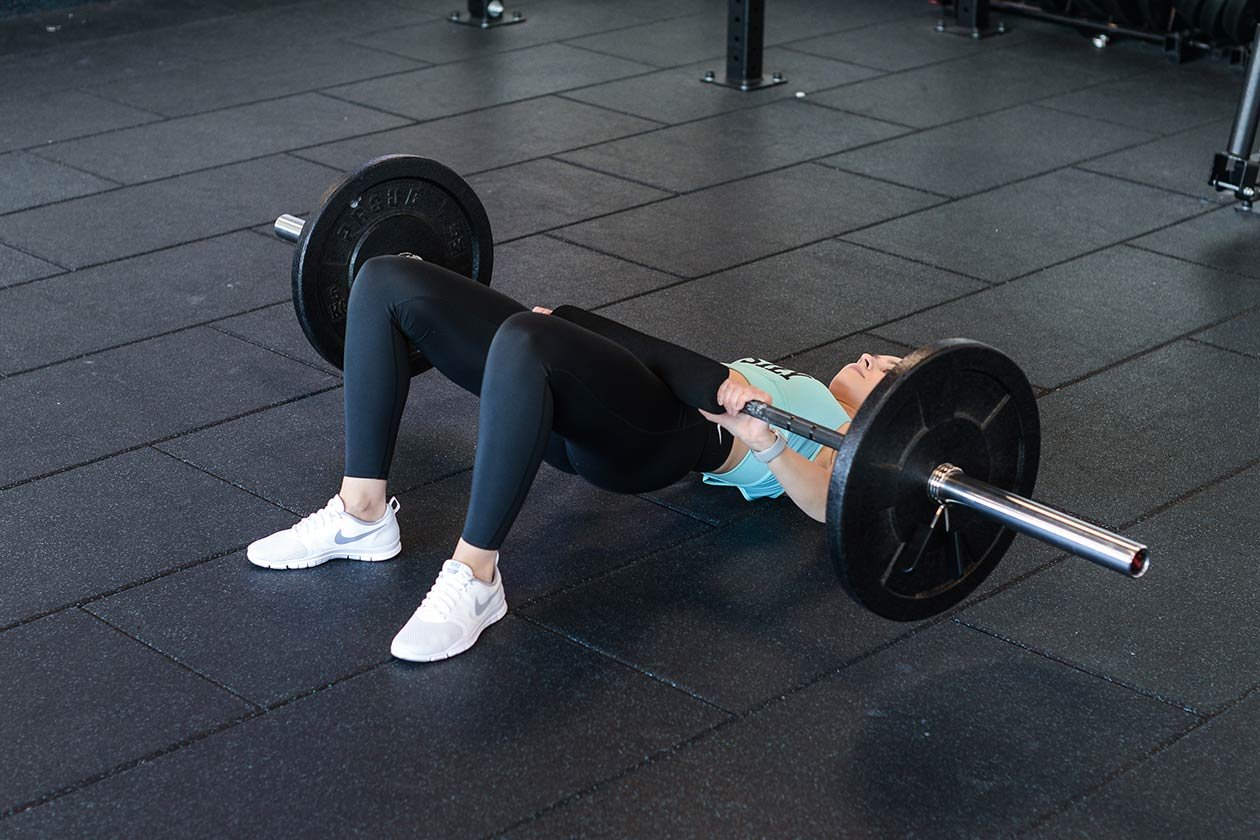
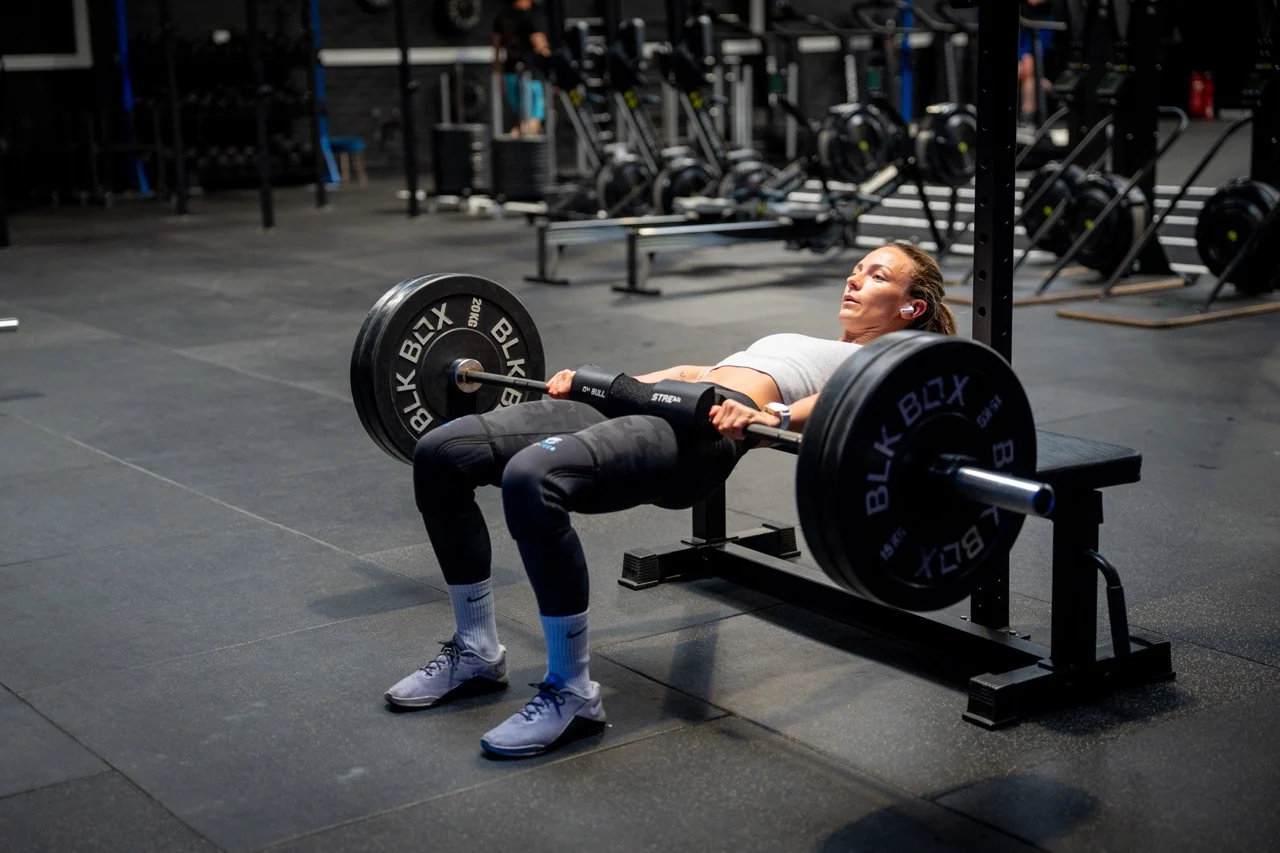
A floor bridge needs no elevated upper-back support. Lie on a firm mat or suitable training floor, bend the knees and plant the feet. For a weighted version, use suitable barbell plates, collars and a protective hip pad; ensure the load can be moved into and out of the hip crease without trapping you. Holding a manageable dumbbell or plate across the hips, when it can be stabilized safely, is another option. There is nothing wrong with beginning with bodyweight alone.
Keep the upper back and shoulders on the ground, hold the resistance steady, brace the abdomen and extend the hips until the trunk and thighs reach a comfortable aligned finish. Avoid turning the final centimeters into a hard lumbar arch. Pause for about a second, then lower deliberately until the pelvis reaches the same bottom position on every rep. If the bar rolls or your hands must fight to keep it in place, reset your setup before adding weight.
In a bridge, the ground prevents your hips from dropping as low as they can during a bench-supported thrust. That means the movement emphasizes a shorter segment nearer the top of hip extension. This makes it useful for learning a stable finish, adding a simple glute accessory or fitting short sets into a session without setting up a bench. It does not make a bridge’s plate number directly comparable with the longer-path thrust; compare load together with travel, pause, repetitions and effort.
Do not mistake simplicity for immunity from discomfort. If a bar presses painfully against the pelvis, change the contact or loading method. If a knee, hip or back symptom appears with the movement, stop and modify rather than forcing more range. Unusual persistent pain or neurological symptoms merit evaluation from a qualified clinician.

Leg Day Shirts & Workout Gear
Leg-day gym shirts and workout gear for lifters who never skip squats, lunges and lower-body punishment.

I Only Do Butt Stuff At The Meme Glute Lovers, Hip T-Shirt
Heavy lifts, good laughs, and a little “I Only Do Butt Stuff At” energy.

Thicc Booty Energy – , & Meme Lovers – T-Shirt
Rep “Thicc Booty Energy” humor in and out of the gym.

Big Ass Energy – , & Booty Gains – T-Shirt
Show some lifting attitude with a playful “Big Ass Energy” tee.

Let It Grow Booty Builder Leg Day & Hip Thrusts Meme Hoodie
Show off your leg-day humor in a laid-back “Let It Grow” hoodie.

Patriotic Eagle Stars Stripes and Squats Gym Shirt for T-Shirt
Make gym days more fun with “Patriotic Eagle” style.

Muscle Mommy Gym – Peach Booty Training Crewneck for Fi T-Shirt
Show some gym-day personality with “Muscle Mommy”.

Thicc Booty Meme – Glute Lovers – T-Shirt
Rep “Thicc Booty Gym Meme” humor in and out of the gym.

Thicc AF Booty Lovers & Glute Gains Meme Athletic Tank Top
Train hard, laugh a little, and rep “Thicc AF”.

Booty Building Mode Sticker
Stick a little “Booty Building Mode” humor on your favorite gear.

Medieval Gym – Dost Thou Even Hoist Knight & Dragon Squ T-Shirt
Make gym days more fun with “Medieval” style.
4. Standardize foot position, pelvic control and effort
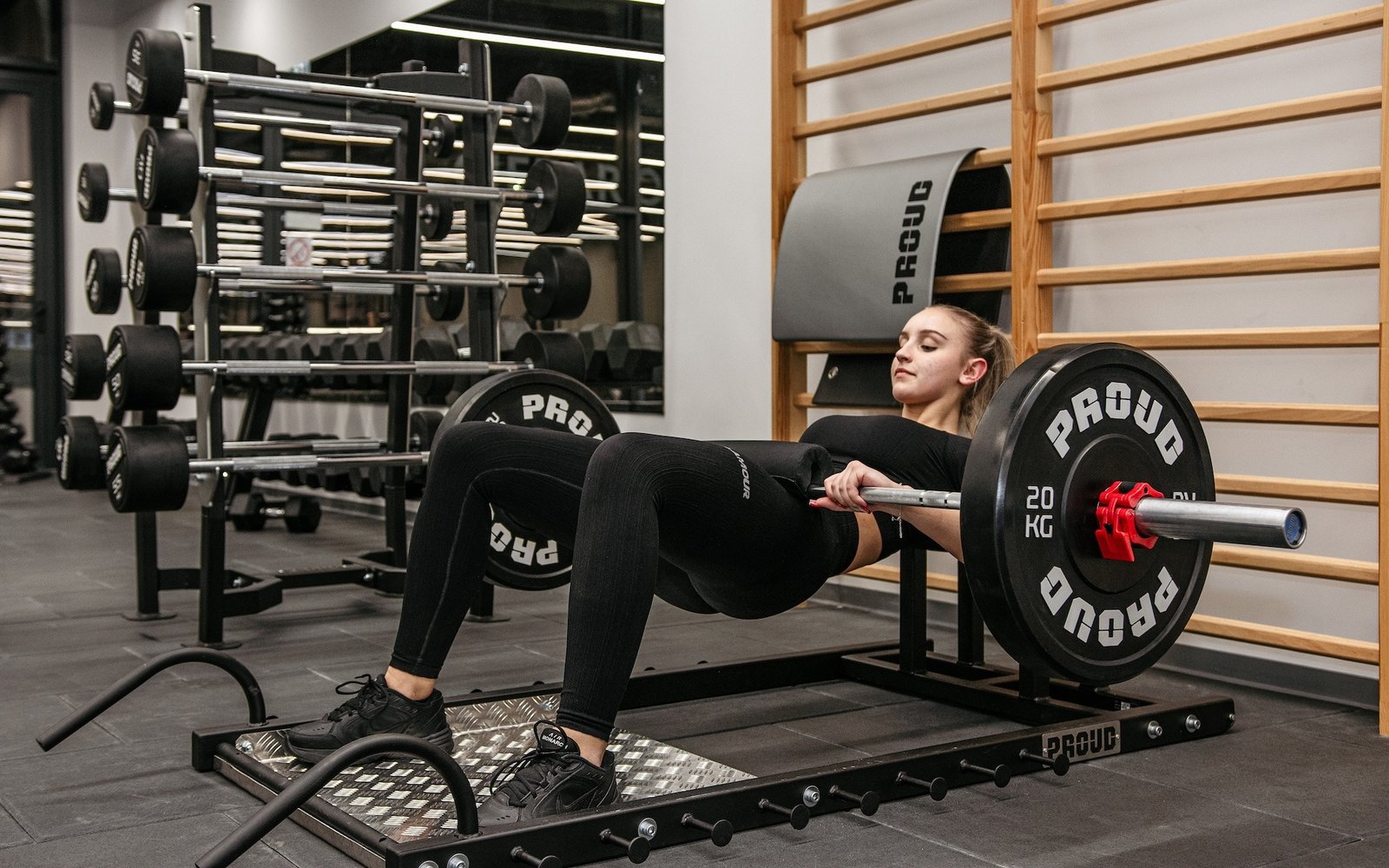
The position of the feet changes the leverage. With the feet excessively far away, you may feel the hamstrings tiring first or lose a smooth hip finish. With the feet tucked too close, the knees can travel more and the effort may shift toward the thighs. Try small adjustments while keeping the entire foot grounded, the knees following a controlled line and the pelvis moving in a repeatable arc. The exact position that feels balanced depends on the individual.
At the top of either lift, the hips should finish the motion, not the lower back. Keep the ribs reasonably stacked above the pelvis and think of the glutes bringing the thighs in line with the torso. A natural amount of spinal movement can occur, but deliberately forcing a bigger back arch makes comparison between sessions misleading. Pause briefly to determine whether the hips can maintain position without the torso continuing to extend.
Another common mistake is allowing the bar and body to fall rapidly from the top, then relying on rebound to start the next repetition. Slow the descent, remove the bounce and use a load that stays under control. The hip thrust also demands attention to bench stability and neck comfort. The bridge demands attention to where the bar settles and to keeping hands clear of plates when they approach the floor.
Check each working set against four simple standards: stable support, consistent foot pressure, the same hip finish and a final rep that resembles the first. If a standard fails, shorten the set or lower the load before abandoning the exercise. Technique is not about making every lifter look identical; it is about giving your own training a consistent baseline.
5. Combine hip thrusts with squats, hinges and machines
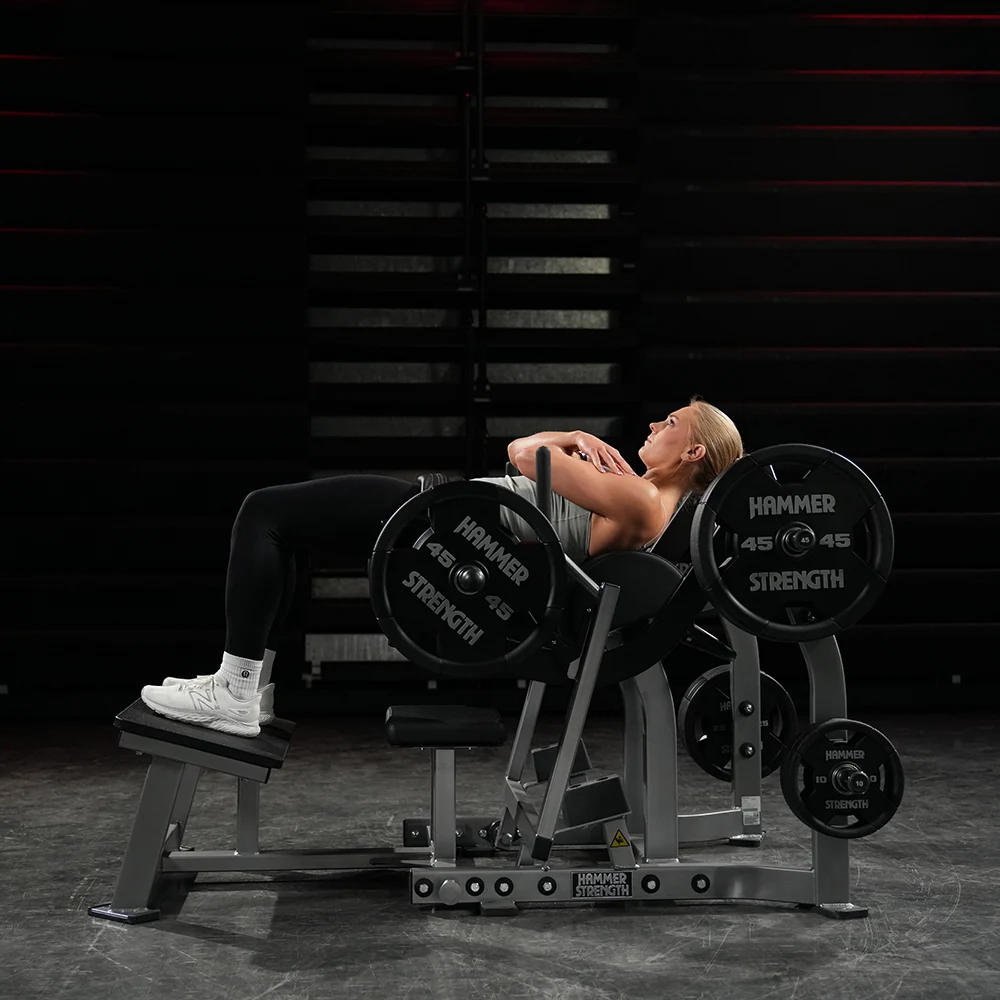
Exercise selection is an exercise in tradeoffs, not a hunt for one magical glute lift. A hip thrust makes heavy hip extension easy to quantify when its bench, bar and feet remain in consistent places. A squat asks the hips and knees to extend together and offers its own broader strength and quadriceps demands. A Romanian deadlift loads a hinge with the hips moving backward; a leg press allows substantial lower-body work with a more supported torso. An individual machine changes the resistance path again.
The 2025 synthesis offers a broad reason to include effective hip-extension training but not a mandate to abandon other compound lifts. If you already squat and hinge hard twice per week, adding four more glute accessories is rarely necessary. If glute size is a priority, start by adding a small amount of high-quality thrust or bridge work to a sustainable plan and reassess after a few weeks. People who need lower-body performance should still keep the other patterns they want to improve.
Equipment fit matters as much as the exercise name. A purpose-built glute-drive machine can reduce setup friction, but its pivot, back support and load curve differ from a free barbell. Do not assume a plate count or machine-stack number equals the effort of another machine. When switching equipment, establish a new performance baseline. Keep the range you can control, avoid aggressive lower-back extension at lockout and choose a weight that lets you repeat the same shape for the final rep.
For a simple two-session week, pair one knee-dominant movement with one hip-extension variation on the first day, then one hinge with a shorter-range bridge or hip-thrust accessory on the second. The split is a practical starting template rather than a finding tested directly in the review. One or two targeted glute exercises can complement your existing leg work without turning it into a separate marathon.
Equipment Worth Exploring
Explore equipment, accessories and gear from our carefully selected range.


Rubber Hex Dumbbells
Rubber-coated hex dumbbell pairs with a stable shape for home and commercial strength training.

Standing Abductor
Plate-loaded standing hip abductor for targeted outer-glute and hip-stability training.

Studio V-Squat
Plate-loaded V-squat machine for supported lower-body strength training.


Multi Bench MBX-650 2.0
Adjustable multi-bench with roller adjustment, 15 backrest positions and accessory mounts.

Cast Iron Kettlebells
Textured cast-iron kettlebells for swings, squats, carries, and full-body training.


6. A six-week progression that keeps glute work measurable
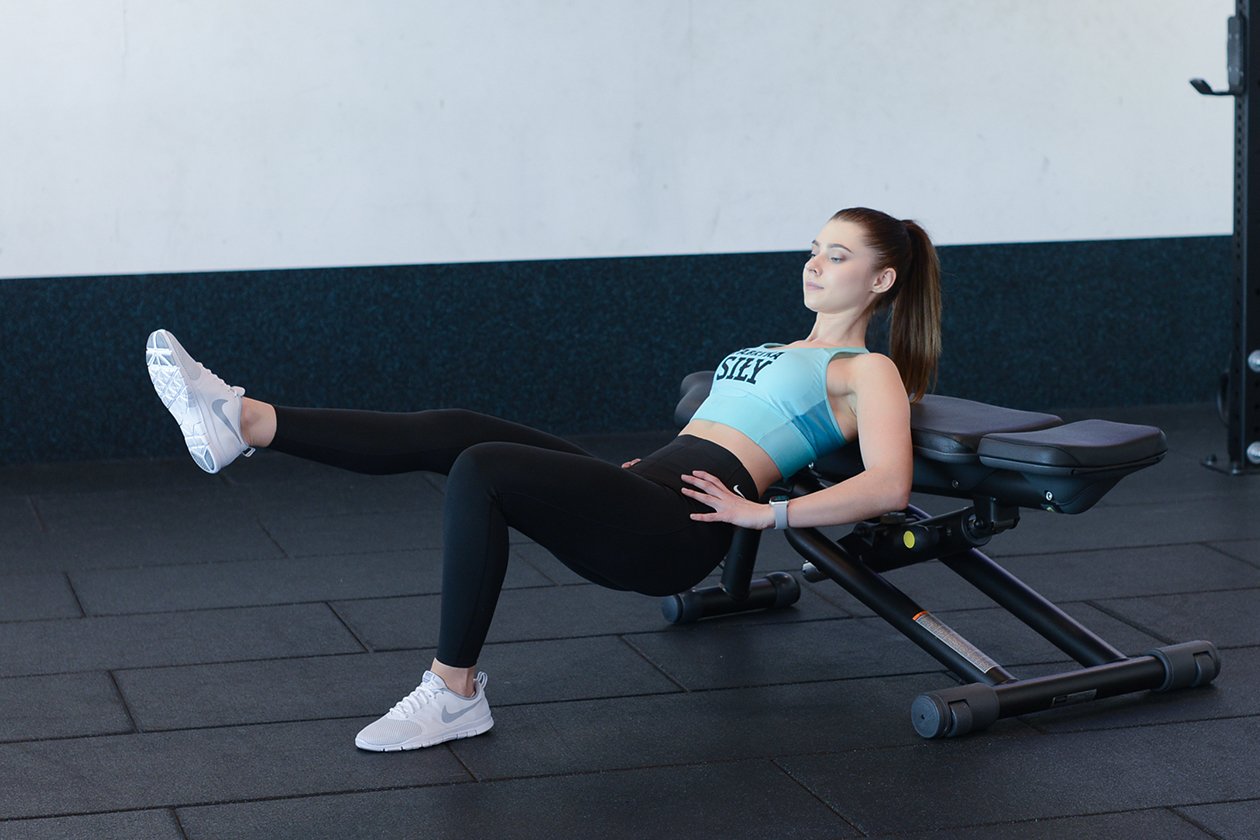
For six weeks, retain a main lower-body lift you already know, then make hip extension a tracked assistance movement. Train glutes on two nonconsecutive days rather than maxing out every session. On Day A perform your usual squat or leg press work and follow with a barbell hip thrust. On Day B train a hinge such as a Romanian deadlift and finish with a floor glute bridge or a lighter hip thrust. If you have only one leg session, combine one compound with one hip-extension movement and use the same progression rules.
| Weeks | Day A: hip thrust | Day B: bridge or light thrust | Progress check |
|---|---|---|---|
| 1–2 | 3 × 8–10 | 2 × 12–15 | Consistent bench/foot marks; 2–3 reps left |
| 3–4 | 3 × 10–12 | 3 × 10–12 | Earn extra reps before raising load |
| 5–6 | 3–4 × 8–10 | 2–3 × 10–15 | Maintain full chosen range under fatigue |
Use moderate effort at first: approximately two or three technically clean repetitions in reserve. Allow roughly 90–150 seconds between challenging assistance sets, or longer if you cannot repeat your form. Add a small load increment only when all sets reach their rep target without shortening the movement or turning the top into an exaggerated back arch. A single-leg bridge may replace a bodyweight bilateral bridge if it remains comfortable and level through the pelvis.
Record the exercise version, load, completed reps, seat or bench arrangement, foot position and working-set difficulty. Reassess after week six: did you gain repetitions or load at comparable range, without irritating hips or lower back? If yes, the variation is serving its role. If your main squat or hinge performance suffers from fatigue, reduce extra hip-extension volume before declaring an exercise ineffective. Consistency makes the research useful; piling on movements simply because they were studied does not.
Bodybuilding Shirts & Workout Gear
Bodybuilding shirts, tanks and gym gear for lifters chasing muscle, size, symmetry and the pump.

Spread Cheeks Not Hate Sweater Glutes Lovers Meme T-Shirt
Show some gym-day personality with “Spread Cheeks Not Hate”.

Big Booty Energy Glute Lover Sweater Meme T-Shirt
For laid-back days and lifting humor: “Big Booty Energy”.

Big Butt Energy Sweater Leg Day & Glute Gains Meme T-Shirt
For laid-back days and leg-day humor: “Big Butt Energy”.

Fantastic Booty Leg Day Sweater Squats & Glutes Meme T-Shirt
Keep things casual with a little “Fantastic Booty” attitude.

Funny Booty Out Of This World Gym | Alien Meme Workout T-Shirt
Keep things casual with a little “Booty Out Of This World” attitude.

Hippo Thrust Meme Leg Day Hooded Booty Day & Glute Hoodie
Keep it laid-back with a little “Hippo Thrust Gym Meme” attitude.


Motivation – Squats & Booty Builder Leg Day – Strong T-Shirt
Bring “Gym Motivation” humor to your next gym day.

Never Skip Legday – Chicken Legs Meme , , & Leg Day T-Shirt
Heavy lifts, good laughs, and a little “Never Skip Legday” energy.

Heavy Metal Skeleton Squat for Powerlifters, Bodybuilde Sticker
Give your everyday gear a playful “Heavy Metal Skeleton Squat” twist.