Advertising disclosure: This page includes affiliate product links that may earn us a commission, as well as products from our own store.
Wrist Rollers: Winding Direction, Support and Repeatable Forearm Work
A wrist roller can make a small load feel demanding surprisingly quickly. The useful part is the repeated wrist work, not the spectacle of a hanging plate or the longest possible set. Handle thickness, winding direction, support and strap travel all change the task. Unless those details stay reasonably consistent, the number written beside the exercise tells only part of the story.
Start by deciding what you want to practise: controlled wrist flexion and extension, additional forearm work after lifting, or simply a different accessory exercise. Then choose a setup you can operate without swinging the load or turning the movement into an endurance test for your shoulders. These five checks make the exercise easier to understand and progress.
1. Check the roller, attachment and available travel
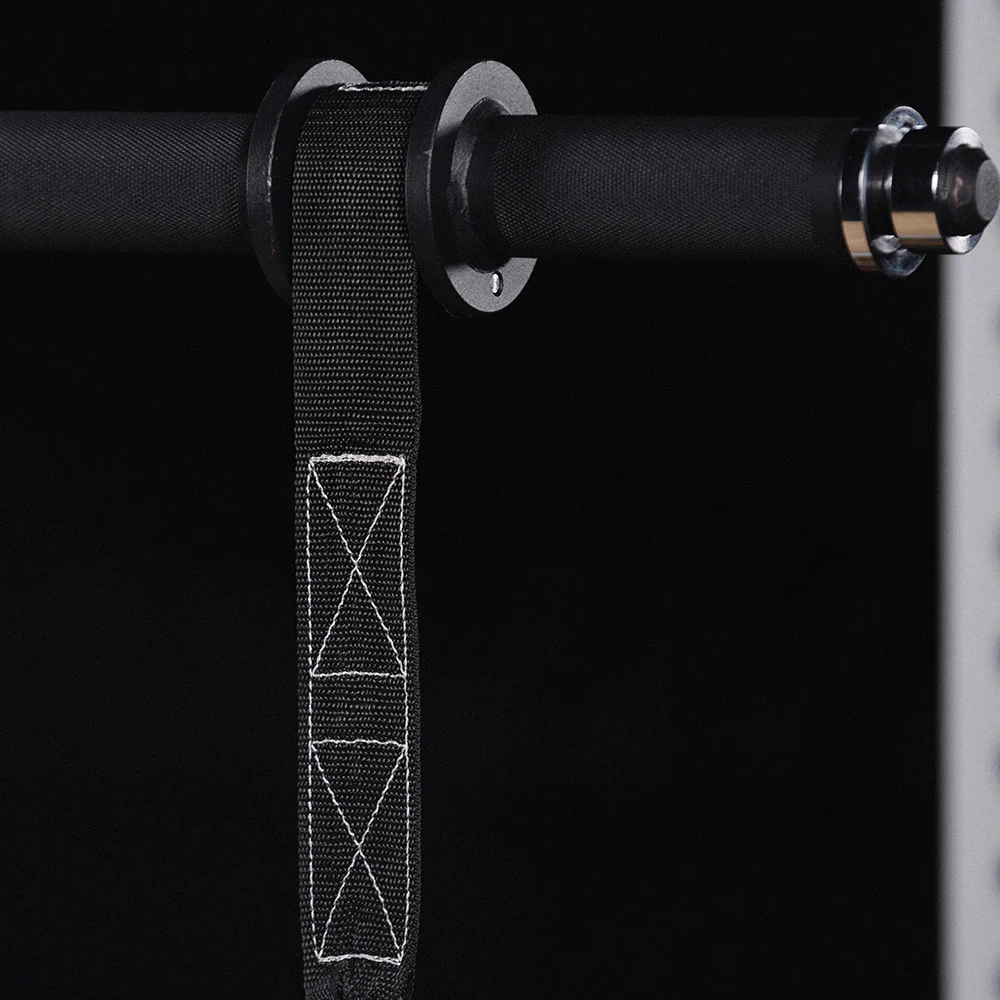
Look at the whole loading path before picking a weight. A handheld roller needs secure handles, an intact cord or strap, and a connection that keeps the resistance attached throughout the cycle. A rack-mounted version also needs the correct fitting and retaining hardware for that rack. Follow the device’s instructions rather than assuming that any roller can be balanced across two supports or fitted to an arbitrary upright.
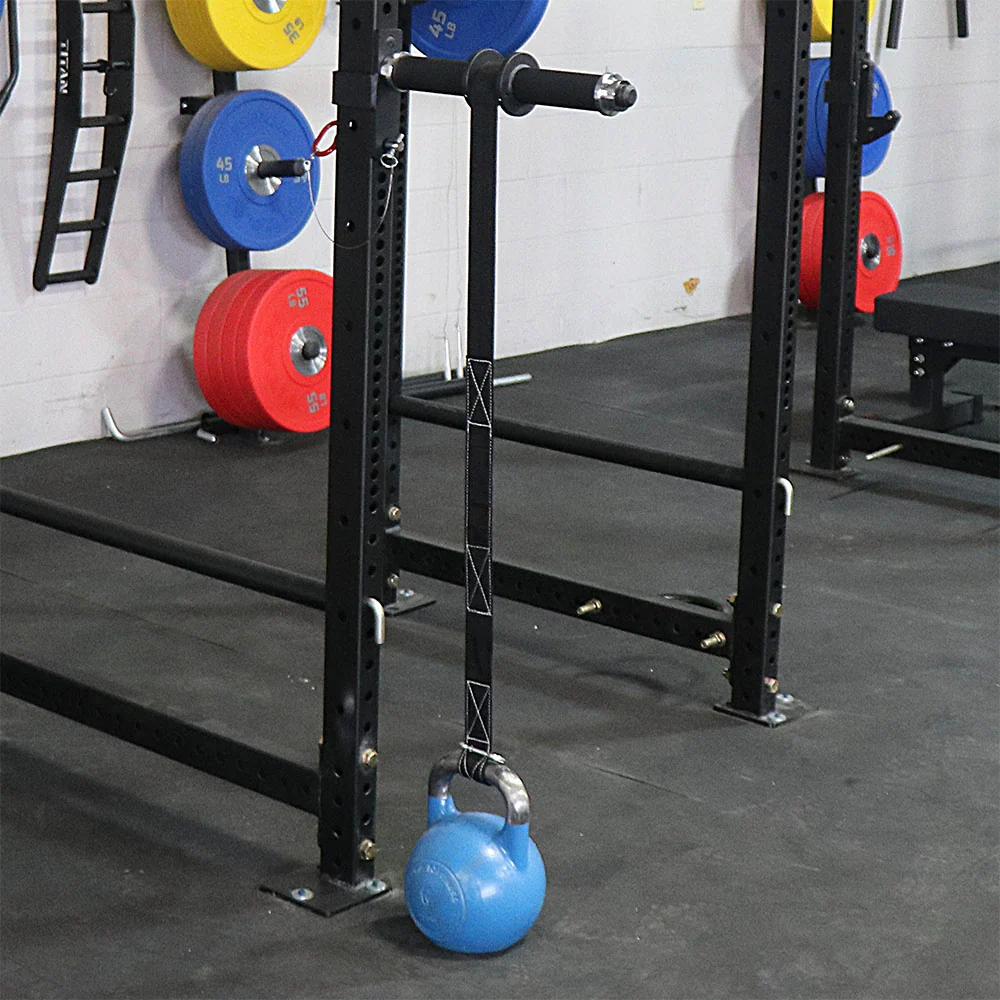
Check how the load connects. Some systems use a loading pin through weight plates; others accept a compatible kettlebell or another specified attachment. Plate hole size and pin size must match. A dumbbell is an alternative only where the attachment method is designed to hold it securely. A loose loop around an awkward weight is not a substitute for a dependable connection.
Leave a clear path below the roller and keep your feet away from the hanging load. Confirm that the weight can reach its intended lower position without hitting the rack, a bench or your legs. At the top, stop before the attachment jams against the handle or mount. The usable movement is the clear distance between those points, not necessarily every centimetre of the supplied strap.
Record the starting height and travel you actually use. A short run from a waist-height handheld setup is a different amount of work from a longer run on a high mount. Neither needs to be exaggerated by standing on an unstable box. Choose a secure position and enough clearance to complete the task under control.
2. Learn both winding directions without letting the weight run
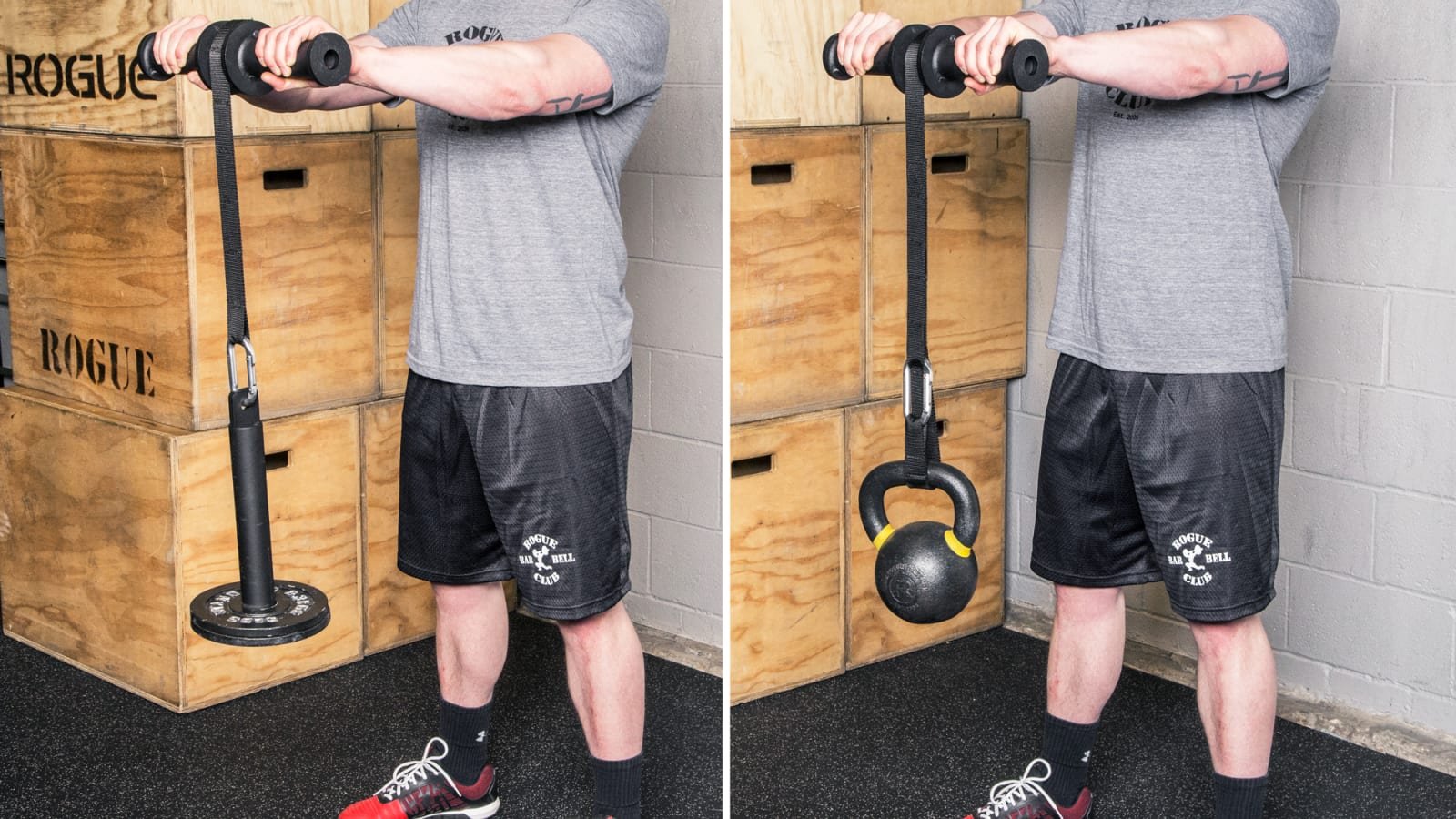
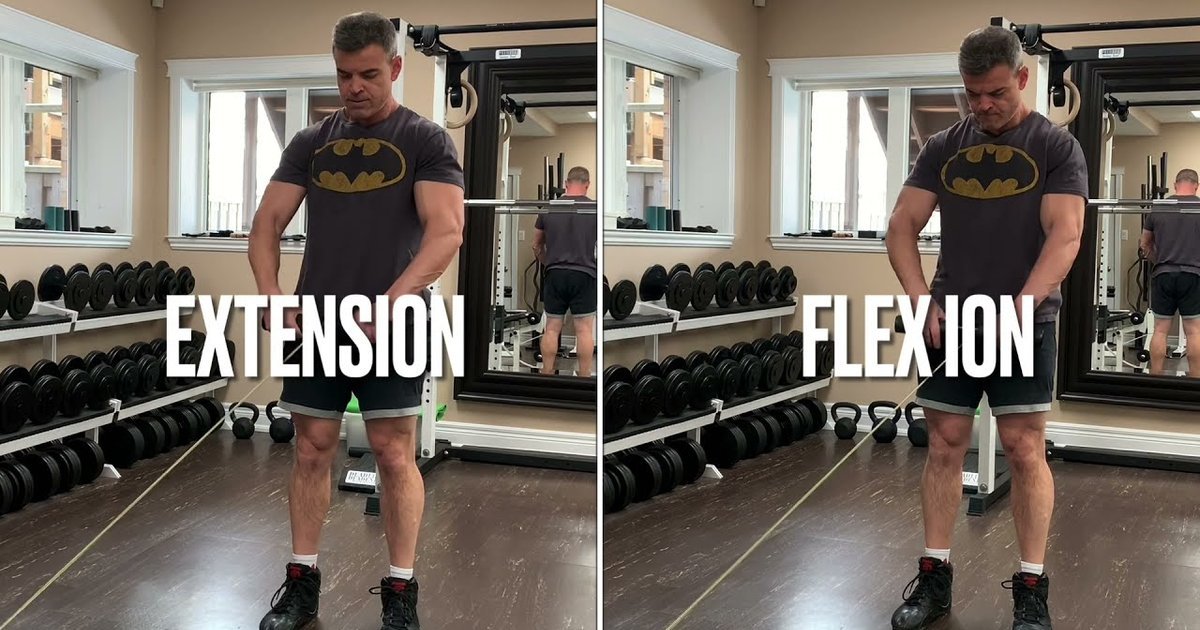
Wrist flexion brings the palm toward the inner forearm; extension moves the back of the hand toward the outer forearm. A roller can load repeated wrist actions in either direction, but instructions such as “roll forward” are ambiguous. The direction that raises the weight depends on how the strap is wound and where you stand relative to the device. Watch your own wrist movement rather than relying on the direction a handle appears to turn.
Begin with a light load and alternate small, deliberate turns between the hands. Keep the roller approximately level and avoid using large elbow or shoulder movements to lift it. Regripping is part of operating the handle; repeatedly jerking the whole assembly upward is a different strategy. The load should rise as the strap winds, not because you are heaving the bar higher.
Lower with the same attention. Reverse the turns gradually instead of opening the hands and allowing the handle to spin. Finish with the weight supported at its lower resting point before changing the winding direction or adjusting the attachment. Do not try to rescue a slipping load by reaching into the moving strap.
It is reasonable for the two directions to feel different. Use a load that allows control in the direction you are practising rather than forcing both to share the same number. A hard forearm sensation is not proof of better execution. If wrist movement becomes uncomfortable, shorten the set or reduce the load instead of forcing the final turns.
3. Choose handheld or supported work for a clear reason
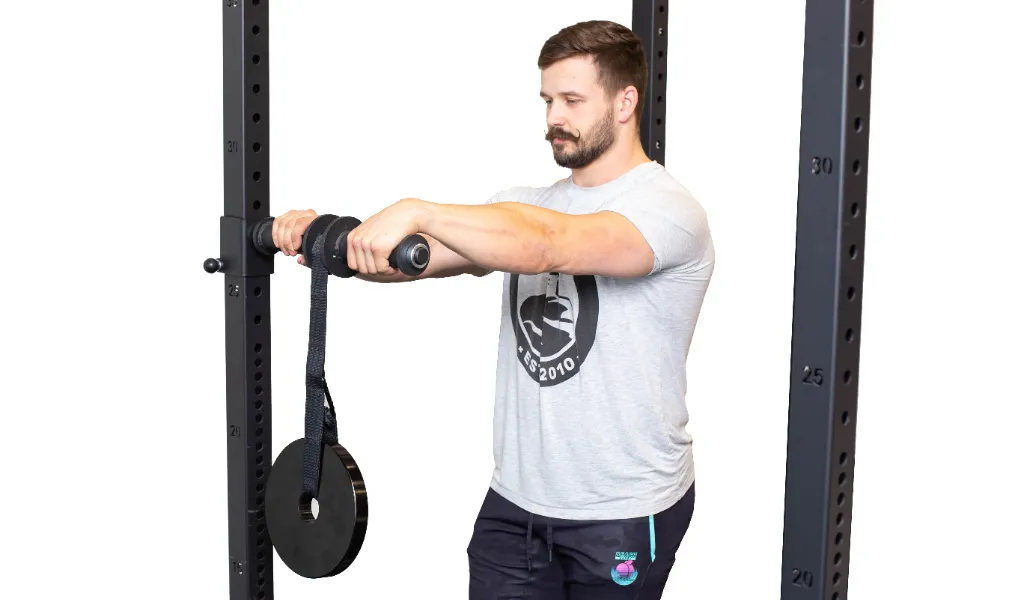
Holding the roller in front of you adds the task of supporting the device and hanging resistance. With the arms raised, the shoulders may become the reason you stop even when the wrists could continue. That does not make the set useless, but it changes what limited it. Write “shoulders stopped the set” in the log rather than interpreting every unfinished run as a forearm strength limit.
A lower handheld position can reduce that overhead-like holding demand, although it also reduces the available distance between the roller and floor. Keep the chosen arm position consistent from session to session. Raising the hands as the weight approaches the floor quietly extends the run and makes comparisons harder. Likewise, bending the elbows more with each turn changes the exercise while you are doing it.
A purpose-built rack mount supports the roller, letting you concentrate on turning it. Set the height so you can reach the handles comfortably without leaning, shrugging or crowding the load. Confirm that the rack and attachment remain secure. Supported does not mean unlimited: the manufacturer’s load rating and attachment requirements still apply, and the wrists still have to control the resistance.
Choose the version that suits the task and equipment available. Handheld work is portable and simple to organise; a compatible supported version can make wrist work easier to separate from shoulder fatigue. Treat a change between them as a new baseline. A heavier supported run is not automatically evidence that the previous handheld performance improved.
4. Progress a defined cycle rather than an improvised challenge
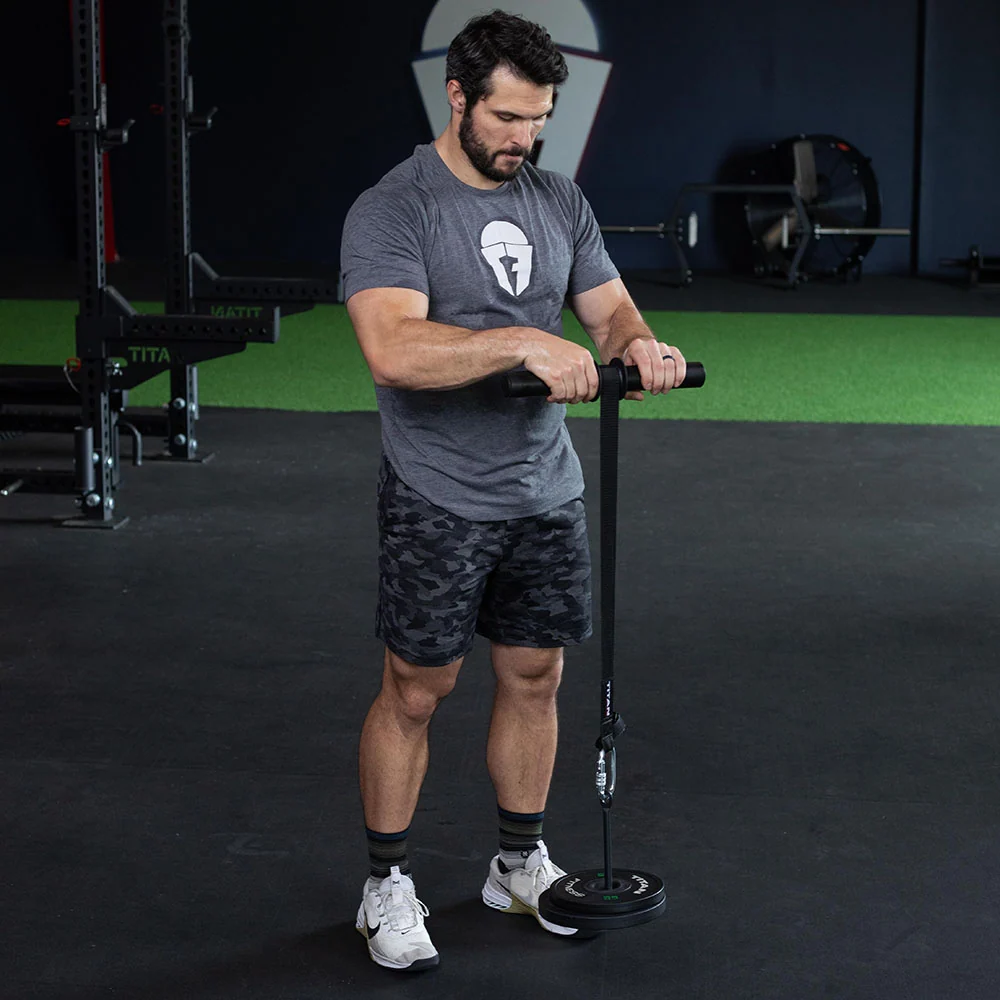
Define a cycle before counting it. One useful convention is a controlled winding from the starting position to the upper stopping point, followed by a controlled return. Record that as one complete up-and-down cycle. Also note which winding direction you used, because a log containing only “three reps” is difficult to interpret later.
Handle and drum size matter. A thicker winding surface takes up more strap per revolution, so fewer turns may cover the same distance. A different roller can therefore feel different at the same hanging weight. Changing strap length, mount height and handle diameter while comparing only kilograms creates several moving targets at once. Keep those variables stable when judging progress.
As a modest starting experiment, try one controlled cycle in each direction, rest until you can repeat the movement well, and assess whether a second set is appropriate. This is an adjustable practice example, not an established optimum. Your existing pulling, carrying and direct arm work affect how much additional forearm training fits comfortably.
First make the same cycle smoother and more repeatable. Then consider another cycle or the smallest practical weight increase, changing one variable at a time. Adding a small plate can be a large percentage jump when the starting load is light. If the added weight makes the roller tilt, the load swing or the lowering speed escape your control, return to the previous setup. Log the result honestly instead of preserving a higher number through shorter travel.
5. Fit wrist work around pulling and your wider arm routine
Place demanding wrist-roller work after exercises that require a reliable grip if those lifts are the priority. Exhausting the hands first can make rows or other pulling work harder to perform as intended. That is a scheduling choice, not a reason to avoid forearm training. Keep the accessory work small enough initially that you can see how it affects the next session.
Do not treat every grip task as interchangeable. Holding a heavy implement, closing a gripper and repeatedly moving the wrist are different actions. A wrist roller combines holding the handle with wrist movement; it does not establish that every form of grip performance will improve equally. Choose exercises for the action you want to train, rather than collecting several versions solely because each produces a forearm burn.
If you do not have a roller, supported dumbbell wrist curls and reverse wrist curls offer another way to organise controlled wrist movement. Use suitable light weights and a stable forearm position. A barbell version has its own grip and clearance constraints. The equipment below includes dumbbells, handles, bars and compatible plate options for these broader forearm-training choices; none should be mistaken for a complete wrist-roller kit.

Equipment Worth Exploring
Explore equipment, accessories and gear from our carefully selected range.


Rubber Hex Dumbbells
Rubber-coated hex dumbbell pairs with a stable shape for home and commercial strength training.


Grip Plates
Rubber-coated weight plates with handholds for loading barbells and machines.

Competition Plates
Competition-style bumper plates for Olympic lifts and loaded strength training.


For the wider arm-day routine, keep curls, forearm accessories and progression notes distinct. Clothing or a grip-day slogan can be part of the gym ritual, but the useful training habit is consistent execution: same setup, clear cycle count and a controlled finish. Choose repeatable work you can recover from, then let the log show when it is time to add more.

Funny Gym Shirts & Workout Gear
Funny gym shirts, tanks, hoodies and workout gear for lifters who like training hard.

Grip Training Essential Gymbro Jumper & T-Shirt
For laid-back days and lifting humor: “Grip Training Essential”.

Get A Grip Grip Training Decal & Gymbros Sticker
Give your everyday gear a playful “Get a Grip” twist.

Welcome To The Gun Show Bro Meme Huge Arms Tank Top
Train hard, laugh a little, and rep “Welcome to the Gun Show”.


Girls Just Wanna Have Guns Shirt Huge Arms & Gains T-Shirt
Show some lifting attitude with a playful “Girls Just Wanna Have Guns” tee.

Shirt – Guns N Poses – Rock Music & Huge Arms Meme T-Shirt
Rep “Guns N Poses” humor in and out of the gym.

For Whom The Bell Curls Dumbbell Metallica Heavy Metal Hoodie
Stay casual and show some metalhead attitude with “For Whom The Bell Curls”.

Gym Dost Thou Even Curl Medieval Knight Bicep Shirt & B T-Shirt
Make gym days more fun with “Dost Thou Even Curl Medieval Knight Bicep” style.

Big Gun Hooded Pullover AC DC Rock Big Arms Fans Hoodie
Stay casual and show some metalhead attitude with “Big Gun”.