Advertising disclosure: This page includes affiliate product links that may earn us a commission, as well as products from our own store.
Lateral Lunges: Find Your Step Width, Control the Depth and Add Load
A lateral lunge asks you to accept your weight sideways, sit over one leg and push back to the start. That sounds straightforward until a wide step leaves you reaching for the floor, your heel lifts or your return becomes a hop. The useful goal is a repeatable movement you can control in both directions. Getting lower is only progress when the foot, knee and trunk remain organised.
For lifters accustomed to squats and forward-backward movements, this is a different coordination task. Use it as an accessory exercise rather than a test of how much stretch or weight you can tolerate. Start with a version you can repeat, then change one part of the challenge at a time.
Build a Sideways Step You Can Brake
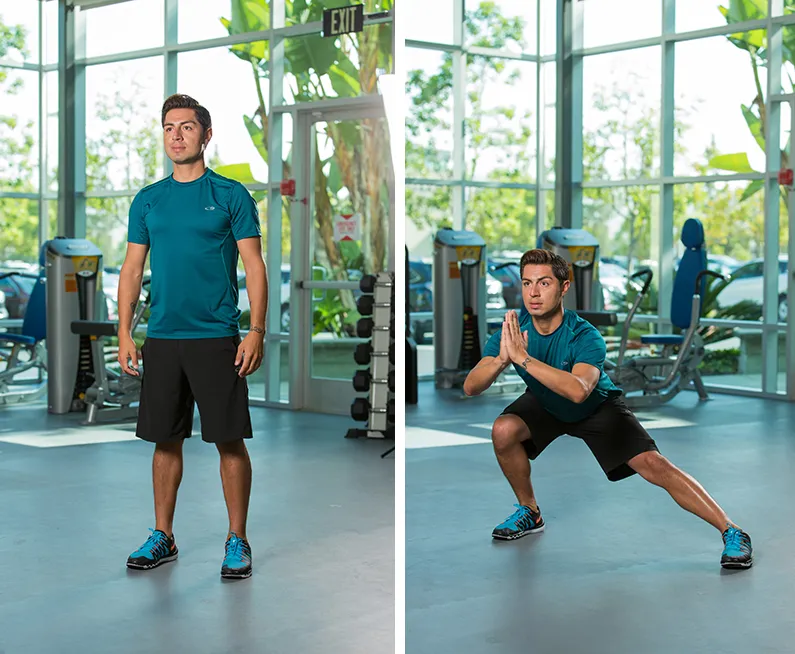
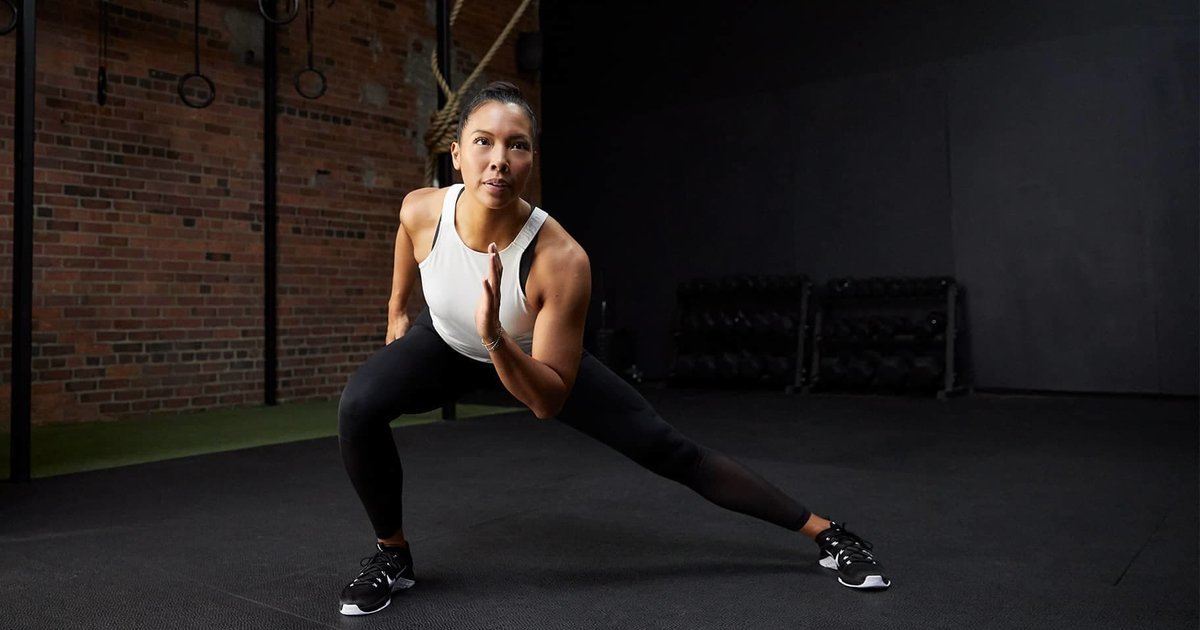
Begin standing tall with your feet around hip-width apart and enough clear floor on either side. Step to your right, allow the right knee to bend and send your hips back over that leg. The left leg stays relatively straight. Keep the working foot planted, let your torso incline naturally with the hip bend and look ahead instead of dropping your head to inspect the floor.
The step should be wide enough to shift your weight, but short enough that you can stop without scrambling. There is no universal distance in centimetres. A tall lifter, someone with long thighs and someone with limited ankle motion may need different starting widths. A useful trial is to take a modest step, pause briefly at a comfortable depth and return. If you cannot reverse without dragging the other foot, shorten the step.
Think about braking before pushing. Land quietly, establish contact through the heel and the base of the big and little toes, then bend. You are moving into a position rather than dropping until something stops you. Let the knee travel generally in the direction of the foot; do not deliberately twist the knee outward while keeping the foot fixed.
Push the floor away with the working leg and bring yourself back over the starting stance. You can complete all repetitions on one side before switching, which makes setup easier to compare, or alternate sides at an unhurried pace. Count repetitions per side in your log. Eight total alternating steps and eight on each side are different workloads.
Choose a Depth That Keeps the Foot and Hip Connected
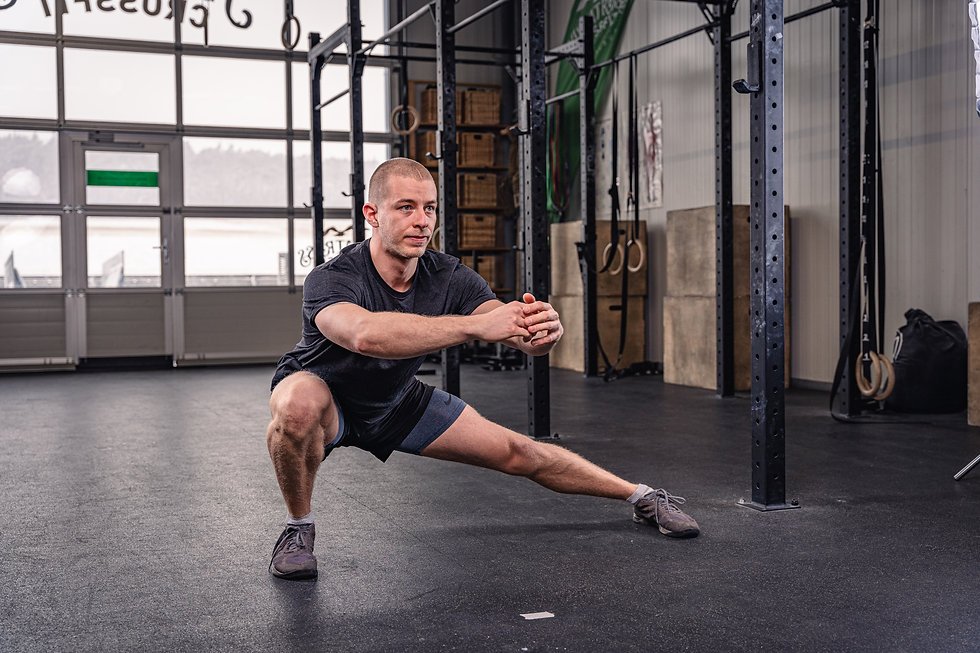
A deeper lunge changes the demands, but a low position is not automatically the right starting point. Stop where you can keep the working foot secure, maintain a comfortable knee path and return without a sudden trunk swing. You may feel the inner thigh of the straighter leg lengthen. A stretch sensation is different from a sharp pull, groin pinch or joint pain.
Some forward torso inclination is expected when the hips move back. The problem is losing your chosen position: rounding down to reach a weight, collapsing sideways or rotating the shoulders to escape the bottom. Try filming a few light repetitions from the front and diagonally from the side. Compare the first and last repetition rather than judging one flattering frame.
A very deep side squat, often called a Cossack squat, can involve a wider stance and the straighter leg’s toes lifting as the foot rotates onto its heel. That is a distinct variation, not a mandatory finishing position for every lateral lunge. Do not copy its foot position accidentally while claiming to practise a planted-foot stepping lunge. Decide which movement you are training and keep the comparison consistent.
If stepping and lowering together feel confusing, use a stationary wide stance and shift toward one side through a shorter range. You can lightly hold a fixed support that cannot slide or tip. Practise the weight shift first, then reintroduce the step. Support is a way to reduce the balance demand; it is not cheating or evidence that you should force a deeper position.
Add Resistance Without Letting It Choose Your Form
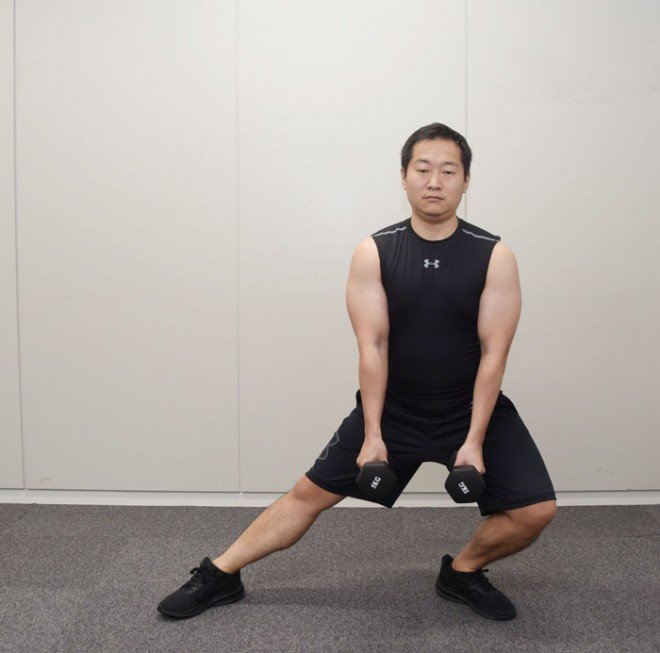
Bodyweight is enough while you learn the path. When a complete set feels controlled, a light dumbbell held close to the chest offers a simple next step. Keep space to breathe and do not rest the weight on your throat. The load should travel with your torso while you sit over the working hip; it should not pull you down or become something you throw forward to stand up.
Holding two dumbbells at your sides is another option, but first check clearance. Large heads can contact a thigh or the floor before you reach your intended depth. That contact changes the exercise and can abruptly unload the working leg. Choose smaller weights, a different holding position or a slightly shallower controlled range rather than reaching around the weights.
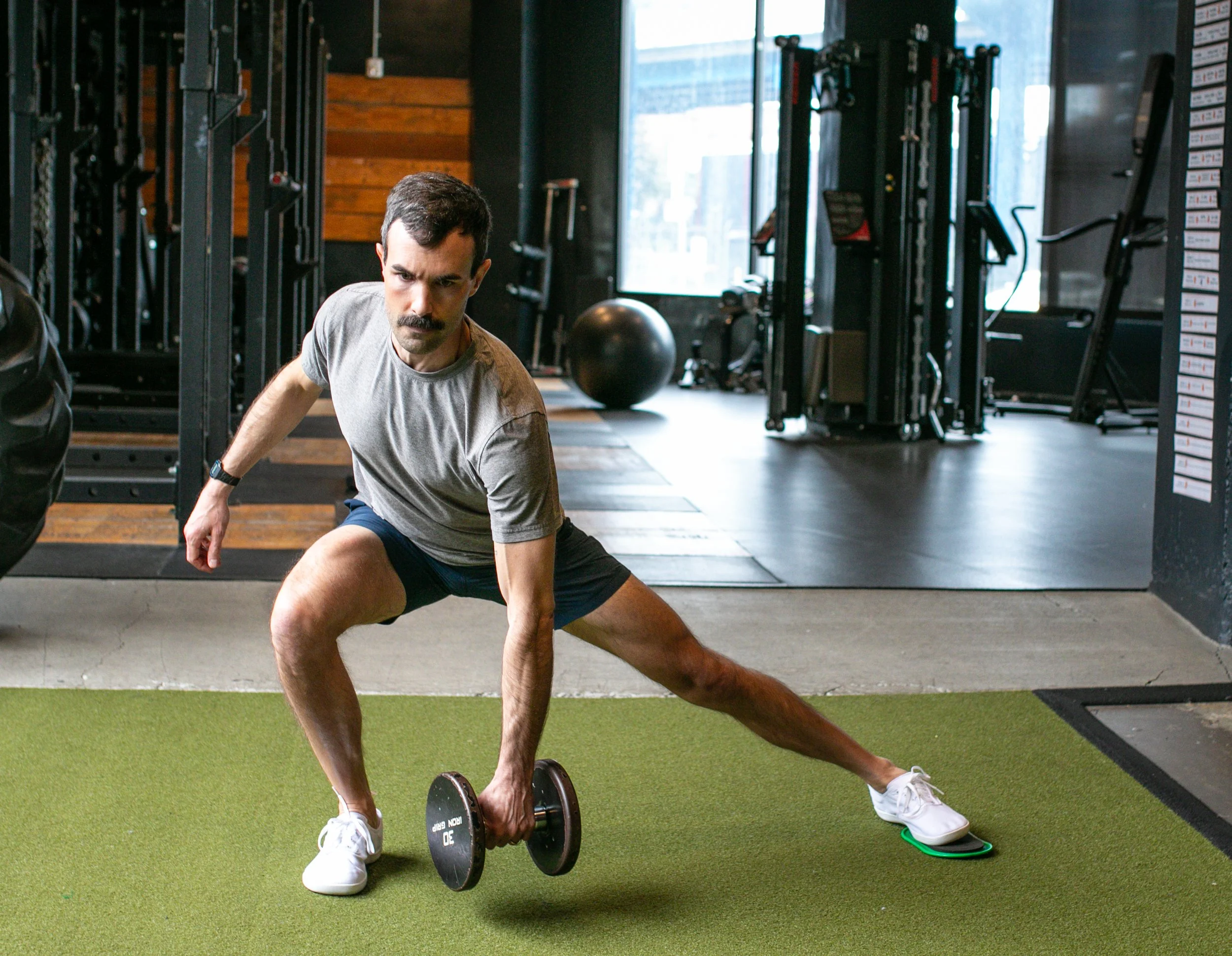
A single weight held down on one side creates a different balance challenge. It can be useful, but it also makes comparisons less straightforward. Record which hand holds it and which leg steps. Do not assume that a lunge with a weight opposite the working leg is equivalent to the same weight held against your chest. The dumbbell label describes mass, not every part of the task.
Dumbbells and kettlebells both work when their shape fits the movement. Adjustable equipment can make small increases convenient; fixed weights are equally valid. A weighted vest keeps the hands free but still adds load that you must brake. None is required, and changing equipment should not become a reason to skip the bodyweight practice that makes later loading useful.
When adding weight, keep the first session conservative. If your usual eight smooth repetitions become six shortened lunges and two sideways recoveries, the increase exceeded your present control. Reduce it and build again. The aim is a comparable set with more resistance, not a heavier object accompanying a different exercise.

Equipment Worth Exploring
Explore equipment, accessories and gear from our carefully selected range.


Rubber Hex Dumbbells
Rubber-coated hex dumbbell pairs with a stable shape for home and commercial strength training.

Cast Iron Kettlebells
Textured cast-iron kettlebells for swings, squats, carries, and full-body training.

Leg Extension/Curl BCO-780
Leg extension and lying leg curl combo with plate loading, band pegs and a cable-loading option.

Seated Leg Combo BCO-680
Adjustable seated leg extension and leg curl machine with band pegs for added resistance.
Separate Useful Variations From Accidental Compensation
Common problems often come in pairs: stepping too wide encourages a hard inner-thigh stretch, while stepping too short can turn the movement into a cramped sideways squat. Test small changes before deciding that your hips are incapable of the exercise. Change the width by a small amount, perform three slow repetitions and compare comfort and the return path.
A lifting heel can indicate that the current combination of depth, step and ankle position does not fit you. First reduce the depth or adjust the step. Do not automatically prop up your heel or force your toes to a precise angle copied from another lifter. A small natural turnout may suit some people, but the knee and foot should work together rather than turning in opposing directions.
If you keep pushing off the straighter leg to escape the bottom, make the working side’s task easier. Use a shorter range, less weight or a stable support, then practise returning without a jump. Some contribution from both legs is normal in a two-foot movement; the point is to avoid letting an uncontrolled rescue replace the action you intended to train.
A sliding lateral lunge is also a separate exercise. One foot stays on a slider while the other leg bends, changing the friction and the way you return. Only use a surface and slider combination you can control, with room to stop. There is no need to add a jump, kick or fast direction change simply because the slow version looks familiar. Those variations introduce different landing or balance demands.
Fit Lateral Lunges Into Leg Day and Track Honest Progress
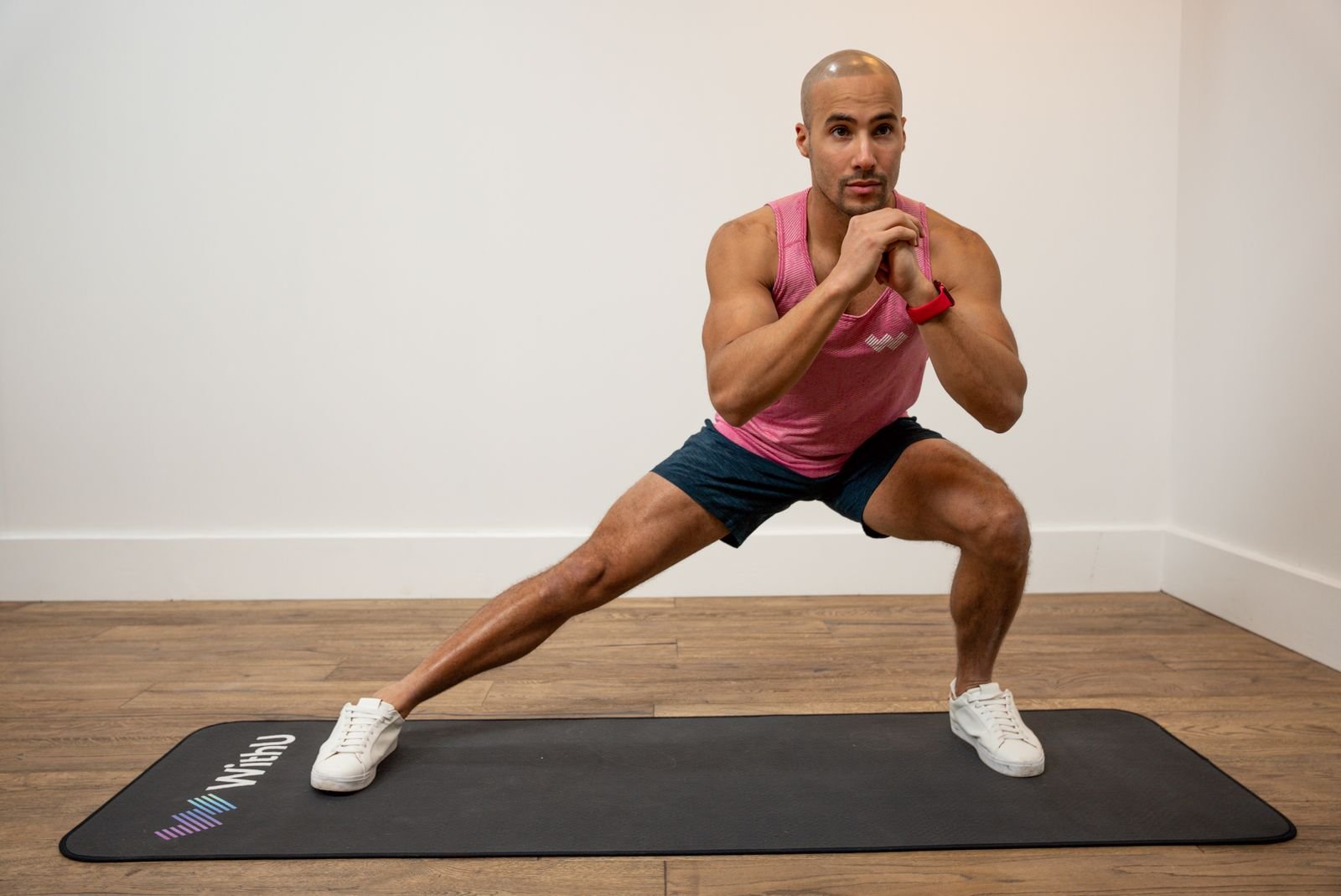
Decide whether today’s lunges are movement practice or loaded accessory work. A few easy bodyweight repetitions can introduce sideways motion before a lower-body session. Harder working sets belong where they will not compromise the exercise you care about most. If heavy squats are the priority, finish those first and keep the lunge volume modest while you learn how it affects recovery.
For a starting example, try two sets of six to eight controlled repetitions per side on two nonconsecutive training days. Leave a few good repetitions in reserve and rest long enough to regain balance and breathing. This is an adjustable example, not a scientifically established optimal dose. Someone already doing substantial unilateral leg work may need less; a novice may start with one set and a fixed support.
- First sessions: Choose a comfortable bodyweight range and repeat the same width. Finish each repetition in balance.
- Next progression: Add a repetition per side only when depth and control stay comparable throughout both sets.
- Then add load: Use the smallest practical increase, return toward the lower end of the repetition range and rebuild.
- After a difficult week: Repeat the previous workload or reduce a set. Progress does not require a new challenge every session.
A leg-extension or leg-curl machine can supply complementary knee-focused work in the same session, but it does not reproduce the lateral weight shift. Conversely, a lateral lunge is not a complete replacement for every squat, hinge or hamstring exercise. Choose a few movements for clear purposes instead of collecting variations until the session becomes unmanageable.
For example, record two sets of eight per side with one light dumbbell at the chest, a brief pause and a consistent step. At the next session, matching that position for nine repetitions is a clearer increase than using a heavier weight while cutting the depth in half. If only one side reaches nine smoothly, keep both at eight until the less confident side catches up. A small floor marker can help repeat your step, provided it cannot slide under your shoe. Use it as a reference rather than a distance you must reach when tired.
Write down the holding position, load, repetitions per side, approximate step width and whether support was used. Note any next-day inner-thigh soreness that affects your sport or next workout. Mild unfamiliar muscular soreness can happen; increasing pain, persistent groin discomfort or a change in your walking deserves a reduction in training and an appropriate assessment rather than another harder set.
Finally, compare your own sides without forcing them to look identical. Begin with the less confident side, use a range both can manage and avoid adding extra exhausted repetitions to punish a difference. A quieter landing, steadier foot and smoother return at the same workload are meaningful improvements. Build those qualities before chasing depth or a heavier pair of dumbbells.

Leg Day Shirts & Workout Gear
Leg-day gym shirts and workout gear for lifters who never skip squats, lunges and lower-body punishment.


If You're Reading This Its Leg Day Drake Parody | Worko T-Shirt
Keep things casual with a little “If You're Reading This Its Leg Day Drake” attitude.

Patriotic Uncle Sam – I Want You To Train Legs Meme Hoo Hoodie
Make your off-duty look more fun with “Patriotic Uncle Sam”.

We Don't Need No Leg Day – Pink Floyd Meme Decal for Wa Sticker
A fun “We Don't Need No Leg Day” touch for bottles, laptops, and lockers.

Paranoid About Leg Day Black Sabbath Heavy Metal & T-Shirt
Rep “Paranoid About Leg Day Black Sabbath” humor in and out of the gym.

Yesterday I Skipped Leg Day – Beatles Music Meme Jumper T-Shirt
Show some gym-day personality with “Yesterday I Skipped Leg Day”.

Don't Skip Leg Day Sticker
Put “Dont Skip Leg Day” gym humor on your laptop, bottle, or gym gear.

Leg Day Gym Fails
Show some leg-day attitude with a playful “Leg Day Gym Fails Funny Grunge Graphic” tee.

Patriotic – Uncle Sam Squats USA Meme 4th Of July, & T-Shirt
Bring “Patriotic” humor to your next gym day.

I Love Squats | Valentine's Leg Day Muscle Shirt Vest Tank Top
Add some leg-day attitude to training with “I Love Squats”.