Advertising disclosure: This page includes affiliate product links that may earn us a commission, as well as products from our own store.
Stalled Overhead Press? Fix Your Bar Path and Build a Stronger Strict Press
A barbell overhead press can feel stubborn. You bench more, your shoulders look bigger, yet the same weight stalls halfway past your forehead. Adding another set of random raises rarely fixes a poor starting position, inconsistent practice or a weekly training load that never changes. A stronger strict press comes from treating it as both a skill and a strength lift.
The approach below starts with a repeatable standing barbell press, then adds a practical two- or three-day structure, supporting shoulder and triceps work, and a six-week progression. It is meant for healthy adult lifters who can already control a light overhead press. It is not a promise of a particular personal record or a reason to press through joint pain.
1. Define the lift before you try to get stronger
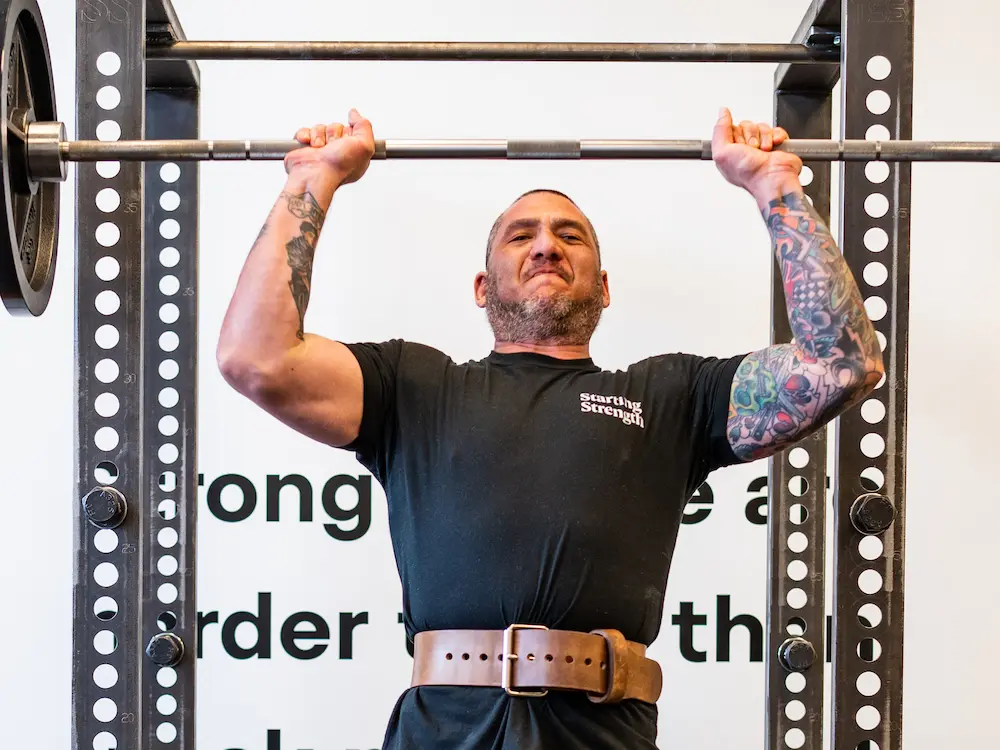
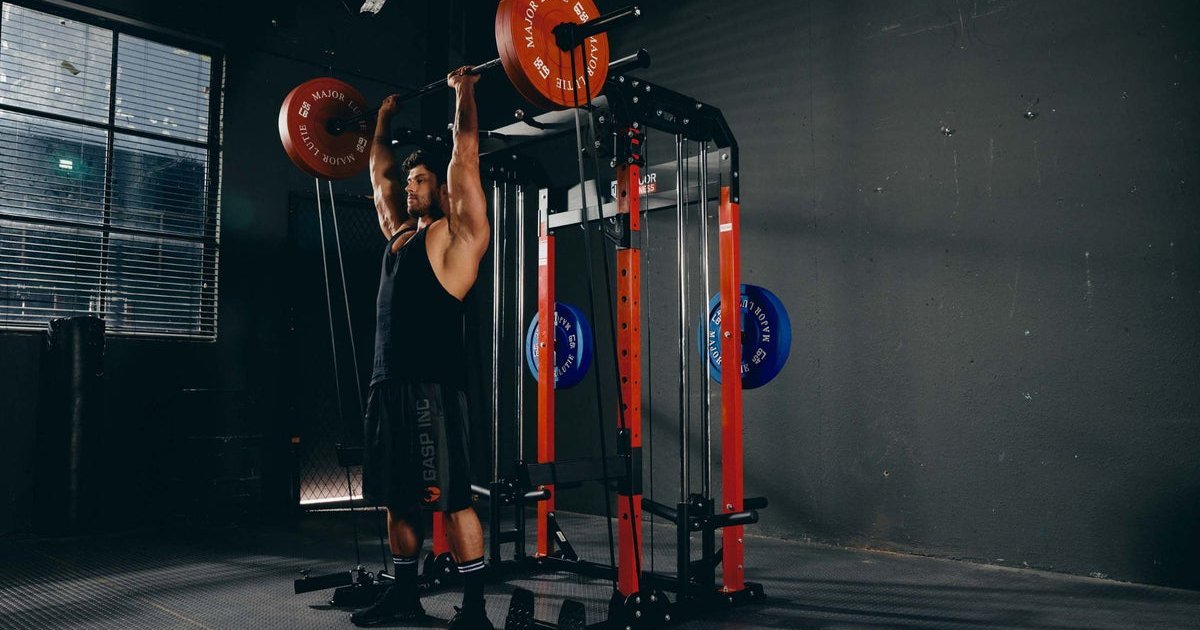
A strict overhead press begins with the bar across the front of the shoulders, moves overhead without a knee dip or intentional leg drive, and ends with straight elbows and the bar supported over the body. A push press uses a deliberate dip and leg drive to accelerate the load. Both are legitimate lifts, but they are different performance tests. If your goal is a bigger strict press, record and compare strict repetitions rather than mixing in push-press numbers.
The prime movers are the shoulder muscles, especially the front and side deltoids, and the triceps, which extend the elbows. The upper back, scapular muscles and trunk help position and stabilize the load. Your legs are not supposed to launch the bar in a strict repetition, yet firm feet, glutes and abdominal pressure give the upper body a platform to press against.
That distinction explains a common plateau. A lifter who progresses the bench press and triceps pushdown but practices a strict press only once every ten days may have enough muscle to press more weight without having refined the movement. Meanwhile, a lifter who practices the press frequently but never adds hard shoulder or triceps work may simply run out of force at the sticking point. The useful question is not whether technique or muscle matters; it is which one currently limits your next clean rep.
Set your benchmark now. Choose one grip width, one stance, a consistent bottom position and a clear rule for what counts as a repetition. Film a moderately heavy set from the side and write down its load, repetitions and perceived effort. Your later progress is meaningful only if the standard stays similar.
2. Start with a grip that stacks your wrists and forearms
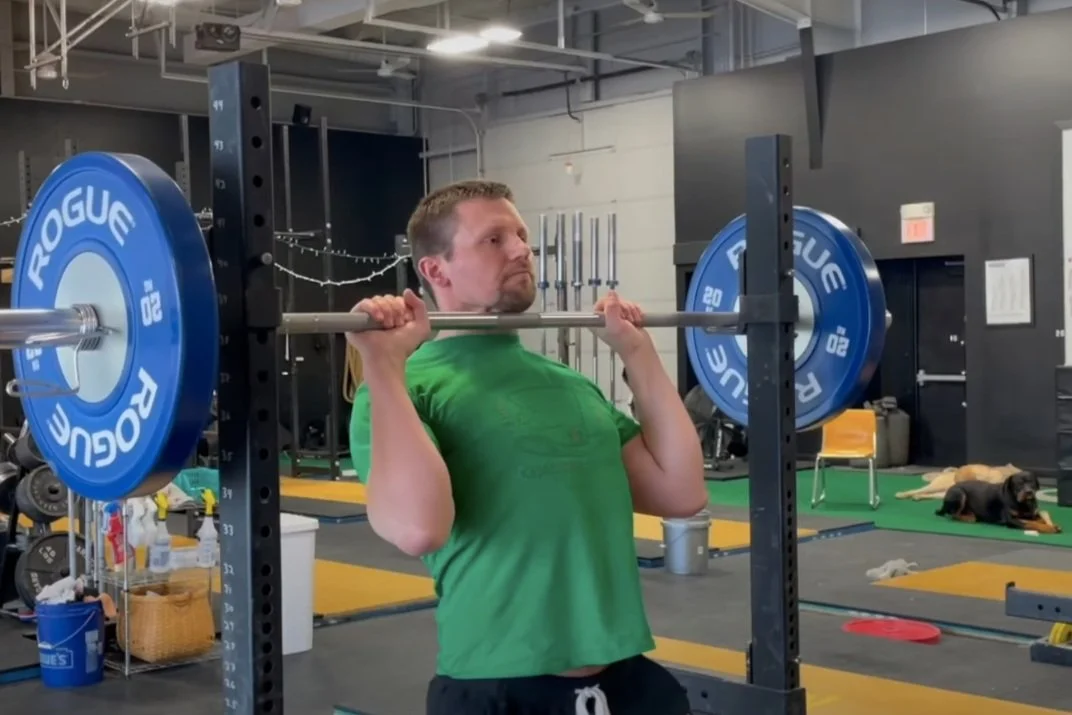
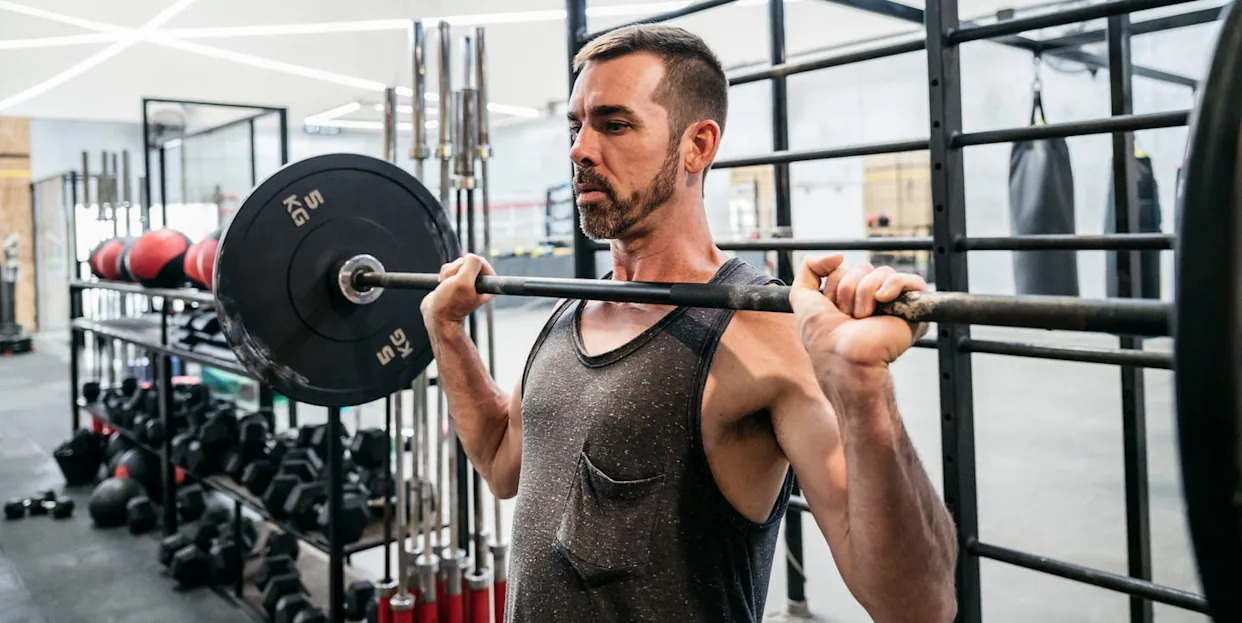
Set the rack hooks so you can lift the bar out without getting on your toes or squatting deeply. Stand about hip-width apart, face forward, and grip the bar just outside your shoulders. Your starting forearms should appear approximately vertical from the front, rather than splaying dramatically outward. A very wide grip often makes the bottom position feel weaker and can ask for more shoulder motion than is comfortable.
Keep the bar close to the heel of the palm, not rolled into the fingers. From the side, the wrist should be reasonably stacked above the forearm. Some extension is normal in a front-rack press, but there is no advantage to letting the wrist collapse backward under a heavy load. Squeeze the bar firmly. A full thumb-around grip is the uncomplicated default, especially when training alone.
Let the bar rest on the front shoulders or upper chest as your anatomy and mobility permit; the exact contact point varies. The elbows usually sit slightly ahead of the bar instead of flaring straight out to the sides. If your wrists or shoulders protest before you have even started pressing, experiment with a modestly narrower grip, lighter weight and a more stable rack setup rather than forcing an extreme position.
Before the first rep, inhale, brace the abdomen, squeeze the glutes, and keep the rib cage from flaring up. Think of the pelvis and ribs moving as one stable unit. Unrack carefully, take a small step away from the hooks and settle your balance over the middle of your feet. A strong start should feel solid enough that you could pause for a moment without losing position.

Equipment Worth Exploring
Explore equipment, accessories and gear from our carefully selected range.


Foldable Wall Rack
Wall-mounted folding squat rack designed to save floor space between workouts.

Multi Pull Smith Rack MPHR-780
All-in-one rack with a Smith machine, functional trainer, lat pulldown and low row.

Lever Arm Multi Press LMP-650
Multi-press with independent lever arms and an integrated adjustable bench for upper-body training.


3. Press close to your face, then finish over your balance point
The bar begins in front of the neck but should finish above the shoulder joints, hips and approximately the middle of the feet when viewed from the side. That means your head has to move. As the bar rises, move the chin and face slightly back so the bar can pass close to you; once it clears the forehead, bring the head naturally through beneath the bar. Avoid throwing the bar several inches forward to travel around a stationary face.
A short, controlled torso adjustment is normal. Turning a strict press into a backward-leaning standing incline bench press is not. If the ribs flare hard and the lower back repeatedly arches to clear the bar, reduce the load and rehearse a braced start. At the top, straighten the elbows, allow the shoulder blades to rotate upward and settle the bar into a stable overhead line without exaggerating a shrug or craning the neck.
Lower the bar along a similarly close path. Move the face back as needed, receive the weight under control at the starting point, and reset your breath. For strength practice, a brief still moment at the bottom can reduce bouncing and make every repetition more comparable to the first rep of a heavy set.
Practical test: record three reps from the side with a weight you can control. Draw an imaginary line from the bar at lockout down to the middle of the foot. If the bar repeatedly stays far in front, look first at your head movement and the timing of the lockout. If your chest rises toward the ceiling, check your brace and whether the load is simply too heavy. Change one cue at a time, then film again.

Bodybuilding Shirts & Workout Gear
Bodybuilding shirts, tanks and gym gear for lifters chasing muscle, size, symmetry and the pump.


Defy Gravity Shirt Old School Weight Strongman Meme T-Shirt
Bring “Defy Gravity” humor to your next gym day.

Atlas Gains Ancient Greece Strongman : Meme Shirt T-Shirt
Rep “Atlas Gains Ancient Greece Strongman” humor in and out of the gym.

Strongman Superman Hero Meme & Gymbros Comic Book Top T-Shirt
Rep “Strongman Superman Gym Hero” humor in and out of the gym.

I’m Strong Barbell Heartbeat Muscle Shirt for Powerlift Tank Top
Show some personality between sets with “I’m Strong Barbell Heartbeat”.

Swole Jesus Lateral Raises – Easter Bodybuilding Meme G Hoodie
Show off your Easter humor in a laid-back “Swole Jesus Lateral Raises” hoodie.

Knight Of The Iron Weights Medieval Tank Top
Bring “Knight of the Iron Weights” humor to your next lifting session.

Mind Muscle Perfection Embroidered Brain and Biceps Gym Hat
A playful “Mind Muscle Perfection Embroidered Dad” cap for workouts and weekends.

Meme – "Shhh I'M Doing Plate Math" & Weightlifting Sticker
Stick a little “"Shhh I'm Doing Plate Math" Workout &” humor on your favorite gear.
4. Practice twice a week before adding a third press day
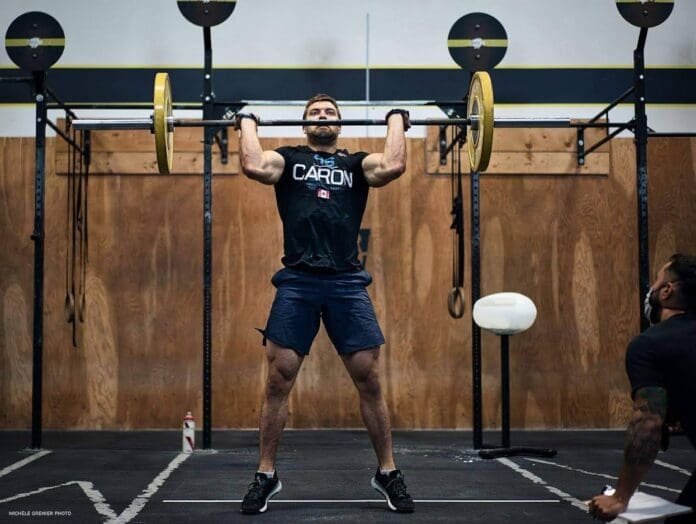
Specificity matters: to improve the strict press, you need regular quality repetitions of the strict press. A single weekly shoulder session can work, but many lifters who have stalled can profit from spreading pressing practice across two nonconsecutive days. The added session gives you another chance to rehearse the same efficient grip, bar path and lockout without forcing all your pressing work into one exhausting workout.
A straightforward starting split is one heavier practice day and one lighter volume day. On the first, perform several low-repetition sets with good rest and leave roughly one or two technically clean reps in reserve. On the second, use a lighter load for repeated sets of six to ten, controlling the descent and preserving the same start position. This is not a requirement to max out twice each week.
A third day can be helpful for someone already recovering well, but it should have a reason. Use a medium-load technique day or a lower-fatigue variation, not another all-out day. Increasing frequency while also adding lots of benching, dips and triceps work may be a poor trade if your elbows and shoulders never recover. Count pressing work across the whole week, not only sets labeled overhead press.
Most of the bar-speed improvement comes from work you can repeat. Stop sets when the bar starts looping far forward, when you need leg drive despite planning strict reps, or when your back position deteriorates. Rest long enough to produce another controlled set; a rushed strength session with sloppy third sets is not automatically a more effective one.
5. A six-week strict-press progression you can actually track
Use your current clean five-repetition working weight as the reference, rather than an optimistic one-rep maximum. Keep a log with load, completed reps, effort and the main technique cue. The following plan assumes you can press pain-free on two nonconsecutive days and do not already perform an unusually large amount of heavy chest pressing. A third optional day is presented separately.
| Week | Day A — heavier strict press | Day B — volume and control | Progression focus |
|---|---|---|---|
| 1 | 4 × 5, around 2 reps in reserve | 3 × 8, about 3 reps in reserve | Establish repeatable grip and bar path |
| 2 | 4 × 5 at a small load increase if clean | 3 × 9 with the same manageable weight | Add a little work, not compensations |
| 3 | 5 × 4, slightly heavier | 3 × 8 with a 1-second bottom pause | Own the first rep of each set |
| 4 | 5 × 4; add a small increment if ready | 3 × 9 with controlled lowering | Keep reps crisp under greater load |
| 5 | 4 × 3, challenging but not grinding | 3 × 6–8, lighter and technically exact | Show higher force without lost form |
| 6 | 3 × 3, comfortable; later test a clean 5RM if recovered | 2 × 8 easy, or omit after the test | Consolidate and compare like with like |
These sets are starting examples, not individualized prescriptions. Add the smallest practical barbell increment when every scheduled rep meets your standard and the last set still leaves a little margin. If you do not have small plates, build repetitions first and increase load later. A failed target should not trigger a crash diet, an immediate max attempt or a desperate technique change. Repeat the weight once with improved execution; if several sessions regress, reduce fatigue before chasing another increment.
For an optional third day, use just two or three easy sets of six with a light barbell or seated dumbbells. Put it away from the heavy day, and remove it if sleep, shoulder comfort or performance worsens. Keep upper-back pulling in your program, and leave the final test for a day when you are rested. A modest improvement in clean five-rep weight is more useful than a dubious personal record with extra leg drive.
Equipment Worth Exploring
Explore equipment, accessories and gear from our carefully selected range.


Rubber Hex Dumbbells
Rubber-coated hex dumbbell pairs with a stable shape for home and commercial strength training.

FID Bench MAX
Adjustable bench offering flat, incline, and decline positions + adjustable headrest.



Long Tricep ERGO Ropes
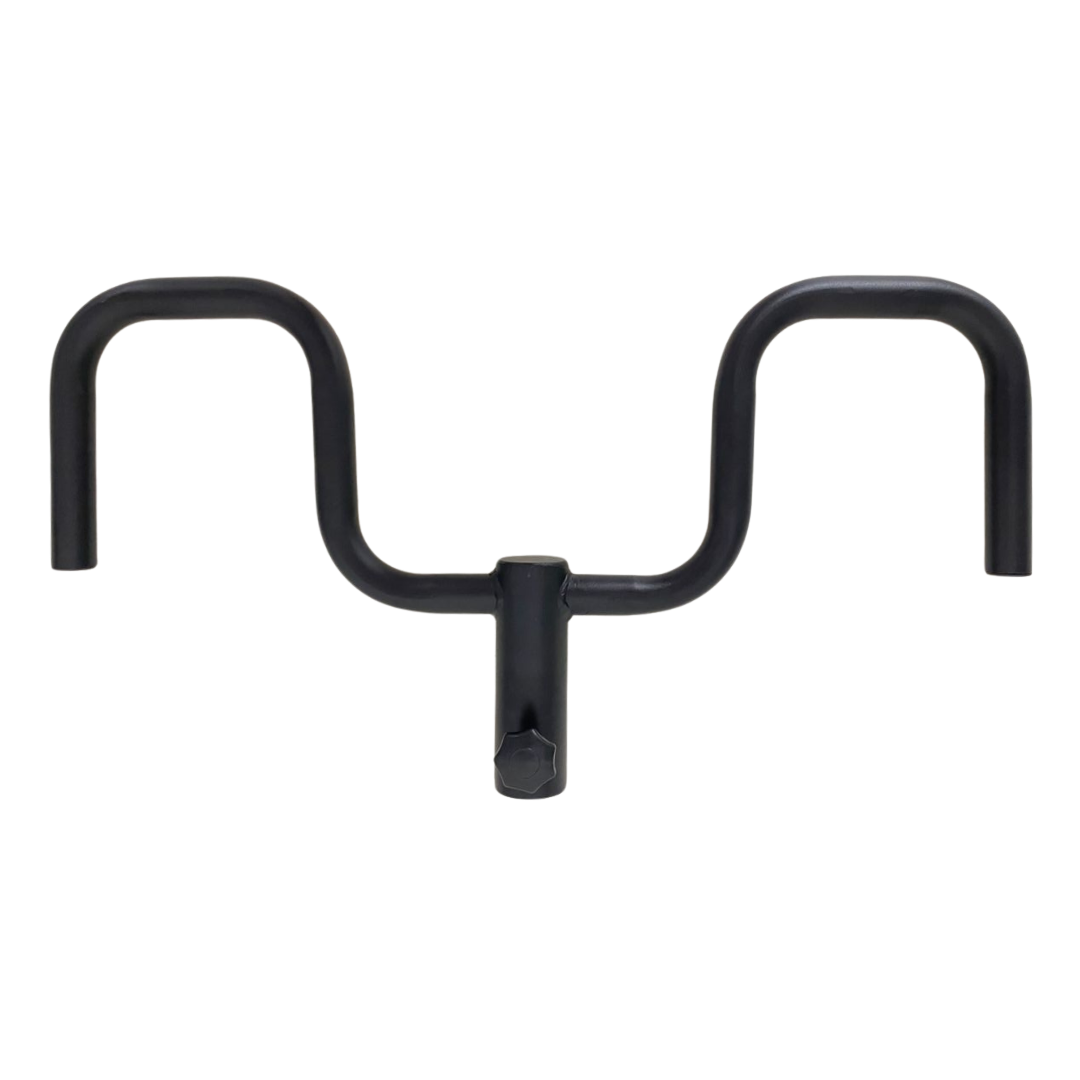
Extended triceps ropes with ergonomic grips for cable pressdowns and overhead extensions.

VForce Wall Trainer
Space-saving wall-mounted functional trainer with pivoting cable arms and variable resistance ratios.

GymPin Ergo Handles
Pair of ergonomic cable handles shaped for comfortable triceps and pulling exercises.
6. Build the delts, triceps and upper back without burying recovery
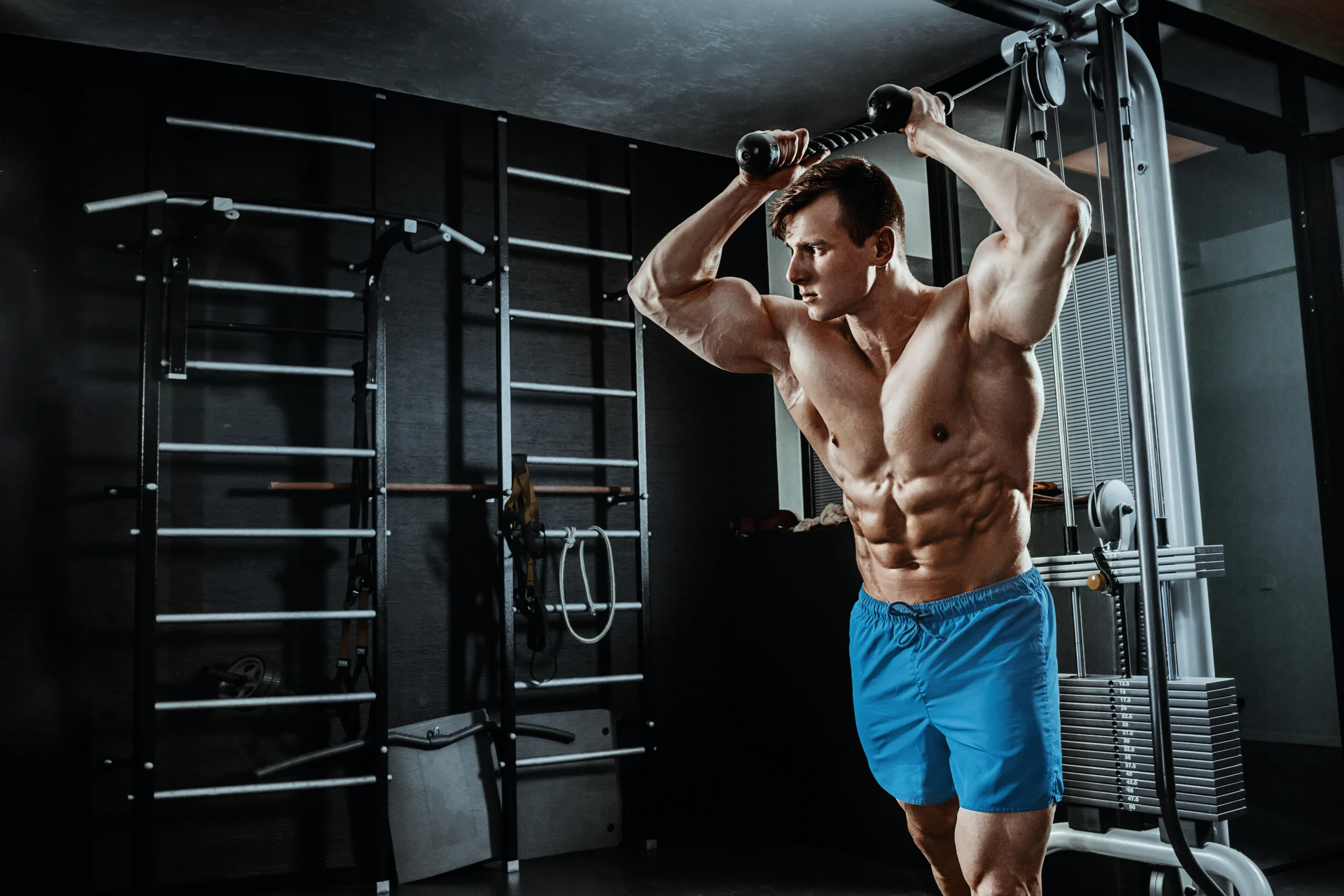
The press is the skill you are trying to improve, but muscle size and force capacity still matter. Supplemental work is most useful when it addresses a real limitation and fits around your main lifts. If you lose control in the start and midrange, some combination of more high-quality pressing, front/side-delt training and stable shoulder positioning may help. If you reach forehead height but repeatedly fail to finish, triceps and overhead-position work deserve attention.
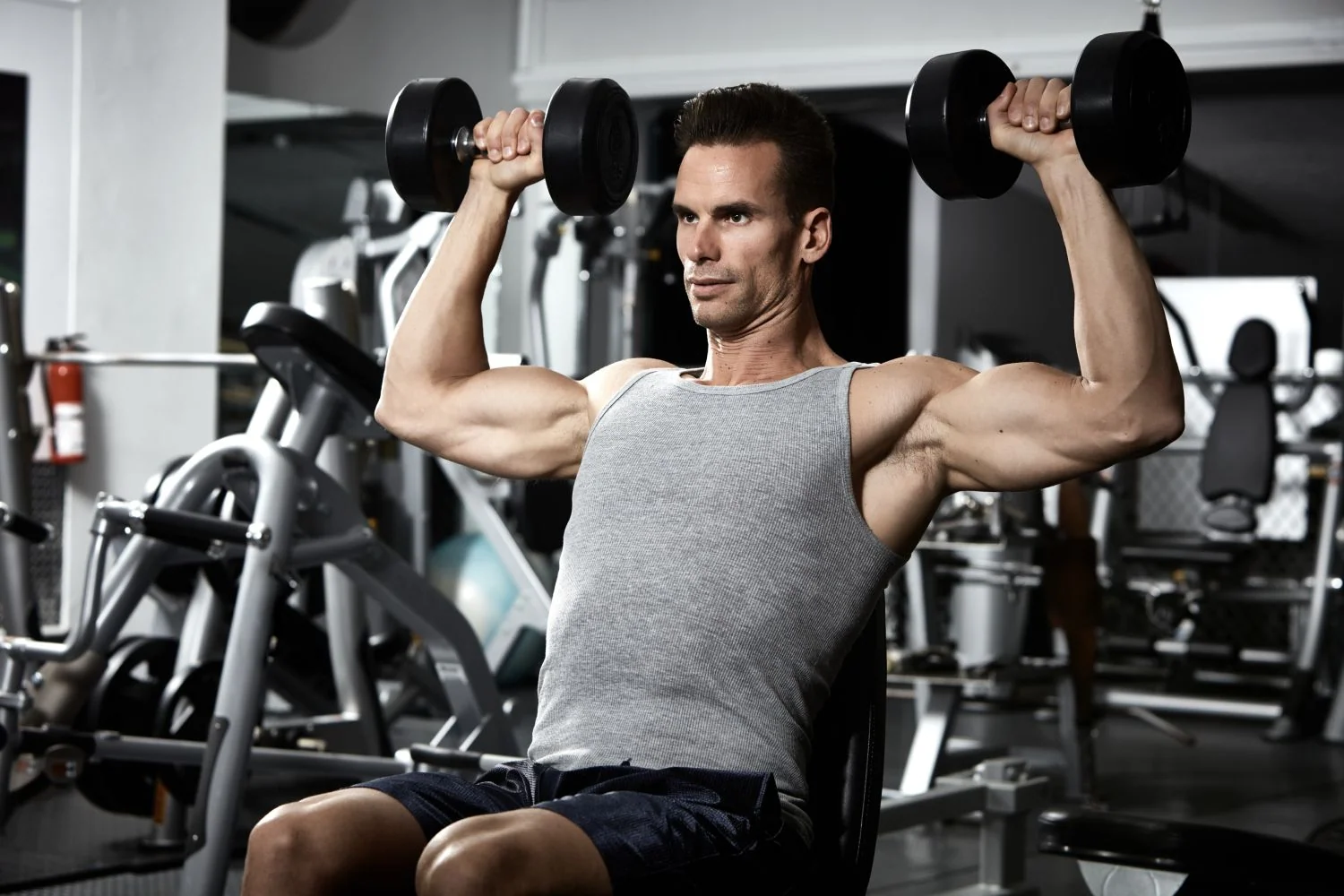
A simple accessory menu after the main lift is two to three controlled sets of a dumbbell shoulder press, two or three sets of lateral raises, and two sets of an elbow-friendly triceps extension or cable pushdown. You do not need every exercise in one workout. Use loads that let you feel the target muscles and retain a repeatable range of motion. A seated dumbbell press is particularly handy when you want shoulder work without making your lower back maintain another challenging standing brace.
Upper-back rows and pulldowns are valuable companions even though they are not a magic shortcut to pressing a heavier bar. They help you train the muscles that control shoulder-blade and upper-arm positioning, while offering pulling volume alongside a push-heavy program. Rear-delt raises and face pulls may also be appropriate if they fit your shoulders. Keep general leg and core training in place so the overhead press does not become your only full-body coordination work.
Resist the temptation to double the accessory menu each time the bar stops moving. Most lifters need a sustainable progression, not an arm-day marathon after every press session. Start with a few sets that you can recover from, record their loads or reps, and add work only when fatigue and performance justify it.
Funny Gym Shirts & Workout Gear
Funny gym shirts, tanks, hoodies and workout gear for lifters who like training hard.


Barbells and Suffering – Demonic Heavy Metal Gym Crewne T-Shirt
Show some gym-day personality with “Barbells and Suffering”.

Superhero Man of Gym Hooded Pullover Gymbros Strength F Hoodie
Show off your superhero humor in a laid-back “Superhero Man of” hoodie.

Iron Is My Therapy – Lifting Bodybuilding Powerlifting T-Shirt
Rep “Iron Is My Therapy” humor in and out of the gym.

Forged In Iron Shirt – Essential & Top T-Shirt
Heavy lifts, good laughs, and a little “Forged In Iron” energy.

Liftionaire Money Barbell Meme Workout Shirt Bodybuildi T-Shirt
Show some powerlifting attitude with a playful “Liftionaire” tee.

Iron Addict Shirt – Weights & Lifting Meme & Gains T-Shirt
Bring “Iron Addict” humor to your next gym day.

Old School Weight Strongman – Meme Shirt & Top T-Shirt
Show some powerlifting attitude with a playful “Old School Weight Lifter Strongman Graphic” tee.

Installing Muscles Meme – Motivation Decal Bros & Sticker
A fun “Installing Muscles” touch for bottles, laptops, and lockers.

Gymhead Skull Plate Water Bottles Laptop Decal Sticker
Put “Gymhead Skull Plate Funny Powerlifting” gym humor on your laptop, bottle, or gym gear.
7. Diagnose the plateau instead of guessing at the next fix
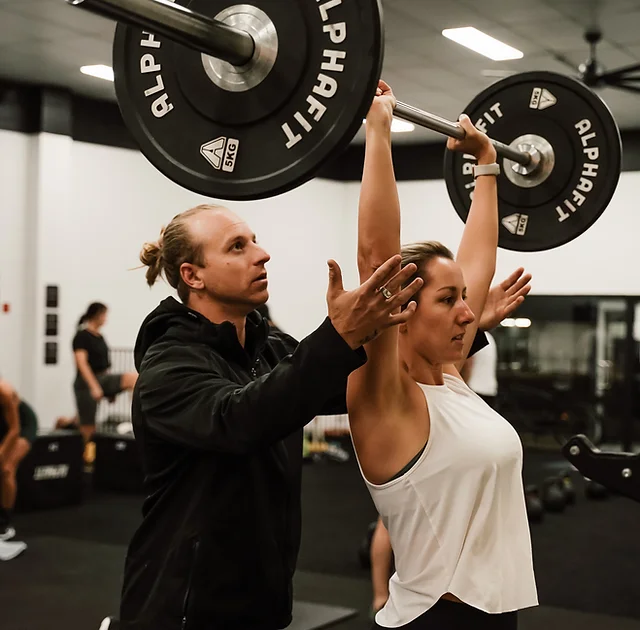
The bar drifts forward: film from the side and rehearse the head-back, head-through sequence with a lighter bar. Keep the load over your balance point and avoid chasing the bar forward with your shoulders. Wrists fold back: place the bar deeper in the palm and check the forearm stack. Wrist wraps can provide comfort or support for some lifters, but they cannot rescue a badly chosen grip or overloaded set.
You stall just off the shoulders: make the first rep deliberate, reset between reps, and review whether your elbows are excessively flared or the bar begins too far forward. You stall near lockout: check that your head comes through, the bar moves close and your triceps are not exhausted from previous work. Heavy partials are not obligatory; cleaner full-range press repetitions and appropriately programmed triceps accessories are often the more practical first steps.
Every session feels heavier: review the rest of the week. A hard bench day the night before, poor sleep, aggressive calorie restriction or unusually high training volume can make the press look stalled even when the movement is improving long term. Try a lighter week before adding frequency. Track body mass if it changes, but avoid treating rapid weight gain as the default solution to a technique or recovery problem.
Your shoulder hurts: sharp, persistent or worsening pain is a reason to stop provoking that motion and seek individualized medical or physiotherapy advice. For normal non-painful variation, a lighter dumbbell, neutral-grip, landmine or seated press may fit better, but those are alternatives, not guaranteed fixes for an injury. Also use suitable rack safeties, collars and enough space to lower the bar without striking overhead structures.
Recheck the same clean five-rep standard after six weeks. If the number improves with a more stable lockout, your plan worked even without a dramatic one-rep maximum. If the number does not change but the bar path improves, you have a more reliable base for the next block. Repeat what is effective, adjust what is not, and make progress measurable rather than mythical.