Advertising disclosure: This page includes affiliate product links that may earn us a commission, as well as products from our own store.
HYROX Wall Balls: 100-Rep Pacing, Squat Standards and a Four-Week Plan
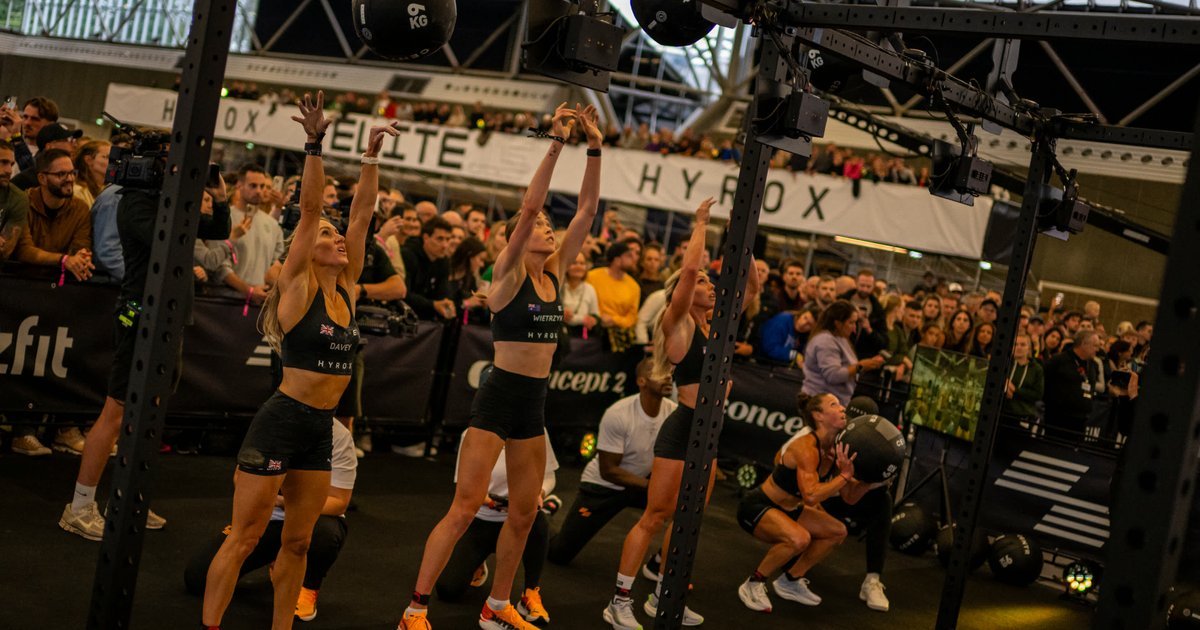
After eight kilometres of running and seven demanding workout stations, HYROX athletes face one final job: 100 wall balls. It sounds like a straightforward squat and throw, but the last station punishes every weak link. Tired legs shorten squat depth, a hurried catch steals your rhythm, and a missed target creates a repetition that does not count.
This guide explains the relevant division loads and target heights, how to make the movement repeatable, when to break the hundred into sets, and how to train without making every workout an exhausting simulation. It is a practical framework for lifters who want accepted repetitions and a finish they can actually execute.
Why the Final 100 Wall Balls Feel Different
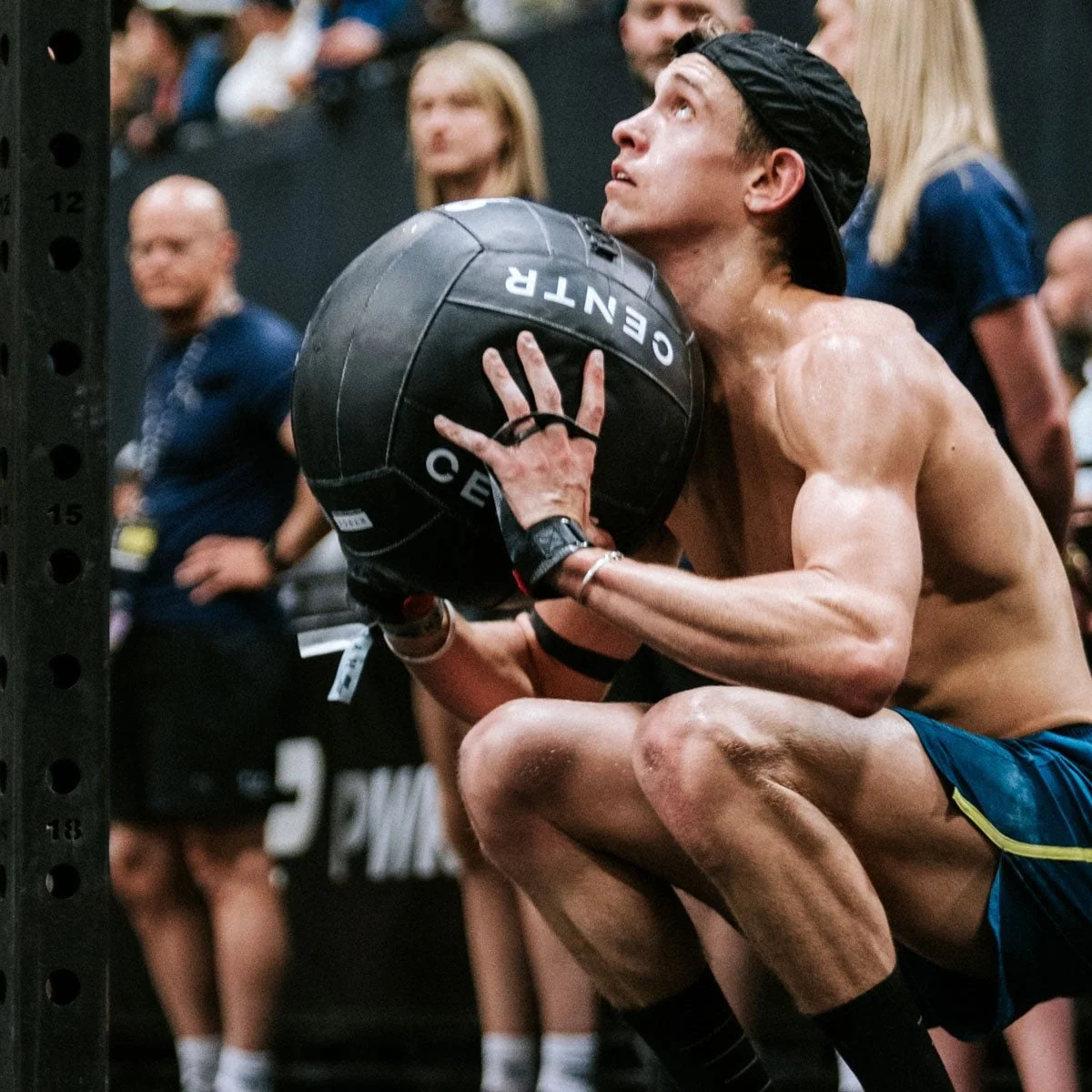
The wall ball station is not just a final strength exercise. In a standard individual HYROX race it follows eight one-kilometre runs and seven previous workout stations, including a 100-metre sandbag lunge. That timing changes everything. The same ball that feels manageable during a fresh gym warm-up can suddenly challenge your quads, trunk, shoulders and breathing after a long sequence of mixed running and loaded work.
One hundred repetitions is the target, but the useful target is 100 accepted repetitions. A fast sequence with shallow squats or throws that miss the designated target may create extra work. Equally, simply surviving one heroic unbroken set in practice is not a prerequisite for a smart race. For many trained people, a controlled plan of smaller sets and efficient rest is more reliable than guessing what the final 30 reps will feel like.
It helps to separate three abilities: the squat mechanics needed to make every repetition count, the local muscular endurance needed for dozens of knee and hip extensions, and the aerobic control needed to keep throwing while breathing hard. A lifter might have a strong barbell squat yet struggle with wall balls because the coordination and repeated overhead launches are unfamiliar. A strong runner can face the opposite problem: excellent lungs but early leg or shoulder fatigue.
Train all three ingredients. Practise the actual race-standard movement while fresh, then periodically rehearse it after running or another demanding station. The goal is not to make every session a race simulation; it is to arrive at station eight knowing how you will start, count, breathe and adjust.
HYROX Wall Ball Weights, Target Heights and Divisions
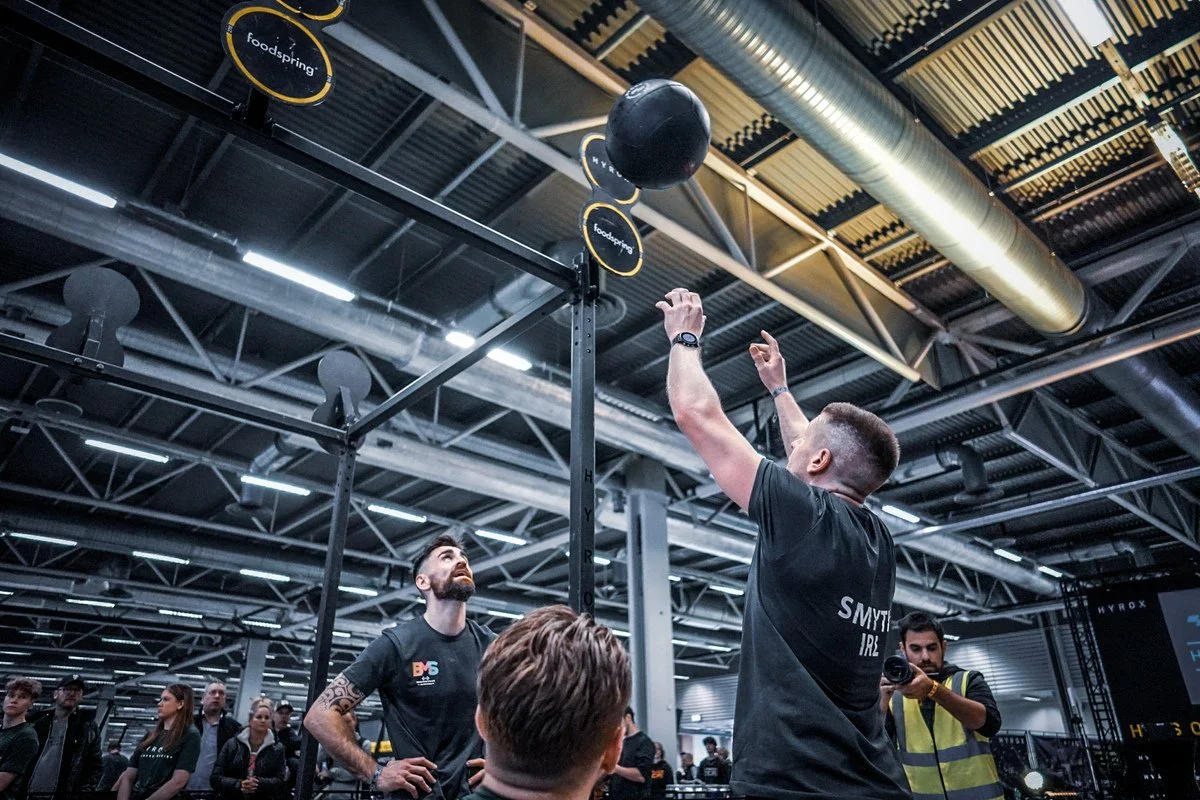
Individual HYROX divisions use the same 100-repetition wall ball finish, but the required medicine-ball load depends on the division. On the published standard race format, Open women use a 4 kg ball, Open men a 6 kg ball, Pro women a 6 kg ball and Pro men a 9 kg ball. The designated targets are approximately 2.7 metres for women and 3.0 metres for men. Verify the current rulebook and the exact division entered before race day; mixed teams, relays and special events can have additional conditions.
| Individual division | Wall ball | Reps | Target height |
|---|---|---|---|
| Women Open | 4 kg | 100 | About 2.7 m |
| Women Pro | 6 kg | 100 | About 2.7 m |
| Men Open | 6 kg | 100 | About 3.0 m |
| Men Pro | 9 kg | 100 | About 3.0 m |
Do not mistake the ball’s kilogram figure for the entire challenge. Target height, ball diameter, the rebound from a particular wall or rig and your own standing reach affect the throw. Tall lifters might find the target closer, yet still have to complete the full squat standard. Shorter athletes can reduce wasted effort by keeping throws accurate rather than launching far above the target.
If you are new to the movement, practise with a lighter ball first to dial in stance, depth, catch position and aim. Then build specific exposure to your division’s load. A heavy-ball session can strengthen the throwing pattern, but excessively heavy throws that force shallow squats or awkward leaning teach a different movement. Match the competition equipment and target whenever possible for your final practice sessions.

Equipment Worth Exploring
Explore equipment, accessories and gear from our carefully selected range.

Competition Wall Ball
Competition-style weighted wall ball for HYROX, wall-ball shots, and functional conditioning.

Slam Ball
Low-bounce weighted slam ball for explosive throws and high-intensity conditioning.

Pro Sled System
Heavy-duty push-pull training sled for loaded conditioning, speed, and strength work.


Cast Iron Kettlebells
Textured cast-iron kettlebells for swings, squats, carries, and full-body training.


Rubber Hex Dumbbells
Rubber-coated hex dumbbell pairs with a stable shape for home and commercial strength training.

Build a Repeatable Squat-to-Throw Technique
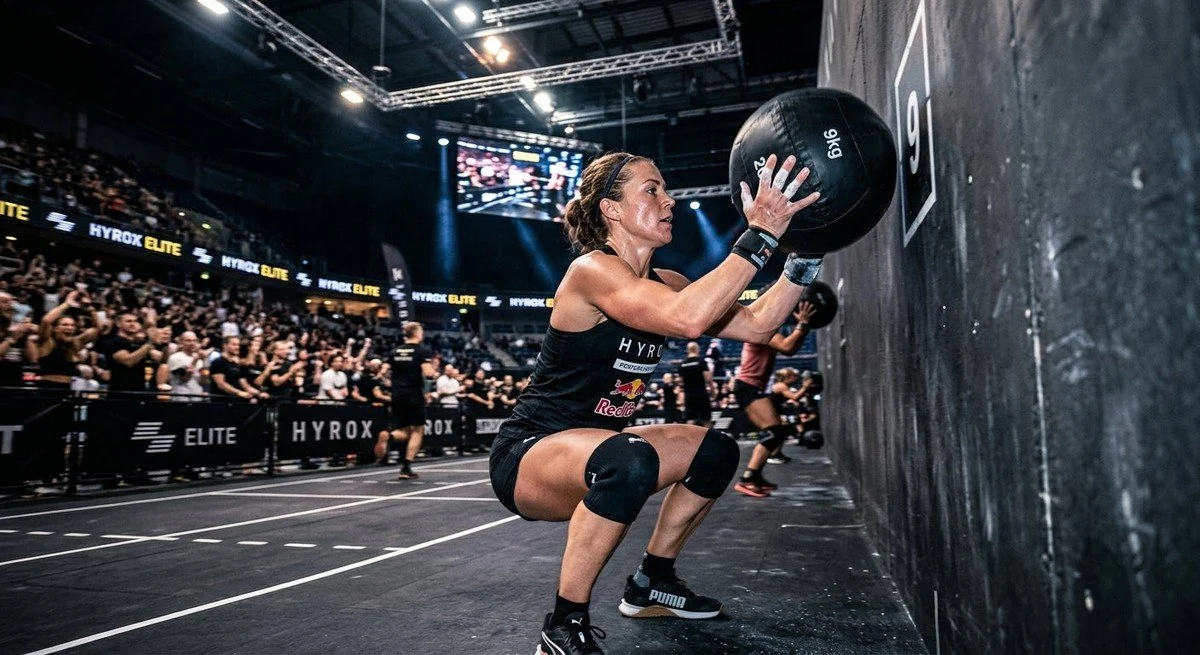
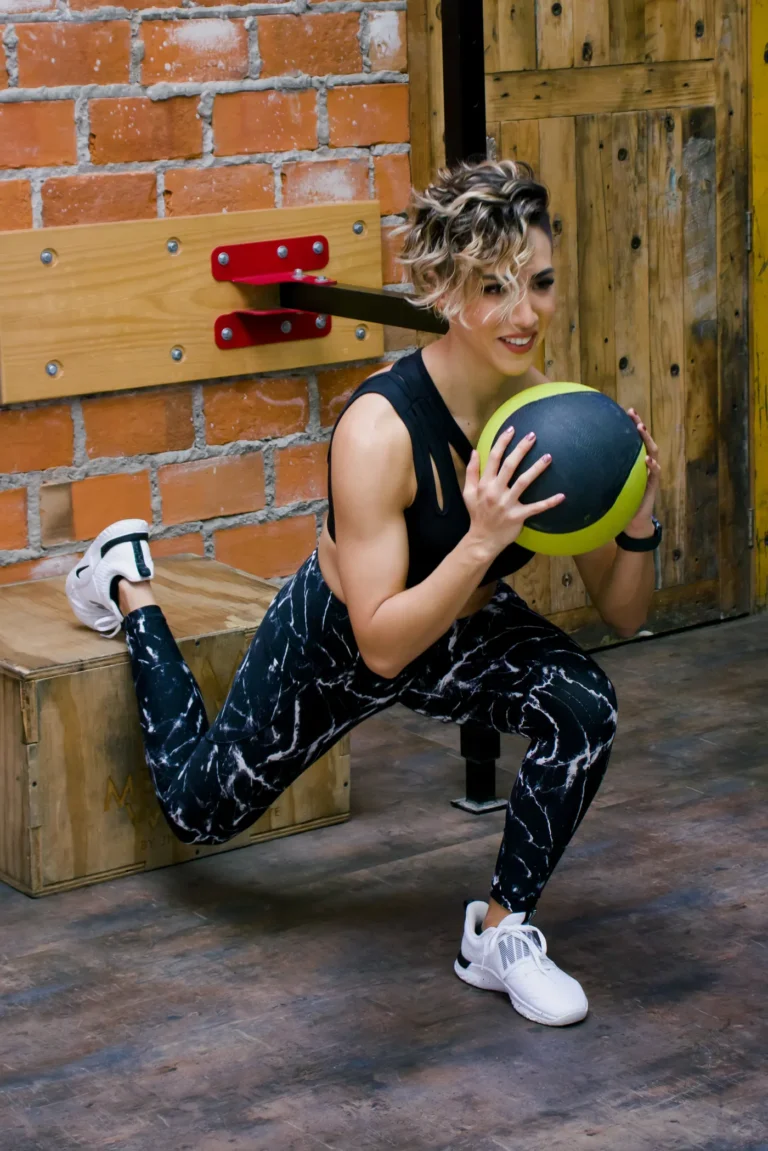
A useful wall ball is a continuous chain of squat, stand, throw, receive and squat again. Start facing the target with feet around squat width, toes and knees tracking in a comfortable direction. Hold the ball in front of the upper chest, not with arms locked straight and not so high that it blocks your view. Keep the trunk braced, allow the knees to travel naturally and descend until the hip crease drops below the top of the knee.
Drive upward through the feet and let hip and knee extension supply most of the ball’s upward momentum. The arms guide and finish the throw rather than doing all the work from a crouched position. Release toward the target with a repeatable line; a high, inefficient arc wastes time and shoulder energy. Once the ball returns, absorb it with your hands and torso before flowing into the next squat. Resist the temptation to catch the ball with rigid elbows or let it crash into the face.
Two easy cues help under fatigue: “stand before you finish the throw” and “catch softly at the chest.” They encourage leg-driven force and smoother rhythm. In practice, pause briefly at full depth and film a few side-view reps. If the hip crease stays above the knee line, work on range of motion, stance and control before pushing the pace.
Keep the ball reasonably close to the body, and experiment with a standing distance from the wall that produces a comfortable catch. Too close may encourage awkward overhead tracking; too far can make you reach forward or launch an unnecessarily powerful throw. Find the distance that lets your throws strike the centre of the target and come back toward your chest. Consistency usually beats theatrically explosive individual reps over a hundred-rep station.
How to Avoid No-Reps When Fatigue Hits
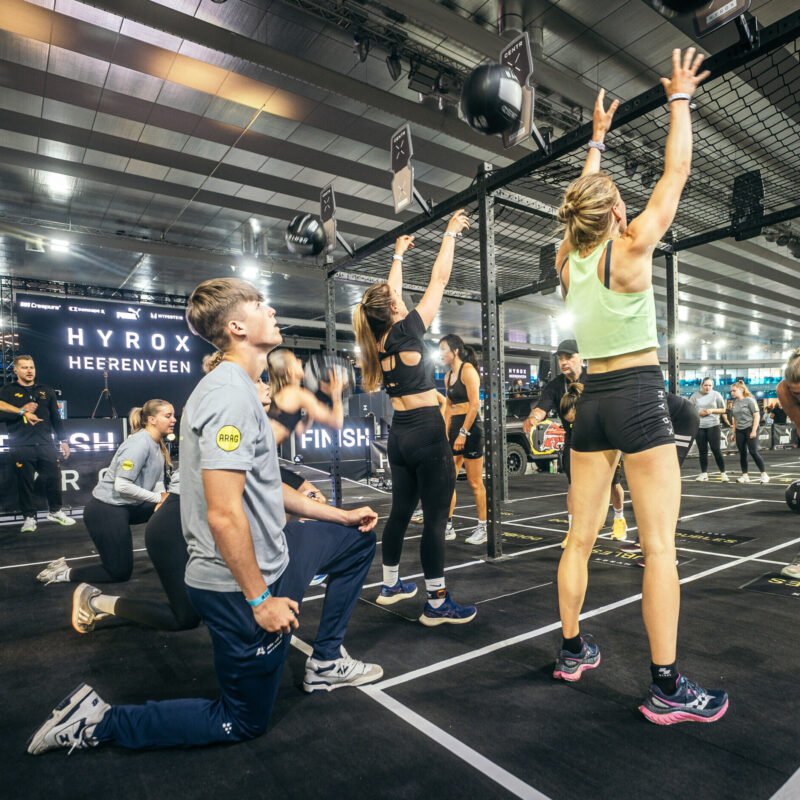
HYROX judging focuses on a valid squat and a valid target strike. Before starting, the athlete should stand upright with hips and knees extended and the ball held in both hands. Descend to the required depth, then stand and throw with both hands so the ball hits the designated target. A shallow squat, a missed target or an incorrect start can mean that repetition does not count.
The distinction between a catch and a reset matters. When a thrown ball hits the target, it may be received and carried into the next squat. Alternatively, the ball can be allowed to reach the floor, followed by a fresh upright start. However, dropping it, letting it bounce, catching it after the bounce and immediately continuing is not the same legal sequence. Practise the full restart when you need a deliberate break rather than improvising while exhausted.
For a simple quality check, record ten reps from the side and ten from an angle where you can see the target. On the side video, mark whether the hips genuinely pass below the knees. On the frontal view, watch whether the ball hits in the intended target zone. A partner should count only clear, complete repetitions; generous self-counting makes a session look impressive but may leave you unprepared for event judging.
Common causes of no-reps include rushing the descent so the bottom position gets cut short, turning the throw into a mostly arm-driven push after the legs tire, or allowing target accuracy to deteriorate while attempting to hold a fast rhythm. If two reps in a row become doubtful, that is a sign to reset your stance or take a short controlled pause. One clean rep is more valuable than a fast repetition you must repeat.

Functional Fitness Shirts & Workout Gear
Functional-fitness shirts, tanks and workout gear for athletes who train strength, conditioning and everything in between.

Hybrid Athlete – Built Different Gym Decal for HYROX, C Sticker
Give your everyday gear a playful “Hybrid Athlete” twist.

Hybrid Athlete – HYROX Training Crewneck for Strength & T-Shirt
Show some gym-day personality with “Hybrid Athlete”.

Hybrid Athlete – Built Different Gym Pullover for HYROX Hoodie
Show off your lifting humor in a laid-back “Hybrid Athlete” hoodie.

HYROX High Rocks Sweater Functional Fans Meme T-Shirt
Add a playful “HYROX High Rocks” touch to your casual rotation.

HYROX High Rocks Functional & CrossFit Tank Top
Your gym-day look, with a playful “HYROX High Rocks” twist.

Hybrid Athlete – HYROX Workout Checklist Gym Decal for Sticker
Give your everyday gear a playful “Hybrid Athlete” twist.


Hybrid Athlete Strength Tee
Show some lifting attitude with a playful “Hybrid Athlete” tee.
Break the 100 Reps Into Sets You Can Actually Finish
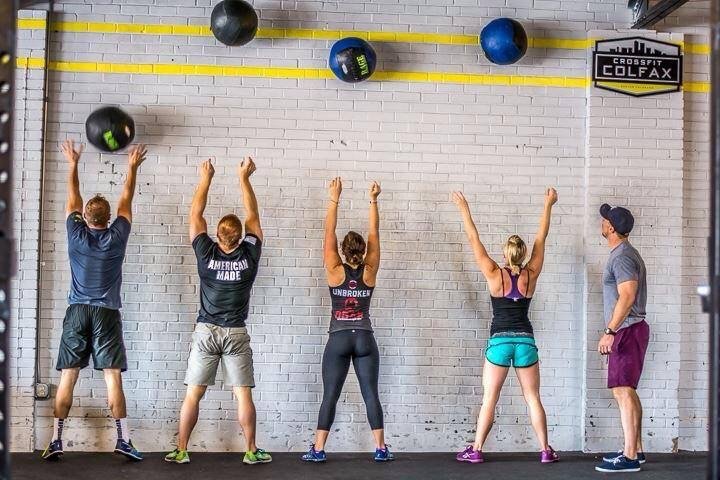
There is no universal best split. The right plan depends on your squat endurance, movement economy and the condition in which you reach the final station. Consider three examples as planning templates, not proven optimal race prescriptions: five sets of 20, four sets of 25, or a descending 25–25–20–15–15 structure. Each totals 100. The third option may appeal to lifters who know their sets get harder toward the end; five twenties may help someone whose form slips in longer bouts.
Begin below the maximum number of consecutive clean reps you could manage while fresh. If 35 repetitions are the absolute limit after a warm-up, opening the race with 35 is unlikely to be a comfortable choice after seven stations. Start with a repeatable number that leaves a margin. Then place the ball safely, take several deliberate breaths, stand tall to reset and begin the next batch. Time the breaks in training instead of assuming they are “quick.”
Example: if you use five sets of 20 with four 10-second pauses, you have already budgeted 40 seconds of rest. Four 25s with three 15-second pauses adds 45 seconds. Neither arithmetic example predicts your total finish time because rep speed, invalid repetitions and transitions matter too. What matters is choosing a strategy that balances the cost of rest against the cost of exhausted, inaccurate throws.
You can also count micro-targets within a set: five clean reps at a time, then another five, without putting the ball down unless you need to. Avoid looking up at the total after every throw. If breathing becomes chaotic, squat depth shortens or the ball repeatedly misses, break the planned set early. A flexible plan that preserves movement quality will generally be more practical than treating the written split as an iron rule.
Equipment Worth Exploring
Explore equipment, accessories and gear from our carefully selected range.

GymPin Squat Wedges
Non-slip 15-degree squat wedges help elevate the heels for deeper quad-focused squats.

Studio V-Squat
Plate-loaded V-squat machine for supported lower-body strength training.


Competition Plates
Competition-style bumper plates for Olympic lifts and loaded strength training.



VForce Wall Trainer
Space-saving wall-mounted functional trainer with pivoting cable arms and variable resistance ratios.
Train the Legs, Breathing and Transitions Together
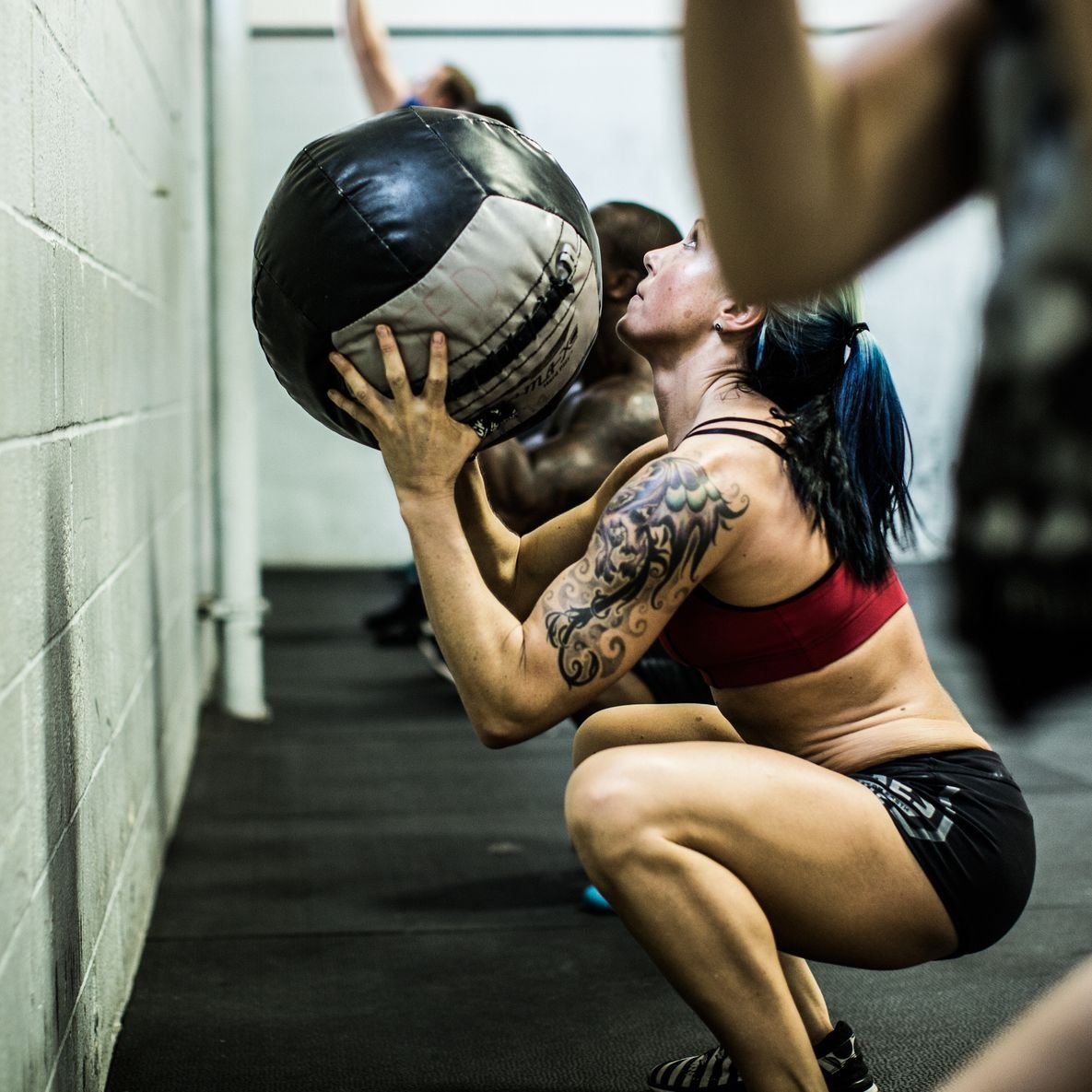
The station begins after sandbag lunges and the final run, so training exclusively with fresh legs is incomplete preparation. Keep regular strength work for squats, single-leg movements and trunk stability, but add specific wall ball practice at controlled intensity. A strong squat gives you a base; repeated accurate throws with an elevated heart rate develop the skill of using that base late in a race.
Try occasional short combinations rather than always running a full simulation: an easy-to-moderate run followed by three sets of 15 wall balls, or a brief sandbag lunge segment followed by 20 to 30 clean throws. Use these sessions to observe whether your depth, breathing and target accuracy change. The goal is to rehearse the transition, not punish your legs on every training day. Leave space for your main lifting and running sessions to recover.
Pay attention to ankles, hips, thoracic positioning and comfortable overhead reach. Restricted ankle movement can lead to heel lift or a forward collapse in the squat; limited shoulder or upper-back mobility can complicate the final throw. Warm up with unloaded squats, light medicine-ball front holds and a few easy target throws. Simple mobility work is a tool for reaching a stable position, not a substitute for repetition-specific practice.
Equipment matters less than consistency, but the ball should have a secure surface and a shape intended for repeated throws at the target. A hard slam ball behaves differently from a soft oversized wall ball and may rebound unpredictably. Clear the area and use an appropriate target and sufficient ceiling space. When training without the exact equipment, substitute a squat-and-press or light medicine-ball drill for conditioning, but do not pretend that it perfectly replicates a judged wall ball.
Leg Day Shirts & Workout Gear
Leg-day gym shirts and workout gear for lifters who never skip squats, lunges and lower-body punishment.

Motivation The Fantastic Booty Leg Day, Squats Meme T-Shirt
Make gym days more fun with “Gym Motivation” style.

Booty Building Mode Leg Day & Squat Meme Fans Hooded Hoodie
Show off your leg-day humor in a laid-back “Booty Building Mode” hoodie.

Girl Booty Builder Leg Day Squats & Cute Vest Tank Top
Train hard, laugh a little, and rep “Gym Girl Booty Builder”.

Gym Girl Booty Builder Sweatshirt
Bring “Gym Girl Booty Builder” humor to your everyday gym style.

I Love Squats Shirt | Valentine's Leg Day Meme with Red T-Shirt
Show some leg-day attitude with a playful “I Love Squats” tee.

Squat Here | Edgy Workout Decal for Water Bottles & Gym Sticker
A fun “Squat Here” touch for bottles, laptops, and lockers.

Leg Day Decal Water Bottles & Equipment Meme Sticker
A fun “Leg Day” touch for bottles, laptops, and lockers.

If You're Reading This Its Leg Day | Drake Rap Music Pa Tank Top
Train hard, laugh a little, and rep “If You're Reading This Its Leg Day”.

Big Heart Bigger Ass Sweater & Leg Day Meme T-Shirt
Bring “Big Heart Bigger Ass” humor to your everyday gym style.

Leg Day No Thanks Skip Leg Day Meme Decal Water Sticker
Give your everyday gear a playful “Leg Day No Thanks” twist.
A Four-Week Wall Ball Training Plan
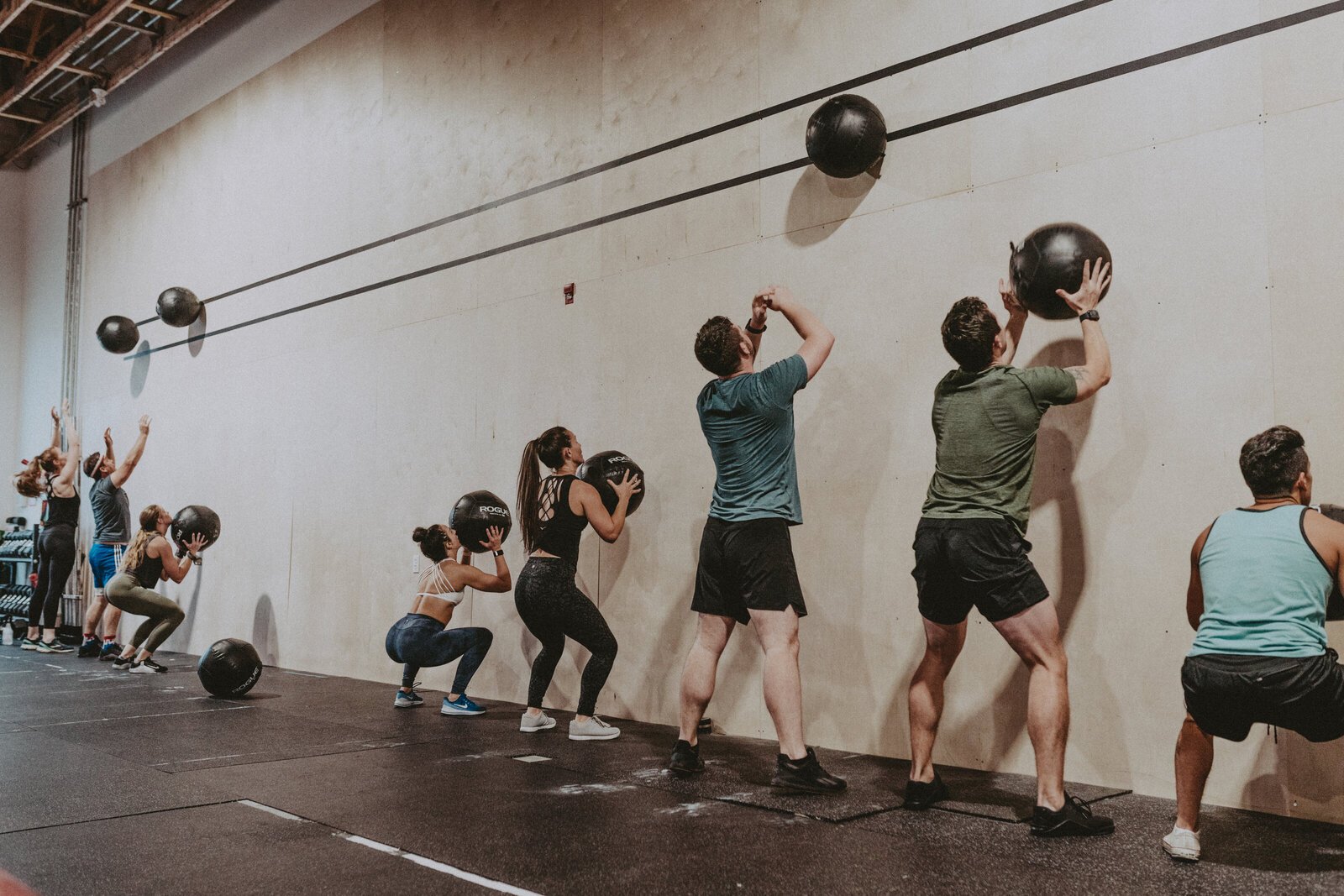
Use two wall ball exposures each week, separated by at least a day and placed around your existing running and lower-body training. These examples assume that you already tolerate squats and low-volume medicine-ball throws without pain. Beginners should start lighter and reduce volume; experienced racers can adjust the sets while preserving crisp technique. Always warm up before the first working set.
Week 1: make every repetition count
Session A: six sets of 10 controlled wall balls with plenty of rest. Film a set for depth and target accuracy. Session B: an easy 10-minute jog followed by four sets of 10. Work at a pace where each repetition looks similar and stop before the ball starts pulling you out of position.
Week 2: extend controlled sets
Session A: five sets of 15, noting whether your throwing height and squat depth remain consistent. Session B: two moderate rounds of a short run followed by 20 wall balls, with generous recovery between rounds. Focus on restarting after the run and getting the first five reps right.
Week 3: rehearse a 100-rep plan
Session A: perform 100 total wall balls using your proposed split, such as five sets of 20. Record total elapsed time, planned breaks and genuine no-reps. Session B: an easier technique exposure of five sets of 12 after a short aerobic warm-up. The harder workout is a rehearsal, not a reason to max out twice in the same week.
Week 4: reduce fatigue, preserve precision
Session A: four sets of 12 to 15 at race load with excellent depth and target strikes. Session B: two or three light sets of 10 with sufficient recovery, or skip them if racing soon and legs remain tired. Avoid a last-minute high-volume test. Review your previous practice videos and write down one start cue, one breathing cue and the set split you can adapt under fatigue.
If discomfort changes your movement or you consistently miss depth, reduce load or repetitions and address the issue before increasing intensity. Improvement should mean more valid, repeatable reps at a sustainable effort—not simply a bigger number on the training whiteboard. When you arrive at the final HYROX station, accuracy and a prepared pacing decision can spare more stress than a burst of desperate speed.