Advertising disclosure: This page includes affiliate product links that may earn us a commission, as well as products from our own store.
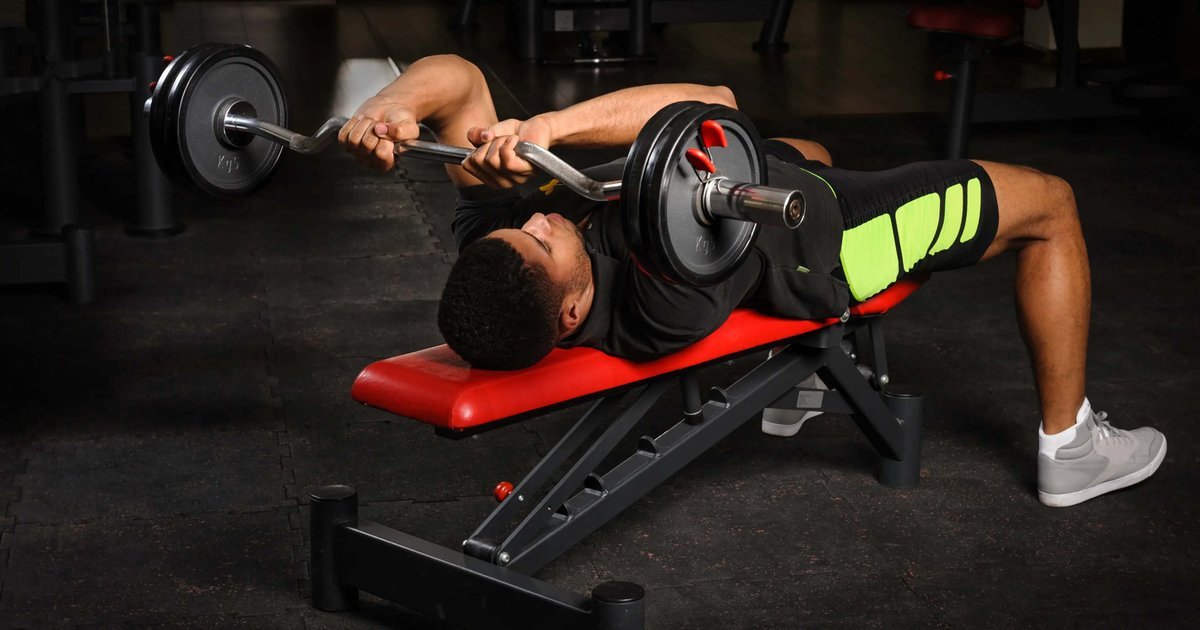
Skull crushers have an intimidating name, but the movement is simple: lie on a bench, bend your elbows to lower a weight toward or just behind your head, then straighten your arms. The challenge is keeping the movement at the elbows instead of turning every rep into a shaky press or pullover.
An angled EZ bar, two dumbbells and a low cable can all train your triceps with this pattern. None is automatically the winner for muscle growth. Your best version is the one you can set up safely, move through a consistent comfortable range, and progress without turning your elbows into the limiting factor. Here is the technique, the evidence behind the exercise and a six-week plan you can actually repeat.
What Skull Crushers Train—and What the Evidence Can Say
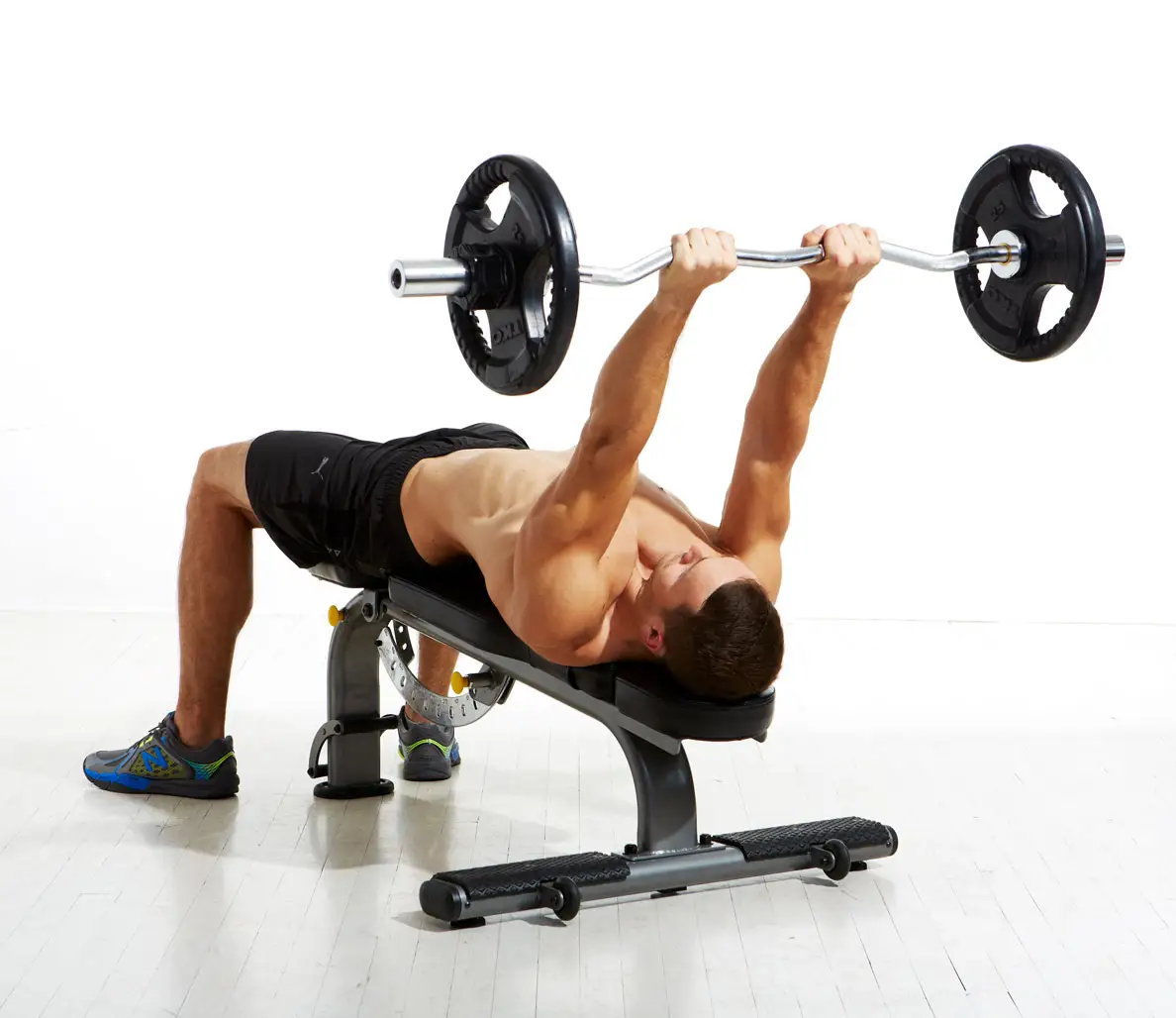
The triceps brachii has three heads that work together to extend the elbow. The long head also crosses the shoulder; the lateral and medial heads do not. When you bend a loaded elbow during a lying extension, all three contribute. The long head’s additional shoulder function helps explain why the angle of your upper arms can alter how stretched the muscle feels.
One ten-week experiment involving 43 young men compared the bench press, a lying barbell triceps extension and a combination of the two. Triceps growth was observed in the groups that trained the lying extension, with differences between regions of the muscle. That supports adding direct elbow-extension work alongside pressing. It does not establish that the EZ bar beats dumbbells, or that one precise bar path guarantees superior growth for every lifter.
A separate twelve-week comparison of overhead and neutral-arm cable triceps extensions found greater average triceps growth with the overhead position. That is useful context for training the long head at different shoulder angles, but it was not a direct trial of forehead versus behind-the-head skull crushers. Treat the result as a reason to consider varied elbow-extension positions, not as a license to claim an untested skull-crusher variation is best.
For practical purposes, skull crushers provide a direct triceps stimulus that your bench, dips or shoulder press may not fully replace. You still need enough recoverable sets over time, a stable technique and a load that allows the target muscle to do the work.
EZ-Bar Skull Crushers: Setup and Rep-by-Rep Form
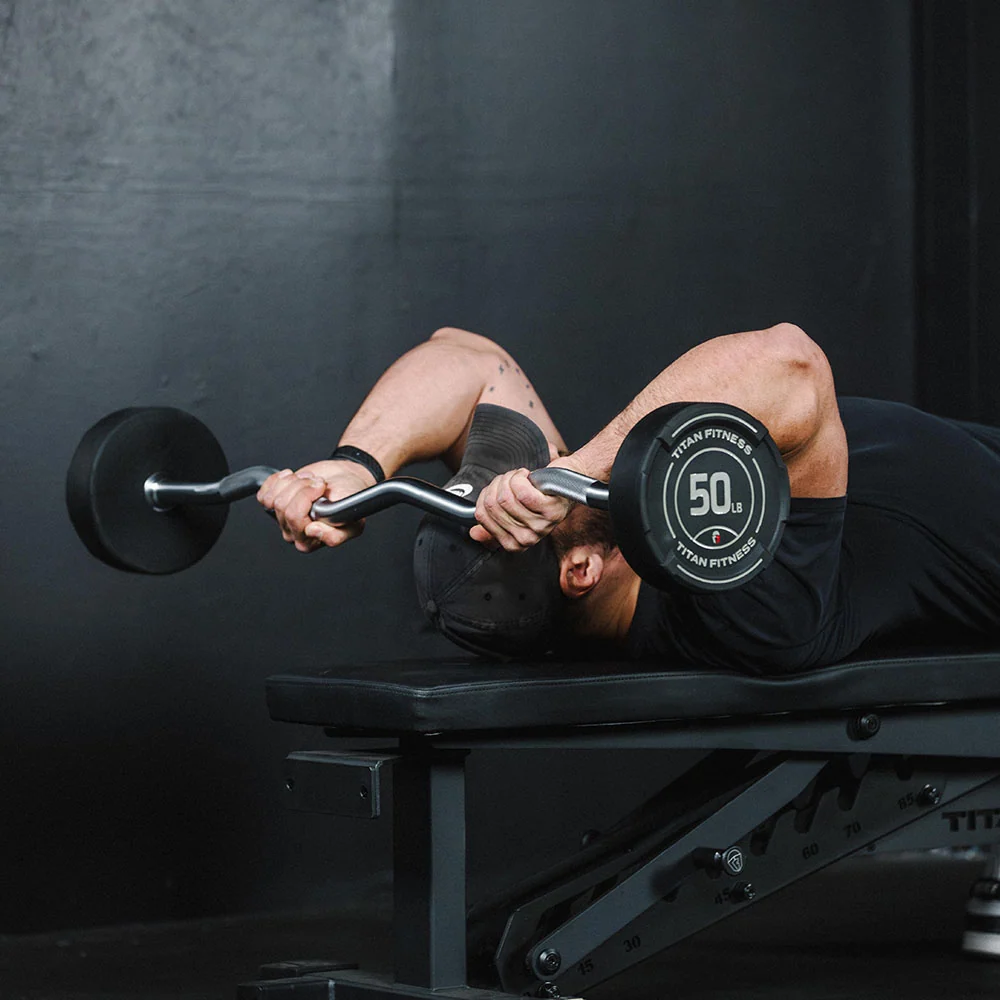
Start with an empty EZ curl bar or a light fixed-weight bar. Count the bar itself when recording load; different EZ bars have different empty weights. A flat bench with stable feet on the floor makes the movement easier to reproduce. Choose a comfortably angled overhand grip around shoulder width rather than forcing your hands into the narrowest bend.
- Sit with the bar resting safely on your thighs, then lie back and bring it above your shoulders using both arms. Keep your feet planted and upper back secure.
- Let your upper arms angle slightly toward your head instead of pointing the bar over your lower chest. Think of your elbows as hinges whose location changes very little.
- Bend the elbows over roughly two controlled seconds, bringing the bar toward your hairline. If you have room and it feels comfortable, allow it to travel behind the crown instead.
- Reverse the movement by straightening your elbows. Keep the bar following a repeatable path; avoid snapping into a hard, painful lockout.
- When finished, guide the bar safely toward your torso before sitting up. Never try to sit up while balancing a loaded bar over your face.
For most lifters, eight to fifteen clean repetitions are a useful starting range. The appropriate load is the one you can lower deliberately without flaring the elbows, losing your grip or needing to bounce out of the bottom. If the descent gets faster as the set goes on, reduce the weight or end the set sooner.

Equipment Worth Exploring
Explore equipment, accessories and gear from our carefully selected range.

EZ Curl Barbell
Olympic EZ curl bar with angled grips for curls and triceps exercises.


Rubber Hex Dumbbells
Rubber-coated hex dumbbell pairs with a stable shape for home and commercial strength training.




FID Bench MAX
Adjustable bench offering flat, incline, and decline positions + adjustable headrest.


EZ Bar or Dumbbells: Which Should You Pick?
The EZ bar links both hands to the same implement. That gives you a stable shared path, makes small plate increases possible and can be convenient when you want to repeat the same lift every week. Its angled grips also let many lifters hold their wrists in a more natural position than a completely straight bar. But a comfortable wrist angle is an individual fit issue, not proof that an EZ bar recruits more triceps muscle.
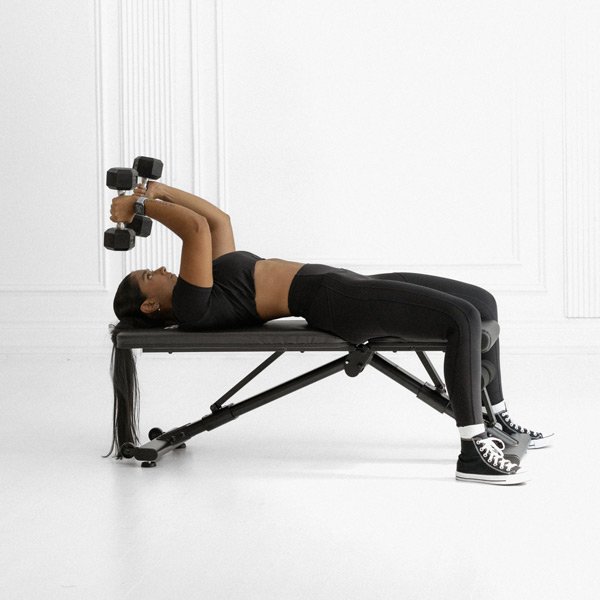
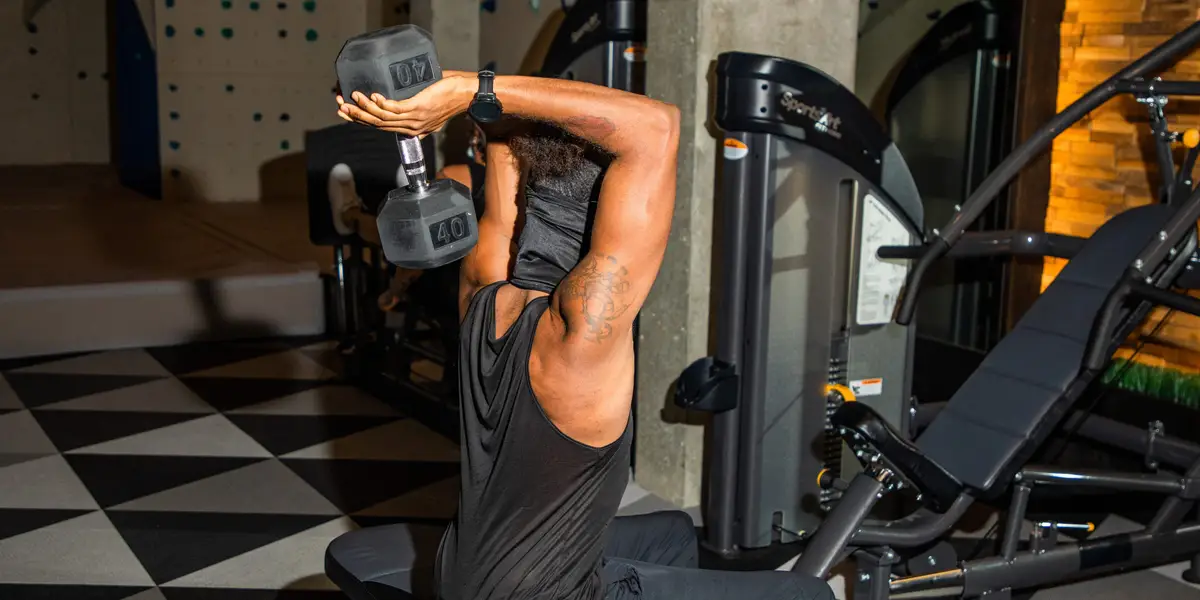
Dumbbells allow each arm to find its own path. With palms facing inward, the bells can descend alongside your ears rather than across your forehead. This can be useful when one elbow dislikes a shared fixed bar path, and it makes left-right differences easier to notice. The tradeoff is greater stabilization demand and sometimes big jumps between available dumbbell sizes. A five-pound increase per hand is a substantial change in a small isolation lift.
There is no convincing direct training trial showing that dumbbell skull crushers produce more hypertrophy than EZ-bar skull crushers or vice versa. Choose by wrist comfort, access, safe setup and whether you can progress without changing the movement. Use the bar if it tracks naturally and small plate increments help. Use dumbbells if separate arm paths feel better or you want unilateral control.
A helpful compromise is alternating implements between training blocks, not switching every workout. Keep one version for several weeks so you can actually assess whether repetition quality and performance improve. Two identical dumbbells are not necessarily equivalent to one bar of the same total listed weight, because stability and the load path differ.
Behind the Head or to the Forehead? Control Matters
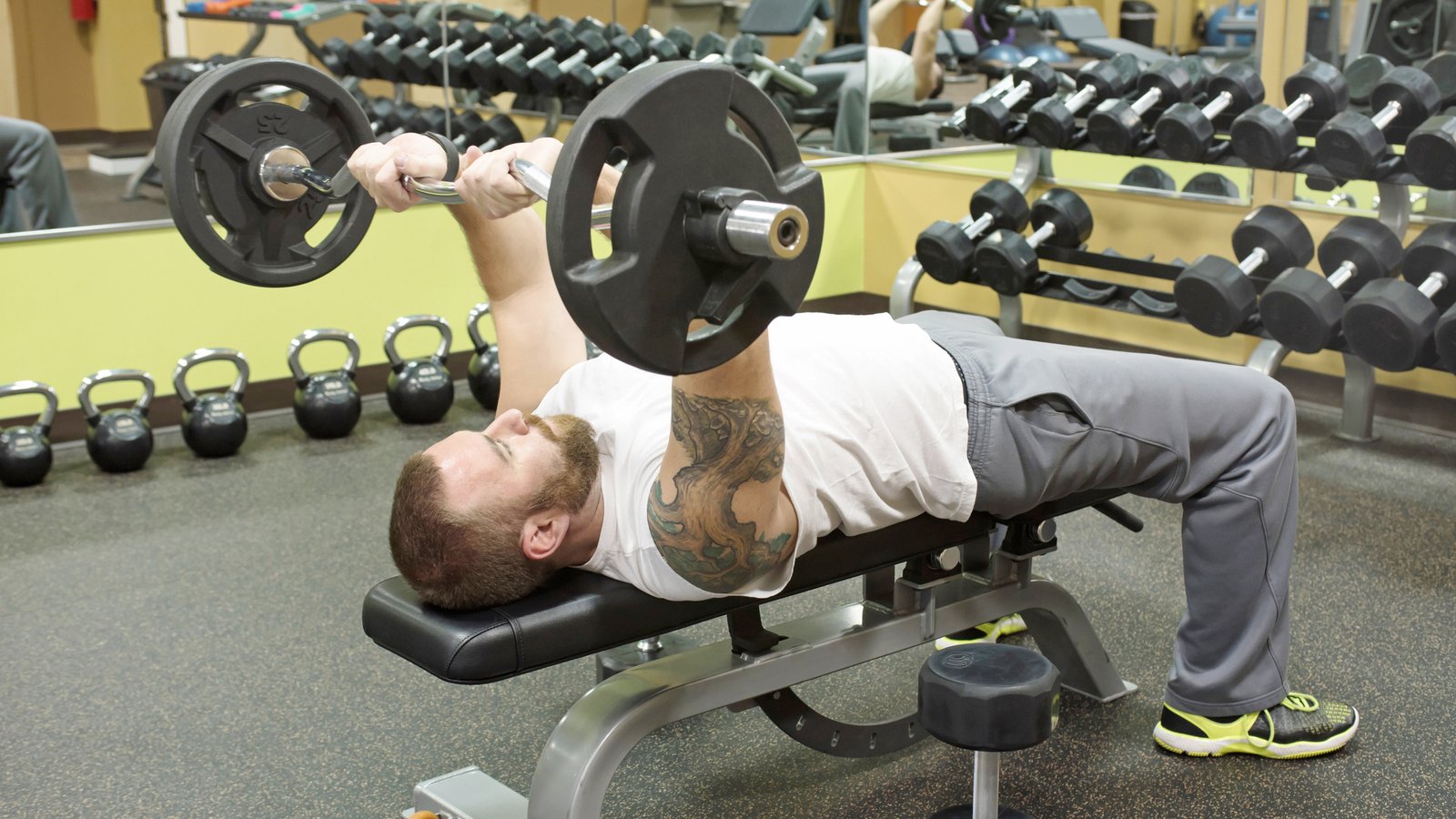
The traditional nickname comes from lowering a bar toward your forehead. That path is easy to understand, but it can make some lifters cut the eccentric short because the face is directly underneath the bar. A slight backward angle of the upper arms permits a descent toward the crown or just behind the head. That position often lets you maintain more elbow bend and a larger comfortable range of motion.
Neither route is universally mandatory. The right endpoint depends on your shoulder movement, elbow tolerance, bench position and whether the implement clears the bench safely. A longer lowering phase can increase range of motion, but it is not automatically better when it forces your shoulders to roll, your elbows to flare sharply or your wrists to fold backward.
Watch the upper arms rather than obsessing about keeping the elbows literally motionless. A little natural movement is normal; a large swing that shifts the load onto the chest and lats turns the lift into a hybrid press-pullover. Keep the same elbow position from the first repetition to the final one and use a speed that allows you to stop the weight at any point.
Think about a compact triangle: hands, elbows and shoulders. The forearms move, the upper arms stay broadly directed toward the ceiling and slightly behind it, and the wrists remain reasonably stacked with the forearms. If a partner has to rescue the bar at the bottom, your chosen weight or setup was not appropriate.
Cable, Incline and Overhead Variations
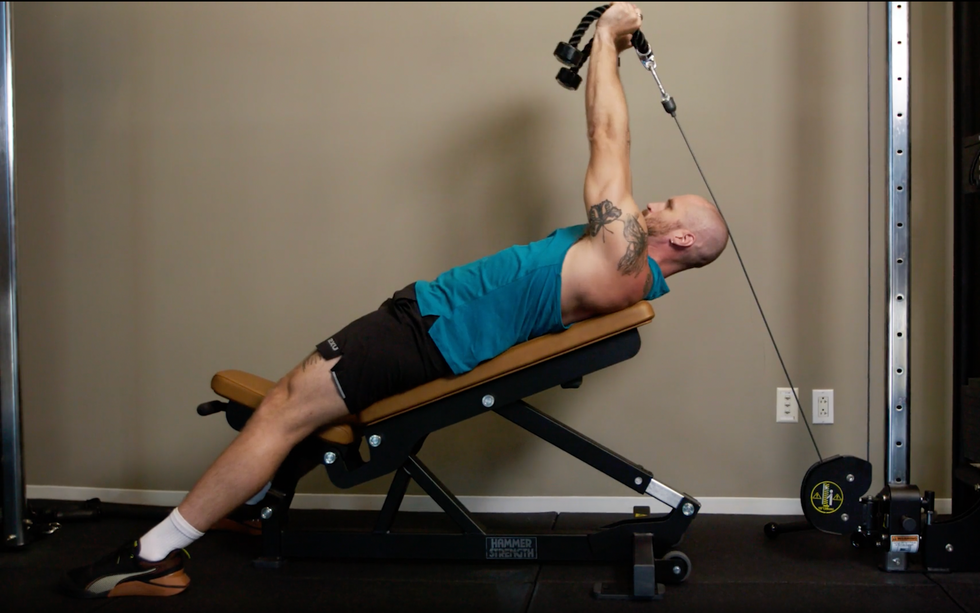
A low pulley lets you perform a lying cable extension on a bench positioned so the line of pull does not run into your face. A rope or short bar attachment allows different hand positions, while cable resistance can alter where in the rep the movement feels hardest. That is a mechanical difference, not evidence that cables automatically produce superior growth. Take time to adjust bench placement and cable height before adding resistance.
Incline and decline benches change the relationship between your torso, shoulders and gravity. On an incline, you may need to alter the upper-arm angle to preserve tension through the top; on a decline, the weight may continue to challenge the triceps differently across the arc. Neither is compulsory. If changing the bench angle adds awkward setup but no better control, return to the simple flat-bench version.
Overhead dumbbell or cable extensions are complementary rather than identical. With the arm raised nearer the ear, the long head sits at a different shoulder position than in a lying skull crusher. Including an overhead option later in the week is a reasonable way to vary the training demand, provided you can do it pain-free.
For lifters with limited equipment, a pair of adjustable dumbbells and one stable bench may be all that is required. Those with a pulley can alternate a cable rope extension and an EZ-bar session. The goal is still a controlled elbow-extension pattern, not collecting every attachment variation in one workout.

Bodybuilding Shirts & Workout Gear
Bodybuilding shirts, tanks and gym gear for lifters chasing muscle, size, symmetry and the pump.

Gym Dost Thou Even Curl Medieval Knight Bicep Hoodie
Show off your medieval humor in a laid-back “Dost Thou Even Curl Medieval Knight Bicep” hoodie.

– Flex Armstrong Astronaut Moon Huge Arms Jumper T-Shirt
Show some gym-day personality with “Flex Armstrong Astronaut Moon Huge Arms”.


Muscle Mountain – Bicep Mountain Meme Pullover Jumper T-Shirt
For laid-back days and lifting humor: “Muscle Mountain”.

Welcome to the Gun Show for Big Biceps and Gains | Rock Tank Top
Add some lifting attitude to training with “Welcome to the Gun Show”.

I Love Gym Bicep Heart Shirt | Swole Heart Graphic For T-Shirt
Bring “I Love Gym Bicep Heart” humor to your next gym day.

GymTok – TikTok Parody Bicep for Gymbro Content Creator Hoodie
Show off your bodybuilding humor in a laid-back “GymTok” hoodie.

Feel The Burn – Muscles On Fire & Gymbro Top T-Shirt
Bring “Feel The Burn” humor to your next gym day.

Netflex Pump Chill Meme Motivation Vest Tank Top
Train hard, laugh a little, and rep “Netflex Pump Chill”.

The Big Flex Theory | Science Based Lifting Sweater | B T-Shirt
For laid-back days and bodybuilding humor: “The Big Flex Theory”.
A Repeatable Six-Week Triceps Progression
Use two direct triceps sessions each week with at least forty-eight hours between hard sessions when possible. If you already bench, overhead press or dip several times weekly, count those as additional elbow-extensor work when judging recovery. You do not need to turn every push workout into another marathon of isolation sets.
Weeks 1–2 — Establish the movement: On Day A, perform EZ-bar skull crushers for two sets of 10–12 controlled repetitions, leaving roughly two or three good reps in reserve. On Day B, use dumbbell skull crushers for two sets of 10–15, followed by one light overhead extension set if comfortable. Write down implement, total bar weight or dumbbell-per-hand weight, repetitions and any elbow discomfort.
Weeks 3–4 — Add useful volume: Move Day A to three sets, and Day B to three sets, while keeping your technique and recovery consistent. When you reach the top of the rep range on every set without drifting elbows or shorter range, add the smallest available increment next time. If a dumbbell jump is large, progress a rep or two per set before changing weight.
Weeks 5–6 — Consolidate and evaluate: Keep three quality sets on each day. Use the same setup and aim for a modest rep or load improvement rather than a forced personal record. If performance stalls while elbow soreness increases, back off one set or reduce load for a week instead of grinding harder. The easiest measurable win is stronger performance at the same clean range of motion.
Rest around 90–150 seconds between working sets, longer if performance noticeably drops. This is a practical sample progression, not a protocol directly tested by the studies discussed above. It works best when total upper-body training volume, sleep and food intake support recovery.
Equipment Worth Exploring
Explore equipment, accessories and gear from our carefully selected range.

Dual Hook EZ Curl Bar
Angled aluminum dual-hook cable bar for biceps curls and pulldown variations.

Long Tricep ERGO Ropes
Extended triceps ropes with ergonomic grips for cable pressdowns and overhead extensions.
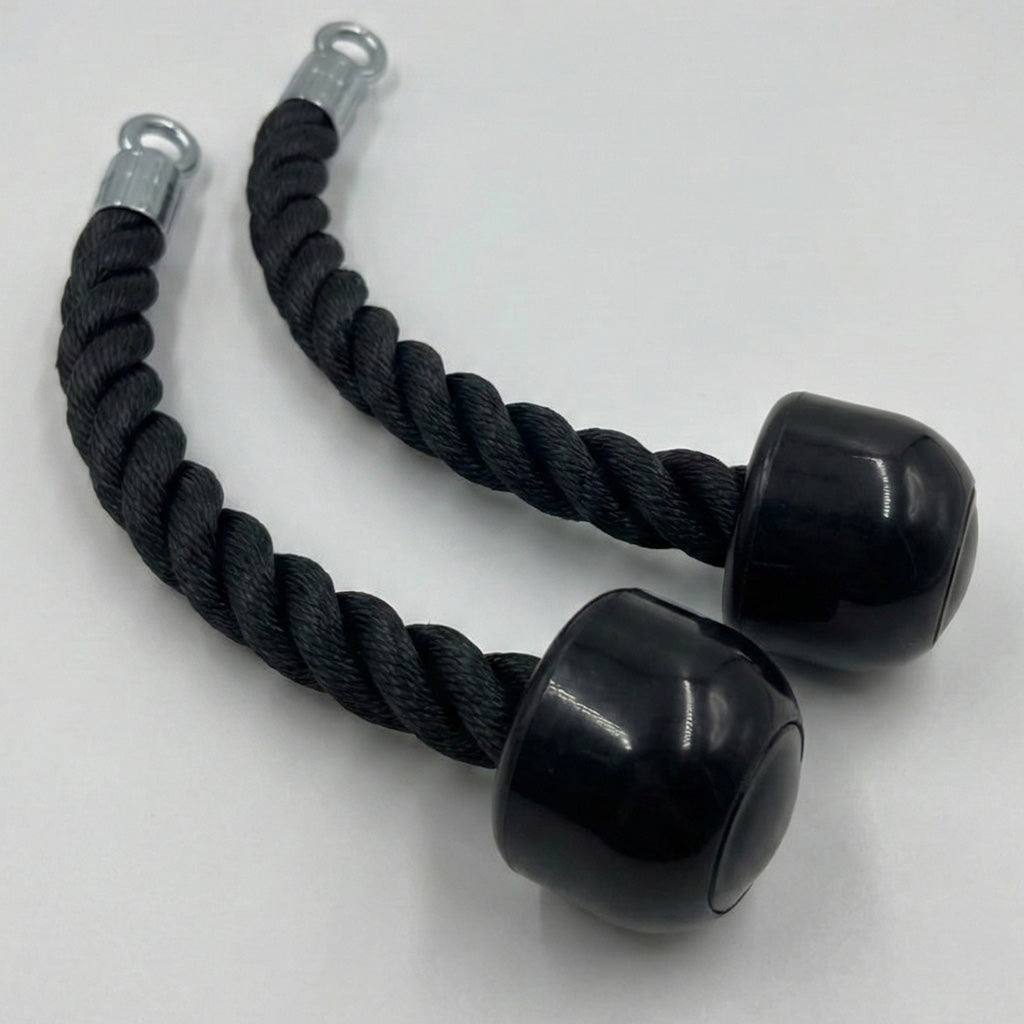
Individual Tricep Ropes
Pair of individual cable ropes for triceps pressdowns and cable hammer curls.
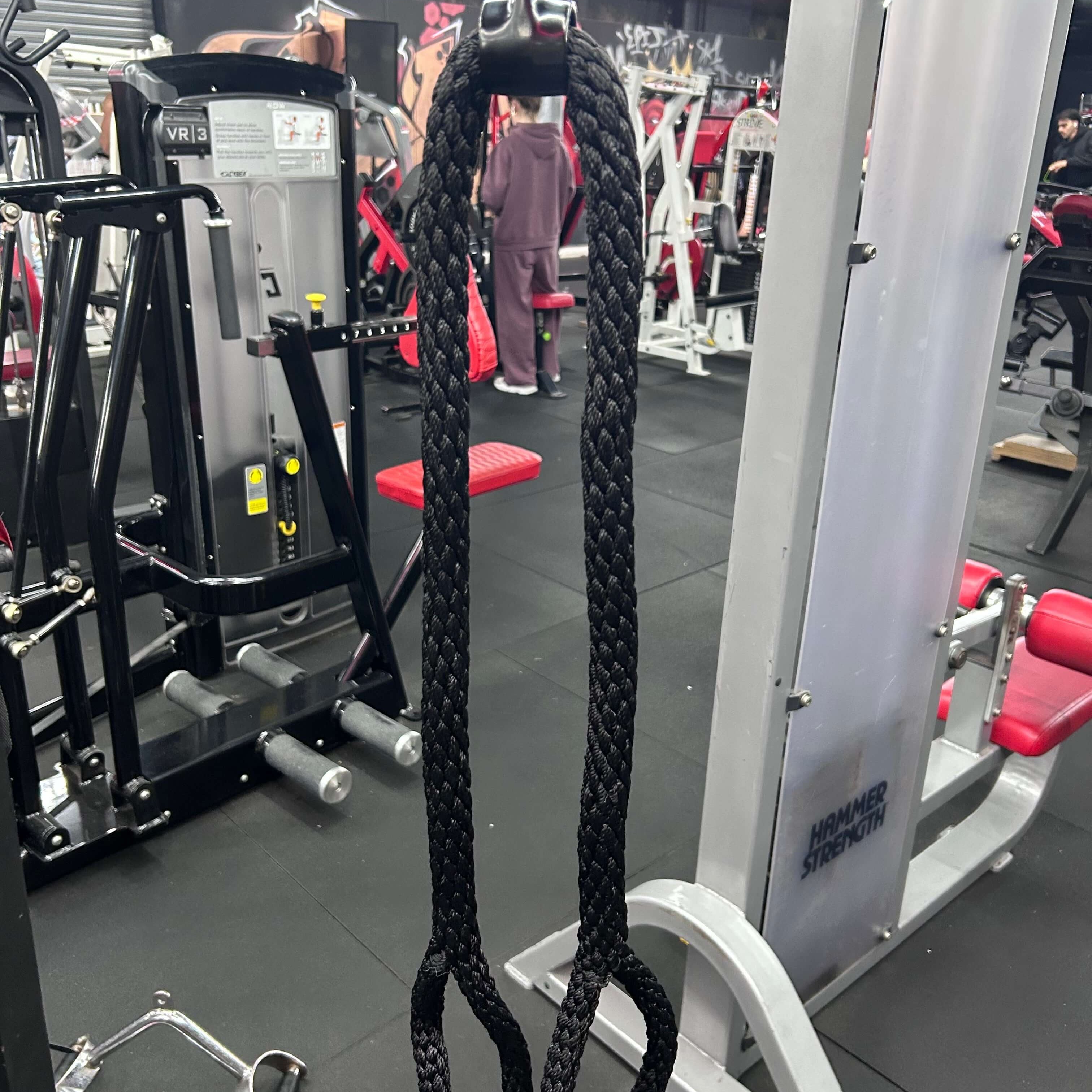
Super Long Tricep Rope
Extra-long looped cable rope for triceps pressdowns and overhead extensions.
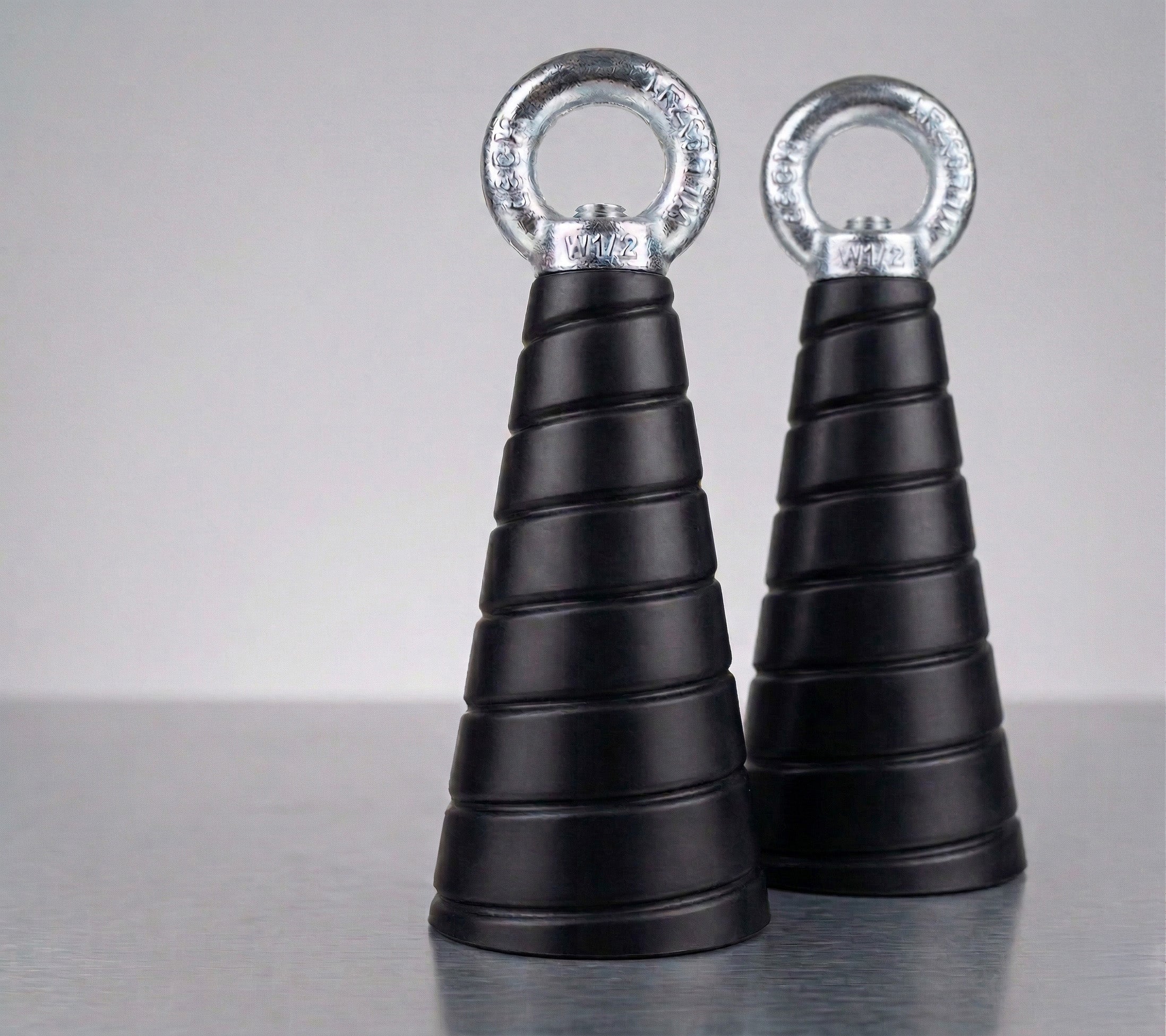
Tapered Tricep Cone
Tapered rubber cable grip for triceps extensions, face pulls and hammer curls.
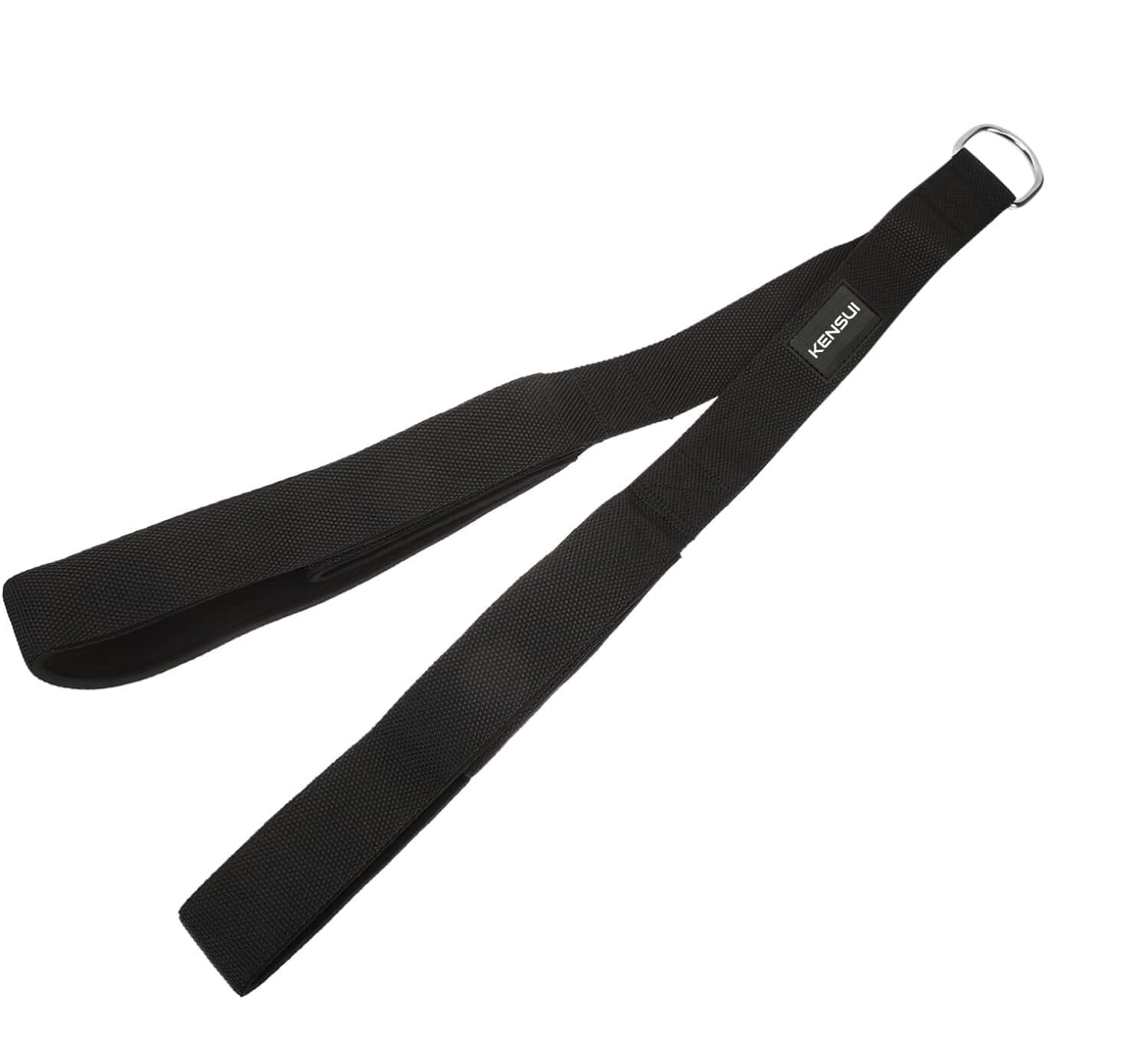
Multi-Length Tricep Strap
Adjustable-length cable strap for triceps, biceps and upper-body cable exercises.
VOLTRA
Compact digital cable trainer with smooth, adjustable resistance.

VForce Lat Tower
Wall-mounted cable tower with pivot arms and adjustable 1:1 or 2:1 pulley ratios.

GymPin D Cuffs
Adjustable wrist cuffs with textured grips for supported cable-machine exercises.
Common Errors, Elbow Comfort and Equipment Choices
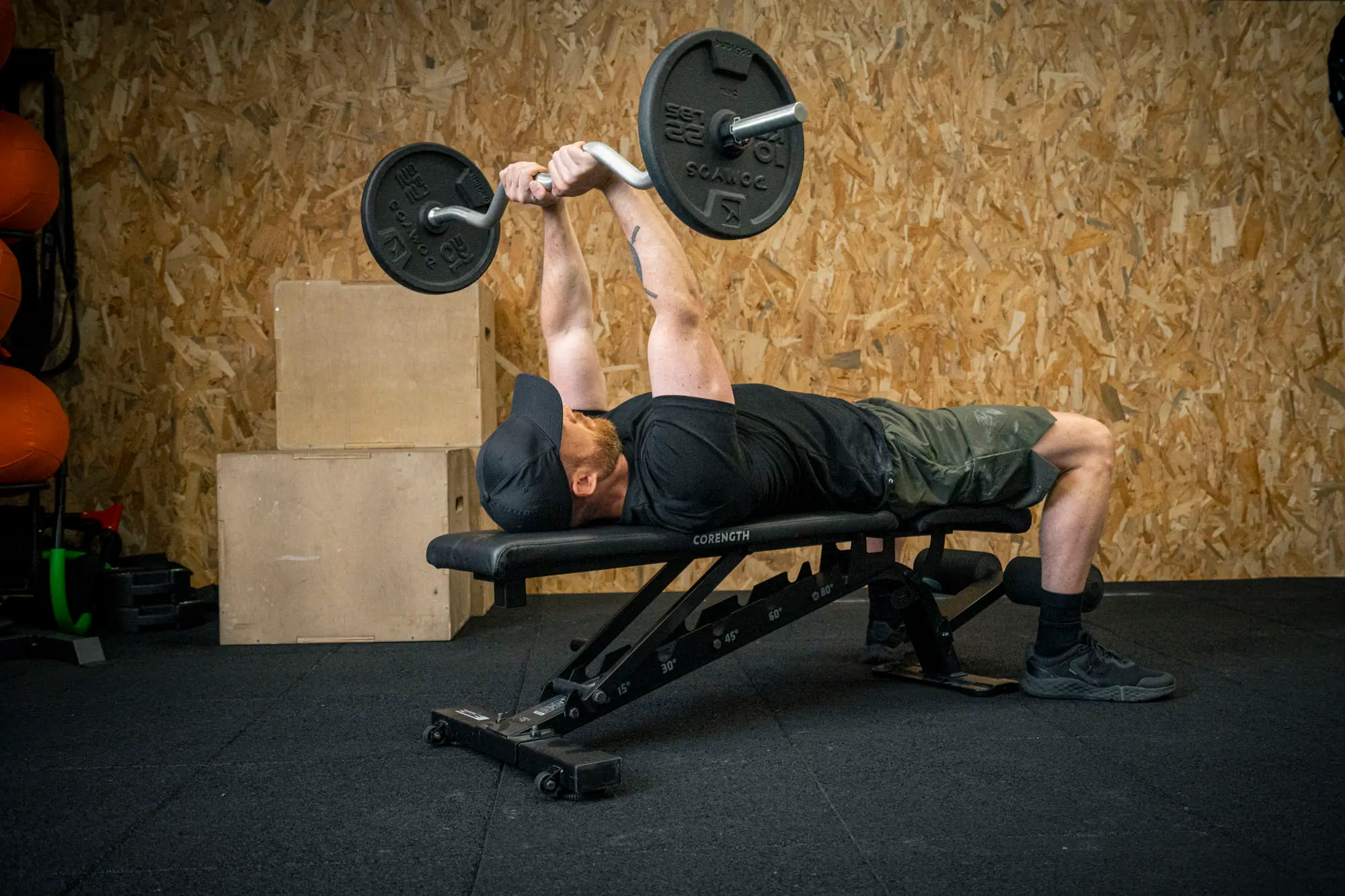
Three mistakes account for many ugly skull-crusher sets: loading too much, letting the elbows flare to move that weight, and dropping the bar into a rushed bottom position. A fourth is turning the upward phase into a chest press by shifting the elbows toward the hips. Film one light set from the side. If your forearms travel through a smooth arc while the upper arms stay broadly in place, you have a repeatable starting pattern.
Use discomfort as feedback, not as a badge of effort. Mild muscular fatigue is expected; sharp pain at the elbow or wrist is not a training target. First reduce load and range, then try a neutral-grip dumbbell variation or a controlled cable attachment. If pain persists or affects normal activities, seek appropriate clinical advice rather than continually changing grip angles and hoping it disappears.
Equipment choices should solve a real problem. An EZ bar with secure collars and small plates helps make gradual load changes; dumbbells give each arm room to move; an adjustable bench improves positioning; and a cable setup permits a different force direction. Check that bench and bar dimensions allow an unobstructed lowering path, particularly when you lower behind the head. If training alone, select a load you can always control back to a safe resting position.
Finally, judge the exercise by months of consistent hard but clean reps, not by how dramatic one set looks. Keep your main pressing movements for general upper-body strength, add direct triceps extensions where they fit, and repeat the same useful basics long enough for progress to become obvious.
Funny Gym Shirts & Workout Gear
Funny gym shirts, tanks, hoodies and workout gear for lifters who like training hard.

Pride : Ultimate Shirt Legs Glutes Biceps & LGBTQ+ T-Shirt
Heavy lifts, good laughs, and a little “Gym Pride” energy.

Guns N' Poses Rock Music & Gymbros T-Shirt
Bring “Guns N' Poses Rock Music” humor to your next gym day.

Tyrannosaurus Flex Gym | Funny T-Rex Dinosaur Workout D Sticker
Stick a little “Tyrannosaurus Flex” humor on your favorite gear.

Flex Pistols Meme : The Ultimate Punk Rock Shirt T-Shirt
Rep “Flex Pistols” humor in and out of the gym.

Hercuflex Greek God Gym | Funny Bodybuilding Vest for M Tank Top
Your gym-day look, with a playful “Hercuflex Greek God” twist.

Hustle For That Muscle Gym | Funny Greek God Meme Worko Sticker
Stick a little “Hustle For That” humor on your favorite gear.

Mike Mentzer Heavy Duty Flexing Bodybuilding for Gym Tr Hoodie
Make your off-duty look more fun with “Hoodie Mike Mentzer Heavy Duty Flexing”.

Just Flex It Meme Shirt – Essential T-Shirt
Show some bodybuilding attitude with a playful “Just Flex It” tee.

Beauty And The Biceps Sweater Meme T-Shirt
Add a playful “Beauty And The Biceps” touch to your casual rotation.

Dwight Schrute Gun Show The Office Meme Decal Water Sticker
A fun “Dwight Schrute Gun Show” touch for bottles, laptops, and lockers.