Advertising disclosure: This page includes affiliate product links that may earn us a commission, as well as products from our own store.
Two leg-curl machines can feel almost identical in the last few inches of a repetition, yet the hip position changes the starting length of most hamstring muscles. A 12-week experiment with 20 adults found larger average hamstring muscle-volume gains after seated curls than after prone, or lying, curls. That does not make the lying machine worthless, and it does not mean every person should copy the experiment’s demanding set count.
This guide separates the measured result from the likely mechanism, shows how to set up either machine without letting the pads dictate your joint position, and gives a practical six-week way to apply the evidence alongside hip-hinge training. Whether your gym has both stations or only one, the aim is consistent knee-flexion work you can progress, not a war between machines.
The 20-person trial: same lifter, two leg-curl positions
The experiment was particularly useful because each of 20 healthy adults trained one leg on the seated leg curl and the other leg on the prone leg curl. The researchers used 12 weeks of resistance training, two sessions each week, with five sets of ten repetitions per leg at roughly 70% of that leg’s one-repetition maximum. This within-person comparison reduced some of the noise that would arise from comparing two completely different groups of people.
Rather than judging progress from how hard a set felt, the researchers measured hamstring muscle volume using magnetic resonance imaging before and after training. They also considered individual hamstring muscles, which matters because the hamstrings are not one uniform structure. The study distinguished the thigh muscles that cross both the hip and the knee from the short head of biceps femoris, which crosses the knee but not the hip.
Participants were healthy adults without the training history of seasoned powerlifters or bodybuilders. The design tells us something meaningful about adaptation during that 12-week period; it does not establish that the exact percentages will repeat in advanced lifters, in a shorter training block, or with a very different loading schedule.
There was a separate eccentric-exercise damage assessment involving some of the original participants and controls. That was not the same outcome as muscle size. Keeping the two study questions apart helps avoid the tempting but unsupported claim that one leg-curl machine also prevents more injuries.
Why sitting changes hamstring length
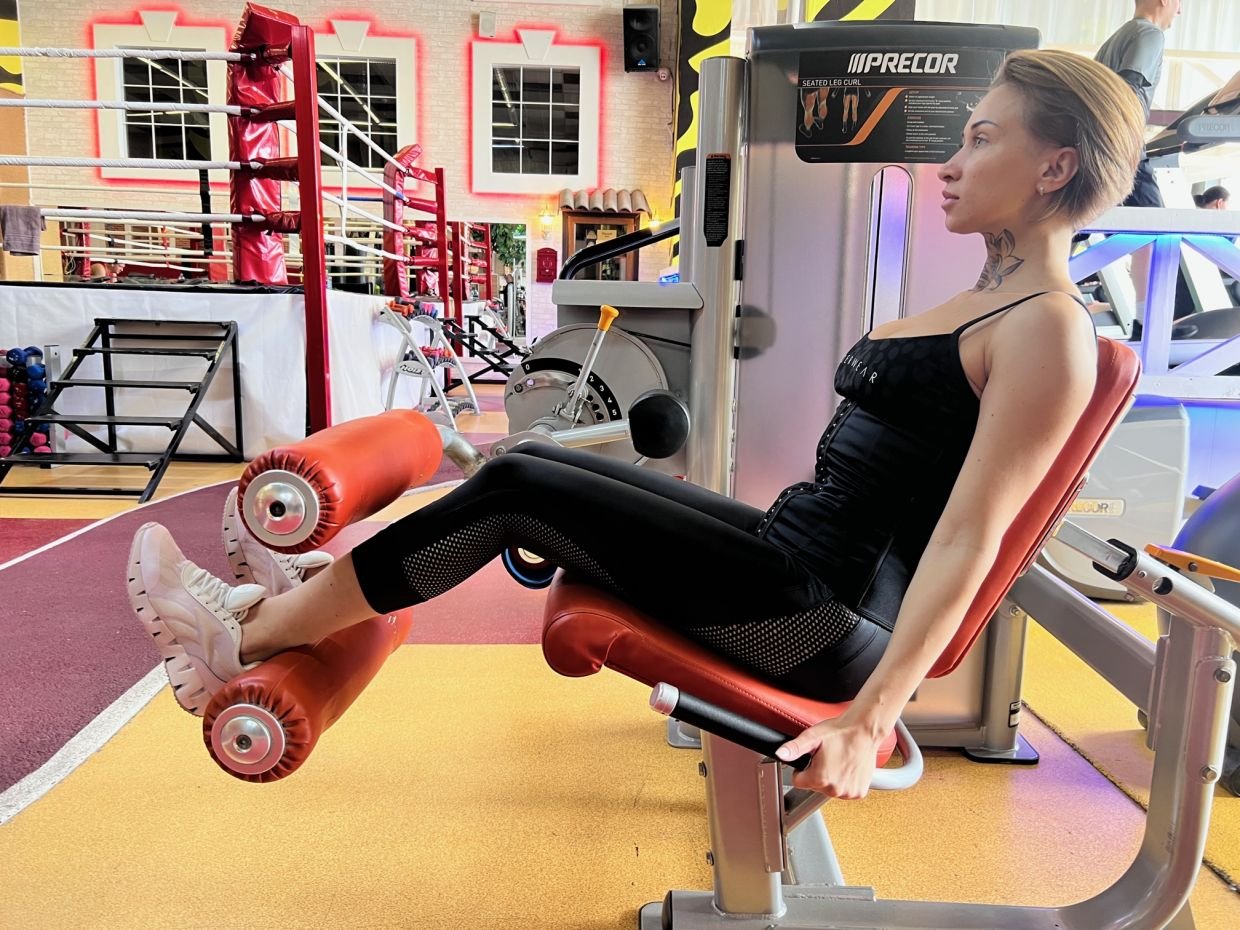
Most of the hamstring group has two jobs: bend the knee and help extend the hip. Because those muscles span both joints, their length changes with the position of each joint. On the seated leg curl, the thigh is flexed forward relative to the torso. On the prone machine, the thigh is usually closer to neutral or extended. At the same knee position, sitting tends to place the two-joint hamstrings under greater length.
That longer starting position changes the conditions under which the muscles produce force as the knee bends. Researchers often discuss training at longer muscle lengths as a possible way to encourage hypertrophy, but the mechanics should not be collapsed into the slogan that a stretch automatically builds muscle. You still need enough effective repetitions, progressive loading and a comfortable range that lets the hamstrings do the work.
There is also an anatomical exception. The short head of biceps femoris only crosses the knee, so changing hip angle does not lengthen it in the same way. That helps explain why a difference in overall hamstring growth does not mean every muscle belly benefited equally. It also warns against making blanket claims from a single sensation of tension behind the thigh.
Think of seat position as an adjustable training variable rather than a moral ranking. If the seated station positions your knees awkwardly or causes your hips to slide, good technique on the prone station can be more useful than forced technique on the supposedly superior machine.

Equipment Worth Exploring
Explore equipment, accessories and gear from our carefully selected range.




VOLTRA
Compact digital cable trainer with smooth, adjustable resistance.


Studio Glute Drive
Plate-loaded hip-thrust machine with supported back pad and adjustable foot platform.

Studio V-Squat
Plate-loaded V-squat machine for supported lower-body strength training.

VForce 2IN1
Half rack and pivot-arm functional trainer with switchable 1:1 and 2:1 pulley ratios.

VForce 3IN1
All-in-one rack combining an adjustable Smith machine, functional trainer, and free-weight station.
What grew more, and what did not
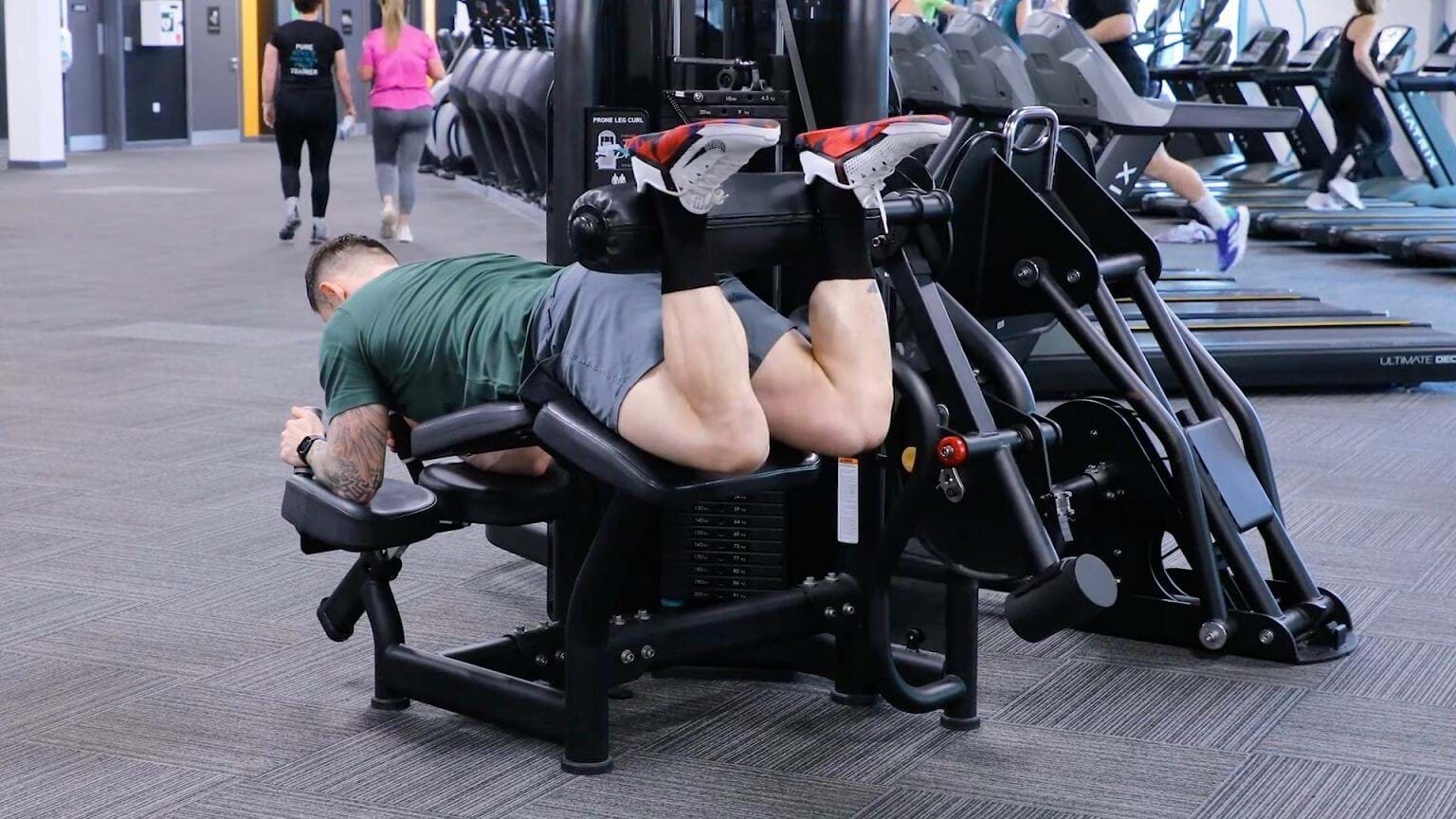
After 12 weeks, average whole-hamstring muscle volume increased by about 14.1% with seated curls and about 9.3% with prone curls. The between-condition advantage was found primarily among the hamstring muscles that cross both the hip and knee. The biceps femoris long head increased by approximately 14.4% versus 6.5%, while the semitendinosus and semimembranosus also showed larger gains in the seated condition.
For the one-joint short head of biceps femoris, the reported changes were close: approximately 10% for the seated leg versus 9% for the prone leg. That difference was not statistically clear. The correct summary is not that seated curls win every muscle or that lying curls are ineffective. Both conditions trained the hamstrings and produced measurable size increases.
What about soreness and resilience? In the separate eccentric challenge, legs that had completed either training intervention showed less disruption in the researchers’ measured markers than untrained control legs. Seated and prone training did not significantly differ from each other on those damage markers. Muscle volume and acute exercise-damage response are different endpoints; neither can be translated into a numerical prediction of injury prevention.
A muscle-growth percentage is also not a guaranteed personal result. Your diet, effort, exercise history, actual range of motion and recovery can easily change the response. The study supports a useful choice when both machines are available, not a promise of 14% larger hamstrings in 12 weeks.

Leg Day Shirts & Workout Gear
Leg-day gym shirts and workout gear for lifters who never skip squats, lunges and lower-body punishment.

Never Skip Leg Day Squats & Deadlifts Meme , Top T-Shirt
Show some leg-day attitude with a playful “Never Skip Leg Day” tee.

Leg Day Is Calling You Squats, Deadlifts & Gains T-Shirt
Rep “Leg Day Is Calling You” humor in and out of the gym.

Leg Day No Thanks – Skip Legday Meme , Squats & T-Shirt
Heavy lifts, good laughs, and a little “Leg Day No Thanks” energy.

Negative Leg Day Review Leg Day Sucks Meme Squats, T-Shirt
Show some leg-day attitude with a playful “Negative Leg Day Review” tee.

Squat You Must – Leg Day Meme , Top Gains T-Shirt
Heavy lifts, good laughs, and a little “Squat You Must” energy.

Squat Here Adult Humor With Meme Pickup Line , & T-Shirt
Make gym days more fun with “Squat Here” style.

Big Butt Energy – Meme , & Gains – Booty & Glutes T-Shirt
Make gym days more fun with “Big Butt Energy” style.

Squatbucks Gym | Funny Starbucks Parody Muscle Shirt | Tank Top
Train hard, laugh a little, and rep “Squatbucks”.

Squat Game Gym | Funny Squid Game Parody Workout Decal Sticker
Bring “Squat Game” attitude to your water bottle or laptop.

Heavy Metal Skeleton Squat for Powerlifting, Bodybuildi Tank Top
Bring “Heavy Metal Skeleton Squat” humor to your next lifting session.
Set up seated and lying curls correctly
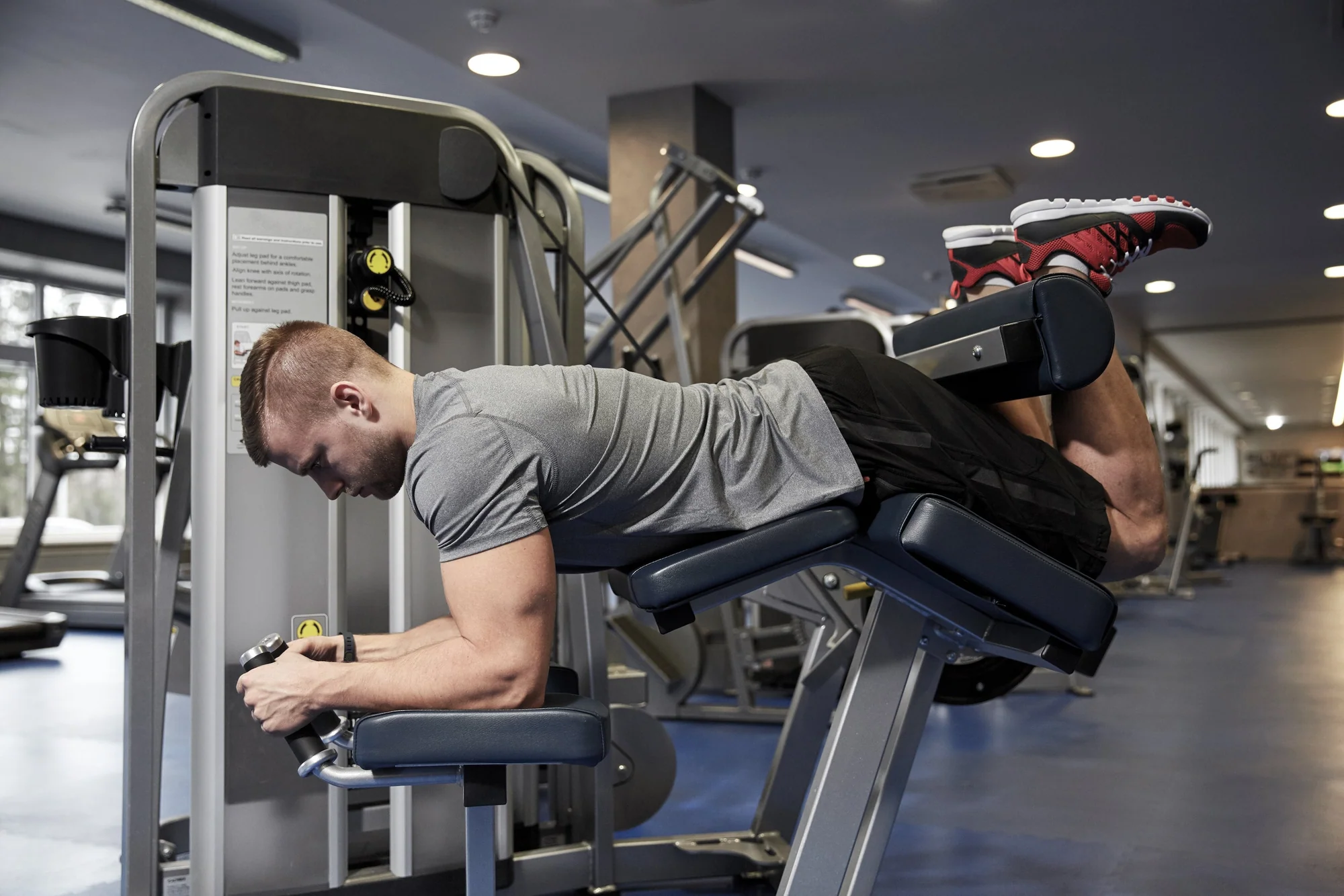
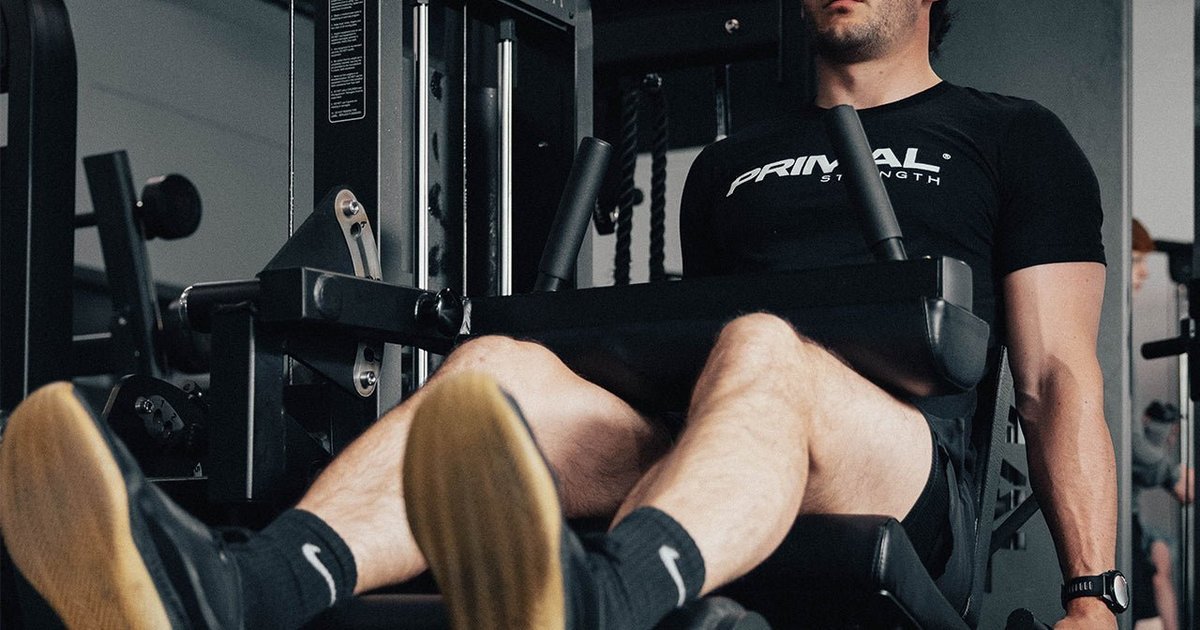
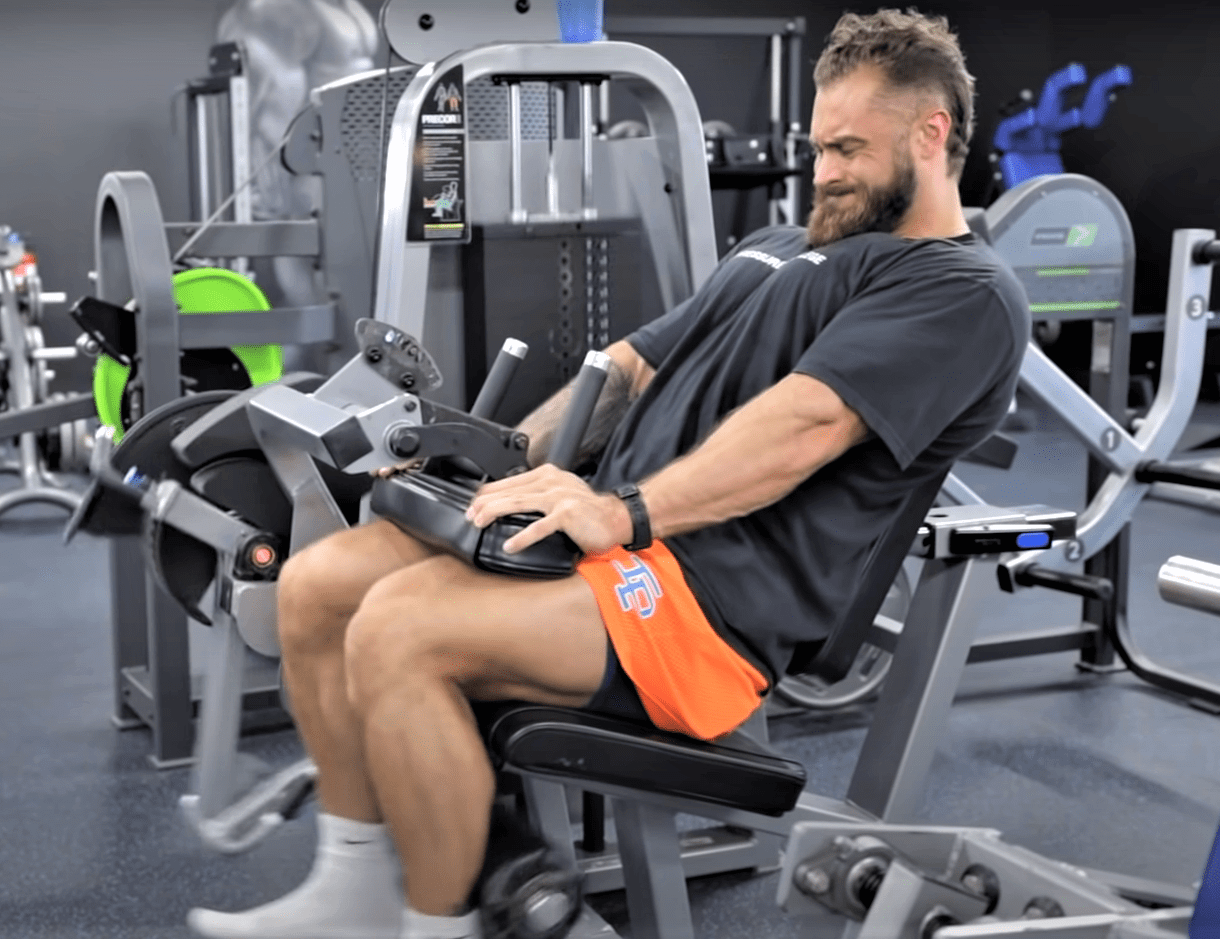
For seated curls, first adjust the backrest so your knee approximately lines up with the machine’s rotation axis. Set the lower pad near the lower leg just above the heel, not pressing hard into the Achilles tendon. Place the thigh restraint securely over your thighs, and keep your lower back and hips against the seat. Begin with a manageable load that permits a slow, controlled return and a confident knee bend.
Grip the handles and keep the hips still as you curl. Avoid rocking the torso forward, sliding the seat, or using momentum to reach a number on the stack. At the top of the return, allow the knee to open as far as you can comfortably control without letting the weight crash down. Different machines place the pads and cam differently, so a stack number is not a universal measure of tension.
For lying curls, align your knees with the machine’s joint, place the lower roller securely above the heels, and position the hips and abdomen on the pad. Curl without driving your pelvis upward or arching your lower back. This is especially important when the weight becomes hard near the middle of the movement: a torso swing may move the roller, but it does not guarantee the hamstrings worked through the intended range.
Use the same criteria to compare machines: controlled repetitions, no painful pressure points, repeatable setup, and room to progress. Knee discomfort, cramping or unusually sharp pulling calls for a smaller range or equipment adjustment, not an instruction to force through pain.
If your gym has only one machine
If both stations are available and your primary goal is hamstring size, the seated version has a good evidence-based case as your default knee-flexion exercise. You do not need to eliminate prone curls; they remain a productive option for variation, for comfort, and for managing machine availability. Alternating them across sessions is reasonable, though that exact combination was not what the 20-person experiment tested.
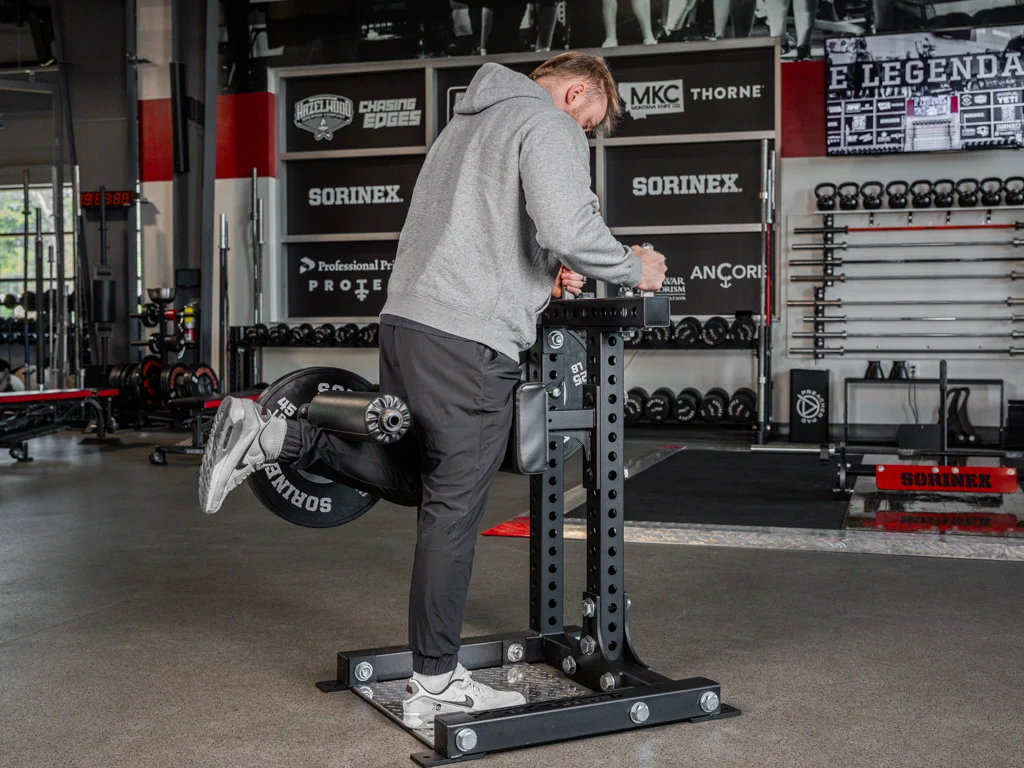
If you only have a lying machine, use it consistently. Keep the pelvis supported, progress the weight or repetitions and avoid turning each set into a rushed hip extension. A unilateral variation may help you notice side-to-side differences, but there is no requirement to manufacture a special hip angle or imitate the seated cam mechanism.
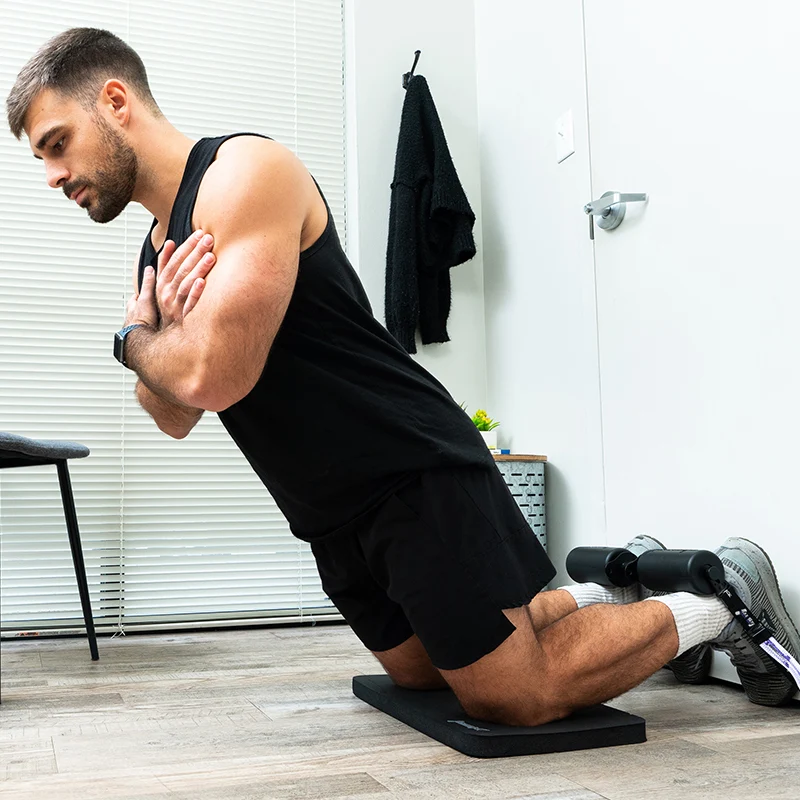
Without either selectorized machine, consider a stable strap-anchored knee curl, a sliding leg curl, a Nordic curl scaled to your strength, or a cable leg curl if it can be set up safely. These are alternatives, not mechanically identical replacements. Nordics tend to challenge the eccentric phase heavily, while sliding variations also ask the hips to stabilize. Begin with fewer demanding sets when an unfamiliar version produces more soreness.
Remember the other major hamstring action: hip extension. Romanian deadlifts, similar hinge movements, and some glute-ham developer work train a different aspect of the posterior chain. A balanced program can use one knee-flexion pattern and one hip-hinge pattern instead of trying to make one exercise cover every function.
Equipment Worth Exploring
Explore equipment, accessories and gear from our carefully selected range.


Open Hex Bar
Open-frame trap bar with multiple handles for deadlifts, carries, and lower-body training.


Rubber Hex Dumbbells
Rubber-coated hex dumbbell pairs with a stable shape for home and commercial strength training.


Leather Lifting Straps
Padded leather straps support grip during heavy rows, deadlifts and pulling exercises.

A six-week progression you can actually recover from
Start with two hamstring-focused exposures each week separated by roughly two or three days. For most recreational trainees, use two or three sets of seated leg curls on the first day and two or three sets of lying curls, or the best available alternative, on the second. Keep most sets approximately one to three repetitions shy of failure, especially while learning the setup. Add two or three sets of a Romanian deadlift or another controlled hip hinge on a day that fits the rest of your lower-body training.
Weeks 1–2: Choose a curl load that allows 10–15 clean repetitions with the last repetition looking much like the first. Log the machine, seat and pad settings, load, repetitions and how close the set felt to failure. Match the range between sessions. Do not change the seat angle every time just to chase a stronger stretch.
Weeks 3–4: Keep the same setup and progress one measurable variable. Add a repetition to one or more sets, or raise the weight by a small stack increment after you can reach the top of your target repetition range with control. If you have both machines, you may favor seated curls on one or both days, but preserve your hip-hinge work and avoid suddenly doubling total leg volume.
Weeks 5–6: Work toward the top of the rep range, then repeat with modestly more load while preserving smooth lowering. If overall leg training is already demanding, maintain the number of sets rather than piling on additional fatigue. If knee discomfort, sleep disruption, or declining performance appears, reduce the load or sets and reassess technique before adding intensity.
This plan is an application of training principles, not a replication of the trial’s five sets of ten per leg twice weekly. The research dose was tightly controlled and relatively substantial; a useful individual program needs to fit your squats, hinges, sporting practice and recovery.
Bodybuilding Shirts & Workout Gear
Bodybuilding shirts, tanks and gym gear for lifters chasing muscle, size, symmetry and the pump.

Heavy Enough Tee
Bring “If You're Not Scared It's Not Heavy Enough” humor to your next gym day.

Bending Bars Meme – Barbell Squat Bench Deadlift, & T-Shirt
Heavy lifts, good laughs, and a little “Bending Bars Gym Meme” energy.

Squat Bench Deadlift Read Shirt Literary Bookworm Top T-Shirt
Bring “Squat Bench Deadlift Read” humor to your next gym day.

5 AM Squad Morning Bro Meme & T-Shirt
Heavy lifts, good laughs, and a little “5 AM Squad” energy.

Massquatch Bigfoot – Sasquatch , & Meme T-Shirt
Heavy lifts, good laughs, and a little “Massquatch Bigfoot” energy.

Shirt – Squad Gains Gymbros, , Meme Top & Gains T-Shirt
Bring “Squad Gains” humor to your next gym day.

OnlyGains Meme Hooded Bros Jumper Top Hoodie
Show off your lifting humor in a laid-back “OnlyGains Gym Meme” hoodie.

Meme – "Shhh I'M Doing Plate Math" Vest & Tank Top
Train hard, laugh a little, and rep “"Shhh I'm Doing Plate Math"”.

Installing Muscles Meme – Hooded Jumper Hoodie
Make your off-duty look more fun with “Installing Muscles”.

Bulking Season Donut Dumbbell Donuts Barbell Bulk Tank Top
Train hard, laugh a little, and rep “Bulking Season Donut Dumbbell Donuts”.
The verdict: choose with evidence, then train consistently
The strongest direct comparison here favors seated leg curls for whole-hamstring growth over 12 weeks in healthy adults. The advantage aligns with the longer position of the two-joint hamstrings when the hip is flexed. That is a meaningful result, but its boundaries matter: short-head growth was similar, the study was not a trial in advanced bodybuilders, and it did not prove that one machine prevents hamstring injuries better than the other.
Broader resistance-training research on muscle length and range of motion provides support for giving lengthened training positions attention, while also showing that outcomes vary among muscles, measurements and protocols. It would be a mistake to generalize the leg-curl result to every exercise or to abandon full, controlled repetitions in favor of arbitrary partial reps.
When you have both machines, try the seated curl first for a hypertrophy-focused knee-flexion slot. When you only have a prone curl, train it hard and well. In either case, pair knee bending with at least one sensible hip-hinge pattern, track progress over weeks rather than individual sessions, and let a comfortable repeatable setup outrank an impressive weight stack number.
The most practical question is not which machine wins an online argument. It is which position lets you train the intended muscles through a useful range, make measurable progress and return to train them again. That is the choice you can actually build on.