Advertising disclosure: This page includes affiliate product links that may earn us a commission, as well as products from our own store.
Does curling with your arm behind your body grow bigger biceps than keeping your shoulder neutral? A controlled ten-week comparison found both methods produced roughly seven to nine percent elbow-flexor thickness gains in the 24 men who finished the trial. The useful lesson is about what actually changes when you move the shoulder, not about choosing a trendy exercise name.
Why moving your upper arm changes the curl
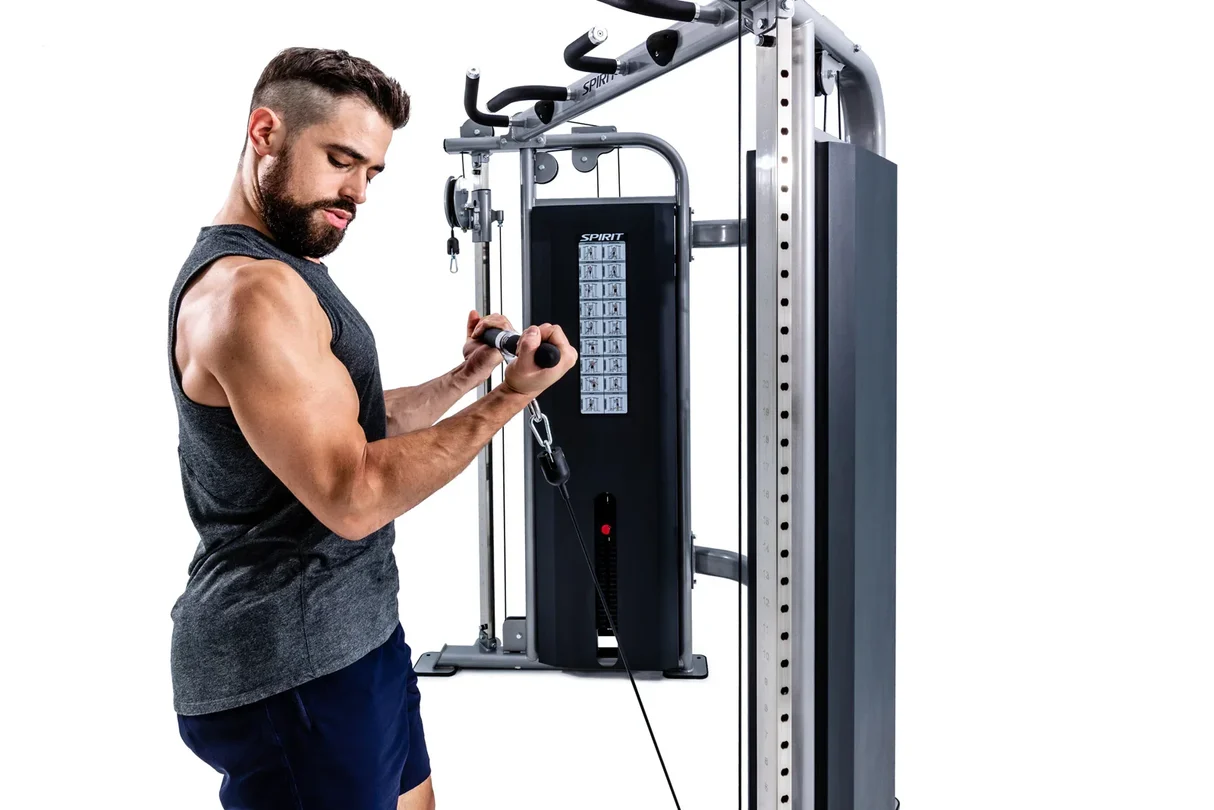
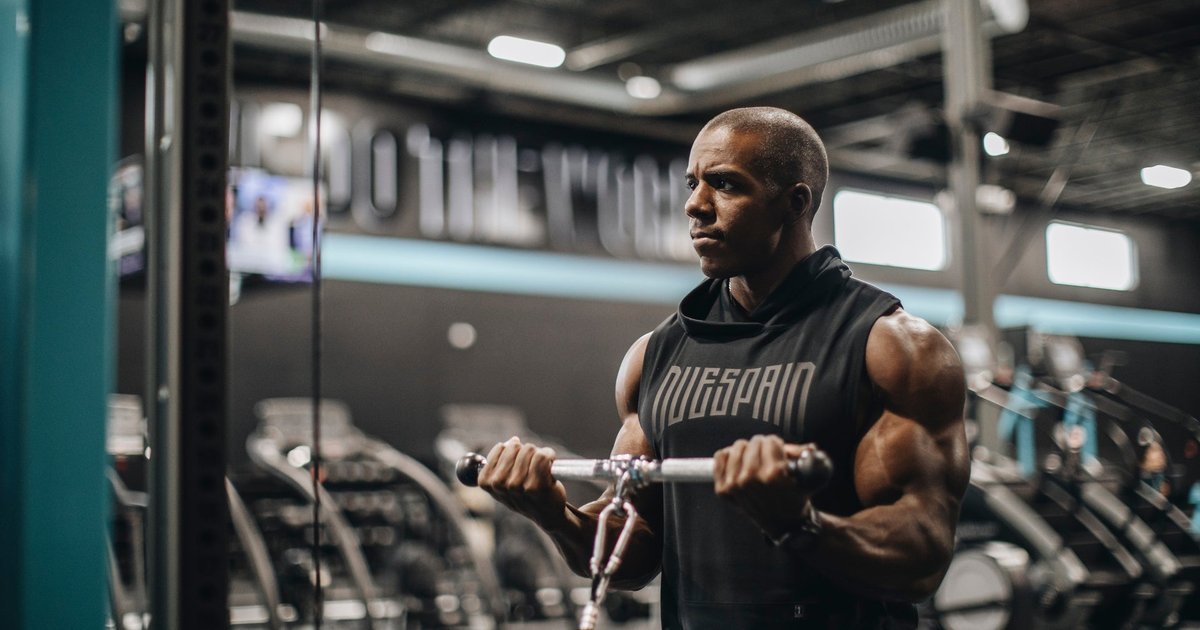
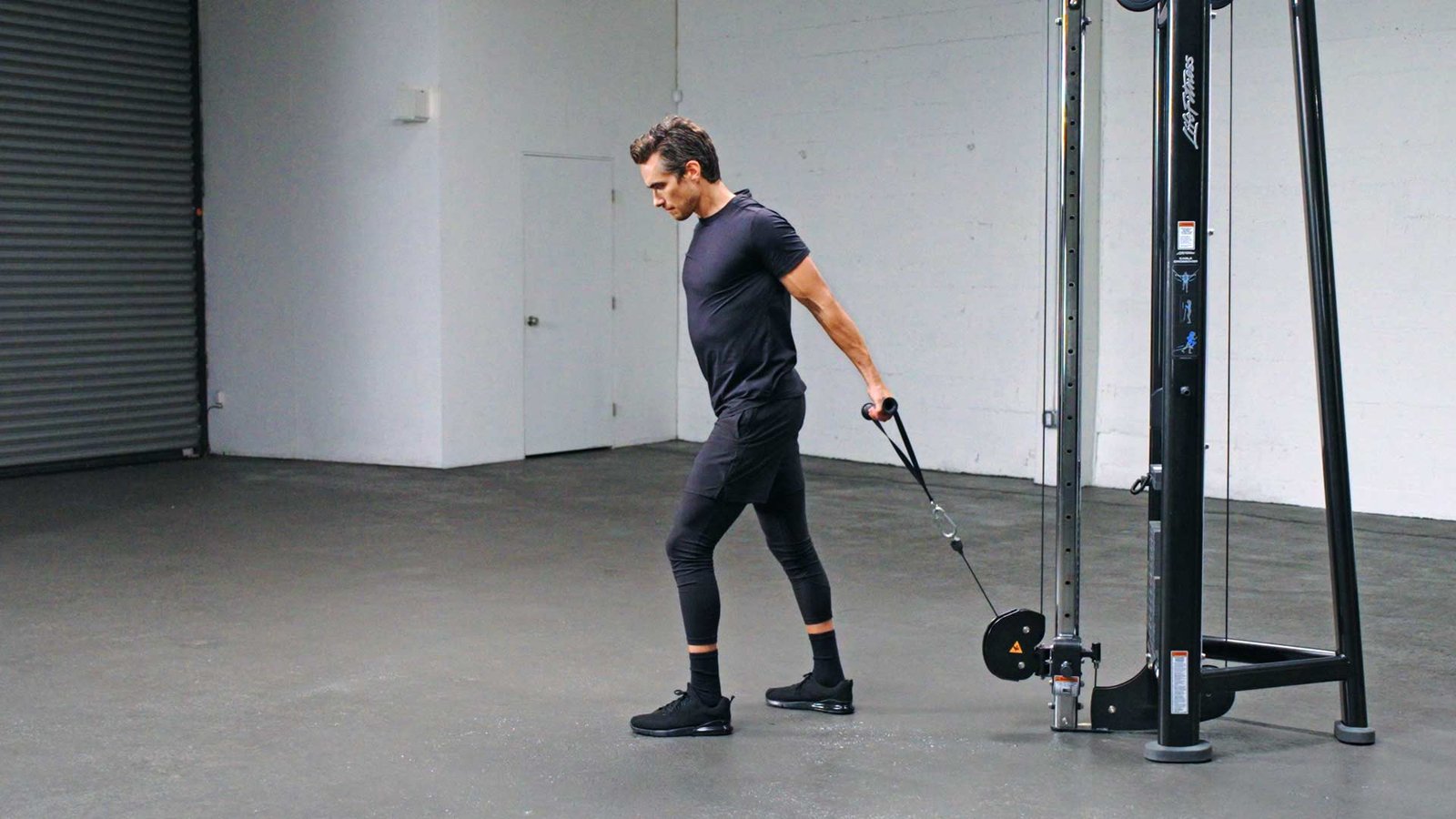
The cable curl is deceptively simple: bend the elbow, keep the body still and make the biceps do the work. Yet two lifters can use the same machine and make the movement feel completely different. One stands with the upper arm close to the torso; the other takes a step forward, letting the working arm reach behind the body. The second version is commonly called a behind-the-body or Bayesian-style curl. It lengthens the biceps at the shoulder before the first repetition even begins. That sounds like an automatic advantage for muscle growth, but the cable’s angle of pull also changes, making the comparison less straightforward than an anatomy diagram suggests.
The biceps brachii crosses both the shoulder and elbow, while the brachialis primarily flexes the elbow without crossing the shoulder. Moving the shoulder backward can alter biceps length without giving the brachialis the same positional change. Meanwhile the pulley, distance from the machine, handle attachment and working arm angle determine where resistance is highest. Two curls that look different may expose the elbow flexors to surprisingly similar mechanical demands. Conversely, two exercises with the same name can become very different if one makes the stretched position much harder.
The practical question is therefore not whether a behind-body cable curl feels more stretched. It usually does. The question is whether shoulder position alone creates more muscle growth when effort, repetitions, elbow travel and the resistance profile are controlled. A 2026 trial offers an unusually useful test of that narrower claim. It also reminds us that making one lift feel harder is not always the same thing as making it a better long-term hypertrophy exercise.
Takeaway for your own training: treat the shoulder position as one adjustable variable rather than a magic exercise classification. Compare exercises based on their comfort, repeatability and loading through the motion. Do not conclude that an unfamiliar stretch or a bigger cable stack number automatically predicts bigger arms.
Inside the 10-week comparison: one man, two curl positions
Thirty previously untrained men began a controlled comparison in which one arm trained with the shoulder in a neutral position and the opposite arm trained with the shoulder pulled back toward that individual’s comfortable maximum extension. Assignment was randomized, which makes this more informative than comparing two unrelated groups with different genetics or training histories. Twenty-four participants completed the ten-week intervention and were included in the main analyses. Their average age was approximately 32 years. Results from the two arms could therefore be compared within the same people rather than between separate groups.
The participants completed supervised unilateral cable curls twice per week. The protocol generally involved three working sets per arm at each session, with participants working in a roughly 10-to-20-repetition loading zone and continuing each set to momentary muscular failure. A controlled lowering phase lasted about two seconds. Training attendance averaged 19.2 of the planned 20 sessions. The investigators adjusted pulley height and body position to make the resistance profile as similar as possible between the two shoulder positions. The elbow movement was also standardized rather than allowing the stretched version to use a completely different range of motion.
Before and after the intervention, muscle thickness of the elbow flexors was measured using ultrasound at two sites along the upper arm, corresponding to approximately 50% and 70% of the length from elbow to shoulder landmarks. These measurements combine contributions from the biceps and brachialis rather than measuring every individual elbow-flexor muscle volume separately. They are useful for detecting local growth, but they are not a direct measure of the exact number of muscle fibers added or how a person’s arm looks at every point.
This design is powerful for isolating shoulder angle, but also narrow by construction. It does not test whether a typical gym-goer gets different results when switching between an incline dumbbell curl and a preacher curl with their natural, unmatched resistance curves. Nor does it tell us how experienced bodybuilders respond to much heavier training. Its central strength is that it makes a reasonably fair comparison between two versions of the same cable exercise.

Equipment Worth Exploring
Explore equipment, accessories and gear from our carefully selected range.
VOLTRA
Compact digital cable trainer with smooth, adjustable resistance.

Go-Tone Pro
Portable digital cable trainer with up to 66 lb (30 kg) of adjustable resistance.

VForce Wall Trainer
Space-saving wall-mounted functional trainer with pivoting cable arms and variable resistance ratios.

VForce 2IN1
Half rack and pivot-arm functional trainer with switchable 1:1 and 2:1 pulley ratios.

VForce 3IN1
All-in-one rack combining an adjustable Smith machine, functional trainer, and free-weight station.

VForce Lat Tower
Wall-mounted cable tower with pivot arms and adjustable 1:1 or 2:1 pulley ratios.

GymPin Ergo Handles
Pair of ergonomic cable handles shaped for comfortable triceps and pulling exercises.
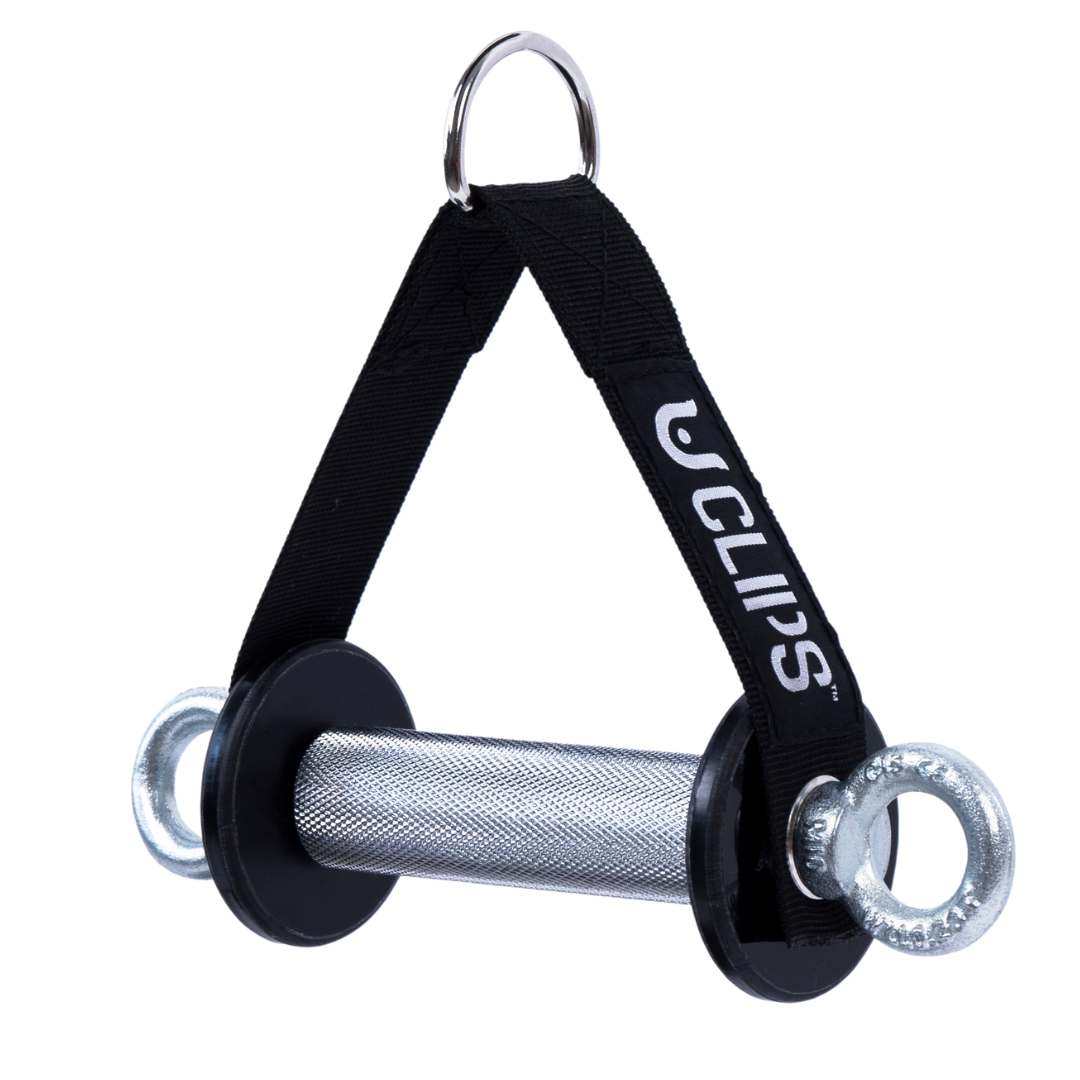

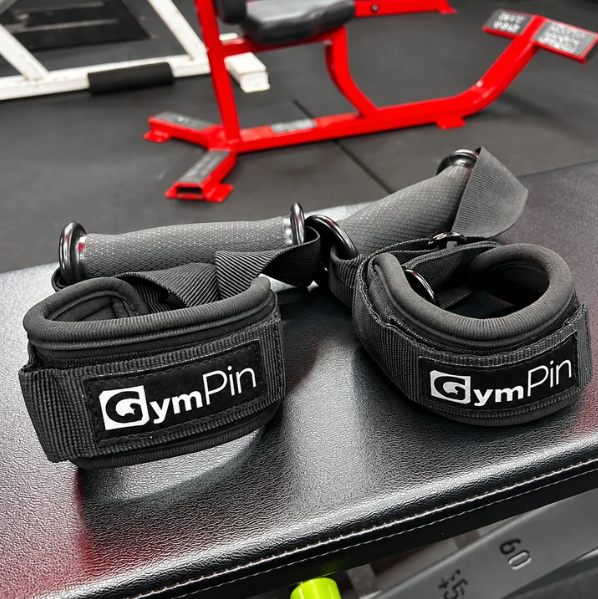
GymPin D Cuffs
Adjustable wrist cuffs with textured grips for supported cable-machine exercises.
The measured result: both positions grew, neither clearly won
After ten weeks, both shoulder positions produced elbow-flexor thickness increases of approximately seven to nine percent. That is the headline result: the arms trained with the shoulder behind the body grew, but so did the arms trained with the shoulder near neutral. The estimated average difference between the neutral and extended conditions was about minus 0.40 millimeters at one measured site and plus 0.21 millimeters at the other. The uncertainty intervals crossed zero, which means the data did not establish a dependable advantage for either variation.
The trial used Bayesian statistical analyses. At the more proximal measurement site, the estimated neutral-minus-extended difference was -0.40 millimeters, with a 95% credible interval from -1.06 to +0.26 millimeters. At the more distal site it was +0.21 millimeters, with an interval from -0.25 to +0.65 millimeters. When the measurements were considered together, the evidence leaned toward little or no meaningful difference under these exact training conditions. That is not proof that shoulder extension never matters, or that every possible variation is equivalent.
An especially useful detail is that participants could generally perform greater total volume load with their shoulders extended. In other words, a variation that allowed more load multiplied by repetitions still did not show more elbow-flexor thickness gain. External weight is a poor standalone proxy for local muscle stimulus when different joint positions or leverage are involved. Load progression is valuable, but only when you compare the same setup, movement depth and level of effort over time.
If a curl behind the body makes your biceps work hard and feels stable, you can keep it. If a neutral cable curl is more comfortable and easier to progress, you have no reason to abandon it based on the assumption that the longer position must always grow more muscle. The experiment supports a choice based on execution and adherence, not a universal winner.

Bodybuilding Shirts & Workout Gear
Bodybuilding shirts, tanks and gym gear for lifters chasing muscle, size, symmetry and the pump.

Gym Dost Thou Even Curl Medieval Knight Bicep Shirt & B T-Shirt
Make gym days more fun with “Dost Thou Even Curl Medieval Knight Bicep” style.

Mind Muscle Perfection Brain and Biceps Gym for Science Hoodie
Show off your lifting humor in a laid-back “Mind Muscle Perfection Brain and Biceps” hoodie.

Biceps of the Caribbean Gym | Funny Pirate Workout Deca Sticker
A fun “Biceps of the Caribbean” touch for bottles, laptops, and lockers.

GymTok – TikTok Parody Bicep Graphic for Gymbros and Fi T-Shirt
Make gym days more fun with “GymTok” style.

Muscle Mountain – Bicep Mountain Meme Hooded Pullover Hoodie
Bring “Muscle Mountain” gym humor to lazy days and post-workout plans.


Pumpeye Forearm Gains Grip Training Popeye Meme Vest Tank Top
Add some lifting attitude to training with “Pumpeye”.

Big Biceps Theory Meme Sweater Bro Science T-Shirt
Add a playful “Big Biceps Theory” touch to your casual rotation.


Curls The Girls Shirt – Bicep Curls Top & Gymbros T-Shirt
Rep “Curls For The Girls” humor in and out of the gym.
The hidden variable: where a cable makes the rep hard
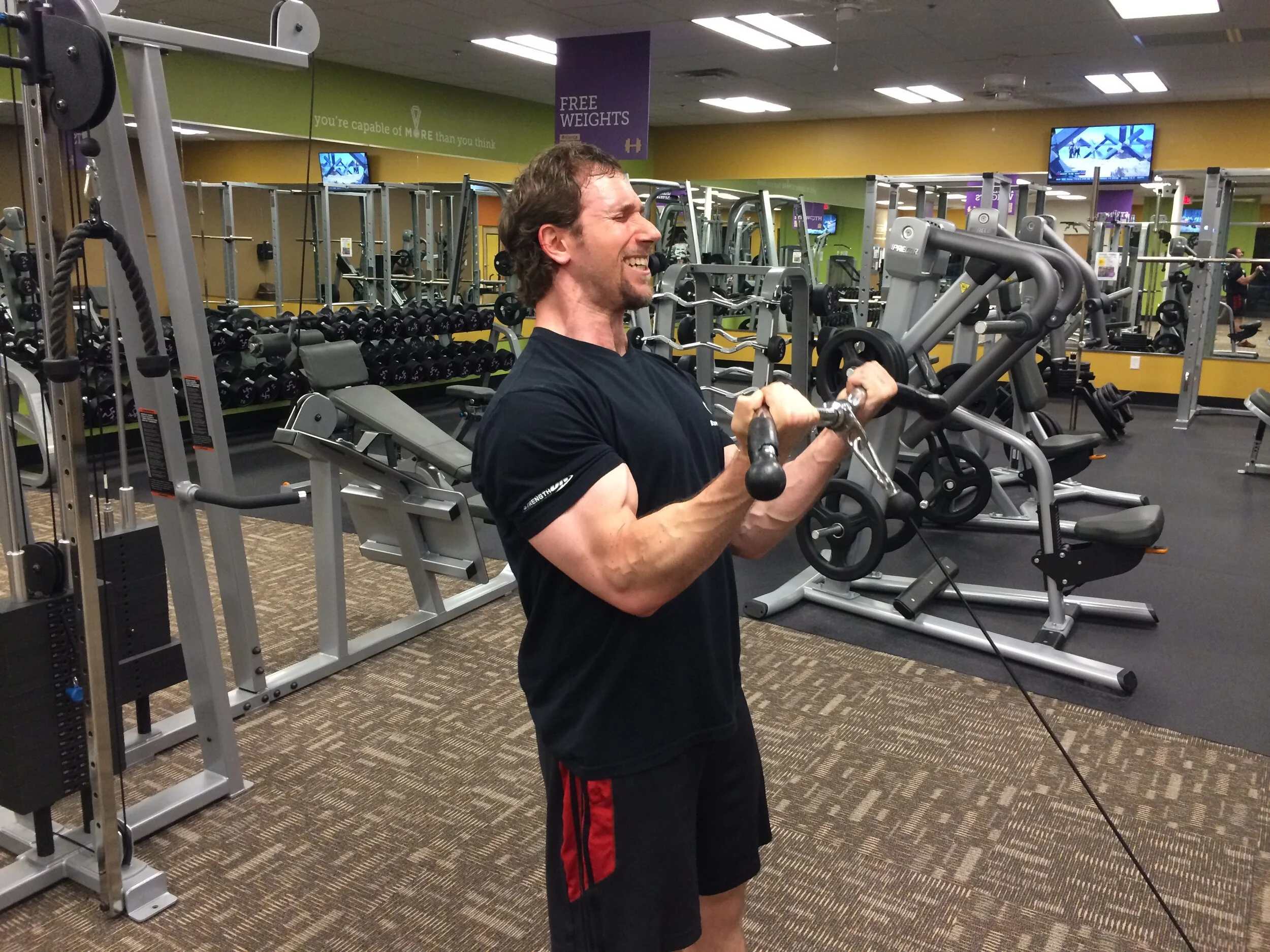
Shoulder angle gets most of the attention in curl debates, but the resistance profile deserves just as much. Gravity acts downward on a dumbbell throughout the repetition. A cable pulls along its line between the handle and pulley, and that line changes relative to the forearm as the handle moves. On a low cable, a small change in where you stand can shift when the exercise feels hardest. A pulley at ankle height, a pulley at mid-shin and a pulley placed slightly behind the body may all create different elbow demands even when the upper arm position looks similar.
In the controlled ten-week comparison, technicians deliberately adjusted cable height and body position to match the two exercise versions’ resistance profiles. This is important because everyday behind-the-body cable curls are often performed with a different cable angle, greater available elbow travel and a different force curve. If you swap neutral curls for behind-body curls without matching anything else, several things change simultaneously. A result about shoulder position alone cannot settle the outcome of those real-world combinations.
Other arm-training trials help explain the apparent conflict. One comparison of cable preacher and cable behind-body curls with matched resistance profiles found meaningful growth in both and no clear overall advantage. A separate twelve-week comparison of incline and preacher dumbbell curls reported small differences in which individual elbow-flexor muscles grew more, even though total elbow-flexor volume did not clearly differ. Different tools, exercise setups, measurement methods and populations can produce different details. The evidence does not justify turning one study into a blanket command to eliminate every other curl variation.
Try a quick practical assessment before choosing an accessory. Where does the set stall: near the bottom, in the middle or near the top? Can you reach the same start and finish positions on every rep? Does the cable remain taut without pulling your shoulder into an uncomfortable position? Can you maintain stable wrist and elbow alignment without twisting your torso? Those answers are more actionable than comparing only the selected weight on two machines.
How to set up a useful neutral or behind-body cable curl
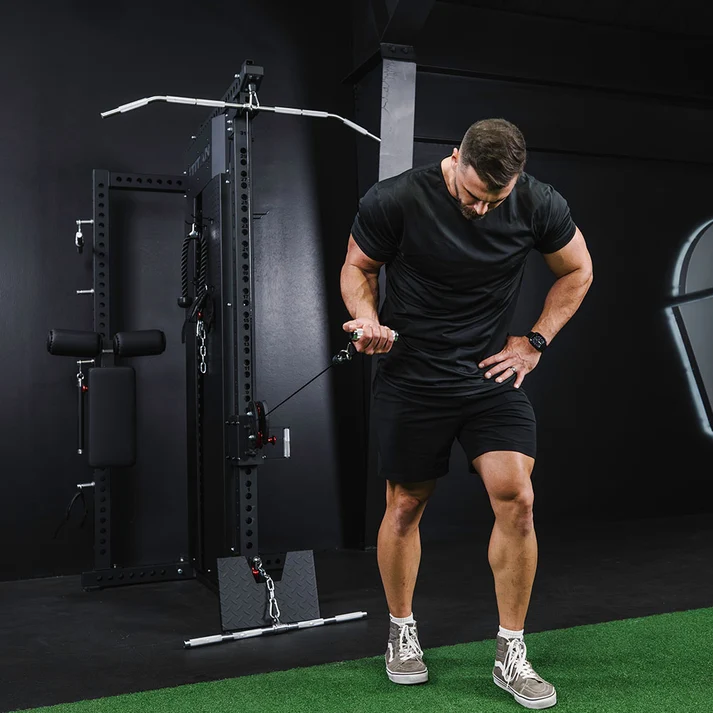
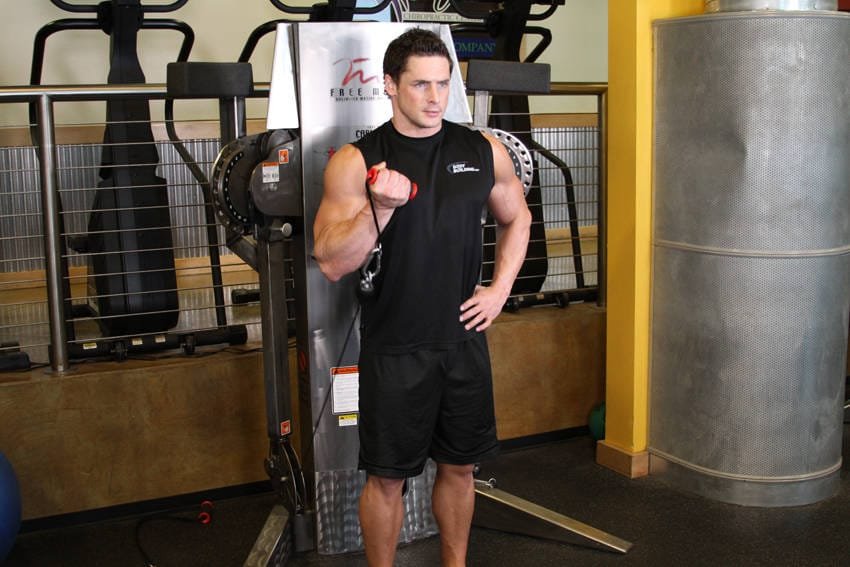
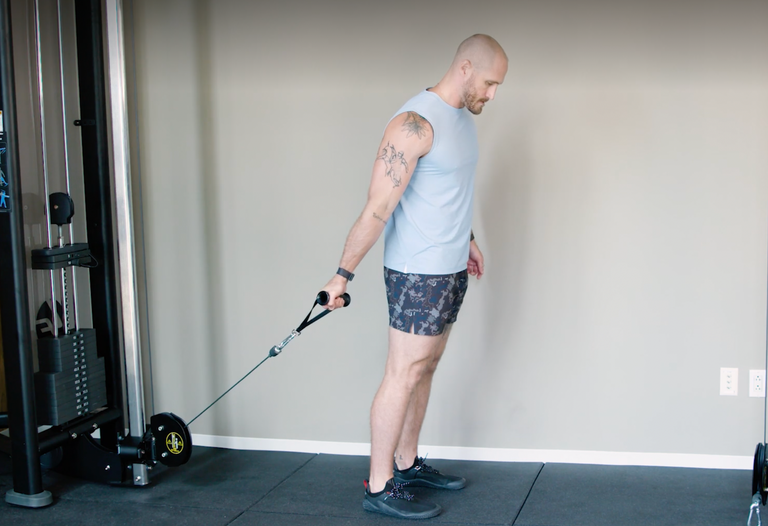
For a neutral-position unilateral cable curl, place a single handle on a low pulley and stand tall with the working upper arm close to the side of your torso. Allow the elbow to extend to a controlled starting position while keeping the shoulder quiet. Curl by bending the elbow, without snapping the wrist or rocking the hips. Finish at the highest comfortable position that preserves elbow-flexor tension, then lower smoothly. You can use a staggered stance or a free hand on the machine to reduce unwanted torso motion.
For the behind-body variation, face away from the low pulley and step forward until the handle sits slightly behind the torso with the elbow close to straight. Do not force the shoulder into its end range: a few degrees short of your comfortable maximum can be enough. Initiate the curl by bending the elbow while keeping the upper arm relatively steady. If the shoulder rolls forward or the cable drags your arm into pain, move closer to the pulley, reduce the weight or return to the neutral version. The sensation should be controlled muscle effort rather than a sharp pulling feeling at the front of the shoulder.
With either setup, use one consistent handle and note the pulley setting and where your feet stand. Those details make your training log meaningful. A larger cable-stack selection on one station may not equal greater resistance at the hand on another, especially when pulley ratios differ. If one machine operates at 2:1 and another at 1:1, the displayed numbers cannot be compared at face value. Prioritize progressive repetitions, controlled technique and an achievable range of motion over chasing a misleading load reading.
Start lighter than you think you need, especially when experimenting with an extended shoulder. Two to three controlled sets of eight to fifteen repetitions are a reasonable practical starting choice for many gym users; this is an example prescription, not a direct replication of the study’s 10-to-20-repetition failure protocol. Stop short of painful shoulder or elbow positions, and allow enough recovery before repeating hard arm work.
Equipment Worth Exploring
Explore equipment, accessories and gear from our carefully selected range.

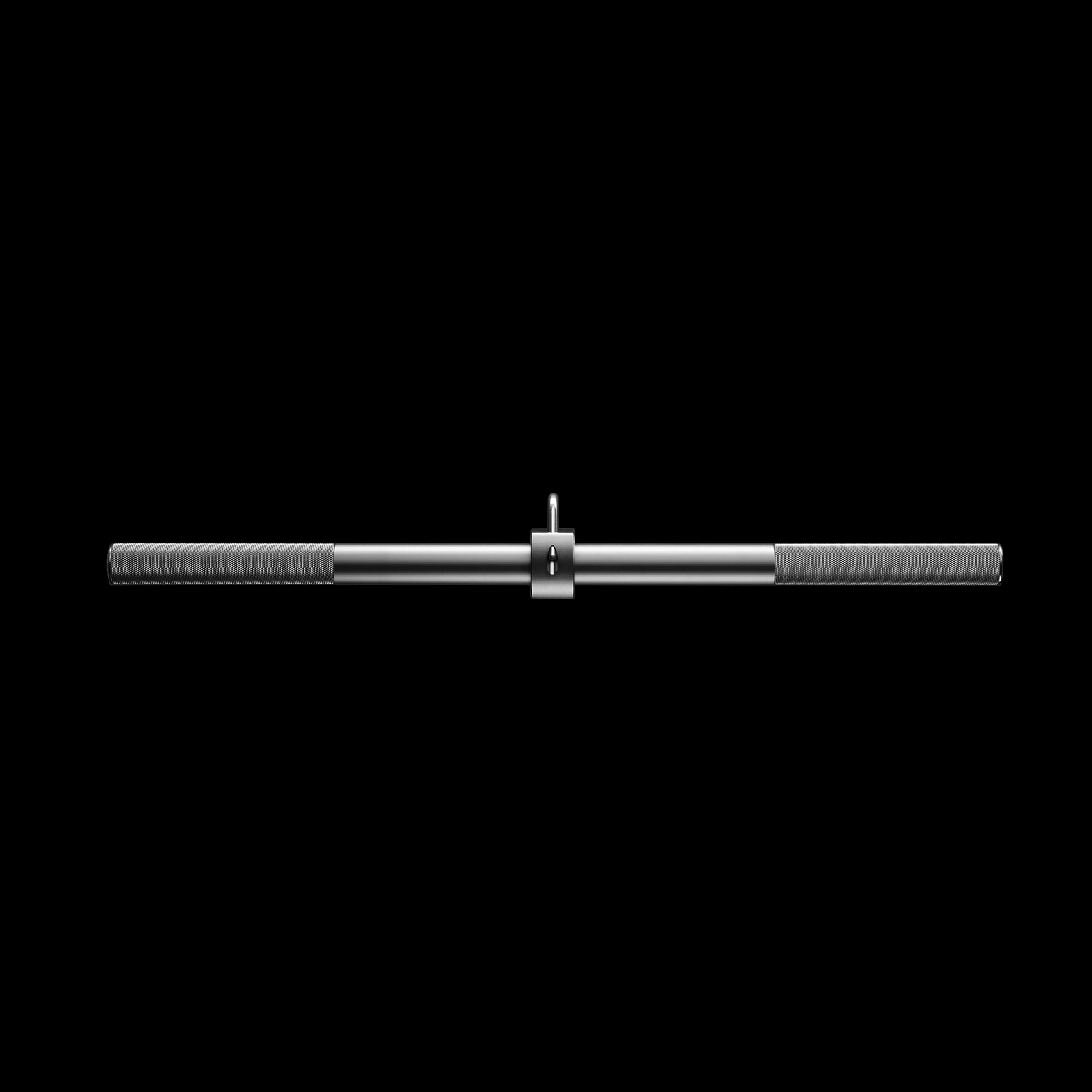
Dual Hook EZ Curl Bar
Angled aluminum dual-hook cable bar for biceps curls and pulldown variations.


EZ Curl Barbell
Olympic EZ curl bar with angled grips for curls and triceps exercises.

Long Tricep ERGO Ropes
Extended triceps ropes with ergonomic grips for cable pressdowns and overhead extensions.

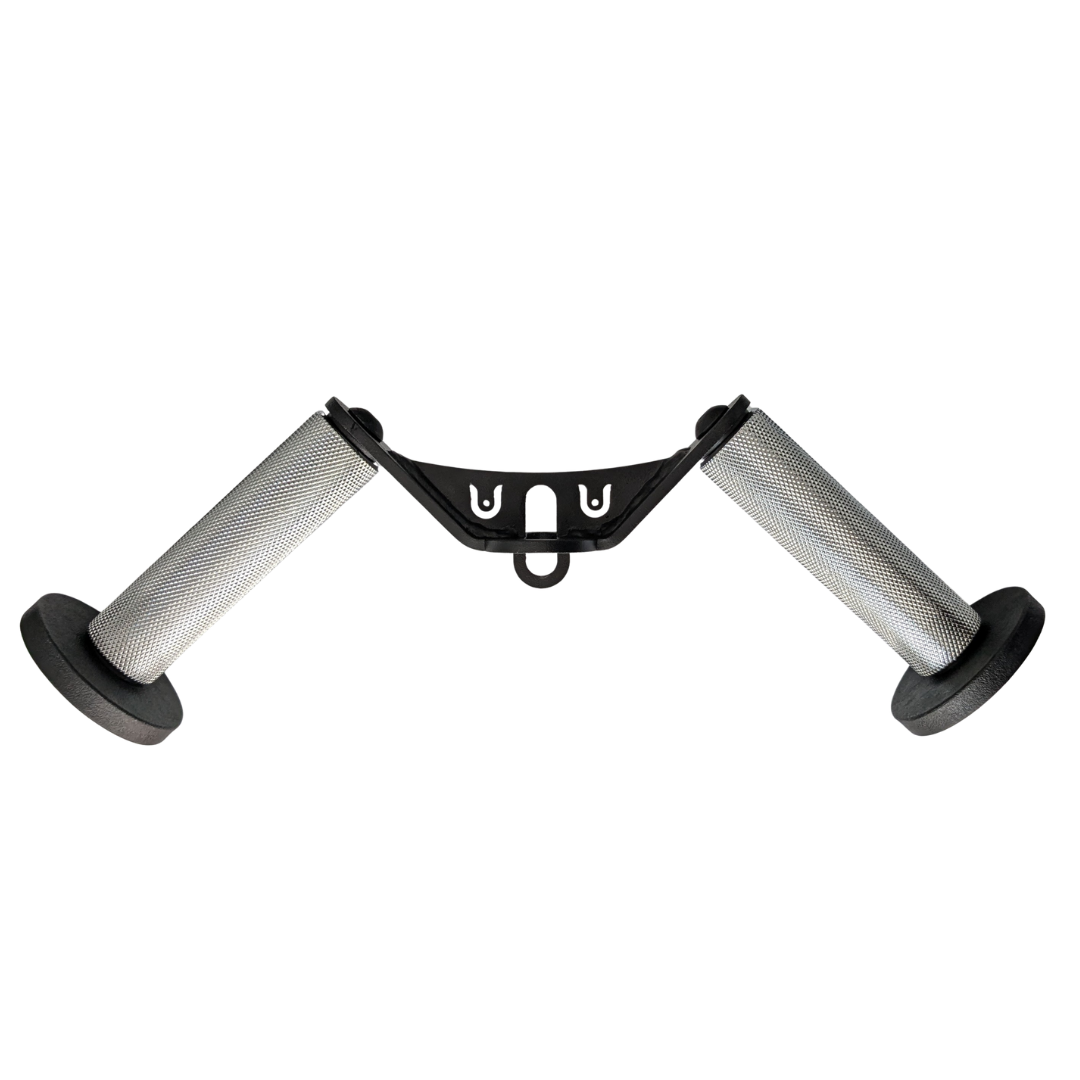
W Grip
Angled cable grip for comfortable rows, pushdowns, and curls.


Rubber Hex Dumbbells
Rubber-coated hex dumbbell pairs with a stable shape for home and commercial strength training.
A simple eight-week biceps plan without gimmicks
Build your training week around a consistent amount of quality elbow-flexion work instead of changing curl variations every session. If you already pull hard with chin-ups or rows, count that loading toward your overall recovery needs, even though it does not perfectly substitute for direct biceps work. The following eight-week example is a flexible training application, not a protocol proven superior by the ten-week trial. It is intended for a generally healthy adult with access to a low pulley and one or two comfortable handles.
On the first upper-body day, perform a neutral single-arm cable curl for three sets of roughly ten to fifteen repetitions per arm, leaving one or two clean repetitions in reserve. Add a short set of a neutral-grip dumbbell or cable hammer curl if you want extra elbow-flexor variety and your elbows tolerate it. On the second upper-body day, perform a behind-body single-arm cable curl for three sets of roughly ten to fifteen repetitions, again with controlled lowering. If the extended position irritates your shoulder, repeat the neutral variation instead. A simple pair of reliable exercises is more useful than a complicated rotation you never practice consistently.
During weeks one and two, select loads you can control and record the exact cable height, machine, handle and stance. During weeks three and four, add repetitions while maintaining the same bottom position and avoiding body swing. In weeks five and six, once you reach the top of your repetition range across sets, increase the resistance by the smallest practical increment and rebuild the reps. In weeks seven and eight, maintain or modestly increase total work only if your technique and recovery remain solid. Do not force progress when an elbow or shoulder becomes irritated.
For a time-constrained session, keep the programming lean. Two purposeful curl movements across the week and a few measurable sets of each can make a better plan than repeatedly seeking the next supposedly optimal angle. If you are already doing extensive upper-body pulling, start with fewer direct curl sets and add only when recovery and performance justify it. The original trial included supervised, untrained men; your best effective dose may be different.
What this study can and cannot settle for your arms
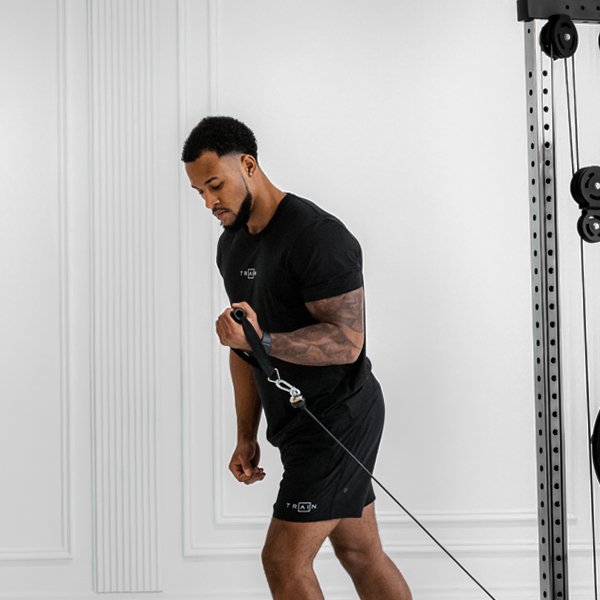
The most defensible conclusion is specific: in twenty-four untrained men who completed ten weeks of closely supervised unilateral cable curling, neutral and maximally comfortable shoulder-extended positions produced similar overall elbow-flexor thickness gains when resistance profiles and elbow travel were matched. Both variations can be productive. A longer starting muscle position did not create a clear additional benefit in this setting, despite differences in training load. That is a useful corrective to treating the behind-body curl as a mandatory shortcut to bigger biceps.
There are important limits. The trial was modest in size and lasted ten weeks; individual differences could have been masked by the uncertainty around the group average. Ultrasound measurements pooled elbow-flexor thickness at two sites and cannot fully resolve small muscle-specific differences. The participants were untrained men, so results should not be automatically generalized to women, advanced lifters, rehabilitation patients or different exercise tempos. Nor should a controlled cable comparison be conflated with a comparison of machines or dumbbells that impose different resistance curves.
Your practical choice can therefore be simple. Pick a neutral curl if it is easier to stabilize and gives you dependable repetitions. Use a behind-body curl if it feels good on your shoulder, is easy to load and provides a useful alternative position. If you enjoy both, keep both for variation while making sure weekly sets, exercise form and progression remain manageable. Neither needs a special label or a dramatic promise attached to it.
For long-term gains, consistency and a progression you can actually track matter more than an argument about a few degrees of shoulder extension. Record what you do, check whether your arms tolerate the movement, and make changes based on months of progress rather than a single session’s pump. This study makes the exercise-choice question less dramatic, which is precisely why it is useful.
Funny Gym Shirts & Workout Gear
Funny gym shirts, tanks, hoodies and workout gear for lifters who like training hard.

Every Day Is Arm Day
Make gym days more fun with “Every Day is Arm Day Octopus Gym Meme” style.


White Marble Greek God Statue – Bicep Pose T-Shirt
Bring “White Marble Greek God Statue” humor to your next gym day.

Gym If You're Reading This It's Arm Day Drake Parody & T-Shirt
Bring “If You're Reading This It's Arm Day Drake” humor to your next gym day.

For Whom The Bell Curls Dumbbell Metallica Workout Heav T-Shirt
Rep “For Whom The Bell Curls” humor in and out of the gym.

I Love Gym Bicep Heart Shirt | Swole Heart Valentine's T-Shirt
Bring “I Love Gym Bicep Heart” humor to your next gym day.

Shirt – Micro Biceps Club President – Gymbros, & T-Shirt
Rep “Micro Biceps Club President” humor in and out of the gym.


OnlyGains Big Biceps Tee
Rep “OnlyGains Only Gains Big Biceps” humor in and out of the gym.