Advertising disclosure: This page includes affiliate product links that may earn us a commission, as well as products from our own store.
A two-week break from lifting can feel much longer when your training normally revolves around the squat, bench press and deadlift. Does a fourteen-day pause erase muscle, or can some performance tests slip even before muscle size measurably changes?
A 2026 assessment of twenty elite male powerlifters found declines in several measures of explosive performance and changes in muscle activation after two weeks without training. Yet muscle thickness and cross-sectional area did not show statistically significant changes. A slow first rep is not automatically proof that muscle has disappeared.
This guide separates performance, coordination and size, explains what the research did not establish, and offers a practical way back to the barbell without turning your first day into a personal-record contest.
What twenty elite powerlifters actually did during the test
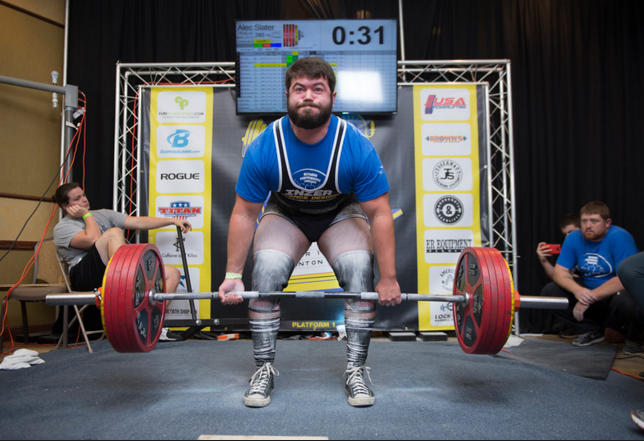
Twenty elite male powerlifters completed tests before and after fourteen days without their normal resistance training. Rather than using only a squat, bench press or deadlift maximum, the assessment covered several different systems. Athletes performed a countermovement jump, an isometric mid-thigh pull and a twenty-metre sprint. Muscle electrical activity, ultrasound images and blood markers were also collected. This broad set of measures is important: strength is not one property that can be reduced to a single number on a barbell.
The jump test considered explosive lower-body qualities, including reactive strength index. The mid-thigh pull captured how force was developed against an immovable bar. The sprint supplied a short acceleration measure. Muscle recordings described activation of the quadriceps and coactivation of the hamstrings, while ultrasound assessed muscle thickness and cross-sectional area. Blood samples added information about circulating hormonal and biochemical markers. Each technique answers a different question; none can substitute for all the others.
Several measures changed after the break. Jump reactive strength index, isometric rate of force development and sprint performance declined significantly. Quadriceps activation amplitude decreased and hamstring coactivation increased. Yet ultrasound did not find a statistically significant change in muscle thickness or cross-sectional area. A small increase in ultrasound echo intensity was observed, but its meaning should not be oversold.
There was no separate comparison group of equally trained lifters who continued training, and the sample contained only twenty men. The researchers did not establish a specific change in squat, bench or deadlift one-repetition maximum. So this is useful evidence of short-term changes in measured performance, not proof that every powerlifter loses a particular percentage of competition strength after exactly two weeks.
Explosive output may feel worse before muscles look smaller
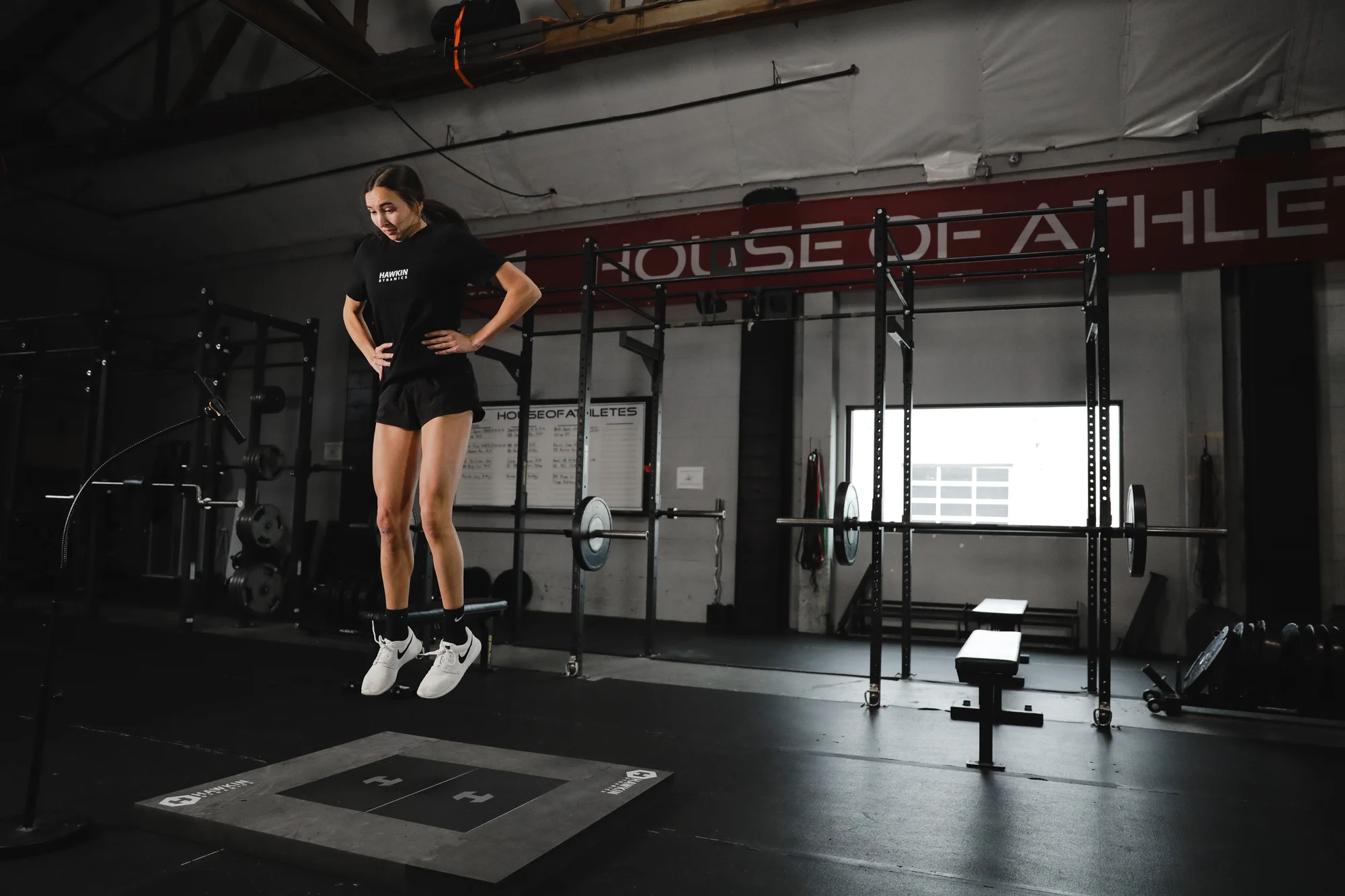
One of the most useful lessons is that expression of force can change even when measurable muscle dimensions appear similar. When a lift or jump demands fast, well-timed movement, your body needs to coordinate joints, muscles, bracing and timing. Muscle mass contributes to that ability, but it is not the whole story. Practiced skill and how rapidly force develops matter too.
The reported decline in countermovement-jump reactive strength index does not establish that every vertical-jump measurement worsened. Likewise, a lower rate of force development during an isometric pull is not the same thing as a proven loss of maximal strength in a competition deadlift. These distinctions sound technical, but they prevent an easy mistake: translating every test result into a claim about lost muscle or a weaker one-repetition maximum.
After a holiday, a familiar working weight might initially feel slow, or your squat descent may be less precise. A bench press touch point can feel awkward. Those sensations may be related to timing and readiness as much as raw strength. Start by watching whether repetitions become more consistent as you work through a sensible warm-up progression.
If the bar speeds up and positioning improves over a few controlled sets, that information is more useful than the first shaky repetition. If everything remains unusually difficult or painful, reducing the load is a better response than forcing a maximal attempt. A short break does not justify abandoning technique, and it does not justify proving your resilience with a reckless grinder.

Equipment Worth Exploring
Explore equipment, accessories and gear from our carefully selected range.


Open Hex Bar
Open-frame trap bar with multiple handles for deadlifts, carries, and lower-body training.


Leather Wrist Grips
Padded leather lifting grips help support the hands and wrists on heavy pulling exercises.


Competition Plates
Competition-style bumper plates for Olympic lifts and loaded strength training.


Leather Lifting Straps
Padded leather straps support grip during heavy rows, deadlifts and pulling exercises.

Muscle activation and why the first session can feel rusty
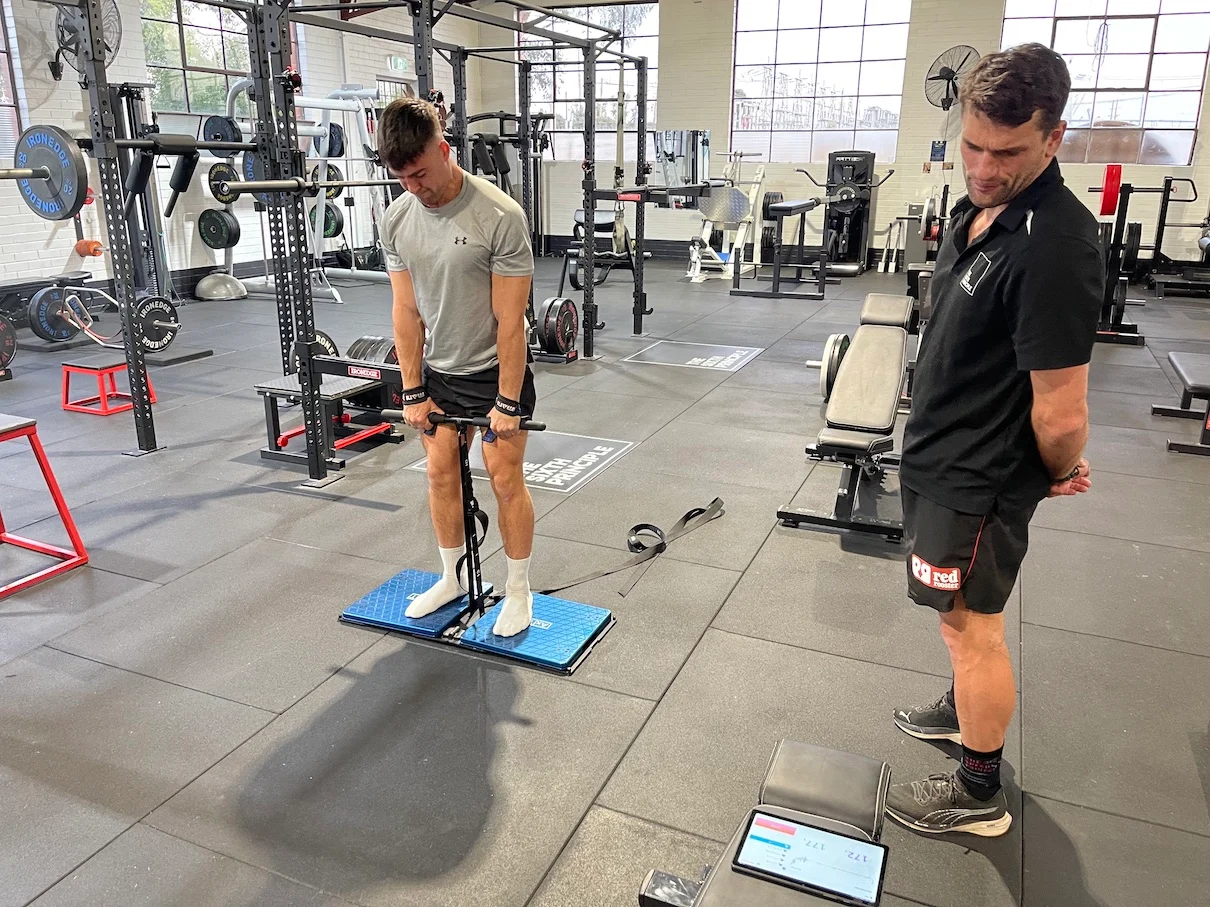
The tested athletes showed changes in recordings of electrical muscle activity. Quadriceps root-mean-square amplitude was lower, while hamstring coactivation was higher after detraining. Coactivation means that muscles which can oppose a movement activate while the primary movers are active. This is normal to a degree and contributes to joint stability. Changes in its level or timing may alter the efficiency of a particular performance task.
Surface electromyography has limitations. Skin electrode placement, the surrounding tissue and how the test is performed can influence the signal. Lower recorded activation is not a direct measurement of lost muscle size. Increased coactivation also does not automatically mean an athlete has developed a permanent movement problem. These signals should be interpreted in the context of the other assessments.
The practical connection is straightforward. Motor patterns become smoother when they are regularly practiced. A lifter returning after time away may need several lower-intensity exposures to recover their usual bracing, foot pressure, upper-back tension and bar path. For a squat, think about foot contact and depth. For a deadlift, make the starting position and first inch of the pull repeatable. For a bench press, restore your shoulder-blade position and leg drive before adding weight.
Use repetition quality as a guide instead of treating every warm-up as a strength test. If a load makes you twist, lose your brace or lift in a way you normally avoid, it is too much for that session. Your training history has not been erased, but the skill of expressing force deserves a few deliberate rehearsals.

Powerlifting Shirts & Lifting Gear
Powerlifting shirts and gym gear for squat, bench and deadlift lifters who live for heavy numbers.


Bending Bars Meme – Barbell Squat Bench Deadlift, & T-Shirt
Heavy lifts, good laughs, and a little “Bending Bars Gym Meme” energy.

Heavy Enough Tee
Bring “If You're Not Scared It's Not Heavy Enough” humor to your next gym day.

Lift Heavy Be Happy Meme Bros & Gains Top T-Shirt
Show some powerlifting attitude with a playful “Lift Heavy Be Happy” tee.

Big Boy Barbell Club Shirt Meme & Essential Top T-Shirt
Make gym days more fun with “Big Boy Barbell Club” style.

Three Plates Bench Club – Chest Day & Gains T-Shirt
Make gym days more fun with “Three Plates Bench Club” style.

7 Plates Squat Club Shirt – Meme & Leg Day Gains T-Shirt
Rep “7 Plates Squat Club” humor in and out of the gym.

5 Plates Deadlift Club : Meme Shirt & Leg Day Gains T-Shirt
Show some leg-day attitude with a playful “5 Plates Deadlift Club Graphic” tee.

PR or ER – Hardcore Deadlift Gym Vest for Powerlifters Tank Top
Bring “PR or ER” humor to your next lifting session.

Gym The Bar Does Not Lie Medieval Knight Barbell Decal Sticker
Give your everyday gear a playful “The Bar Does Not Lie Medieval Knight” twist.
Why unchanged muscle measurements matter
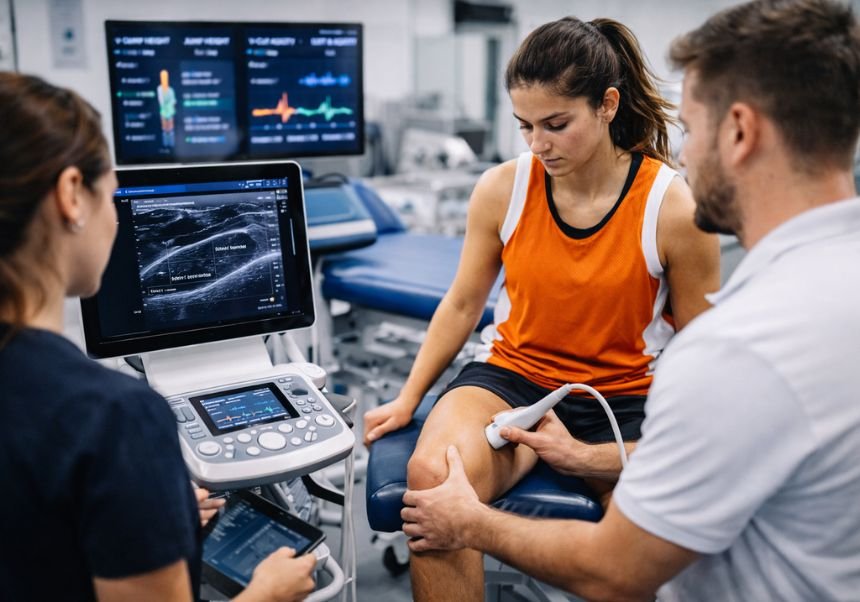
The ultrasound result is a reason for perspective. The powerlifters did not show statistically significant changes in measured muscle thickness or cross-sectional area after fourteen days. That does not prove there was absolutely no individual variation or that every muscle in every participant was unchanged. The study simply did not detect a clear group-level size difference with its sample and methods.
Researchers also found a small increase in muscle echo intensity. Echo intensity reflects how ultrasound signals are displayed and may relate to tissue characteristics, but it is not a straightforward measurement of muscle lost. A grayscale shift cannot be treated as evidence that a particular percentage of contractile tissue has disappeared. Hydration and measurement details can complicate interpretation.
Your appearance after a break offers even less precision. Food intake, carbohydrate storage, fluid balance, lighting and the absence of a recent training pump all affect how muscular you look. If your arms appear flatter following travel, that is not necessarily atrophy. Equally, stable muscle measurements after two weeks should not be stretched into the claim that long-term training breaks have no consequences.
Longer periods without training can reduce previously acquired adaptations, and the pattern depends on age, training background, day-to-day activity and what outcome is being measured. Fourteen days in highly trained men is only one snapshot. The best way to judge your return is by repeatable training performances across several sessions, not one photograph, mirror impression or anxious estimate of lost gains.
What blood markers can and cannot tell you
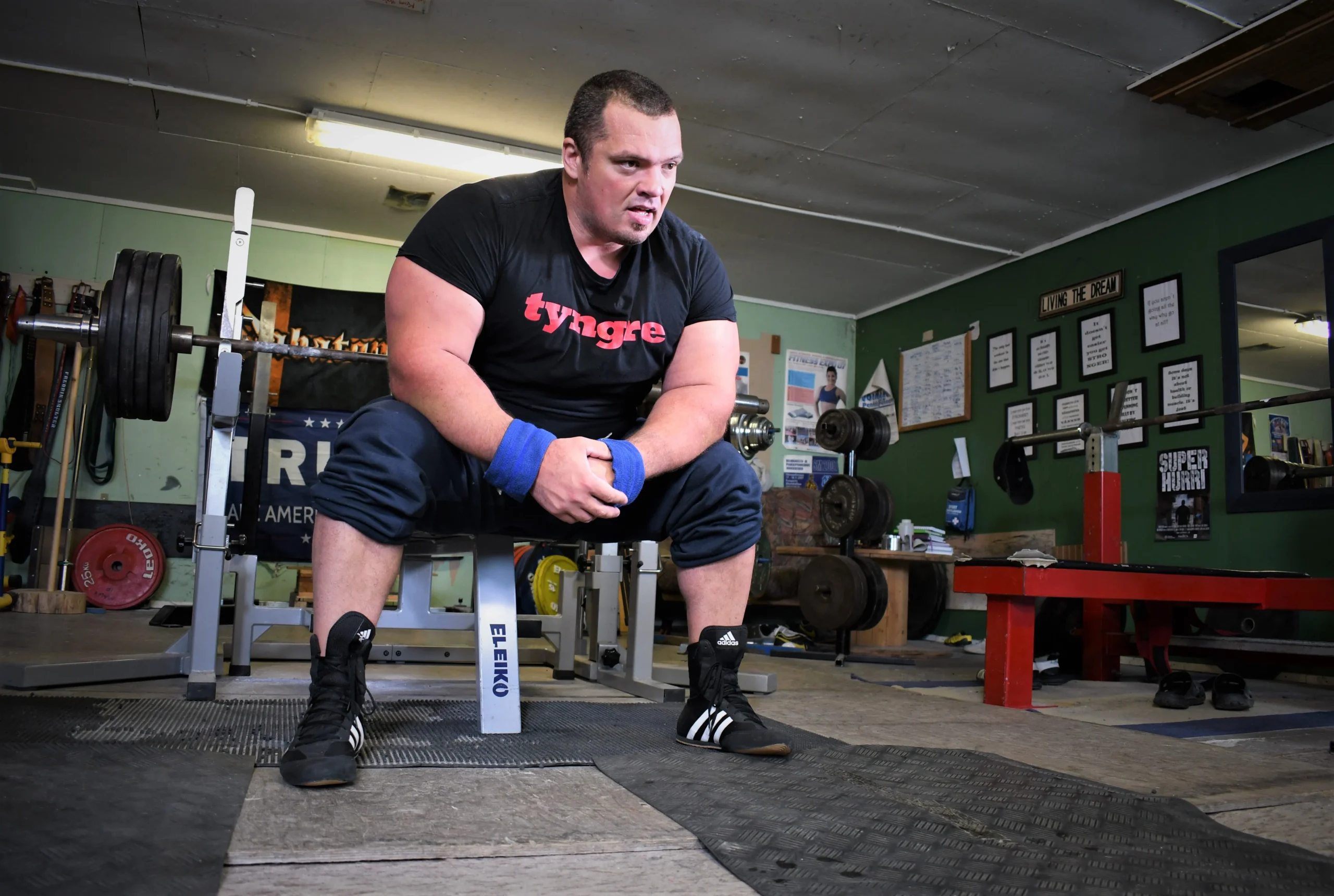
Several biochemical and hormonal results shifted after detraining. Creatine kinase and interleukin-6 increased in the reported measurements, cortisol rose, testosterone declined and the testosterone-to-cortisol ratio decreased. These are observations about measured blood values in this group, not a direct diagnosis of low recovery or a calculator for muscle loss.
Blood markers fluctuate for many reasons. Sleep, energy intake, recent activity, illness, stress, time of day and laboratory variation can all affect a result. A lower testosterone measurement at one time point does not establish that muscle was lost, particularly when the study’s structural measurements did not show significant changes. It certainly does not demonstrate that a supplement or special recovery product can reverse the results.
The study also did not manipulate hormones to test a direct cause-and-effect pathway. It recorded before-and-after associations over a short period without a separate continuing-training control group. The findings suggest that several physiological systems change when a highly trained athlete stops normal training, but the mechanisms and practical significance remain uncertain.
When you resume lifting, focus on conditions you can actually control: adequate sleep, regular meals, hydration, appropriate effort and enough time between challenging sessions. If your training interruption followed an illness, surgery or significant injury, seek an individualized return plan rather than treating an elite-powerlifter study as a medical clearance document.
Equipment Worth Exploring
Explore equipment, accessories and gear from our carefully selected range.

Foldable Wall Rack
Wall-mounted folding squat rack designed to save floor space between workouts.

FID Bench MAX
Adjustable bench offering flat, incline, and decline positions + adjustable headrest.


Safety Squat Handles
Barbell squat handles that reduce shoulder positioning demands during high-bar squats.

Grip Plates
Rubber-coated weight plates with handholds for loading barbells and machines.


Speed Collar
Quick-release collars designed to secure weight plates on standard two-inch Olympic bars.

Squat Harness
Wearable harness for hands-free cable squats, sled work, and lower-body training.

The difference between a complete break and a maintenance week
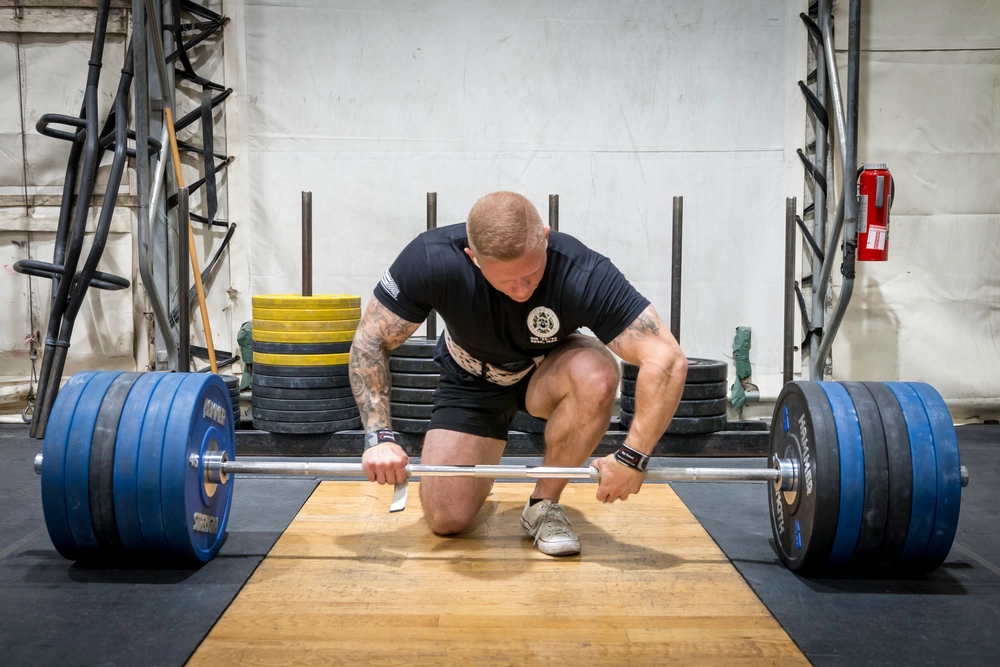
Two weeks of complete detraining and two weeks of reduced training volume are not interchangeable. During a maintenance week you can still practice the squat, bench and deadlift and expose yourself to meaningful resistance while reducing overall fatigue. During a full break, those frequent skill exposures disappear. This distinction matters when you plan travel or are choosing between taking all training off and doing one short session.
Research in broader populations suggests that lower-frequency strength training can preserve many adaptations for a period, particularly when the remaining sessions maintain meaningful intensity. The exact amount differs by age, training history and outcome, and findings in recreational participants cannot be transferred directly to elite powerlifters. Still, the concept is practical: when life gets busy, something manageable can be better than repeatedly attempting an impossible full program.
If you have access to a simple barbell or dumbbells on a trip, even a few controlled compound sets may provide useful practice. If you do not have gym access, ordinary activity, adequate food and rest are worthwhile habits. There is no need to invent a punishing hotel-room workout simply because you are concerned about muscle shrinkage.
Experienced lifters retain substantial familiarity with their movements. The first day back can feel rusty while the general training skill remains recognizable. Conversely, an inactive beginner may have less ingrained technique to fall back on. Focus on the training pattern you can consistently sustain over months and years, not on winning every week against the calendar.
A sensible two-week return to squat, bench and deadlift
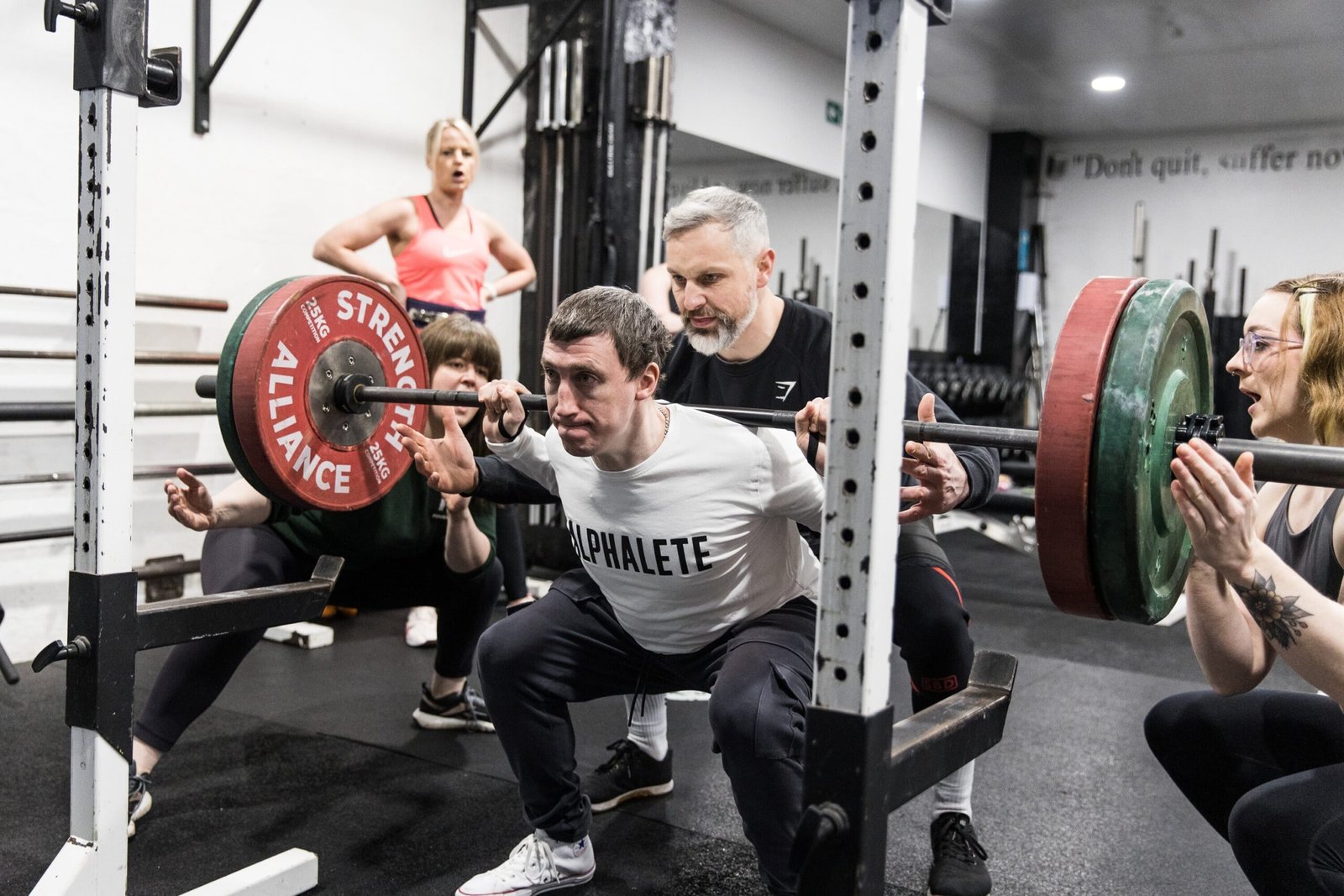
The following is a practical coaching-style framework for a generally healthy lifter following an uncomplicated fourteen-day break. It was not tested as a specific intervention in the twenty-powerlifter study, and you should adapt it to your current health, experience and equipment. The goal is to restore quality while managing fatigue, not to reproduce the heaviest session from before your holiday.
- First session: rehearse and assess. Begin with generous warm-up sets. Keep several clean repetitions in reserve on your working sets and use roughly half to two-thirds of the hard-set volume you performed before the break. Stop sets when technique or speed becomes inconsistent.
- Second session: increase only if earned. If the previous day recovered well and the bar feels stable, add a little load or another set. Avoid increasing weight, sets and failure proximity all at once.
- Third and fourth sessions: restore routine. Bring volume back toward normal while paying attention to the positions you usually use. Heavy attempts are optional; good execution is not.
- Week two: progress from evidence. Resume more typical work if your movements, recovery and energy support it. A stubbornly slow lift is a reason to repeat or adjust the session, not proof that progress has vanished.
On squats, watch stable foot contact, a consistent brace and controlled depth. On bench presses, restore your setup, touch point and leg-drive timing before pushing near limits. On deadlifts, rehearse the start position and bar path with weights that let you stay organized. Keep accessories moderate at first; there is no reward for cramming all the missed sets into one week.
If you experience sharp pain, unusual dizziness or illness symptoms, stop the session and evaluate the situation. For a routine short break, you generally do not need to restart your entire program from zero. You also do not need a maximum on the first day to confirm that your previous gains still exist.
The clearest interpretation of the fourteen-day evidence is that measured performance and coordination can change before a statistically clear alteration in muscle dimensions appears. That is a reason to return with patience and sensible load management, not a reason to panic about a temporary interruption.
Powerlifting Shirts & Lifting Gear
Powerlifting shirts and gym gear for squat, bench and deadlift lifters who live for heavy numbers.

Therapy Barbell – Lifting Bodybuilding Powerlifting Mem Hoodie
Stay casual and show some powerlifting attitude with “Therapy Barbell”.

Liftionaire Money Barbell Meme Workout Bodybuilding Pow Hoodie
Keep it laid-back with a little “Liftionaire” attitude.

I’m Strong Barbell Heartbeat Crewneck Pullover for Powe T-Shirt
Bring “I’m Strong Barbell Heartbeat” humor to your everyday gym style.

Deadlift Stone Skull Gym Crewneck for Powerlifters, Hea T-Shirt
For laid-back days and deadlift humor: “Deadlift”.

No Plates No Dates Shirt – Gymbros & – Meme & Gains T-Shirt
Bring “No Plates No Dates” humor to your next gym day.

Bench Press and Chill Funny Gym T
Make gym days more fun with “Bench Press and Chill” style.

Lift Heavy Sh*T – Essential & Gymbros T-Shirt
Show some powerlifting attitude with a playful “Lift Heavy Sh*t” tee.

Raise The Barbell Shirt – Motivational & T-Shirt
Show some powerlifting attitude with a playful “Raise The Barbell” tee.

Defy Gravity Isaac Newton Deadlift Meme Science T-Shirt
Heavy lifts, good laughs, and a little “Defy Gravity” energy.

Skeleton Deadlift Powerlifters & Deadlift Lovers Tank Top
Add some deadlift attitude to training with “Skeleton Deadlift”.