Advertising disclosure: This page includes affiliate product links that may earn us a commission, as well as products from our own store.
Standing just an inch higher than the floor makes an ordinary deadlift a different strength challenge. Deficit deadlifts can sharpen your start when you struggle to break the bar off the floor, but the extra range is useful only when your brace, grip and bar path stay controlled. Here is how to choose the platform, avoid common mistakes and build a realistic six-week training block without pretending the variation is essential for every lifter.
What a deficit deadlift actually changes
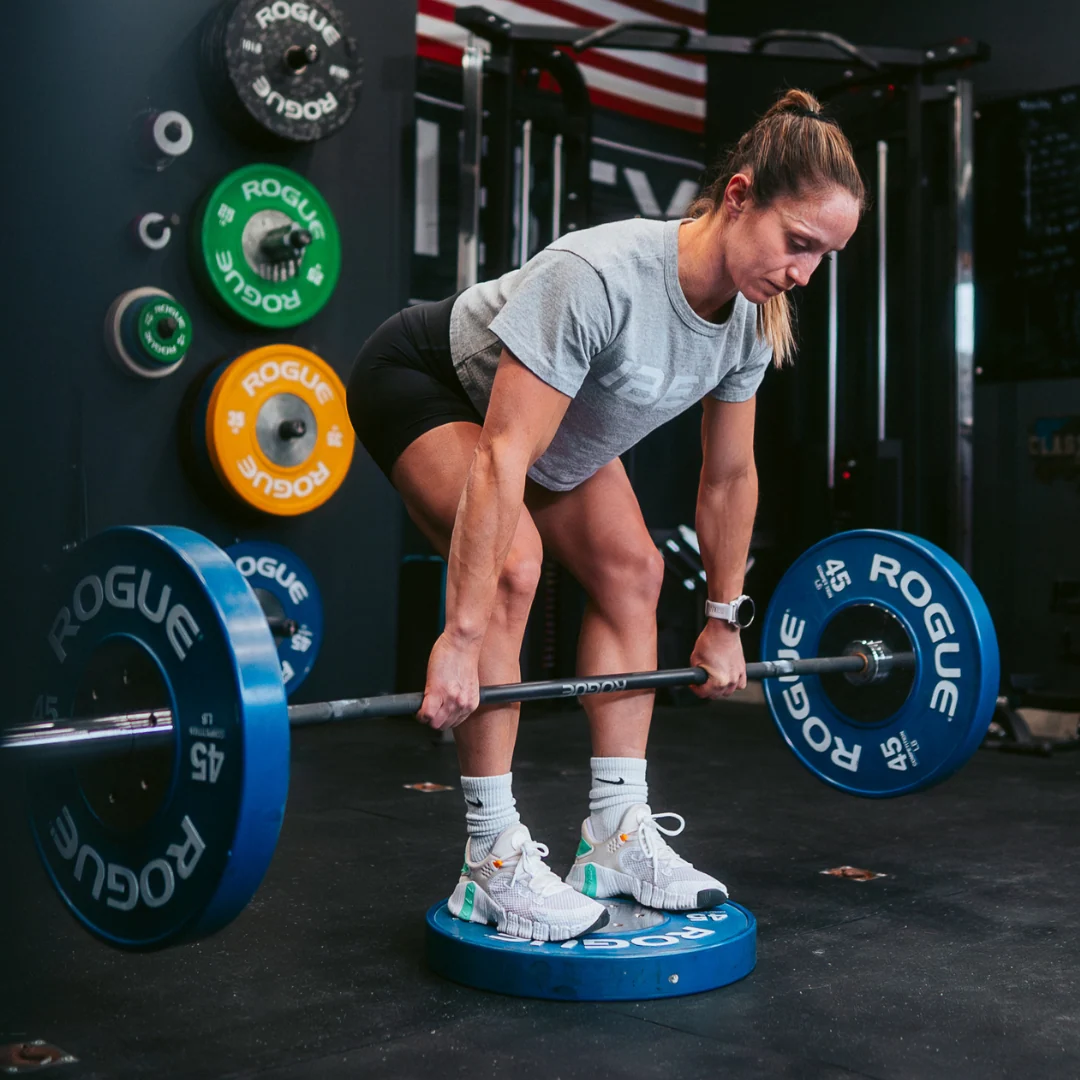
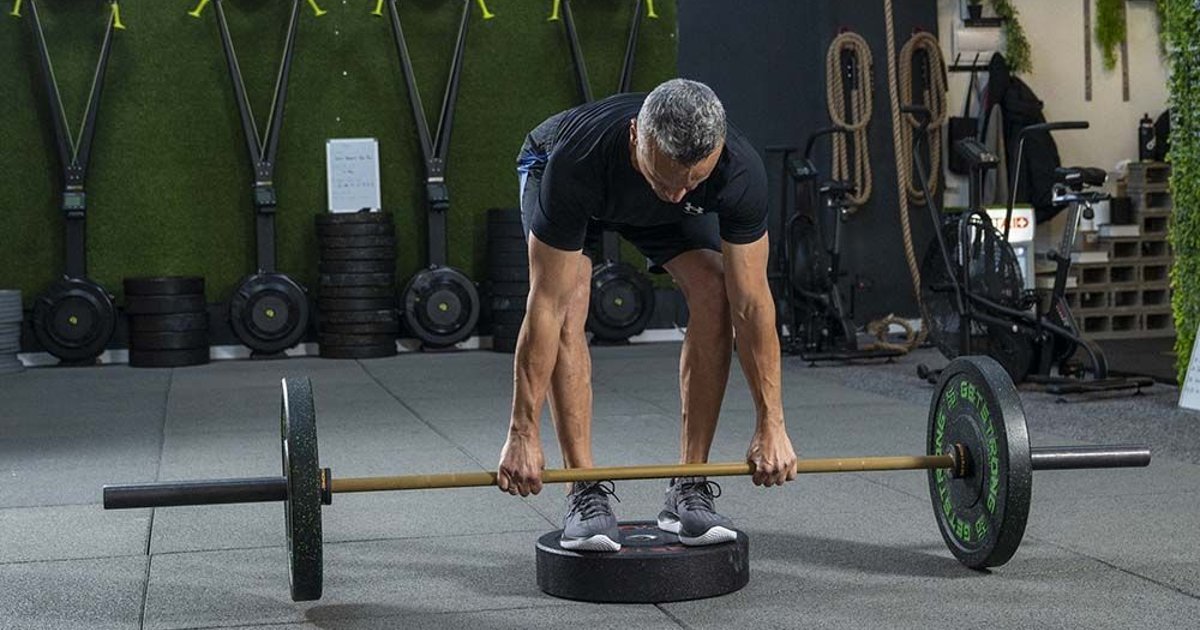
A deficit deadlift is a regular pull with one deliberate change: your feet stand higher than the floor under the bar. Because the plates remain on the floor, your hands must travel farther before you stand tall. Even a small one-inch rise can noticeably change the start position. It typically asks for more knee and hip flexion, longer time under control, and a stronger brace through the first few inches of the lift. It does not magically recruit an entirely new set of muscles, and it is not a substitute for learning a conventional deadlift.
That difference matters when a bar stubbornly refuses to break from the floor. If your normal deadlift position is solid but the first inch is your limiting point, a controlled deficit can expose that portion of the movement to repeated practice. You must generate force without allowing the hips to rise faster than the shoulders, the bar to wander forward, or the lumbar spine to lose its normal position. A heavier conventional pull is not automatically the best training choice for that particular weakness; a lighter pull from a slightly more demanding position may teach better mechanics.
The extra range is not free, however. A lifter with long femurs, shorter arms, restricted hip motion or a difficult start position may find even a small rise turns an otherwise repeatable setup into an awkward compromise. Think of the deficit as a specific training tool for an already competent deadlifter. The goal is not the tallest platform or the greatest discomfort. The goal is better force production from a stable starting position that transfers to your regular lift.

Equipment Worth Exploring
Explore equipment, accessories and gear from our carefully selected range.


Competition Plates
Competition-style bumper plates for Olympic lifts and loaded strength training.

Grip Plates
Rubber-coated weight plates with handholds for loading barbells and machines.


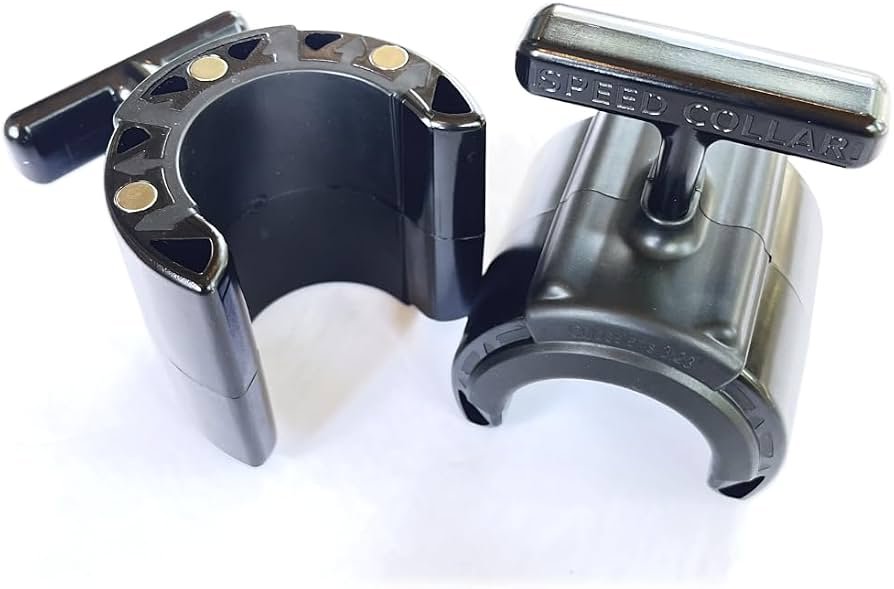
Speed Collar
Quick-release collars designed to secure weight plates on standard two-inch Olympic bars.
Keppi Open Collars
C-shaped magnetic Olympic barbell collars with a quick-lock mechanism and grippy lining.

Leather Lifting Straps
Padded leather straps support grip during heavy rows, deadlifts and pulling exercises.
Choose a platform height, stance and weight you can actually control
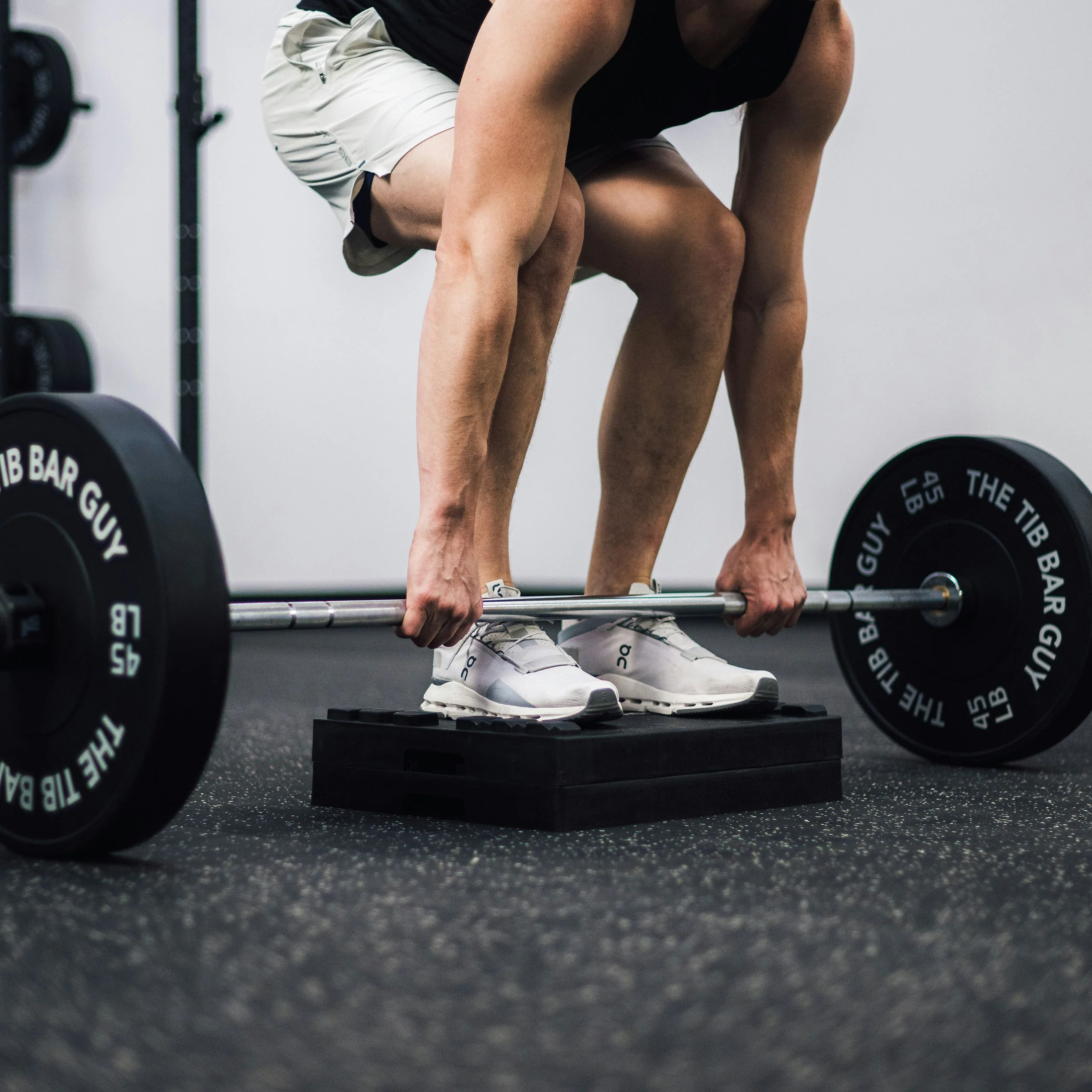
Begin with a stable elevation of approximately one inch, roughly 2.5 centimetres, rather than jumping onto tall blocks. One or two solid plates may work if they cannot slide, rock or tilt, but a broad purpose-built platform is preferable. Both feet must be supported across the whole sole. Avoid stacking loose, uneven plates or improvising a narrow perch where a heavy bar could pull you off balance. Keep the bar on a level floor in front of the raised platform, with enough clearance for the sleeves and plates to move freely.
Use your normal conventional stance first: feet approximately hip width for many lifters, toes at a comfortable angle, bar roughly above the midfoot. The deficit is not a reason to exaggerate stance width or force a deeper squat-like start. If you can only touch the bar by rounding significantly, reduce the height or replace the movement with standard pulls. A useful first-workout loading estimate is roughly 70–80 percent of the weight you would normally use for comparable conventional sets, then adjust by the quality of the repetitions rather than clinging to a percentage.
For instance, a lifter who conventionally performs three controlled sets of five at 120 kilograms might begin the new variation around 85–95 kilograms. That is an illustrative starting range, not a validated conversion formula. The right load is one that allows the shoulders and hips to rise together, keeps the bar near the legs, and ends the set with one or two clean repetitions left in reserve. If the added reach changes your back position before the bar leaves the floor, even the lighter weight is too ambitious for that height.

Powerlifting Shirts & Lifting Gear
Powerlifting shirts and gym gear for squat, bench and deadlift lifters who live for heavy numbers.

4 Plates Deadlift Club – Motivational & Gymbros T-Shirt
Make gym days more fun with “4 Plates Deadlift Club” style.

Deadlifts & Gains Meme – Essential T-Shirt
Heavy lifts, good laughs, and a little “Deadlifts & Gains” energy.

Deadlift Snake Skull – Hardcore Powerlifting Crewneck f T-Shirt
Show some gym-day personality with “Deadlift Snake Skull”.

Heavy Metal Deadlift – Skeleton Gym for Powerlifters an Hoodie
Stay casual and show some metalhead attitude with “Heavy Metal Deadlift”.

Deadlift Skull Cyberpunk Muscle Shirt for Powerlifting Tank Top
Bring “Deadlift Skull” humor to your next lifting session.

Deadlift Purple Skull Gym Decal for Powerlifters Heavy Sticker
Put “Deadlift” gym humor on your laptop, bottle, or gym gear.

Deadlift Military Skull Gym Pullover for Powerlifters, Hoodie
Keep it laid-back with a little “Deadlift” attitude.

Deadlift Skull Pink Heavy Metal Gym Decal for Powerlift Sticker
Give your everyday gear a playful “Deadlift Skull” twist.

I Love Deadlifts Gym | Valentine's Heart Weight Plate F Tank Top
Add some deadlift attitude to training with “I Love Deadlifts”.

Deadlifter Life Shirt – Halloween Ghost T-Shirt
Rep “Deadlifter For Life” humor in and out of the gym.
Set up and execute every rep in five deliberate steps
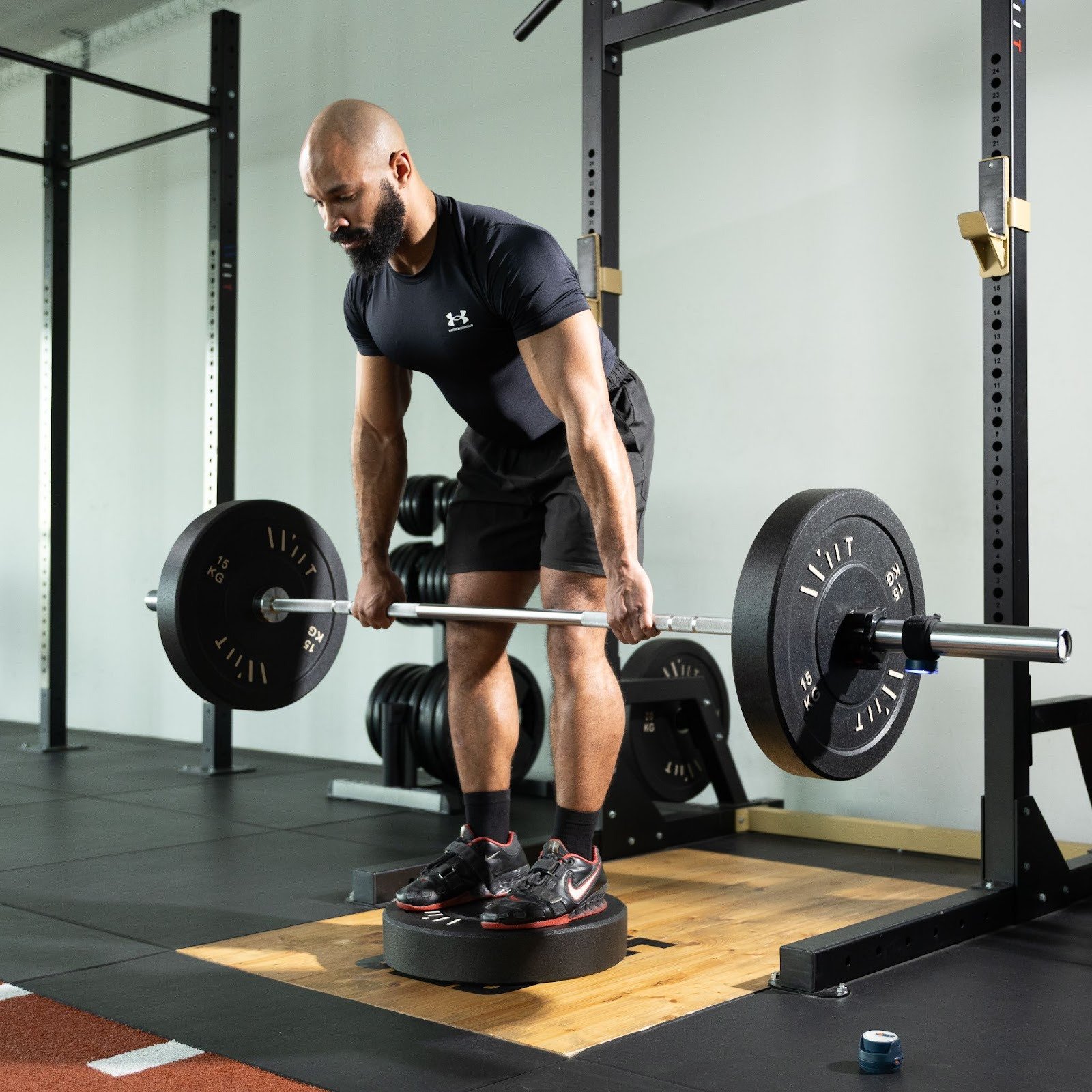
1. Build the station. Confirm that the platform cannot shift underfoot. Load the bar evenly with collars where appropriate, place it directly in front of you, and check that the plates will not strike the platform on the way up. Step onto the raised surface with the entire foot supported, not with your toes on an edge.
2. Hinge to the bar. Push the hips back as you reach down, allowing the knees to bend only as much as your proportions require. With the bar over the midfoot, take a secure grip just outside the legs. Use a double-overhand grip for moderate loads if possible; switch grips only when your target stimulus warrants it. Do not crank the bar into your shins by starting with your hips unnaturally low.
3. Create tension before the plates leave the floor. Take a breath into the trunk, brace in all directions and tighten the upper back without aggressively pinching the shoulder blades. Think about pulling the slack out of the bar while pressing the floor away. Your shoulders can begin slightly ahead of the bar, but they should not jerk upward while the hips shoot back.
4. Drive through the whole foot. Extend the knees and hips together, tracking the bar close to the shins and thighs. Resist the temptation to loop the bar forward around the knees; this increases the lever arm on the back and often exposes a setup that was never tight. Move through the difficult bottom position with steady pressure rather than a sudden yank.
5. Finish and reset. Stand tall with hips extended, ribs stacked and no exaggerated backward lean. Reverse by moving the hips back, then bend the knees when the bar can pass them. Let each rep settle fully, restore the brace and rebuild tension. A true dead stop makes it easier to notice a collapsing setup than bouncing the plates through a rushed set.
What muscle activation studies can—and cannot—tell us
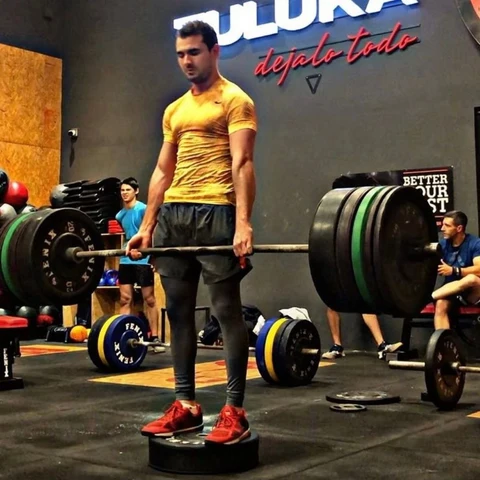
Deadlift variations change joint angles, mechanical leverage and which muscles do more work during particular portions of a lift. A comparison of conventional and Romanian deadlifts in 21 men recorded differences in lower-body muscle electrical activity and joint moments under specified testing loads. That is useful evidence that two movements sharing the word deadlift are not interchangeable. It is not direct evidence that a deficit produces a specific amount of extra muscle growth or guarantees a stronger one-repetition maximum.
Small acute comparisons of conventional pulls, shortened-range rack pulls and deeper-range variations likewise help explain why the start position can change quadriceps and gluteal demands. But the electrical signal detected by surface electrodes is only a snapshot of muscle activity during a particular task. It does not measure muscle growth over months, recovery cost after repeated training, or long-term transfer to a competition deadlift. Training adaptations depend on loading, total work, technical consistency and what happens across many sessions.
For the practical lifter the defensible conclusion is narrower—and still valuable. A modest deficit increases the range you must control, potentially giving you useful practice where your normal lift begins. That makes it a sensible experiment for a clean, slow off-the-floor pull, not a proven hypertrophy shortcut. If your deadlift already breaks the ground quickly but stalls at knee height or lockout, the variation is less specifically matched to your weakness. Pauses at the knee, Romanian deadlifts or strategically chosen rack work may make more sense.
Five mistakes that turn a useful variation into junk reps
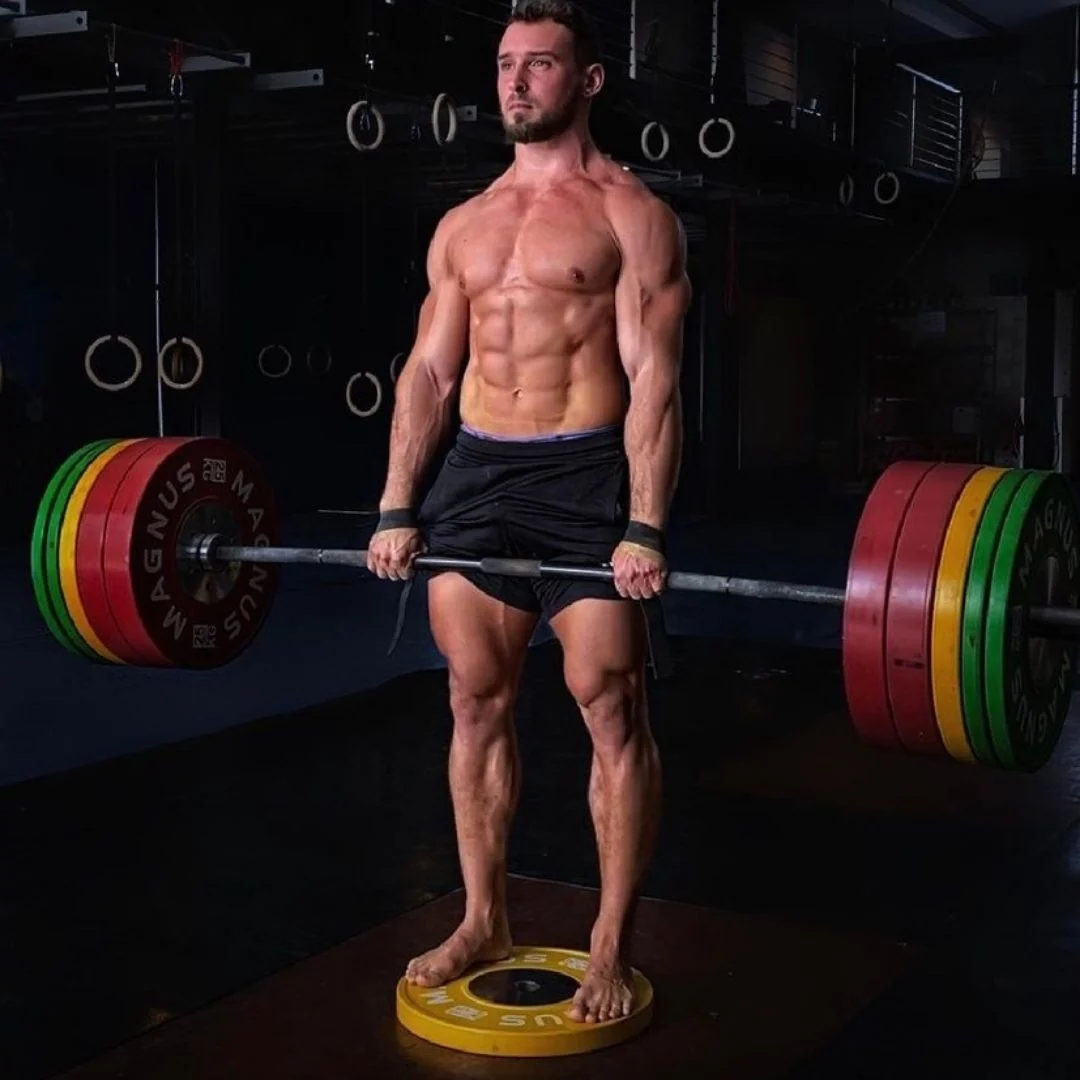
Building an unnecessarily tall deficit. The point is not to demonstrate flexibility by standing on a tower of plates. A high platform demands much more mobility and often changes the movement so thoroughly that you no longer practice the start position you want to improve. Go back to one inch and earn any additional elevation with repeated clean sets.
Copying your conventional working weight. The deeper starting position usually limits what can be lifted without position loss. Do not assume a 180-kilogram conventional triple should immediately become a 180-kilogram deficit triple. First lower the load, preserve speed and rebuild gradually. A variation that reduces the load but improves the target movement can be more productive than a record attempt in week one.
Jerking the bar before bracing. A sharp yank can pull the back out of position and make the hips shoot up early. Tighten the upper body, build trunk pressure and pull out slack before you deliberately push against the floor. The bar should feel connected to you before it moves.
Letting the bar move away from the body. If the plates drift forward, pause the set, confirm midfoot alignment and rethink the start position. A close bar path is usually more efficient; chasing it forward makes the already longer pull even harder.
Turning every set into a grind. Deficit pulls are easy to overuse because they feel demanding with relatively light weights. Leave a little margin, stop when form changes, and account for the hamstring, glute and spinal-erector fatigue when scheduling squats, rows and regular deadlifts later in the week. You are training a weakness, not auditioning for a struggle montage.
Equipment Worth Exploring
Explore equipment, accessories and gear from our carefully selected range.


Open Hex Bar
Open-frame trap bar with multiple handles for deadlifts, carries, and lower-body training.


Foldable Wall Rack
Wall-mounted folding squat rack designed to save floor space between workouts.

Leather Wrist Grips
Padded leather lifting grips help support the hands and wrists on heavy pulling exercises.


GymPin Barbell Row Handle
Heavy-duty handle attachment for barbell, landmine and T-bar rows.

T-Bar Row Attachment
Welded barbell attachment that connects a D-handle bar for landmine and T-bar rows.
Who benefits, and when a different deadlift is the smarter option

Intermediate and advanced conventional pullers are the clearest candidates. You already have a repeatable bar path, can maintain trunk position under an ordinary heavy set, and consistently identify the first inches as the weak link rather than blaming every failed lift on technique. For that lifter, a little extra depth gives a specific, measurable training stress that can be compared with subsequent conventional sessions.
Beginners should generally build ordinary deadlift skill first. A new lifter who cannot set the back comfortably with a normal-height bar gains little by increasing the reach. Likewise, someone with a history of pain, an irritated back, or a hip position that becomes uncontrolled at extra depth should choose the variation that permits a stable, comfortable movement rather than forcing the deficit. Persistent pain calls for individual professional advice, not simply another warm-up set.
If the conventional bar starts too low for your current mobility, use elevated pulls from blocks to shorten the reach, or try a trap bar with raised handles if one is available. If you mainly want posterior-chain muscle volume rather than a stronger floor break, Romanian deadlifts with an appropriate range and tempo may be easier to recover from. If you lose tension after the plates barely leave the ground, paused conventional pulls are another option that makes the weak position obvious without changing your starting height.
The best variation is the one that targets a clear limitation while maintaining your ability to train the next session. Choose it by the point where your technique breaks down, not by how exotic the movement looks on a training plan.
Leg Day Shirts & Workout Gear
Leg-day gym shirts and workout gear for lifters who never skip squats, lunges and lower-body punishment.

Trap Bar Deadlift Behold Thee Trap Bar Medieval Knight T-Shirt
Show some gym-day personality with “Trap Bar Deadlift”.

The Walking Deadlift | Zombie Workout Sweater For Leg D T-Shirt
Bring “The Walking Deadlift” humor to your everyday gym style.

Deadlift Lovers – Grim Reaper Skeleton , Bros & Leg T-Shirt
Rep “Deadlift Lovers” humor in and out of the gym.

Deadlift Skull Decal , Hardcore Gym Accessory, Powerlif Sticker
Put “Deadlift” gym humor on your laptop, bottle, or gym gear.

Deadlift Viking Skull Muscle Shirt for Powerlifters, No Tank Top
Add some Viking attitude to training with “Deadlift”.

Six Plates Deadlift Club Motivational T-Shirt
Heavy lifts, good laughs, and a little “Six Plates Deadlift Club” energy.

Leg Day Is Calling You Sweater Squats & Deadlifts T-Shirt
Add a playful “Leg Day Is Calling You” touch to your casual rotation.

Never Skip Leg Day | LEGO Workout Sweater For Squats & T-Shirt
Keep things casual with a little “Never Skip Leg Day” attitude.

I Want You To Deadlift – Patriotic Uncle Sam 4th of Jul Tank Top
Add some deadlift attitude to training with “I Want You To Deadlift”.

A six-week progression for stronger off-the-floor pulls
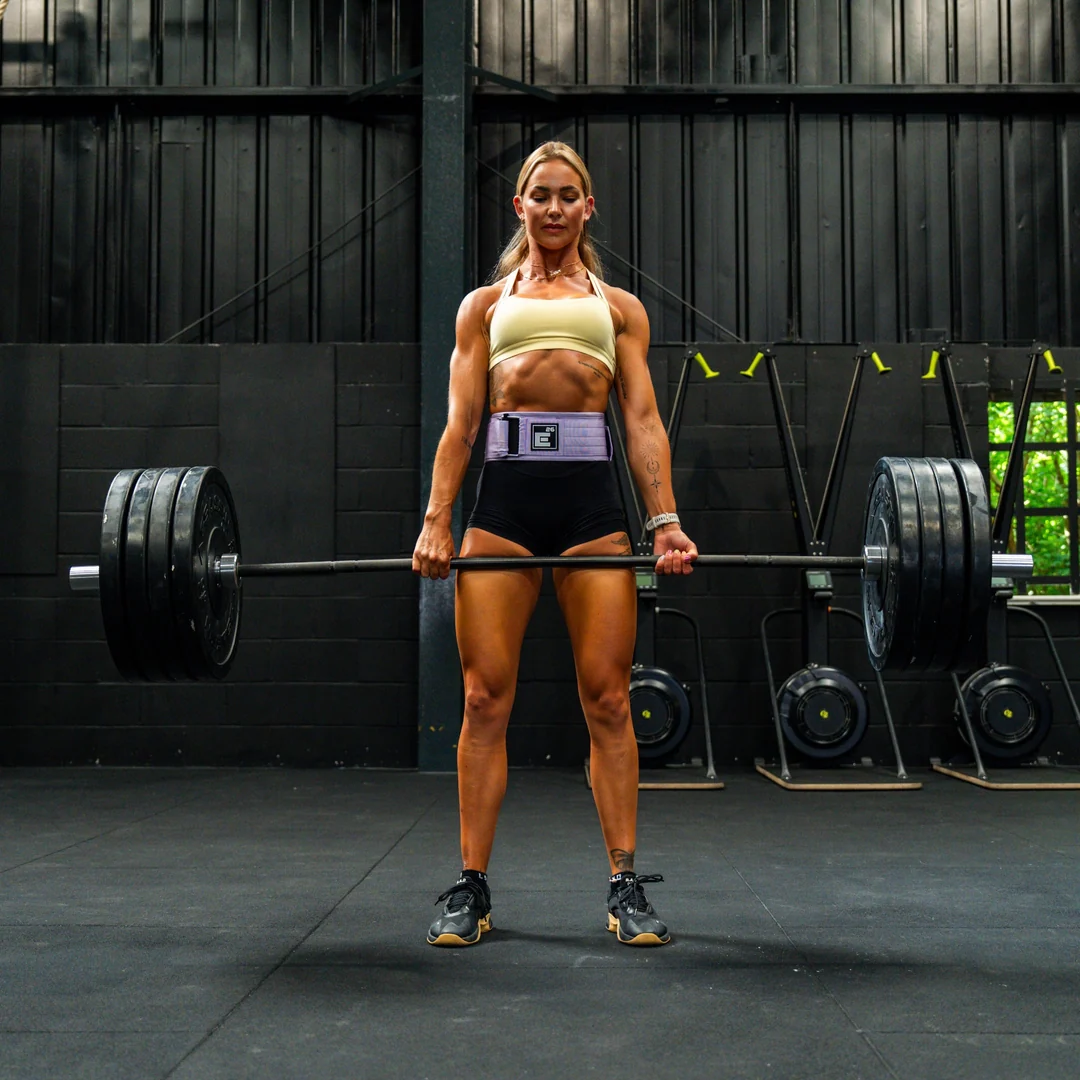
Use one deficit deadlift exposure per week and keep your regular deadlift technique in the program. This is an illustrative six-week training block for healthy lifters already comfortable with barbell pulls, not a study-proven prescription. Start each lower-body session with a general warm-up and two or three progressively heavier ramp-up sets. Keep the deficit around one inch unless you have a strong reason to adjust it; consistent conditions make your progress easier to interpret.
Weeks 1–2: learn the new start. Perform three sets of five with a load that leaves roughly three good repetitions in reserve. Rest two to three minutes. Film a side-view first set if practical: the bar should stay close, and the shoulders and hips should begin rising together. If you have to change the platform height or stance repeatedly to finish the workout, the movement is not ready for harder loading.
Weeks 3–4: add measured work. Use four sets of four at approximately two repetitions in reserve. Add a small amount of weight only if every rep resembles the first set. It is perfectly acceptable to keep the previous load and improve consistency. On another training day, practice two or three moderate sets of standard deadlifts with clean acceleration, avoiding maximal effort so the two exposures complement rather than bury each other.
Week 5: practice stronger triples. Perform four sets of three with one or two repetitions in reserve and full recovery between sets. Do not chase a new one-rep max on the raised platform. If the lower back or hamstrings remain unusually sore across sessions, remove a set rather than treating fatigue as proof of progress.
Week 6: measure transfer. Reduce deficit work to two easy sets of three early in the week, then later assess your normal-height deadlift with a conservative submaximal set under familiar conditions. Compare bar speed, position and how the first few inches feel at a load you have used before. A smoother floor break is a useful sign; no improvement after one block is not a crisis, and does not justify forcing the deficit into every training cycle.
Pair the plan with enough recovery, sensible lower-body accessory volume and stable sleep and nutrition habits. Track the elevation, sets, reps, weight and perceived effort. Those ordinary details reveal more about whether the variation is working than a dramatic training-video clip.