Advertising disclosure: This page includes affiliate product links that may earn us a commission, as well as products from our own store.
You’ve loaded the bar, set your back and taken a breath. Then your fingers start negotiating with gravity before your legs and hips have finished their job. Lifting straps promise to make grip less of a bottleneck. But do they genuinely change how much force a lifter produces, or merely make heavy sets feel more comfortable?
A 2026 experiment offers an unusually useful answer, provided we read the fine print. Thirty men performed a fixed-bar strength test with and without straps. The strapped trials generally produced better force-time results. That is intriguing for coaches and people who train heavy, but it is not proof that straps automatically add pounds to your deadlift or inches to your back. Here is what happened, what the numbers mean and how to use them without confusing grip assistance with new muscle.
1. Why a lifter’s hands can become the weak link
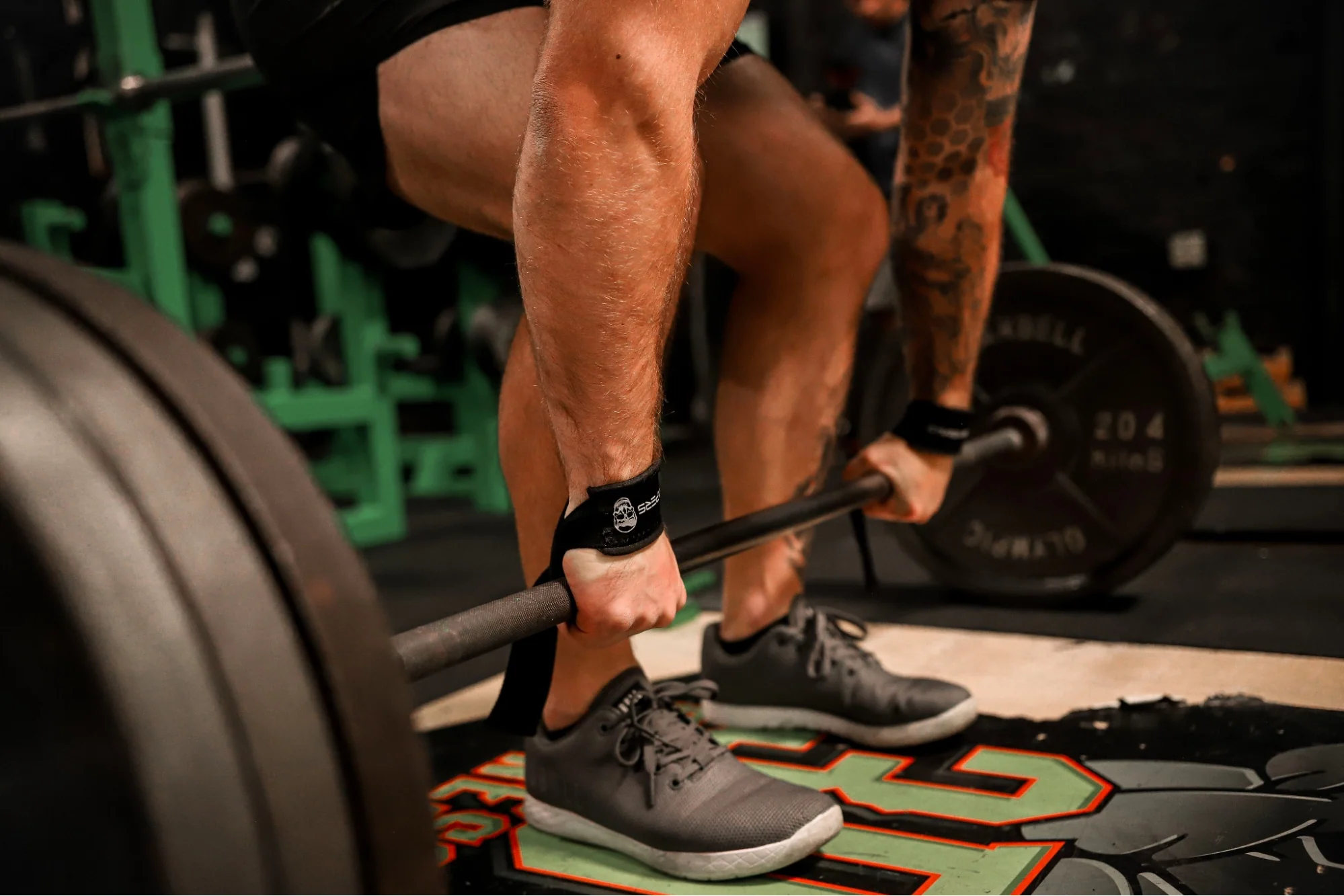
A pull is a chain of demands: the feet push into the floor, hips and knees extend, the trunk stays organized, the upper back transfers tension, and the hands hold onto the bar. In a hard deadlift or row, the bar can begin slipping before the prime movers are exhausted. At that point the set ends because the connection failed, not necessarily because the back or hips had nothing left to contribute.
That distinction matters. Grip strength is a genuine physical quality worth training, particularly in sports where holding an opponent, rope or implement determines success. But grip is also a potential source of measurement noise when the goal is to learn how forcefully the lower body and trunk can pull. A tired hand can hide a strong pair of legs. A strap changes the hand-to-bar connection by routing some of that holding demand through material wrapped around the wrist and bar.
The new experiment looked at this mechanical problem during the isometric mid-thigh pull, often shortened to IMTP. Instead of raising a moving bar from the floor, an athlete pulls as hard and fast as possible against an immovable bar fixed near mid-thigh. Force plates measure the effort. It is a common sports-performance test, but it is not the same thing as a conventional deadlift, a set of eight Romanian deadlifts or a judo gripping contest.
One practical implication appears immediately: whether you use straps should match what you intend to measure or train. If your session is about maximal force expression, a secure connection may help. If your session is about holding power without assistance, hiding the grip demand misses the point.
2. Inside the 30-man study: judo athletes versus gym-trained men
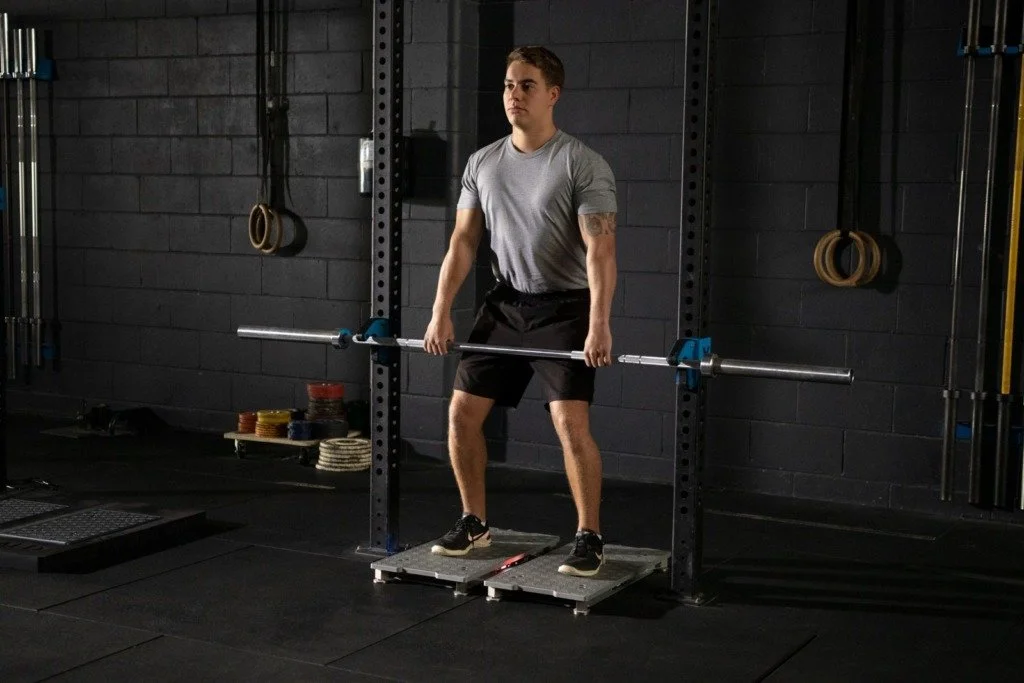
The researchers recruited 15 male judo athletes and 15 recreationally resistance-trained male university students. Both groups completed the same fixed-bar IMTP under two conditions: using lifting straps and pulling without them. The order of those conditions was randomized, which limits the chance that everyone simply performed better during whichever attempt came second.
Participants pulled on a fixed bar while a force platform sampled data at 1,000 times per second. The researchers focused on three closely related but distinct measurements. Peak force is the highest force registered; rate of force development describes how rapidly force rises; and impulse captures force accumulated over a defined time interval. These are performance-test outcomes, not measurements of muscle thickness or the amount of weight somebody can complete for five clean repetitions.
There was an important reason to include judo athletes. Judo demands constant gripping and pulling against another person, so it offers a comparison between athletes whose sport emphasizes the hands and recreational lifters whose training does not necessarily include the same grip exposure. Unsurprisingly, the judo group had a stronger measured handgrip: approximately 51.3 kg versus 44.7 kg in the recreationally trained group. That difference helps describe the samples, but does not make either group a proxy for every advanced powerlifter.
The design tested an acute equipment effect within a single assessment context. It did not follow the men through weeks of strap-based training, examine injury outcomes or assign a group to never practice grip work. Keep that boundary in mind when seeing the headline result.

Equipment Worth Exploring
Explore equipment, accessories and gear from our carefully selected range.

Leather Lifting Straps
Padded leather straps support grip during heavy rows, deadlifts and pulling exercises.

Leather Wrist Grips
Padded leather lifting grips help support the hands and wrists on heavy pulling exercises.


Competition Plates
Competition-style bumper plates for Olympic lifts and loaded strength training.

Grip Plates
Rubber-coated weight plates with handholds for loading barbells and machines.

GymPin Barbell Row Handle
Heavy-duty handle attachment for barbell, landmine and T-bar rows.

T-Bar Row Attachment
Welded barbell attachment that connects a D-handle bar for landmine and T-bar rows.
3. What changed with straps: force, speed and accumulated effort
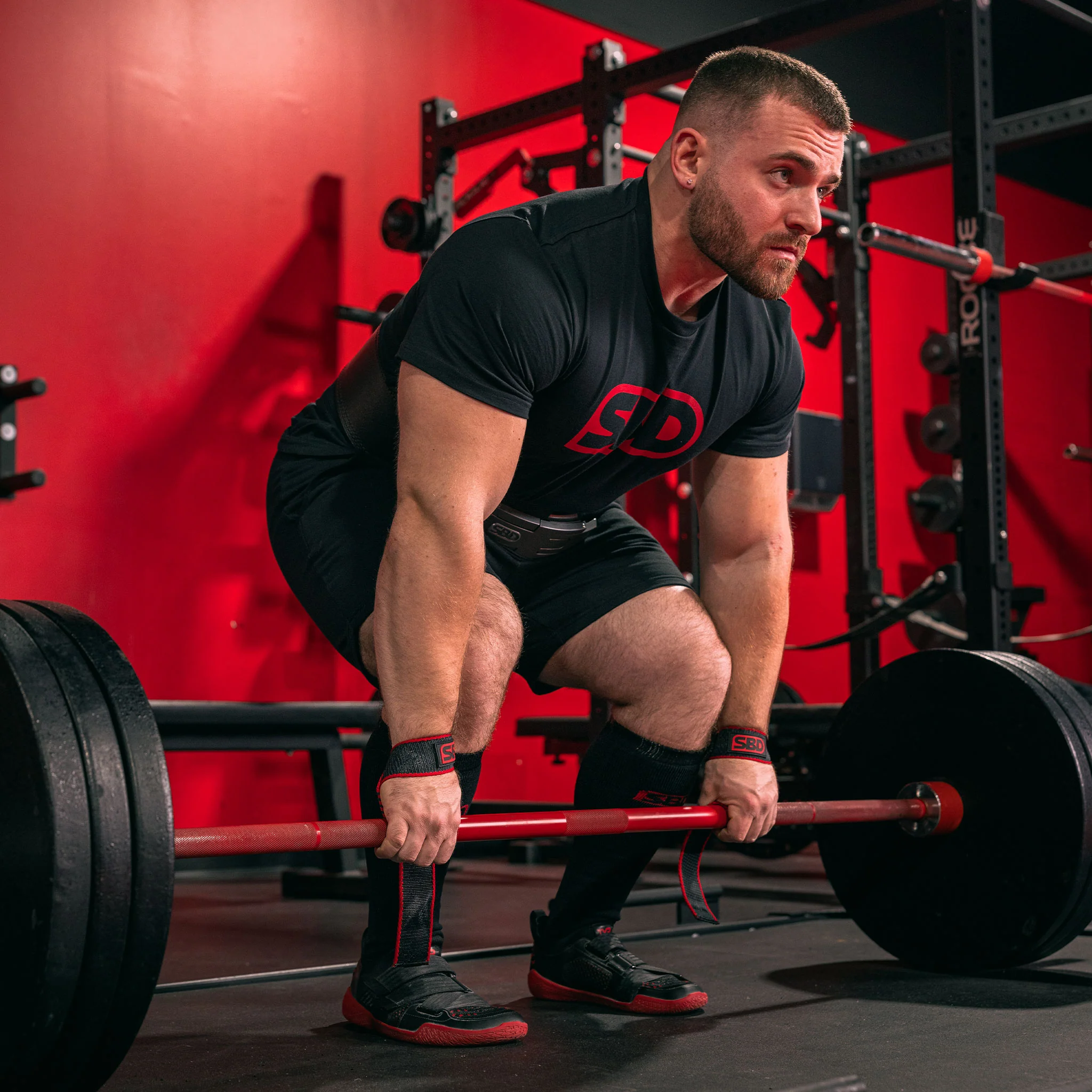
Across the experiment, using straps was associated with higher measurements for most of the peak-force, rate-of-force-development and impulse variables. The statistical analysis identified significant overall effects of strap condition for most outcomes. In ordinary gym language, participants generally expressed more measured force when their hands were secured to the fixed bar.
It is tempting to translate that into “straps make you X percent stronger.” Resist that shortcut. Different measurements use different time windows and scaling approaches. A peak-force result expressed relative to body mass cannot be compared casually with an absolute force trace, and improvements in early force rise are not interchangeable with changes in the highest registered value. Nor should the strap condition’s average performance be interpreted as a guaranteed personal improvement.
The researchers also examined whether the strap advantage differed between the judo and recreational resistance-training groups. They found no statistically significant interaction between group and strap condition. That means the experiment did not establish a reliable difference in how much the two populations benefited from straps, even though their baseline handgrip measurements differed. It does not establish that straps help everyone by precisely the same amount.
The most plausible training explanation is that a firmer connection lets athletes express force without having to protect a slipping bar. But there may be other contributors, including perceived security and familiarity with the equipment, and this study was not designed to isolate each mechanism. Its strongest conclusion is narrower and still useful: for this specific maximal fixed-bar test, straps changed the observed performance.
4. What an isometric result cannot tell us about your deadlift
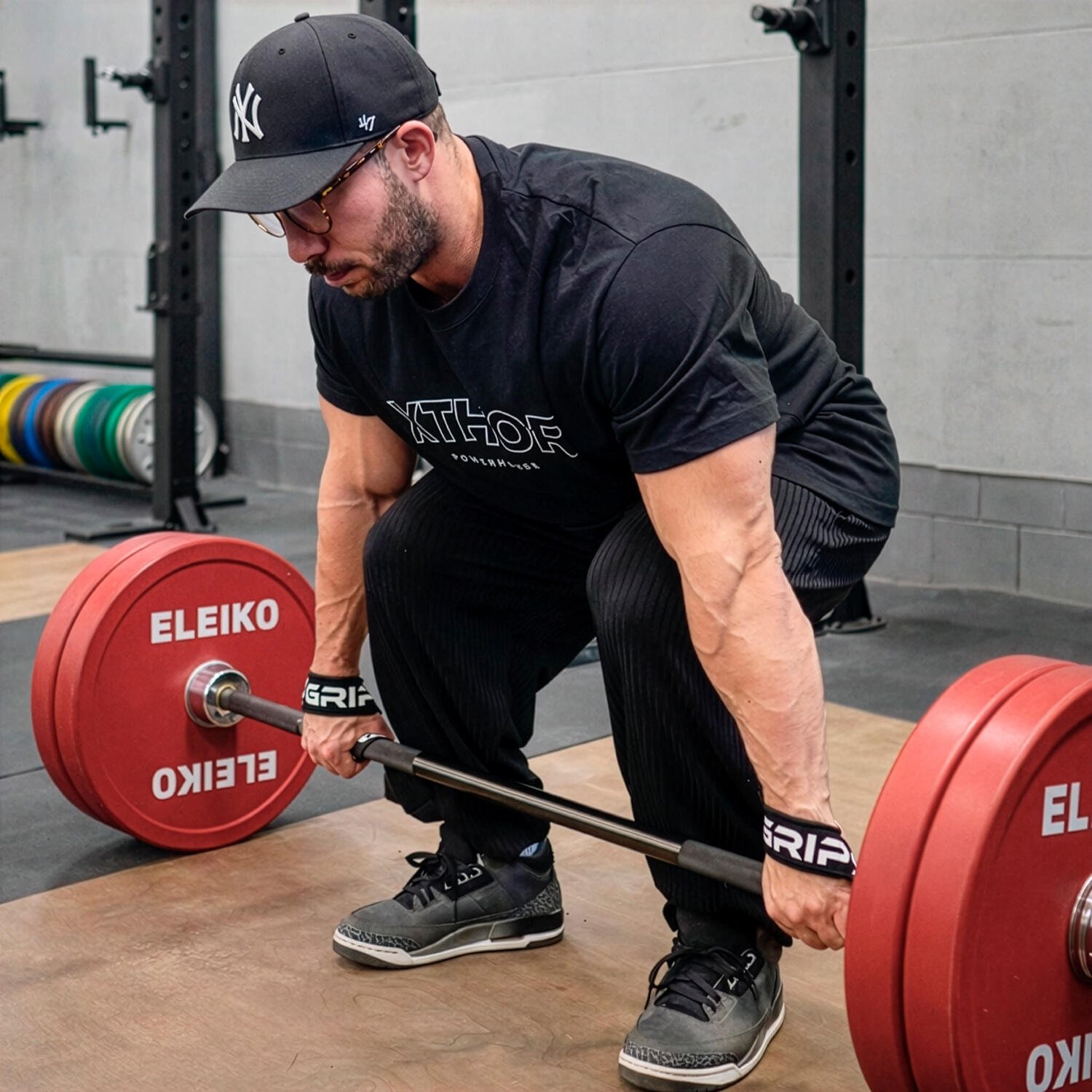
An IMTP has no moving bar path, no lockout, no eccentric phase and no repeated-repetition fatigue. A conventional deadlift requires you to accelerate a load from the floor, coordinate changing joint angles, maintain bar proximity and complete the rep under sport-specific rules. A strapped improvement in stationary force production does not establish a matching improvement in your one-rep maximum.
The same caution applies to muscle growth. Hypertrophy depends on how you train over many sessions, including challenging sets, sufficient work, recovery and progression. The 30-person experiment did not compare back-muscle size before and after a training block. It cannot show that using straps builds more lats or hamstrings, and it certainly does not prove that raw-grip lifting is inferior.
Outside this experiment, evidence is mixed across exercises and designs. Some smaller studies have reported improvements in aspects of repeated deadlift performance or grip-related fatigue when straps are used. Other work, including a lat-pulldown experiment, has not found a clear improvement in the tested repetition or activation measures. The useful question therefore is not “Do straps always work?” but “What exactly is limiting this exercise, and what outcome am I trying to improve?”
Consider a heavy Romanian deadlift set where your hamstrings are still working but your hands open after the sixth rep. Straps might allow those target muscles more high-quality work. Contrast that with a farmer’s carry programmed explicitly to build sustained hand strength: putting straps on would change the exercise’s central challenge. Both choices can be intelligent; they simply serve different targets.

Powerlifting Shirts & Lifting Gear
Powerlifting shirts and gym gear for squat, bench and deadlift lifters who live for heavy numbers.

700lb Club Meme – Top & Gymbros T-Shirt
Show some powerlifting attitude with a playful “700lb Club Gym Meme” tee.

2000 Pound Club Shirt – Meme & Gymbros Top T-Shirt
Show some powerlifting attitude with a playful “2000 Pound Club” tee.


More Plates More Dates Gym Meme | Funny Weightlifting D Sticker
A fun “More Plates More Dates Gym Meme” touch for bottles, laptops, and lockers.

Bro Science Albert Einstein Science Based Lifting Humor Hoodie
Keep it laid-back with a little “Bro Science” attitude.


Nice Try Gravity Astronaut Deadlift – , Gymbros & T-Shirt
Rep “Nice Try Gravity Astronaut Deadlift” humor in and out of the gym.

Be Happy Lift Heavy – Motivational & Gymbros – Meme T-Shirt
Make gym days more fun with “Be Happy Lift” style.

Lift Heavy Sh*T – Essential & Gymbros T-Shirt
Show some powerlifting attitude with a playful “Lift Heavy Sh*t” tee.

Heavy Enough Tee
Bring “If You're Not Scared It's Not Heavy Enough” humor to your next gym day.
5. A smarter way to decide when to use straps
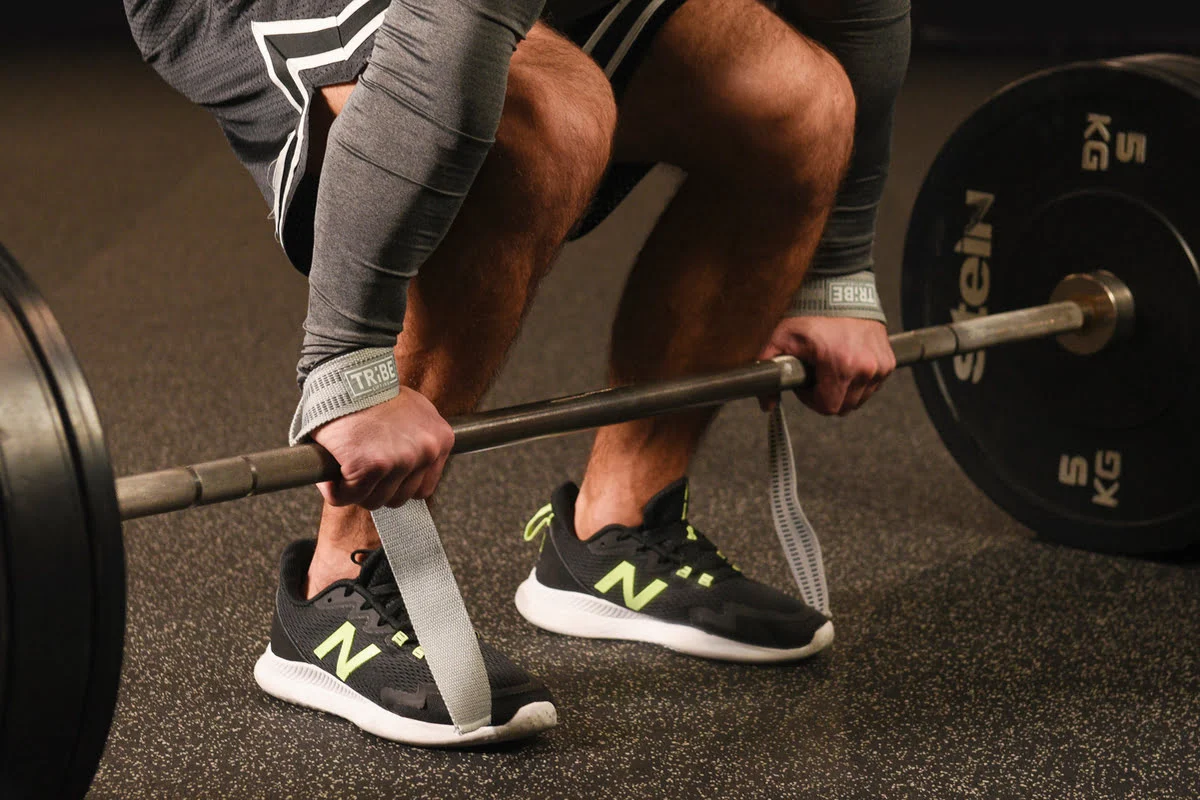
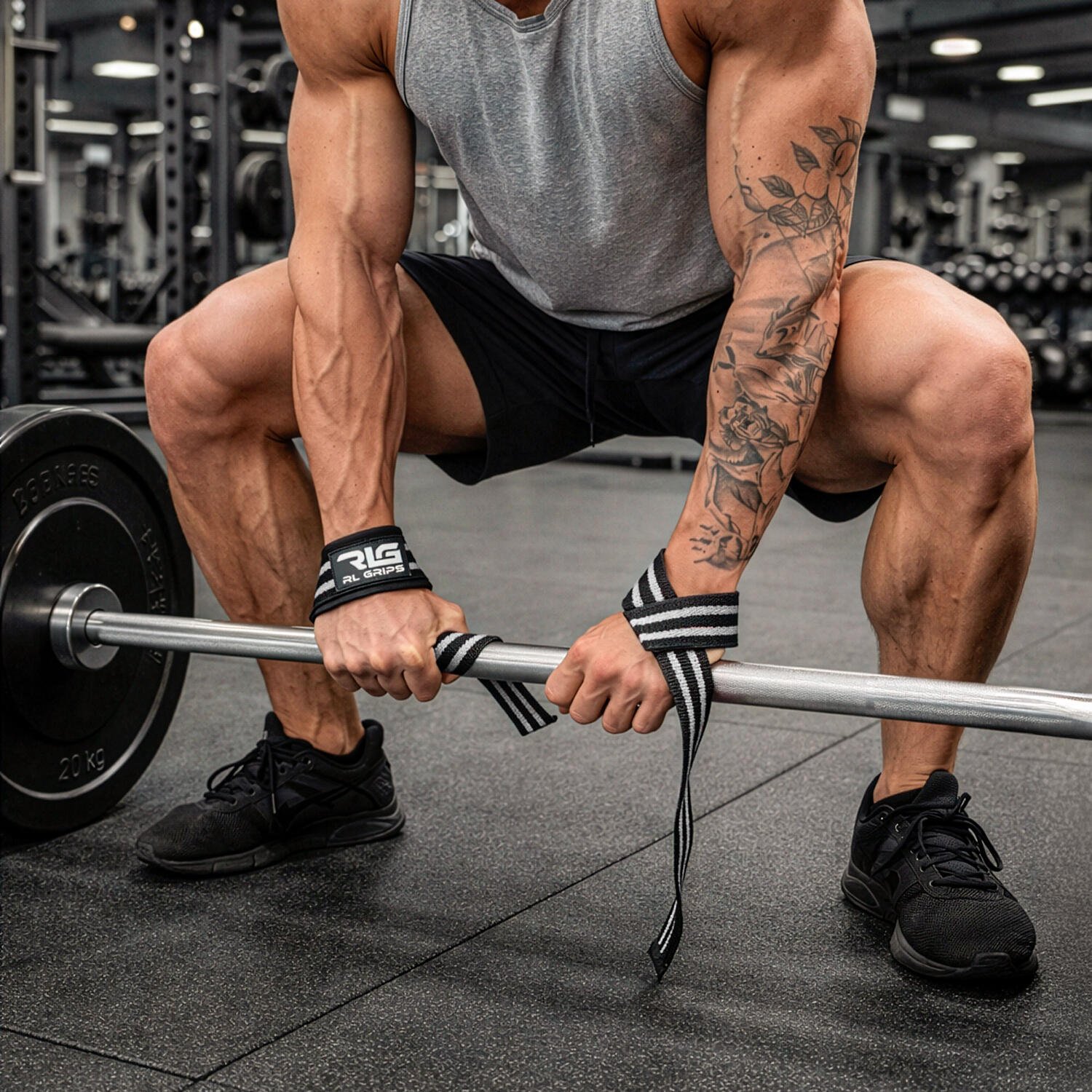
Start with your goal instead of your accessory drawer. For maximal back or posterior-chain work, straps can be useful when grip fails before the intended muscles and technique begin to break down. Heavy rows, Romanian deadlifts, high-repetition pulls and some cable exercises are possible candidates. You do not need to strap into every warm-up; give yourself chances to hold manageable loads normally.
For powerlifting practice, check the rules that govern your competition lifts and train the required grip accordingly. A deadlift that counts only because you used assistance is not evidence that your competition grip is ready. Similarly, in judo or climbing, the ability to apply force through a bare hand on a real opponent or surface is part of performance. A strapped laboratory test can be useful information while still being incomplete sport preparation.
A practical compromise is to perform early pulling sets with bare hands and use straps on selected high-demand work sets when the hands would cut muscular training short. You can also keep separate, dedicated grip work: loaded carries, controlled bar hangs, plate pinches or thoughtfully progressed static holds. Progress those just as you would any other exercise, with appropriate recovery instead of piling on more random forearm fatigue after every session.
Monitor whether grip is actually the limiting factor. If the bar stays secure and your posture collapses or hip extension slows first, straps may change little. If your fingers consistently uncurl while the rest of the lift feels controlled, there is a clearer reason to experiment. Record load, repetitions, difficulty and whether assistance was used so that comparisons remain honest.
6. How coaches should test pulling force without muddying the data
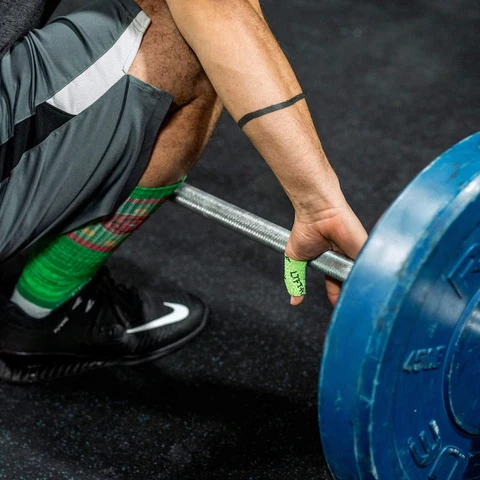
The study’s most immediate application may be assessment consistency. Imagine you test an athlete’s IMTP with straps in November and without straps in December. A lower December peak force could reflect a different hand-to-bar connection rather than lost leg or trunk capacity. The equipment condition has become a confounder. If you care about trends, keep the test repeatable.
Choose your protocol in advance: strapped or unstrapped; bar height; foot position; grip width; body angles; familiarization; warm-up; rest between attempts; and verbal instructions. Document those details so the next test is genuinely comparable. The same rule applies to force-platform calibration, timing windows and any relative-to-body-mass scaling. A flashy percentage change means little if the setup has drifted.
It may be helpful to test both conditions when staffing and time permit. The strapped attempt can illuminate potential maximal force expression, while the unstrapped attempt retains the hand connection as part of the challenge. The difference between those conditions is an interesting coaching signal, but do not treat it as a validated standalone measure of grip deficiency. It can also be influenced by technique and strap familiarity.
For everyday lifters without a force platform, you can still apply the reasoning carefully. Compare similar pulling sessions, keep the setup and rest times consistent, and note which body part ends the set. Avoid treating a heavier strapped set as proof of whole-body strength gain. It is a new performance condition, useful for a particular training purpose.
Equipment Worth Exploring
Explore equipment, accessories and gear from our carefully selected range.


48in Aluminum Lat Bar
48-inch aluminum lat pulldown bar with knurled grip and rotating center swivel.

44in Dual Hook Bar
44-inch aluminum dual-hook straight bar for cable rows, pulldowns, and curls.

Angles 90 Grips
Flexible grip attachments that allow natural wrist movement during pulling exercises.

VForce Lat Seat
Rack-mounted seat attachment for supported lat pulldowns and seated cable exercises.

7. The bottom line: better connection, not magic strength
The interesting thing about the 2026 experiment is that even the judo athletes, who had stronger measured grip than the recreational trainees, tended to produce higher force-time outputs when strapped into an isometric pull. That reinforces the idea that high grip strength does not necessarily eliminate the hand-to-bar constraint during a maximal whole-body effort. But the lack of a significant group-by-condition interaction means we should not invent a special judo-only or novice-only effect.
We also need to remember the limits: just 30 men, one test family, an acute comparison and no long-term training outcomes. We cannot generalize directly to women, elite deadlifters, every strap design or competition performance. And we cannot convert an isometric force trace into a guaranteed number of extra reps or kilograms on a moving bar.
Takeaway: Use straps when they help the target of your session, not because they look more serious. They can make an isometric strength test less dependent on the hands and may let you keep working your back or hips when grip is the first point of failure. Keep some unassisted pulling and explicit grip practice if holding strength matters to your sport. Above all, label your strapped and unstrapped results separately. A good training tool supports the objective; it does not replace one.
Bodybuilding Shirts & Workout Gear
Bodybuilding shirts, tanks and gym gear for lifters chasing muscle, size, symmetry and the pump.

Lifting Stoic Sigma Meme Marble Sculpture Top T-Shirt
Rep “Lifting Stoic Sigma” humor in and out of the gym.

Broseidon Lord of Lifting | Poseidon Workout Hooded for Hoodie
Stay casual and show some bodybuilding attitude with “Broseidon Lord of Lifting”.

Knight Lifting Iron Medieval Decal Sticker
Give your everyday gear a playful “Knight Lifting Iron” twist.

Iron Is My Therapy – Gymbro Meme , & Gains Top T-Shirt
Bring “Iron Is My Therapy” humor to your next gym day.


Meat Mountain Shirt – Gymbro , & Gains T-Shirt
Bring “Meat Mountain” humor to your next gym day.


Progressive Overload Milo Tee
Bring “Progressive Overload Milo Bull” humor to your next gym day.