Advertising disclosure: This page includes affiliate product links that may earn us a commission, as well as products from our own store.
Two people can finish the same pull-up session and distribute the work among their back, arms and shoulders differently. Turning your palms toward you, spreading your hands wider or using a shoulder-width overhand grip changes the geometry of the lift. But does that change tell us which grip builds the biggest lats, produces the strongest biceps or protects your shoulders?
A controlled experiment involving 11 experienced male exercisers offers useful clues without naming a universal winner. The participants completed three pull-up variations while cameras tracked the movement and a shoulder model estimated muscle forces. The findings reveal distinct loading patterns. They do not prove that any grip produces faster muscle growth or prevents injuries. Understanding the difference can make your vertical pulling more purposeful and less confusing.
How 11 experienced men tested three pull-up grips
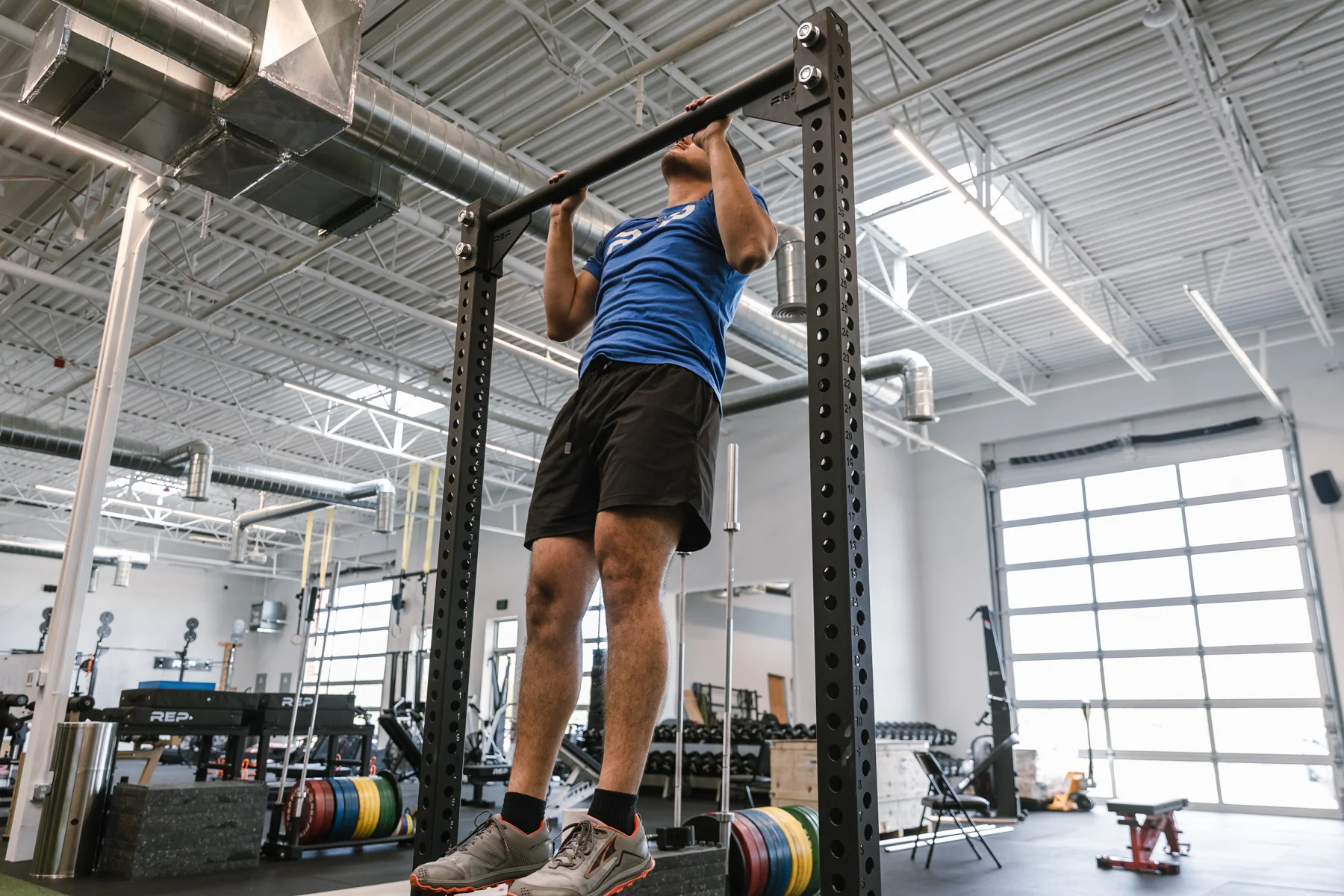
The volunteers were healthy men who had used pull-ups regularly for more than three years. They tested a shoulder-width overhand front pull-up, a wider overhand pull-up using angled portions of a bar, and a shoulder-width underhand reverse pull-up. In everyday gym language, the last version is a chin-up. The researchers randomized the order, recorded five repetitions of each variation and imposed short breaks to limit fatigue.
Motion-capture cameras recorded the positions of the upper body, while a force platform provided additional movement data. A detailed musculoskeletal shoulder model then estimated how individual muscles shared the force required to raise the body. It tracked muscles of the upper back, arms and rotator cuff through the upward part of the repetition. The experiment was demanding and carefully controlled, but it was still a laboratory comparison rather than a normal training block.
The sample was small and entirely male. Participants were familiar with pull-ups, and one set of movement measurements was used to feed a mathematical model. Those facts restrict how broadly we can apply the results. Nobody was assigned to train a single grip for months. No one was tested for changes in muscle thickness, and injury rates were not monitored. The findings are about estimated loading now, not guaranteed adaptations later.
Shoulder-width overhand: more elbow-flexor involvement
The shoulder-width pronated front pull-up gave a greater modeled contribution to biceps brachii and brachialis than the other variants in this experiment. The study reported statistically significant differences for these muscles. That does not mean the movement stops challenging the lats. The torso still has to rise against gravity, and elbow flexion remains only one part of a coordinated movement involving the shoulder and shoulder blade.
That result may surprise anyone raised on the rule that underhand chin-ups are always the best biceps exercise. Another experiment using surface electrodes in 25 people found higher biceps electrical activity during chin-ups than conventional pull-ups. There is no reason to hide the disagreement. Electrical activity measured at the skin and force estimates calculated by a shoulder model are different outcomes, collected with different participants and protocols.
Use shoulder-width overhand repetitions as a dependable benchmark if they feel comfortable. Keeping the bar, hand spacing, tempo and assistance consistent makes it easier to tell whether your strength is improving. You do not need to squeeze the grip narrower or make every rep a test of suffering. A repeatable pull-up performed through a controlled range is more informative than picking a variation from an isolated activation statistic.

Equipment Worth Exploring
Explore equipment, accessories and gear from our carefully selected range.

Power Tower
Freestanding pull-up and dip station with adjustable handles for bodyweight training.



VForce Lat Tower
Wall-mounted cable tower with pivot arms and adjustable 1:1 or 2:1 pulley ratios.

VForce Lat Seat
Rack-mounted seat attachment for supported lat pulldowns and seated cable exercises.

48in Aluminum Lat Bar
48-inch aluminum lat pulldown bar with knurled grip and rotating center swivel.
Wide overhand: a relative back-muscle emphasis
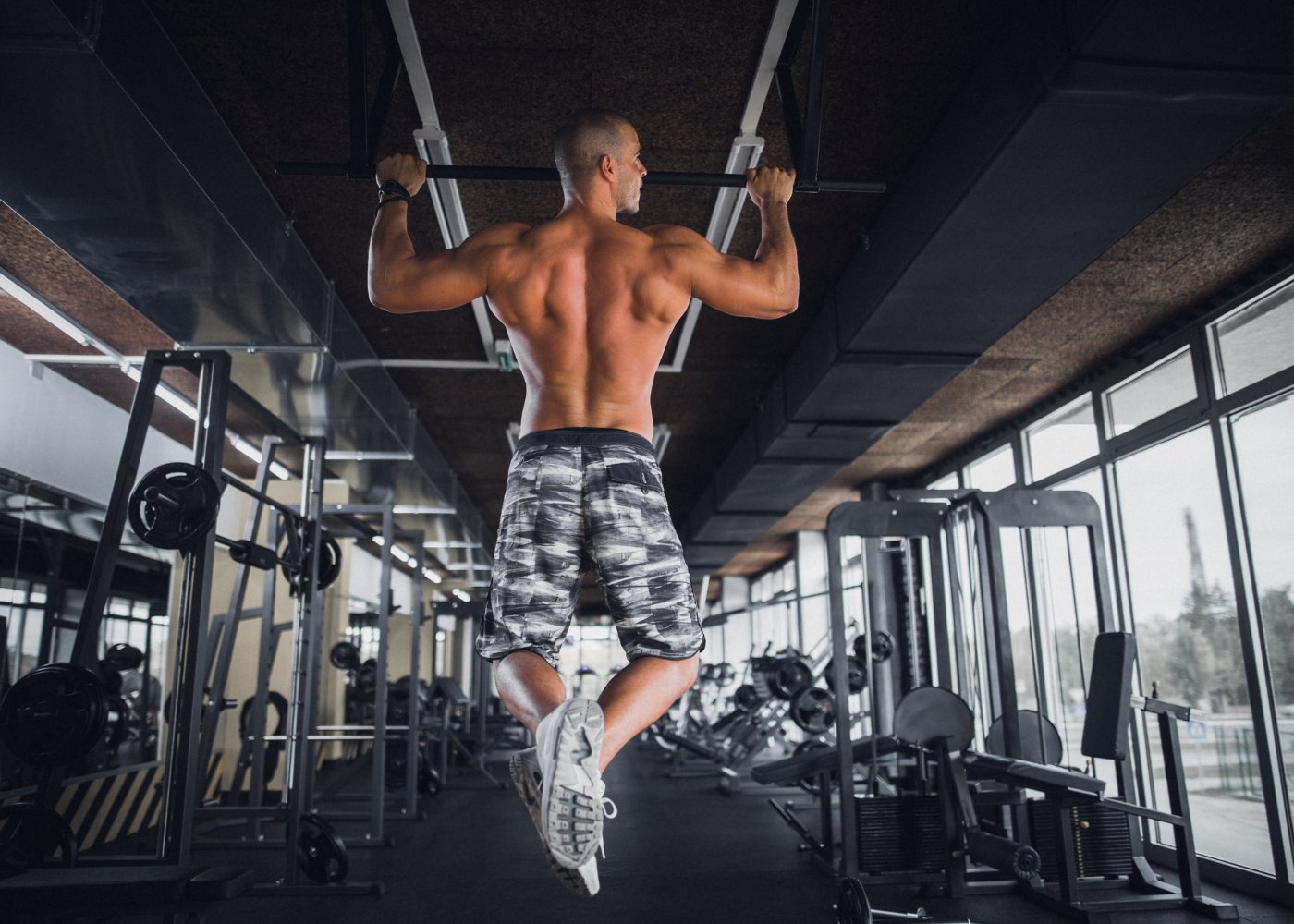
The wide pronated variation concentrated a larger share of modeled muscle stress in latissimus dorsi, trapezius and rhomboid major than the shoulder-width front or reverse versions. For a lifter who wants to emphasize the upper back, that is an interesting result. It supports the idea that changing hand spacing alters the distribution of effort, even though the basic objective of lifting the body toward the bar remains the same.
The key word is relative. A greater percentage of modeled work in the back does not directly establish more lat growth. It does not tell us how many good repetitions a particular athlete could perform, whether the grip felt comfortable or whether that person could recover from enough training to improve. Likewise, the study used a defined angled wide grip. It cannot prove that progressively wider hands keep increasing the training benefit.
Find a wide position that still allows natural shoulder movement and controlled elbow travel. If you have to cut the repetition short, twist awkwardly or swing to get over the bar, the hand spacing may be too extreme for your body. A moderately wide pull-up can add variety to your back program. It is not a reason to abandon rows, pulldowns or the shoulder-width grip that you already perform well.

Calisthenics Shirts & Street Workout Gear
Calisthenics and bodyweight-training gear for pull-ups, dips, handstands and street-workout athletes.

Pull Up Or Shut Up Sticker
Put “Pull Up or Shut Up” gym humor on your laptop, bottle, or gym gear.

Always Pull Yourself Up Calisthenics Decal for Water Bo Sticker
A fun “Always Pull Yourself Up” touch for bottles, laptops, and lockers.

Calisthenics Pullups Heartbeat Hoodie
Bring “Calisthenics Pullups Heartbeat” gym humor to lazy days and post-workout plans.


Human Flag Crewneck Calisthenics Pullover Sweater Worko T-Shirt
Bring “Human Flag” humor to your everyday gym style.


Funny Calisthenics Gym Crewneck Pullover Sweater for Bo T-Shirt
Add a playful “Calisthenics” touch to your casual rotation.
Underhand chin-ups and the modeled rotator cuff demands
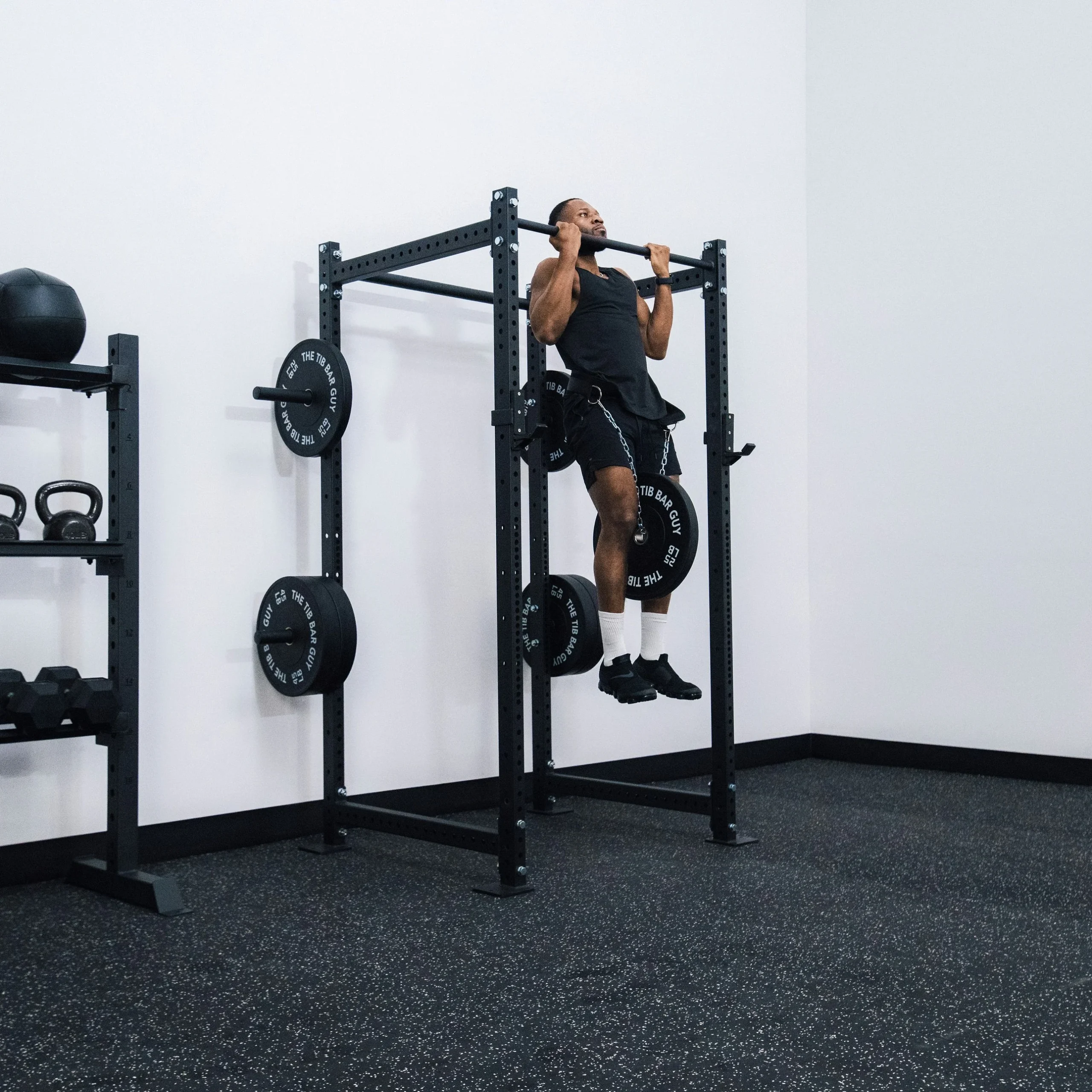
The palms-facing-you reverse pull-up produced the highest relative rotator cuff stress in the shoulder model. The estimated share of stress assigned to rotator cuff muscles was about 30% of total shoulder-crossing muscle stress, compared with roughly 25% for shoulder-width overhand and 20% for wide overhand. Some of the differences came from supraspinatus and infraspinatus rather than every cuff muscle responding identically.
Those numbers describe the model, not your individual risk of injury. The rotator cuff is supposed to stabilize the shoulder during challenging pulling tasks. A higher relative share of its work may be completely tolerable in a healthy trained shoulder. To establish real injury risk, we would need evidence about pain, tissue condition, how loads changed over time and actual injuries. None of those outcomes was tested in the 11-man study.
It would therefore be a mistake to label chin-ups dangerous or to declare wide pull-ups automatically protective. If you already have persistent shoulder symptoms, a diagnosis or a recent injury, grip and loading choices deserve individual assessment. Otherwise, an underhand grip that feels natural can remain part of a sensible pulling program. Use the force comparison to understand the exercise, not to diagnose your joints.
Why an activation ranking cannot crown a muscle-growth winner
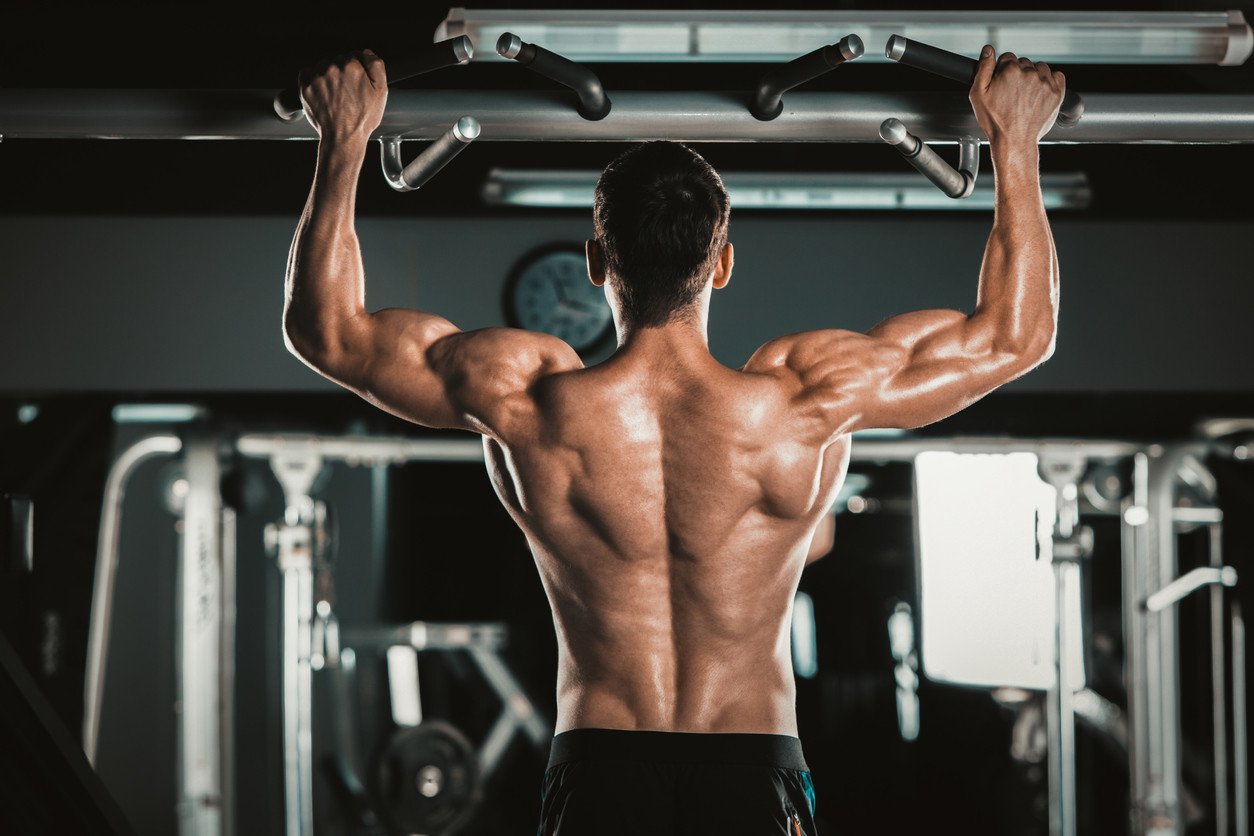
A muscle can contribute more modeled stress during a repetition without necessarily growing more across a training cycle. Long-term hypertrophy depends on repeated training stimuli, adequate effort, recoverable volume, progression and individual response. One grip may emphasize a muscle on paper while limiting how many quality repetitions you can perform. Another may let you train consistently without elbow irritation. The result you care about is adaptation over time.
Range of motion also changes the interpretation. The pulling muscles do not contribute identically at the beginning, middle and end of a repetition. Broader resistance-training reviews suggest that different training ranges can influence strength and hypertrophy, but the effects depend on the muscle, movement and study design. Those reviews do not turn an 11-person pull-up model into a long-term grip-versus-grip muscle-growth trial.
Do not select a grip only because a screenshot claims it lights up one muscle. Ask whether you can load the movement, reproduce your technique and gradually improve without pain. Different arm lengths and shoulder mobility may affect what comfortable pulling looks like. Performance logs and a well-rounded program are better evidence for your own progress than a single moment of modeled muscle stress.
Equipment Worth Exploring
Explore equipment, accessories and gear from our carefully selected range.

Ultimate Power Seat
Rack-mounted power seat for lat pulldowns, leg extensions, and leg curls.

Lat Pulldown Set
Multi-grip cable attachment set for pulldowns, rows, and varied upper-body training.
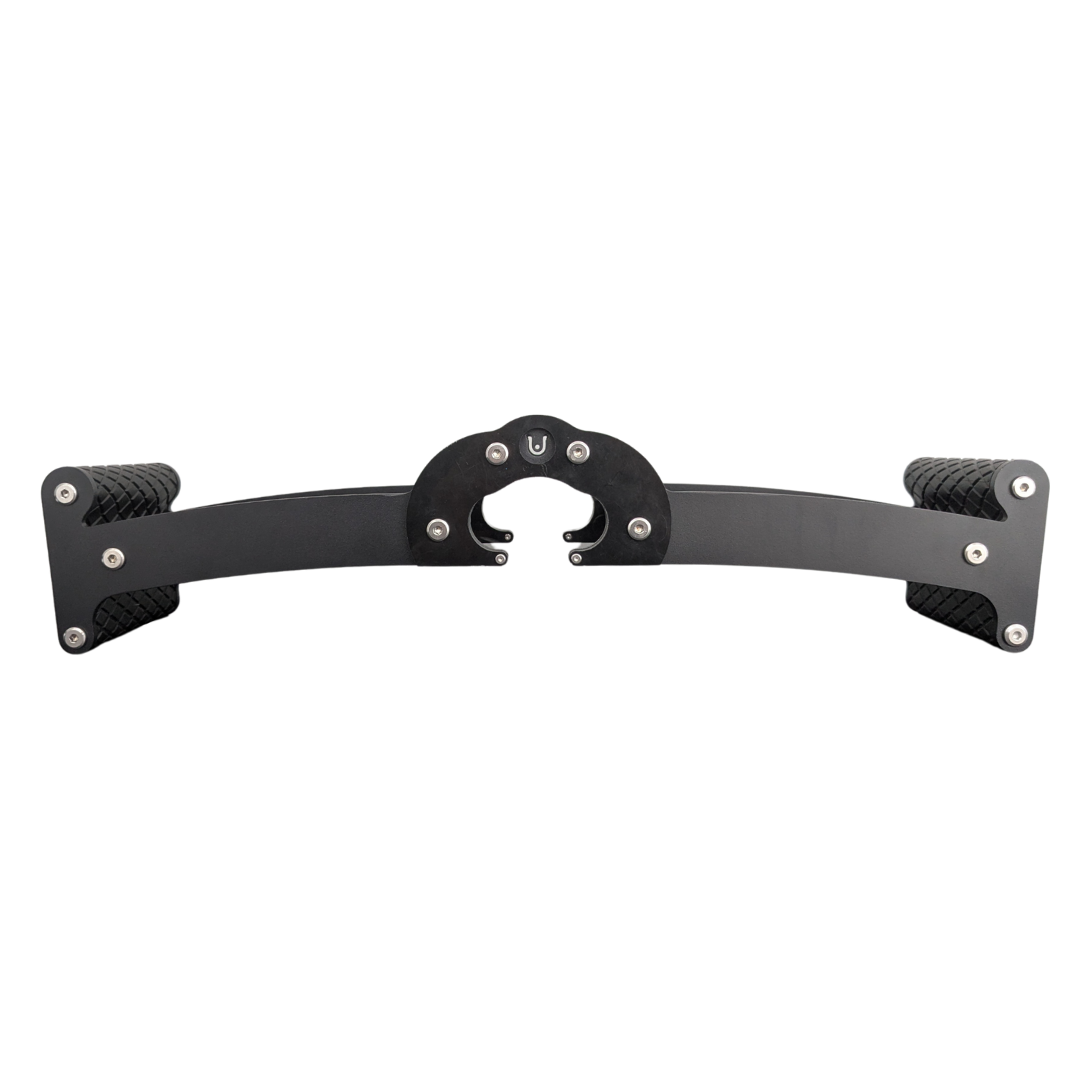
Back Bar
Multi-grip cable and landmine bar with a built-in deadlift jack.


Leather Lifting Straps
Padded leather straps support grip during heavy rows, deadlifts and pulling exercises.

GymPin Ergo Handles
Pair of ergonomic cable handles shaped for comfortable triceps and pulling exercises.

VForce Wall Trainer
Space-saving wall-mounted functional trainer with pivoting cable arms and variable resistance ratios.

VForce 2IN1
Half rack and pivot-arm functional trainer with switchable 1:1 and 2:1 pulley ratios.

44in Dual Hook Bar
44-inch aluminum dual-hook straight bar for cable rows, pulldowns, and curls.

Dual Hook EZ Curl Bar
Angled aluminum dual-hook cable bar for biceps curls and pulldown variations.
Use assistance and added weight to make each rep consistent
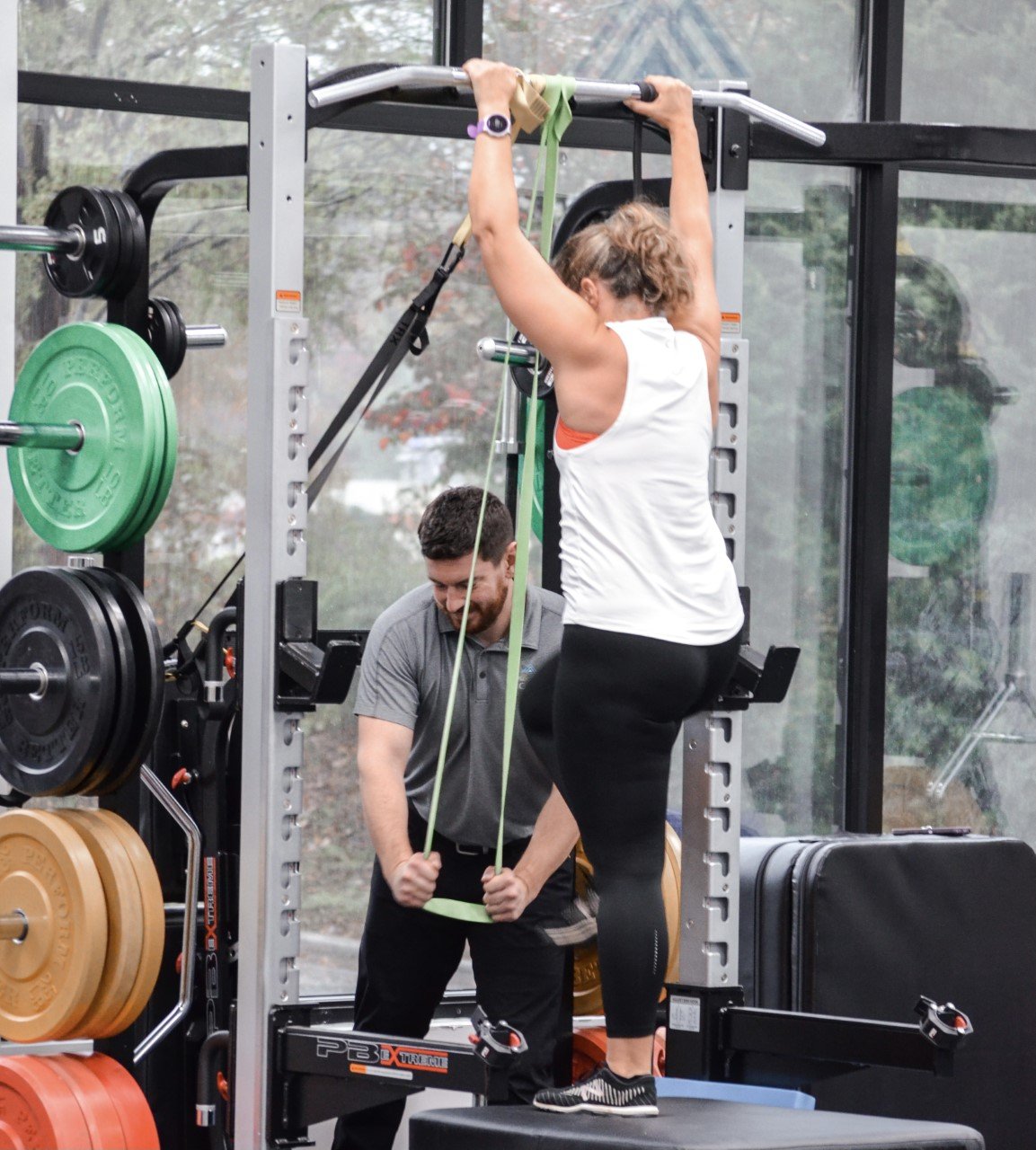
If strict bodyweight pull-ups are not yet repeatable, use an assisted machine, band assistance or a controlled pulldown. Choose a hand position that permits a comfortable, predictable range. Maintain tension without kicking your legs, craning your neck to clear the bar or letting the shoulders crash abruptly at the bottom. The purpose of scaling the movement is to practice a strong pattern and accumulate enough quality work to progress.
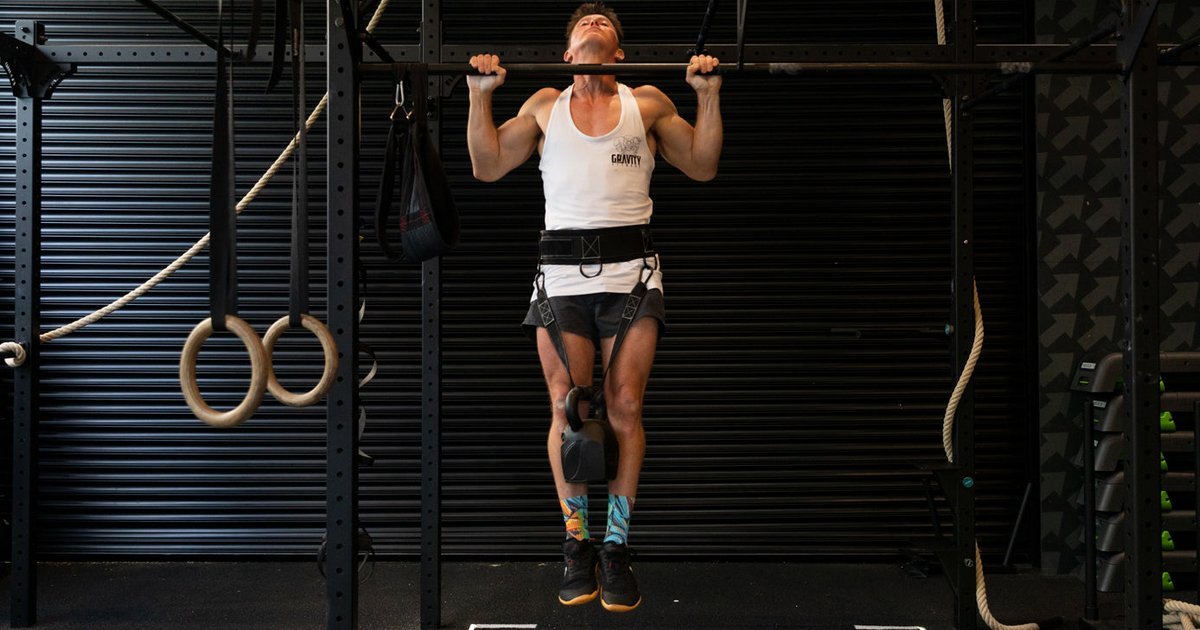
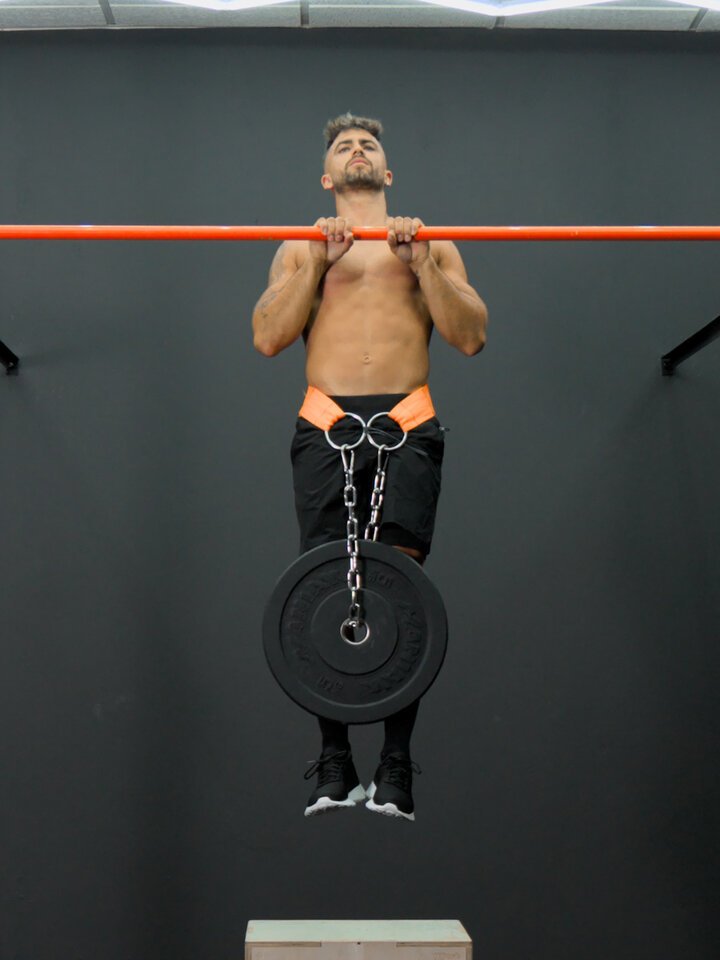
Once you can complete several clean sets, progress one variable at a time. You might add a repetition, reduce assistance or attach a small amount of resistance with a weighted vest or dip belt. External load is useful only when you retain consistent form and range. It can also help to build a base with chest-supported rows and pulldowns while your vertical pulling develops, rather than making every session revolve around one demanding skill.
Let your shoulder blades rotate and move naturally. You do not need to force them into a permanently locked-down position through every phase. If a particular grip produces repeated discomfort in the elbow or shoulder, scale the loading, try a different tolerated handle and seek professional evaluation if symptoms persist. Avoid using sharp discomfort as evidence that a variation must be stimulating more growth.
Bodybuilding Shirts & Workout Gear
Bodybuilding shirts, tanks and gym gear for lifters chasing muscle, size, symmetry and the pump.

Lat Man Big Back – Hooded With Huge Lats – Jumper Hoodie
Stay casual and show some superhero attitude with “Lat Man Big Back”.

Demon Back Big Back & Lat Workouts Vest Tank Top
Your gym-day look, with a playful “Demon Back” twist.


Wide Privilege – Wide Back Meme Hooded Pullover Hoodie
Make your off-duty look more fun with “Wide Privilege”.


Strong Back Bodybuilder Tee
Show some lifting attitude with a playful “Strong Back Bodybuilder” tee.


Hardcore Gains Gym | Funny No Pain No Gain Muscle Shirt Tank Top
Add some lifting attitude to training with “Hardcore Gains”.

Gym Dost Thou Even Pull Medieval Knight Lat Pulldown Hoodie
Show off your medieval humor in a laid-back “Dost Thou Even Pull Medieval Knight Lat” hoodie.

Pumpeye Sweater Forearm & Grip Training Popeye Meme T-Shirt
For laid-back days and bodybuilding humor: “Pumpeye”.
A practical two-day grip rotation for the next month
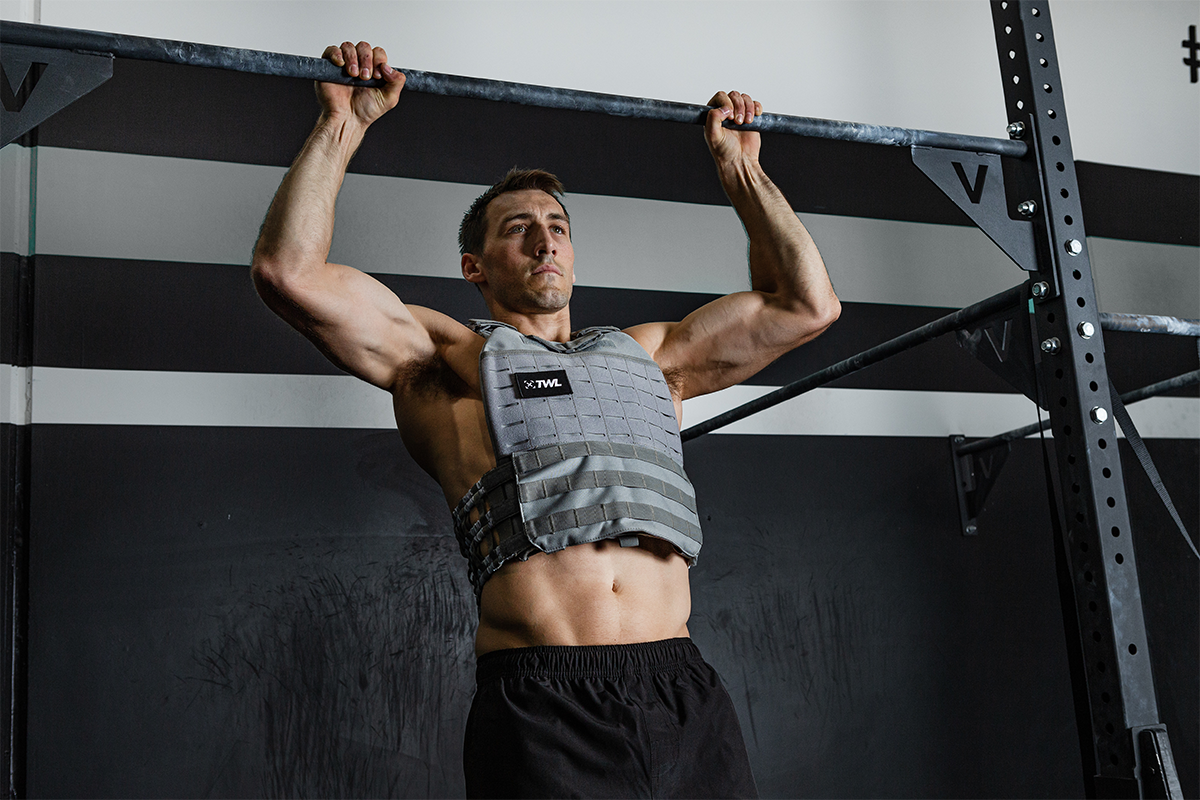
For an experienced and symptom-free lifter, a simple option is two weekly vertical-pulling exposures spaced far enough apart for recovery. The first can use shoulder-width overhand pull-ups as a consistent strength benchmark. The second can feature a comfortable wide overhand grip or underhand chin-ups, depending on the focus and what your shoulders tolerate. Keep the number of hard sets appropriate for your total back and arm workload.
Record grip, reps, sets, assistance or added load, effort and whether the technique stayed controlled. If you change hand position, rest interval, training order and added weight at the same time, your log becomes much harder to interpret. A steady increase in quality repetitions at a familiar load is meaningful personal progress. It still does not prove the chosen grip is best for everyone.
The most useful lesson from the 11-man comparison is that grip choice changes load sharing. A shoulder-width overhand grip can be your baseline, a wider version can offer another way to stress the back, and chin-ups can provide a different pulling pattern. Rotate purposefully if variety helps, but do not chase an absolute winner. Over weeks and months, consistent work, comfortable positions and measurable progress matter much more than a dramatic grip-width claim.