Advertising disclosure: This page includes affiliate product links that may earn us a commission, as well as products from our own store.
Some product links may be affiliate links. If you shop through them, Mind Muscle Perfection may earn a commission at no extra cost to you.
After a brutal leg session, your quads are sore, your usual weights feel unusually heavy, and tomorrow’s workout suddenly looks less appealing. Is a different protein shake enough to change the next 72 hours? A controlled 2026 experiment compared a blend of yeast-derived protein and whey with whey on its own and with water. The findings are interesting, but the important answer is more nuanced than a supplement advertisement.
Fifty-four trained athletes were assigned to three groups and 48 completed the testing. Some outcomes favored the blended protein over water, particularly among the men. That is not the same as demonstrating that yeast protein beats whey, speeds all aspects of recovery, or builds bigger muscles over time. Here is how to read the experiment and use it without changing everything about your diet.
The experiment: 48 athletes, three drinks and a tough leg test
Unlike a casual gym survey, this was a randomized, three-arm experiment in well-trained athletes. Researchers assigned 54 competitors to a yeast-and-whey blend, whey-only powder, or water. Six withdrew before follow-up measurements, leaving 48 athletes in the analysis. Both women and men participated, but the investigators evaluated their responses separately rather than assuming one shared recovery profile.
The two protein groups were matched for the actual protein provided: 0.9 grams per kilogram of body weight per day from the supplement. That is 72 grams of supplemental protein for an 80-kilogram athlete, divided into three servings. Participants took it for seven days before the damaging exercise, continued on the exercise day and through the 48-hour recovery assessment, and returned for a final check at 72 hours.
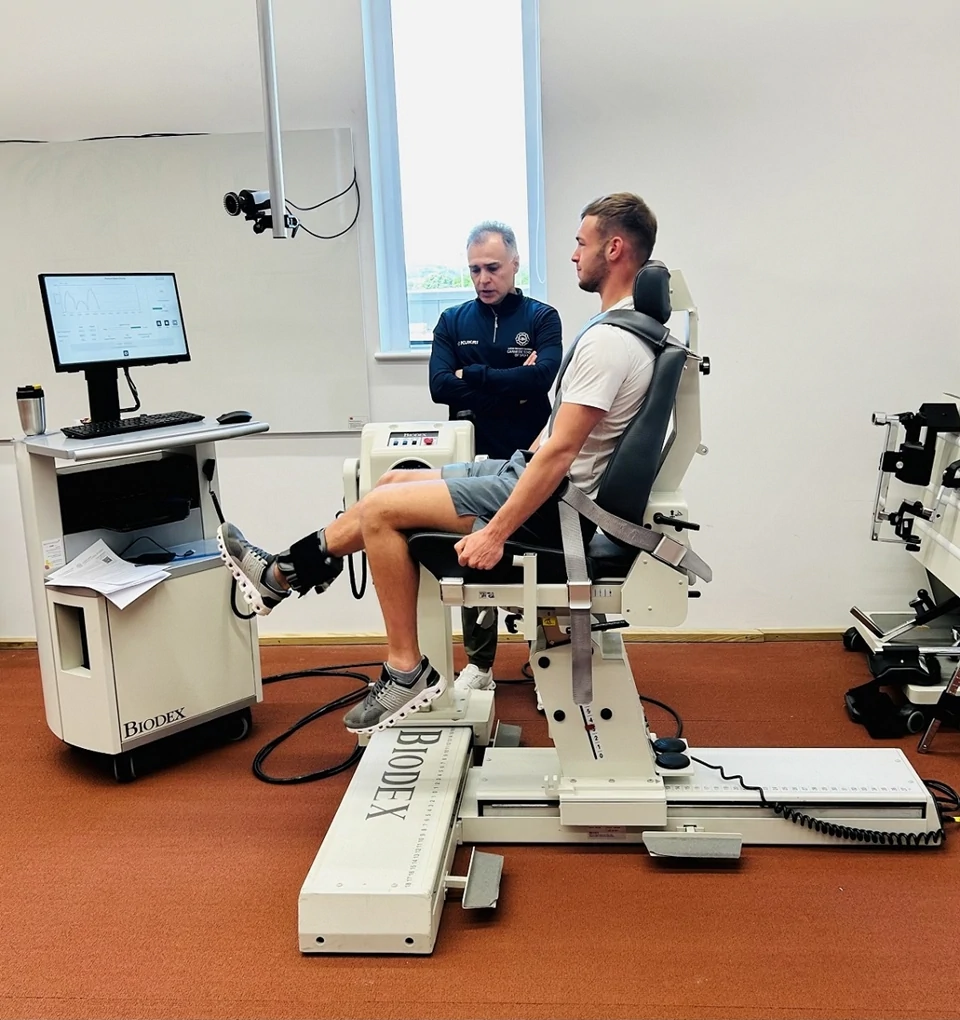
The training challenge was not an ordinary squat workout. Participants performed a standardized bout of bilateral isokinetic knee-extensor exercise designed to create muscle damage and temporary function loss. Measurements included knee-extension force, eccentric torque, jumping ability, perceived soreness, creatine kinase in blood and selected inflammation-related signals. This design isolates several recovery dimensions better than asking lifters whether they feel ready.
One crucial control was imperfect: the third group drank water rather than a calorie-matched, taste-matched placebo. The protein drinks supplied both nutrients and energy that plain water did not. That means a result favoring the blend over water cannot prove a special yeast ingredient caused the difference. The small groups also mean apparent sex differences should not be interpreted as proof that the formulation inherently works differently for women and men.
What does exercise-induced muscle damage actually mean?
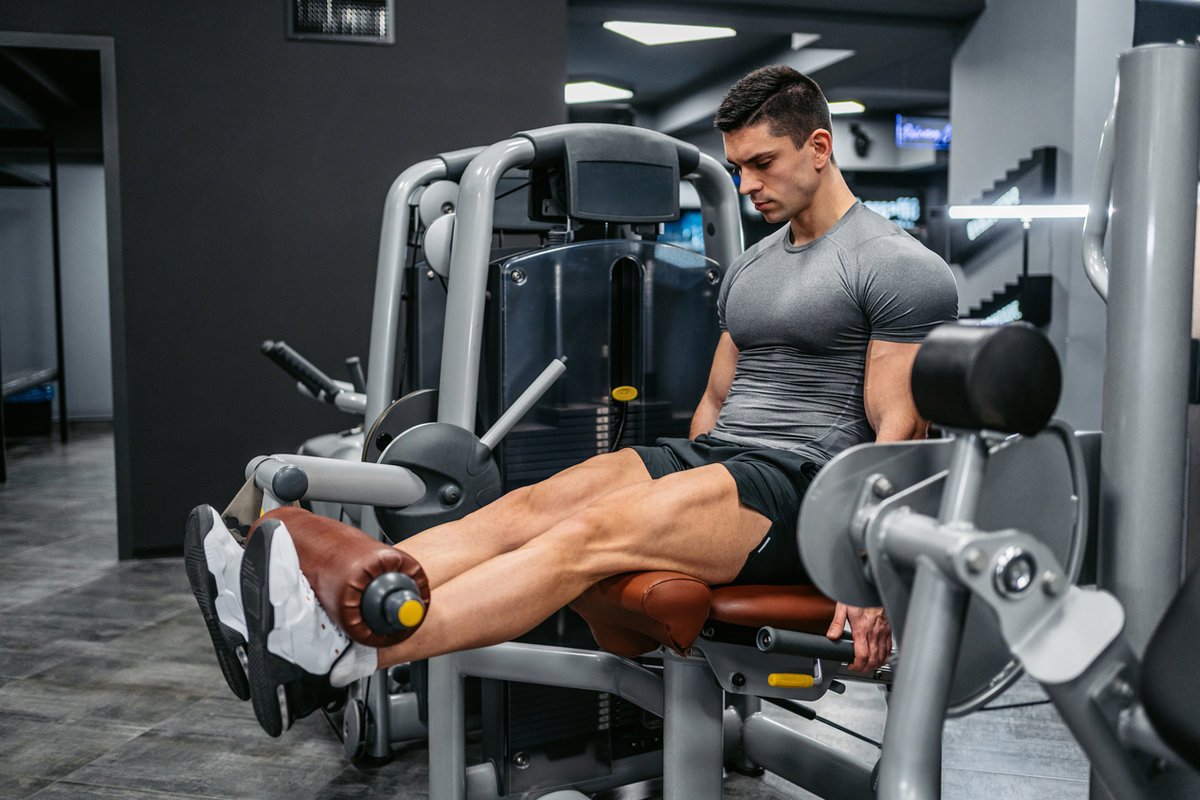
A hard or unfamiliar session can temporarily disturb muscle function, particularly when a movement emphasizes braking or lowering against resistance. Your first demanding set of deep split squats after a break, a heavy downhill run, or a machine session with lots of eccentric work can all leave your legs feeling beaten up. The experience usually includes soreness, reduced force or stiffness, although the pattern varies between people.
Muscle soreness, muscle damage and muscle growth are not interchangeable. Being sore after training does not establish that you created a superior hypertrophy stimulus; feeling little soreness does not establish that nothing happened. Temporary force loss is a functional measurement, while blood creatine kinase is a noisy indirect marker influenced by training status, muscle mass, sampling time and individual biology.
The 2026 trial used a specialized dynamometer to evaluate knee extension at controlled speeds. Such equipment makes the comparison more standardized but less like a real-world series of back squats or leg presses. A result that preserves right-leg eccentric peak torque in this setting may matter for sports science without automatically predicting your deadlift performance on Tuesday.
The most useful question for recreational lifters is therefore practical: how much quality training can you repeat when your legs are recovering? Watch whether normal warm-up weights feel dramatically heavier, whether joint or muscle discomfort changes technique, and whether scheduled sessions remain productive. Do not chase soreness simply to confirm you trained hard.

Equipment Worth Exploring
Explore equipment, accessories and gear from our carefully selected range.



HUSLA Leg Extension Pad
Pad attachment designed to increase usable range of motion on compatible leg-extension machines.

Studio V-Squat
Plate-loaded V-squat machine for supported lower-body strength training.

GymPin Squat Wedges
Non-slip 15-degree squat wedges help elevate the heels for deeper quad-focused squats.

Studio Glute Drive
Plate-loaded hip-thrust machine with supported back pad and adjustable foot platform.


The results: some recovery signals improved, not everything
Across several follow-up measurements, the yeast-and-whey group showed favorable differences from the water group. In men, the blend was associated with lower average muscle soreness across the measurement period, a lower immediate interleukin-6 reading and a smaller immediate loss in selected knee-extension strength measures. Some creatine-kinase comparisons at later time points also favored the blend over water.
However, a long list of measured outcomes raises the chance of apparently exciting findings. The researchers applied statistical corrections across multiple tests. The most defensible acute function result surviving a broader correction was the comparison of right-leg eccentric peak-torque decline between the yeast-whey and water groups in men. Other jump and strength contrasts should be treated as exploratory, not definitive performance promises.
One detail matters for gym programming: smaller strength loss immediately after the damaging protocol does not automatically mean a faster rate of recovery over the next three days. Follow-up analyses did not consistently show that the supplemented groups regained force more rapidly at 24, 48 and 72 hours. Preserving a little more initial function and accelerating the return to baseline are two different claims.
Inflammatory readings need similar caution. Interleukin-6 also participates in normal exercise-related metabolic signaling; a lower blood value does not by itself show that harmful inflammation has been blocked. The absence of a consistent response across all measured cytokines further argues against a sweeping anti-inflammatory claim. Read these findings as a set of specific, limited signals rather than one universal recovery score.

Bodybuilding Shirts & Workout Gear
Bodybuilding shirts, tanks and gym gear for lifters chasing muscle, size, symmetry and the pump.

Funny Brotein Shake Gym | Workout Sweater For Bros & Li T-Shirt
Bring “Brotein Shake” humor to your everyday gym style.

Bro Protein Sweater & Fans Meme T-Shirt
Show some gym-day personality with “Gym Bro Protein”.

Bro – Protein Tub Meme , & Fans – Protein T-Shirt
Bring “Gym Bro” humor to your next gym day.

Funny Brotein Bar Gym | Workout Sweater For Gym Bros & T-Shirt
Add a playful “Brotein Bar” touch to your casual rotation.

Protein Monster Decal Protein Lovers, & Bros Sticker
Stick a little “Protein Monster” humor on your favorite gear.

with Pink Protein Shaker Design | Workout Jumper T-Shirt
Keep things casual with a little “with Pink Protein Shaker Design” attitude.

Funny Protein Shaker Bottle : Gym Meme Pullover For Fit T-Shirt
Keep things casual with a little “Protein Shaker Bottle” attitude.

Everything Hurts And I'm Hungry – Motivation Lifting T-Shirt
Show some lifting attitude with a playful “Everything Hurts And I'm Hungry” tee.

Dino Sore Dinosaur With Sore Muscles Meme Vest Tank Top
Your gym-day look, with a playful “Dino Sore” twist.

Off-Season Rest Day Sweater & Bros Meme T-Shirt
For laid-back days and powerlifting humor: “Off-Season Rest Day”.
Did yeast protein outperform ordinary whey?
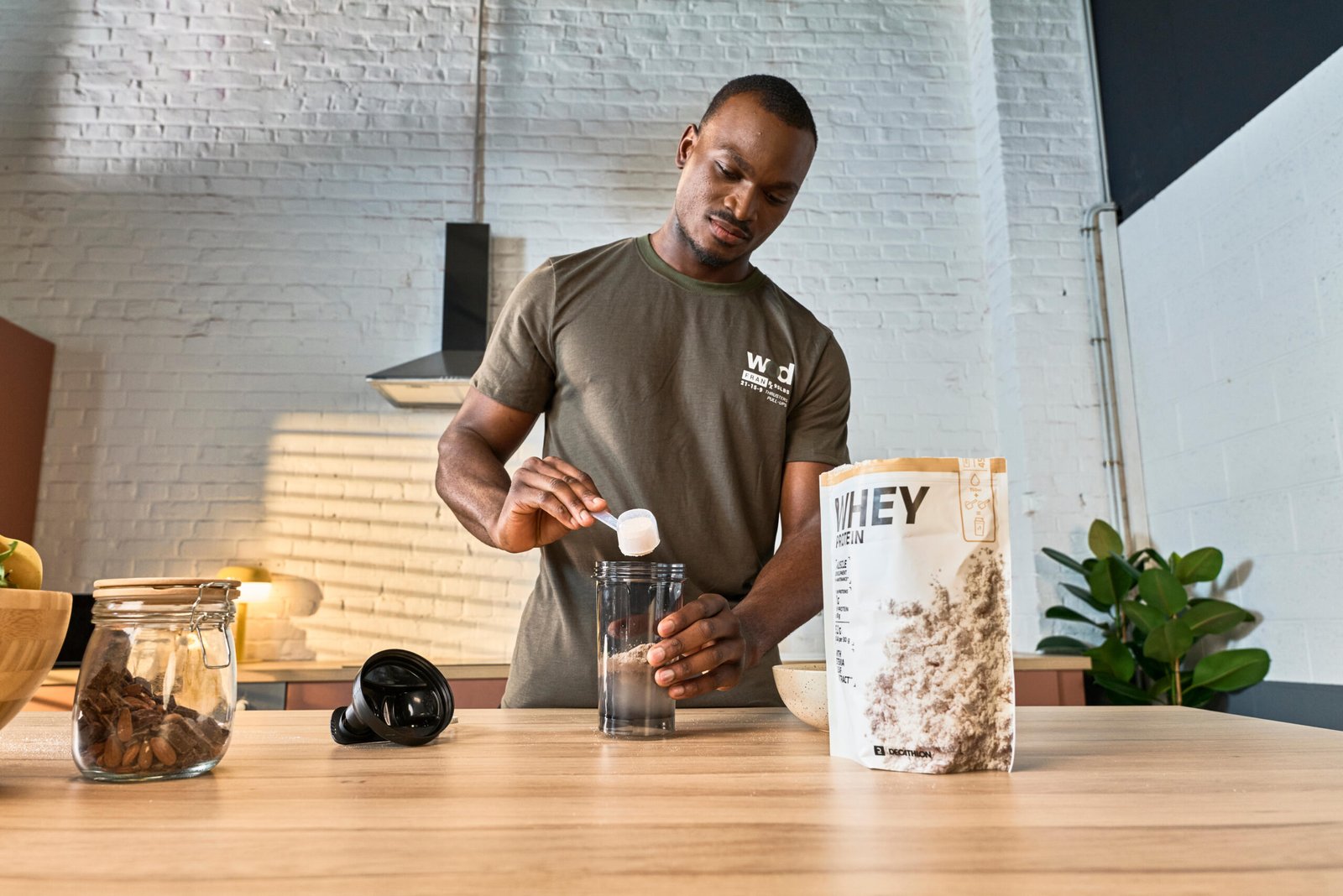
This is the headline question for anyone already using a whey shake. The two protein interventions supplied approximately equal total protein and comparable calculated energy. The blended formulation replaced part of the whey-derived protein with yeast-derived protein; it was not a direct test of yeast protein alone against whey alone.
The broad pattern of recovery outcomes with the blend was similar to the whey-only group’s pattern. Most direct blend-versus-whey comparisons did not demonstrate a clear advantage. One eccentric-strength contrast favored the blend in an initial analysis, but the more stringent correction made that finding exploratory. It would be misleading to advertise this trial as proof that a yeast blend is a better recovery supplement than conventional whey.
Nor does the experiment settle long-term effects on muscular size, strength progression, protein synthesis or sports results. There was one deliberately damaging exercise session and several days of observations, not months of progressively overloaded training. The sample was also too small to establish a reliable superiority finding across sexes and athletic disciplines.
Yeast protein is nevertheless worth watching as an alternative ingredient. Microbial fermentation offers a different protein-production route, and blended foods may be attractive for practical formulation reasons. Yet digestion rates, cost, product taste, long-term tolerability and environmental claims depend on the actual product and were not tested as outcomes here. If you already tolerate whey and meet your total protein needs, there is no strong reason to switch based on these data alone.
How much protein do you actually need after training?
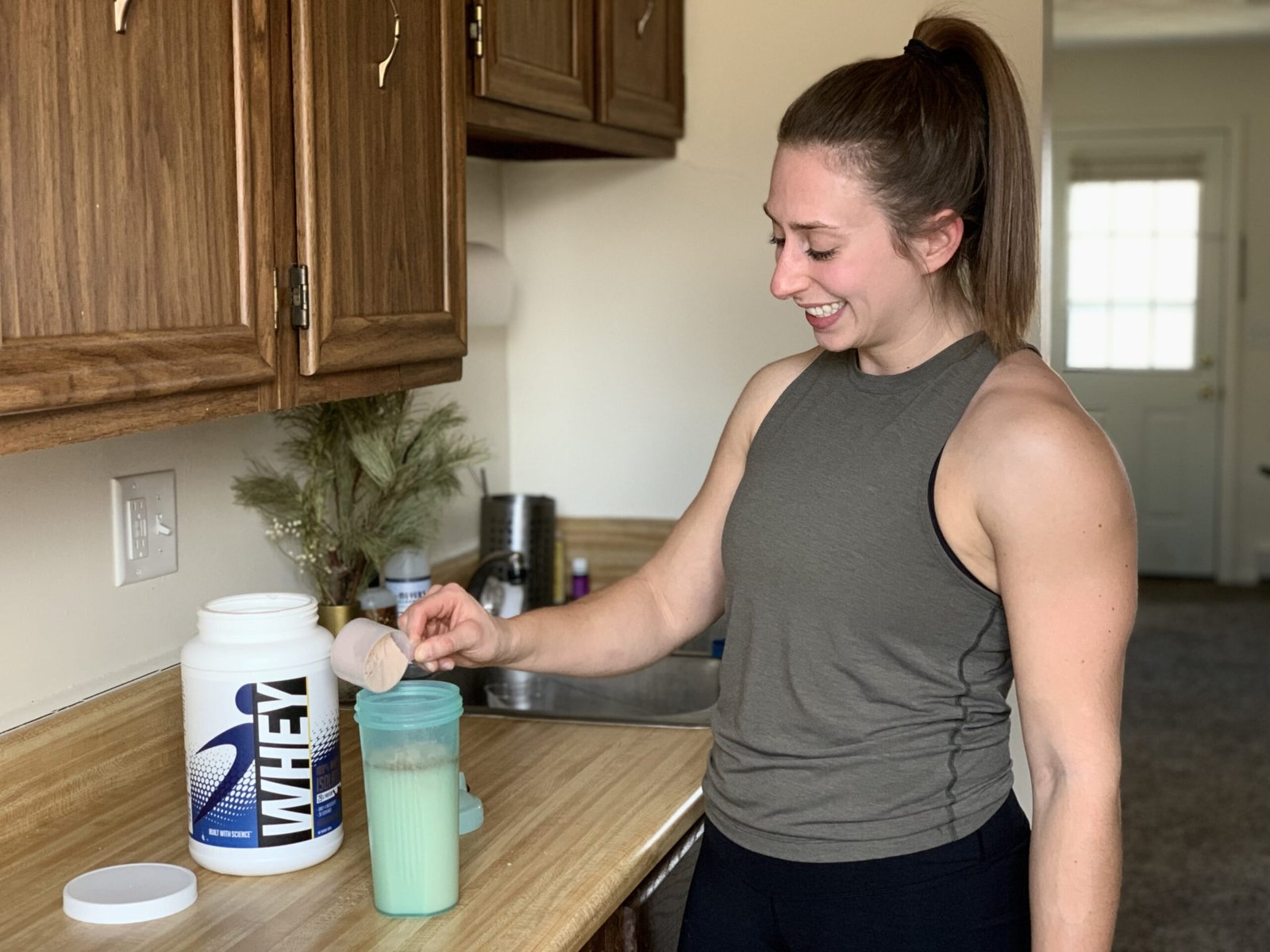
The athletes in this study were already eating about 1.2 grams of protein per kilogram of body weight daily on average before the supplements. Adding the study’s 0.9 grams per kilogram brought estimated totals close to 2.1 grams per kilogram for the supplemented groups. That is a high overall intake, not a standard requirement for every lifter and not proof that an extra 72 grams is necessary for an 80-kilogram trainee.
For many resistance-training adults, a sensible daily starting range is roughly 1.4 to 2.0 grams per kilogram, adjusted for body composition, training load, calorie intake and preferences. An 80-kilogram lifter might therefore aim for approximately 112 to 160 grams of protein across meals. Athletes dieting aggressively or with specific sport demands may need different targets; the practical test is whether food intake supports training and recovery over weeks.
Spreading protein across three or four meals can make the target easier to reach. A meal containing roughly 25 to 40 grams of high-quality protein is a convenient example, not a hard ceiling on absorption or a magic timing window. The day’s intake matters far more than whether your shaker was consumed exactly seven minutes after your last set.
Protein can come from ordinary meals: yogurt, eggs, lean meat, fish, legumes, tofu or other combinations that provide adequate essential amino acids. A shake is simply a convenient way to close the gap when a meal would be difficult. If your diet is already sufficient, spending money on ever more powder may add little compared with consistent calories, training progression and sleep.
Equipment Worth Exploring
Explore equipment, accessories and gear from our carefully selected range.


Rubber Hex Dumbbells
Rubber-coated hex dumbbell pairs with a stable shape for home and commercial strength training.


Go-Tone Pro
Portable digital cable trainer with up to 66 lb (30 kg) of adjustable resistance.

VForce Wall Trainer
Space-saving wall-mounted functional trainer with pivoting cable arms and variable resistance ratios.


Cast Iron Kettlebells
Textured cast-iron kettlebells for swings, squats, carries, and full-body training.

Leather Lifting Straps
Padded leather straps support grip during heavy rows, deadlifts and pulling exercises.
Recover faster by managing the next session, not chasing soreness
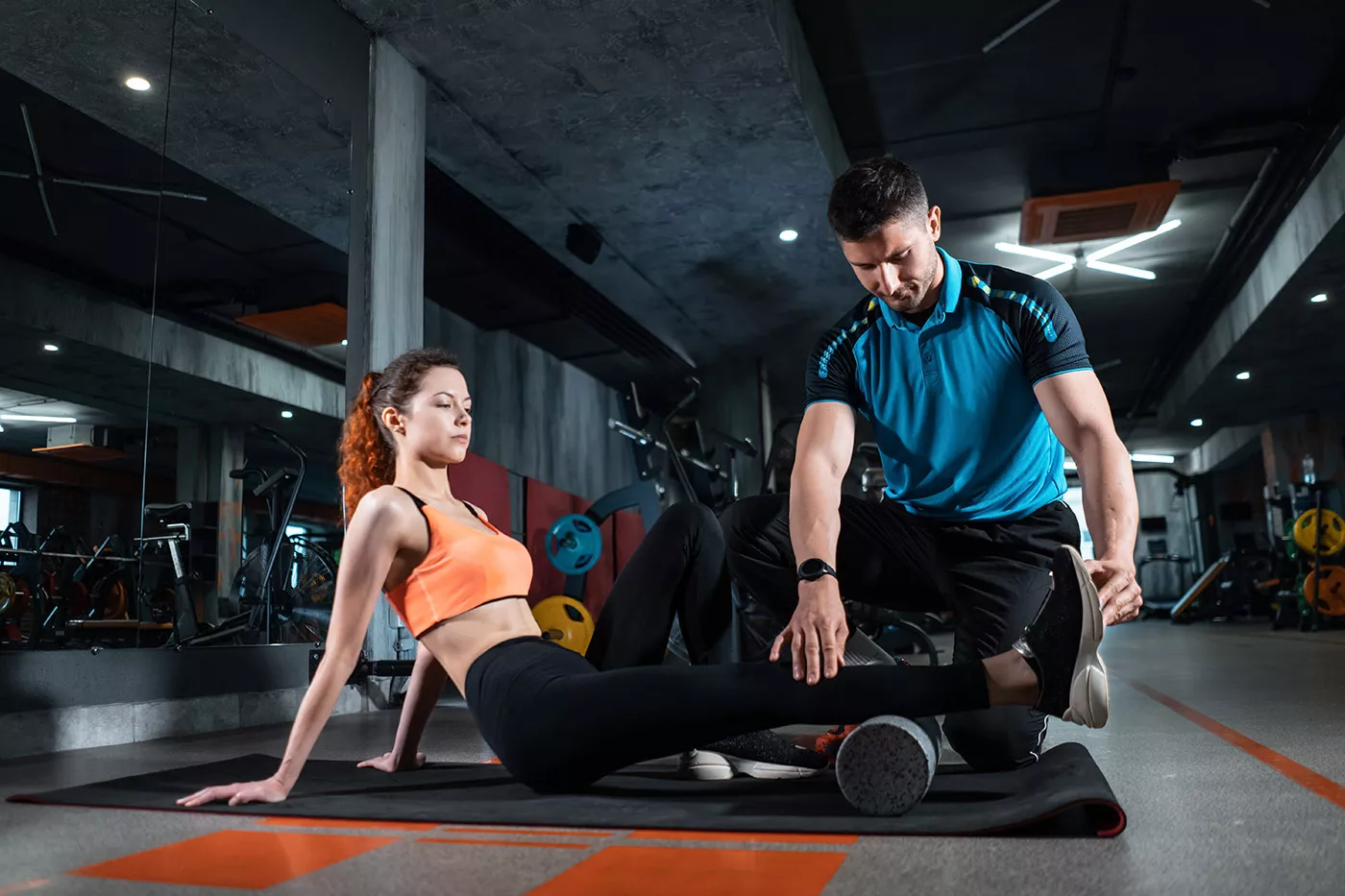
Nutrition is only one part of the recovery equation. If Monday is your hardest quad day, scheduling maximal sprint intervals and heavy squat singles on Tuesday may be poor planning even with a perfect protein intake. You can preserve training quality by separating the most damaging lower-body sessions, using an upper-body day between them or temporarily reducing hard sets after an unfamiliar workout.
Start by noting your normal working weight, rep range and perceived effort. When returning after a layoff, leave a few reps in reserve on the first exposures to high-volume lunges or eccentric-heavy exercises. Increase volume over subsequent sessions rather than going from zero to six sets taken to failure. A consistent progression lowers the surprise element that drives intense soreness.
Simple active recovery can help you feel more comfortable: a walk, light cycling or a brief easy mobility session. Foam rolling may change perceptions of tightness for some people, but it is not proof that damaged muscle tissue has been rebuilt. Choose it if it helps, not as a requirement. Adequate carbohydrates also matter when the next session depends on glycogen-rich high-volume work.
Sleep deserves more attention than exotic ingredient blends. Keep a reasonably consistent schedule and allow enough opportunity for sleep during heavier training blocks. Persistent severe pain, major swelling, marked weakness or dark urine after intense exercise are not routine soreness signals; seek medical care rather than trying to solve them with a supplement.
For a practical two-leg-day week, put the harder squat or leg-press workout early, train another body region the following day, and return for a somewhat different lower-body emphasis after you have regained normal movement quality. Use the same equipment and similar rep targets over several weeks so you can judge progress rather than guessing from how sore you feel after each session.
A sensible buying decision for lifters
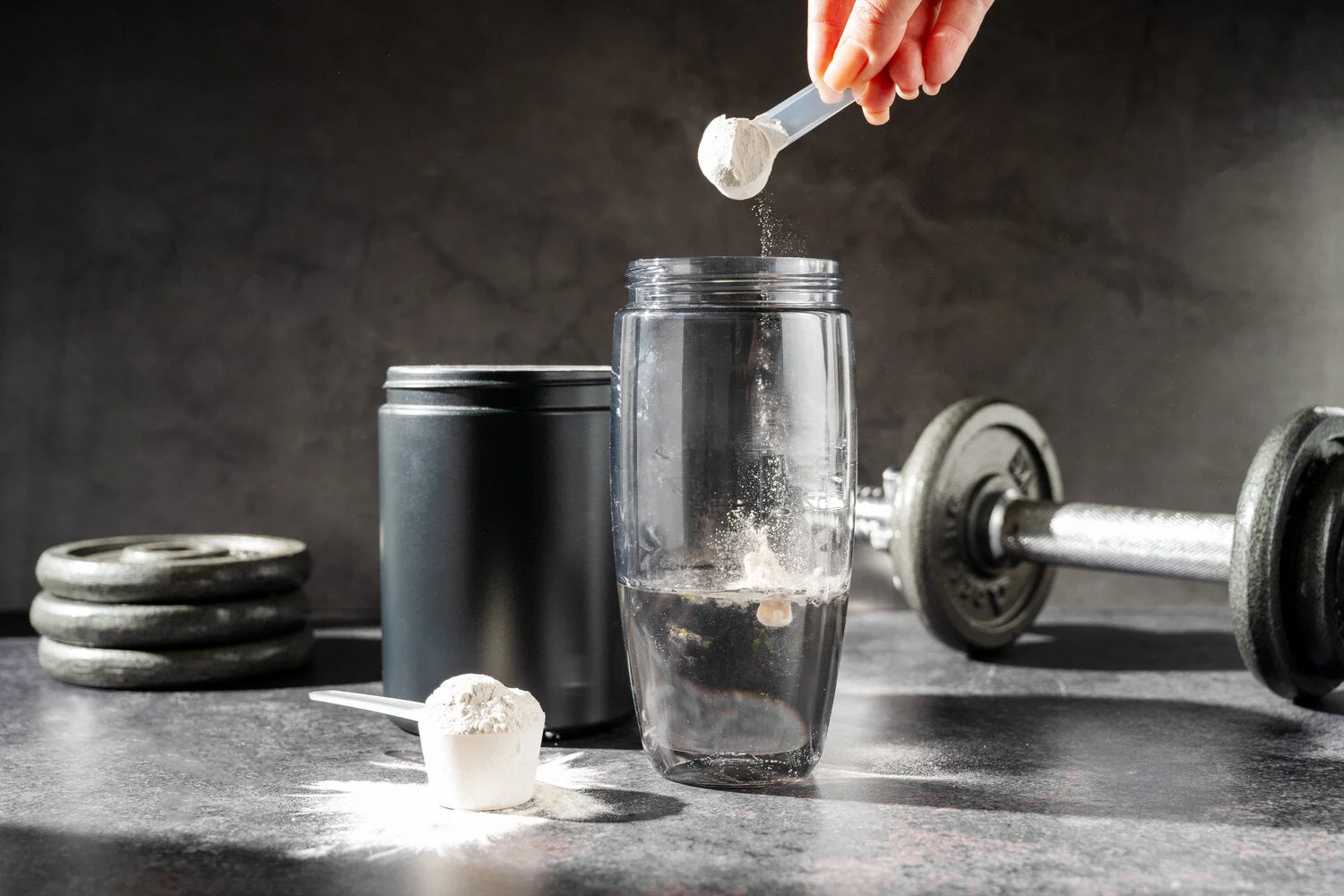
If you already use whey, can tolerate dairy, and hit your food targets, keep the setup that works. This experiment offers no established muscle-building or athletic-performance advantage for paying more for a yeast-whey blend. If you are curious about a blend, compare the actual protein grams per serving, leucine or amino-acid profile when available, allergen information, flavor, independent quality controls and price per usable gram of protein.
Do not mistake yeast-whey for a dairy-free supplement. A formula that still contains whey remains unsuitable for someone who must avoid milk proteins. Anyone with a diagnosed food allergy or medical nutrition restriction should verify ingredients with an appropriate professional. Yeast proteins also differ by species and processing method, so results for one tested formula are not transferable automatically to every product labeled yeast protein.
An easy self-check is to track your training quality and total dietary protein for two to four weeks before changing supplements. Are you achieving target calories? Can you complete your prescribed sets without performance collapsing? Are you sleeping enough and recovering between similar workouts? If any of those basics are missing, they are stronger first interventions than a new ingredient.
The takeaway is encouraging but narrow: a yeast-whey blend produced several favorable recovery observations compared with water in a small athlete study, with the clearest surviving result involving an immediate strength-loss measure in men. The whey-only comparator showed a broadly similar response. For now, consider the blend an interesting possible alternative—not a proven recovery upgrade. Eat enough, train progressively, and judge success by repeatable performance over time.
Funny Gym Shirts & Workout Gear
Funny gym shirts, tanks, hoodies and workout gear for lifters who like training hard.

Protein Shaker Bottle Graphic : Shirt For Protein Lover T-Shirt
Bring “Protein Shaker Bottle Graphic” humor to your next gym day.

Rest Day Sloth – Essential T-Shirt
Show some bodybuilding attitude with a playful “Rest Day Sloth” tee.

Everything Hurts And I'm Dying , , Lifting Meme T-Shirt
Bring “Everything Hurts And I'm Dying” humor to your next gym day.

Simple Man Complex Macros Shirt Lynyrd Skynyrd Rock T-Shirt
Heavy lifts, good laughs, and a little “Simple Man Complex Macros” energy.

Everything Hurts And I'M Tired Duck Meme Vest Lovers Tank Top
Your gym-day look, with a playful “Everything Hurts And I'm Tired” twist.

Protein Bro Supplement Decal Water Bottles & Shaker Sticker
Give your everyday gear a playful “Protein” twist.

Protein Gym Cosmic Graphic , Bodybuilding Workout T-Shirt
Make gym days more fun with “Protein” style.

Fueled By Bacon | Gymbro Workout & Graphic T-Shirt
Rep “Fueled By Bacon” humor in and out of the gym.

Shirt Protein King – Meme & – Top T-Shirt
Heavy lifts, good laughs, and a little “Protein King” energy.

Weights & Protein Shakes Tee
Bring “Heavy Weights and Protein Shakes” humor to your next gym day.