Why preacher curls feel different from standing curls
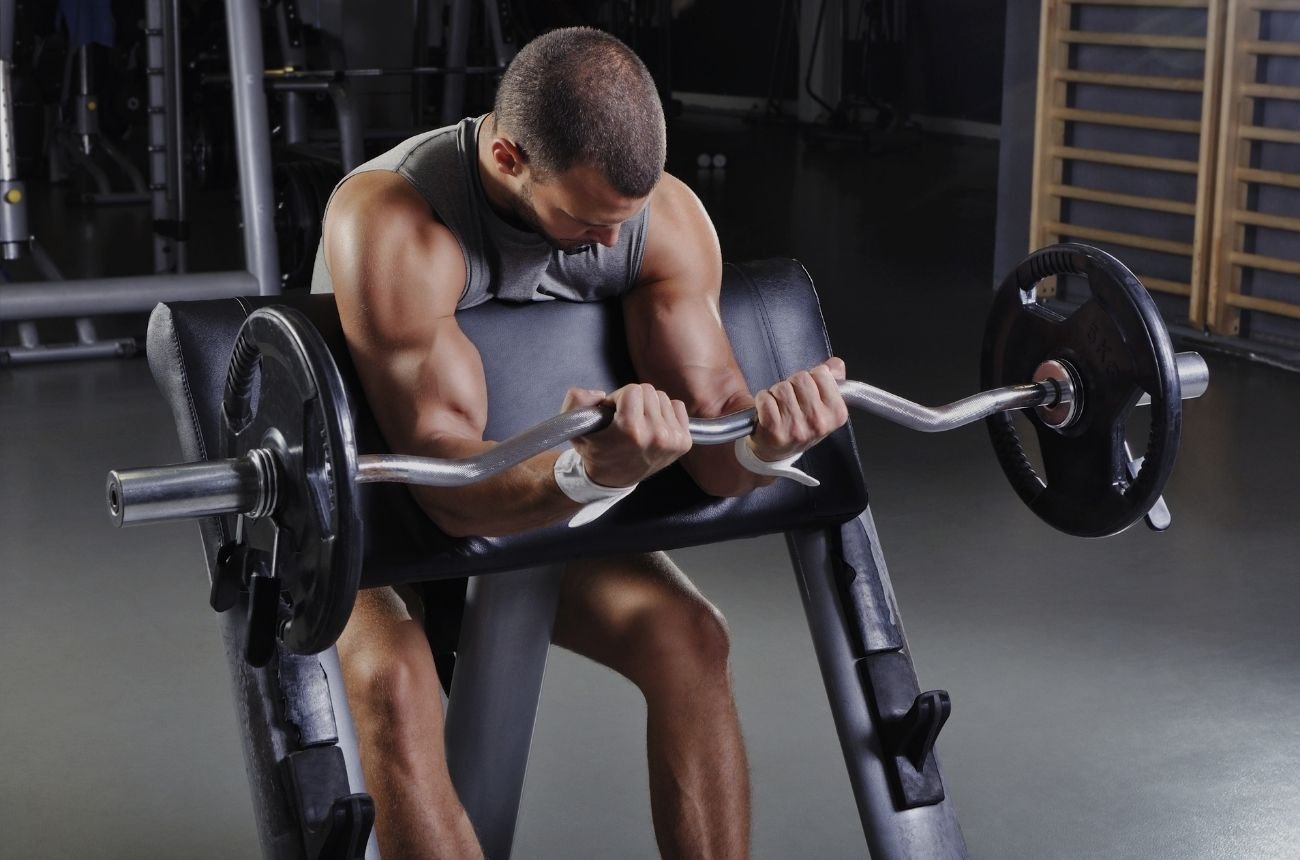
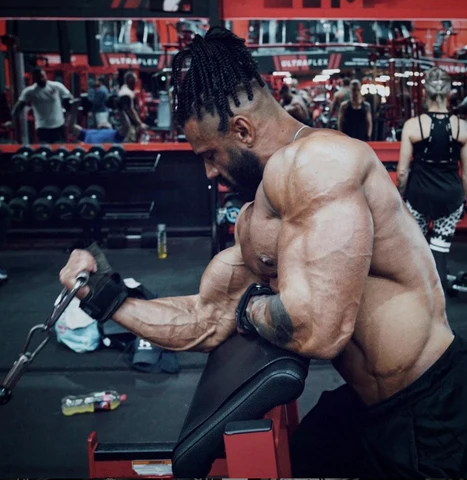
Most biceps workouts contain a curl, but not every curl asks the elbow flexors to work hardest at the same point. A preacher pad supports the upper arms and reduces the temptation to swing the torso. That makes it easier to compare repetitions honestly, particularly when the final few reps get difficult. The biceps brachii helps flex the elbow and supinate the forearm; the brachialis also contributes substantially to elbow flexion. Grip, shoulder angle, forearm position and the external resistance profile all influence how a set feels.
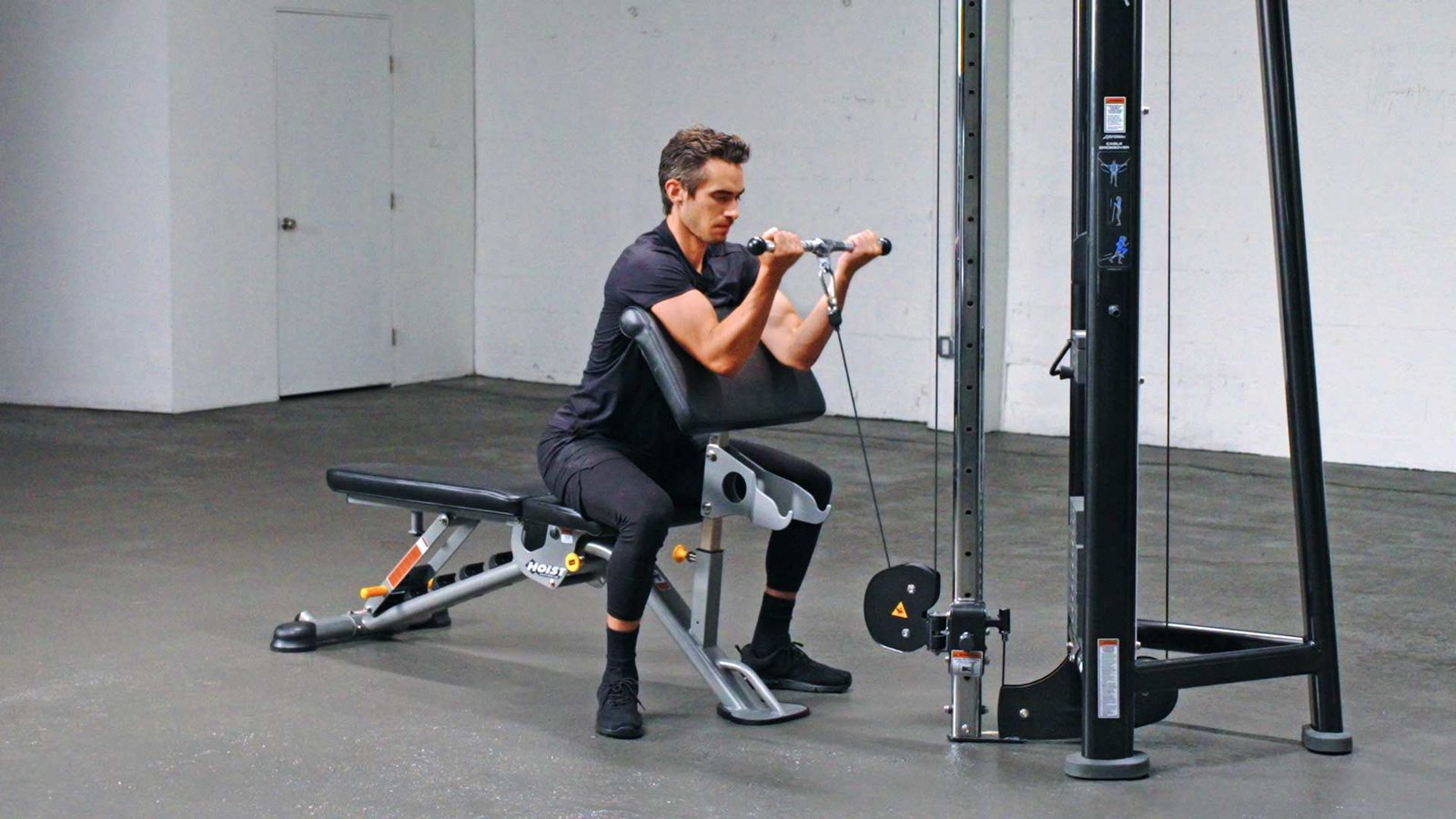
The preacher curl is not automatically a better muscle builder than a standing curl. It is a controlled environment for training elbow flexion. With a free-weight bar, gravity creates a changing moment arm as the forearm rotates. With a cable, the direction of the cable and the pulley location create a different torque curve. Even when the same weight is printed on the machine and plates, the joint does not experience identical resistance. That distinction is more useful than arguing that one tool maintains ‘constant tension’ at every angle.
Treat the exercise as a way to accumulate challenging, repeatable repetitions rather than a contest to curl the largest number. The most productive version is the one you can load progressively without losing elbow position or provoking joint discomfort.
The 35-person experiment: cable versus barbell over ten weeks
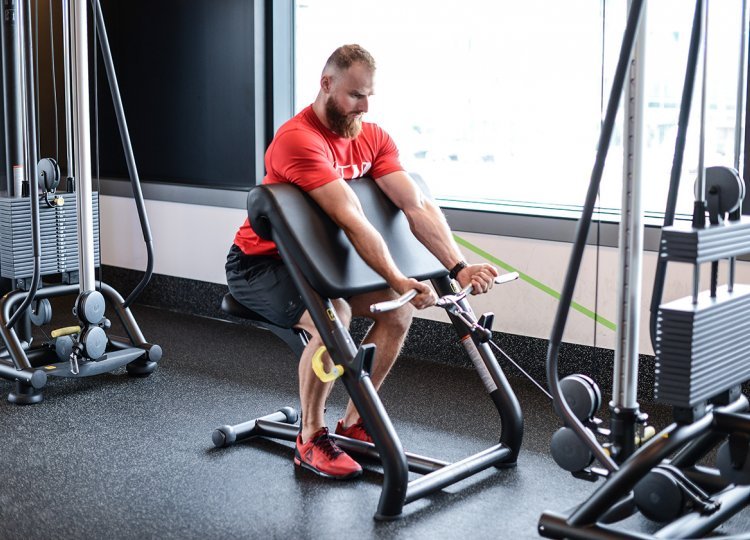
A controlled ten-week experiment compared two preacher-curl setups in 35 young adults, averaging roughly 24 years of age. The cable group included 18 participants and the barbell group 17, with both men and women represented. Participants trained three times weekly, performing three sets of eight to twelve repetitions per session. The cable arrangement placed relatively more torque toward the shortened, flexed-elbow portion of the movement; the barbell setup emphasized a longer-muscle-length portion of the range.
Both groups increased biceps thickness. The reported average changes were approximately seven percent with the cable setup and eight percent with the barbell, without a statistically significant between-group difference in muscle thickness. That is the central finding: neither resistance profile demonstrated a clear overall hypertrophy advantage in this sample over ten weeks. It would be misleading to turn the small numerical difference into a claim that barbells are categorically superior.
Strength testing added a more specific detail. At a near-extended elbow position, the barbell group improved about 39 percent compared with 30 percent in the cable group, with a reported between-group difference at that test angle. At more flexed positions, between-group differences were not clearly demonstrated. The lesson is that strength adaptations can be angle-specific, even when average muscle growth is similar. This is one study with a modest sample and short duration, not a universal prescription for advanced bodybuilders.

Equipment Worth Exploring
Explore equipment, accessories and gear from our carefully selected range.


FID Bench MAX
Adjustable bench offering flat, incline, and decline positions + adjustable headrest.



The resistance curve matters more than the machine label
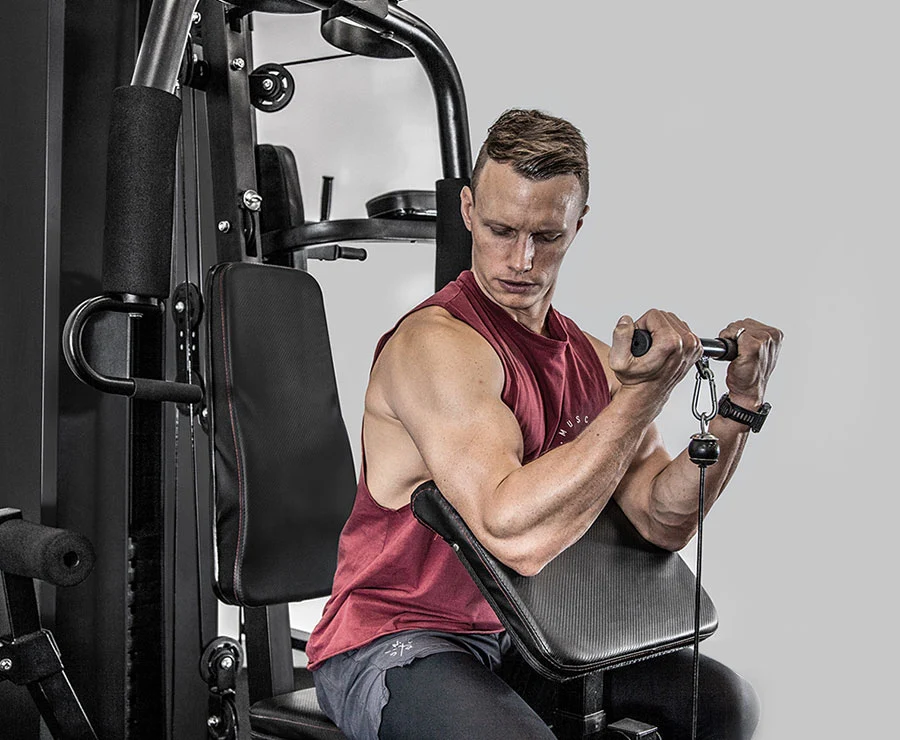
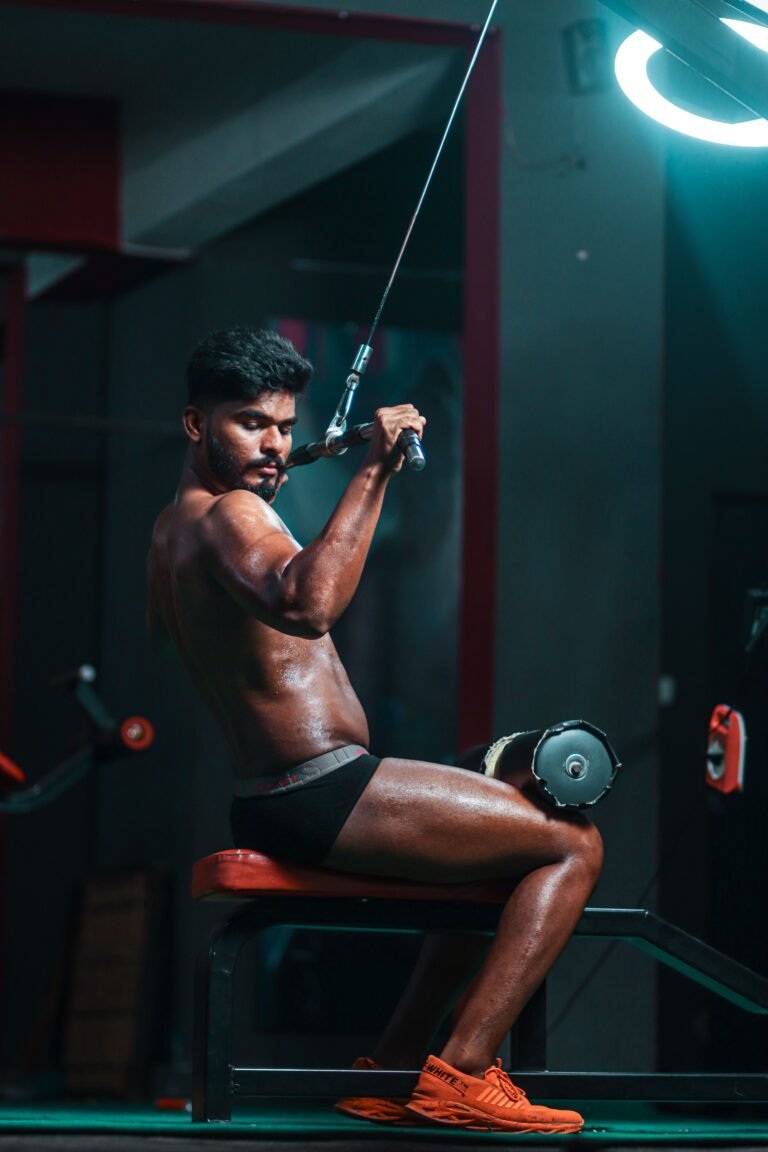
Imagine the forearm moving from almost straight to strongly bent while the upper arm stays supported. A free-weight bar always pulls vertically downward, but the horizontal distance from the elbow to that line of force changes. A low cable pulls toward its pulley, so moving the pulley, bench or athlete can shift the point of greatest demand. A cable does not magically produce the same torque at the elbow from the bottom to the top. Cable tension may be present throughout the repetition while the actual joint torque still rises and falls.
This explains why two preacher stations can feel completely different. A straight bar attached to a low pulley, an EZ bar attached to a cable, and a plate-loaded preacher machine can all produce different force curves. The height and angle of the pad, seat position and attachment path add more variation. When you compare your own training logs, do not assume that ten plates on one station equal ten plates on another.
For a practical test, film a light set from the side. Keep the upper arm stationary and note which third of the motion feels hardest without bouncing. That observation tells you more about your specific setup than the label ‘cable’ or ‘barbell.’ Choose the setup that loads the range you want while allowing controlled reps.

Bodybuilding Shirts & Workout Gear
Bodybuilding shirts, tanks and gym gear for lifters chasing muscle, size, symmetry and the pump.

Big Guns Rock Gym Funny Workout Muscle Shirt Who Love R Tank Top
Bring “Big Guns Rock” humor to your next lifting session.

Welcome to the Gun Show Tee
Show some rock-and-lifting attitude with a playful “Welcome to the Gun Show” tee.

Big Guns Rock Gym Funny Workout Decal Who Love Rock Mus Sticker
Give your everyday gear a playful “Big Guns Rock” twist.

Love Gun Big Biceps Sweatshirt
Bring “Love Gun Big Biceps” humor to your everyday gym style.

Shirt – Guns N Poses – Rock Music & Huge Arms Meme & T-Shirt
Heavy lifts, good laughs, and a little “Guns N Poses” energy.

Paradise Lifty Funny Rock & Roll Gym – Guns and Roses M Tank Top
Add some lifting attitude to training with “Paradise Lifty Funny Rock & Roll”.

Top Guns Muscle Shirt Huge Muscles Air Swole Meme Top T-Shirt
Make gym days more fun with “Top Guns” style.

Muscle Mountain – Bicep Mountain Meme Hooded Pullover Hoodie
Bring “Muscle Mountain” gym humor to lazy days and post-workout plans.

Sweet Gains O' Mine – Rock Music Fitness Decal for Body Sticker
Put “Sweet Gains O' Mine” gym humor on your laptop, bottle, or gym gear.

What other biceps studies add—and what they cannot prove
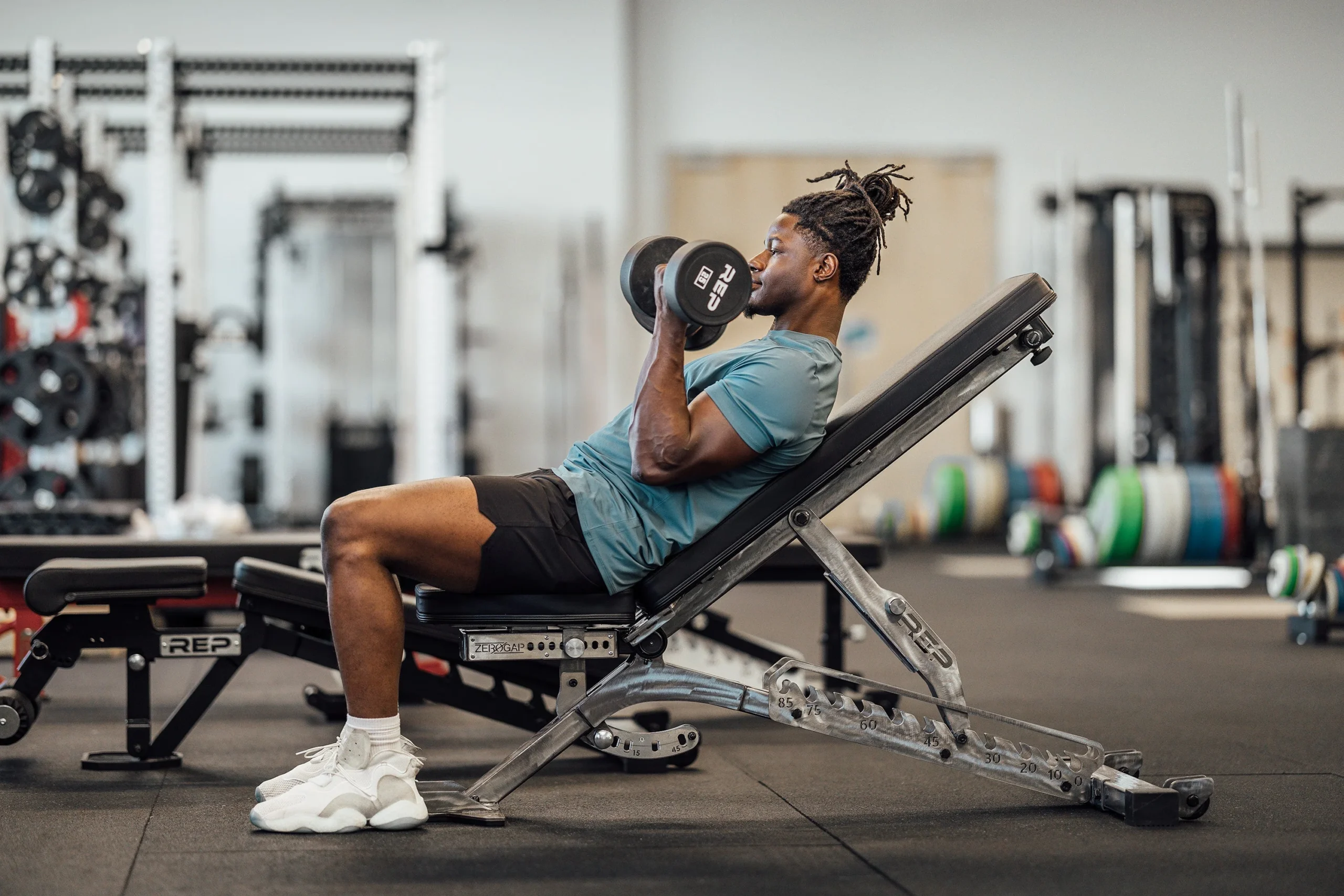
Separate research comparing incline dumbbell curls with preacher curls has reported that different regions of the elbow flexors can respond differently. In an eight-week randomized trial involving 63 young women, incline curls produced a larger increase at a more proximal measurement site, while preacher curls produced a larger increase closer to the elbow. Strength improvements also tended to favor the movement used in training. A different nine-week comparison in recreationally trained women observed a distal-arm increase within the preacher group, but its between-group findings were less decisive.
Those results do not mean that a lifter can precisely sculpt the upper and lower halves of a single biceps head. Ultrasound measurements at different arm positions can capture contributions from more than one elbow-flexor muscle, and the studies also change shoulder angle, resistance curve or both. They support exercise variation as a plausible tool, not a guarantee of spot-specific growth.
Likewise, muscle growth depends on the broader program: adequate effort, enough recoverable weekly work, consistent range of motion, food and sleep. A curl variation cannot rescue a training plan in which loads never progress or sets stop far short of meaningful effort. If your arms already grow with a barbell, the evidence gives no reason to abandon it. If your elbows prefer cables, there is no evidence that you are sacrificing meaningful size by using them.
Technique: set the pad, elbows and grip before adding weight
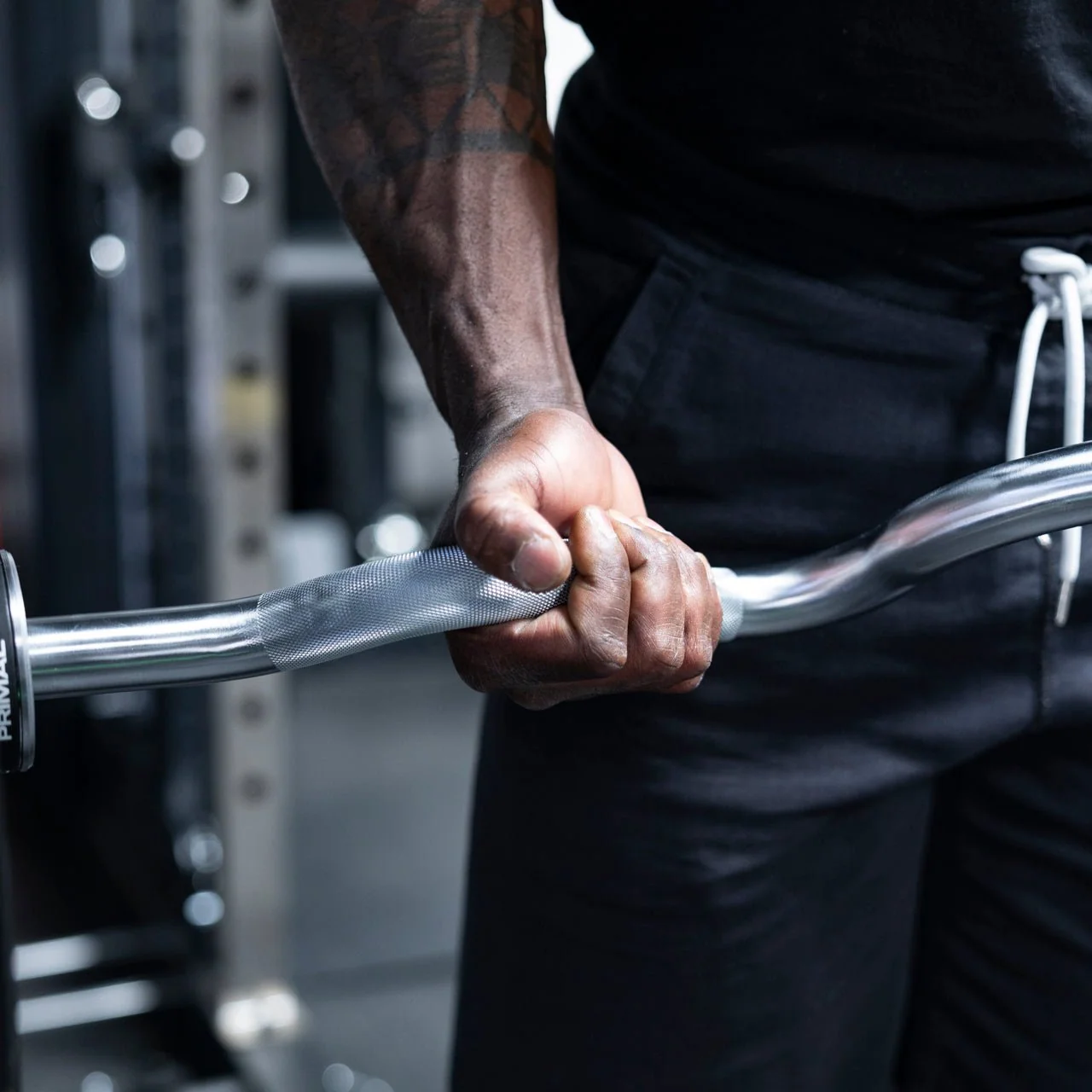
Start by adjusting the preacher pad so the upper arms are supported comfortably and the shoulders do not have to shrug forward to reach the bar. Place your feet firmly, keep the torso quiet and use a grip width that lets the wrists remain reasonably neutral. An EZ curl bar can be more comfortable than a straight bar for some lifters, but it is not a treatment for an irritated elbow. A cable attachment should track smoothly without pulling the hands awkwardly into the frame.
Lower with control and avoid dropping into the bottom position. A deep elbow angle can be useful when tolerated, yet bouncing from a fully straightened elbow under a heavy load is an unnecessary gamble. Maintain tension and reverse smoothly rather than snapping the joint. Curl until you can no longer maintain the chosen upper-arm position, not until the shoulders roll forward to finish the rep.
Use a load that permits about eight to fifteen clean repetitions with one to three repetitions left in reserve on most sets. If the last rep requires the torso to lift off the pad, the load is too high for that execution standard. When discomfort appears, first reduce load and check the setup; persistent pain warrants professional assessment rather than forcing through it. For a single-arm variation, match range and effort across both sides before chasing symmetry with extra weight.
Equipment Worth Exploring
Explore equipment, accessories and gear from our carefully selected range.
VOLTRA
Compact digital cable trainer with smooth, adjustable resistance.

Go-Tone Pro
Portable digital cable trainer with up to 66 lb (30 kg) of adjustable resistance.

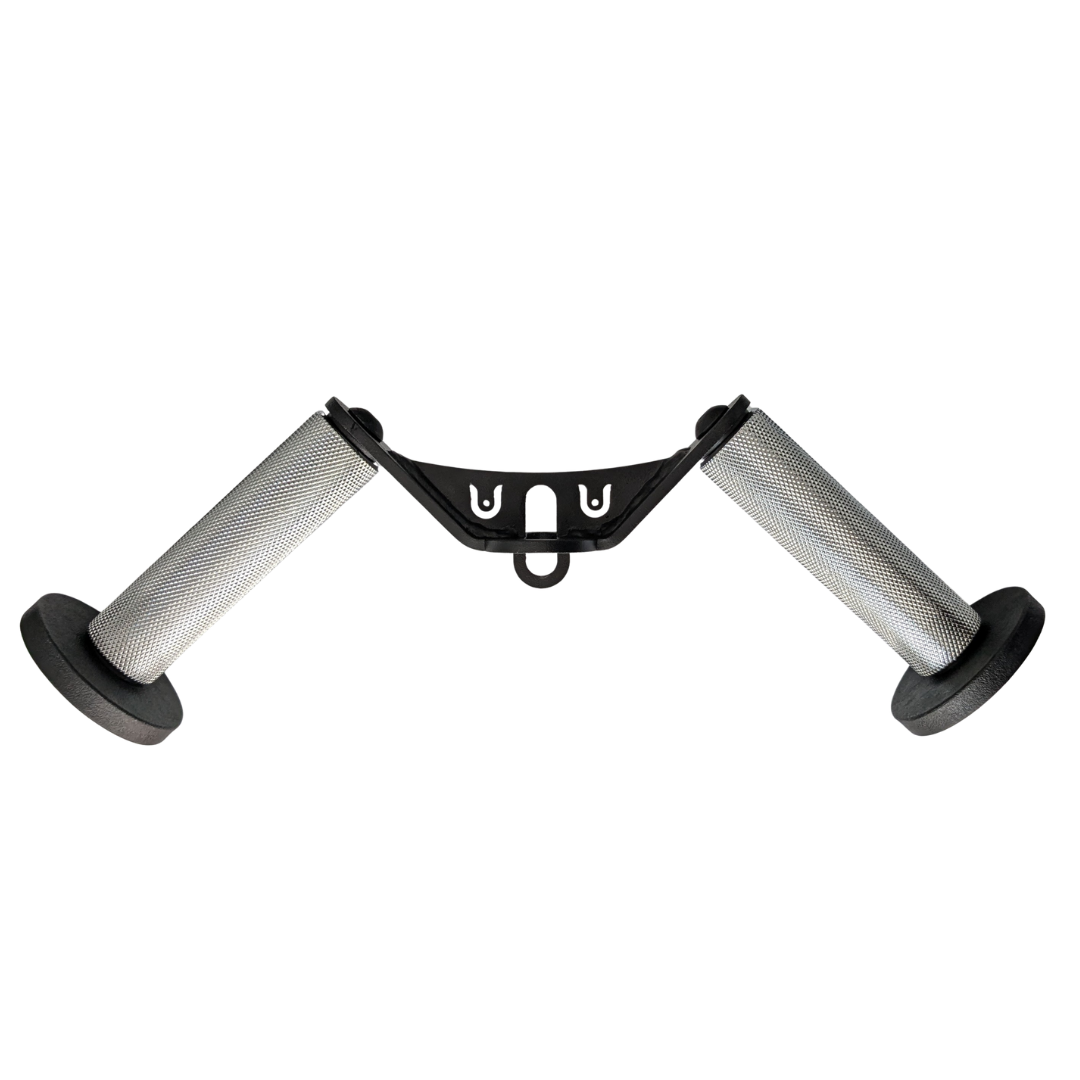
W Grip
Angled cable grip for comfortable rows, pushdowns, and curls.

GymPin Ergo Handles
Pair of ergonomic cable handles shaped for comfortable triceps and pulling exercises.
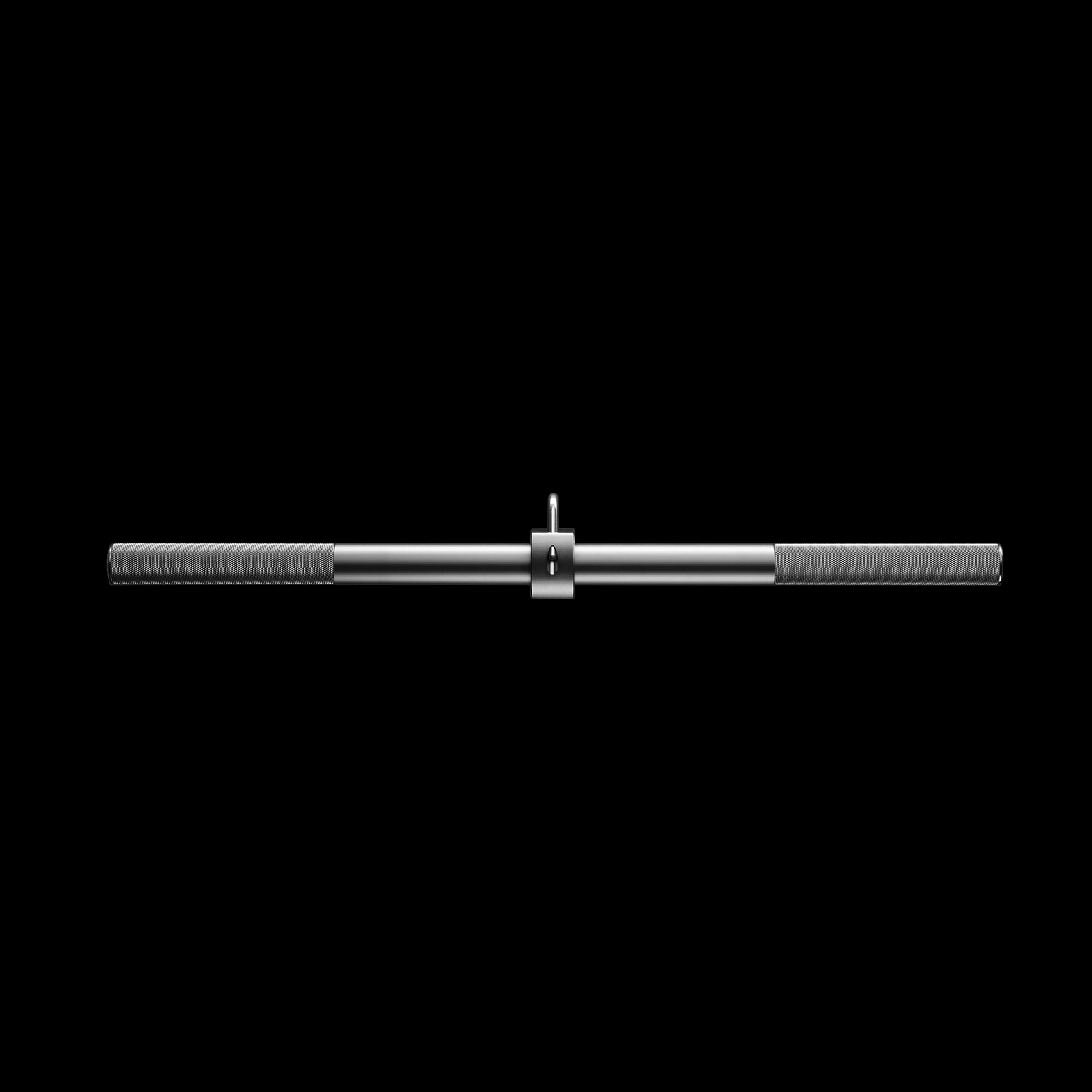

GymPin D Handle Bar
Multi-use steel D-handle bar for cable rows, pulldowns and other cable exercises.


Original GymPin
Adds Olympic plates to compatible cable-machine weight stacks for extra resistance.
Cable, dumbbell, barbell or machine: choose by constraints
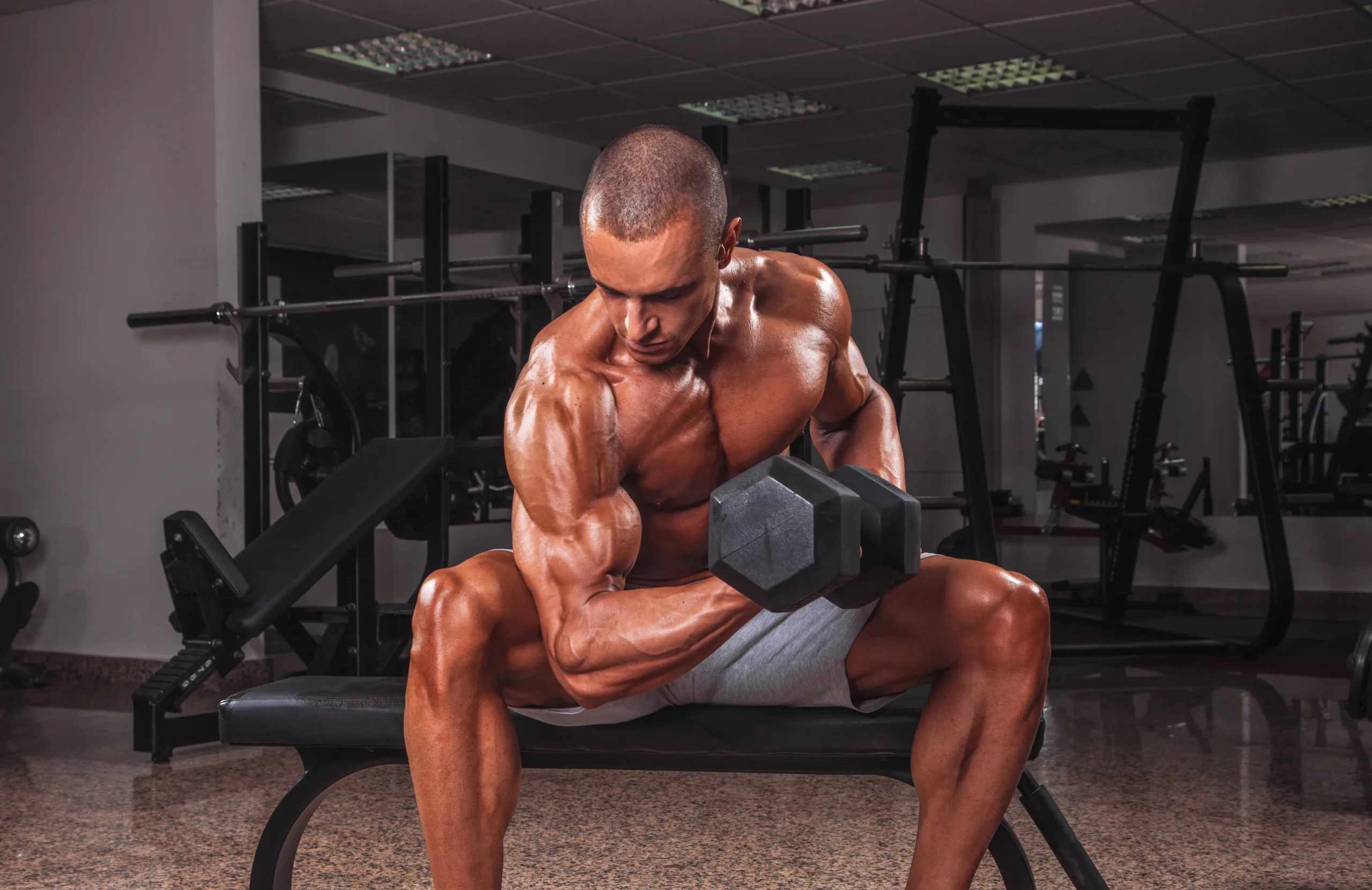
A barbell or EZ bar is simple to load, easy to track and practical in a gym with a dedicated preacher station. A cable setup offers convenient small increments and quick attachment changes. A plate-loaded or selectorized preacher machine can be especially stable, though its lever design may not match either of the two experimental setups. Dumbbells allow each arm to work independently and can make it easier to find a comfortable wrist path.
If you train in a compact space, an adjustable bench can sometimes be positioned to support the upper arm, but its pad geometry may not replicate a purpose-built preacher bench. Use light weights to establish a secure, stable setup first. A digital cable trainer can offer flexible resistance placement; the actual torque profile still depends on cable angle and body position. Avoid turning a general biceps guide into a shopping requirement: no one needs four different curl stations to grow.
Prioritize stability, the ability to progress in small steps, and a setup you can repeat. A simple combination of one supported curl and one standing or incline variation can cover plenty of useful training. More equipment is worthwhile only when it solves a real limitation such as uncomfortable wrists, inconsistent loading, inadequate increments or difficulty maintaining form.
A six-week biceps plan you can actually track
Train direct biceps work twice weekly after your heavier pulling movements, leaving at least one recovery day between demanding sessions. Begin with six direct sets per week if rows and pull-ups already contribute meaningful elbow-flexor work. More experienced lifters may benefit from additional sets, but increasing volume is not automatically better; progress and recovery should determine the next step. Use the same equipment and range of motion for the full block so the numbers remain comparable.
Session A: perform three sets of eight to twelve barbell or EZ-bar preacher curls with controlled lowering. Session B: perform three sets of ten to fifteen cable preacher curls or single-arm cable curls. Rest around ninety to one hundred fifty seconds between challenging sets. Finish each set when the next repetition would require obvious swinging or loss of the intended range. Record load, reps, effort and any elbow irritation.
In weeks one and two, establish a repeatable load and leave roughly two reps in reserve. In weeks three and four, add repetitions before weight; when all sets reach the top of the rep range cleanly, increase the load by the smallest practical increment. In week five, keep the same exercise order and try to beat one earlier performance metric without changing technique. In week six, repeat the week-one setup and compare reps at the same load, or the load handled for the same reps and effort.
Do not compare cable stack numbers directly with free-weight plates. Instead, compare each exercise against its own baseline. If elbows feel beat up, trim a set or reduce loading before adding another curl variation. If progress is steady and recovery is good, keep the simple plan running. The most defensible takeaway from the research is not that one preacher curl wins; it is that both can build biceps, with some strength advantages reflecting the exact angles trained.
Funny Gym Shirts & Workout Gear
Funny gym shirts, tanks, hoodies and workout gear for lifters who like training hard.

Dwight Schrute Gun Show The Office Meme Sweater Bicep T-Shirt
Bring “Dwight Schrute Gun Show” humor to your everyday gym style.

Gym Dost Thou Even Curl Medieval Knight Bicep Decal & B Sticker
Give your everyday gear a playful “Dost Thou Even Curl Medieval Knight Bicep” twist.

Ha Ha Hammer Curls Joker Gym Funny Workout Pullover Hoo Hoodie
Bring “Ha Ha Hammer Curls Joker” gym humor to lazy days and post-workout plans.

Gym If You're Reading This It's Arm Day Drake Parody & T-Shirt
Bring “If You're Reading This It's Arm Day Drake” humor to your next gym day.

Sweet Gains O' Mine Rock Music Gym – Funny Muscle Shirt Tank Top
Add some rock-and-lifting attitude to training with “Sweet Gains O' Mine Rock Music”.

Biceps of the Caribbean Gym | Funny Pirate Workout Swea T-Shirt
Bring “Biceps of the Caribbean” humor to your everyday gym style.

For Whom The Bell Curls Dumbbell Metallica Workout Deca Sticker
Bring “For Whom The Bell Curls” attitude to your water bottle or laptop.

Big Gun Hooded Pullover AC DC Rock Big Arms Fans Hoodie
Stay casual and show some metalhead attitude with “Big Gun”.

GymTok – TikTok Parody Bicep Workout Vest for Gymbros a Tank Top
Bring “GymTok” humor to your next lifting session.

Gundalf The Grey Big Guns – Lord Of The Rings Meme Pull T-Shirt
Keep things casual with a little “Gundalf The Grey Big Guns” attitude.