Why the landmine changes the way a barbell feels
Anchor one end of a barbell in a landmine pivot and the free end moves in an arc. This creates a useful middle ground between a free barbell and a fixed machine. You still produce force and control your body, but the bar has fewer directions in which it can wander. Presses travel diagonally rather than straight overhead, rows follow a predictable curved path, and squats keep the load in front of the torso instead of across the shoulders.
Those changes matter because the shoulders, hips and trunk solve a slightly different problem on each repetition. A one-arm press challenges you to resist twisting. A front-loaded squat demands leg drive while the hands stabilize the bar. A row challenges the upper back and the hip hinge at the same time. The anchored bar can make some patterns easier to learn, but it does not automatically make them safer or more effective for muscle growth. Appropriate range, effort and repeatable technique still determine the outcome.
The seven movements in this guide are the standing single-arm press, half-kneeling press, T-bar row, landmine squat, reverse lunge, rotation and push press. You do not need all seven in one workout. Select the few that serve your goals, then make them measurably better. Landmine work is a useful addition to training, not a reason to abandon effective squats, rows and overhead presses.
Press with a quiet trunk instead of a backbend
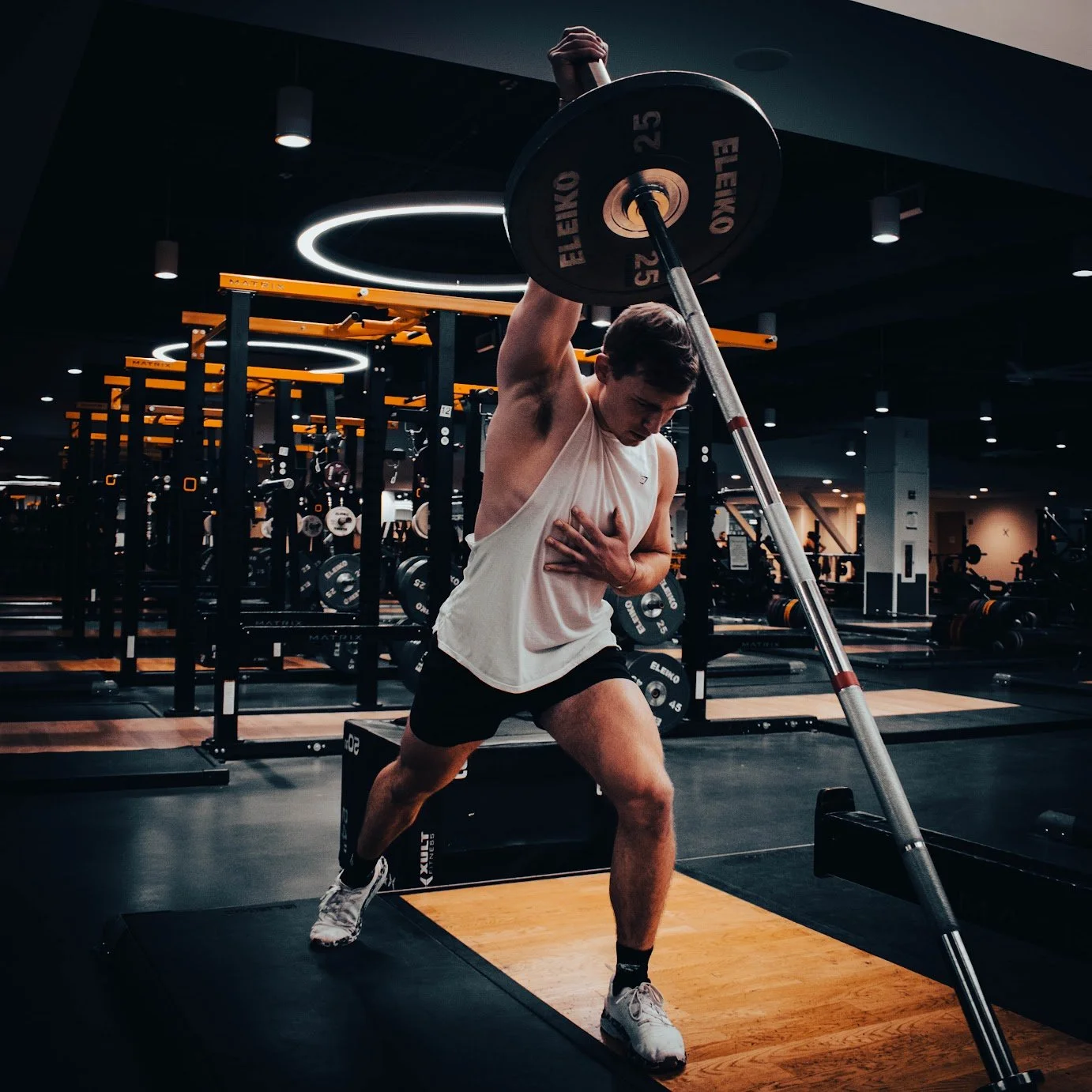
Move 1: standing single-arm landmine press. Set the free end near shoulder height and take a balanced stance. Grip the sleeve securely, brace the abdomen and keep the wrist reasonably straight. Press upward and slightly forward along the bar’s natural arc. Allow the shoulder blade to move as the arm reaches, then lower under control until the hand returns near the shoulder. Begin with two or three sets of six to ten repetitions per side. If the ribs flare, the back arches or the torso twists, reduce the load.
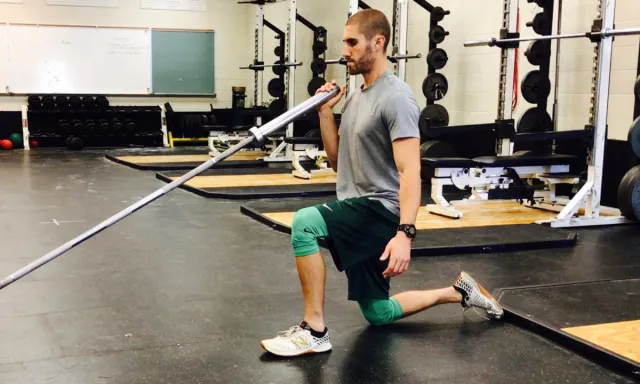
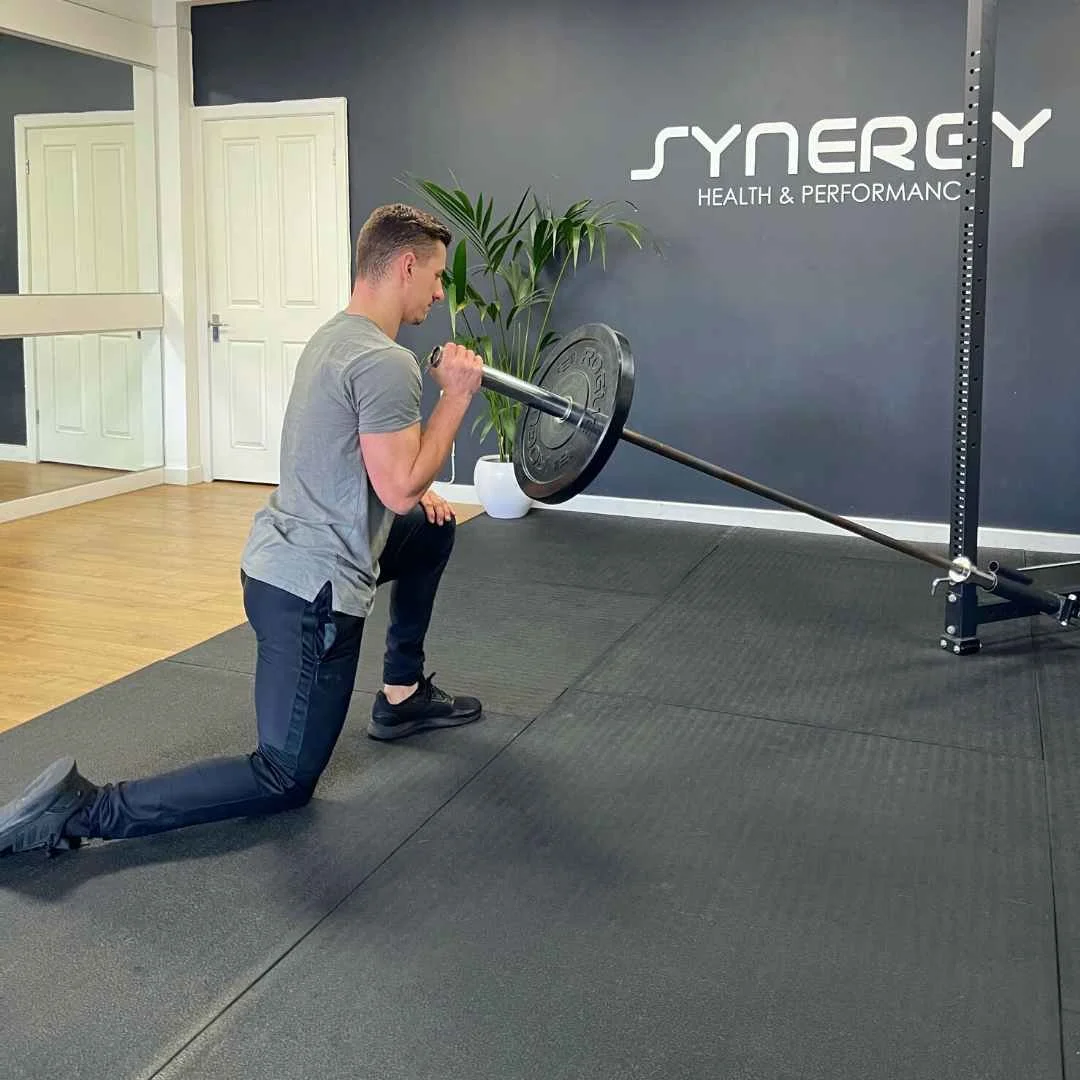
Move 2: half-kneeling landmine press. Put one knee on a pad and the opposite foot forward, roughly hip-width apart. Keep the pelvis level and the front foot planted. Try pressing with the kneeling-side hand, then compare with the other hand if it feels natural. The kneeling position can make excessive lumbar extension easier to notice, but it does not magically remove it. Keep the trunk quiet and avoid chasing an exaggerated forward lean at lockout.
A diagonal press can feel more comfortable than a strict overhead barbell press for some lifters, but it is not a guaranteed treatment for shoulder pain. Comfort depends on anatomy, load, range and the underlying issue. For hypertrophy, accumulate challenging sets with stable technique and record actual repetitions. For power, use lighter weights that move quickly without losing control. Landmine pressing complements conventional pressing; it does not prove one tool is universally best.
Make the T-bar row a real back exercise
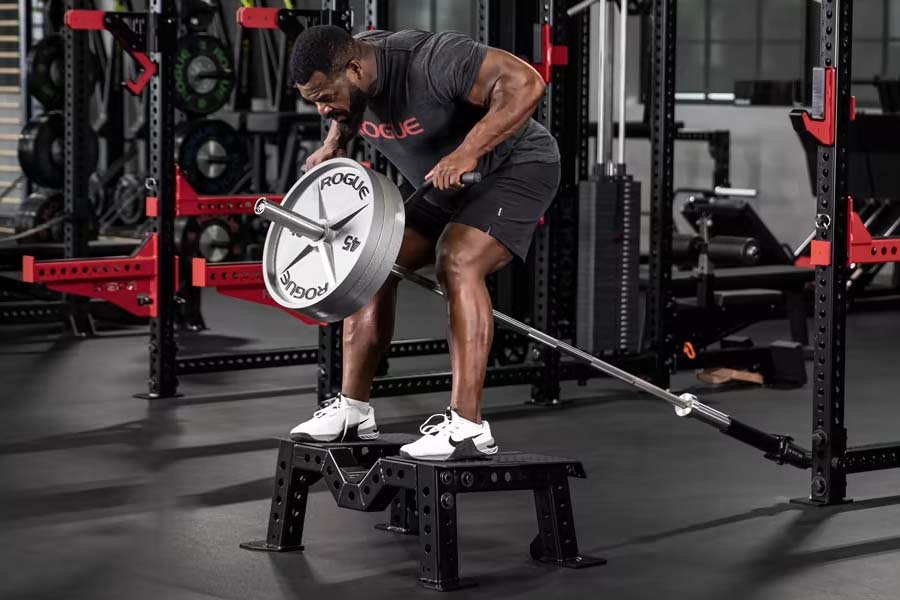
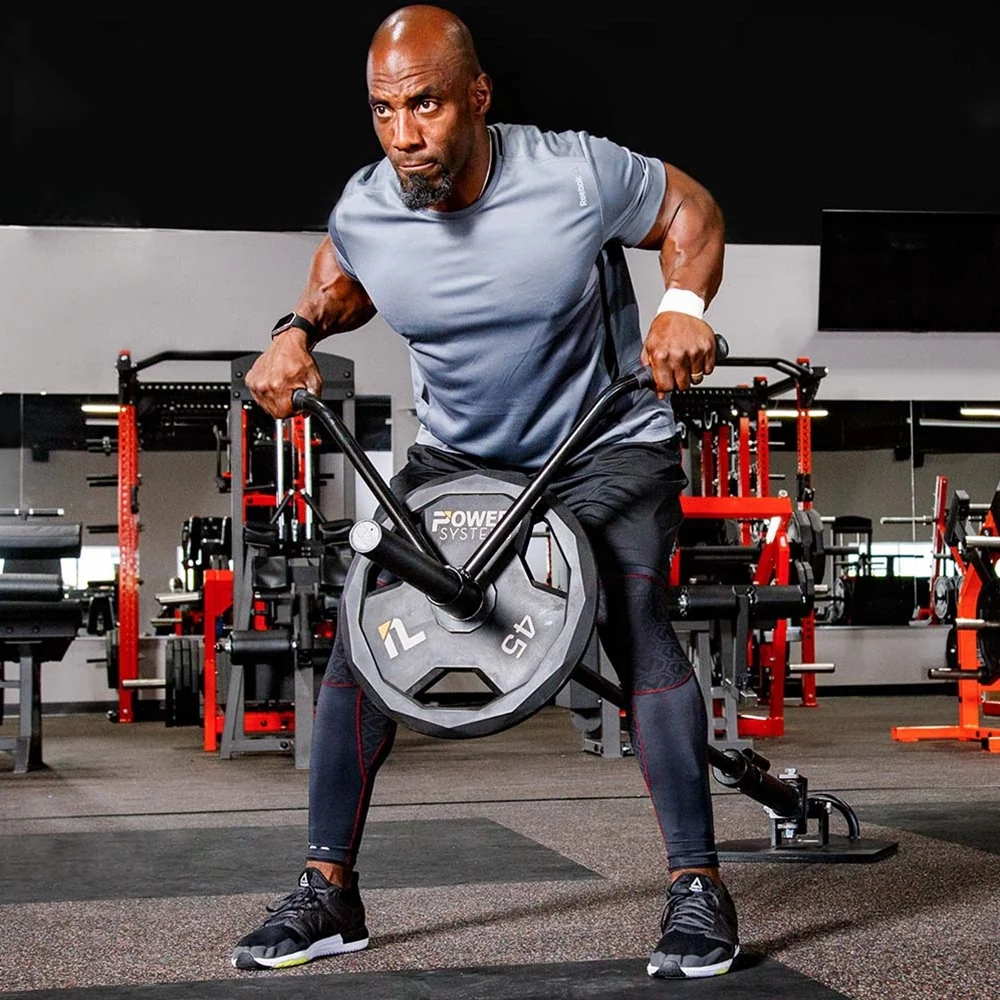
Move 3: landmine T-bar row. Secure plates on the free end and place a close-grip row handle beneath the bar, just behind the plates. Straddle the bar, soften the knees and hinge at the hips until the torso is inclined. Brace as you would for a barbell row. Pull toward the lower ribs or upper abdomen while keeping the trunk angle nearly constant. Lower until the arms extend without allowing the spine to collapse into a rounded position.
The row trains the lats, mid-back, rear delts and elbow flexors, while the spinal erectors and hips hold the hinge. If the final repetitions become a standing shrug, the weight is too heavy for the range you are claiming. Smaller plates can allow the hands to travel farther before the weights hit the torso. Different handles and attachment positions change leverage, so compare performance with the same setup rather than pretending every variation has identical resistance.
For a single-arm variation, stand beside the bar and pull the elbow toward the hip without twisting the torso. Two or three sets of eight to twelve per side are a useful starting point. If the lower back is already exhausted by squats or deadlifts, a chest-supported row may be the better choice that day. Challenge the intended pulling muscles, not the number on the plates. A repeatable full range and controlled lowering beat heavy, momentum-driven half-reps.

Equipment Worth Exploring
Explore equipment, accessories and gear from our carefully selected range.

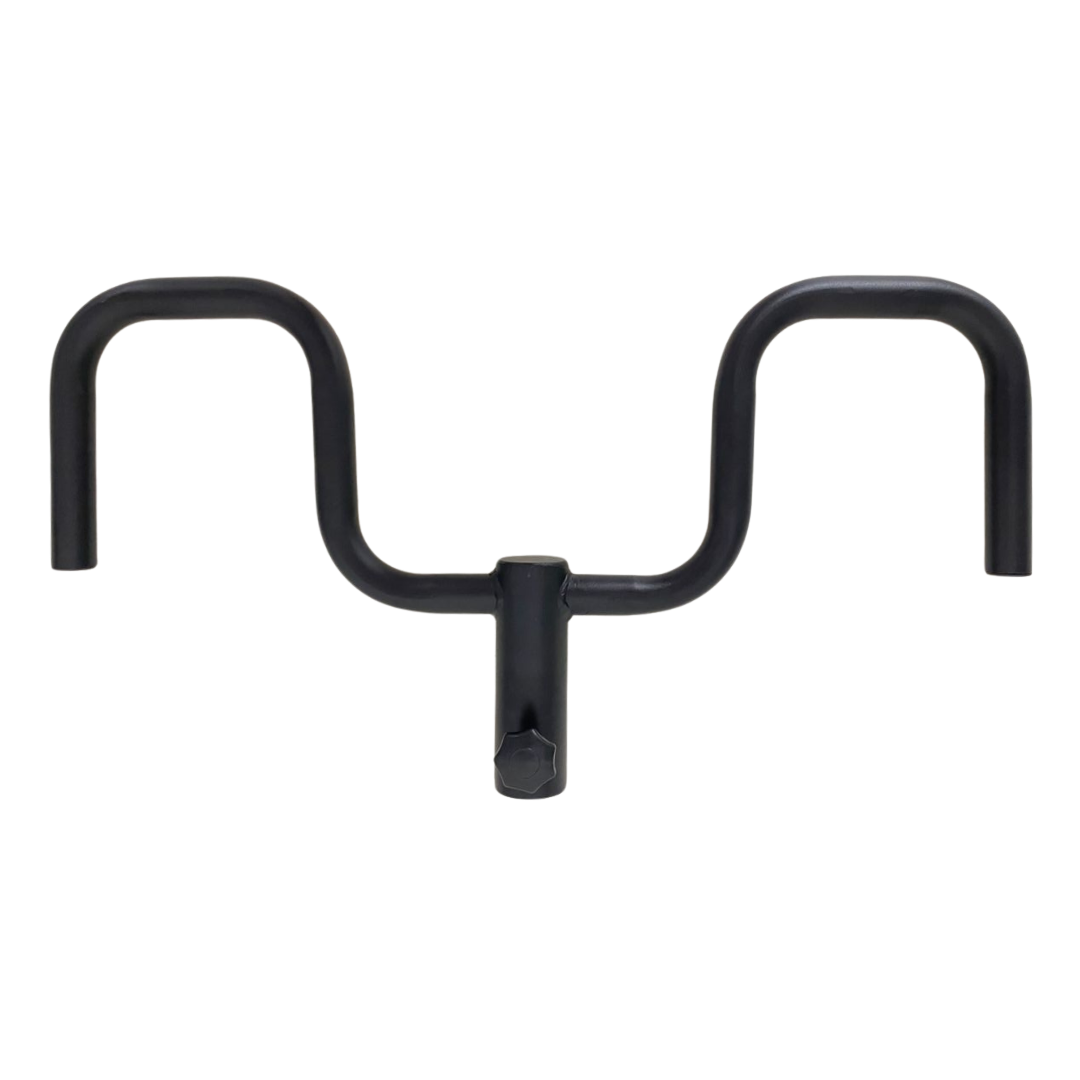


T-Bar Row Attachment
Welded barbell attachment that connects a D-handle bar for landmine and T-bar rows.

GymPin Barbell Row Handle
Heavy-duty handle attachment for barbell, landmine and T-bar rows.


Squat and lunge with the bar in front
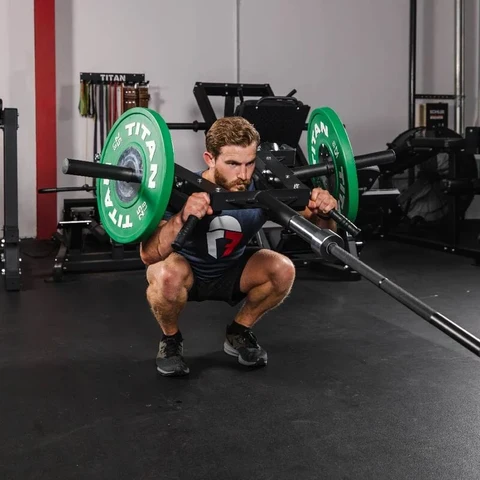
Move 4: landmine squat. Face the loaded sleeve and hold it near the upper chest with both hands. Use a stance that lets the knees and hips bend naturally. Sit down between the legs, keep the whole foot planted and rise by extending the knees and hips together. The angled bar can make an upright torso easier to maintain, but the resistance changes throughout the arc. A landmine squat is a useful variation, not a kilogram-for-kilogram substitute for a heavy back squat.
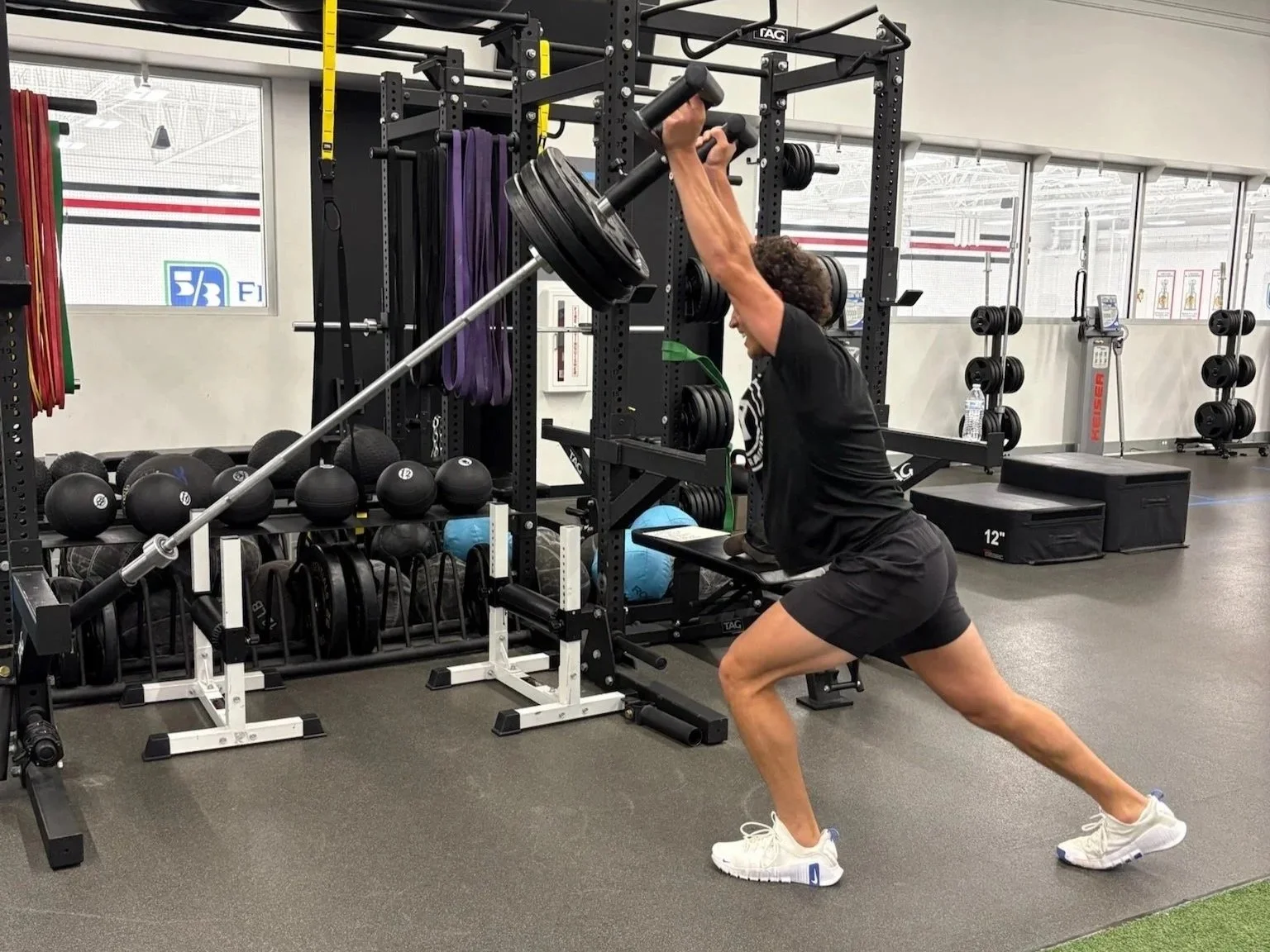
Move 5: landmine reverse lunge. Hold the sleeve in front of the chest or beside the body, step backward and lower under control until the front leg does most of the work. Push through the front foot to return to standing. Choose a stride long enough to move smoothly, not so long that the pelvis rotates or the rear knee crashes into the floor. Start with a light bar and controlled sets of six to ten per leg. Stable footwork is worth more than loading an awkward movement heavily.
Both exercises can follow a primary squat or deadlift when you want extra quad and glute work without another bar on the shoulders. They can also serve as main exercises for beginners learning to load a squat pattern. Do not claim that landmine squats eliminate spinal stress: the trunk still works, and total loading depends on execution. If the pivot shifts or the bar approaches your face as you descend, reset the equipment before continuing.

Functional Fitness Shirts & Workout Gear
Functional-fitness shirts, tanks and workout gear for athletes who train strength, conditioning and everything in between.

Live Love Lift Crewneck Pullover Sweater Workout Gymbro T-Shirt
For laid-back days and gym-girl humor: “Live Love Lift”.

Vive La Resistance Bands – Resistance Bands Warmup Reha Hoodie
Stay casual and show some lifting attitude with “Vive La Resistance Bands”.

Gym Equation Kettlebell Happiness Muscle Shirt for Lift Tank Top
Show some personality between sets with “Gym Equation”.

Gym Is My Happy Place Happy Kettlebell Emoji Decal Sticker
Give your everyday gear a playful “Gym Is My Happy Place” twist.

Hybrid Athlete Strength Tee
Show some lifting attitude with a playful “Hybrid Athlete” tee.

Lift Together Grow Stronger Buddies Friendship Workout T-Shirt
Make gym days more fun with “Lift Together Grow Stronger” style.

Forged in the Gym Tee
Show some lifting attitude with a playful “Forged in the Gym: Hephaestus God of Fire” tee.


Skull Kettlebell Gym | Heavy Metal Lifting Funny Workou T-Shirt
For laid-back days and metalhead humor: “Skull Kettlebell”.

Rotate deliberately and use leg drive for power
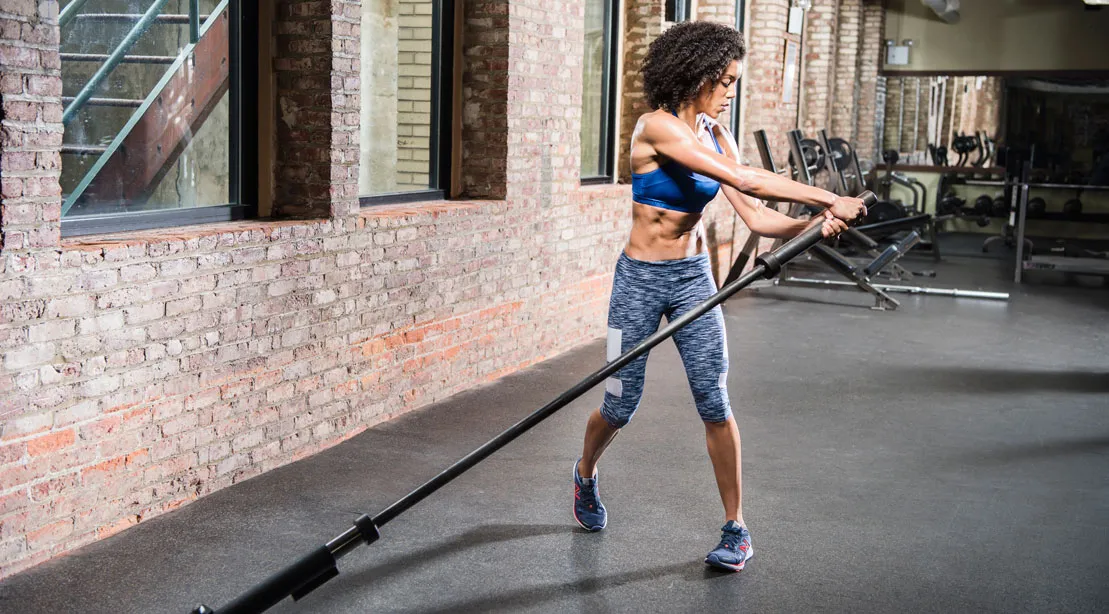
Move 6: landmine rotation. Stand with feet roughly shoulder-width apart, hold the sleeve with both hands and begin with the bar in front of the chest. Move the bar in a controlled arc toward one side while allowing the hips and feet to turn as needed. Reverse through the center and repeat to the other side. Do not yank a heavy bar across a rigid lower back. Begin with an unloaded bar or small plate and use two sets of six to eight controlled repetitions per side.
A slow single-arm press can also challenge anti-rotation: the torso resists the bar’s tendency to twist you. This is different from deliberately rotating for athletic power. Heavier resistance is not necessarily a better core stimulus when it causes you to lose control. Progress range, speed and load only when the earlier version is clean. The goal is coordinated force through the legs and trunk, not merely a burning sensation in the obliques.
Move 7: landmine push press. Dip a few centimeters by bending the knees with the trunk braced, then drive hard through the floor and let the legs accelerate the bar upward. Finish with the arms instead of turning the lift into a slow squat followed by a separate press. This is a power exercise, not a substitute for strict shoulder hypertrophy sets. Use small sets of three to five fast repetitions with enough rest to keep speed and timing crisp. Stop before the movement becomes a grind.
Secure the pivot and understand the lever
Landmine work starts with a stable anchor. A rack-mounted attachment should fit the rack and be secured with its specified hardware. A freestanding post belongs in a suitably weighted base or manufacturer-approved mount. A bar simply wedged into a bare wall corner can slip, damage the sleeve or mark the wall, especially during rotations. Test the unloaded bar first. If the pivot moves, do not begin. Secure plates with a compatible collar and check that the free end clears nearby equipment and people.
The load at your hands is not the total mass of the bar plus every plate. The bar is a lever supported at one end, and effective resistance changes with the angle and where the plates sit. Adding ten kilograms to a landmine does not feel like adding ten kilograms to a dumbbell. Record the plates, bar, handle location, pivot position and range of motion. Keep those variables consistent before deciding that you have become stronger.
Check bar sleeve compatibility, clearance and grip security. A shorter bar may be more comfortable for some movements, while rows sometimes benefit from smaller plates that do not collide with the torso. If the movement feels awkward, adjust your distance from the pivot before abandoning the exercise. A few centimeters of foot placement can alter the line of force and room available at the bottom. Good equipment matters when it supports stable, repeatable training rather than complicated tricks.
Equipment Worth Exploring
Explore equipment, accessories and gear from our carefully selected range.


GymPin Squat Wedges
Non-slip 15-degree squat wedges help elevate the heels for deeper quad-focused squats.


Safety Squat Handles
Barbell squat handles that reduce shoulder positioning demands during high-bar squats.

FID Bench MAX
Adjustable bench offering flat, incline, and decline positions + adjustable headrest.


A two-day landmine workout and six-week progression
Use this as an accessory block on two nonconsecutive days or as a main session between heavier barbell workouts. Warm up with unloaded movements and choose weights that leave roughly two or three technically sound repetitions in reserve. If your main sport is powerlifting or Olympic lifting, keep the landmine work after the competition lifts rather than exhausting your shoulders and back before the priority work.
Day A — press, row and squat: standing single-arm landmine press, three sets of six to ten per side; T-bar row, three sets of eight to twelve; landmine squat, three sets of eight to twelve; and controlled rotations, two sets of six per side. Rest roughly ninety seconds to two minutes between challenging strength sets, longer if breathing or grip prevents good execution. Log the actual repetitions, plates and handle position.
Day B — stability, single-leg strength and power: half-kneeling press, three sets of eight per side; reverse lunge, three sets of six to ten per leg; landmine push press, four sets of three to five fast repetitions; and a lighter T-bar row, two sets of twelve. Put the push press first after warming up if explosive performance is the priority. If shoulder muscle growth matters more, lead with strict pressing. This is a flexible menu, not a mandate to accumulate junk volume in an already exhausting program.
Weeks 1–2: learn the range and establish a repeatable setup. Weeks 3–4: add repetitions inside the assigned range before increasing plates; keep one or two reps in reserve on the final set when recovery is good. Week 5: add a small load increment only where technique remains stable. Week 6: compare performance with the first week using the same equipment and similar effort. If joints feel irritated or bar speed falls, reduce a set or load rather than forcing a personal record.
The useful outcome is not how many variations you fit into one workout. It is cleaner presses without trunk compensation, rows that keep the hinge, squats that remain controlled and explosive reps that look athletic from first to last. Landmine training earns its place when those qualities improve and the work fits your recovery budget. Seven exercises are options; consistent progression on the right few is the actual program.
Funny Gym Shirts & Workout Gear
Funny gym shirts, tanks, hoodies and workout gear for lifters who like training hard.

Bending Bars Meme Breaking Bad Sweater Powerlifters T-Shirt
Show some gym-day personality with “Bending Bars Gym Meme”.


Train Like a Machine Hooded Pullover Iron Man Fans Hoodie
Keep it laid-back with a little “Train Like a Machine” attitude.

Barbell Heartbeat Decal for Water Bottles Laptops Power Sticker
Stick a little “Barbell Heartbeat” humor on your favorite gear.

Lift Eat Repeat Sweater & Meme Fans T-Shirt
For laid-back days and lifting humor: “Lift Eat Repeat”.

Big Boy Barbell Club Shirt Meme & Essential Top T-Shirt
Make gym days more fun with “Big Boy Barbell Club” style.

Barbell Country Club Shirt Meme Top & T-Shirt
Heavy lifts, good laughs, and a little “Barbell Country Club” energy.

Forged In Iron Shirt – Essential & Top T-Shirt
Heavy lifts, good laughs, and a little “Forged In Iron” energy.

Funny Lift O'Clock Gym | Bodybuilding Muscle Shirt For Tank Top
Train hard, laugh a little, and rep “Lift O'Clock”.

Lift King Lion – , & Gymbros – Meme T-Shirt
Bring “Lift King Gym Lion” humor to your next gym day.