Progressive overload is one of the most familiar rules in strength training, yet it is easy to misunderstand. Does every workout need a heavier dumbbell? Can your arms still grow if you repeat the same weight? And what happens when the load stays fixed and the repetitions never change?
An eight-week controlled experiment published in 2026 gives those questions a useful, unusually direct test. It compared progressively heavier triceps extensions with a deliberately unchanged workout and a nontraining control. Both training approaches produced muscle growth in beginners, but the progressive condition produced substantially larger changes in measured triceps thickness. The practical lesson is not to chase a personal record every Monday. It is to make sure the training challenge evolves as your ability improves.
What the eight-week triceps experiment actually tested
The trial involved 55 previously untrained young women. Researchers assigned individual arms to one of three conditions: progressive loading, an unchanged training prescription, or a time-matched nonexercise control. The reported arm counts were 37 for progressive loading, 32 for fixed loading, and 41 for control; these are arm allocations, not three separate groups of that many people. The within-person design helped compare responses while reducing some differences between participants.
Both active conditions performed unilateral elbow extensions three days per week for eight weeks, with three sets of eight to twelve repetitions per session. In the progressive group, the weight increased whenever the upper end of the repetition range was reached. In the fixed group, the load and repetition count remained unchanged throughout. The control arms did not perform the exercise intervention.
Muscle size was assessed with ultrasound at two locations along the triceps, 60% and 70% of upper-arm length. The investigators also combined those two thickness measurements into a summed outcome. That is useful because growth can vary along a muscle, but ultrasound thickness is not identical to a direct measure of total muscle volume or a test of maximum strength.
Crucially, the experiment did not compare increasing weight with increasing repetitions. It compared a changing workload with a workload that was intentionally held constant in both weight and reps. That distinction determines how much we can apply the results to ordinary training programs.
How much more did the progressively loaded arms grow?
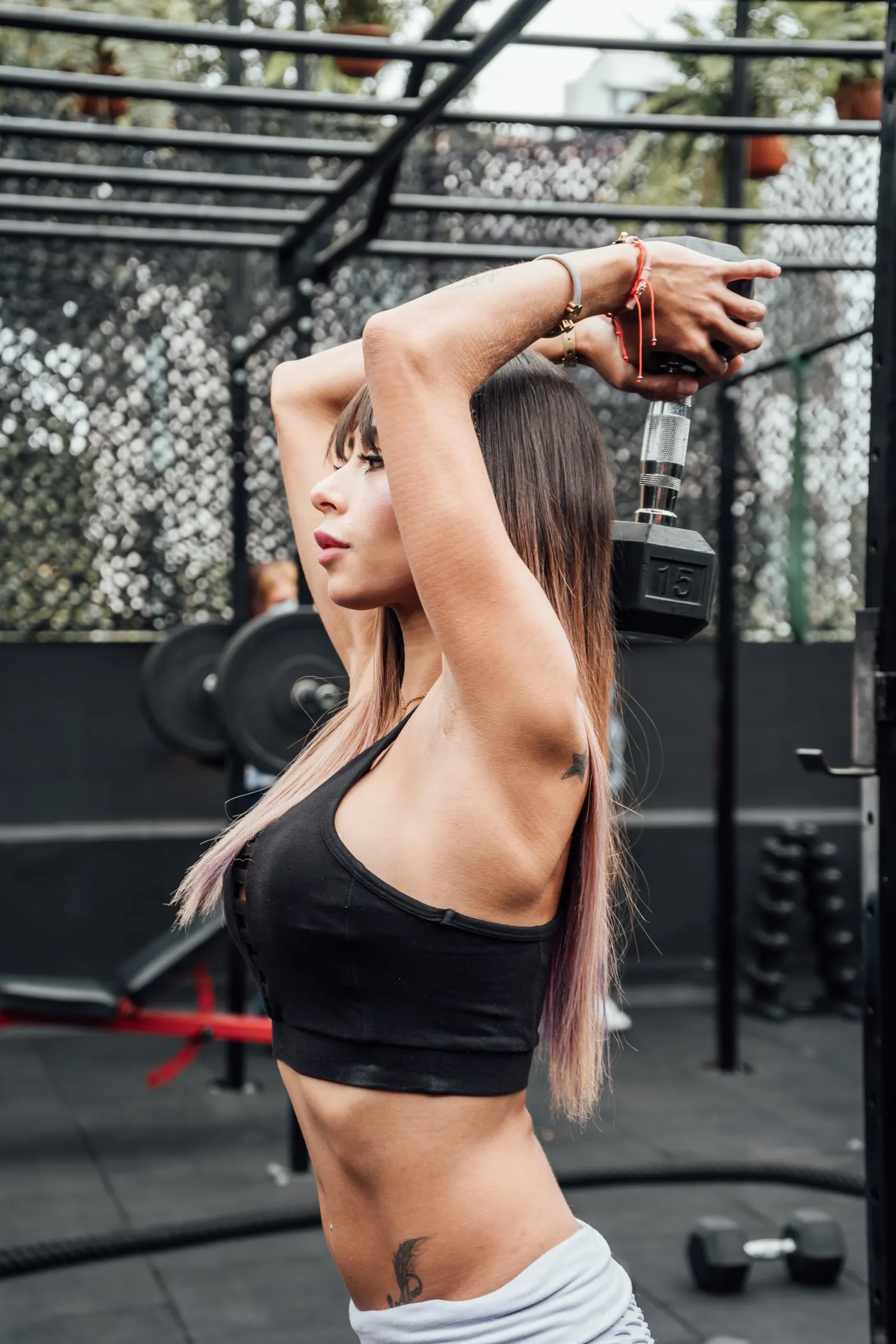
The difference was clear at both measurement sites. At the first location, triceps thickness increased about 21.4% in the progressive condition and 11.3% in the fixed condition. At the second, the corresponding increases were about 25.0% and 12.0%. The nontraining controls changed only slightly at either site.
For the combined thickness measure, the reported changes were 22.9% with progression, 11.6% with a fixed prescription, and 1.8% in control. In absolute terms, the summed measurement rose by approximately 0.79 cm, 0.41 cm, and 0.05 cm respectively. These are measurements over eight weeks in this particular population; they are not forecasts of how many centimeters a trained lifter will gain.
It is tempting to reduce the result to “progression doubled growth.” The percentages are indeed roughly two to one, but that slogan leaves out the experimental context. Both trained arms received the same scheduled number of sets. The fixed arm was not allowed to add repetitions or load even as participants adapted. A real-world lifter who holds the same dumbbell but gradually performs more controlled repetitions is already applying a form of progression.
There is another important limit: the primary outcome was muscle thickness, not a head-to-head comparison of bench-press strength, athletic performance, or injury risk. The experiment supports progressing training demand for hypertrophy in beginners. It does not establish that weekly load jumps are mandatory, nor that the same effect size will appear in experienced bodybuilders.
Why a fixed weight can still build muscle at first
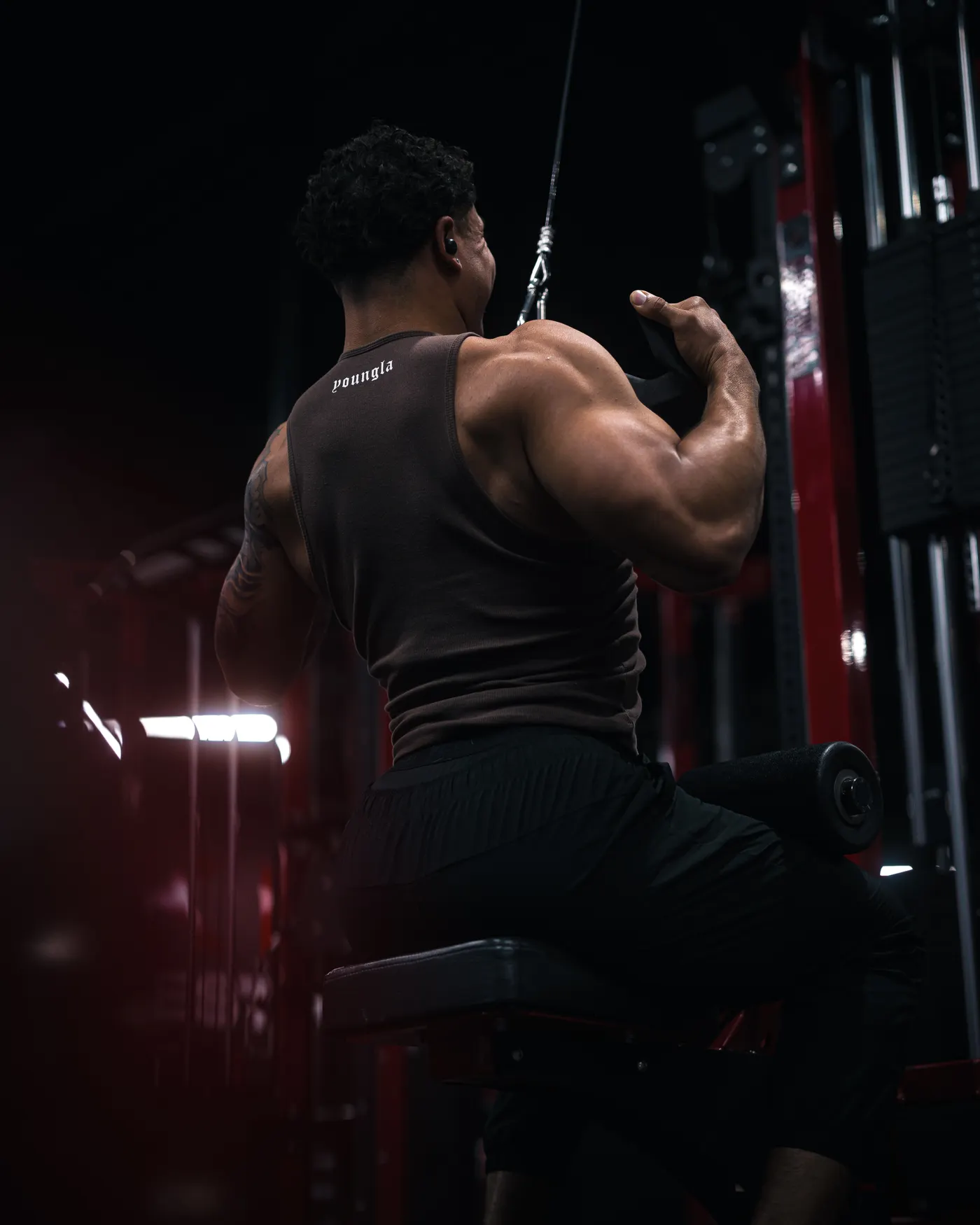
Beginners often improve rapidly because an unfamiliar resistance exercise creates a meaningful challenge even with modest equipment. Their technique, coordination, tolerance for effort, and muscle capacity are all changing. That explains why the fixed-training condition still gained triceps thickness compared with the nontraining control. Doing some reasonably challenging resistance work can be much better than doing none.
Over time, however, the exact same sets can become easier. Imagine that twelve repetitions with a certain weight initially leave only one or two good reps in reserve. Six weeks later, those twelve repetitions might leave five or six. The external workload is unchanged, but the relative difficulty has fallen. The lifter is no longer delivering the same effort relative to their improved capacity.
That does not mean a pump, burn, or soreness score can tell you exactly how much growth a set will produce. Those sensations are imperfect signals. More reliable progress markers include clean repetitions, load, range of motion, stable technique, and how close a set is to genuine technical failure. Keep the exercise setup comparable so changes in the logbook mean something.
It also helps to distinguish a fixed weight from a fixed workout. If a 10 kg dumbbell goes from eight difficult repetitions to twelve difficult repetitions, training demand has progressed even before the dumbbell gets heavier. If the same 10 kg is lifted for exactly eight reps forever, the challenge may gradually fade. The trial tested the second scenario, not the first.

Bodybuilding Shirts & Workout Gear
Bodybuilding shirts, tanks and gym gear for lifters chasing muscle, size, symmetry and the pump.

Girls Just Wanna Have Guns Shirt Meme Huge Arms & T-Shirt
Make gym days more fun with “Girls Just Wanna Have Guns” style.

Muscle Mommy Muscle Club for Gym Girls, Lifting, Fitnes Tank Top
Show some personality between sets with “Muscle Mommy Muscle Club”.

Gym Dost Thou Even Curl Medieval Knight Arm Day Crewnec T-Shirt
Show some gym-day personality with “Dost Thou Even Curl Medieval Knight Arm Day”.

T-Rex Hates Push Ups Crewneck Pullover Sweater for Cali T-Shirt
For laid-back days and bodybuilding humor: “T-Rex Hates Push Ups”.

Lifting Is My Therapy – Lifting Bodybuilding Powerlifti T-Shirt
Rep “Lifting Is My Therapy” humor in and out of the gym.

Lifting Cult Meme Graphic Bodybuilding Powerlifting Wor T-Shirt
Make gym days more fun with “Lifting Cult” style.

Gym Nerd Pixel Lifting Meme Bodybuilding Powerlifting D Sticker
A fun “Gym Nerd” touch for bottles, laptops, and lockers.

In My Muscle Mommy Era for Gym Girls, Bodybuilding, Lif Hoodie
Make your off-duty look more fun with “In My Muscle Mommy Era”.

Rat Cheese Barbell | Workout Sweater & Bodybuilding Mem T-Shirt
For laid-back days and lifting humor: “Gym Rat Cheese Barbell”.

Gains Before Brains | Zombie Bodybuilding Meme | Hallow T-Shirt
Bring “Gains Before Brains” humor to your next gym day.
Adding repetitions versus adding weight: two sensible routes
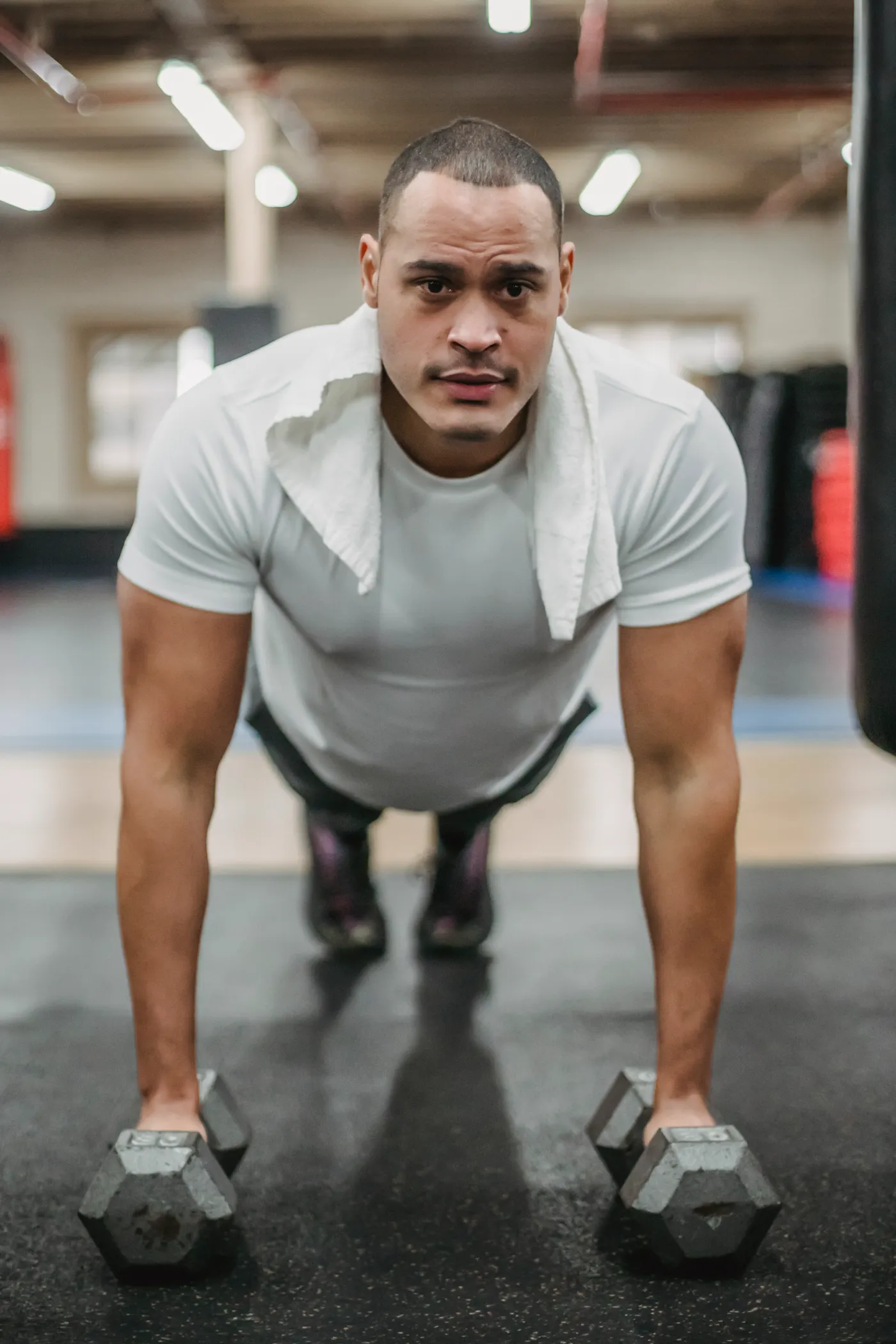
Other controlled training experiments help fill in the missing comparison. In an eight-week study involving 43 resistance-trained participants, increasing repetitions while keeping load constant produced broadly similar muscular adaptations to increasing load within a stable repetition range. Some individual outcomes leaned in one direction, but the overall picture supported both methods as viable.
A separate ten-week experiment assigned the legs of 39 previously untrained adults to repetition progression or load progression. Both approaches improved leg-extension strength and muscle cross-sectional area without a meaningful difference between protocols. Neither result proves that repetitions and load are always interchangeable, especially at the extremes of very light or very heavy training. Together, they show why the simple command to add weight every session is too narrow.
Use double progression when you want a repeatable rule. Choose a working range, such as eight to twelve controlled reps. Keep the weight stable while you build toward twelve reps across all prescribed sets. Once you reach the upper limit with consistent range of motion and the intended effort, make the smallest practical load increase. Your reps will usually fall toward the lower end, and the cycle begins again.
For cable extensions, an increment of one plate can sometimes be a large percentage of the load. If the machine jumps too far, add repetitions, improve control, or use smaller compatible loading increments rather than forcing ugly reps. For dumbbells, the same logic applies. A heavier number is only progress when the exercise remains recognizably the same movement.
Volume, effort and frequency still matter. Broad resistance-training guidance supports flexible equipment and rep choices for hypertrophy, provided training is sufficiently challenging and repeated consistently. Progression should be a tool for maintaining an effective stimulus, not a contest to change every variable at once.

Equipment Worth Exploring
Explore equipment, accessories and gear from our carefully selected range.
VOLTRA
Compact digital cable trainer with smooth, adjustable resistance.

Go-Tone Pro
Portable digital cable trainer with up to 66 lb (30 kg) of adjustable resistance.

Long Tricep ERGO Ropes
Extended triceps ropes with ergonomic grips for cable pressdowns and overhead extensions.
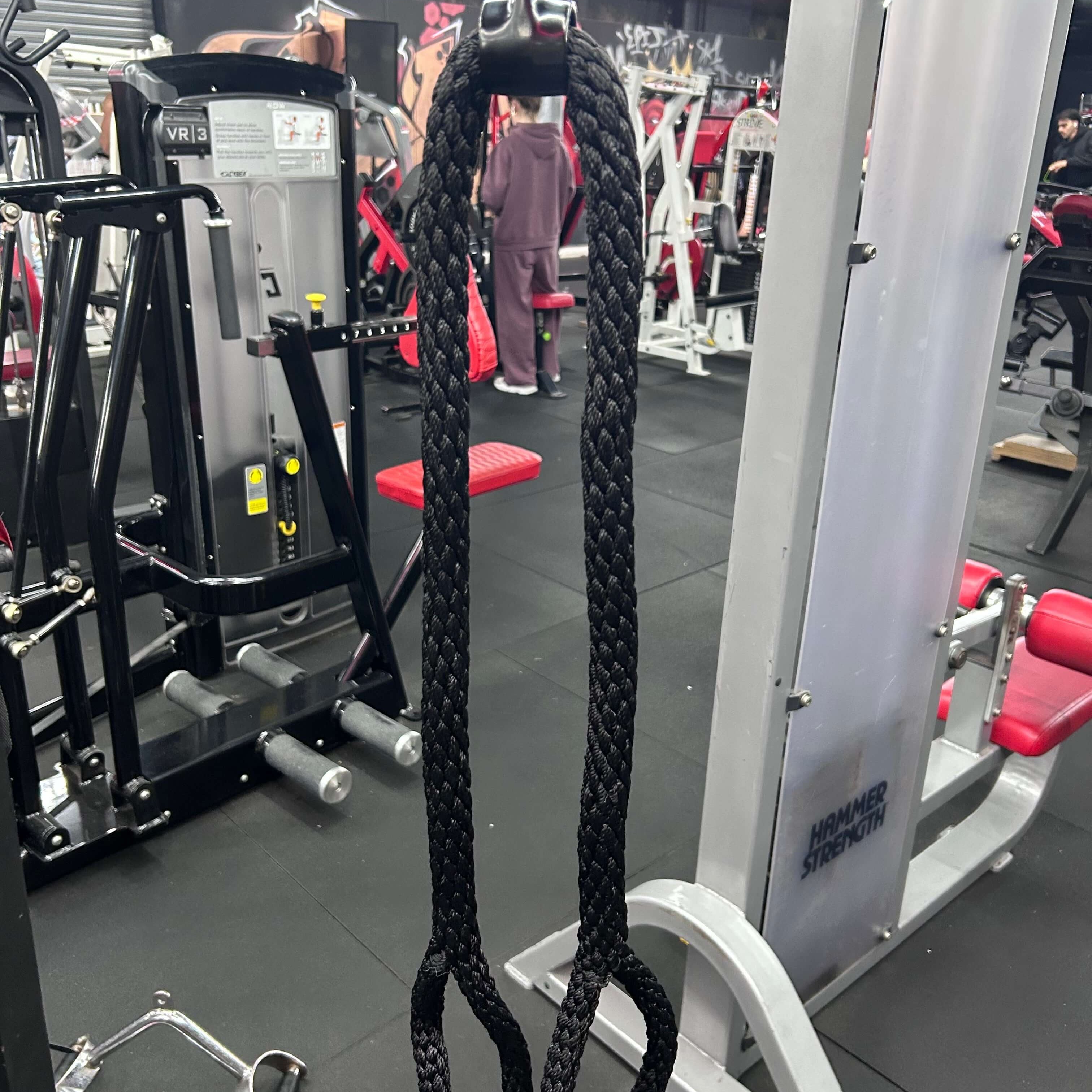
Super Long Tricep Rope
Extra-long looped cable rope for triceps pressdowns and overhead extensions.
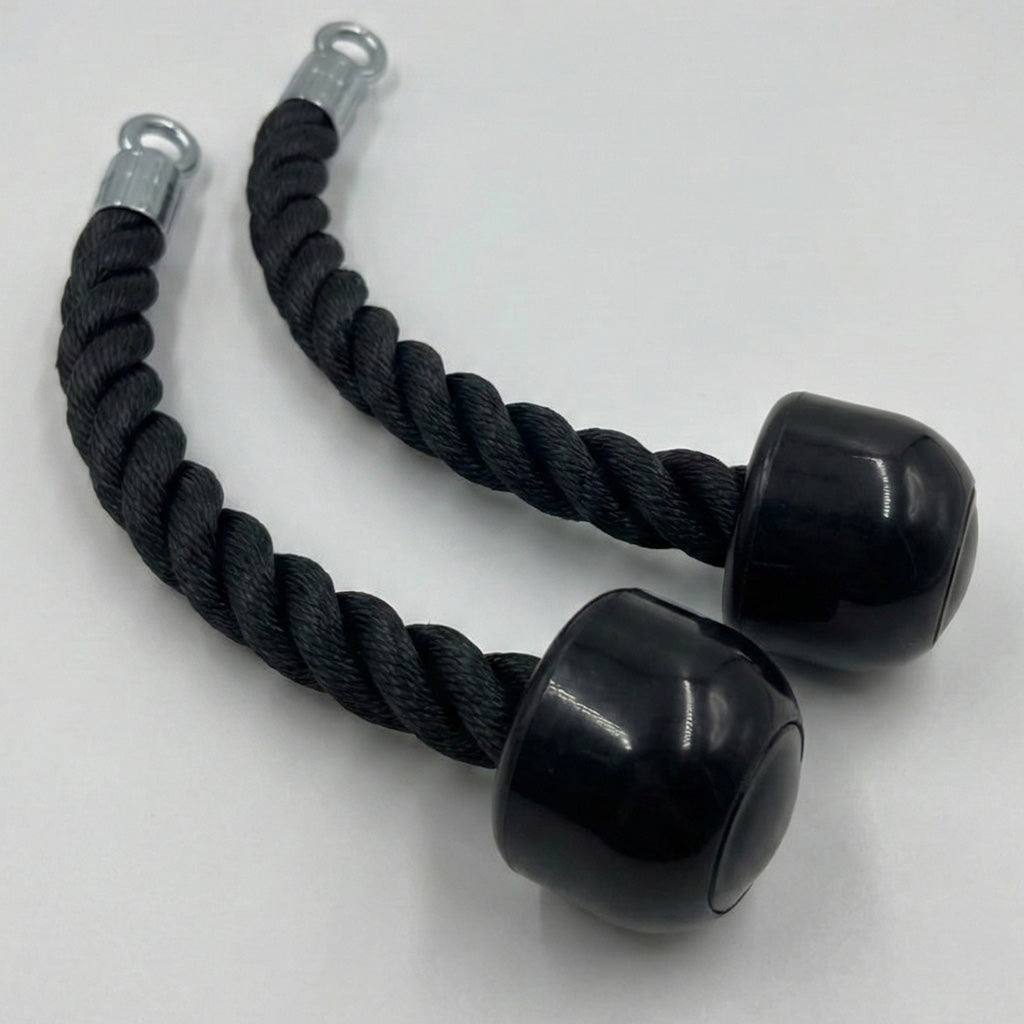
Individual Tricep Ropes
Pair of individual cable ropes for triceps pressdowns and cable hammer curls.
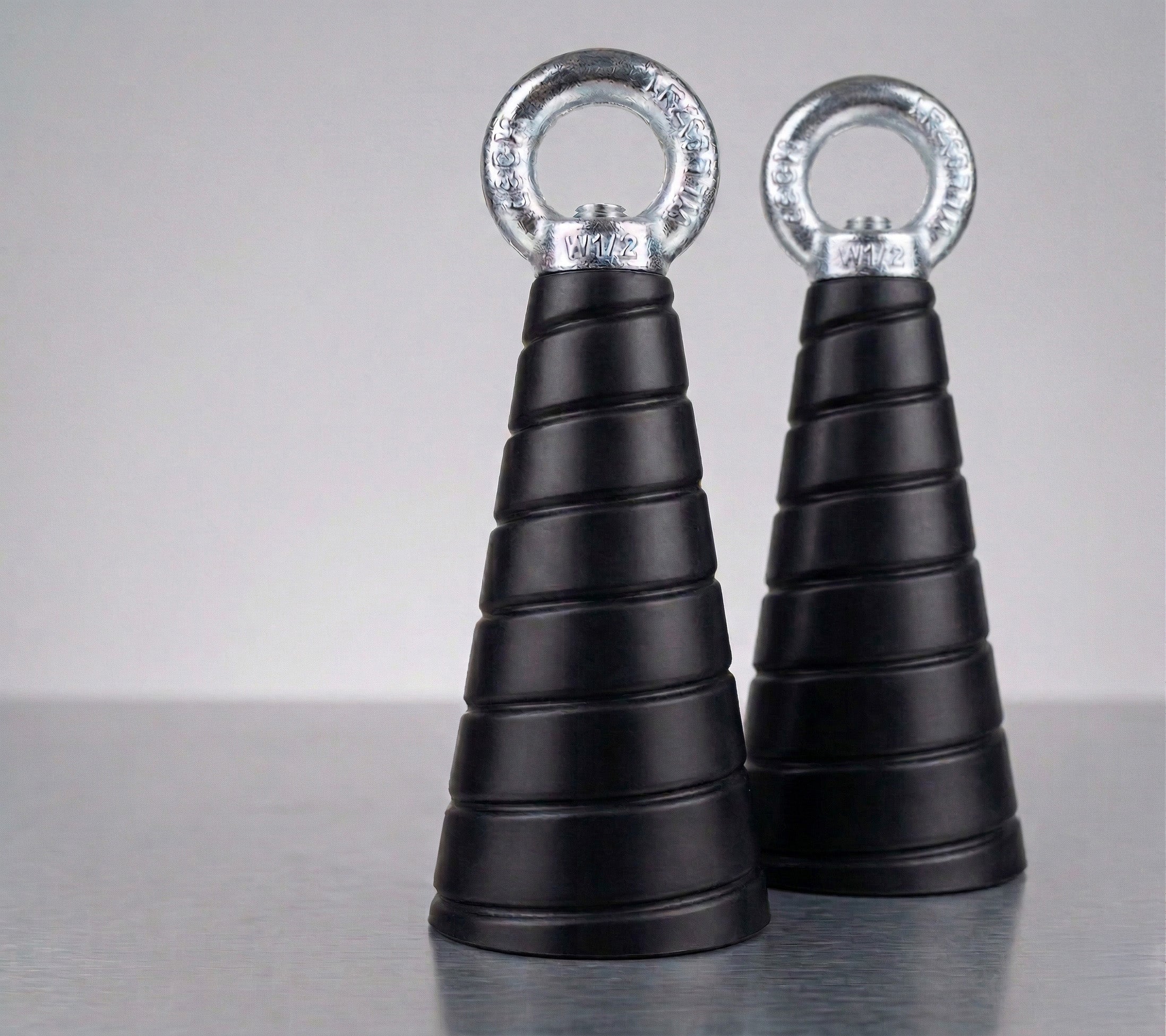
Tapered Tricep Cone
Tapered rubber cable grip for triceps extensions, face pulls and hammer curls.
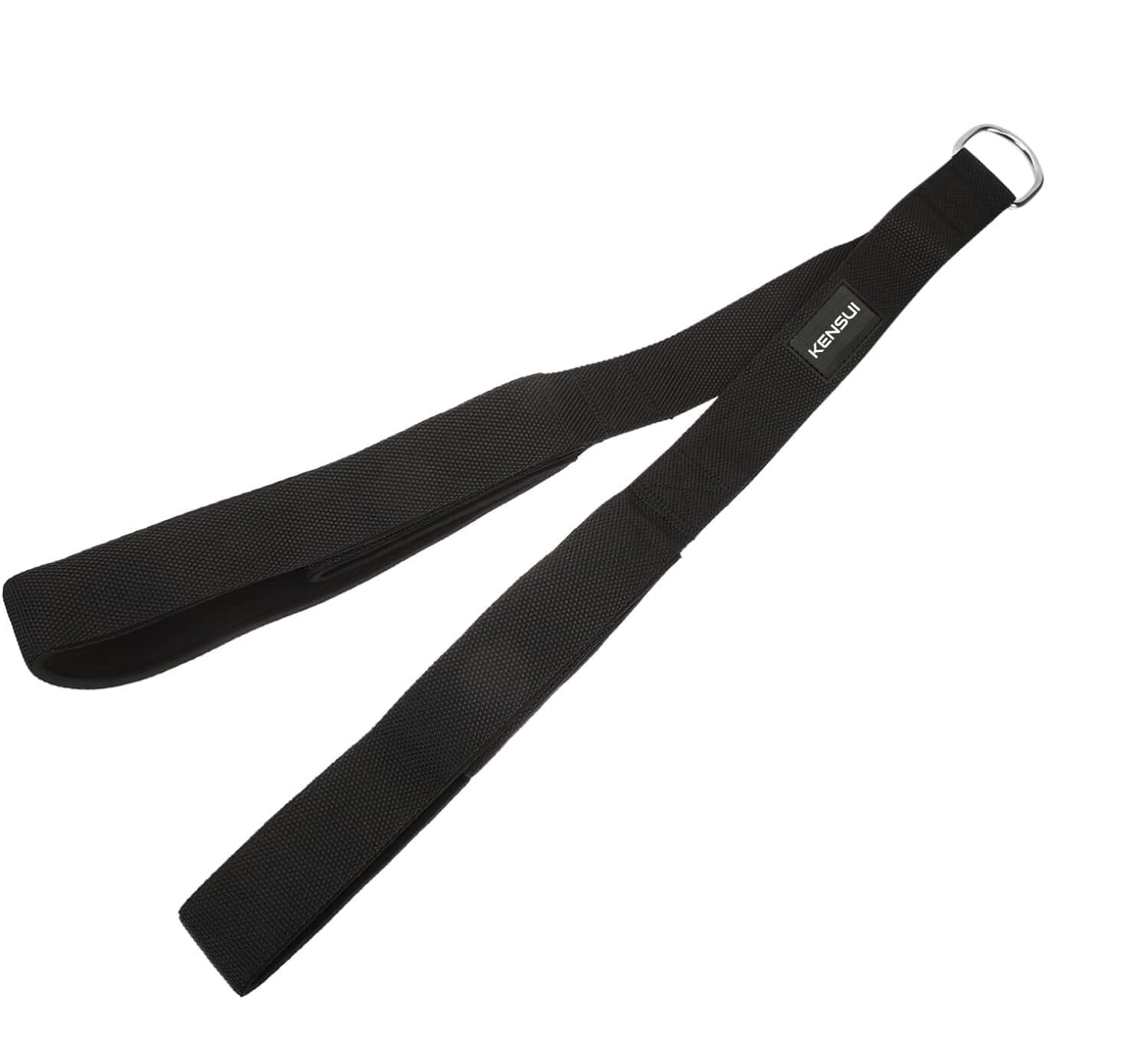
Multi-Length Tricep Strap
Adjustable-length cable strap for triceps, biceps and upper-body cable exercises.

GymPin Ergo Handles
Pair of ergonomic cable handles shaped for comfortable triceps and pulling exercises.

GymPin D Cuffs
Adjustable wrist cuffs with textured grips for supported cable-machine exercises.

Choose triceps exercises you can progress without aggravating your elbows
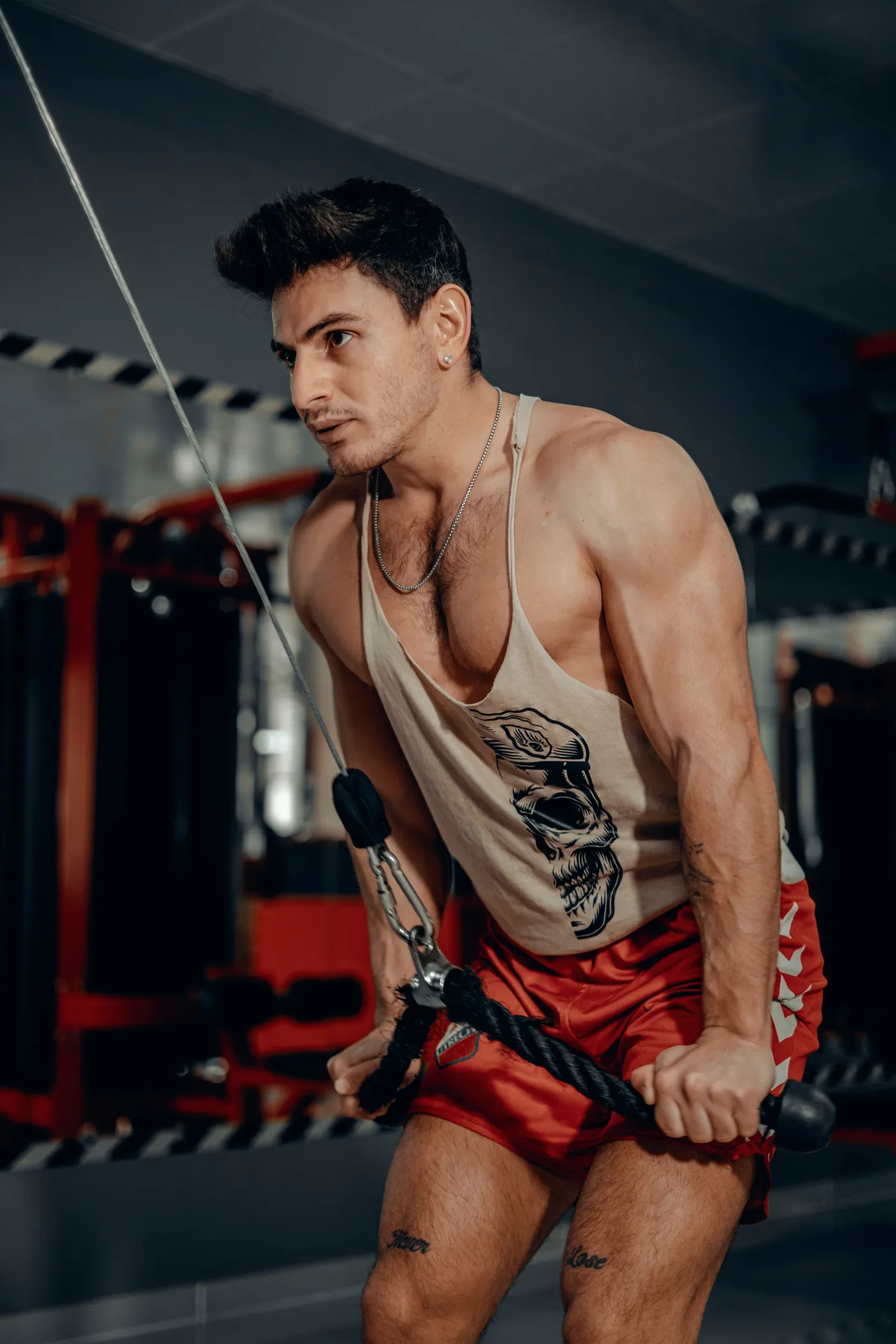
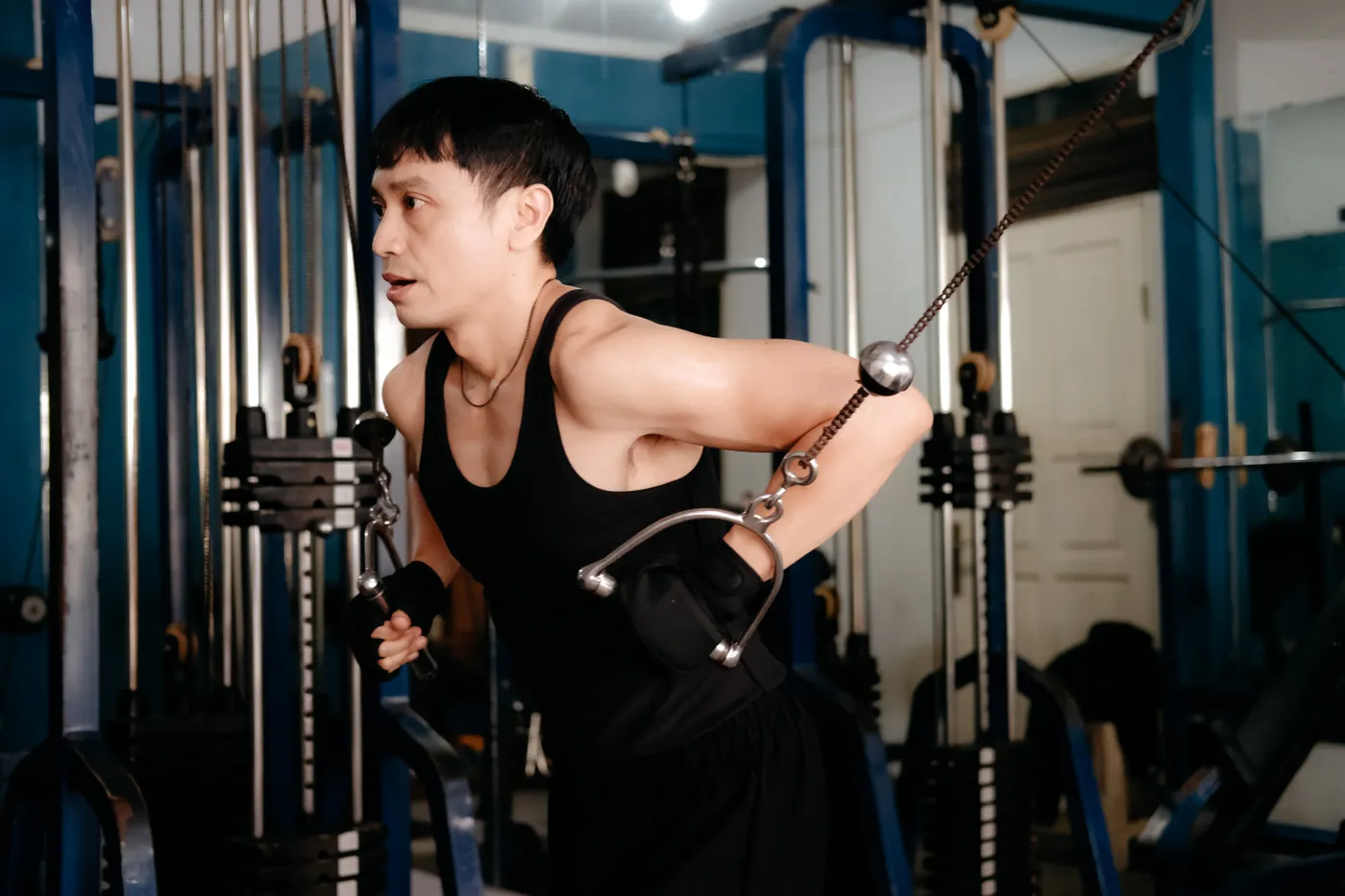
The triceps extend the elbow, and the long head also crosses the shoulder. That makes it useful to include more than one arm position across the week. A cable pushdown is straightforward to stabilize and load in small increments. An overhead extension places the upper arm in a different position and can provide a distinct training challenge. Presses and dips also train elbow extension, but their chest and shoulder demands make them less isolated measures of triceps progression.
For a pushdown, keep the upper arms relatively quiet, extend the elbows smoothly, and avoid turning the final third of the repetition into a whole-body lean. Use a rope, straight bar, or separate handles according to comfort. For an overhead extension, set a position that lets the upper arms remain controlled, allow a comfortable elbow bend, and avoid snapping the lockout. There is no reward for forcing a painful range.
Do not assume one attachment is universally superior. Different handles change wrist position and comfort, while pulley height, cable angle and body position change the resistance profile. Pick a setup you can reproduce and log accurately. If elbow discomfort increases, reduce the load or range, change the exercise, and seek appropriate clinical advice for persistent symptoms.
Keep your triceps work proportional to the pressing already in your program. Someone benching and overhead pressing twice weekly may need fewer additional direct sets than someone doing very little compound pressing. Start with a manageable number of hard direct sets, watch performance and recovery, and add volume only when there is a reason. Quality matters more than accumulating every extension variation in one workout.
Equipment Worth Exploring
Explore equipment, accessories and gear from our carefully selected range.


FID Bench MAX
Adjustable bench offering flat, incline, and decline positions + adjustable headrest.


Power Tower
Freestanding pull-up and dip station with adjustable handles for bodyweight training.


Leather Lifting Straps
Padded leather straps support grip during heavy rows, deadlifts and pulling exercises.
A six-week double-progression plan for stronger triceps
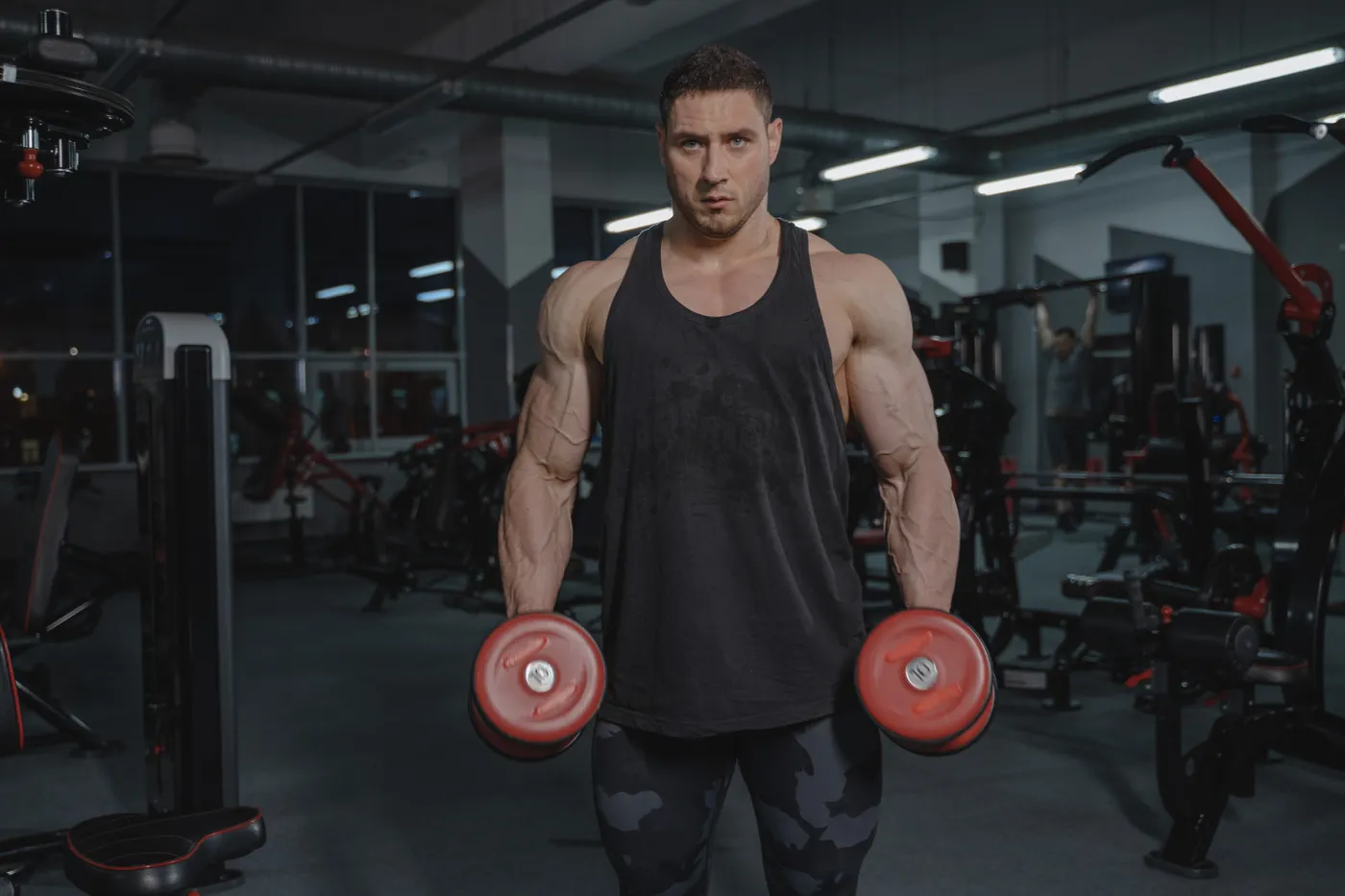
This is a practical training example, not a reproduction of the experiment. Train triceps directly twice weekly with at least one recovery day between sessions. Keep your existing compound pressing, but avoid placing the hardest triceps isolation work immediately before a bench-press session where strength is the priority. Begin conservatively if you are new to direct arm training.
Session A: controlled cable emphasis
- Cable pushdown: 3 sets of 8–12 reps, finishing with roughly 1–3 good reps in reserve.
- Overhead cable extension: 2 sets of 10–15 reps, using a comfortable stretch and smooth return.
- Optional close-grip push-up: 1–2 sets of 8–15 reps if your weekly pressing volume and elbows tolerate it.
Session B: pressing plus extension
- Close-grip bench press or neutral-grip dumbbell press: 3 sets of 6–10 controlled reps.
- Single-arm cable extension: 2 sets of 10–15 reps per arm.
- Optional rope pushdown: 1–2 lighter sets of 12–15 reps only if recovery remains good.
During weeks one and two, find repeatable loads and record honest reps. In weeks three and four, try to add one rep to a set when technique and effort permit. During weeks five and six, increase the load on exercises where every prescribed set has reached the top of its range. If fatigue accumulates, keep the load steady or reduce optional sets rather than forcing an increase.
Example: a pushdown at 20 kg might progress from 10/10/9 to 11/10/10, then 12/12/12 over several sessions. Only then would you try the next sensible increment, accepting perhaps 9/9/8 clean reps. Do not claim progress from a heavier stack if the elbows flare, torso swings or the range shortens substantially.
Funny Gym Shirts & Workout Gear
Funny gym shirts, tanks, hoodies and workout gear for lifters who like training hard.


Funny Gymrat Mousetrap | Gym Rat Workout Sweater | Next T-Shirt
Keep things casual with a little “Gymrat Mousetrap” attitude.

Funny Uncle Sam Gym | I Want You To Lift Heavy Patrioti T-Shirt
Add a playful “Uncle Sam” touch to your casual rotation.

Listen Heavy Lift Heavy Gym | Heavy Metal Workout Vest Tank Top
Train hard, laugh a little, and rep “Listen Heavy Lift”.

Gym Cult Member Occult Lifting Meme Graphic – Bodybuild T-Shirt
Make gym days more fun with “Gym Cult Member” style.


| Sweet Gains Workout Decal for Water Bottles, Gym Lock Sticker
Give your everyday gear a playful “Sweet Gains Workout” twist.

Heavy Metal Lift Heavy – Hardcore Powerlifting for Body Hoodie
Show off your metalhead humor in a laid-back “Heavy Metal Lift” hoodie.

Patriotic Eagle Gym Gains of the Free USA Workout Shirt T-Shirt
Make gym days more fun with “Patriotic Eagle” style.

Molten Skull Crewneck Gym Wear Strength Gift Uplift Iro T-Shirt
For laid-back days and powerlifting humor: “Sweatshirt Molten Skull”.
What this trial cannot tell us—and the useful takeaway
The eight-week intervention tested a single-joint elbow-extension exercise in previously untrained young women. It does not directly establish what happens after six months, in experienced lifters, or across every muscle group. Ultrasound thickness is a meaningful but localized size measure. The trial also did not establish a best loading increment, a universal frequency, or whether load progression outperforms rep progression when effort and total work are otherwise comparable.
It is worth separating three statements that are often blurred together. First, beginners can grow with a fixed exercise prescription for a while. Second, in this particular comparison, progressively heavier training produced larger triceps-thickness gains than keeping both weight and reps unchanged. Third, a lifter can progress through repetitions, load, technique, range of motion or thoughtfully adjusted volume without changing everything every week. The first two were directly examined here; the third is a broader programming principle supported by other training comparisons.
Track one or two stable triceps movements for six weeks. Note load, clean reps, sets and approximate reps in reserve. Increase a variable when the previous challenge becomes easier, but preserve technique and recovery. If your repetitions are rising with the same weight, you are not standing still. If nothing has changed for weeks and the sets feel easier, that is a useful prompt to adjust the prescription.
The strongest conclusion is also the most practical: repeat what works long enough to measure it, then progress the challenge deliberately. Muscle growth rewards consistent hard work more reliably than a new exercise, attachment or dramatic personal record every session.