Advertising disclosure: This page includes affiliate links that may earn us a commission at no additional cost to you.
Hossein Rezazadeh made extraordinary weights look almost routine. That impression can hide the most interesting part of his Olympic record: he won in Sydney in 2000 and Athens in 2004 with the same official total, 472.5 kilograms, assembled from different combinations of snatch and clean and jerk.
The Iranian superheavyweight’s career is a useful way to understand what competitive strength actually measures. Two successful lifts, a limited set of attempts and a particular rulebook create the result. A giant overhead number is impressive, but its meaning becomes clearer when you look at the separate skills and decisions behind it. This is a historical performance analysis, not a reconstruction of his training program.
From early snatches to Sydney’s 472.5 kg total
Rezazadeh was already competing on the world championship platform in 1999, before his first Olympic victory. At the Sydney Olympics, Rezazadeh combined a 212.5 kg snatch with a 260 kg clean and jerk. Adding those best successful lifts gives 472.5 kg. It does not mean he lifted that total in one movement, and it is not a squat, bench press and deadlift total.
In Olympic weightlifting, the snatch takes the bar from the platform to overhead in one continuous movement. The clean and jerk first brings it to the shoulders, then overhead. The lifter needs a successful result in both disciplines to build a total. Being exceptional in one does not remove the demands of the other.
That makes the total an unusually revealing score. It combines two tests without telling you which one did more of the work. Two athletes can reach the same total through different strengths, while a lifter who improves one movement may still lose ground if the other becomes less reliable.
Sydney also belongs to a specific competitive era. Rezazadeh competed in the men’s over-105 kg division, the heaviest category used at those Games. The category label matters when reading a result or comparing it with another historical record. Later weight-class systems should not be silently applied to an older competition.
For someone following the sport for the first time, start by reading three separate numbers: best snatch, best clean and jerk, then total. That simple habit prevents a highlight clip or an isolated record from becoming the whole story of a meet.
The snatch shows why strength needs a specific skill
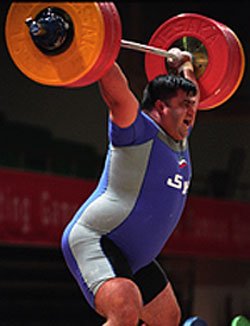
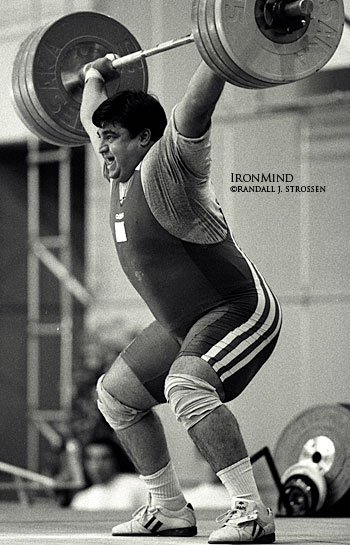
Rezazadeh’s career-best snatch reached 213 kg. The number describes a completed competition lift, not merely a fast pull or a heavy weight raised partway. The athlete has to move under the bar, receive it overhead and establish the control required for a successful attempt.
It is tempting to watch an elite lifter and reduce the movement to explosive strength. Force matters, but the bar also needs a usable path and the lifter needs the positions to receive it. Pulling harder is not automatically the answer when an attempt drifts out of position.
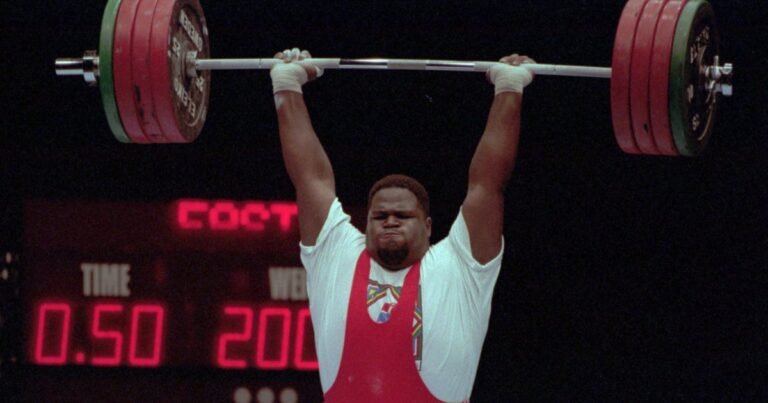
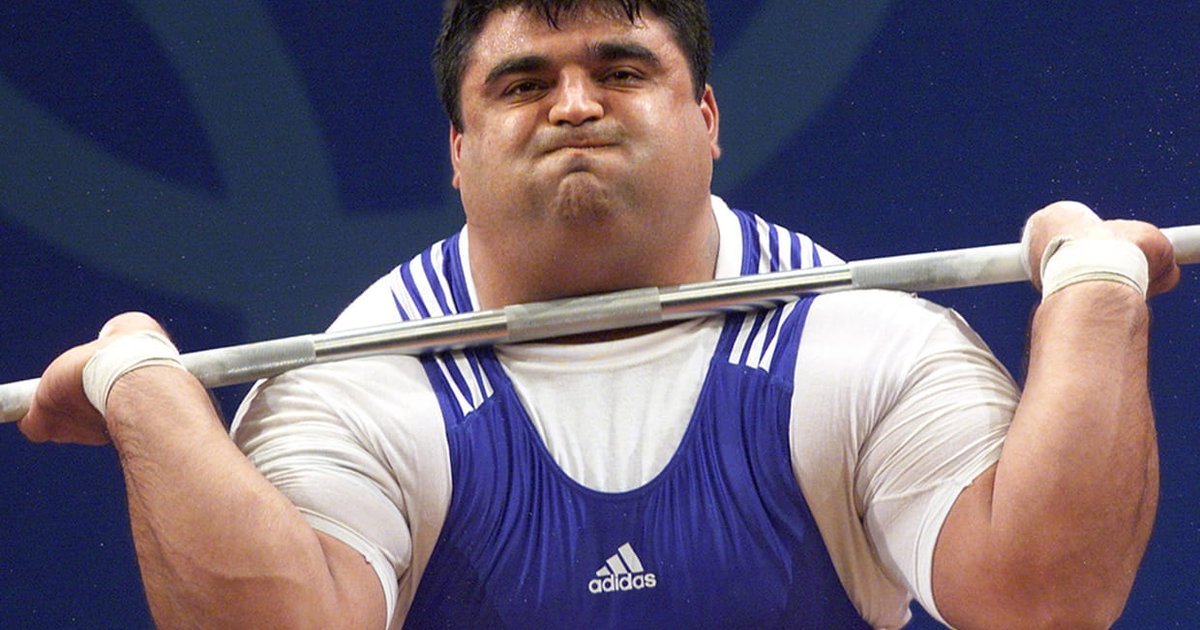
A photograph captures only one instant. It cannot show the whole bar path, the timing of the turnover or whether the lifter’s position was changing just before the shutter fired. Use competition footage to understand the sequence, and avoid treating a still image as a complete technical tutorial.
The distinction is especially useful for gym lifters who already squat or deadlift substantial loads. Strength provides resources for learning a new movement; it does not instantly supply that movement’s coordination. Someone can be strong in a familiar exercise and still need patient practice with a much lighter bar in an unfamiliar lift.
A productive beginner goal is a repeatable movement at an appropriate load, with coaching suited to the individual. Rezazadeh’s best attempts illustrate the finished skill of a champion. They do not establish a sensible starting weight, timetable or expected rate of progress for someone else.
Athens: a different route to the same official total

In Athens, Rezazadeh’s best snatch was 210 kg. His final clean and jerk reached 263.5 kg, setting a world record at the time. The official total was again 472.5 kg. Historical scoring conventions matter here: the record lift counted as 262.5 kg for the competition total, rather than producing a 473.5 kg total.
The clean and jerk sequence also shows why an unsuccessful attempt need not define the entire competition. He opened successfully at 250 kg, missed his first attempt at 263.5 kg, then returned and completed the weight on his final attempt. The successful opener and the record attempt served different purposes.
An opener can establish a result before an athlete takes a more ambitious risk. That does not make opening-weight selection a universal formula. It depends on the athlete’s preparation, the competition and what is happening on the platform. Copying an elite lifter’s jumps without that context misses the decision being made.
Notice the scale of the change between Games. His best snatch in Athens was lower than in Sydney, while his best clean and jerk was higher. A single headline total conceals those differences. You need both components to understand how the result was achieved.
The broader lesson is about reading performance honestly. A repeated total can still contain a new achievement, and a bigger individual lift does not guarantee a larger official total. Before drawing conclusions about progress, check the attempts, the scoring and the event being measured.

Equipment Worth Exploring
Explore equipment, accessories and gear from our carefully selected range.


Competition Plates
Competition-style bumper plates for Olympic lifts and loaded strength training.


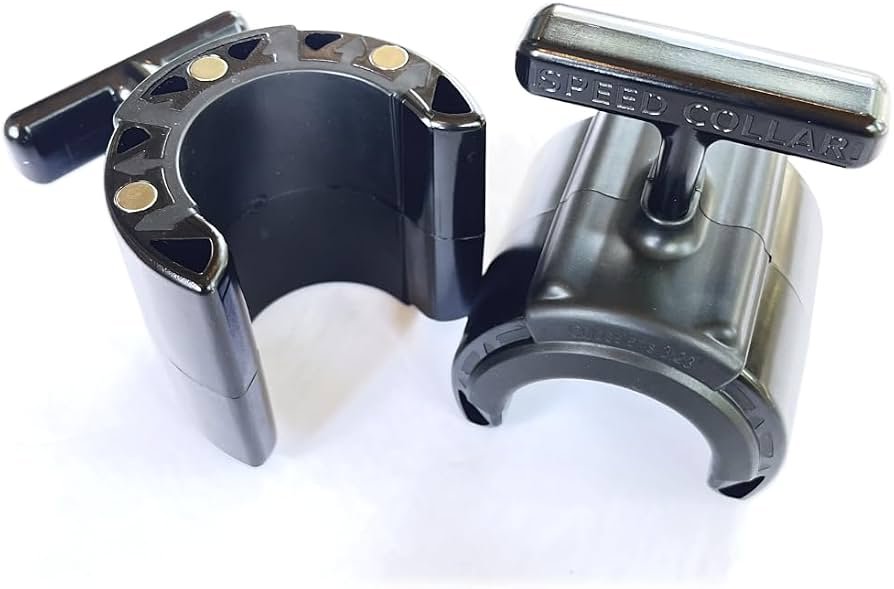
Speed Collar
Quick-release collars designed to secure weight plates on standard two-inch Olympic bars.
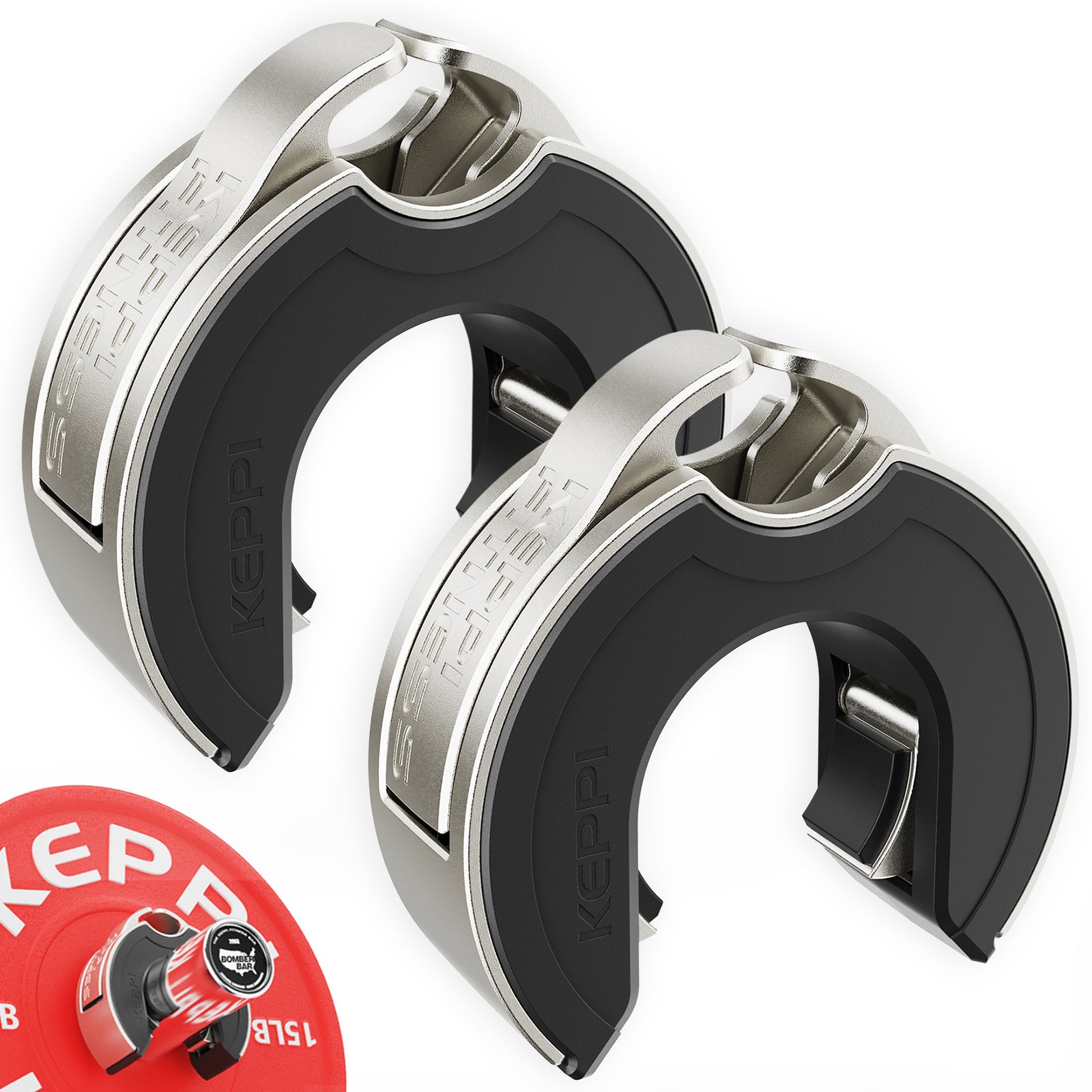
Keppi Open Collars
C-shaped magnetic Olympic barbell collars with a quick-lock mechanism and grippy lining.

Historical records need their original context

Rezazadeh won four world championship titles, in 2002, 2003, 2005 and 2006, as well as his two Olympic golds. That repeated success is different evidence from one exceptional lift. It shows that his career cannot be reduced to a single famous photograph or a lone record attempt.
Even so, avoid calling every historical best a current world record. Bodyweight categories and record lists change, and later athletes compete within their own systems. The precise claim here is that his 263.5 kg Athens clean and jerk was a world record when performed, not that the same record classification still governs competition today.
Comparing different strength sports needs equal care. Our Shane Hamman profile follows an athlete who moved from equipped powerlifting to Olympic weightlifting. His career makes the distinction between a huge squat and a two-lift total particularly clear.
Changes within weightlifting also matter. The John Davis article on the three-lift era explains a period when the competition total included an additional overhead discipline. Equal-looking totals from different eras can describe different tasks.
None of this diminishes the achievement. Context makes it more specific. Identify the athlete, event, category, lifts, scoring system and date before turning a number into a comparison. The result becomes more interesting when you understand what it required.
Take the lesson without inventing his routine
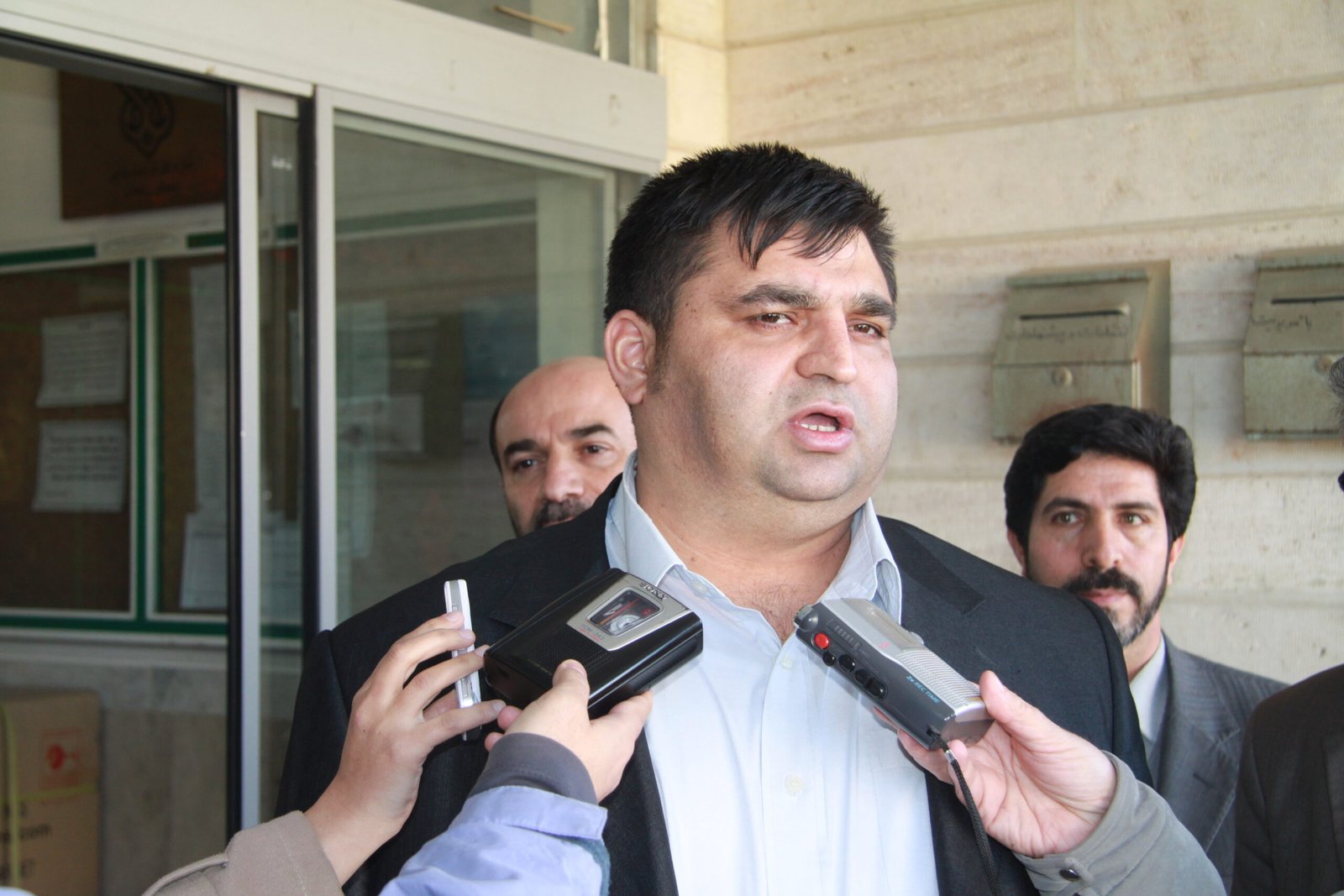
Rezazadeh retired before the 2008 Beijing Olympics following medical advice, then moved into coaching and administration. His competitive career had an endpoint. That is a useful reminder that elite performance histories are not endless upward lines, and that a famous result does not tell you everything about the athlete’s later circumstances.
It would be easy to attach a made-up champion’s workout to this story. The competition results do not establish his complete weekly split, exact training volume, recovery practices or the reason each session was organized as it was. Those details should not be filled in simply because readers would like a routine to copy.
What you can use is a better way to review your own training. Keep separate records for movements that test different abilities. Note the load, the actual exercise and the conditions under which you performed it. A heavier lift with a different range of motion or different assistance may represent a different task rather than a clean improvement.
If you train with a coach or partner, use video and repeatable standards to discuss a specific issue. Was the starting position consistent? Did the successful attempts look similar? Is the next target appropriate for the skill you can reproduce? These questions offer more direction than asking how to imitate an Olympic champion’s biggest number.
Rezazadeh’s story remains compelling because extraordinary strength met a defined competitive task repeatedly. Enjoy the scale of the lifts, but keep the distinctions intact: a snatch, a clean and jerk, an official total and a whole career are connected achievements, each worth understanding on its own terms.

Funny Gym Shirts & Workout Gear
Funny gym shirts, tanks, hoodies and workout gear for lifters who like training hard.

Meme – "Shhh I'M Doing Plate Math" & Weightlifting Sticker
Stick a little “"Shhh I'm Doing Plate Math" Workout &” humor on your favorite gear.

Safety Practice Safe Sets Hooded Jumper Top Hoodie
Show off your bodybuilding humor in a laid-back “Gym Safety” hoodie.

Lift Eat Repeat Sweater & Meme Fans T-Shirt
For laid-back days and lifting humor: “Lift Eat Repeat”.

Live Love Lift Muscle Shirt Athletic Vest Workout Gym L Tank Top
Your gym-day look, with a playful “Live Love Lift” twist.

Medieval Gym – Dost Thou Even Hoist Knight & Dragon Mus Tank Top
Bring “Medieval” humor to your next lifting session.

No Plates No Dates For Gym Bros | Funny Lifting Meme Pu Hoodie
Make your off-duty look more fun with “No Plates No Dates”.

More Plates More Dates | Weightlifting Meme Graphic Shi T-Shirt
Heavy lifts, good laughs, and a little “More Plates More Dates” energy.


Be Stronger Than Your Excuses Funny Gym
Bring “Be Stronger Than Your Excuses” humor to your everyday gym style.

Lift Together Grow Stronger Buddies Friendship Workout T-Shirt
Make gym days more fun with “Lift Together Grow Stronger” style.