Advertising disclosure: This page includes affiliate links that may earn us a commission at no additional cost to you.
Sam Watson climbed faster than any competitor at the 2024 Paris Olympics, but he went home with bronze. His 4.74-second ascent on 8 August was a world record at the time. How does someone set the fastest time and still miss gold?
Speed climbing offers a fascinating lesson for anyone who trains: physical strength, precise movement and the ability to reproduce a performance are not interchangeable. Watson’s story illustrates how tiny differences in execution can decide a race even when an athlete has extraordinary power. The story is not a prescription to train exactly like an Olympian. It is an opportunity to understand what the result actually means and which ideas may translate into ordinary training.
How the fastest Olympic climb earned bronze
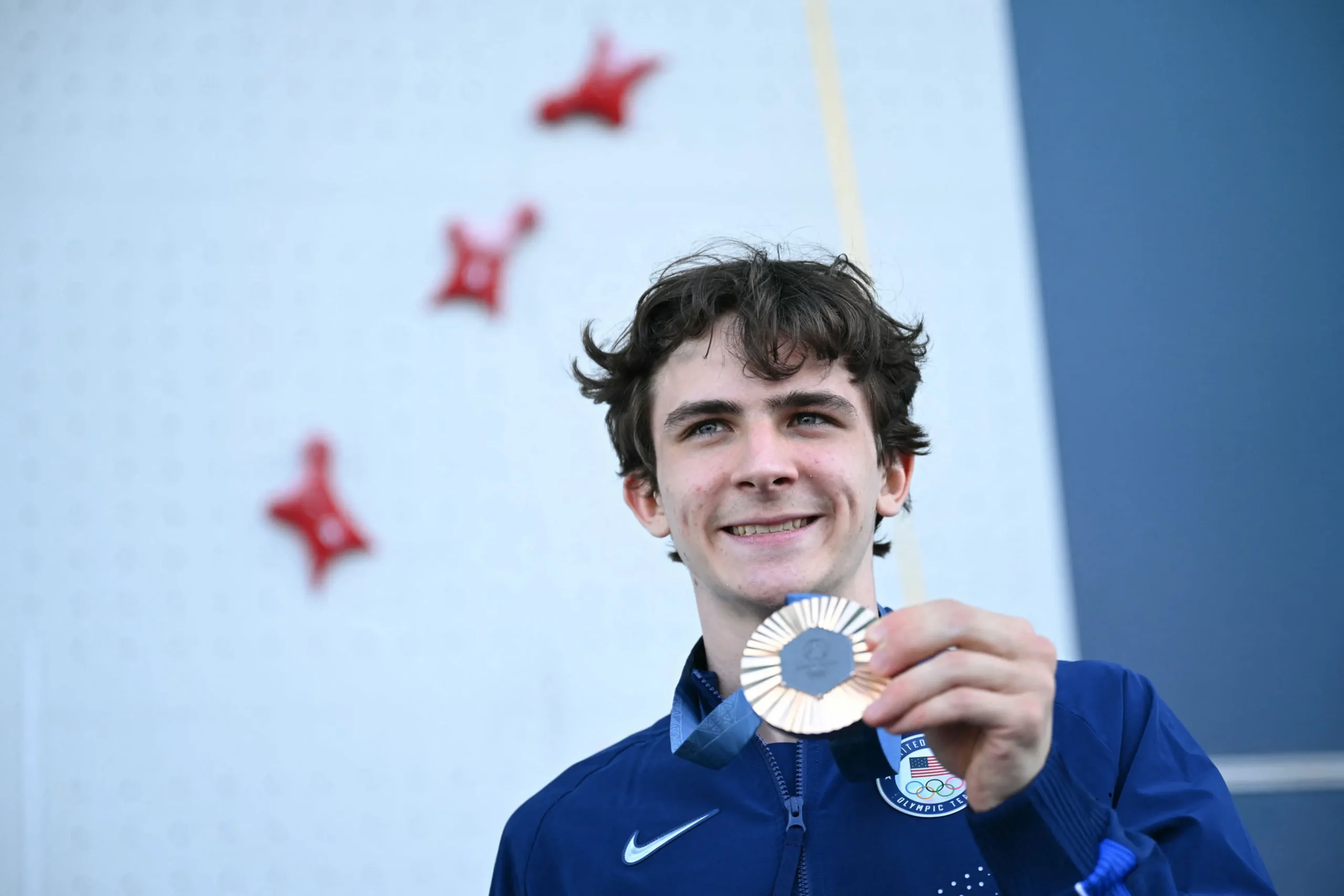
On 6 August 2024, Watson stopped the clock at 4.75 seconds in Paris. Two days later, he went one hundredth faster in the bronze-medal race. In between those efforts, Wu Peng beat him in the semifinal. Veddriq Leonardo subsequently defeated Wu in the gold-medal race, 4.75 to 4.77 seconds. Watson had the fastest run of the competition, but the knockout bracket determined the medal positions.
Imagine a sprinter running a personal best in a consolation race after missing the championship final. The achievement is real, yet it does not rewrite the earlier race. Climbing has the added complication that a missed foothold or a slightly misplaced hand can change the movement available immediately afterward. Once the other athlete reaches the finish first, a superb time from a previous round cannot rescue the result.
That distinction matters outside competition. A lifter can hit a lifetime best on one session and struggle to repeat an ordinary working weight the following week. A climber may complete a difficult sequence once but miss it repeatedly when tired. A best performance is worth celebrating. Reproducible performance is a separate quality worth developing.
Instead of treating bronze as evidence that Watson was somehow slower than both finalists, consider the two measures separately: the quickest legal ascent and the outcome of the races that decided the medals. Both tell us something useful. Neither needs to invalidate the other.
The wall rewards precision, not simply stronger arms
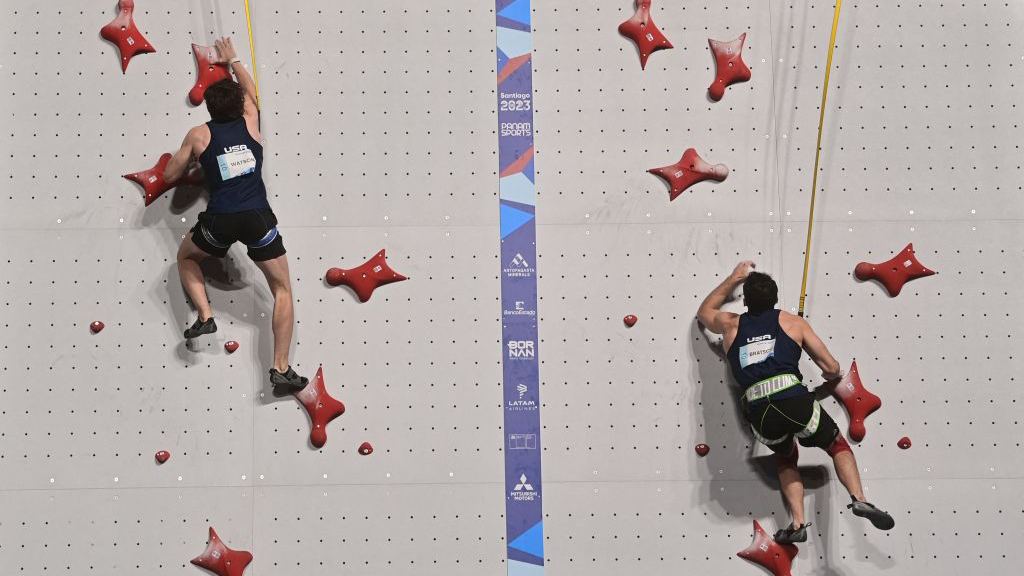
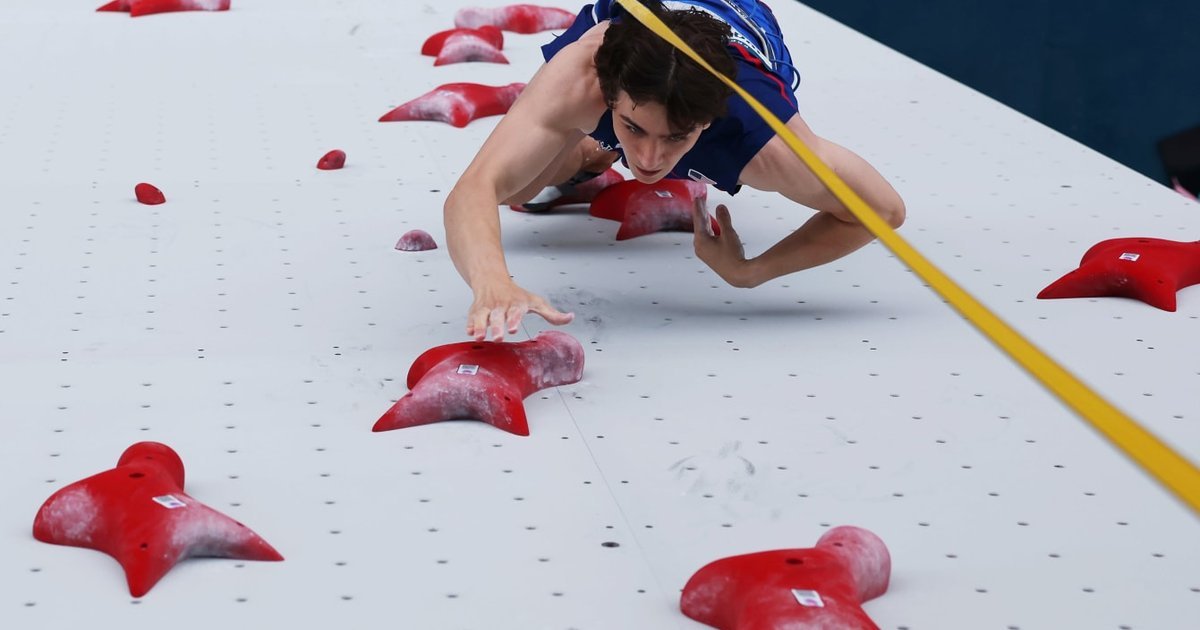
A speed climber races up a standardized 15-metre wall. It is a fixed sequence of holds, so athletes can rehearse movements and refine their approach before racing. Unlike a new bouldering problem, the route is not primarily a puzzle to be solved on the spot. The difficulty lies in executing a known sequence at speed.
Watch the legs as well as the hands. An effective foothold lets an athlete push upward and prepare the next contact. The arms help keep the body near the surface, redirect motion and transmit force. The trunk connects the two. If the feet arrive late, the hands may have to support the body for longer; if the hands arrive in an awkward position, a powerful push may not translate into useful height. These are mechanical explanations, not measured force data from Watson’s race.
A good analogy is a jump: a strong athlete cannot compensate for every poorly timed take-off by producing more force later. On a wall, each contact sets up another contact. A small movement error may leave the next hold farther away or require extra time to regain a favorable position. The best climbers make the whole sequence look continuous.
Pull-ups, rows and grip training may build physical capacity for climbing, but they cannot teach the route itself. A pull-up bar has the same contact points throughout the set. The wall asks the athlete to repeatedly change body orientation, foot placement and hand position. That is why a stronger pull-up does not automatically predict a faster climbing time.

Equipment Worth Exploring
Explore equipment, accessories and gear from our carefully selected range.

Power Tower
Freestanding pull-up and dip station with adjustable handles for bodyweight training.


VForce Lat Tower
Wall-mounted cable tower with pivot arms and adjustable 1:1 or 2:1 pulley ratios.


Rubber Hex Dumbbells
Rubber-coated hex dumbbell pairs with a stable shape for home and commercial strength training.

Cast Iron Kettlebells
Textured cast-iron kettlebells for swings, squats, carries, and full-body training.

Why a small error can cost the race
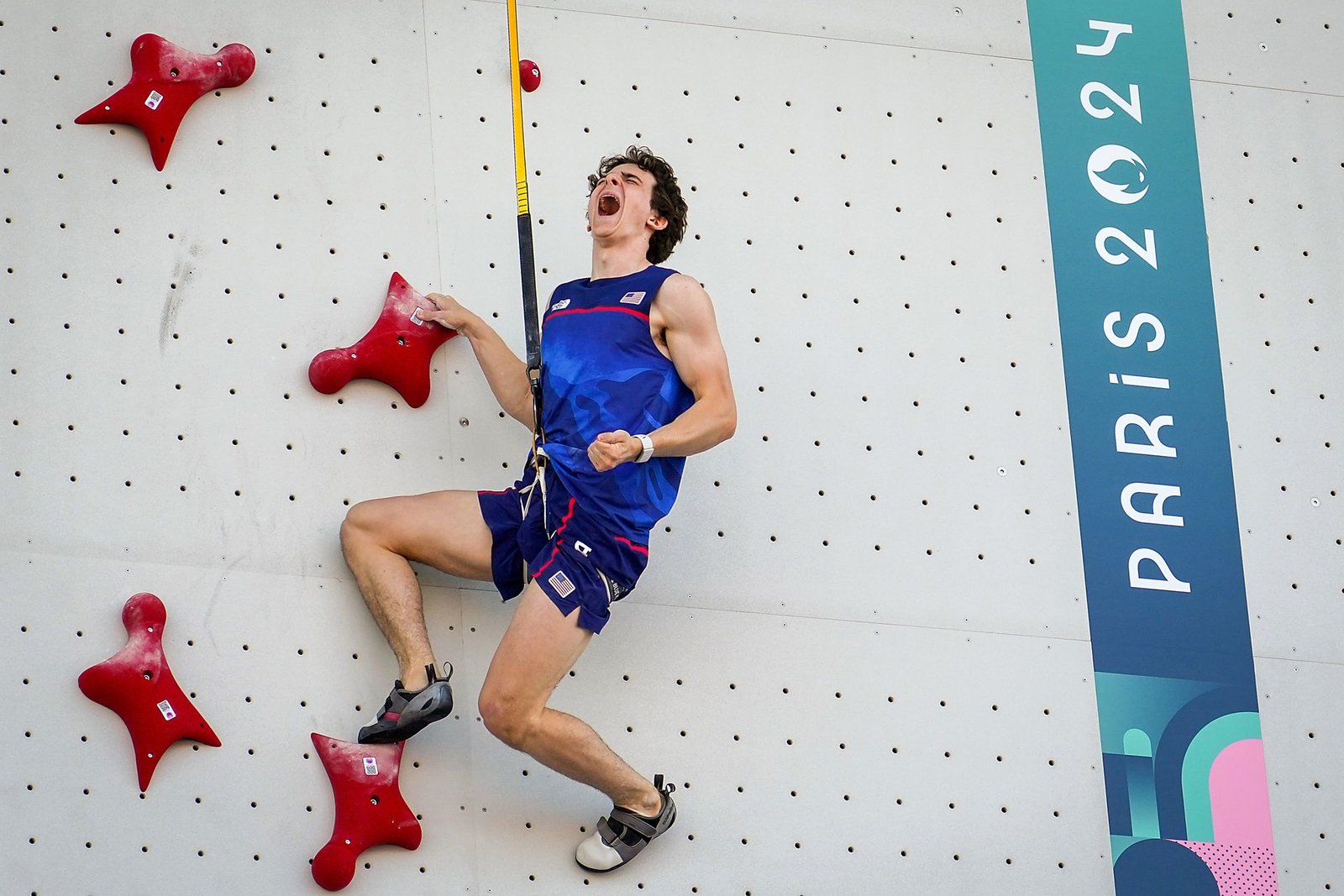
Watson explained after the semifinal that a slight error in contacting a hold near the upper part of the wall reduced his ability to produce power there. His race took 4.93 seconds; Wu finished in 4.85. Eight hundredths of a second separated the two. For context, a tenth of a second is only a little over two percent of a five-second effort. There is very little time in which to recover.
The lesson is not that athletes should avoid taking risks altogether. A speed event requires commitment. Moving cautiously through every position would defeat the purpose of the race. The training challenge is to find a movement sequence that can be performed quickly without making successful contacts unnecessarily uncertain.
Consider how you practise a new gym skill. If your first attempts at a pull-up involve swinging uncontrollably, repeating the same unsuccessful attempt at full effort may not reveal the missing piece. You could instead isolate the starting position, practise an assisted repetition and then return to the full movement. A good coach can make that progression specific to what actually needs improvement.
Speed climbing also illustrates why the clock is useful feedback rather than a complete coaching diagnosis. Two ascents can finish with identical times despite different mistakes. An athlete might lose time at the start in one run and lose it near the top in another. Video review and a clear definition of the movement being practised help identify which part deserves attention. The same principle works for ordinary strength work: record a set from a suitable angle, examine one relevant feature and avoid changing five things at once.
Paris was a snapshot, not the ceiling
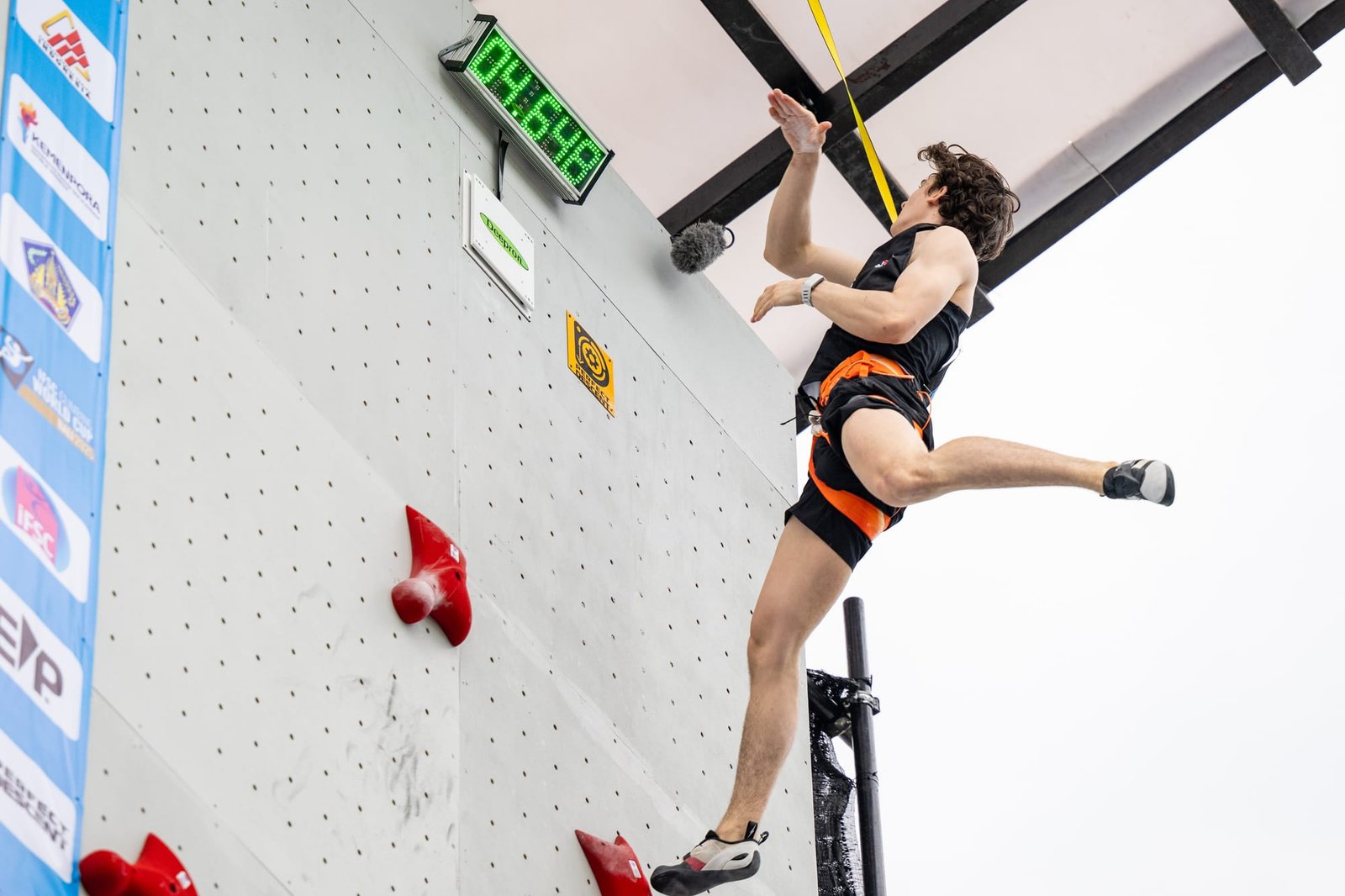
Watson continued to improve after Paris. At the Bali World Cup on 3 May 2025, he produced a 4.67-second semifinal and then a 4.64-second final. His opponent in the final had false-started, leaving Watson to finish the route without a live race beside him. The times were records at that point in history, not a statement of the current world record.
The contrast with Paris is fascinating. One competition demonstrated that the fastest run does not guarantee gold; the other showed how the same athlete could produce an even faster time after the result of the final had effectively been settled. We should not infer that an absent opponent was necessary for the improvement, or that the time difference reveals the effect of pressure. These are individual competitive performances, not a controlled experiment.
For a lifter, the practical distinction is between a record attempt and the longer process that makes it possible. A personal record is easy to log. The work that precedes it is less dramatic: repeating movements, keeping useful sessions productive, adjusting the workload when necessary and accumulating practice without turning every day into a test.
If your current best set of five pull-ups is technically untidy, a month of cleaner sets of three could be a sensible step even if you do not immediately beat the five. Similarly, someone trying to improve jumping power may benefit from monitoring the quality of each jump rather than adding more repetitions simply to increase the total. Establish a baseline and use repeatable conditions when comparing results. Progress should be assessed over enough sessions to account for ordinary day-to-day variation.
Build the capacity to move well, then practise the sport
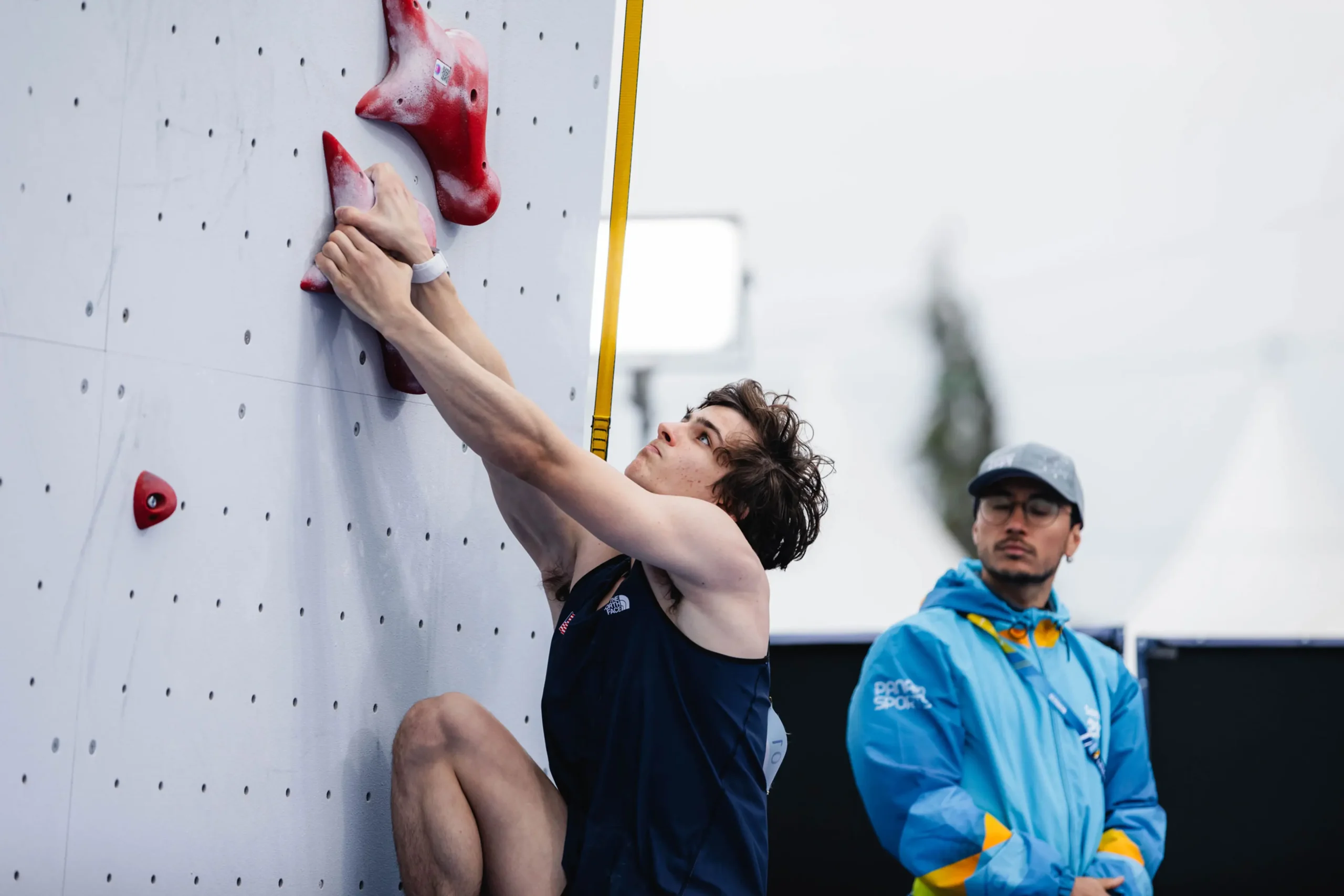
Here is a practical way for a recreational lifter interested in climbing to approach training. This is an editorial example, not Watson’s personal workout. Start with an introductory session at a supervised climbing facility. Learn how the equipment works and follow the facility’s instructions. A speed wall, harness and belay system are specialist equipment; do not try to improvise one using a gym rack or a residential wall.
For supplementary strength training, two modest sessions each week may be a useful starting point, provided you can recover from them and your climbing practice. On the first day, choose a pull-up variation or lat pulldown, a split squat and a supported row. On the second, practise another pulling variation, a controlled squat or hinge and some trunk work. Two or three working sets per exercise can be enough initially. Leave a few good repetitions in reserve and adjust the load to your experience. Treat grip and forearm exercises as optional additions, not an obligation after every climbing session.
When training power, rest enough between attempts to keep the movement controlled and quick. Small sets of suitable jumps or light explosive exercises can be useful for healthy, experienced trainees, but not if landing quality declines. Build toward these movements rather than introducing them under heavy fatigue. There is no requirement to perform an explosive weighted pull-up or copy an elite climber’s high-speed technique to become a better recreational athlete.
Separate your outcomes. Track strength with consistent repetitions and loading; assess climbing practice with movement quality and route completion; compare speed only under comparable conditions. If a particular training choice leaves your elbows or fingers too tired to climb well, change its placement or reduce the workload. Persistent pain warrants assessment by a qualified professional rather than another attempt to push through it.
Watson’s Paris result is memorable because it puts a remarkable number next to a medal that might seem surprising. The more durable lesson is that athletic performance is made up of more than a single physical quality. A powerful body, a reliable movement pattern and the ability to deliver at the right moment are different pieces of the same task. Work on the pieces you can improve, then give yourself a fair opportunity to demonstrate them.

Calisthenics Shirts & Street Workout Gear
Calisthenics and bodyweight-training gear for pull-ups, dips, handstands and street-workout athletes.


Always Pull Yourself Up Crewneck Calisthenics Pullover T-Shirt
Bring “Always Pull Yourself Up” humor to your everyday gym style.

Pullups Heartbeat Sticker
Stick a little “Calisthenics Pullups Heartbeat” humor on your favorite gear.

Calisthenics Muscle Shirt Athletic Vest for Bodyweight Tank Top
Your gym-day look, with a playful “Calisthenics” twist.

Turn Off Gravity Funny Calisthenics Gym Hooded for Huma Hoodie
Show off your lifting humor in a laid-back “Turn Off Gravity Funny Calisthenics” hoodie.

Calisthenics Evolution Muscle Shirt Athletic Vest for B Tank Top
Add some lifting attitude to training with “Calisthenics Evolution”.

Funny Calisthenics Gym Hooded Pullover for Bodyweight W Hoodie
Stay casual and show some lifting attitude with “Calisthenics”.


Funny Calisthenics Gym Crewneck Pullover Sweater for Bo T-Shirt
Keep things casual with a little “Calisthenics” attitude.

Calisthenics Hanging Out Decal for Water Bottles Laptop Sticker
A fun “Calisthenics Hanging Out” touch for bottles, laptops, and lockers.