Advertising disclosure: This page includes affiliate product links that may earn us a commission, as well as products from our own store.
A heavy deadlift does not automatically make you quick at moving a sled, turning at a line or carrying weights when your legs are already tired. The sprint-drag-carry puts those tasks together. Its appeal for lifters is that strength matters, but strength has to survive repeated changes of movement.
The useful lesson is not that every gym session needs to become a military fitness test. It is that a short course can expose different weaknesses from a barbell session. Understanding the sequence, controlling the turns and organising equipment can make practice more informative than simply repeating an exhausting circuit and hoping the stopwatch improves.
Understand the course before treating it as a fitness score
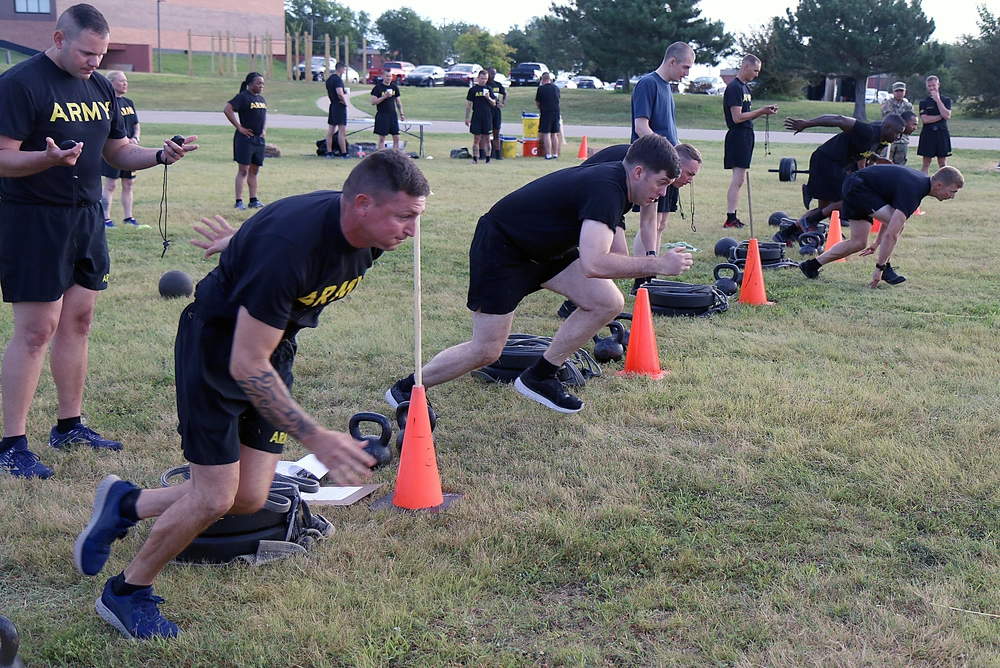
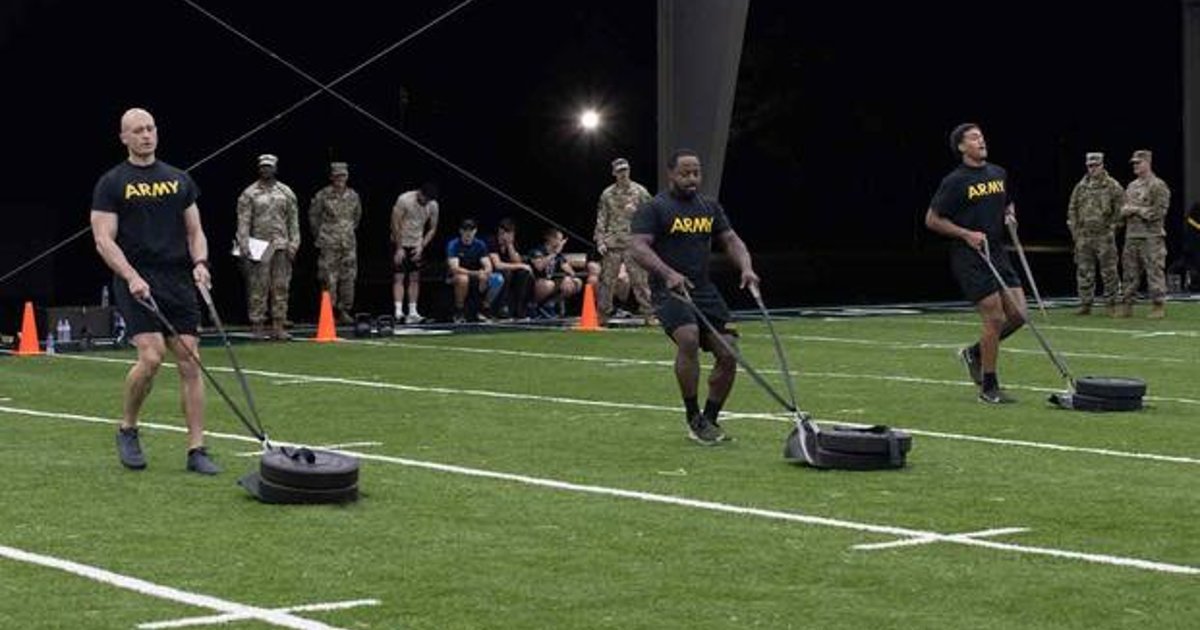
The sprint-drag-carry uses five 50-metre shuttles: sprint, backward sled drag, lateral movement, a loaded carry and a final sprint. Each shuttle travels out to a 25-metre line and back, giving 250 metres altogether. The standard equipment includes a 90-pound sled and two 40-pound kettlebells.
This is a mixed task. The runner changes direction repeatedly, handles equipment and returns to unloaded running after carrying weight. A single finishing time combines all of that work. It cannot tell you, by itself, whether the main limitation was running speed, the drag, grip, transitions or an incorrect turn.
Historical descriptions refer to the Army Combat Fitness Test. Current official material places the event within the Army Fitness Test. For a civilian practice session, the important distinction is between reproducing a measured event and borrowing its movement ideas. Shorter distances or different loads can be useful training choices, but they create a different test.
Write down what you are actually doing. Include the lane length, surface, sled, loading and carry implements. A course on grass with one sled is not interchangeable with a turf lane using another. Keeping a clear record prevents an equipment change from being mistaken for a sudden improvement in conditioning.
Keep pass marks separate from personal training goals too. Military scoring depends on the applicable current standard. A recreational lifter does not need to borrow an unrelated age-category cutoff to decide whether a first practice session was useful.
Practise the turn as deliberately as the acceleration
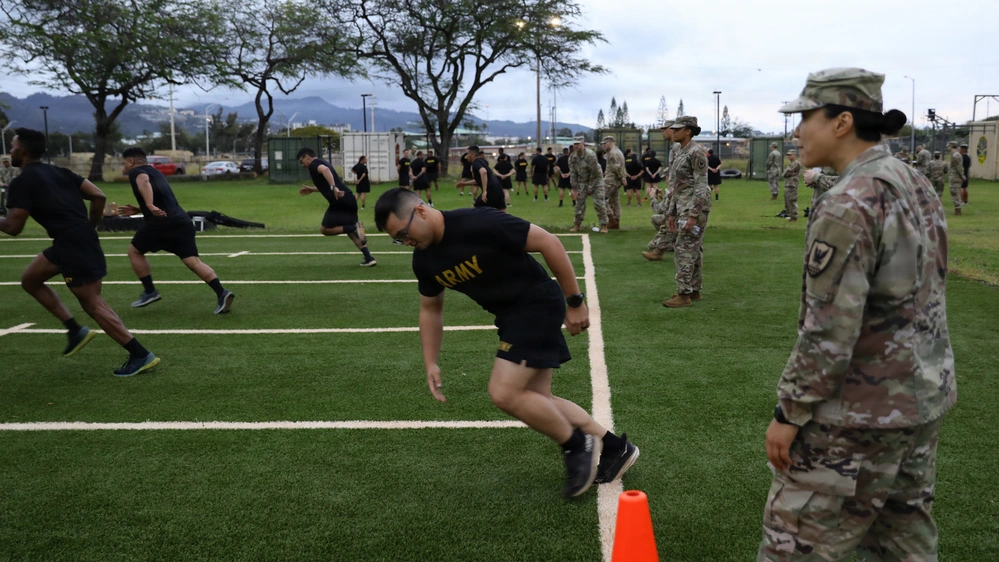
The opening sprint requires a hand and foot to reach the far line. Missing that contact can mean being called back. Fast running followed by a rushed, incomplete turn therefore produces a different outcome from a clean shuttle.
Changing direction involves braking before accelerating again. Approaching a line at a speed you cannot control leaves less opportunity to organise your next steps. The final stride should not become a desperate reach that disrupts the return. Rehearse the approach slowly enough to notice where your feet and hand actually land.
A useful practice question is whether the same turn appears repeatedly. If one attempt ends with several tiny adjustment steps and another flows directly into the return, the stopwatch includes that difference. Video from the side of the lane can help you identify it without guessing from how difficult the effort felt.
Separate rehearsals from tests. Walk the boundary contacts first, then build to controlled shuttle efforts after warming up. There is little value in discovering that you misunderstood the line rule during a maximum effort. A partner can watch the turn while you concentrate on moving, then give one specific observation afterwards.
For example, feedback such as “your hand stopped short twice” gives you something concrete to change. “Be more explosive” does not explain the lost time. Work on the visible error before adding a larger conditioning workload to compensate for it.
Make the sled setup repeatable instead of merely heavier
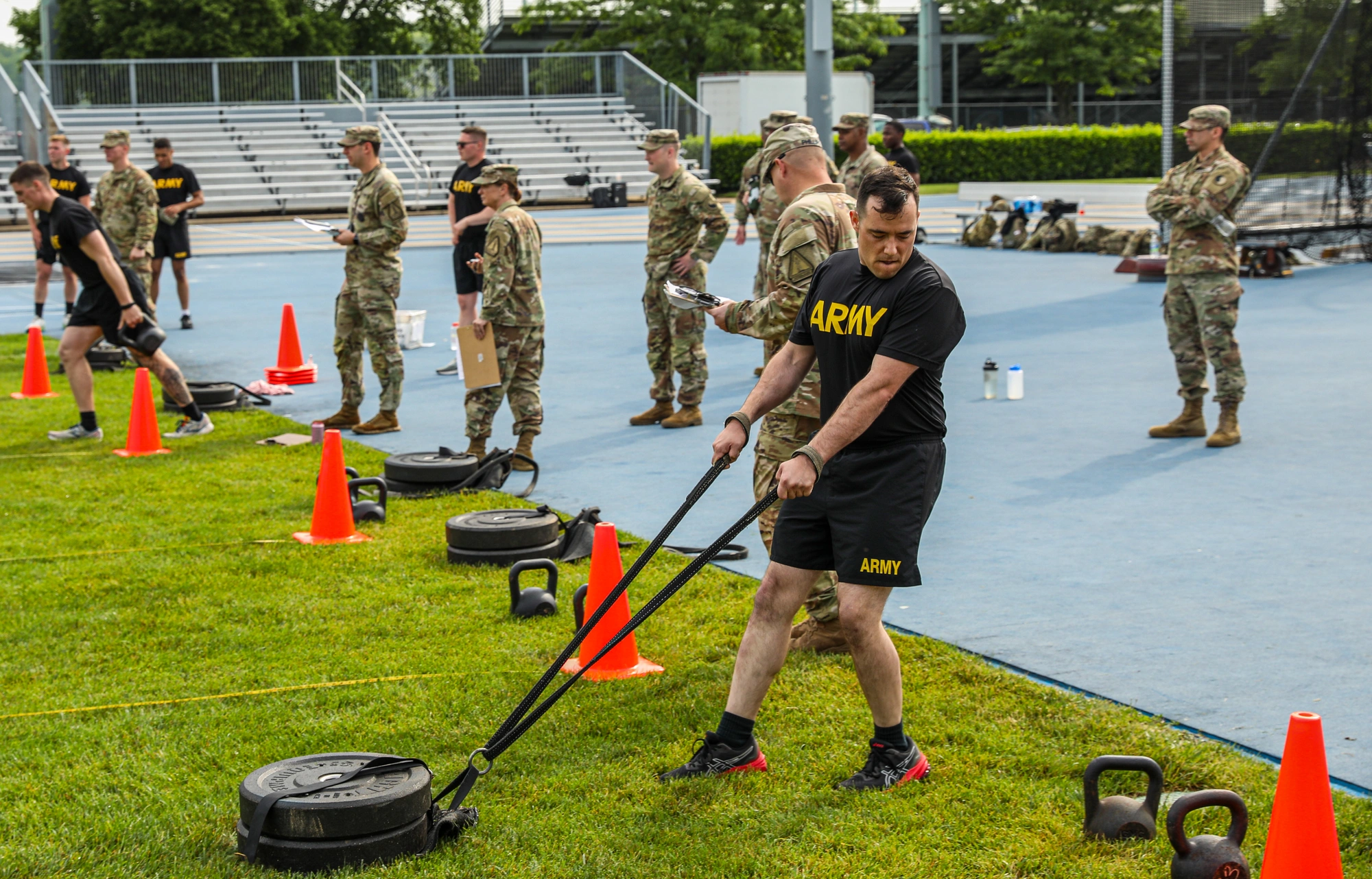
The sled must fully cross the turn line before the return drag. It also has to return fully across the starting line. The strap handles need to be accessible when you arrive. Setting them down carelessly creates a small equipment problem at exactly the point when you want to start moving.
Different sleds and surfaces can feel dramatically different with similar plates. For training comparisons, record the actual arrangement rather than describing every session as “90 pounds.” A change from dry turf to damp grass, or from one sled base to another, changes the task you are trying to repeat.
Begin with controlled backward movement and a clear path. Take tension through the handles before trying to move quickly. Avoid jerking the straps or throwing the sled around at the turn. A faster transition is useful only when you can maintain control of the implement and stay inside your lane.
If a drag is the obvious weak link, practise it separately while you can still concentrate. Observe whether you lose time taking up slack, initiating movement, maintaining steps or turning the sled. Those are different problems. Increasing load does not automatically address all of them.
Buying equipment is optional. A suitable sled and loading plates support specific practice; an improvised cable exercise does not reproduce the surface interaction or the turn. Use alternatives for general training when appropriate, while keeping their results separate from a measured course time.

Equipment Worth Exploring
Explore equipment, accessories and gear from our carefully selected range.


Cast Iron Kettlebells
Textured cast-iron kettlebells for swings, squats, carries, and full-body training.


Rubber Hex Dumbbells
Rubber-coated hex dumbbell pairs with a stable shape for home and commercial strength training.


Pro Sled System
Heavy-duty push-pull training sled for loaded conditioning, speed, and strength work.


Competition Plates
Competition-style bumper plates for Olympic lifts and loaded strength training.
Carry under control and keep the lateral leg distinct
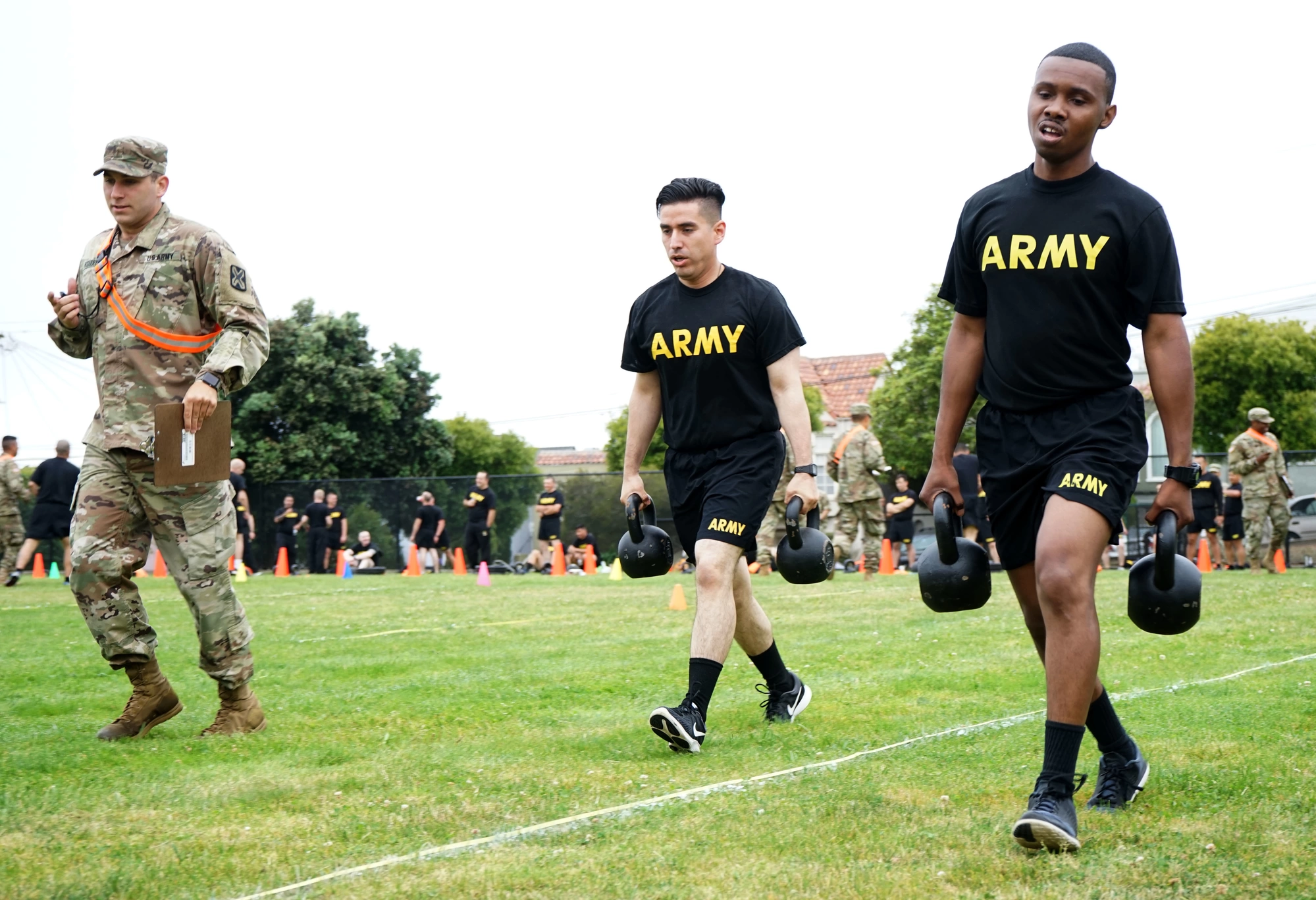
During the carry, a foot must reach the far line before the return. The kettlebells are placed down at the end rather than thrown. The lateral shuttle has its own movement constraint: feet should not cross, and facing the same direction on the return lets the opposite foot lead.
The farmer’s carry is useful to practise as its own movement before trying to run it under fatigue. Pick up manageable weights with control, establish a stable position and walk a clear route. Progress speed only when the implements remain controlled. Being able to hold a heavy pair while standing still does not establish that you can turn or run with them well.
Check where the bells travel relative to your legs. Large swings, repeated collisions or an uncertain turn tell you more than a brave-looking load. In an ordinary gym, a walking carry with appropriately selected dumbbells can provide relevant practice, but a different handle or implement should be noted in your log.
The lateral movement deserves separate attention because forward running practice does not teach every part of it. Rehearse both directions, keep the lane clear and choose a speed at which the movement remains recognisable. If you repeatedly cross your feet when hurried, slow down and rebuild the pattern.
These details explain why a tidy course can feel less chaotic without becoming easy. Better organisation removes avoidable confusion; it does not remove the effort required to move your body and the equipment through the full distance.
Use component practice before chasing a full-course time
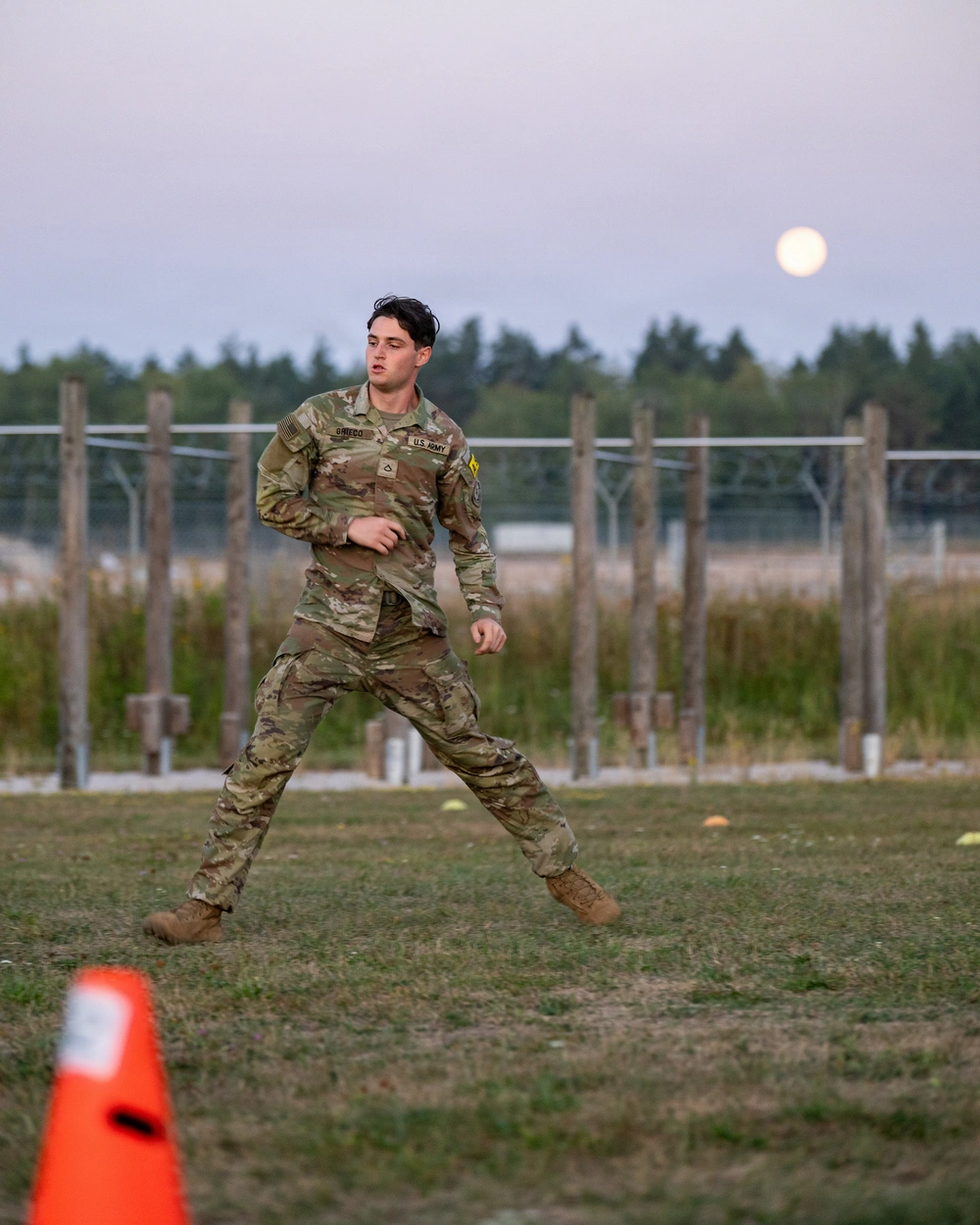
Warm up for the movements you intend to perform. Build from easy movement into controlled accelerations, lateral steps and lighter or easier loaded practice. The preparation should make the first meaningful effort familiar, rather than becoming an exhausting workout of its own.
For a recreational lifter, an MMP practice example is to rehearse the unloaded turns, then perform a few short sled drags and walking carries with comfortable loads. Rest between efforts so you can repeat the intended technique. This is an illustrative session structure, not an official military preparation programme or a validated prescription.
Choose one observation to track. You might record whether every turn met the line, whether the sled stayed under control or whether the carries remained steady. Once the components are familiar, a measured course effort becomes more useful because fewer unknowns are competing for your attention.
Keep the full effort and its component practice in separate log entries. Record the total time alongside any visible mistake, equipment change or unusual fatigue. If you finish faster after shortening the lane or changing the sled, label the comparison accordingly. If the conditions are stable, you have a more useful basis for judging progress.
A simple review can have three columns: what happened, what probably caused it and what to check next. “Lost the sled handles” belongs in the first column; “poor conditioning” is only a guess about the cause. Repeating a tidy handle pickup at low effort helps test the simpler explanation. Likewise, a dropped carry weight might reflect an ambitious load, an awkward turn or accumulated fatigue. Record the observation before deciding which part of training needs to change.
Fit demanding conditioning around the rest of your training rather than adding repeated maximum attempts to every leg day. The purpose is to improve your ability to execute the task and recover for the next session. The stopwatch matters most when the distance, equipment and movements behind it are consistent.

Cardio Shirts & Workout Gear
Cardio and conditioning gym gear for runners, endurance athletes and anyone who earns the sweat.


Cardio Is Calling Decline Vest Meme Tank Top
Show some personality between sets with “Cardio Is Calling”.

Skip Cardio Exit Cardio Meme Hooded Hoodie
Keep it laid-back with a little “Skip Cardio” attitude.

Negative Cardio Review Cardio Sucks 1 Star Decal Sticker
Give your everyday gear a playful “Negative Cardio Review” twist.

Cardio Is Hardio – Workout Meme Pullover Jumper T-Shirt
For laid-back days and cardio humor: “Cardio Is Hardio”.

Anti Running Club Tee
Heavy lifts, good laughs, and a little “Anti Running Running Club” energy.

Anti Jogging Jogging Club Shirt – & Meme Top T-Shirt
Bring “Anti Jogging Jogging Club” humor to your next gym day.

Anti Cardio Cardio Club Shirt Meme & Top T-Shirt
Bring “Anti Cardio Cardio Club” humor to your next gym day.

Shirt: Does Running Out Of F*Cks Count As Cardio? & T-Shirt
Heavy lifts, good laughs, and a little “: Does Running Out Of F*cks Count As” energy.

Don't Quit Do It – Motivational Jumper Pullover For Wor T-Shirt
Show some gym-day personality with “Don't Quit Do It”.